












Chủ sở hữu nhà máy cáp quang không nên coi việc lắp đặt là hoàn tất khi mọi máy móc đã được đặt xuống sàn và có thể bật lên. Quyết định thực sự là liệu toàn bộ dây chuyền có an toàn, được kết nối chính xác, có thể tái tạo sản phẩm cáp đã thống nhất và được hỗ trợ bởi các hồ sơ mà người mua có thể sử dụng sau khi nhà cung cấp rời đi.
Việc lắp đặt dây chuyền sản xuất cáp quang cần đóng năm khe hở bằng chứng: sự sẵn sàng của địa điểm, tình trạng máy móc, an toàn điện và cơ khí, chức năng dây chuyền được kiểm soát và chấp nhận sản phẩm. Người mua nên phê duyệt một trình tự bằng văn bản, bắt đầu từ kiểm tra nhận hàng, chạy không tải, thử nghiệm vật liệu, kiểm tra chấp nhận tại hiện trường và bàn giao. Mỗi kết quả phải được liên kết với cấu hình hợp đồng, bản vẽ cáp, vật liệu đã được phê duyệt và phương pháp đo được đặt tên. Một danh sách các mục còn mở đã ký kết sẽ hữu ích hơn nhiều so với lời hứa bằng miệng rằng việc đưa vào vận hành đã hoàn tất.
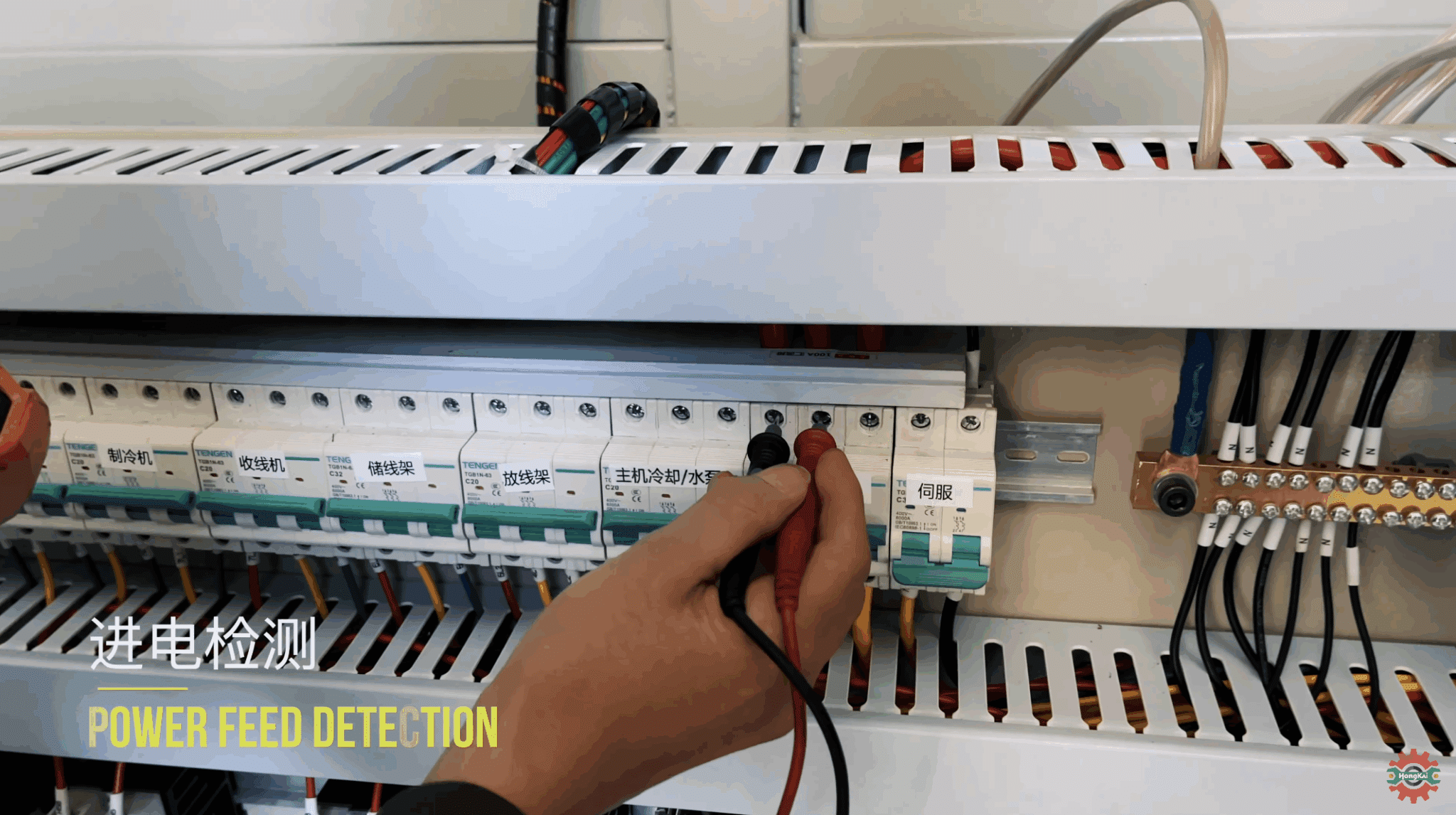
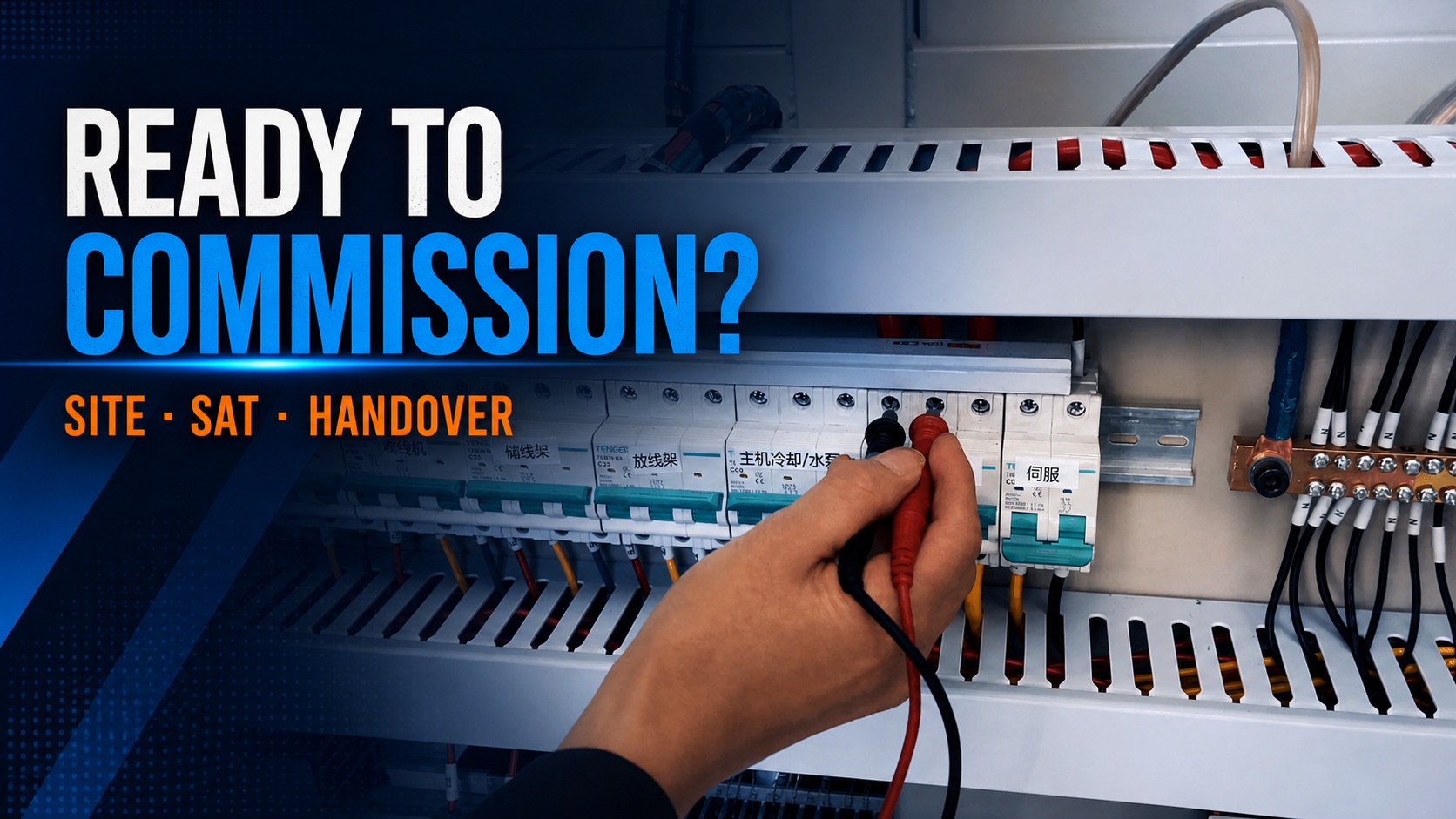
Ảnh thực tế HONGKAI tại xưởng: việc kiểm tra nguồn điện đã được hoàn thành trước khi giao thiết bị. Hiện trường khách hàng phải lặp lại các kiểm tra yêu cầu bởi tài liệu dự án và quy định địa phương.
Lắp đặt, đưa vào vận hành và chấp nhận là các giai đoạn liên quan nhưng khác nhau. Lắp đặt đặt và kết nối thiết bị. Đưa vào vận hành chứng minh máy hoạt động, các liên động và điều khiển liên kết. Kiểm tra chấp nhận tại hiện trường, hay SAT, sau đó kiểm tra đầu ra đã thống nhất và tài liệu tại nhà máy người mua. Sản xuất được kiểm soát chỉ nên bắt đầu sau khi các rủi ro và trách nhiệm còn lại đã được làm rõ.
Tám quyết định dưới đây biến các giai đoạn đó thành một kế hoạch dự án có thể kiểm toán. Chúng áp dụng cho cả khi nhà máy thêm một dây chuyền cáp ống lỏng hay phối hợp nhuộm màu, phủ lớp thứ hai, SZ xoắn và bao vỏ như một tuyến đường hoàn chỉnh.
Người mua cần hoàn thành những gì trước khi chấp nhận một dây chuyền cáp quang?
Người mua cần hoàn thành tám quyết định chấp nhận liên kết: kiểm soát tài liệu, sự sẵn sàng của hiện trường, kiểm tra nhận hàng, lắp đặt vật lý, xác minh điện và an toàn, đưa vào vận hành không tải, thử nghiệm sản phẩm và đào tạo kèm bàn giao cuối cùng. Mỗi quyết định cần có người phụ trách, đầu vào, tiêu chí đạt và hồ sơ lưu trữ. Bản vẽ máy HONGKAI và tài liệu điều khiển có thể xác định thiết bị được cung cấp, nhưng người mua cũng phải kết nối chúng với hệ thống tiện ích địa phương, nghĩa vụ an toàn địa phương và thông số cáp đã được phê duyệt. Việc chấp nhận nên tiến triển từ các kiểm tra rủi ro thấp sang các chức năng có điện và sau đó sang sản xuất vật liệu.
1. Cơ sở dự án: Tài liệu nào kiểm soát việc lắp đặt và chấp nhận?
Tại sao điều này quan trọng: Một đội đưa vào vận hành không thể giải quyết tranh chấp nếu hợp đồng, cấu hình máy, bố trí, bản vẽ cáp và phương pháp kiểm tra mô tả các phạm vi khác nhau. Cơ sở tài liệu quyết định những gì đã được cung cấp, những gì người mua phải chuẩn bị và kết quả nào đóng dự án. Các cấu hình tham chiếu HONGKAI cho nhuộm màu HK-235, cáp ống lỏng HK-50, xoắn HK-800/12 SZ và bao vỏ HK-90 bao gồm bản vẽ lắp đặt, hướng dẫn vận hành và sơ đồ điện, nhưng mỗi dự án phải xác nhận bộ bản sửa đổi cuối cùng.
Câu hỏi cần đặt: Tạo một sổ đăng ký được kiểm soát cho cấu hình kỹ thuật đã ký, danh sách thiết bị, bố trí, bản vẽ nền và lắp đặt, sơ đồ điện, lịch trình tiện ích, bản sao lưu phần mềm hoặc công thức, bản vẽ cáp và ống, vật liệu thô đã được phê duyệt, hồ sơ chấp nhận tại nhà máy, ma trận SAT, hướng dẫn, phụ tùng thay thế và các mục còn mở. Đặt tên bản sửa đổi hiện tại và người phê duyệt cho mọi tài liệu. Ghi lại bất kỳ sự khác biệt nào đã được thống nhất giữa kiểm tra chấp nhận tại nhà máy và kiểm tra chấp nhận tại hiện trường.
Cách xác minh: Tổ chức cuộc rà soát tài liệu trước khi dỡ hàng hoặc cấp điện cho dây chuyền sản xuất cáp quang. Theo dõi từng đơn vị, tùy chọn, cảm biến, công cụ và giao diện được giao đến phạm vi đã ký. Đánh dấu các mục thiếu hoặc đã sửa đổi trong danh sách hành động có ngày tháng thay vì chấp nhận lời giải thích không chính thức. Tham chiếu hợp đồng bán hàng HONGKAI cũng biến cấu hình kỹ thuật thành phụ lục và gán trách nhiệm vật liệu thử nghiệm cho người mua, do đó hợp đồng cuối cùng phải nêu rõ số lượng vật liệu, thông số kỹ thuật, điểm giao hàng và cách xử lý vật liệu còn dư.
Cảnh báo đỏ: Bản vẽ đến sau khi đặt máy, SAT sử dụng cáp khác với thông số mua, phần mềm và công thức không có bản sao lưu, hoặc đội ngũ không thể xác định bản sửa đổi tài liệu nào đang kiểm soát.
2. Sự sẵn sàng của hiện trường: Không gian, nền móng và tiện ích đã sẵn sàng trước khi dỡ hàng?
Tại sao điều này quan trọng: Một dây chuyền có thể hoàn tất về mặt cơ khí nhưng vẫn thất bại tại hiện trường khách hàng vì sàn, lối đi, nguồn điện, nước làm mát, khí nén, thông gió hoặc đường đi vật liệu không được chuẩn bị cho cấu hình chính xác. Yêu cầu tiện ích không thể hoán đổi giữa thiết bị nhuộm màu, cáp ống lỏng, xoắn và bao vỏ. Người mua nên đóng băng giao diện hiện trường trước khi giao hàng thay vì tự tạo kết nối trong quá trình đưa vào vận hành.
Cần hỏi gì: Xác nhận lộ trình dỡ hàng, các điểm nâng, tải trọng sàn, đường tâm máy, chi tiết móng hoặc neo giữ, lối đi cho người vận hành, khoảng trống bảo trì, xử lý cuộn dây, lưu trữ nguyên liệu thô, phân loại chất thải và lộ trình lấy mẫu phòng thí nghiệm. Lập ma trận tiện ích liệt kê rõ điện năng, nối đất bảo vệ, khí nén, nước công nghệ, nước làm lạnh, hệ thống thoát nước, hệ thống hút khói bụi, nitơ hoặc các môi chất khác—chỉ tại những vị trí mà cấu hình đã ký yêu cầu. Các đánh giá lắp đặt của HONGKAI đặc biệt kiểm tra khí nén, cấp nước, thoát nước và lộ trình nâng/hạ cùng lối tiếp cận thông thoáng trước khi dỡ hàng; bốn mục kiểm tra này là điều kiện sàng lọc sẵn sàng dự án, không thay thế cho toàn bộ yêu cầu tiện ích và bố trí đã được ký duyệt. Ghi rõ vị trí kết nối, chất lượng, áp suất hoặc công suất, bên chịu trách nhiệm và ngày sẵn sàng—không sao chép giá trị từ dòng khác.
Cách xác minh: So sánh hiện trường thực tế với bố trí đã được phê duyệt trước khi thiết bị được di chuyển vào vị trí cuối cùng. Kiểm tra các điểm kết nối và ghi lại điều kiện tiện ích đo được so với yêu cầu dự án. Tham chiếu hiện tại của HONGKAI cho cáp ống lỏng bao gồm nước nóng và nước làm lạnh, khí nén và nguồn điện được phối hợp, trong khi tham chiếu nhuộm màu có thể cũng yêu cầu giao diện nitơ cho quá trình UV- đóng rắn đã thống nhất. Cấu hình dự án, chứ không phải danh sách kiểm tra nhà máy chung, kiểm soát danh sách cuối cùng.
Cảnh báo đỏ: Người lắp đặt phát hiện điện áp không tương thích sau khi đặt, ống hoặc cáp chéo qua lối đi, nguồn cấp và hồi nước bị nhầm lẫn, xử lý cuộn chặn lối thoát khẩn cấp, hoặc dây chuyền được cấp điện trước khi kiểm tra nối đất bảo vệ và nguồn cấp hoàn tất.
3. Tình trạng nhận hàng: Mọi đơn vị được giao có đến đầy đủ và không bị hư hại không?
Why it matters: Shipping damage, missing loose parts and mismatched labels are easier to resolve before assembly. Once packaging is discarded and units are connected, responsibility becomes harder to establish. The buyer should separate transport condition from machine performance and record both.
What to ask: Obtain the packing list, equipment list, serial or identification records, accessory and tooling list, spare-parts list, container loading plan and preservation instructions. Define who opens each package, who photographs the condition and how damage or shortage is reported. Keep moisture protection and temporary supports in place until the manufacturer instructions allow removal.
How to verify: Photograph packaging before opening and each machine unit after opening. Match nameplates, cabinets, pay-offs, take-ups, sensors, tooling, cables, manuals, spares and supplied tools against the signed list. Rotate or move only the parts that the manual permits during the receipt check. Record damage, corrosion, loose connections, contaminated surfaces and missing items with a location and corrective owner.
Red flags: Crates are discarded before reconciliation, the team signs a complete-delivery record from a packing count alone, tooling is not tied to the target product, or shipping locks remain installed during a powered test.
4. Physical Installation: Are alignment, guarding and interfaces correct before power-on?
Why it matters: Cable machinery is a linked system. A misplaced guide, uneven machine centerline, unstable foundation, wrong rotation path or restricted dancer can create tension and quality problems that look like control faults. Installation therefore has to verify both individual units and the continuous product path.
What to ask: Require a unit-by-unit placement and assembly checklist covering center height, centerline, leveling, anchoring, fasteners, guards, access panels, reel orientation, guide and capstan alignment, water and air connections, drain routing, lubrication, shipping-lock removal and cleanliness. Define the accepted method and tolerance in the project documents where the value matters; do not invent a universal alignment tolerance.
Cách kiểm tra: Đi bộ dọc toàn bộ đường đi của vật liệu từ trạm phóng (pay-off) đến trạm thu (take-up) theo bản vẽ đã được phê duyệt. Đối với một hệ thống lắp đặt HONGKAI, trình tự thông thường của dự án là tháo dỡ thiết bị, định vị từng cụm thiết bị theo thứ tự và vị trí đã được phê duyệt, kết nối các cụm này với tủ điều khiển chính theo sơ đồ điện, đấu nối nguồn cấp vào tủ chính và hoàn thiện các kết nối nước theo yêu cầu. Kiểm tra từng cụm thiết bị riêng lẻ trước khi vận hành liên động, kiểm tra toàn bộ đường đi của sản phẩm và đường tâm ngang, thực hiện các điều chỉnh căn chỉnh cuối cùng và chỉ sau đó mới lắp đặt các bu-lông neo giãn nở. Xác nhận rằng các bộ dẫn hướng, khuôn kéo, tang kéo (capstans), bộ ổn định lực căng (dancers), cảm biến và cơ cấu di chuyển ngang của trạm thu (take-up traverse) có thể hoạt động trong phạm vi chuyển động thiết kế mà không bị cản trở. Kiểm tra các tấm chắn an toàn và các điểm tiếp cận trước khi đưa vật liệu thử nghiệm vào. Việc chạy thử sản phẩm và tinh chỉnh thông số sẽ được thực hiện sau khi đã cố định cơ khí; các bước kiểm tra điện và tiện ích cụ thể vẫn phụ thuộc vào từng dự án. Đối với toàn bộ dây chuyền bố trí ngoài trời, cần lặp lại quy trình kiểm tra riêng biệt cho các công đoạn tạo màu, sản xuất ống lỏng (loose-tube), bện SZ và bọc vỏ (sheathing), vì mỗi công đoạn sử dụng loại cuộn dây, vùng điều chỉnh lực căng và hệ thống phụ trợ khác nhau.
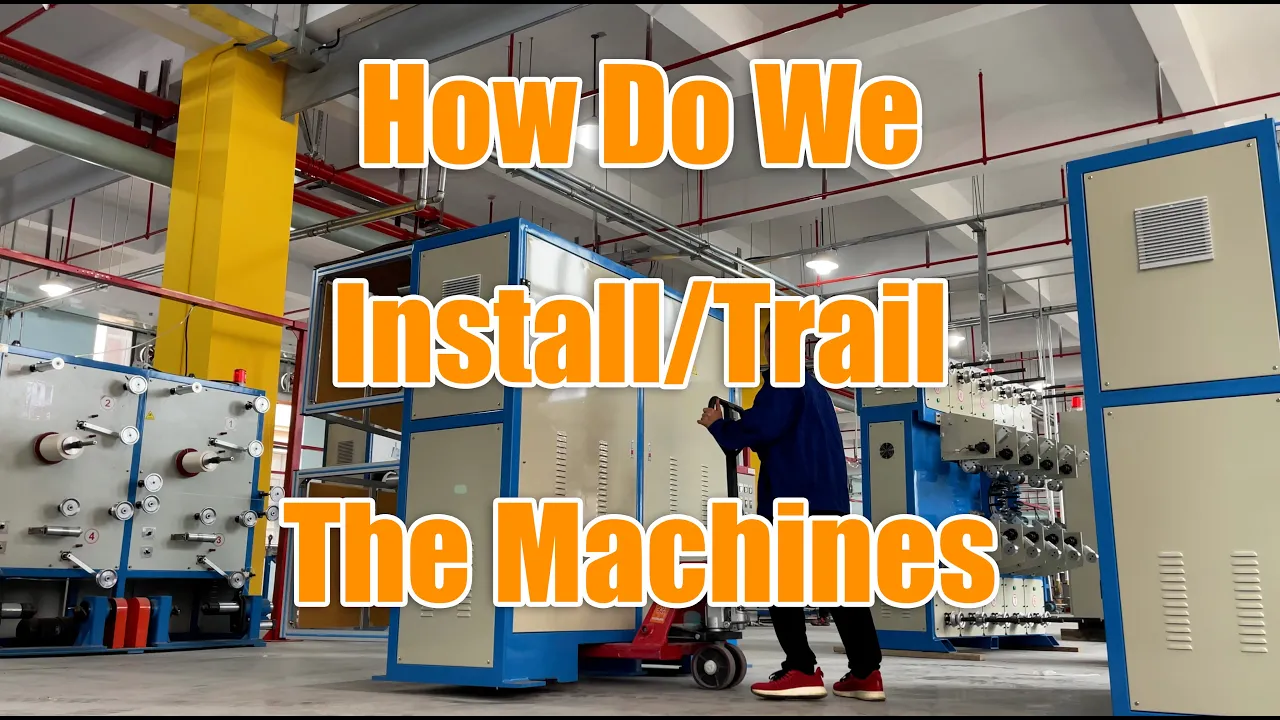
Real HONGKAI installation and trial environment for fiber optic cable production equipment. Final placement follows the approved project layout.
Red flags: Operators must bypass a guard to thread the product, the product path rubs a frame, drain lines can flood an electrical area, reel lifting conflicts with an adjacent unit, or alignment is accepted by visual judgment without the project method.
5. Electrical Safety: Which checks must pass before the production line is energized?
Why it matters: Power-on is a controlled safety gate, not the first troubleshooting step. Supply compatibility, protective bonding, overcurrent protection, control circuits, emergency stops and documentation must be evaluated for the installed machine group. Local legal requirements and the contracted standards remain controlling.
What to ask: Define the competent person, lockout procedure, supply data, short-circuit and protection information, protective-bonding checks, insulation or other required measurements, cabinet inspection, phase and rotation checks, emergency-stop zones, reset behavior, control-voltage checks and test instruments. Require calibration or status evidence for the instruments used. Identify any site modifications and update the drawings before acceptance.
How to verify: Record the installed electrical checks before enabling powered movement, then challenge emergency stops, guards, limit switches and fault responses by the approved test method. IEC 60204-1:2016 with its 2021 amendment covers electrical equipment of machines from the supply connection and includes protective bonding, control-circuit protection, emergency-stop-related requirements and technical documentation.1 The standard reference does not replace local regulation or a project-specific risk assessment.
Red flags: Cabinet doors remain open during uncontrolled start-up, a safety device is bridged to save time, a site wiring change is not added to the diagram, or the SAT record says only “power OK” without the measured checks and responsible person.
6. Dry Commissioning: Do individual units, interlocks and linked controls behave correctly?
Why it matters: Dry commissioning isolates machine and control behavior before expensive fiber, polymer, gel, yarn or cable core is introduced. It should prove direction, manual movement, speed references, dancers, alarms, limits, heating and cooling functions, counters, recipes and coordinated stop behavior. A successful empty run does not prove product quality, but it removes avoidable faults from the material trial.
What to ask: Build a functional test list for every motor, drive, heater, pump, fan, valve, sensor, gauge, dancer, capstan, pay-off, take-up, traverse, alarm and human-machine-interface screen included in the project. Define normal response, fault response, reset condition and retained evidence. Include loss of signal, material absence or line-stop simulations only where the approved method permits them safely.
How to verify: Test units first in permitted manual or inching modes, then test linked operation at controlled conditions. Confirm direction and feedback before increasing speed. Review current and historical alarms, production trends, recipe storage, length counting and coordinated acceleration, deceleration and stop. HONGKAI’s HK-800/12 and HK-90 reference controls include linked PLC operation, alarm history, trend display and recipe functions; the final SAT should test only the functions actually supplied.
Red flags: The team jumps directly to a high-speed empty run, alarm history is cleared before review, one operator verbally confirms every interlock, or the supplier treats a spinning motor as proof that the linked production line is commissioned.
7. Product Trial: Can the line reproduce the agreed cable with traceable evidence?
Why it matters: Product commissioning connects machine functions to saleable cable requirements. The accepted trial must use named materials, tooling, settings, sampling positions and measurement methods. A short display of headline speed cannot replace stable production evidence for the agreed construction.
What to ask: Approve the product drawing, bill of materials, material grades and lots, fiber and reel packages, tooling, process recipe, target operating condition, stabilization rule, sample plan, measuring equipment, cable tests, run length or time when contractually required, and pass or fail criteria. Separate commissioning material from material intended for sale. State who owns the disposition of trial output and nonconforming material.
Cách xác minh: Liên kết từng mẫu với máy, công thức, thời gian, cuộn dây và kết quả đo được. Đối với thiết bị HONGKAI SAT, tập hợp bằng chứng cốt lõi bao gồm vận hành dây chuyền ổn định, kích thước thành phẩm, dữ liệu kiểm tra sản phẩm đã thống nhất và không có cảnh báo nào chưa được giải quyết. Hợp đồng và đặc tả sản phẩm đã phê duyệt phải xác định rõ phương pháp đo lường và giới hạn đạt cho từng phép đo, vì không có giá trị chuẩn chung nào áp dụng cho mọi cấu trúc cáp. So sánh các đồng hồ đo và bộ đếm trực tuyến với phương pháp ngoại tuyến đã thống nhất. Xem xét bằng chứng từ lúc khởi động, vận hành ổn định và cuối ca chạy máy thay vì chỉ lưu giữ mẫu tốt nhất. IEC 60794-1-1:2023 establishes generic optical-cable requirements across geometry, transmission, materials, mechanical and environmental properties, while the buyer’s product specification and applicable test methods decide the actual SAT limits.2
Red flags: Trial material differs from the approved grade, samples have no time or reel traceability, speed is accepted without cable results, or pass criteria are written after the trial.
8. Handover: Are operators, maintenance staff and records ready for controlled production?
Why it matters: A line is not ready if only the visiting engineer knows how to start it, recover from a fault or change a product. Handover must transfer operating knowledge, maintenance responsibilities, backups, spares and unresolved actions to named factory personnel. Training attendance alone does not prove competence.
What to ask: Define separate training for operators, process engineers, maintenance staff and quality personnel. Cover safe start and stop, threading, recipe control, changeover, alarm response, cleaning, lubrication, inspection, sample traceability, backup and restoration, spare-parts identification and escalation. Require final manuals, drawings, software and recipe backups, training records, accepted SAT report, open-item list and responsibility matrix.
Cách xác minh: Yêu cầu nhân viên nhà máy vận hành dây chuyền sản xuất cáp quang dưới sự giám sát, xử lý các tình huống lỗi an toàn được chọn lọc, thực hiện thao tác chuyển đổi đã định sẵn và truy xuất hồ sơ cần thiết. Không giới hạn bàn giao chỉ trong trường hợp khởi động bình thường: hãy xác minh việc chuyển đổi thông số kỹ thuật sản phẩm, khôi phục sau báo động, phản ứng thông thường trước lỗi vận hành, các nhiệm vụ bảo trì định kỳ và bằng chứng cần thiết khi yêu cầu hỗ trợ sau bán hàng trực tuyến. Đối chiếu tất cả phụ tùng thay thế và dụng cụ hiện có. Kết thúc nghiệm thu tại hiện trường (SAT) theo ba nhóm: các hạng mục được chấp nhận, các hành động khắc phục có thời hạn cụ thể và các hạng mục gây cản trở sản xuất. Dây chuyền sản xuất cáp quang chỉ sẵn sàng cho sản xuất có kiểm soát khi sản phẩm thử nghiệm đáp ứng tiêu chuẩn kiểm tra đã thỏa thuận và người vận hành của khách hàng có thể vận hành quy trình một cách bình thường, xử lý các sự cố cơ bản và nhận biết khi nào cần báo cáo cấp cao hơn. Không được che giấu vấn đề gây cản trở sản xuất bên trong chữ ký chung chung “đã hoàn thành chạy thử”.
Red flags: Training covers only normal running, backups remain on the supplier’s laptop, spare parts are unlabelled, drawings do not reflect site changes, or the acceptance signature has no attached open-item list.
Note: A defensible site acceptance test moves from documents and utilities to safety, functions, product evidence and human handover—so production starts from a controlled baseline rather than from memory.
How Does HONGKAI Structure a Project-Specific Commissioning Handover?
HONGKAI bắt đầu với cấu hình máy đã ký, cáp mục tiêu, các giao diện trang web và ma trận chấp thuận đã thống nhất. Một tuyến cáp quang ngoài trời hoàn chỉnh có thể bao gồm các giai đoạn riêng biệt về HK-235 màu, HK-50 ống lỏng, HK-800/12 SZ- xoắn và HK-90 bao ngoài, nhưng mỗi giai đoạn đều được lắp đặt và kiểm chứng dựa trên các chức năng được cung cấp riêng biệt. Các tài liệu tham khảo HONGKAI bao gồm bản vẽ lắp đặt, hướng dẫn vận hành và sơ đồ điện, trong khi hợp đồng cuối cùng xác định các dịch vụ tại trang web, vật liệu thử nghiệm, sự hiện diện và trách nhiệm chấp thuận. Tốc độ sản xuất, thời gian thử nghiệm và giới hạn cáp vẫn được xác định cụ thể theo sản phẩm đã thống nhất và các điều kiện SAT.
The HONGKAI hướng dẫn lập kế hoạch thiết bị cáp quang cho thấy tại sao tuyến đường phải bắt đầu từ cáp hoàn thiện thay vì từ danh sách thiết bị phổ quát. Một nhà máy chỉ thêm lớp phủ thứ cấp nên sử dụng hướng dẫn thông số kỹ thuật dây chuyền sản xuất ống lỏng để khóa các thao tác xử lý sợi, polymer, điền đầy, làm mát, độ dài sợi dư và bằng chứng cuộn trước khi đưa vào vận hành. Một dự án đa giai đoạn cũng nên sử dụng HONGKAI’s phương pháp lập kế hoạch năng lực sản xuất cáp quang để đảm bảo các đầu ra được chấp thuận và các giao diện cuộn không tạo ra điểm nghẽn mới.
Đối với bàn giao, người mua nên yêu cầu một bộ hồ sơ dự án thay vì các thư mục riêng lẻ không thể đối chiếu. Bộ hồ sơ cần liên kết các mục sau:
- ☐ Cấu hình kỹ thuật đã ký và hồ sơ thay đổi
- ☐ Bố cục cuối cùng, bản vẽ lắp đặt và sơ đồ điện
- ☐ Hồ sơ tiện ích và nối đất bảo vệ tại trang web
- ☐ Hồ sơ kiểm tra nhận hàng và lắp đặt
- ☐ Kết quả kiểm tra chức năng, cảnh báo và an toàn
- ☐ Vật liệu, dụng cụ, công thức và mẫu thử đã được phê duyệt
- ☐ Các phép đo sản phẩm được liên kết với thời gian và cuộn
- ☐ Hồ sơ đào tạo, dự phòng, phụ tùng thay thế và bảo trì
- ☐ Báo cáo SAT đã ký với các mục mở chưa giải quyết và đã giải quyết
HONGKAI’s hiện tại hỗ trợ chuỗi bằng chứng này. Dây chuyền tạo màu xác định tài liệu lắp đặt và mạch điện; các dây chuyền ống lỏng và bao ngoài kết hợp đùn, làm mát, căng và điều khiển liên kết; dây chuyền SZ bổ sung các giao diện cấp sợi đa chiều, xoắn, buộc và thu cuộn. Đây là các thực tế cấu hình, không phải bằng chứng cho thấy mọi dự án khách hàng đều sử dụng cùng các tiện ích, điều khiển hoặc bài kiểm tra chấp thuận.
Người mua cũng nên tách riêng việc xác minh sản phẩm khỏi an toàn máy móc. ISO 12100:2010 cung cấp các nguyên tắc đánh giá và giảm thiểu rủi ro xuyên suốt vòng đời máy móc và vẫn được cập nhật sau khi được xác nhận 2022, mặc dù ISO cho thấy bản nháp thay thế đang được phát triển.3 Phải kiểm tra bản hợp đồng, luật địa phương và đánh giá hiện trường đủ năng lực khi thực hiện dự án.
Lưu ý: HONGKAI có thể cung cấp bằng chứng về lắp đặt và điều khiển máy cụ thể, nhưng dự án chỉ kết thúc khi người mua có thể vận hành, đo lường, bảo trì và kiểm toán đường dây cáp quang đã thỏa thuận mà không phụ thuộc vào kiến thức không được tài liệu hóa.
-
IEC 60204-1:2016, An toàn máy móc — Thiết bị điện của máy móc — Phần 1. Trang sản phẩm IEC xác định phiên bản tổng hợp kèm Sửa đổi 1:2021; xác nhận bản hợp đồng và yêu cầu địa phương.↩
-
IEC 60794-1-1:2023, Cáp sợi quang — Tiêu chuẩn chung — Tổng quan. Các tiêu chuẩn cụ thể sản phẩm, thông số khách hàng và phương pháp đã thỏa thuận vẫn cần thiết để chấp nhận cuối cùng.↩
-
ISO 12100:2010, An toàn máy móc — Nguyên tắc chung về thiết kế — Đánh giá và giảm thiểu rủi ro. ISO báo cáo rằng phiên bản đã được xác nhận vào 2022 a và đang được sửa đổi; xác minh trạng thái khi ký hợp đồng.↩