Cable release
Manufacture and release the patch-cord base cable.


- HK-30 buffering and HK-50 simplex / duplex jacketing
- Verified cable structure, dimensions and fiber identification
- Optical and agreed mechanical release records

CABLE MACHINERY

Equipment for optical cable manufacture

Equipment for twisted-pair cable

Machinery for insulated wire and cable
Browse fiber optic cable types

Materials for optical cable production
Complete cable lines, materials, layout and startup support.

Cable manufacture, MPO assembly and final optical testing.

Base cable, connector assembly, polishing and release.
Equipment selection and process planning for network cable.

01FIBER OPTIC PATCH CORD FACTORY SOLUTION
From optical fiber to a tested optical patch cord.
A complete factory solution with equipment, materials, layout and know-how for cable manufacturing and precision connector assembly.
For new factories, existing cable manufacturers and assembly businesses ready to expand.
Plan My FactoryExplore the full process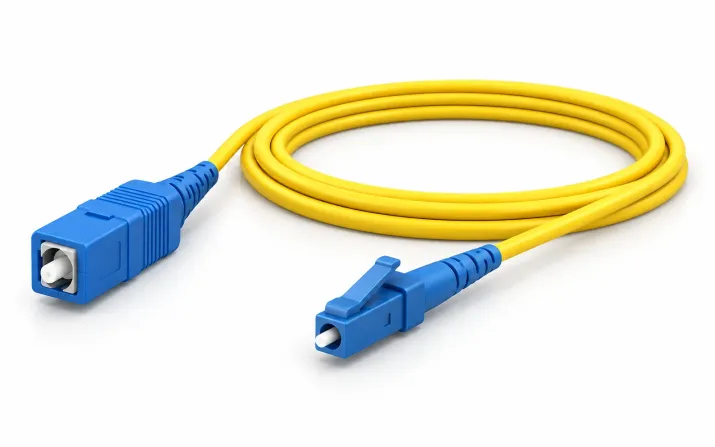
Illustrative reference.
Final scope follows the
approved product.
02INTERACTIVE PROCESS EXPLORER
See what to make, which areas are required, and how each step fits into a complete patch-cord factory.
STAGE 04 / 07
Cut the released cable, preload the required parts and prepare each end without damaging the optical fiber.

28 operations and control points across seven stages. Open a stage for its full scope.
Before production: approve the launch assembly, cable drawing, fiber category and count, connector families at both ends, polish, finished length, duplex mapping and acceptance plan. The signed work instruction controls the exact sequence.
Check input identity, coating and compound compatibility, incoming optical condition and storage.
Payoff → configured preparation → buffer extrusion → cooling → dimensional control → capstan and take-up. Identify each reel.
Set the tight-buffer input, guides, crosshead and tooling for the actual simplex or duplex drawing.
Verify yarn packages, paths and tension against the approved construction.
Material preparation → jacket extrusion → cooling → diameter control → traction, accumulation and take-up. Link all material lots.
Verify the actual cable structure, dimensions, surface and agreed optical results.
Mechanical and environmental tests follow the product agreement and sampling plan. They are separate from connector inspection.
Confirm connector ends, finish, finished length, quantity, labels and tests. Link the reel or purchased-cable lot to the work order.
Include the approved strip/assembly allowance and retain actual sample measurements.
Put required boots, sleeves and other captive parts onto the cable before later steps prevent access. Follow the connector-specific order.
Control exposed length and preserve reinforcement and buffered fiber.
Expose the specified fiber length with a compatible tool and inspect for residue, scratches or breakage.
Use the approved cleaning method, protect the bare fiber and retain piece identity.
Control material identity, preparation, usable life and air removal according to its supplier instruction.
Use the specified needle, dose and verification method; link the batch to the assembly.
Guide the single fiber into its round ferrule. Assemble hardware in the approved order and confirm seating.
Use the specified dies and retain the approved aramid/boot arrangement. Exact position in the route depends on the connector.
Use compatible holders and the qualified time-temperature cycle; retain load, cycle and operator records.
After the approved cure and cooling sequence, use the specified scribing tool without chipping the ferrule. A hand-tool operation is not an extra powered machine.
Verify the SC / LC fixture and the qualified UPC / APC process. Include FC / ST only after variant review.
Control films, pads, load, time and cleaning between stages. Retain consumable and fixture records.
Use compatible cleaning supplies and keep the finished surface protected from recontamination.
Use the correct adapter and agreed criteria. Clean and re-inspect contamination; route damage to controlled disposition.
Agree the connector attributes, instrument, limits and sampling or full-inspection plan separately.
Confirm fiber category, wavelengths, reference cords, adapters, method, direction and limits before testing. Link the raw results to the patch cord.
Check end identification and the ordered A/B fiber relationship. A single-fiber assembly does not need an MPO channel-map test.
Inspect housing, boot, retention and appearance against the control plan. A visual fault locator is supplementary, not an IL / RL replacement.
Fit clean protective caps, keep the agreed bend condition, label the assembly and retain its source, component and test records.
Segregate failed assemblies. Clean and re-inspect contamination; repolish or reassemble only within the approved connector limits. Repeat the affected inspection and optical checks, retaining both original and repeat results. Do not pass a damaged fiber by changing the test limit.
03COMPLETE FACTORY FLOW
Separate manufacturing and assembly areas.
Clear release points. Connected production records.
Manufacture and release the patch-cord base cable.
Complete, test and release finished patch-cord assemblies.


One assembly identity. Keep the link from input fiber reel to finished cable reel, cut length, component lots, connector ends, cure and polishing recipe, inspection images and optical results.
Retain failed and reworked records. An optical pass does not replace the base cable’s own acceptance evidence.
04PROJECT REQUIREMENT SNAPSHOT
The first decision is your launch assembly. It defines the cable construction, connector workcells and evidence needed for release.
Build your project briefThis route covers conventional SC / LC epoxy-and-polish assemblies. FC / ST are project-specific fixture variants; MPO needs its own production route.
05EQUIPMENT BY PRODUCTION STAGE
Complete cable lines, specialist assembly tools and separate release instruments.
Controlled fiber payoff, buffer extrusion, cooling, dimensional measurement, capstan and take-up form one complete production line.
A separate complete line applies aramid reinforcement and the outer jacket to the approved tight-buffered input. Match the simplex or duplex tooling to the cable drawing.
Equipment names open a production-line page or the matching equipment process guide. Select an image for scope and acceptance notes. The illustrated stations require product-matched tooling and accessories. Equipment renders are configuration references, not a customer-delivery record.
06RAW MATERIALS & INITIAL BOM SUPPORT
Plan the cable inputs, connector components and process consumables together, so the first production run has a complete material path.
Define the fiber, reinforcement and compounds before choosing the final cable-making configuration.
Explore cable materialsCategory, coating compatibility, incoming condition and reel identity.
Separate material grades, drying, processing and storage instructions.
Construction, linear density, reel package and controlled application.
Illustrative material references. Exact parts, grades and consumables follow the approved product and process.
Cable drawing, initial material BOM, supplier matching and trial-run material quantities.
07FACTORY LAYOUT & UTILITIES
Connect material flow. Separate heavy cable-making work from precision connector assembly.
Plan machine lengths, service access, reel routes, lifting and safe aisles around the confirmed equipment.


Define cleanliness, handling, ESD where applicable and storage conditions from the selected process. No generic cleanroom class is assumed.
Voltage, frequency, connected loads and protection.
Line cooling, water quality and recirculation.
Compressed air, ventilation and process-specific extraction.
Workstations, labels, records and result-file storage.
A final layout follows your building dimensions, selected machinery and safety review. These workflow zones are not a construction drawing.
08PHASED FACTORY CONFIGURATION
A complete factory can be planned in phases. Keep one approved launch product and a clear acceptance boundary at each step.
Plan HK-30 tight buffering, HK-50 cable manufacture and the complete conventional connector-assembly route together.
Start from purchased optical fiber. Confirm all interfaces and acceptance responsibilities before quotation.
Plan My Factory09PROJECT SCOPE & RESPONSIBILITY
HONGKAI engineers the cable-making route and coordinates specialist patch-cord assembly, inspection and test equipment. The signed scope defines who supplies, proves and supports each part.
10EXECUTION, FAT & HANDOVER
Milestones are agreed after scope review. Each step has a decision and a deliverable, not a generic lead-time promise.
Launch product, connector specification, target output and acceptance plan.
Matched lines, workcells, BOM, layout and responsibility matrix.
Run the purchased route at FAT and retain the linked evidence.
Check site readiness, install and commission the defined scope.
Train operators, repeat the agreed checks and close open items.
Follow one identified launch assembly from the source cable reel to its final optical results. Include cable-stage and back-end acceptance in the same project plan.
Read the complete process guideCable drawing, connector system, connector specification and test limits.
Cable results, cure record, end-face images, geometry when specified and optical test files.
Repeatable work instructions, recipe control, cleaning, test setup and permitted rework.
Request an agreed sample run and evidence package for the scope you are purchasing.
Images on this page are presentation references. They are not a claim that a specific customer factory has been delivered.
11KNOWLEDGE & DECISION SUPPORT
12FREQUENTLY ASKED QUESTIONS
Answers to the questions that change a project’s scope.
The full route includes tight buffering, simplex / duplex cable manufacture, cable release, connector assembly, polishing, inspection and optical testing. The signed project scope defines which parts are supplied and which are buyer-provided.
Yes. Qualified purchased cable can feed the assembly-first route. HK-50 can be added when you purchase tight-buffered fiber, and HK-30 can bring buffering in house. Each phase still needs its own input approval and release records.
SC and LC are the main conventional epoxy-and-polish scope. FC and ST can be reviewed as fixture and tooling variants. The connector system, cable construction and finish must be approved for each launch product.
No. Multi-fiber MPO assemblies need a separately matched ferrule, preparation, polishing, inspection, mapping and test scope. Use the separate MPO factory solution for that project.
Do not assume it. Match the connector, ferrule geometry, fixture, films and recipe to the specified finish. A machine name alone does not prove support for every connector or polish.
Define the fiber category, wavelengths, reference method, test direction, adapters, reference cords, acceptance limits and calibration ownership. Retain results against the assembly identity. Check duplex mapping when applicable.
HONGKAI supplies its defined cable-making scope and integrates specialist back-end equipment. The proposal separates HONGKAI-manufactured, specialist-integrated and buyer-supplied items, including training and after-sales responsibility.
Start with launch connector pairs, simplex or duplex construction, fiber category, UPC / APC finish, length range and output targets. Add factory country, shifts, available floor space, utilities and existing equipment. Undecided fields can be reviewed during engineering.
13YOUR PATCH CORD FACTORY PROJECT
Build a project brief around your patch-cord product, production target and site. Leave undecided specifications open for engineering review.
Review your brief before sending it to HONGKAI. Nothing is sent automatically.
Your cable drawing, connector specification and factory floor plan. You can share these during the technical follow-up.
 English English Русский हिन्दी 한국어 বাংলা Bahasa Indonesia Tiếng Việt മലയാളം Português do Brasil العربية فارسی