




A fiber optic cable factory owner should not treat installation as finished when every machine is on the floor and can be switched on. The real decision is whether the complete line is safe, correctly connected, able to reproduce the agreed cable and supported by records that the buyer can use after the supplier leaves.
A fiber optic cable production line installation should close five evidence gaps: site readiness, machine condition, electrical and mechanical safety, controlled line functions, and product acceptance. The buyer should approve a written sequence from receipt inspection through dry running, material trials, site acceptance testing and handover. Each result must be linked to the contract configuration, cable drawing, approved materials and named measuring method. A signed open-item list is more useful than a verbal promise that commissioning is complete.
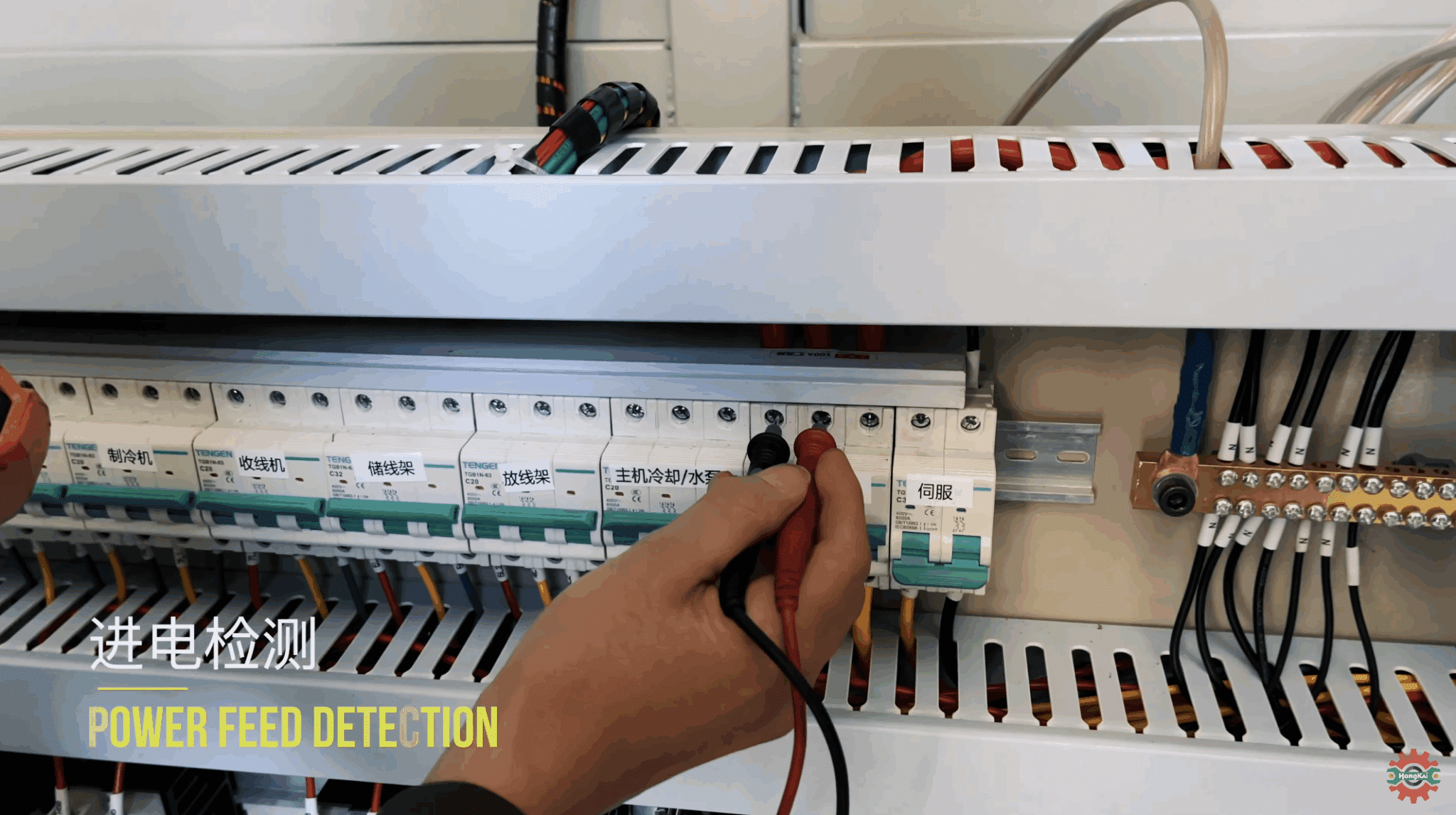
Real HONGKAI workshop photo: electrical power-feed inspection is completed before equipment delivery. The customer site must repeat the checks required by the project documents and local rules.
Installation, commissioning and acceptance are related but different. Installation places and connects the equipment. Commissioning proves the machine functions, interlocks and linked control. A site acceptance test, or SAT, then checks the agreed output and documents at the buyer’s plant. Controlled production should begin only after the remaining risks and responsibilities are visible.
The eight decisions below turn those stages into an auditable project plan. They apply whether the factory is adding one loose-tube line or coordinating coloring, secondary coating, SZ stranding and sheathing as a complete route.
What Should a Buyer Complete Before Accepting a Fiber Optic Cable Line?
A buyer should complete eight connected acceptance decisions: document control, site readiness, receipt inspection, physical installation, electrical and safety verification, dry commissioning, product trials, and training with final handover. Every decision needs an owner, input, pass criterion and retained record. HONGKAI machine drawings and control documents can define the supplied equipment, but the buyer must also connect them to local utilities, local safety obligations and the approved cable specification. Acceptance should move from low-risk checks to energized functions and then to material production.
1. Project Baseline: Which documents control the installation and acceptance?
Why it matters: A commissioning team cannot resolve a disagreement if the contract, machine configuration, layout, cable drawing and test method describe different scopes. The document baseline decides what was supplied, what the buyer must prepare and what result closes the project. HONGKAI reference configurations for HK-235 coloring, HK-50 loose-tube, HK-800/12 SZ stranding and HK-90 sheathing include installation drawings, operating instructions and electrical diagrams, but each project must confirm the final revision set.
What to ask: Create one controlled register for the signed technical configuration, equipment list, layout, foundation and installation drawings, electrical diagrams, utility schedule, software or recipe backup, cable and tube drawings, approved raw materials, factory acceptance records, SAT matrix, manuals, spare parts and open items. Name the current revision and approver for every document. Record any agreed difference between the factory acceptance test and the site acceptance test.
How to verify: Hold a document review before unloading or energizing the fiber optic cable production line. Trace every delivered unit, option, sensor, tool and interface to the signed scope. Mark missing or revised items in a dated action list instead of accepting an informal explanation. The HONGKAI sales-contract reference also makes the technical configuration an attachment and assigns trial-material responsibility to the buyer, so the final contract must state material quantity, specification, delivery point and unused-material disposition.
Red flags: Drawings arrive after machine placement, the SAT uses a different cable from the purchase specification, software and recipes have no backup, or the team cannot identify which document revision is controlling.
2. Site Readiness: Are space, foundations and utilities ready before unloading?
Why it matters: A line can be mechanically complete and still fail at the customer site because the floor, access route, electrical supply, cooling water, compressed air, ventilation or material path was not prepared for the exact configuration. Utility requirements are not interchangeable across coloring, loose-tube, stranding and sheathing equipment. A buyer should freeze the site interface before shipment rather than improvise connections during commissioning.
ما يجب سؤاله: تأكيد مسار التفريغ، نقاط الرفع، تحميل الأرضية، خط مركز الآلة، تفاصيل الأساس أو التثبيت، ممرات المشغل، مساحة الصيانة، التعامل مع البكرات، تخزين المواد الخام، فصل النفايات، ومسار عينات المختبر. قم بإنشاء مصفوفة مرافق تحدد الطاقة المطلوبة، التأريض الوقائي، الهواء المضغوط، مياه العملية، مياه التبريد، التصريف، الاستخراج، النيتروجين أو وسائل أخرى فقط في الحالات التي تتطلبها التكوينات الموقعة. تتحقق مراجعات التثبيت HONGKAI بشكل خاص من الهواء المضغوط، إمدادات المياه، التصريف، ومسار رفع ووصول واضح قبل التفريغ؛ هذه الفحوصات الأربعة هي معيار جاهزية المشروع، ولا تُعد بديلاً عن متطلبات المرافق والتصميم الموقعة بالكامل. شمل موقع التوصيل، الجودة، الضغط أو السعة، الجهة المسؤولة، وتاريخ الجاهزية دون نسخ القيم من سطر آخر.
How to verify: Compare the actual site with the approved layout before the equipment is moved into final position. Inspect connection points and record measured utility conditions against the project requirements. HONGKAI’s current loose-tube reference includes hot and chilled water, compressed air and a coordinated electrical supply, while the coloring reference may also require a nitrogen interface for the agreed UV-curing process. The project configuration, not a generic factory checklist, controls the final list.
Red flags: The installer discovers an incompatible voltage after placement, hoses or cables cross access aisles, water supply and return are confused, reel handling blocks emergency access, or the line is energized before protective bonding and supply checks are complete.
3. Receipt Condition: Did every delivered unit arrive complete and undamaged?
لماذا يهم ذلك: الأضرار الناتجة عن الشحن، وقطع الغيار المفقودة، والملصقات غير المتطابقة أسهل في حلها قبل التجميع. بمجرد التخلص من التغليف وتوصيل الوحدات، يصبح من الصعب تحديد المسؤولية. يجب على المشتري فصل حالة النقل عن أداء الآلة وتسجيل كليهما.
ما الذي يجب السؤال عنه: احصل على قائمة التعبئة، وقائمة المعدات، وسجلات التسلسل أو التعرف، وقائمة الملحقات والأدوات، وقائمة قطع الغيار، وخطة تحميل الحاويات، وتعليمات الحفظ. حدد من يفتح كل حزمة، ومن يصور الحالة، وكيف يتم الإبلاغ عن الضرر أو النقص. احتفظ بحماية الرطوبة والدعائم المؤقتة في مكانها حتى تسمح تعليمات المُصنِّع بإزالتها.
كيفية التحقق: صوّر التغليف قبل فتحه، وكل وحدة من الآلة بعد فتحها. قارن لوحات الأسماء، والخزائن، وأجهزة التفريغ، وأجهزة التجميع، والمستشعرات، والأدوات، والكابلات، والكتيبات، وقطع الغيار، والأدوات المقدمة مع القائمة الموقعة. دور أو انقل فقط الأجزاء التي تسمح بها الكتيبات أثناء فحص الاستلام. سجّل الضرر، والتآكل، والتوصيلات المفككة، والأسطح الملوثة، والعناصر المفقودة مع الموقع والمالك المُسؤول عن التصحيح.
علامات التحذير: يتم التخلص من الصناديق قبل المطابقة، ويوقع الفريق على سجل تسليم كامل بناءً على عد التغليف وحده، أو لا ترتبط الأدوات بالمنتج المستهدف، أو تبقى أقفال الشحن مثبتة أثناء الاختبار المُشغّل.
4. التركيب المادي: هل المحاذاة، والحماية، والواجهات صحيحة قبل توصيل التيار؟
لماذا يهم ذلك: آلات الكابلات هي نظام مترابط. يمكن أن يؤدي توجيه غير موضع، أو خط وسط غير متساوٍ، أو أساس غير مستقر، أو مسار دوران خاطئ، أو مُحرك مقيد إلى إنشاء توتر ومشاكل في الجودة تبدو وكأنها أعطال تحكم. لذلك يجب أن يتحقق التركيب من الوحدات الفردية ومسار المنتج المستمر.
ما الذي يجب السؤال عنه: اطلب قائمة تحقق للوضع والتجميع لكل وحدة تغطي ارتفاع المركز، وخط المركز، والمستوى، والتثبيت، والمشابك، والحماية، ولوحات الوصول، واتجاه البكرات، ومحاذاة الدليل والكابستن، ووصلات الماء والهواء، ومسار التصريف، والتشحيم، وإزالة أقفال الشحن، والنظافة. حدد الطريقة المقبولة والتسامح المسموح به في وثائق المشروع حيث يكون القيمة مهمة؛ لا تبتكر تسامح محاذاة عالميًا.
كيفية التحقق: قم بمسح مسار المواد بالكامل من نقطة التفريغ إلى نقطة التجميع باستخدام الرسم المعتمد. بالنسبة لتثبيت HONGKAI، فإن التسلسل القياسي للمشروع هو فك تغليف المعدات، ووضع كل وحدة بالترتيب والموقع المعتمدين، وتوصيل الوحدات بخزانة التحكم الرئيسية وفقًا للرسومات الكهربائية، وتوصيل التغذية الداخلة بالخزانة الرئيسية، وإكمال توصيلات المياه المحددة. اختبر الوحدات الفردية قبل التشغيل المتصل، وافحص مسار المنتج الكامل وخط المركز الأفقي، وقم بإجراء التعديلات النهائية للمحاذاة، ثم ثبت فقط أقفال التمدد. تأكد من أن الدلائل، القوالب، المحاور، المذبذبات، المستشعرات، وحركة التجميع يمكنها التحرك عبر مداها المقصود دون أي تداخل. افحص الحواجز ونقاط الوصول قبل تحميل مواد التجربة. تتبع تجارب المنتج وضبط المعلمات الدقيقة بعد التثبيت الميكانيكي؛ تبقى الفحوصات الكهربائية والمرافق الدقيقة محددة حسب المشروع. بالنسبة لمسار خارجي كامل، كرر الفحص بشكل منفصل للصبغ، إنتاج الأنابيب المفتوحة، SZ التلفيف، والتغليف لأن كل عملية لها بكرات ومناطق شد وأنظمة مساعدة مختلفة.

بيئة تركيب وتجربة HONGKAI حقيقية لمعدات إنتاج كابلات الألياف البصرية. يتم التثبيت النهائي وفقًا لتخطيط المشروع المعتمد.
علامات التحذير: يجب على المشغلين تجاوز الحماية لتمرير المنتج، أو يلامس مسار المنتج الإطار، أو يمكن أن تغمر خطوط التصريف منطقة كهربائية، أو يتعارض رفع البكرة مع وحدة مجاورة، أو تُقبل المحاذاة بالتقدير البصري دون الطريقة المحددة في المشروع.
5. السلامة الكهربائية: ما هي الفحوصات التي يجب اجتيازها قبل تزويد خط الإنتاج بالطاقة؟
لماذا يهم ذلك: توصيل التيار هو بوابة أمان مُحكمة، وليس أول خطوة في استكشاف الأعطال. يجب تقييم توافق التغذية، والتوصيل الوقائي، وحماية التيار الزائد، ودوائر التحكم، وإيقاف الطوارئ، والوثائق بالنسبة لمجموعة الآلات المثبتة. تظل المتطلبات القانونية المحلية والمعايير المتعاقد عليها مُحكمة.
ما الذي يجب السؤال عنه: حدد الشخص المخول، وإجراء إيقاف التشغيل، وبيانات التغذية، ومعلومات القصر والحماية، وفحوصات التوصيل الوقائي، والقياسات المطلوبة للعزل أو غيرها، وفحص الخزانة، وفحوصات الطور والدوران، ومناطق إيقاف الطوارئ، وسلوك إعادة الضبط، وفحوصات جهد التحكم، وأدوات الاختبار. اطلب دليل المعايرة أو الحالة للأدوات المستخدمة. حدد أي تعديلات في الموقع وحدّث الرسومات قبل القبول.
كيفية التحقق: سجّل فحوصات الكهرباء المثبتة قبل تمكين الحركة المُشغّلة، ثم اختبر إيقافات الطوارئ، والحماية، وحدود التحديد، واستجابات الأعطال باستخدام طريقة الاختبار المعتمدة. IEC 60204-1:2016 مع 2021 amendment يغطي المعدات الكهربائية للآلات من نقطة توصيل التغذية ويشمل التوصيل الوقائي، وحماية دوائر التحكم، والمتطلبات المتعلقة بإيقاف الطوارئ، والوثائق الفنية.1 مرجع المعيار لا يستبدل اللوائح المحلية أو تقييم المخاطر الخاص بالمشروع.
علامات التحذير: تظل أبواب الخزانة مفتوحة أثناء بدء التشغيل غير المُتحكم، أو يتم تجاوز جهاز أمان لتوفير الوقت، أو لا يُضاف تغيير في التوصيلات في الموقع إلى الرسم، أو يقول سجل SAT فقط “الطاقة OK” دون الفحوصات المقاسة والشخص المسؤول.
6. التشغيل الجاف: هل تتصرف الوحدات الفردية، والربطات، والتحكمات المترابطة بشكل صحيح؟
Why it matters: Dry commissioning isolates machine and control behavior before expensive fiber, polymer, gel, yarn or cable core is introduced. It should prove direction, manual movement, speed references, dancers, alarms, limits, heating and cooling functions, counters, recipes and coordinated stop behavior. A successful empty run does not prove product quality, but it removes avoidable faults from the material trial.
What to ask: Build a functional test list for every motor, drive, heater, pump, fan, valve, sensor, gauge, dancer, capstan, pay-off, take-up, traverse, alarm and human-machine-interface screen included in the project. Define normal response, fault response, reset condition and retained evidence. Include loss of signal, material absence or line-stop simulations only where the approved method permits them safely.
How to verify: Test units first in permitted manual or inching modes, then test linked operation at controlled conditions. Confirm direction and feedback before increasing speed. Review current and historical alarms, production trends, recipe storage, length counting and coordinated acceleration, deceleration and stop. HONGKAI’s HK-800/12 and HK-90 reference controls include linked PLC operation, alarm history, trend display and recipe functions; the final SAT should test only the functions actually supplied.
Red flags: The team jumps directly to a high-speed empty run, alarm history is cleared before review, one operator verbally confirms every interlock, or the supplier treats a spinning motor as proof that the linked production line is commissioned.
7. Product Trial: Can the line reproduce the agreed cable with traceable evidence?
Why it matters: Product commissioning connects machine functions to saleable cable requirements. The accepted trial must use named materials, tooling, settings, sampling positions and measurement methods. A short display of headline speed cannot replace stable production evidence for the agreed construction.
What to ask: Approve the product drawing, bill of materials, material grades and lots, fiber and reel packages, tooling, process recipe, target operating condition, stabilization rule, sample plan, measuring equipment, cable tests, run length or time when contractually required, and pass or fail criteria. Separate commissioning material from material intended for sale. State who owns the disposition of trial output and nonconforming material.
كيفية التحقق: ربط كل عينة بالآلة، الوصفة، الوقت، البكرة، والنتيجة المقاسة. بالنسبة لـ HONGKAI SAT، فإن مجموعة الأدلة الأساسية هي التشغيل المستقر للخط، أبعاد المنتج النهائي، بيانات اختبار المنتج المتفق عليها، وعدم وجود إنذارات غير محلولة. يجب أن يحدد العقد ومواصفات المنتج المعتمدة كل طريقة قياس وحد أقصى للقبول لأن لا توجد قيمة عالمية تنطبق على كل بنية كابل. قارن المقاييس والعدادات عبر الإنترنت مع الطريقة غير المتصلة المتفق عليها. راجع أدلة التشغيل الأولي، التشغيل المستقر، ونهاية التشغيل بدلاً من الاحتفاظ بالعينة الأفضل فقط. IEC 60794-1-1:2023 establishes generic optical-cable requirements across geometry, transmission, materials, mechanical and environmental properties, while the buyer’s product specification and applicable test methods decide the actual SAT limits.2
Red flags: Trial material differs from the approved grade, samples have no time or reel traceability, speed is accepted without cable results, or pass criteria are written after the trial.
8. Handover: Are operators, maintenance staff and records ready for controlled production?
Why it matters: A line is not ready if only the visiting engineer knows how to start it, recover from a fault or change a product. Handover must transfer operating knowledge, maintenance responsibilities, backups, spares and unresolved actions to named factory personnel. Training attendance alone does not prove competence.
What to ask: Define separate training for operators, process engineers, maintenance staff and quality personnel. Cover safe start and stop, threading, recipe control, changeover, alarm response, cleaning, lubrication, inspection, sample traceability, backup and restoration, spare-parts identification and escalation. Require final manuals, drawings, software and recipe backups, training records, accepted SAT report, open-item list and responsibility matrix.
كيفية التحقق: اجعل موظفي المصنع يشغلون خط إنتاج كابلات الألياف البصرية تحت المراقبة، ويستجيبون لسيناريوهات الأعطال الآمنة المختارة، ويؤدون عملية تغيير محددة، ويسترجعون السجلات المطلوبة. لا تقتصر التسليم على التشغيل العادي: تحقق من تغيير مواصفات المنتج، استعادة الإنذارات، الاستجابات الروتينية للأخطاء التشغيلية، مهام الصيانة الروتينية، والأدلة المطلوبة عند طلب الدعم ما بعد البيع عبر الإنترنت. قم بمطابقة جميع قطع الغيار والأدوات المادية. أغلق SAT في ثلاث فئات: البنود المقبولة، الإجراءات التصحيحية المؤرخة، والبنود التي تمنع الإنتاج. يكون خط إنتاج كابلات الألياف البصرية جاهزًا للإنتاج المُتحكم فيه فقط عندما يلبي منتج التجربة معيار الاختبار المتفق عليه، ويمكن لمشغل العميل تشغيل العملية بشكل طبيعي، ومعالجة المشكلات الأساسية، والتعرف على متى يكون التصعيد مطلوبًا. لا تخفي أي مشكلة تمنع الإنتاج داخل توقيع عام “التشغيل تم إكماله”.
Red flags: Training covers only normal running, backups remain on the supplier’s laptop, spare parts are unlabelled, drawings do not reflect site changes, or the acceptance signature has no attached open-item list.
Note: A defensible site acceptance test moves from documents and utilities to safety, functions, product evidence and human handover—so production starts from a controlled baseline rather than from memory.
How Does HONGKAI Structure a Project-Specific Commissioning Handover?
HONGKAI begins with the signed machine configuration, target cable, site interfaces and agreed acceptance matrix. A complete outdoor fiber optic cable route may include separate HK-235 coloring, HK-50 loose-tube, HK-800/12 SZ-stranding and HK-90 sheathing stages, but each stage is installed and proven against its own supplied functions. HONGKAI reference documents include installation drawings, operating instructions and electrical diagrams, while the final contract defines site services, trial materials, attendance and acceptance responsibilities. Production speed, trial duration and cable limits remain specific to the agreed product and SAT conditions.
The HONGKAI دليل تخطيط معدات كابلات الألياف البصرية يوضح لماذا يجب أن تبدأ المسار من الكابل النهائي وليس من قائمة معدات عالمية. يجب على المصنع الذي يضيف فقط طلاء ثانوي استخدام دليل مواصفات خط إنتاج الأنابيب الفضفاضة لتأمين معالجة الألياف، البوليمر، الحشو، التبريد، طول الألياف الزائدة، وسجلات اللفة قبل التشغيل. كما يجب على المشروع متعدد المراحل استخدام HONGKAI’s طريقة تخطيط قدرة إنتاج الألياف البصرية بحيث لا تخلق المخرجات المقبولة وواجهات اللفة عقدة جديدة.
لأغراض التسليم، يجب على المشتري طلب ملف مشروع واحد بدلاً من مجلدات منفصلة لا يمكن مطابقتها. يجب أن يربط الملف العناصر التالية:
- ☐ تسجيل التكوين الفني الموقع والتعديلات
- ☐ التخطيط النهائي، رسومات التثبيت والمخططات الكهربائية
- ☐ سجلات المرافق الميدانية والربط الوقائي
- ☐ سجلات استلام وفحص التثبيت
- ☐ نتائج الاختبارات الوظيفية والإنذار والسلامة
- ☐ المواد المقبولة، الأدوات، الوصفات العينات التجريبية
- ☐ قياسات المنتج المرتبطة بالوقت واللفة
- ☐ سجلات التدريب، النسخ الاحتياطية، قطع الغيار والصيانة
- ☐ تقرير SAT الموقع مع البنود المفتوحة المحظورة وغير المحظورة
تدعم مراجع الآلات الحالية لـ HONGKAI سلسلة الأدلة هذه. يحدد خط التلوين وثائق التثبيت والدوائر؛ تجمع خطوط الأنابيب الفضفاضة والتشييد بين البثق، التبريد، التوتر والتحكم المرتبط؛ تضيف خط SZ واجهات متعددة للإطلاق، التلفيف، التثبيت والالتقاط. هذه حقائق تكوين، وليست دليلاً على أن كل مشروع عميل يستخدم نفس المرافق أو التحكم أو اختبارات القبول.
يجب على المشتري أيضًا فصل التحقق من المنتج عن سلامة الآلات. ISO 12100:2010 يوفر مبادئ تقييم المخاطر وتقليلها عبر دورة حياة الآلات، وظل محدثًا بعد تأكيده في 2022، على الرغم من أن ISO يظهر مشروع بديل قيد التطوير.3 يجب التحقق من الإصدار المتعاقد عليه، والقانون المحلي، وتقييم الموقع المختص عند تنفيذ المشروع.
ملاحظة: يمكن لـ HONGKAI توفير أدلة التركيب والتحكم الخاصة بالآلة، لكن المشروع يُغلق فقط عندما يستطيع المشتري تشغيل وقياس وصيانة ومراجعة خط كابل الألياف البصرية المتفق عليه دون الاعتماد على معرفة غير موثقة.
-
IEC 60204-1:2016، سلامة الآلات — المعدات الكهربائية للآلات — الجزء 1. تحدد صفحة المنتج IEC الإصدار المُدمج مع التعديل 1:2021؛ تأكد من إصدار العقد والمتطلبات المحلية.↩
-
IEC 60794-1-1:2023، كابلات الألياف البصرية — المواصفات العامة — عامة. تظل المعايير الخاصة بالمنتج، ومواصفات العميل، والطرق المتفق عليها ضرورية للقبول النهائي.↩
-
ISO 12100:2010، سلامة الآلات — المبادئ العامة للتصميم — تقييم المخاطر وتقليلها. تشير ISO إلى أن الإصدار تأكيد في 2022 a وهو قيد المراجعة؛ تحقق من الحالة عند التعاقد.↩

 English
 हिन्दी
 فارسی