










Lini Produksi Tabung Longgar
Secondary coating · Manual & semi-automatic reel change
Menghasilkan elemen loose-tube yang digunakan dalam kabel optik tipe central-tube dan stranded. Tinjau penanganan serat, ekstrusi tabung, pendinginan, dan penggulungan sebagai satu proses terkoordinasi, lalu bandingkan pergantian reel manual dengan konfigurasi pergantian reel semi-otomatis HK-50 a dan HK-60.
- INPUT
- Approved fibers, tube polymer and specified filling system
- QUALIFIED OUTPUT
- Loose tube on the confirmed output package
- CORE PROCESS
- Pay off → apply specified filling / water blocking → extrude → cool → measure → take up
- APPLICATION
- Central-tube and stranded loose-tube cable routes
Scope boundary: this page covers secondary coating only. Fiber coloring, cable-core stranding, armoring and final sheathing remain separate stages unless included in a wider written proposal.
One process family. Four different reasons to configure it.
The equipment family is selected from the cable route, material path, output package and factory interface—not from a model number alone.
Form one qualified loose tube for an approved central loose-tube cable construction.
Confirm the tube construction, strength-member arrangement and downstream sheathing interface.
Prepare multiple loose tubes for the following SZ core-forming stage.
Confirm tube quantity, fillers, central member and the package handed to stranding.
Replace or extend one part of an operating secondary-coating line.
Document retained equipment, mechanical interfaces, signals, line direction and ownership.
Plan a complete loose-tube workshop around product and factory conditions.
Review materials, packages, utilities, layout, testing and operator workflow together.
Define the handoff before defining the machine.
The same visible line can represent different supply boundaries. The proposal should make each responsibility explicit.
Buyer provides
- Approved cable and loose-tube drawings
- Optical-fiber specification and supply package
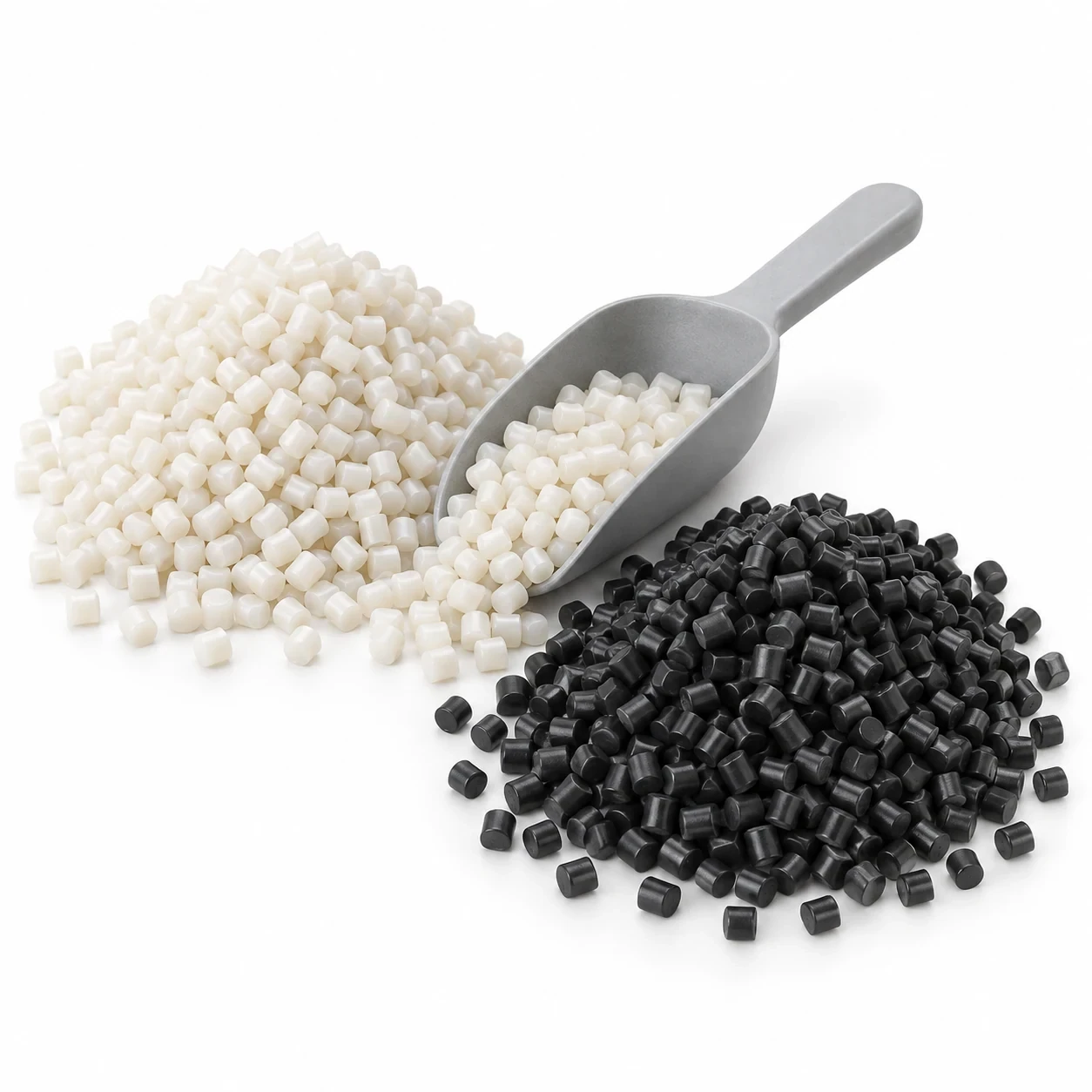
- Tube polymer, masterbatch and filling requirements
- Target output reel or package
- Tata letak pabrik, utilitas, dan peralatan yang dipertahankan
- Metode pengujian produk dan kriteria penerimaan
HONGKAI configures
- Modul pengeluaran dan penanganan serat
- Pengisian atau antarmuka penghalang air yang ditentukan
- Persiapan material, ekstrusi, dan cakupan perkakas
- Pendinginan, pengukuran, traksi, dan sinkronisasi
- Susunan penanganan gulungan secara manual atau semi-otomatis
- Tata letak referensi, kontrol, interlock, dan rencana FAT
Jointly confirm
- Kompatibilitas material dan perkakas
- Geometri tabung dan jendela produksi
- Metode pengendalian dan pengujian panjang serat berlebih
- Urutan penggantian gulungan dan gangguan yang diizinkan
- Inklusi, eksklusi, dan penyerahan ke hilir
- Sampel FAT, bukti penerimaan, dan layanan
Pilih cara jalur menangani gulungan berikutnya.
Manual reel change uses the FTTH drop-cable-style dual-axis take-up. HK-50 and HK-60 share the same semi-automatic take-up. Compare operator tasks and equipment-assisted steps here, then review each complete line's extrusion, cooling and production requirements separately.
Explore the equipment behind each process.
Select a numbered marker or a module below to locate its equipment in the complete line and view the matching 3D detail. All equipment details open here, without leaving the page.

01 Bahasa Indonesia: Multi-position fiber pay-off racksLine entrance · the two fiber pay-off racks
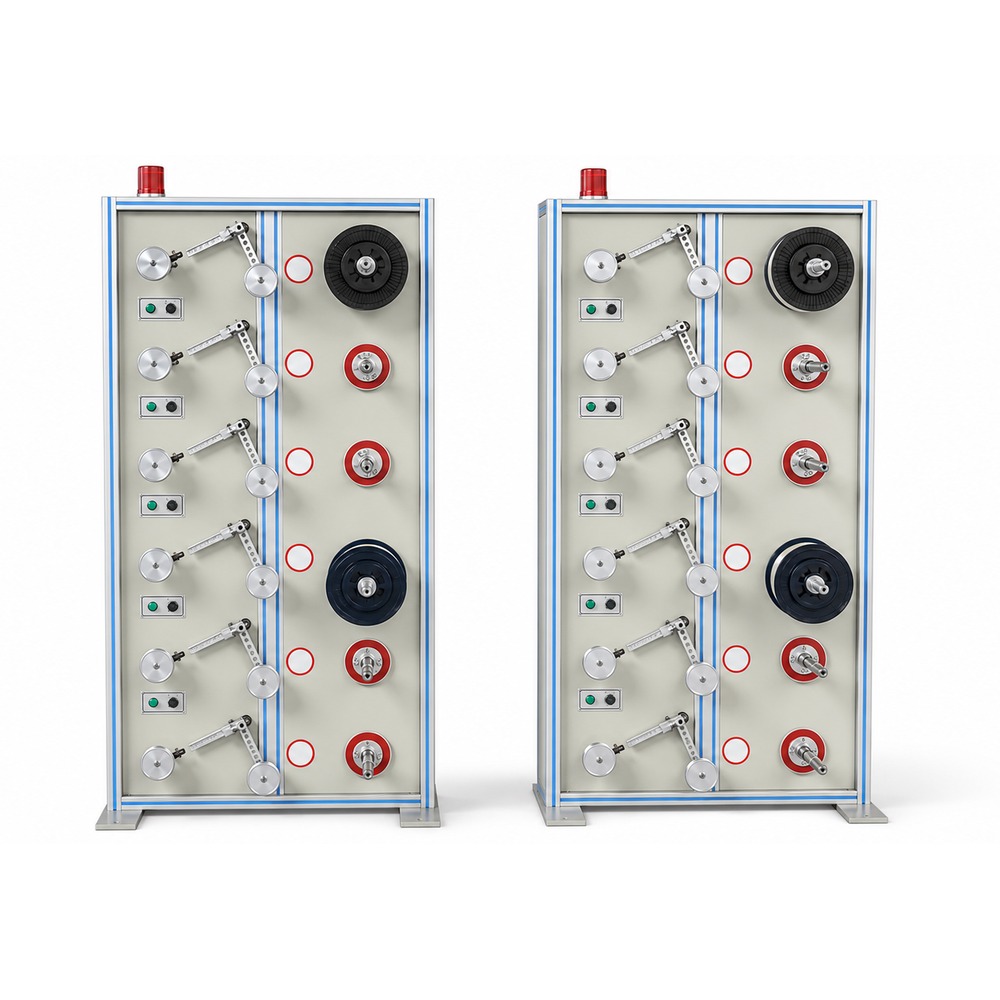
12-head pay-off assembly · proposal equipment reference, not the total line quantity
Multi-position fiber pay-off racks
The rack group at the line entrance feeds optical fibers toward extrusion. The detail shows the proposal's 12-head pay-off assembly; total rack quantity, package count, tension control and fiber routing follow the approved tube construction.
Konfirmasi jumlah serat, dimensi gulungan input, dan persyaratan tegangan.
Selected module 01: Multi-position fiber pay-off racks. Line entrance · the two fiber pay-off racks.
Reference architecture: ten process responsibilities do not mean ten separate machines. Solid outlines locate visible equipment; the dashed outline marks an interface that is not separately resolved. Final hardware and layout follow the approved configuration.
Compare structure, operation and production requirements.
Use the same product and acceptance conditions to compare all three configurations. Rated speed, stable running speed and net production output are different values; request each with its stated trial conditions.
Swipe across the table to compare all three configurations.
| Review item | ManualOperator-managed change | HK-50 ReferenceSemi-automatic change reference | HK-60 ReferenceSemi-automatic change reference |
|---|---|---|---|
| Take-up arrangement | FTTH-style dual-axis take-up with operator-managed reel change | Shared semi-automatic take-up — same arrangement as HK-60 | Shared semi-automatic take-up — same arrangement as HK-50 |
| Changeover approach | Operator-managed reel replacement | Define operator tasks and assisted transfer steps for HK-50 | Define operator tasks and assisted transfer steps for HK-60 |
| Continuity & accumulation | Confirm whether a controlled stop is acceptable | Define storage, transfer and permitted interruption together | Size storage and transfer for the reviewed production requirement |
| Extrusion & cooling | Pilih dari gambar tabung dan material | Confirm the HK-50 screw, tooling and cooling configuration | Confirm the HK-60 screw, tooling and cooling configuration separately |
| Kecepatan lini & output | Assess stable running plus reel-change and restart time | Quote running speed and net output for the specified product | Quote its own operating window; do not reuse HK-50 values |
| Rentang tabung & gulungan | Confirm tube OD, wall thickness, fiber count and output reel | Konfirmasi rentang tabung, dimensi gulungan, dan kompatibilitas transfer | Konfirmasi rentang tabung, dimensi gulungan, dan kompatibilitas transfer |
| Operator tasks | Reel replacement, restart and quality checks | Persiapan, pelepasan, pengisian ulang, dan pemulihan gangguan reel | Persiapan, pelepasan, pengisian ulang, dan pemulihan gangguan reel |
| Acceptance trial | Stop, replace reel, restart and check tube quality | Saksikan proses transfer, penggulungan, alarm, dan kualitas tabung saat pergantian | Witness the agreed HK-60 sequence with its own trial conditions |
Numerical specifications are not yet confirmed for these three configurations. Compare their separate technical proposals against the same tube drawing, materials, reel package and output target.
Buka daftar periksa rekayasa terperinci
Product & material
- Gambar tabung longgarTO CONFIRM
- Jumlah serat & paket inputTO CONFIRM
- Sistem polimer dan warnaTO CONFIRM
- Filling / water blockingTO CONFIRM
- Tooling scopeTO CONFIRM
Kontrol proses
- Tegangan pay-offTO CONFIRM
- Extrusion monitoringTO CONFIRM
- Cooling zonesTO CONFIRM
- Online measurementTO CONFIRM
- EFL strategyTO CONFIRM
Reel handling
- Manual / semi-otomatisTO CONFIRM
- AccumulationTO CONFIRM
- Transfer & cuttingTO CONFIRM
- Operator interventionTO CONFIRM
- Restart qualityTO CONFIRM
Factory integration
- Line directionTO CONFIRM
- Available footprintTO CONFIRM
- UtilitasTO CONFIRM
- Retained equipmentTO CONFIRM
- Control signalsTO CONFIRM
Acceptance boundary
- Buyer materialsTO CONFIRM
- FAT productsTO CONFIRM
- Sampling methodTO CONFIRM
- Changeover trialTO CONFIRM
- Handover scopeTO CONFIRM
Sesuaikan peralatan dengan bauran produk Anda.
Berikan gambar tabung Anda, output yang diharapkan, dan kebutuhan penggantian gulungan agar ekstrusi, pendinginan, akumulasi, penggulungan, dan sistem kontrol dapat ditinjau sebagai satu kesatuan.
One loose-tube stage. Multiple cable applications.
See where secondary coating fits into each complete cable-production route. Central-tube constructions proceed to their specified protection and sheathing stages; stranded constructions need a cable-core forming stage first.
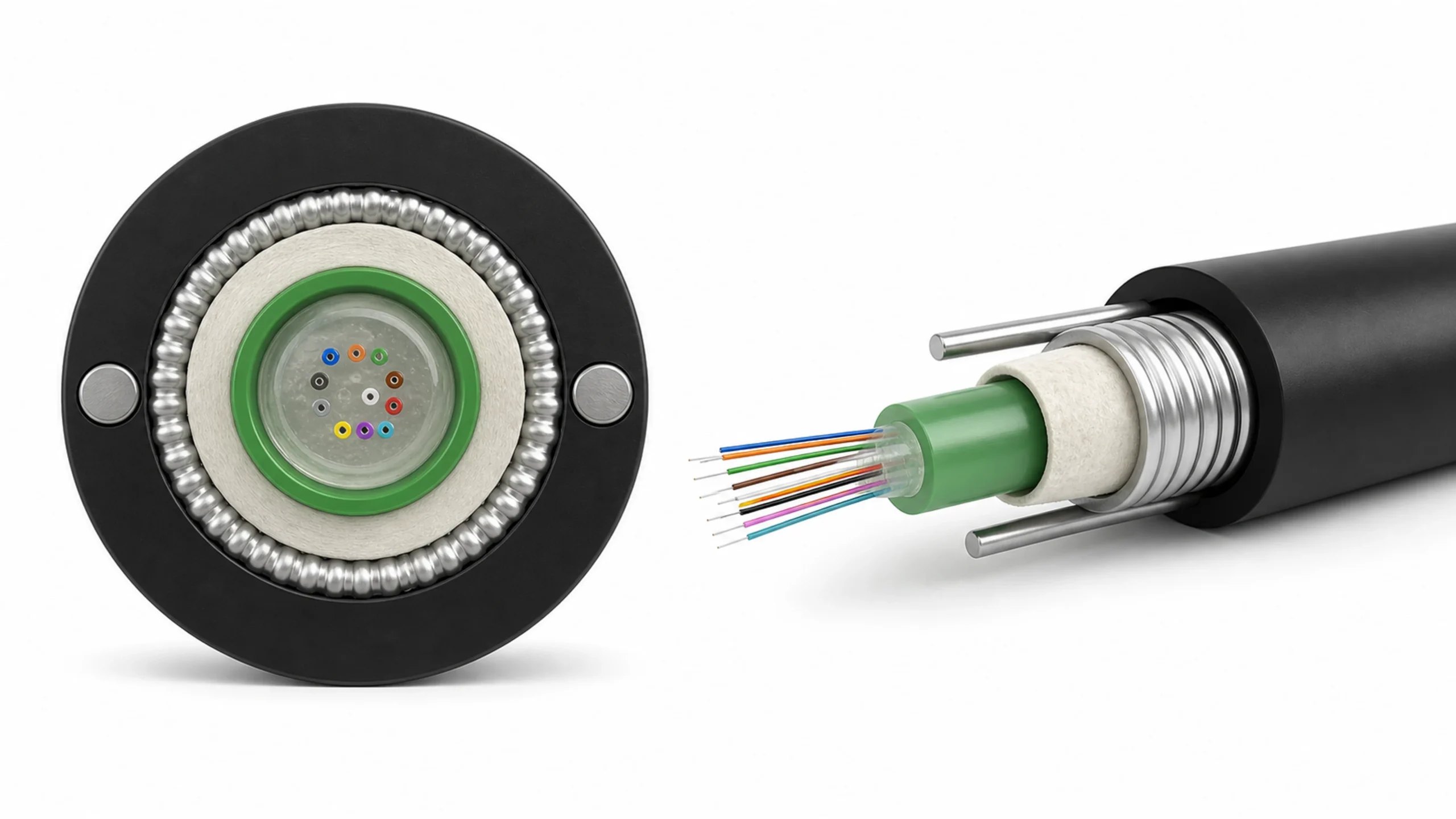
GYXTW Central Loose-Tube Cable
Proses ini membentuk tabung longgar pusat sebelum tahap pelindungan, penguatan, dan pelapisan.
Open cable solution
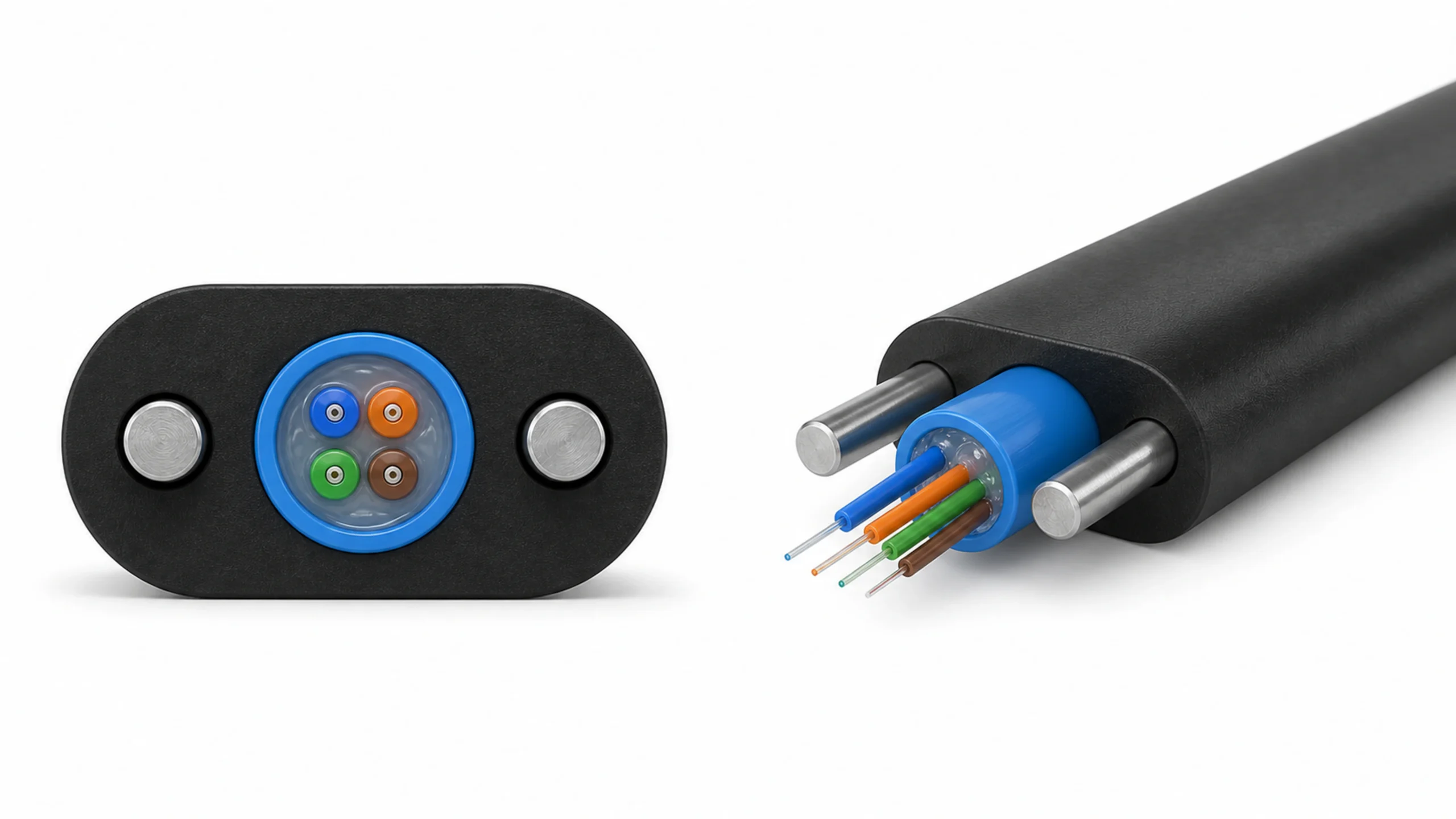
GYXTPY Small-Oval Central Loose-Tube Cable
Elemen loose-tube dilanjutkan ke integrasi elemen penguat paralel dan pelapisan akhir.
Open cable solution
Central Loose-Tube ASU Cable
The central PBT loose tube feeds the approved non-metallic forming and sheathing route.
Open cable solution
Stranded Loose-Tube Micro Cable
Individual loose tubes proceed to compact SZ cable-core formation before final PE sheathing.
Open cable solution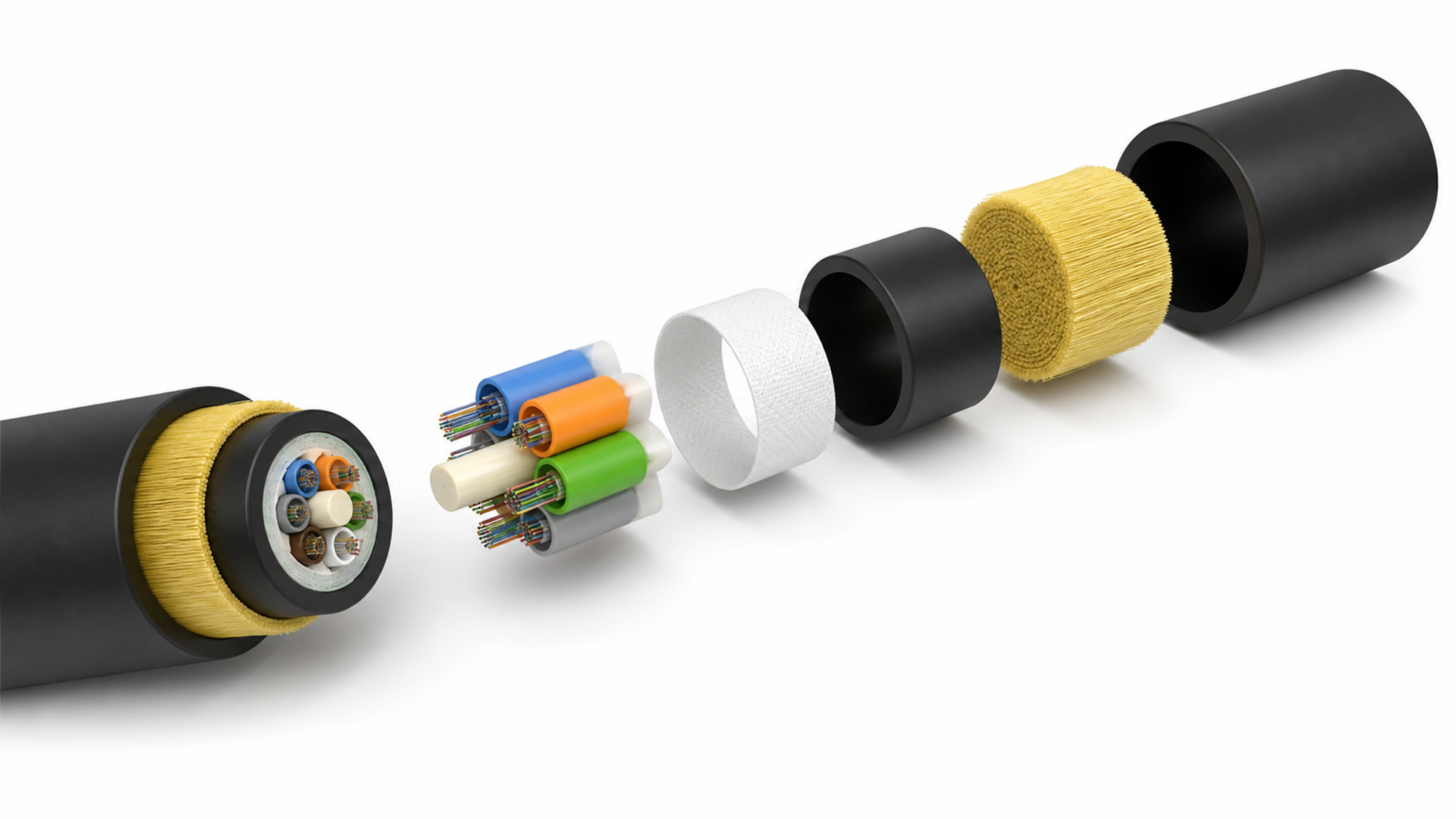
Kabel ADSS Tube Longgar Berpilin
Loose tubes feed SZ stranding, all-dielectric reinforcement and final sheathing.
Open cable solution
GYXTC8S Figure-8 Cable
The referenced loose tubes proceed to SZ core formation before GYXTC8S armoring, messenger positioning and figure-8 sheathing.
Open cable solutionFunction before model code: these cards refer only to the published cable constructions on their linked solution pages. Other central-tube or stranded loose-tube constructions require drawing review. FTTH drop, tight-buffered, GJFJV, GJFV and Patch Cord routes are not included merely because another page may use an HK-50 label.
Use the visual to plan the proof—not to replace it.
3D models support configuration review. The approved FAT plan establishes what the project must actually demonstrate.
Susunan peralatan yang terlihat
Use the 3D model to discuss module order, material path and the arrangement being reviewed.
Nilai akhir atau penerimaan
It does not confirm final quantity, footprint, speed, capacity, continuity or an accepted result.
Batas operasi yang disepakati
Verify product, materials, controls, alarms, reel-change sequence, waste and restart quality.
Real project records. Loose-tube priorities made specific.
These HONGKAI-authored summaries connect existing customer project records with the equipment and engineering responsibilities reviewed for a loose-tube production line. They are not presented as verbatim quotations or customer-issued ratings.

Equipment review
- Peralatan
- Fiber handling, the filling-system interface, extrusion, staged cooling, online measurement and reel handling were reviewed as one connected loose-tube process.
- HONGKAI support
- HONGKAI mengorganisasi diskusi seputar konstruksi tabung yang telah disetujui dan rute produksi kabel hilir.

Engineering coordination
- Peralatan
- Tube polymer, filling method, tooling, cooling path, EFL control and the output package were treated as connected configuration inputs.
- HONGKAI support
- HONGKAI translated the available project information into an equipment scope and FAT checklist for technical review.

Project support
- Peralatan
- Line interfaces, utilities, layout, controls, reel-change operation and acceptance samples were considered with the production equipment.
- HONGKAI support
- HONGKAI menjaga inklusi, eksklusi, tanggung jawab serah terima, dan batas penerimaan tetap terlihat sepanjang perencanaan proyek.
Source boundary: names, roles and photos follow existing HONGKAI customer records. The loose-tube-specific wording is prepared by HONGKAI from project-review priorities; no star score, verbatim endorsement, Review or AggregateRating markup is asserted.
Tell us what you need to produce or improve.
Bagikan proyek dan detail kontak Anda. Tambahkan spesifikasi atau gambar jika tersedia; nilai-nilai teknis yang belum diketahui dapat dikonfirmasi selama tinjauan teknis.
Nine inputs make the first review useful.
- 01
Target cable family and loose-tube drawing
- 02
Fiber count, specification and supply package
- 03
Tube polymer, masterbatch and filling system
- 04
Preferensi penggantian gulungan manual atau semi-otomatis
- 05
Output reel dimensions and planned batch length
- 06
Whether a controlled stop is acceptable
- 07
Existing upstream and downstream equipment
- 08
Tata letak pabrik, utilitas, dan arah lini
- 09
Required FAT products and acceptance method
Pertanyaan sebelum Anda menentukan jalur.
Review cable compatibility, reel-change operation and the information needed for a project-specific proposal.
01Apakah HK-50 a dan HK-60 menggunakan take-up semi-otomatis yang berbeda?
Tidak. Keduanya menggunakan susunan take-up semi-otomatis yang sama seperti yang ditunjukkan di sini. Penggantian reel manual menggunakan take-up dual-axis bergaya kabel drop FTTH sebagai gantinya. Berbagi susunan take-up semi-otomatis tidak membuat kedua lini lengkap tersebut identik: ekstrusi, pendinginan, kontrol, dan parameter produksi ditinjau ulang untuk setiap proyek.
02Apakah halaman ini merupakan spesifikasi HK-50 tetap?
Tidak. Halaman keluarga proses bersama ini membandingkan referensi pergantian gulungan manual dengan referensi proyek HK-50 a dan HK-60 yang cakupan pergantian gulungannya semi-otomatis masih tunduk pada tinjauan teknis. Ekstruder akhir, sistem kontrol, paket, tapak, dan nilai penerimaan didefinisikan dalam konfigurasi proyek tertulis.
03Apakah HK-60 a secara otomatis berarti kecepatan lebih tinggi daripada HK-50?
Tidak. Nama keluarga saja tidak membuktikan kecepatan, kapasitas, atau jangkauan gulungan. Nilai-nilai tersebut memerlukan gambar tarik tabung yang telah disetujui, sistem material, daftar peralatan lengkap, dan proposal teknis yang telah ditandatangani.
04Kabel optik mana yang dapat menggunakan proses loose-tube ini?
Solusi GYXTW, GYXTPY, dan ASU berinti tengah yang ditautkan menggunakan elemen loose-tube pusat. Solusi Micro Cable, ADSS, dan GYXTC8S yang dirujuk menggunakan loose tube sebelum penganyaman inti kabel. Kompatibilitas tetap bergantung pada konstruksi yang disetujui, material tabung, dimensi, dan antarmuka hilir. Rute tight-buffered dan kabel drop merupakan proses yang berbeda.
05Dapatkah jalur tersebut terhubung ke peralatan yang dipertahankan?
Kemungkinan iya. HONGKAI terlebih dahulu harus meninjau antarmuka mekanis, sinyal, ukuran kemasan, arah jalur, tanggung jawab keselamatan, dan urutan pengoperasian.
06Apa yang harus ditunjukkan oleh FAT pergantian gulungan semi-otomatis?
Produk dan material yang disepakati harus digunakan untuk mengamati akumulasi, transfer, pemotongan, intervensi operator, alarm, gangguan yang diizinkan, limbah pergantian, serta pemeriksaan kualitas saat restart.