




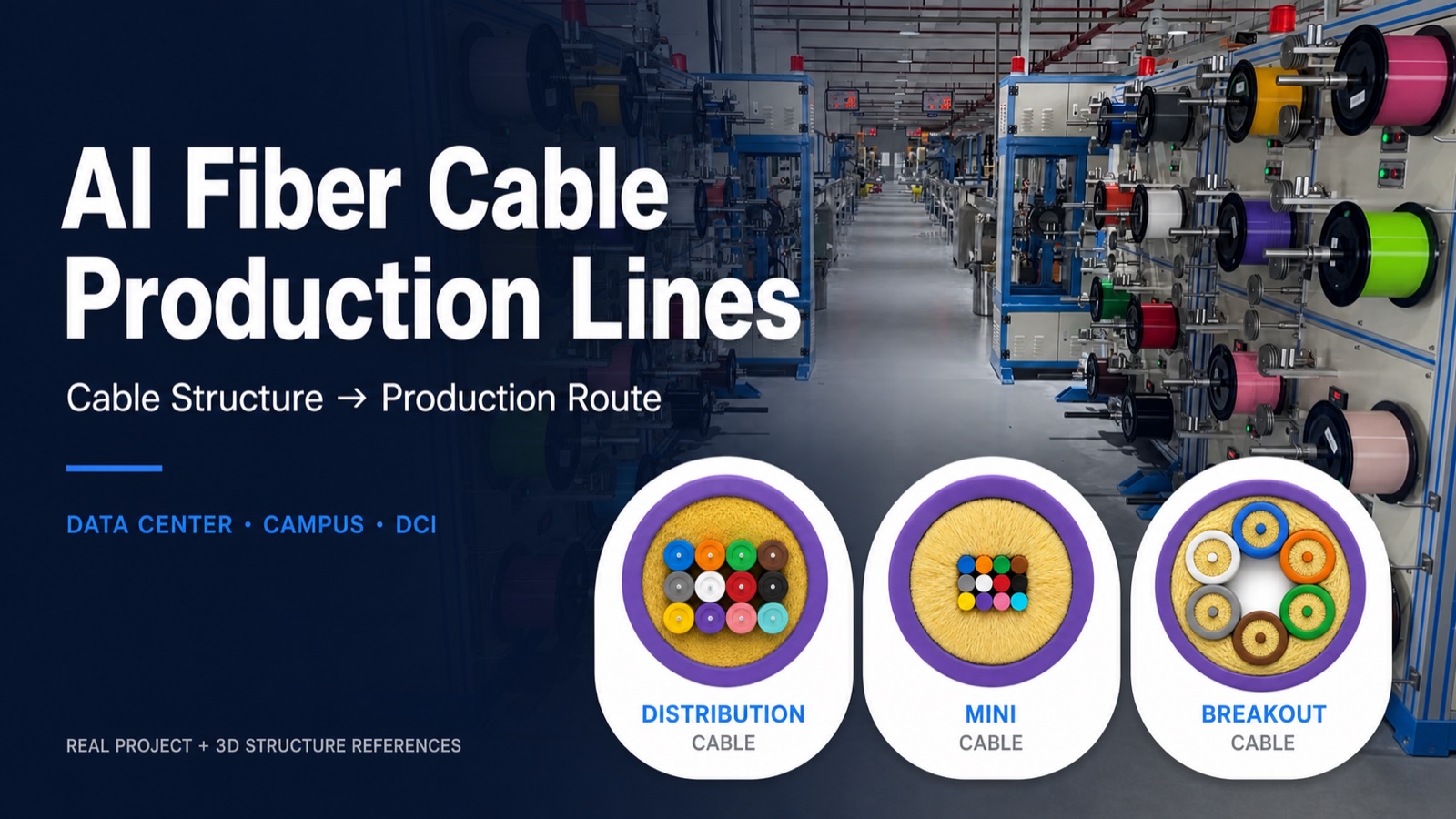
AI은 데이터센터 네트워크의 속도, 밀도 및 물리적 크기를 증가시키고 있습니다. 그러나 AI 프로젝트는 “AI 광섬유 케이블”이라는 범용 제품 하나를 사용하지 않습니다.”
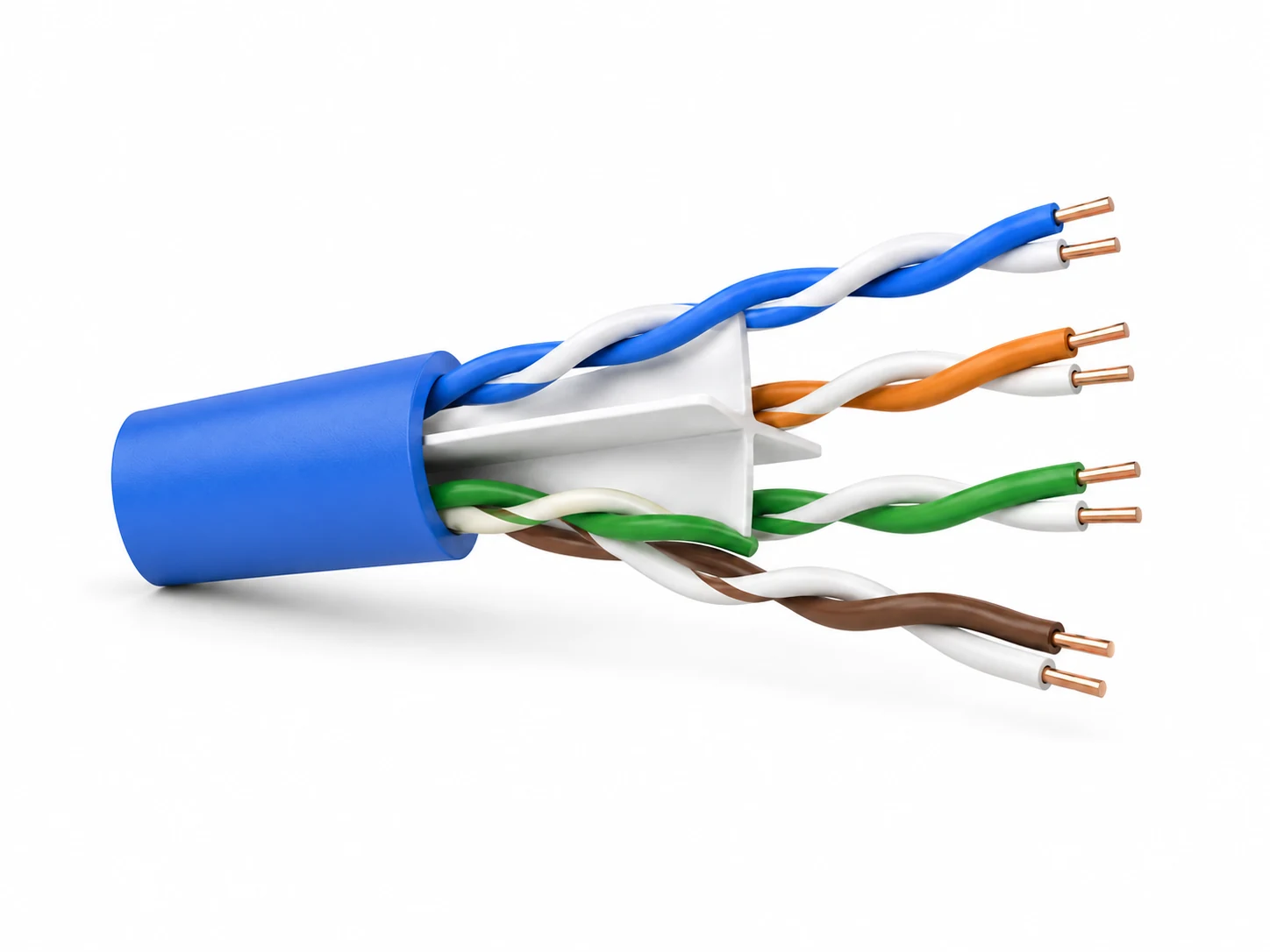
AI 인프라는 일반적으로 여러 종류의 케이블 패밀리를 필요로 합니다: 데이터 홀용 실내 고밀도 케이블, 캠퍼스 및 데이터센터 간 연결용 OS2 단일모드 케이블, 그리고 덕트, 방호 또는 공중 경로용 보호된 실외 케이블입니다. 단거리 링크는 OM4 다중모드 케이블을 사용할 수 있으며, 일부 매우 짧은 서버 링크는 광섬유 대신 구리 케이블을 사용합니다. 적절한 생산 라인은 “AI”이라는 단어가 아니라 완성된 케이블 구조에 따라 선택됩니다. 따라서 케이블 제조업체는 장비 구매 전 네트워크 위치, 케이블 도면, 광섬유 수, 설치 환경 및 요구 용량을 정의해야 합니다.
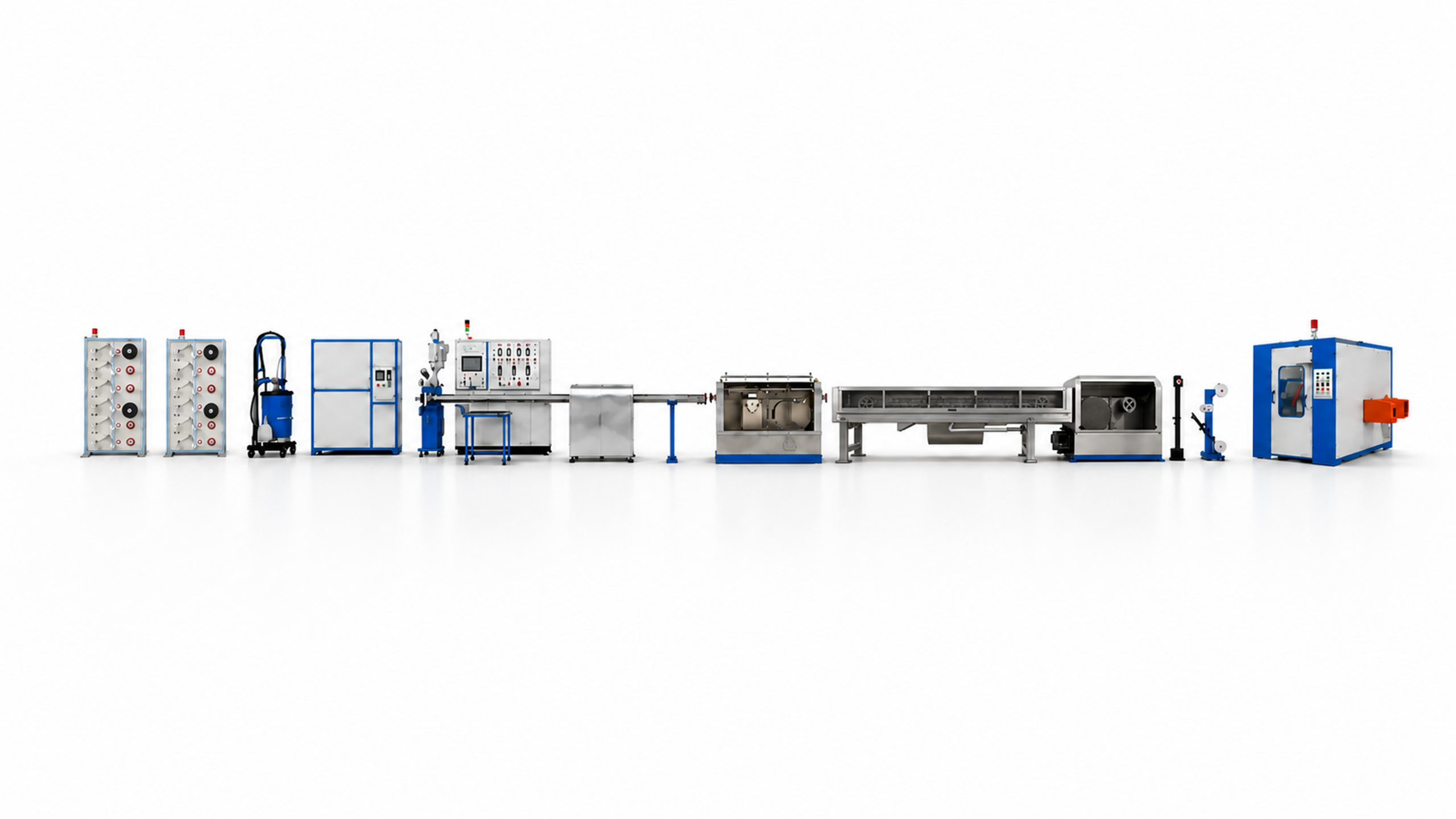
HONGKAI 3D 참조 구성: HK-50 느슨 튜브 생산 라인과 이차 코팅 단계용 12 광섬유 페이아웃 위치.
IEEE은 이미 다중모드 및 단일모드 광섬유 모두에서 800 Gb/s 이더넷 광 링크를 표준화했으므로, “800G”만으로는 하나의 케이블 구조를 식별할 수 없습니다.1 광 모듈, 도달 거리, 링크 예산, 커넥터 인터페이스 및 설치 경로는 프로젝트가 OM4, OS2, 듀플렉스, 병렬 섬유, 느슨 튜브 또는 다른 설계를 사용할지 결정합니다.
이 가이드는 케이블 공장이 필요로 할 수 있는 케이블 구조 및 제조 단계를 주요 AI- 네트워크 위치에 매핑합니다. 모든 경로는 참조 경로이며, 최종 장비 모델, 공구, 수량 및 수락 계획은 승인된 케이블 도면에서 확인해야 합니다.
광섬유 케이블은 AI 인프라에 실제로 어떤 종류를 필요로 할까요?
AI 인프라는 일반적으로 네 가지 제품 그룹을 사용합니다: 실내 패칭 및 분배 케이블, 고밀도 데이터 홀 트렁크, 캠퍼스 또는 데이터센터 간 연결 케이블, 그리고 보호된 실외 백본 케이블입니다. OM4 다중모드와 OS2 단일모드는 모두 광 인터페이스와 거리에 따라 데이터센터 내부에 나타날 수 있습니다. OS2 단일모드는 일반적으로 더 긴 캠퍼스 및 간선 경로의 시작점입니다. 광섬유 수와 케이블 보호는 네트워크 설계 및 설치 환경에 따라 달라집니다.
| AI 네트워크 위치 | 일반적인 케이블 제품 | 주요 제조 방향 |
|---|---|---|
| 랙 또는 폴 내부 | 듀플렉스 패치 케이블, 병렬 섬유 트렁크, 또는 수동 구리 링크가 지정된 경우 광 케이블 없음 | 실내 베이스 케이블에 필요한 경우 별도 커넥터 조립 |
| 행 및 데이터 홀 | 분배 케이블, 브레이크아웃 케이블, 심플렉스/듀플렉스 베이스 케이블, 고밀도 트렁크 | 타이트 버퍼 또는 기타 승인된 실내 케이블 공정, 보강 및 외피 |
| 건물 간 또는 DCI | OS2 느슨 튜브 케이블, 마이크로 케이블, 고섬유 수 케이블, 옵션으로 리본 설계 | Coloring, loose tube or ribbon process, core formation, protection and sheathing |
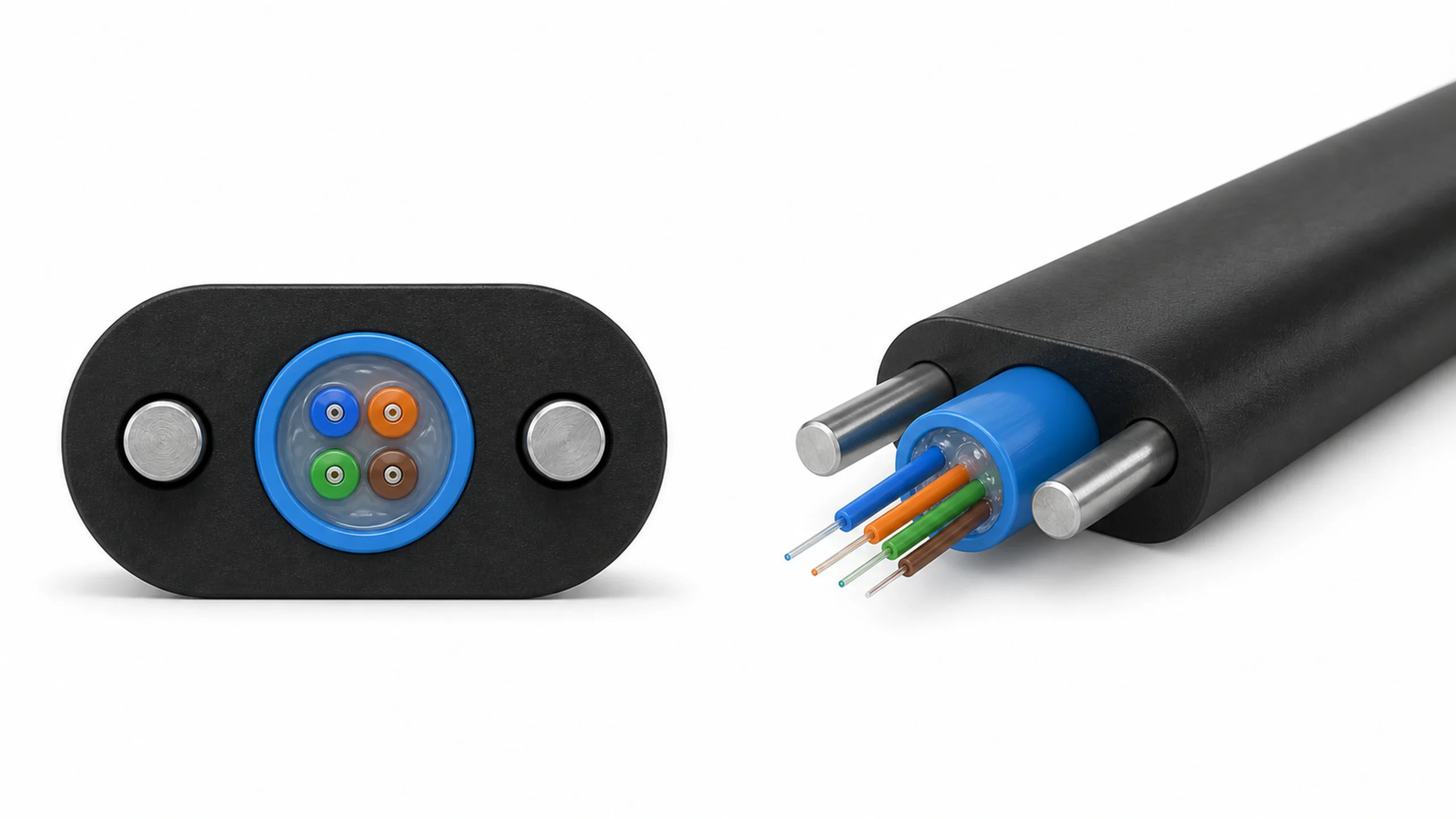
| Duct, direct-buried or aerial route | Central-tube, stranded loose-tube, armored cable, ADSS or another route-specific design | Outdoor cable line with the required water blocking, strength and environmental protection |
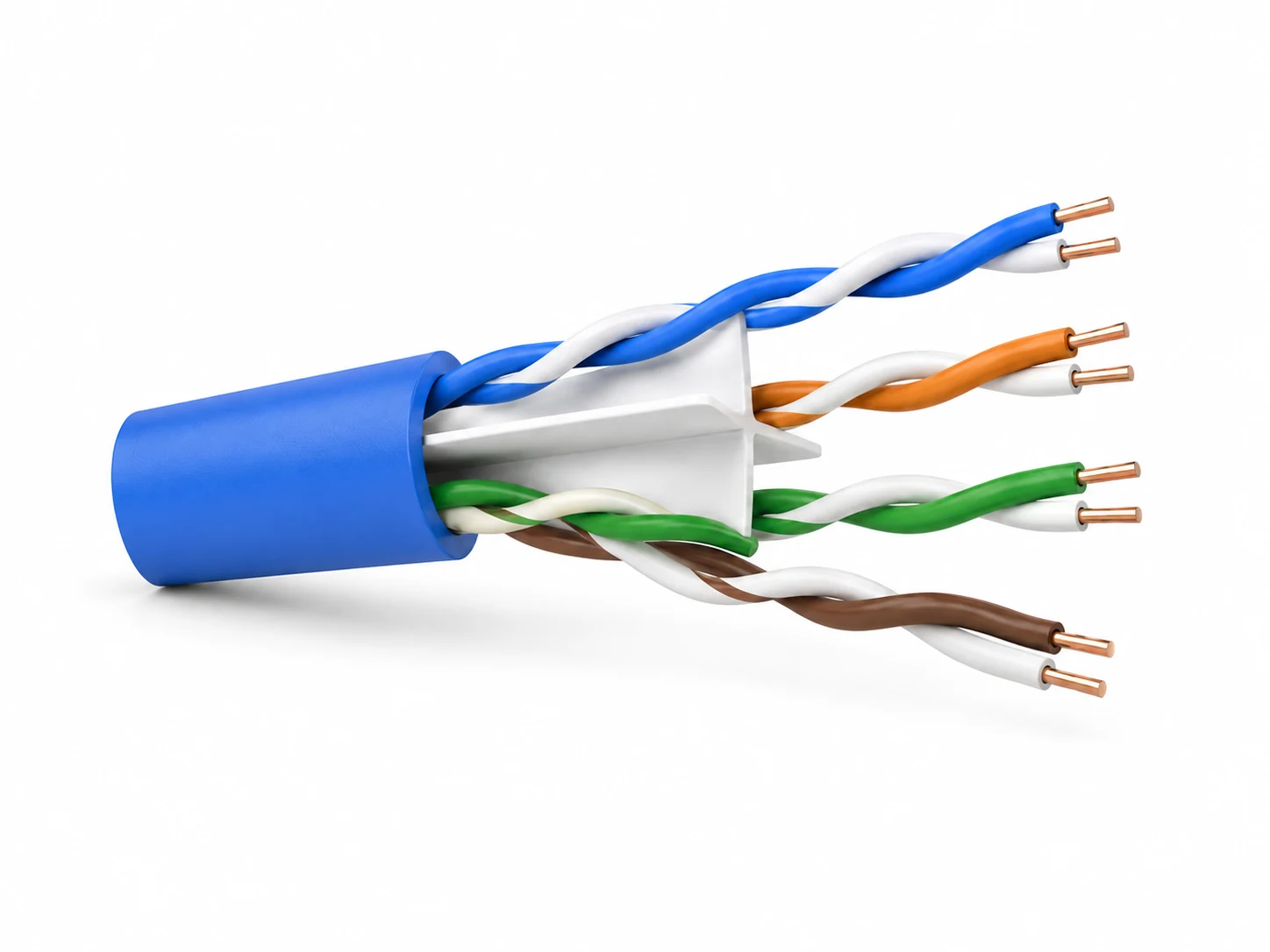
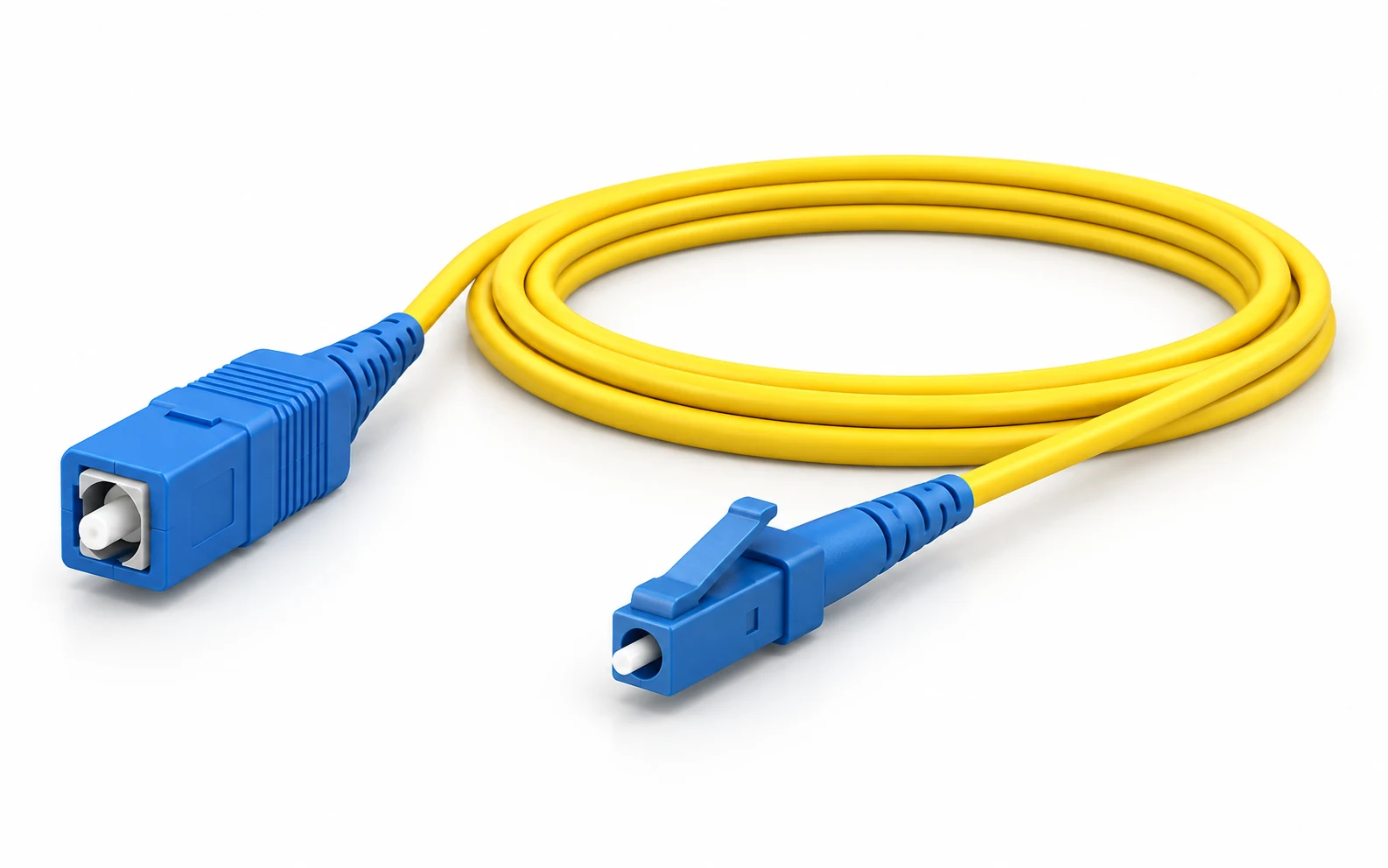
These names describe different things. OM4 and OS2 describe optical cabling categories. G.652.D and G.657.A describe single-mode fiber characteristics.2 Tight buffer, loose tube, ribbon, armor and ADSS describe cable structures that affect the equipment route. MPO/MTP and LC describe connector interfaces and do not define the base cable by themselves.
그만큼 HONGKAI fiber optic cable production line guide shows how finished cable structures lead to different process modules. A published Open Compute Project architecture also illustrates an important limit: passive copper can remain inside an AI pod, while optical links are used when the connection leaves that local zone.3 A factory should not assume that every AI server connection becomes a fiber order.
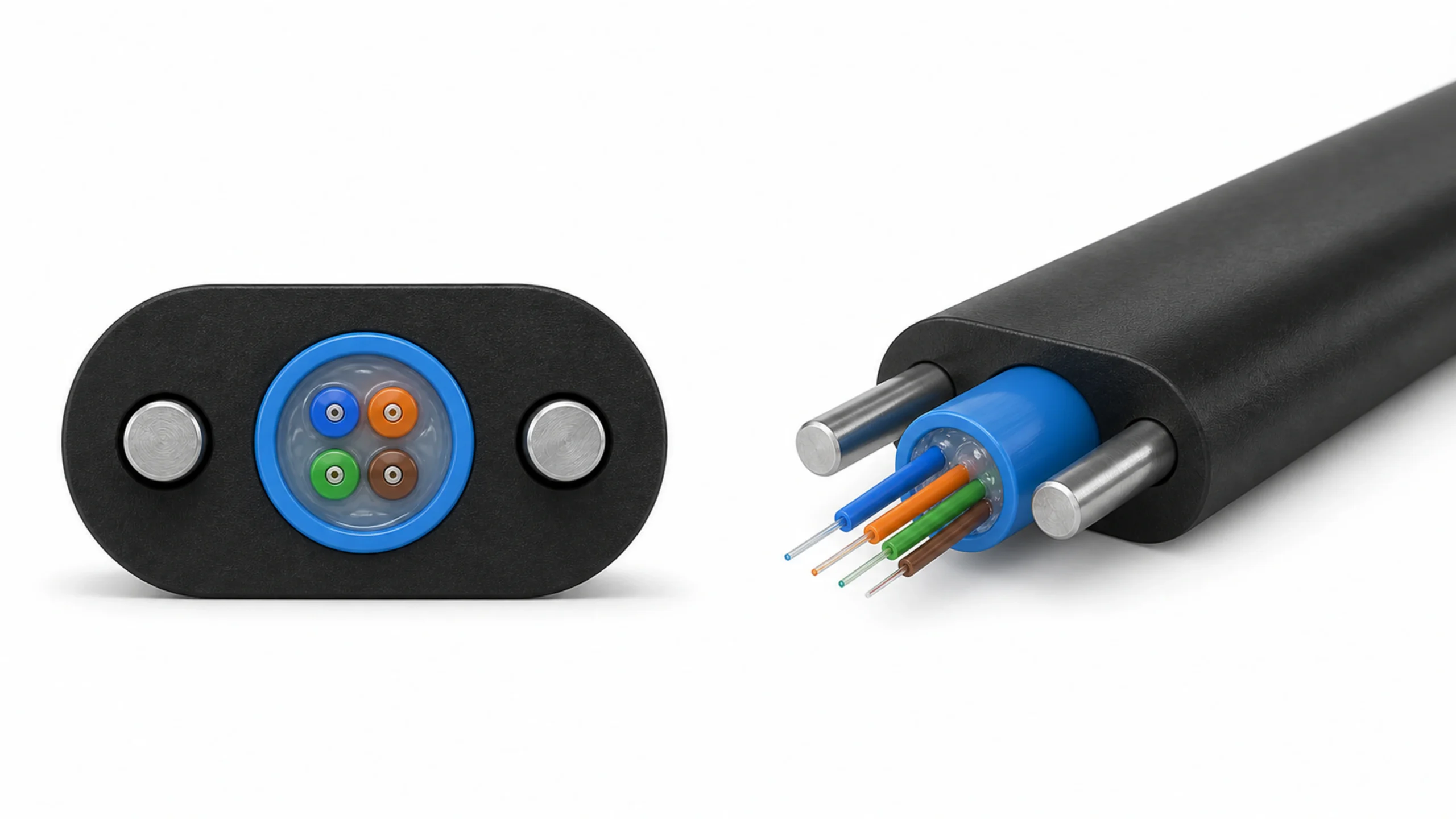
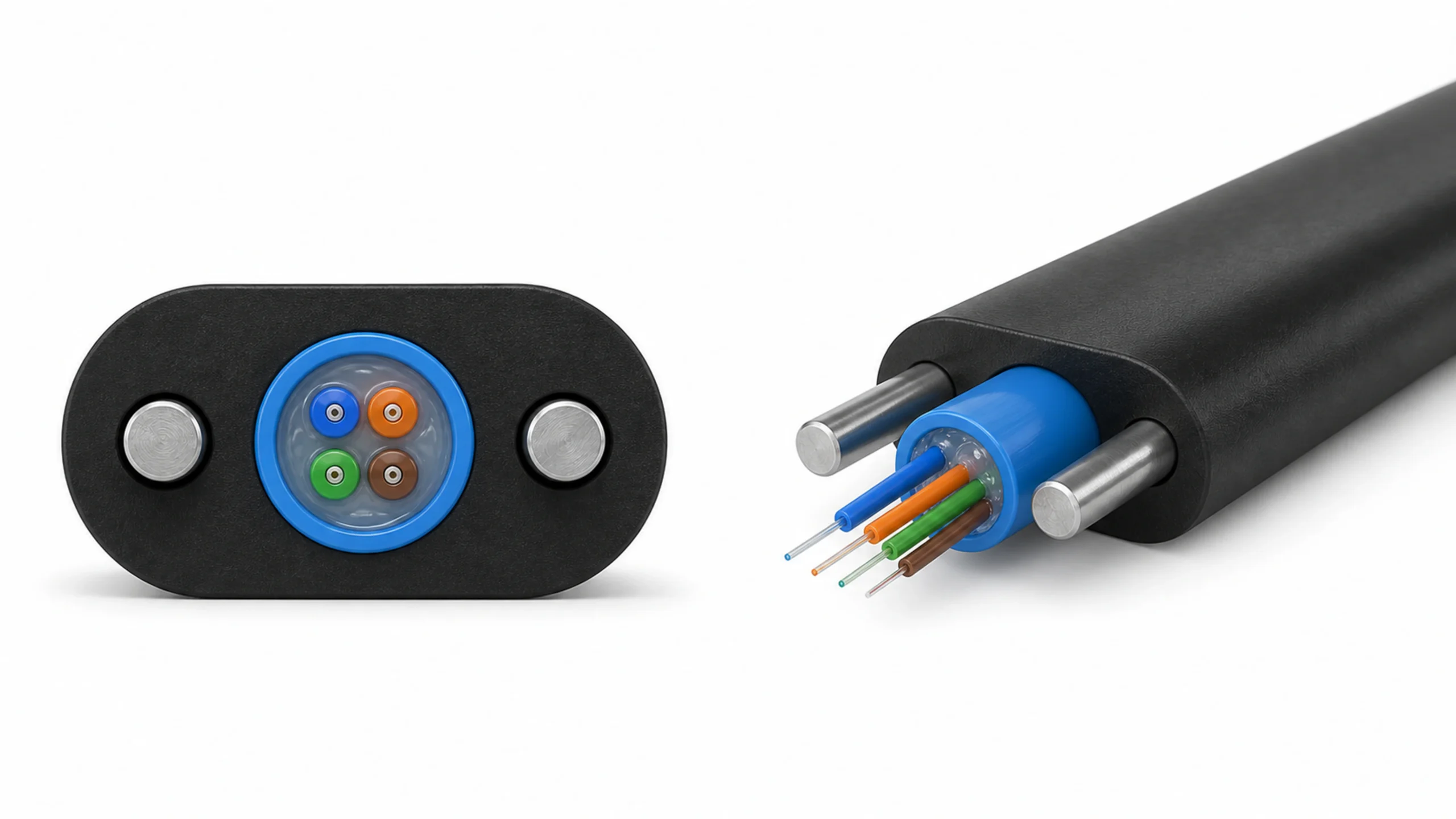
Recent HONGKAI customer enquiries and project discussions for AI data centers in China have included both indoor multi-fiber breakout constructions and compact mini cable. For screening, compare the cross-section and check whether every fiber or subunit has its own protective jacket; the two names are not interchangeable. These enquiries are company-specific experience, not a market-share claim or evidence of a wider China or global industry trend.
Note: The useful sales question is not “Which AI cable is popular?” but “Which part of the AI network will this finished cable serve?”
Which Production Line Makes Indoor AI Data-Center Cables?
Indoor AI data centers do not use one universal “micro cable” or “breakout cable.” Distribution cable, mini cable, breakout cable and ribbon cable are separate constructions and do not use one interchangeable production line. A GJFJV distribution route can use the HK-30 tight buffered production line before the configured HK-50 GJFJV stage; a compact mini cable uses its own upstream core or subunit process and an HK-50 PLC+IPC mini-cable sheathing configuration; a true breakout cable first forms individually protected subcables before assembly and final sheathing. Outdoor air-blown micro cable for campus or DCI ducts is another loose-tube or ribbon product with a different equipment route.
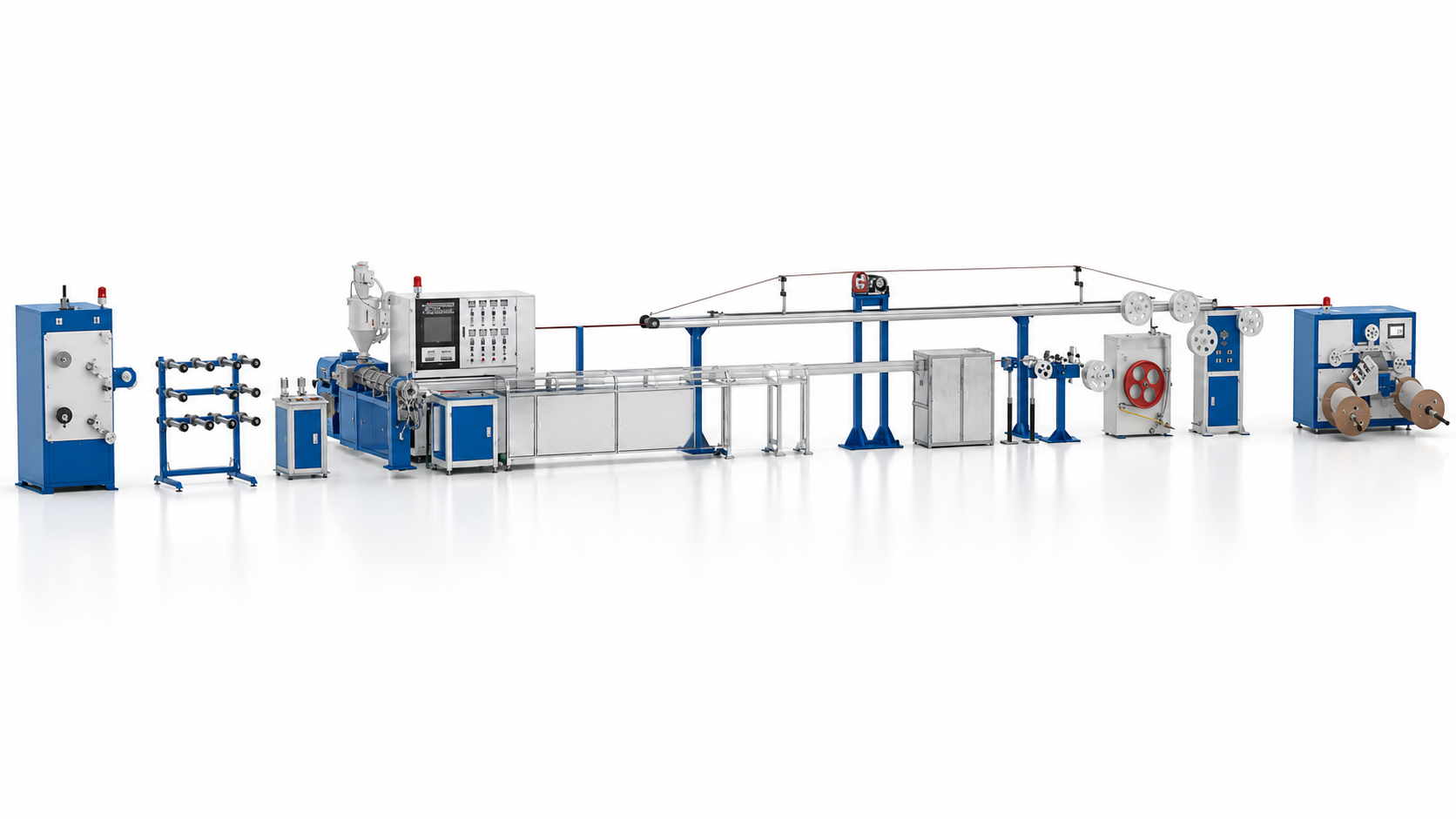
HONGKAI 3D equipment model: the complete HK-30 line produces the tight-buffered fiber element used by many indoor cable structures.
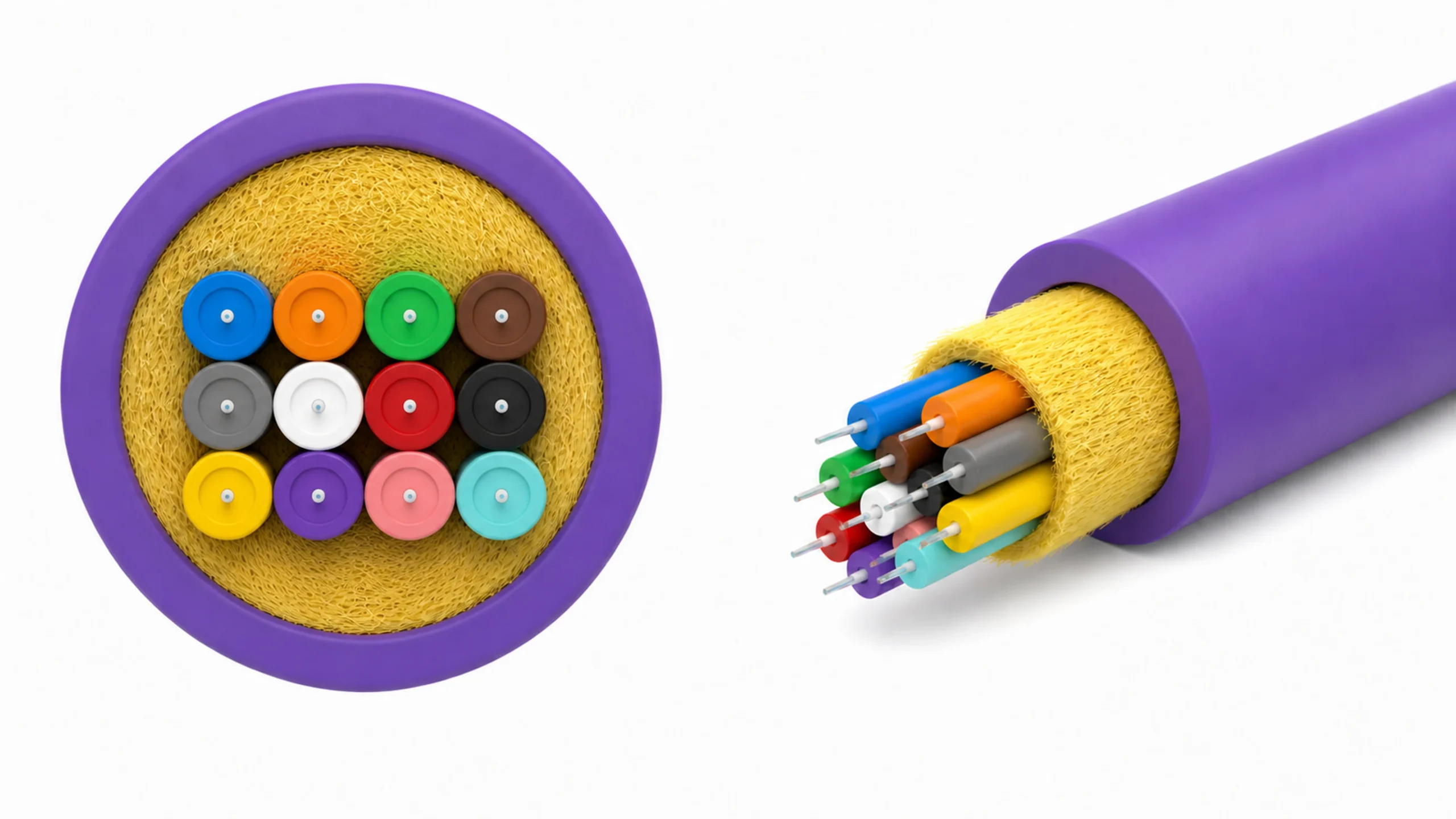
HONGKAI 3D structure reference: twelve color-coded tight-buffered fibers share a strength-yarn layer and one outer jacket. Fiber type, yarn material, jacket compound and flame rating are confirmed per cable specification.
Decision criterion: A distribution cable normally groups buffered fibers under one common cable jacket. A mini cable uses a separate compact core and sheathing design to reduce the finished construction, while a true breakout cable contains individually protected subcables before the final outer jacket. These three production routes must be quoted separately, even when all three products are installed inside the same data center. The word “breakout” may also describe a port-splitting assembly, so the buyer’s cross-section and finished connector map must be checked before assigning the cable-making route.4
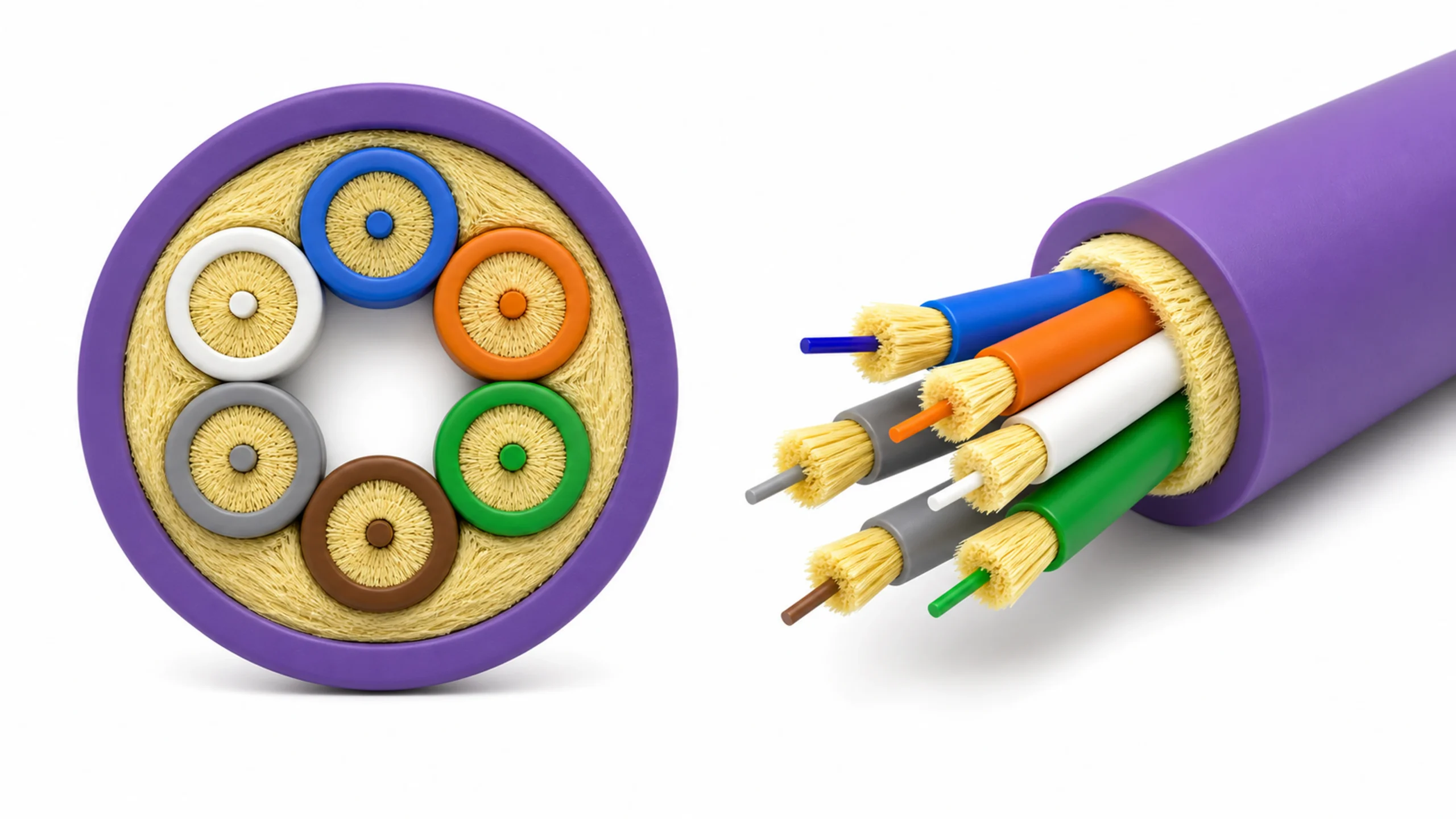
- HONGKAI 3D structure reference: six individually jacketed single-fiber subcables are assembled beneath a common outer jacket. The drawing explains breakout construction; it does not identify connector type or project use.
-
::flow
01 · Prepare|Load qualified coated fiber
Confirm the incoming fiber specification, reel condition and pay-off tension before extrusion.
02 · Tight buffer|Apply the buffer layer
The HK-30 process adds the specified tight-buffer material and controls cooling, diameter and take-up.
03 · Build cable|Add the required strength
Combine the buffered elements and add aramid yarn or other reinforcement only when the finished drawing requires it.
04 · Finish|Jacket, test and coil
- Extrude the outer jacket, print and measure the cable, then complete the agreed optical and dimensional tests.
-
::
| Finished indoor product | Cable-making stages | 케이블 제조 후 분리 작업 |
|---|---|---|
| 심플렉스 또는 듀플렉스 베이스 케이블 | 타이트 버퍼, 보강재, 외피 및 권취 | 패치 코드로 판매될 경우 커넥터 단자 처리 |
| 다중 코어 분배 케이블 | HK-30 타이트 버퍼 → 섬유 집합 또는 끈질기기 → 아라미드 보강 → 구성된 분배 케이블 외피 공정 | 필요할 경우 커넥터화 또는 팬아웃 |
| 브레이크아웃 케이블 | HK-30 필요 시 타이트 버퍼 → 개별 심플렉스 또는 서브유닛 케이블 형성 → 서브케이블 조립 → 최종 외피 | 주문에 따라 직접 단자 처리 또는 커넥터 조립 |
| 콤팩트 실내 미니 케이블 | 승인된 섬유 또는 서브유닛 입력 → 콤팩트 코어 형성 → 전용 HK-50 PLC+IPC 미니 케이블 외피 구성 | 미니 케이블 단면이 상류 공정을 결정한다. 분배 케이블 라인을 대체하지 말 것 |
| GJFJV 실내 케이블 | HK-30 타이트 버퍼, 서브유닛/코어 형성, 강화재 적용 및 승인된 설계에 따른 외피 | 주문에 따른 최종 커넥터 또는 포장 작업 |
| GJFV 색상 섬유를 직접 사용하는 실내 케이블 | 색상 섬유 페이오프, 강화재 적용 및 외피 | 승인된 구조가 타이트 버퍼 요소를 요구할 경우에만 HK-30 추가 |
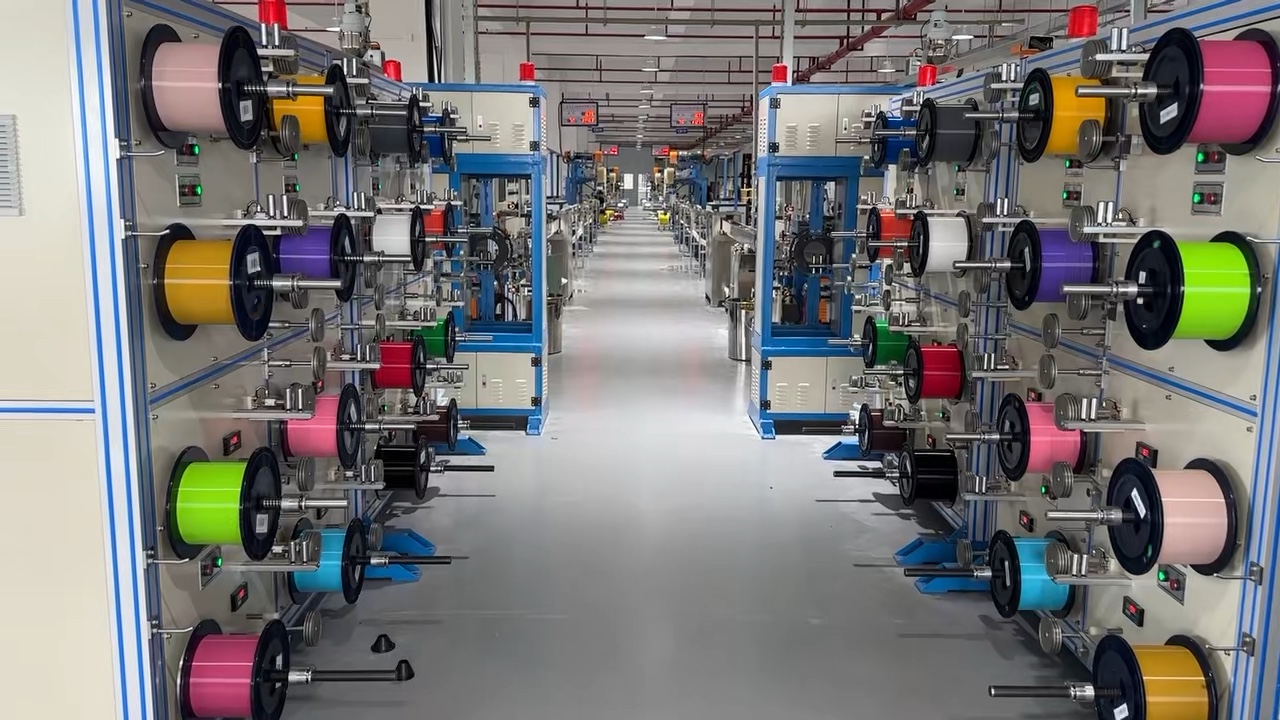
실제 생산 영상: HONGKAI HK-50 PLC+IPC 미니 케이블 외피 장비가 중국 AI 데이터센터 프로젝트용 실내 다중 섬유 케이블을 생산하는 장면.
생산 영상은 HK-50 PLC+IPC 미니 케이블 외피 라인이 콤팩트 코어 및 외피 공정에 사용됨을 확인한다. 영상만으로는 개별 서브유닛 외피와 전체 단면이 보이지 않기 때문에 완성된 제품이 고전적인 브레이크아웃 구조임을 증명할 수 없다. 라인 속도, 케이블 직경 및 상류 공정은 승인된 제품 도면 및 프로젝트 계약서에서 가져와야 한다.
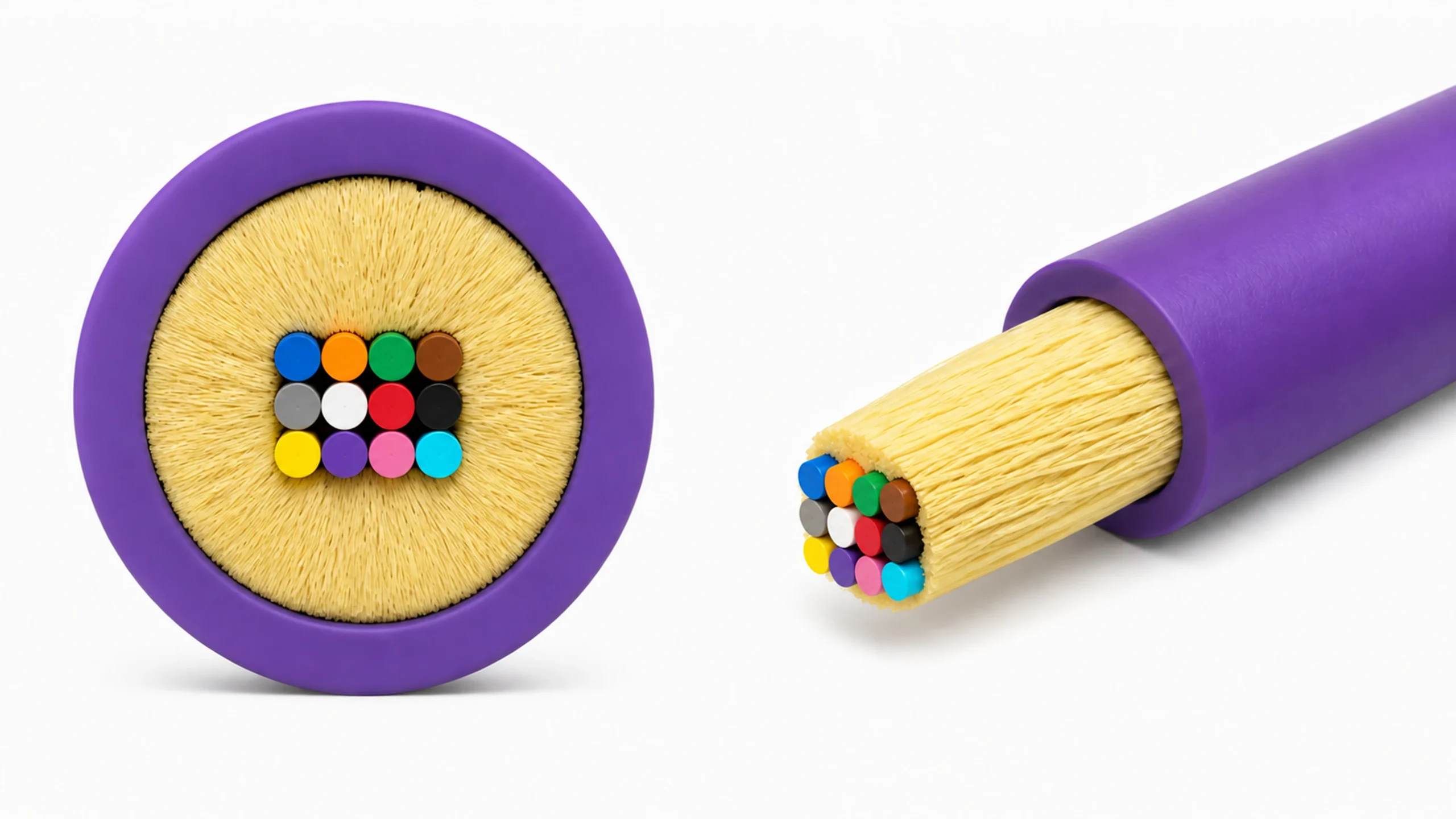
HONGKAI 3D structure reference: twelve color-coded fibers form a compact bundle inside a strength-yarn layer and one outer jacket. The illustration is not a verified cross-section of the production footage above and does not show individually jacketed breakout subcables.
그만큼 HONGKAI GJFJV cable production route uses HK-30 tight buffering before the HK-50 GJFJV stage. The HONGKAI GJFV route can begin with approved colored fiber instead, while the patch-cord base-cable line uses tight-buffered elements. In this article, “mini cable” means a compact indoor multi-fiber cable; it should not be confused with an outdoor duct or air-blown micro cable. Material choice and flame performance must still follow the buyer’s specification and the rules of the target market.
Note: An indoor-cable quotation should separate tight buffering, subunit or core formation, final sheathing, testing and connectorization so every included stage is visible.
Which Production Lines Make High-Density Campus and Data-Center Interconnect Cables?
Campus and data-center interconnect routes mainly use OS2 single-mode outdoor or indoor/outdoor cable. Common structures include central loose tube, stranded loose tube, compact micro cable and high-fiber-count ribbon cable. High fiber count does not automatically mean ribbon, because several internal structures can provide high density. A factory must select the production route from the cable cross-section and installation method.
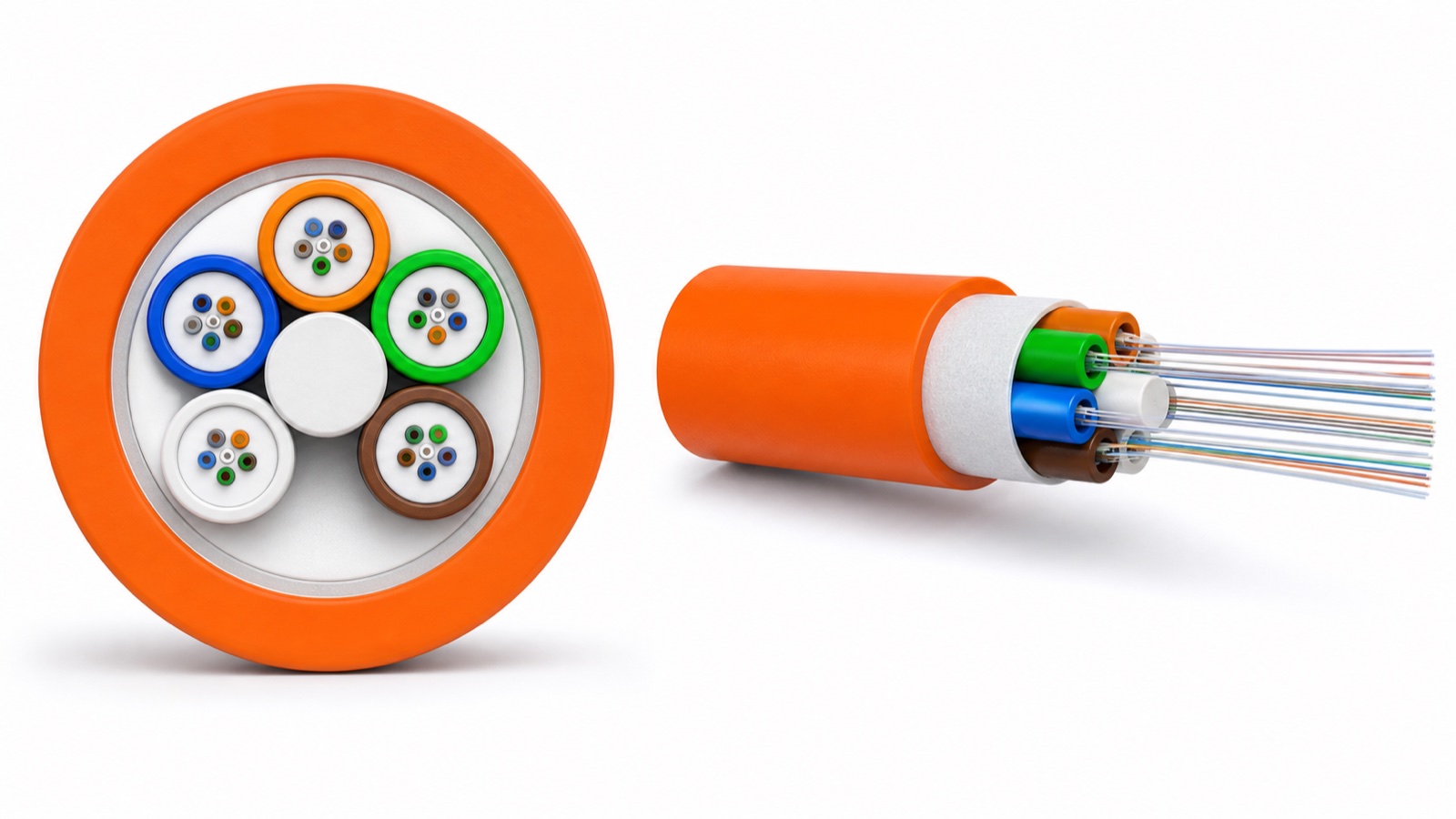
HONGKAI 3D 구조 참조: 중앙 비금속 강화재 주변에 다섯 개의 느슨한 튜브가 배열된 단일 비틀림 느슨한 튜브 마이크로덕트 케이블. 섬유 수, 튜브 충전, 재질 및 치수는 프로젝트 도면에 따라 확인됩니다.
| 케이블 구조 | 참조 생산 라인 | 중요한 경계 |
|---|---|---|
| 중앙 느슨한 튜브 케이블 | 섬유 색상 표시 → 하나의 느슨한 튜브 요소 → 수분 차단 또는 강화층 → 컴팩트한 외피 | 진정한 중앙 튜브 설계에는 SZ 비틀림 공정이 필요하지 않을 수 있습니다. |
| 비틀림 느슨한 튜브 마이크로 또는 표준 케이블 | 섬유 색상 표시 → 여러 개의 느슨한 튜브 → SZ 코어 형성 → 수분 차단 및 강화 → 외피 | 튜브 수, 레이 방향, 강화재 및 보호 시스템은 도면에서 확인됩니다. |
| 기존 리본 케이블 | 섬유 식별 → 리본 형성 → 리본 유닛 또는 튜브 공정 → 코어 형성 → 외부 보호 | HONGKAI는 구성된 프로젝트 범위로 필요한 기존 리본 공정을 공급하거나 통합할 수 있습니다. |
| 롤링 가능 또는 유연한 리본 케이블 | 자격을 갖춘 섬유 → 특수 유연 리본 공정 → 고밀도 코어 구조 → 외부 보호 | 정확한 리본 설계에 대한 장비 능력은 확인되어야 합니다. |
그만큼 HONGKAI 마이크로 케이블 생산 라인 provides a reference for a stranded loose-tube micro-cable route using coloring, loose-tube, SZ and sheathing modules. A true central-tube design follows a different route and may omit SZ stranding. Ribbon cable needs more caution. A Sumitomo Electric product example shows FREEFORM Ribbon used inside a high-density microduct cable, but that vendor example is not a standard and does not prove that one production line can make every ribbon design.[^5]
HONGKAI는 원스톱 프로젝트의 일환으로 기존 리본 케이블 생산 장비를 공급하거나 통합할 수 있습니다. HONGKAI의 기존 리본 프로젝트 범위는 하나의 표준 라인이 모든 플랫 리본, 튜브 내 리본, 슬롯 코어 또는 롤링 가능 리본 구조를 커버한다는 의미가 아닙니다. 롤링 가능 또는 유연한 리본 처리, 공구 및 테스트는 정확한 도면에 대해 공학적 확인이 여전히 필요합니다. 구매자는 일반적인 “고밀도 AI 케이블 라인”을 요청하기보다 실제 구조를 제공해야 합니다.”
참고: 리본 라인 견적은 리본 기하학, 코어 구조, 공구 및 FAT 샘플이 명시될 때까지 비교할 수 없습니다.
어떤 생산 라인이 야외 AI 캠퍼스 및 백본 케이블을 제작합니까?
야외 AI- 캠퍼스 및 백본 프로젝트는 중앙 튜브, 비틀림 느슨한 튜브, 갑옷, 덕트 또는 공중 케이블을 요구할 수 있습니다. 중앙 튜브 설계는 색상 표시, 느슨한 튜브 및 외피 공정을 사용할 수 있으며, 비틀림 설계는 일반적으로 SZ 코어 형성을 추가합니다. ADSS는 전체 비금속 인장 강화 공정을 추가하며, 갑옷 제품은 승인된 도면에 표시된 보호 공정을 추가합니다. 경로는 대역폭만이 아니라 설치 응력 및 환경 보호에 의해 결정됩니다.

HONGKAI 3D 참조 구성을 위한 HK-800/12 SZ 뭉치 라인은 해당 다중 느슨한 튜브 케이블 코어를 형성하며, 기타 SZ 구성은 프로젝트별로 확인됩니다.
| 실외 케이블 패밀리 | 참조 HONGKAI 공정 모듈 | 확인해야 할 사항 |
|---|---|---|
| GYXTW 중앙 느슨한 튜브 | HK-235 섬유 컬러링 → HK-50 느슨한 튜브 → HK-90 보호 및 외피 | 튜브 구조, 충진 또는 건식 수분 차단, 강화재, 방호층 및 외피; 이 루트에는 SZ 단계가 표시되지 않습니다. |
| 뭉친 느슨한 튜브 | HK-235 → HK-50 → HK-SZ 뭉치 → HK-90 보호 및 외피 | 튜브 수, SZ 피치, 바인더, 중앙 재료 및 최종 보호 |
| ADSS 공중 케이블 | HK-235 → HK-50 → HK-SZ 코어 형성 → HK-90 아라미드 강화 및 외피 | 스팬, 인장 설계, 케이블 지름, 외피 시스템 및 수용 시험 |
| 방호 덕트 또는 매설 케이블 | 코어 제조 라인 → 수분 차단 → 지정된 방호 → 외피 | 방호 재질, 중첩, 접합, 기계적 목표 및 현장 설치 규정 |
HONGKAI의 참조 ADSS 장비 라인은 공중 케이블이 표준 외피 공정으로 축소될 수 없음을 보여줍니다. ADSS 케이블의 강도 시스템과 최종 구조는 목표 라인에 맞게 설계되어야 합니다. 비교하여, 공개된 HONGKAI GYXTW 중앙 튜브 라인 does not add an SZ stage. A fiber optic cable factory normally buys coated optical fiber. HONGKAI does not manufacture glass-preform or fiber-drawing equipment, but HONGKAI can introduce a third-party supplier and coordinate that supplier’s equipment within an integrated sales project. The technical proposal must identify the third-party manufacturer and separate the equipment, technology, installation and warranty responsibilities from HONGKAI-made cable machinery.
For longer links, the network designer may specify G.652.D, bend-insensitive G.657.A, or another approved fiber. ITU-T states that G.657.A fiber is compatible with G.652.D, while the tighter-bend G.657.B family has a different application boundary.[^3] Fiber specification affects raw-material purchasing, handling and optical acceptance, but the cable structure remains the main driver of the machinery route.
참고: 각 야외 보호 모듈은 제안서에서 명명된 설치 위험과 측정 가능한 수용 시험과 연결되어야 합니다.
MPO/MTP 트렁크, 패치 코어, 및 액티브 광 케이블은 케이블 생산 라인에서 제작됩니까?
A standard optical cable production line can make the base cable used in a patch cord or high-density trunk. MPO/MTP and LC finished products then need separate cutting, termination, polishing, end-face inspection, polarity control and insertion-loss or return-loss testing. An active optical cable also contains optical and electronic modules, so AOC assembly needs module integration and complete system testing.[^6] These assembly stages should not be described as functions of an extrusion or stranding line.
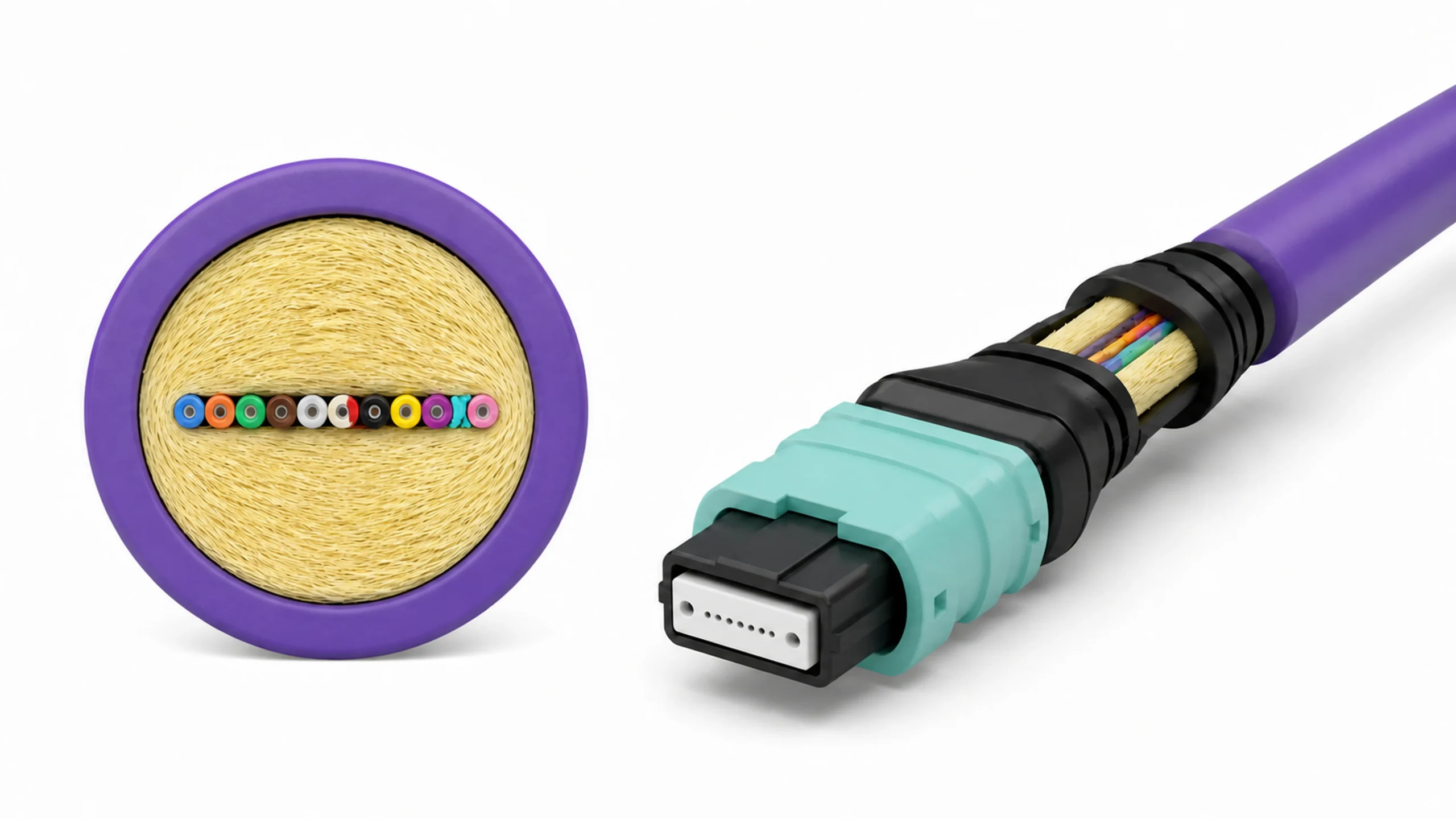
HONGKAI 3D 개념 참조: 다중 섬유 실내 케이블이 MPO/MTP 트렁크로 단자 처리된 예. 커넥터 기하학, 극성 및 테스트 요구사항은 선택된 구성품 데이터시트를 따르어야 합니다.
| 고객에게 판매되는 제품 | 케이블 라인이 제작하는 것 | 추가 제조 범위 |
|---|---|---|
| LC 패치 코어 | 심플렉스 또는 듀플렉스 실내 베이스 케이블 | 커넥터 단자 처리, 연마, 검사 및 광학 테스트 |
| MPO/MTP 트렁크 | 다중 섬유 실내 베이스 케이블 | 다중 섬유 커넥터 어셈블리, 극성 제어, 단면 검사 및 광학 테스트 |
| 수동 광 트렁크 | 지정된 다중 섬유 케이블 | 제품 설계에 따라 공장 단자 처리 또는 현장 단자 처리 |
| 활동 광 케이블 | 광 케이블 구성 요소 | Optical/electronic modules, assembly, firmware or electrical functions, and system test |
HONGKAI can coordinate MPO/MTP and patch-cord termination as well as AOC assembly within a one-stop project. These are additional production modules, not functions built into the base-cable extrusion line. A technical proposal should therefore list the cable-making, connectorization and active-assembly scopes separately.
The distinction also changes a factory budget. A buyer asking for reel-packed cable needs cable-making and cable-test equipment. A buyer selling ready-to-install trunks needs a connector-assembly area, controlled cleaning and inspection, skilled operators and finished-link tests. A buyer selling active optical cables needs electronics and optoelectronics assembly plus complete system testing.
Connector choice follows the optical module. Parallel links often use a multi-fiber interface, while duplex optical systems may use LC or another approved connector. The connector, polarity and fiber type must be taken from the module and cabling design rather than guessed from the port speed.[^7] The HONGKAI patch-cord cable production line describes the base-cable route; HONGKAI’s coordinated termination or AOC service must be added as a separate project module.
Note: Before comparing quotations, the buyer must state whether the required output is bulk cable on a reel or a tested, connectorized network assembly.
How Should a Cable Factory Choose Production Lines for the AI Infrastructure Market?
A cable factory should choose equipment in the order of market segment, approved cable structure, manufacturing process, equipment module and measurable acceptance test. The word “AI” is only the market context. The word “AI” cannot replace a product drawing, capacity plan or factory-scope list. The following six decisions prevent most missing-equipment and wrong-line problems.
1. Network Segment: Which part of the AI network will the factory supply?
왜 중요한가: 랙 링크, 데이터 센터 트렁크, 캠퍼스 덕트 케이블 및 공중 주선은 서로 다른 설치 문제를 해결합니다. 이들은 하나의 교환 가능한 공장 경로를 사용하지 않습니다.
문의할 사항: 대상 주문이 실내 기반 케이블, 커넥터화된 트렁크, 캠퍼스/DCI 케이블, 덕트 케이블, 매설 케이블 또는 공중 케이블인지 확인하세요.
확인 방법: 네트워크 위치, 설치 도면, 예상 거리 및 구매자의 제품 사양을 요청하세요.
경고 신호: 영업 계획에 단지 “AI 케이블”만 명시되어 있고, 완성된 제품이 어디에 설치될 것인지 명시하지 않습니다.
2. 케이블 구조: 어떤 승인된 케이블 도면이 장비 경로를 정의합니까?
왜 중요한가: 동일한 섬유 수를 가진 두 개의 케이블은 타이트 버퍼, 센트럴 튜브, 스트랜드 풀 투브 또는 리본 구조를 사용할 수 있습니다. 이러한 구조는 서로 다른 공정 모듈을 요구합니다.
문의할 사항: 각 대상 제품에 대해 단면도, 재료 목록, 직경 범위, 섬유 수 및 보호 구조를 확보하세요.
확인 방법: 도면의 각 층을 하나의 제조 또는 검사 단계로 변환한 후, 제안된 경로에 누락된 층이 없는지 확인하세요.
경고 신호: 공급업체가 구조를 검토하지 않고 케이블 이름이나 섬유 수만으로 장비를 선택합니다.
3. 섬유 인터페이스: 제품은 어떤 섬유 등급과 커넥터 형식을 지원해야 합니까?
왜 중요한가: 섬유 등급은 원재료 및 광학 테스트 계획을 결정하고, 커넥터 형식은 후속 조립 공정을 결정합니다. 이 두 용어 중 어느 하나만으로는 케이블 생산 라인을 정의할 수 없습니다.
문의할 사항: 관련 경우 OM4 또는 OS2, 명시된 ITU 섬유 사양, 커넥터 유형, 극성, 광학 모듈 및 요구되는 케이블 거리를 확인하세요.
확인 방법: 케이블 사양을 광학 모듈 데이터 시트 및 고객의 승인된 케이블 설계와 비교하세요.
경고 신호: OM4, OS2, MPO/MTP, LC 및 OSFP가 동일한 유형의 제품 사양인 것처럼 처리됩니다.
4. 제품 혼합: 공장은 어떤 용량과 전환 범위를 달성해야 합니까?
왜 중요한가: 여러 케이블 크기에서 안정적인 월간 출력은 단일 제품을 단일 교대에서 생산하는 경우와 다른 공장 계획을 요구할 수 있습니다. 최대 라인 속도만으로는 출력을 증명할 수 없습니다.
문의할 사항: 제품 혼합, 계획된 교대, 리ール 크기, 배치 길이, 전환 빈도 및 시작 시 허용 가능한 폐기물을 정의하세요.
확인 방법: 가장 느린 단계, 세팅 시간, 정비 및 품질 보류를 포함한 전체 공정 경로에서 용량을 계산하세요.
경고 신호: 제안서는 하나의 주요 속도만 제시하고 안정적인 출력 가정, 리ール 계획 또는 병목 현상 검토는 제공하지 않습니다.
5. 공장 범위: 어떤 공정은 이미 존재하며, 어떤 공정은 추가되어야 합니까?
Why it matters: A new factory may need main lines, laboratory equipment, utilities, material handling and training. An existing factory may need only one missing process or extra capacity.
What to ask: List current machines, test instruments, available floor space, electricity, cooling, compressed air, operators and planned installation date.
How to verify: Mark every item as existing, new, optional, customer-supplied or outside the project scope.
Red flags: The quotation lists extrusion equipment but omits reels, tooling, test equipment, utilities or installation boundaries.
6. Acceptance Plan: Which tests must prove that the finished cable meets the contract?
Why it matters: Equipment is valuable only when the agreed cable can be made and measured. A general statement such as “good quality” cannot be used for factory acceptance.
What to ask: Define raw-material checks, in-process measurements, finished optical tests, dimensional checks and required mechanical or environmental tests.
How to verify: Put measurable FAT conditions, sample materials, target products and responsibility for test instruments into the technical agreement.
Red flags: Production capacity and cable quality are promised without a test method, sample definition or acceptance limit.
Note: Two equipment quotations are comparable only when both are tied to the same approved cable drawing, factory scope and FAT criteria.
HONGKAI가 AI- 케이블 생산 라인 제안을 구성하기 전에 필요한 정보는 무엇입니까?
HONGKAI는 완성된 케이블 명칭 또는 사진, 단면도, 실내 또는 실외 사용 여부, 광섬유 사양, 광섬유 수 및 요구 생산 능력을 필요로 합니다. HONGKAI은 계획된 제품 혼합비, 기존 장비, 프로젝트 일정, 예산 범위 및 요구 서비스 범위도 필요로 합니다. 제품이 확정되지 않은 경우, HONGKAI는 논의를 위한 단계별 참조 공장 범위를 준비할 수 있으나, 최종 기계 목록은 제공할 수 없습니다. 광섬유 수만으로는 정확한 생산 라인을 구성할 수 없습니다.
기술 제안서를 준비하기 전에 다음 정보를 수집해야 합니다:
- ☐ 완성된 케이블 명칭, 샘플, 명확한 사진 또는 단면도
- ☐ 랙, 데이터 센터, 실내, 덕트, 매설, 공중 또는 DCI 적용
- ☐ OM4 또는 OS2 등급 및 지정된 광섬유 표준
- ☐ 광섬유 수, 튜브 또는 리본 구조 및 케이블 직경 범위
- ☐ 자켓, 수분 차단, 강화재 및 방호 요구사항
- ☐ 요구 출력, 제품 혼합비, 교대, 리ール 크기 및 배치 길이
- ☐ 기존 생산 라인, 실험실 장비 및 유틸리티
- ☐ 계획된 가동일 및 대략적인 예산 범위
- ☐ 기계만 또는 테스트, 유틸리티, 설치 및 교육을 포함하는 원스톱 범위
- ☐ 볼륨 케이블 또는 커넥터화된 완제품
그만큼 HONGKAI 완전한 광섬유 케이블 공장 체크리스트 새 공장 또는 확장 공장에 동일한 자격 논리를 설명합니다. HONGKAI는 이후 제안을 핵심 생산 기계, 구조에 의존하는 옵션, 실험실 및 온라인 검사, 산업 유틸리티, 서비스 및 명시적 제외 사항으로 분리할 수 있습니다.
Any unverified speed, energy use, fiber-count limit, ribbon capability or commercial result should be written as “to be confirmed per project.” The same caution applies to new technologies. Large AI networks can increase inter-building and inter-data-center fiber construction, but WDM and coherent optics can also increase the capacity carried by each fiber pair; fiber count does not rise in a simple one-to-one ratio with bandwidth.[^4]
참고: 완성된 도면 및 공장 경계를 조기에 확정할수록 장비 누락, 중복 구매 또는 용량 불일치의 위험이 줄어듭니다.