






GJFJV Cable Production Line
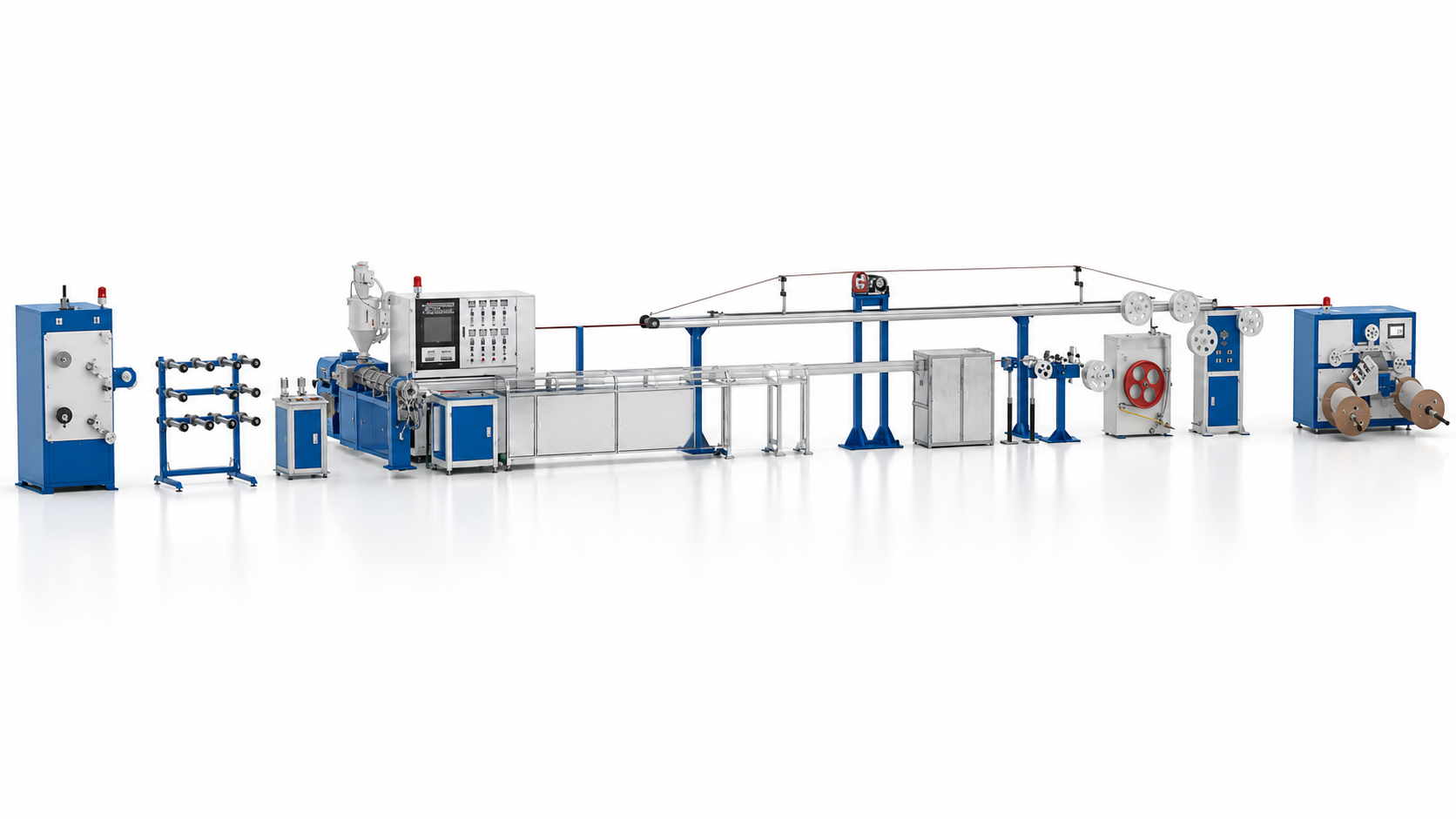
Stage 02 panorama · HK-30 tight buffering remains the upstream phase What does this production route produce? A two-phase reference route for an indoor tight-buffered distribution cable. HK-30 forms the individual tight-buffered fiber elements. The configured GJFJV/HK-50 phase gathers them, applies aramid yarn and extrudes the common outer jacket. Final fiber count, buffer size, jacket material, gathering method and equipment scope follow the approved cable drawing and written proposal.
- Production route
- HK-30 → configured GJFJV / HK-50 phase
- Control approach
- Coordinated controls and handoff reviewed for both manufacturing phases
- Main processes
- Tight buffering · fiber gathering · aramid application · common-jacket extrusion
- Suitable cable range
- GJFJV indoor tight-buffered distribution cable · final design confirmed per project
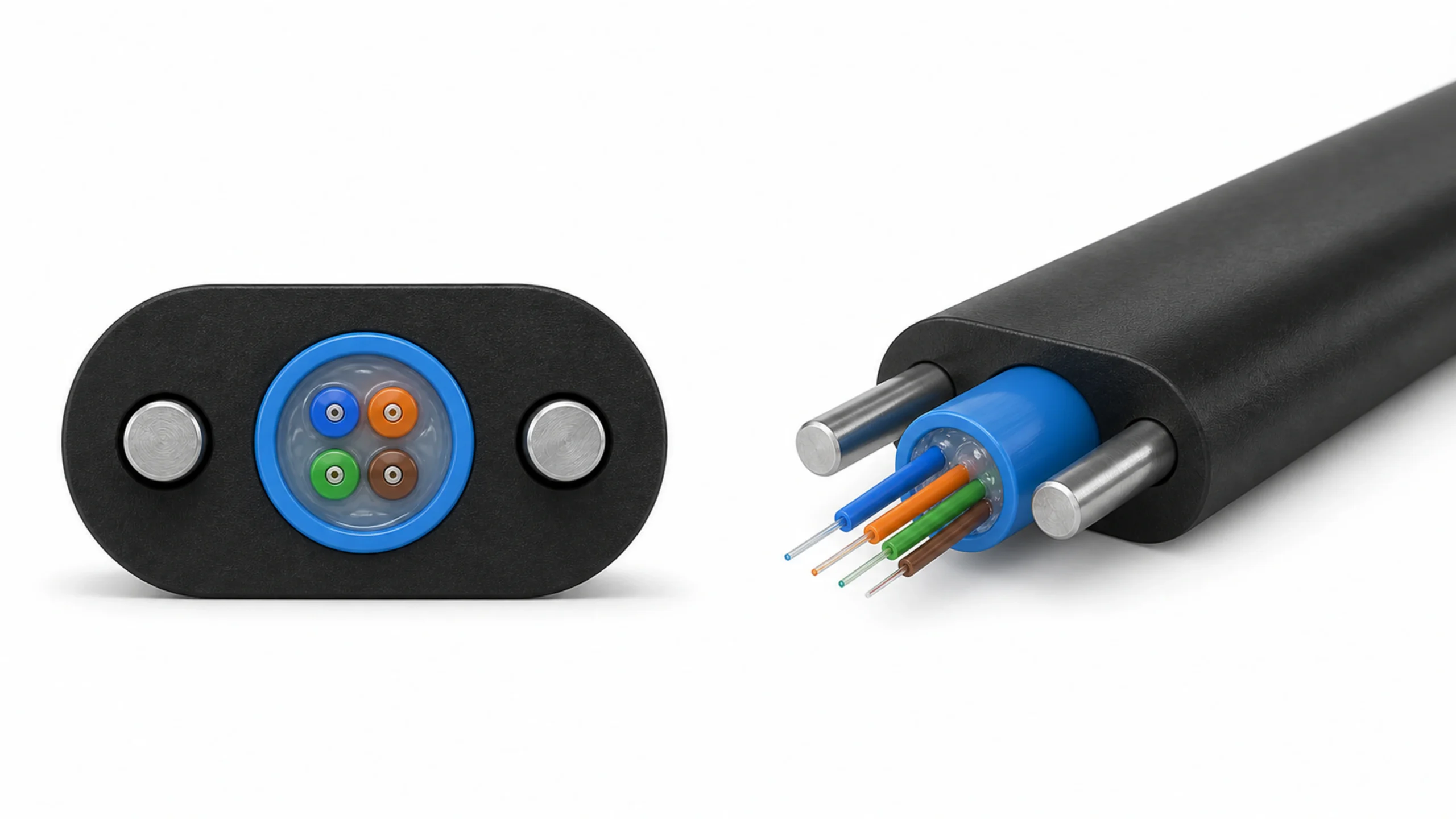
Trace the 12-fiber GJFJV reference structure from optical fiber to common outer jacket.
Open the exploded view and select one of four visible structure groups. See whether it is an incoming HK-30 material, formed by HK-30, or integrated in the configured GJFJV/HK-50 phase. The 12-fiber count is a page reference; final construction follows the approved drawing.
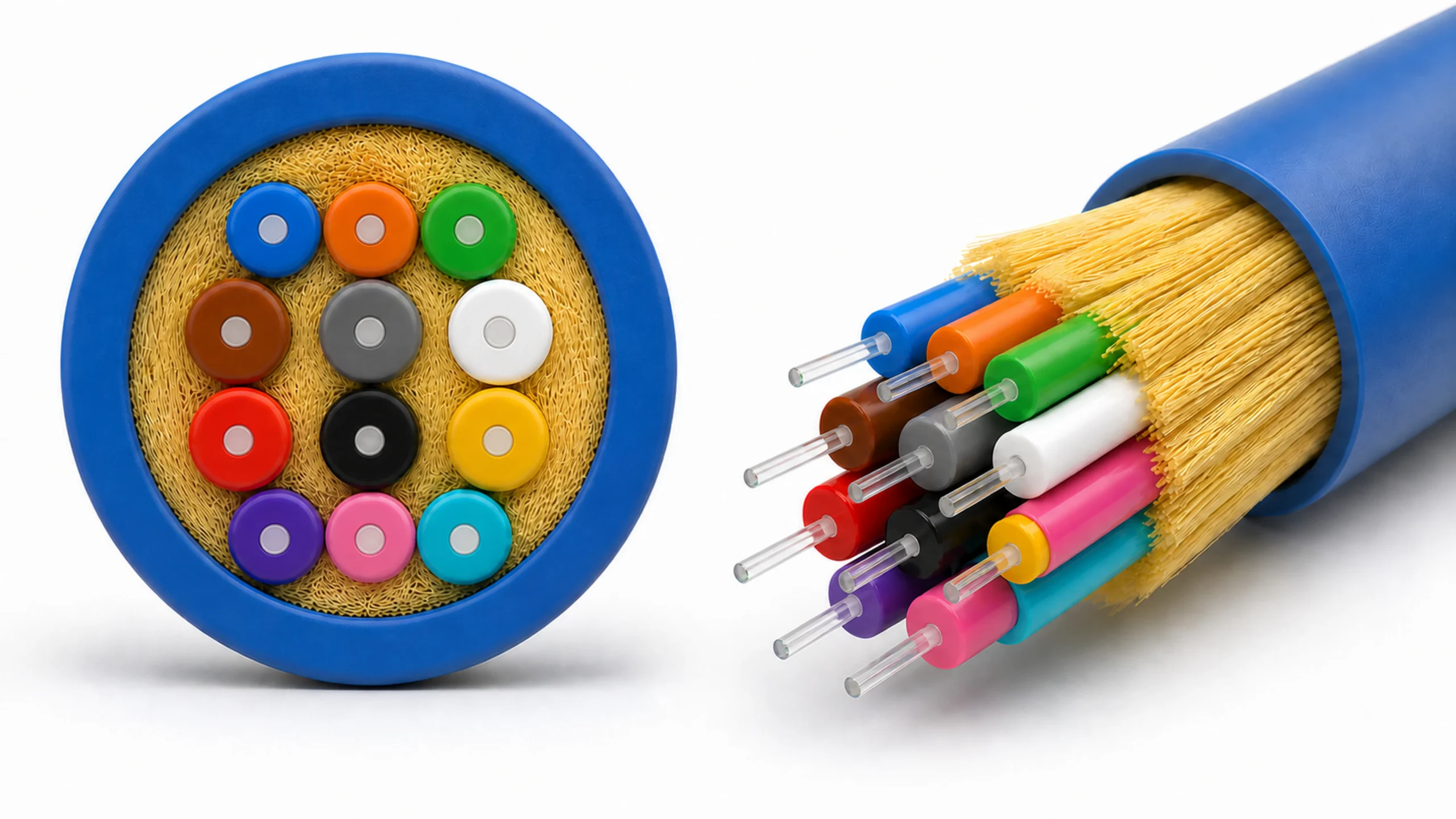
Two manufacturing phases form the GJFJV reference cable.
Select a layer above to highlight the stage that prepares, forms or integrates it.
Review the two production phases behind the GJFJV reference cable.
Carry a structure group from Section 02 into its mapped phase, then compare HK-30 upstream preparation with the configured GJFJV / HK-50 cable-formation phase.
HK-30
Individual tight-buffer formation
Pay off the approved primary-coated optical fiber, prepare it as configured, extrude the specified tight buffer, cool, monitor and take up each identified element.
- Input
- Approved primary-coated optical fiber + project-specified tight-buffer compound and identification plan
- Output
- Individually identified tight-buffered fiber elements ready for cable formation
- Route position
- Stage 01 · Upstream element formation
- Interface to confirm
- Finished package, buffer dimensions, identification and Stage 02 feeding interface
Form each project-specified tight-buffered element
Coordinate fiber payoff and handling, buffer extrusion, cooling, dimensional monitoring, traction and take-up.
Fiber handling · compound delivery · dimensional control
HK-30 prepares the individual buffered elements required by the approved GJFJV construction. It does not form the common cable jacket.
Fiber input, buffer system and acceptance criteria
Confirm fiber type, spool, buffer dimensions, compound, colors, tension, output target, reels and inspection criteria.
The Stage 02 panorama explains a configured process phase, not a final machine layout or supply commitment. Final equipment scope, interfaces and acceptance criteria follow the approved cable drawing and written proposal. No default capacity is assumed.
Use video evidence one production phase at a time.
Review the verified upstream HK-30 recording alongside a related HONGKAI breakout / distribution cable machinery video. Each clip keeps its own evidence boundary so related equipment footage is never presented as proof of the complete configured line.
The related equipment video is temporarily unavailable.
The approved drawing and written proposal still control the configured gathering, aramid and common-jacket phase.
Define the GJFJV project boundary before the route is finalized.
The two-stage route above is a reference configuration, not a contractual supply scope. Buyer, HONGKAI and joint responsibilities become final only in the approved technical proposal or agreement.
Nothing below is treated as included, excluded, buyer-supplied or HONGKAI-supplied until it is confirmed in writing.
Opening a group only reveals its details; it does not confirm scope.
01 Buyer prepares Buyer responsibility Project, product and site information for engineering review 4 items
Information HONGKAI must review before fixing the production route and reference equipment configuration.
- Approved GJFJV cable drawing, target fiber count, tight-buffer dimensions, gathering or stranding method and finished-cable requirements To be confirmed
- Primary-coated optical fiber, tight-buffer material and identification plan, aramid-yarn system, common-jacket material, color and marking inputs To be confirmed
- Factory space, utilities, material flow, reel sizes, access and installation conditions To be confirmed
- Existing equipment and interfaces to Stage 01 tight-buffer formation and the configured Stage 02 phase To be confirmed
02 Defined in the written proposal HONGKAI responsibility Recommended configuration and quoted supply boundary 4 items
HONGKAI defines the recommended configuration and quoted supply boundary after reviewing the available project inputs.
- Recommended two-stage GJFJV route and reference equipment configuration stated in the written proposal To be confirmed
- Quoted equipment list, equipment-source boundary and the proposed Stage 01 to Stage 02 interfaces To be confirmed
- Required tooling, tension control, cooling, diameter measurement, haul-off and take-up, including whether the gathering cage is integrated or supplied as a matched unit To be confirmed
- Documentation, commissioning, training and after-sales scope stated in the proposal To be confirmed
03 Confirmed together Joint confirmation Technical interfaces, acceptance and project coordination 4 items
Technical interfaces, acceptance and project coordination require written confirmation from both project teams.
- Final GJFJV cable structure, process route and equipment configuration To be confirmed
- Factory layout, equipment interfaces, utilities and site-readiness conditions To be confirmed
- Trial materials, sampling, FAT and acceptance criteria for tight-buffered elements and the finished GJFJV cable To be confirmed
- Delivery timing, installation, trial production, change control and final sign-off To be confirmed
Prepare the inputs for a complete GJFJV production review.
Select the planning topics you are ready to discuss during the first engineering review. A selection marks a review topic only; it does not approve a technical value, equipment quantity, material grade, performance target or supply scope.
Review the available GJFJV production references and the evidence boundaries.
The Stage 01 image and video plus the Stage 02 panorama and related equipment video illustrate the current GJFJV reference route. They are not the approved line layout, FAT record, customer case, performance commitment, confirmed supply scope or acceptance record.
No planning topics selected yet. Return to Section 05 to add review priorities.
HK-30 tight-buffer formation reference
Reference line for paying off primary-coated optical fiber, forming the identified tight-buffered element, then cooling, measuring, hauling off and taking up. Fiber input, tight-buffer material, dimensions, tooling, tension, identification and reel format remain project-specific.
These production-stage images and the two stage-specific videos illustrate the current GJFJV planning route only. The Stage 02 recording is related equipment footage, not exact configured-line proof. None proves the approved drawing, final layout, equipment quantity, performance, customer result, FAT, supplied scope or acceptance. Those items are defined only by the mutually approved technical and commercial documents.
Customer feedback published with HONGKAI's GJFJV production line.
These five-star reviews are reproduced from HONGKAI's current GJFJV production-line page. The selected comments focus on fiber-optic production-line experience and retain their published wording.
“I highly recommend Hongkai's fiber optic cable production line. It has helped us reduce production time and costs while maintaining the highest standards of quality. The customer service provided by Hongkai has also been exceptional.”
“We've been using the Hongkai fiber optic cable production line for years now and it never fails to impress. It's an essential piece of equipment for our operations in Jakarta.”
“The quality of the fiber optic cable produced by Hongkai's production line is unmatched. It's helped us become a major player in the telecom industry here in São Paulo.”
Source boundary: these review excerpts and five-star displays reproduce what is currently published on HONGKAI's GJFJV page. Customer statements describe their experience; final GJFJV configuration, output, FAT, supplied scope and acceptance remain project-specific.

Clarify the GJFJV route before requesting a proposal.
These answers connect the individually tight-buffered distribution-cable structure to the two reference stages and the inputs needed for engineering review.
What stages are included in the GJFJV reference route?
The reference route has two stages. HK-30 forms each identified tight-buffered optical-fiber element. The configured GJFJV / HK-50 phase gathers or arranges those elements as defined by the drawing, applies the common aramid system, extrudes the common outer jacket, then cools, monitors, hauls off and takes up the finished cable. The final route follows the approved drawing and written project inputs.
What cable construction does this page use as its reference?
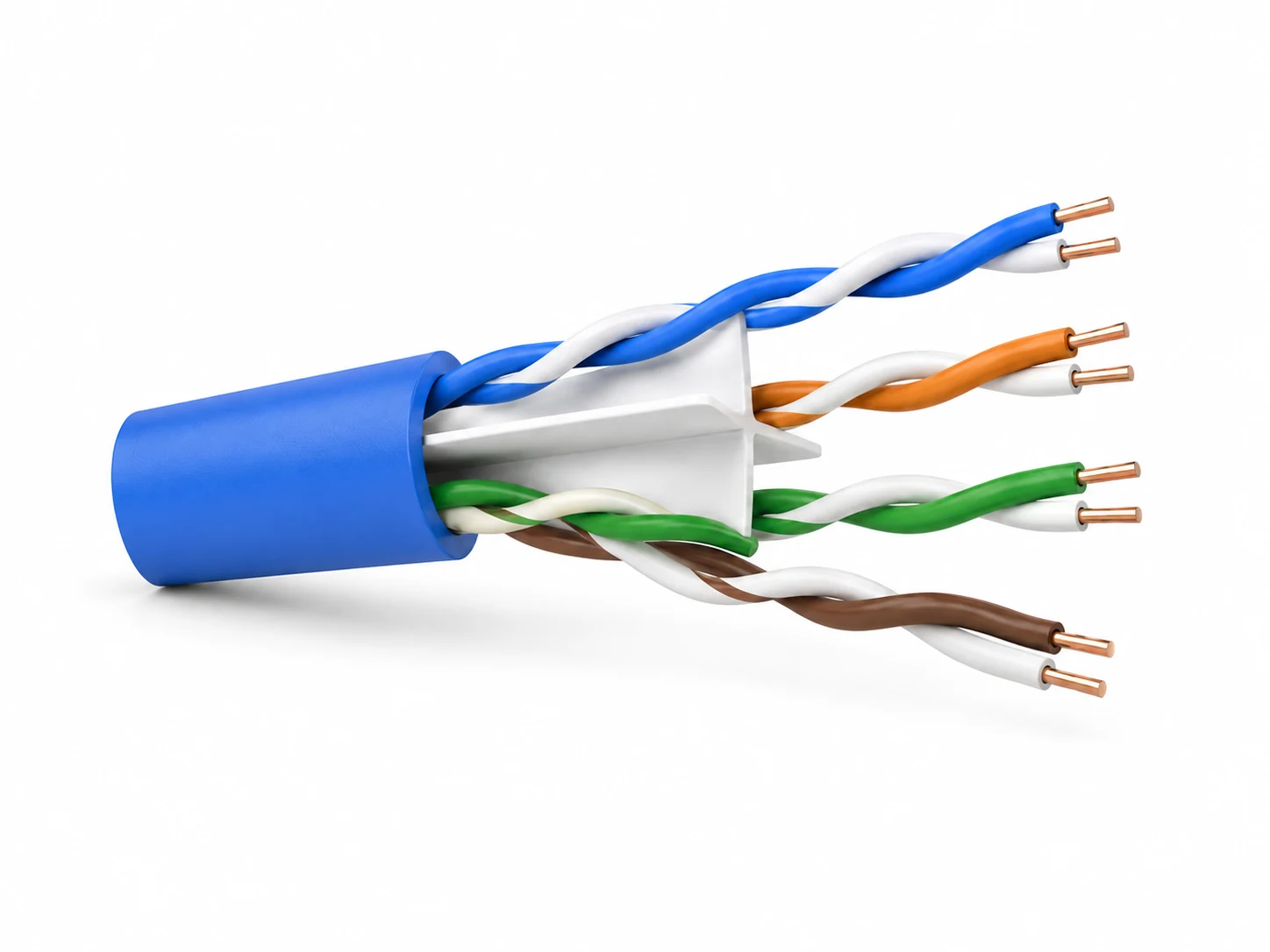
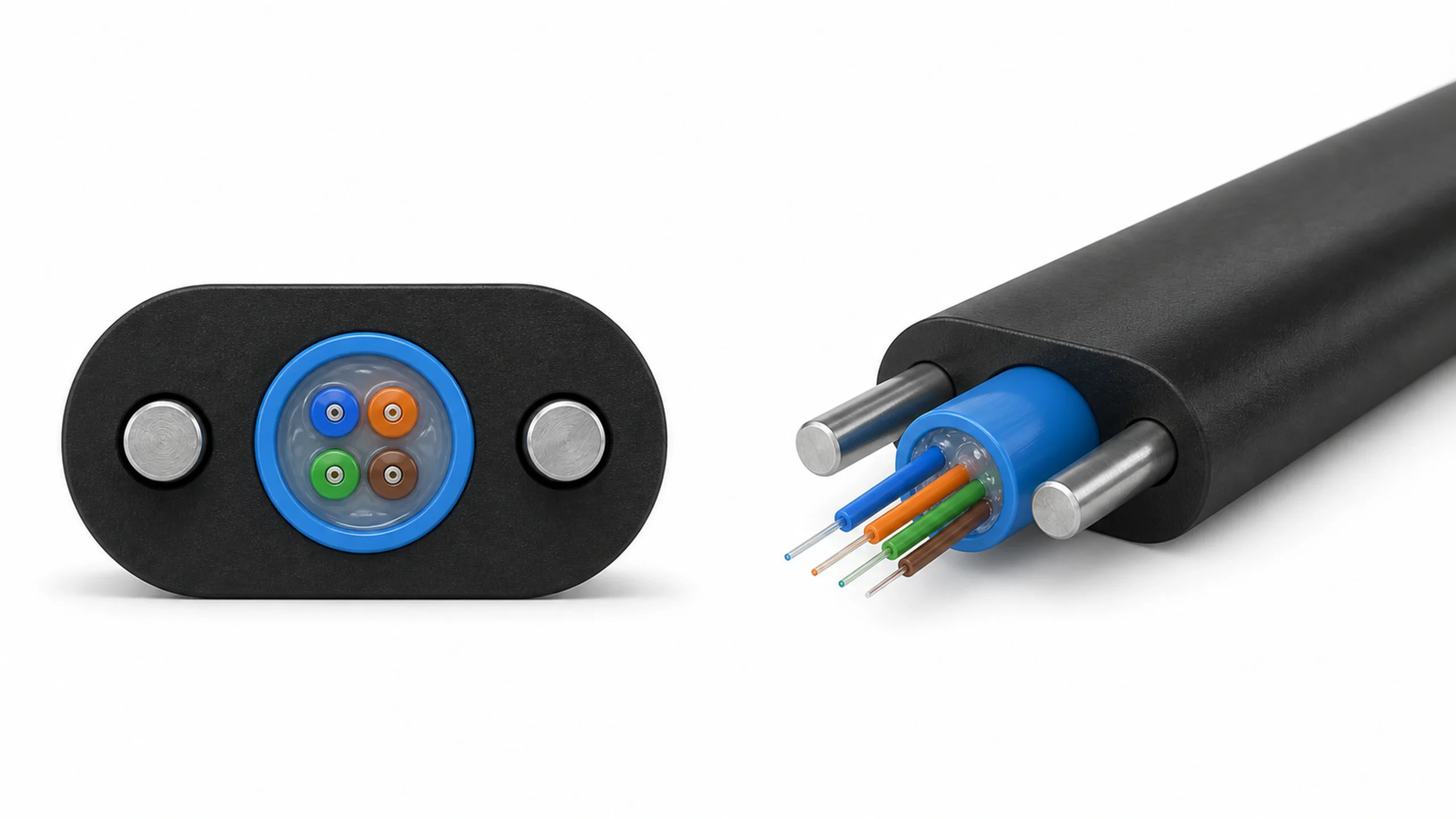
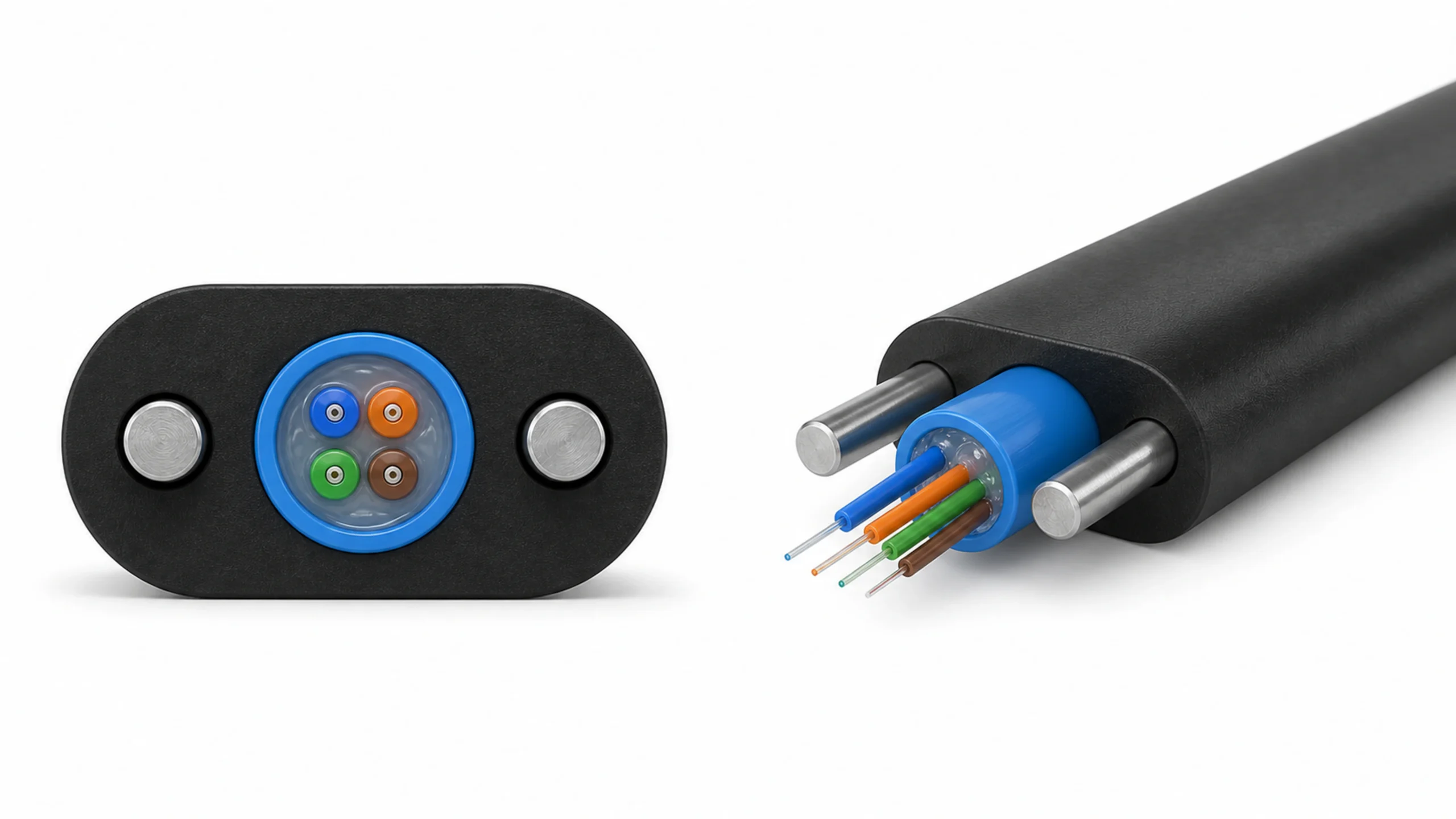
The reference is an indoor distribution construction with multiple individually tight-buffered optical fibers, one common aramid system and one common outer jacket. The product rendering is representative and does not fix fiber count, dimensions, material grades or performance.
How is the Stage 01 output handed to Stage 02?
Reel format, tight-buffer dimensions, identification, tension and handling requirements must match the configured Stage 02 input. If the buyer already has qualified tight-buffered fibers, Stage 01 may become an upstream or existing-equipment interface. That does not automatically place Stage 01 inside the supplied scope.
What should the buyer provide for engineering review?
Provide the approved drawing or sample, target fiber count, optical-fiber and input-reel data, tight-buffer dimensions, material and identification, gathering or stranding method, any applicable lay direction or pitch, aramid and jacket requirements, marking, target output, reel plan, factory utilities, existing equipment, inspection and acceptance needs, and the project schedule.
Which materials and configuration choices remain project-specific?
Fiber count, tight-buffer dimensions, material and identification, parallel gathering or a light lay or defined stranding method, cage integration or a matched unit, aramid package, jacket material, profile and color, tooling, controls, reels and inspection points all require written confirmation. This page does not select a fixed version.
What do the images and process videos prove?
The structure renders, equipment image and Stage 02 panorama support visual review only. The verified HK-30 recording supports the Stage 01 process shown in that recording. The Stage 02 breakout / distribution cable machinery recording is related equipment footage only and does not verify the exact configured GJFJV / HK-50 route. None proves the approved drawing, complete two-stage supply, final layout, speed, capacity, performance, certification, FAT or customer result, and visible recording values are not page guarantees.
How should existing equipment and factory conditions be reviewed?
Confirm whether Stage 01 already exists, whether the gathering cage is integrated or supplied as a matched unit, available space and material flow, power, cooling, air where required, reel handling and inspection interfaces. A catalog image or reference panorama is not a project layout commitment.
How are capacity, FAT, installation and service confirmed?
The written technical and commercial documents define buyer materials, the stable-operation basis, speed or output targets, sampling and instruments, FAT or site acceptance, installation, training, spare parts, service and each party's responsibility. This page assumes no default capacity or service scope.
Final cable construction, equipment, performance, acceptance criteria and supply scope are defined in the signed technical and commercial agreement.
Define the GJFJV construction and two-stage production boundary.
Share the available GJFJV drawing or sample, target fiber count, optical-fiber and reel inputs, tight-buffer dimensions, material and identification, gathering or stranding method, cage arrangement, aramid and common-jacket requirements, finished dimensions and marking, output and reel plan, factory conditions, inspection and acceptance basis, and project schedule. HONGKAI will review the open engineering items before preparing a project-specific proposal.
What HONGKAI will review
- Cable construction
- Drawing or sample, target fiber count, individual tight-buffer arrangement and finished requirements
- Stage 01 interface
- Primary-coated fiber input, tight-buffer dimensions, material, identification and reel handoff
- Gathering & cage
- Parallel gathering or defined stranding method and whether the cage is integrated or matched
- Aramid & jacket
- Common aramid system, jacket material, profile, color, tooling, marking and finished dimensions
- Capacity & reels
- Product mix, shifts, target output, stable-operation basis and input and output reel formats
- Factory & acceptance
- Layout, utilities, existing equipment, inspection, FAT, installation and service boundary
What to prepare · 6 items
- Available GJFJV drawing, reference sample, target fiber count and finished requirements
- Optical-fiber input, tight-buffer dimensions, material, identification and qualified-element status
- Gathering or stranding method, fiber order, applicable lay definition and cage arrangement
- Aramid system, common-jacket material, profile, color, tooling and marking
- Target output, shifts, stable-operation basis and source and delivery reel formats
- Factory conditions, existing interfaces, inspection, FAT, acceptance, installation and schedule
No complete specification yet? Share the known construction and operating conditions. Unknown values can remain open for engineering review.
The information submitted here supports a preliminary technical review. Final cable construction, equipment configuration, performance, price, delivery schedule and supply scope are confirmed only in an approved proposal or agreement.
Provide the GJFJV drawing, tight-buffer inputs, gathering method and finished-cable targets.
Add the available drawing or sample, target fiber count, optical-fiber and reel inputs, tight-buffer dimensions, material and identification, gathering or stranding and cage arrangement, aramid and common-jacket requirements, target output, factory conditions and acceptance basis.