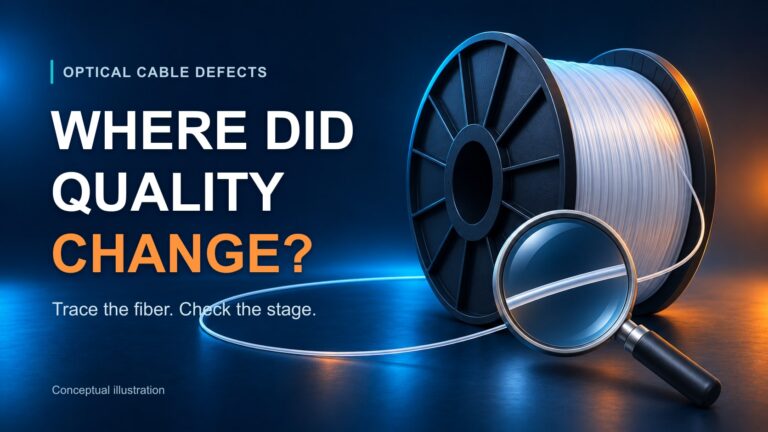













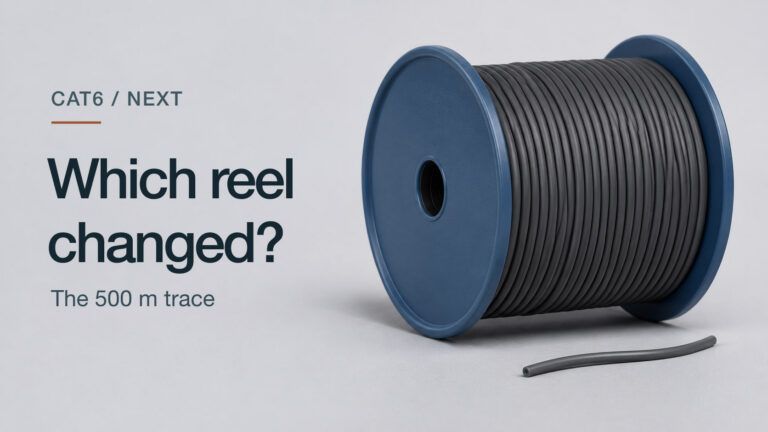
Cat6 릴에서 NEXT 오류 발생 시, 어떤 페어 릴을 추적해야 할까요?
500 m에서 리엘 교체를 수행합니다. Cat6 샘플의 양쪽 끝 마크를 사용하여 점검할 리엘을 식별하고, 리엘 번호만으로는 트위스터 설정 변경을 정당화할 수 없는 이유를 확인하십시오.
가이드 읽기
CABLE MACHINERY

케이블 제조 지식 센터
Follow a cable from material to reel, compare production equipment, or trace a fault back to its sample.
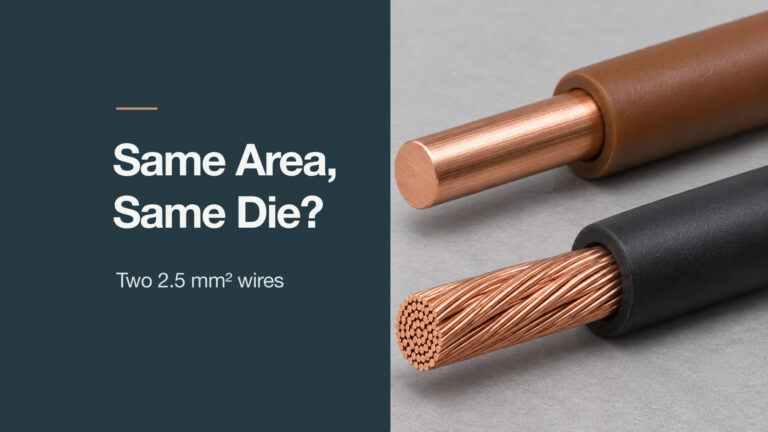 Latest guide고체 및 유연성 건축용 전선은 동일한 절연 라인에서 공유할 수 있습니까?
500 m에서 리엘 교체를 수행합니다. Cat6 샘플의 양쪽 끝 마크를 사용하여 점검할 리엘을 식별하고, 리엘 번호만으로는 트위스터 설정 변경을 정당화할 수 없는 이유를 확인하십시오.
가이드 읽기튜브 직경이 일정하다고 해서 내부에 포함된 광섬유의 양을 알 수 있는 것은 아닙니다. 표시된 튜브와 해당 광섬유를 비교한 후, 측정값을 릴로 거슬러 올라가 확인하십시오.
절단 단면은 압출 라인에서 제조해야 할 제품의 종류를 나타냅니다. 코팅된 광섬유가 채워진 젤 충전 튜브인지, 아니면 단일 광섬유에 밀착되는 버퍼층인지 확인하십시오. 샘플을 해당 라인에 매칭하고 도면에 표시합니다.
광섬유 사양, 케이블 물리적 구조, 재사용 가능한 장비 인터페이스 및 제품별 테스트 증거를 구분하여 첫 번째 케이블 범위를 선택하십시오.
라인 속도 승인 또는 수조 변경 전에 제품 경로, 수질 조건 및 측정 지점을 기준으로 케이블 압출 냉각을 비교하십시오.
Choose a cable to follow the material through the line and see what to check on the finished reel.
By project
Use the material going in and the product coming out to compare the equipment on a quotation.
What changes on the lineA single-screw line commonly applies ready-made compound to cable. A twin-screw compounding line mixes ingredients into a new material.
명시할 사항Specify the feed material and whether the required output is coated cable or finished compound.
What changes on the lineThe way bobbins and elements rotate affects twist and orientation. Check the mechanism against the conductor or core being stranded.
명시할 사항Bring the construction, bobbin sizes and required lay. Identify any backtwist or compaction requirement.
What changes on the lineA take-up collects the continuous line output. A sale-length coil may need a separate measuring, cutting and packing operation.
명시할 사항Specify the shipping length, coil or spool dimensions, and how the cable transfers from the production reel.
Production problems

Use the two jacket marks and the pair-reel change record to trace the failed sample.
Compare the water path, water conditions and point of measurement for the same cable.
Follow an identified sample through the process to narrow down where the readings change.
Factory economics
See how utilization, material, labor and energy assumptions affect cost per kilometre.
Optical attenuation
Compare measured attenuation at different stranding pitches and review the test method.
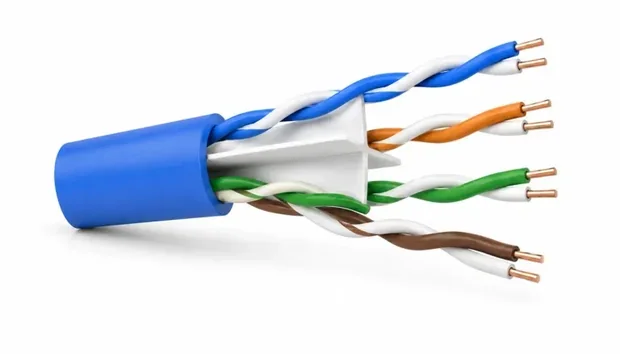
Twisted pairs
Compare throughput and near-end crosstalk margins under the benchmark’s test conditions.
Choose the decision in front of you to see which drawing, sample or test record to bring.
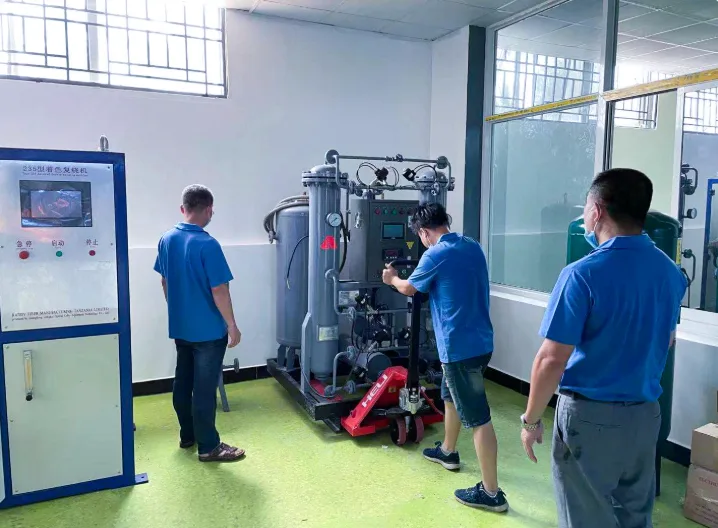
Send the construction, size range and required saleable output for a named cable. Include the working hours behind the target and identify equipment already in the factory.
Open the RFQ checklistMark columns, doors and utility points on a dimensioned plan. Trace a loaded reel from storage to the pay-off and from take-up to the next operation, including space for loading and service.
Check the factory layoutAgree which products will run at the supplier’s factory. List the installation, utility and product checks to repeat at your site, with a record and responsible person for each.
Compare FAT and SATIdentify the drum and the specimen taken from it. Bring the line measurements, required lab results and release decision together so someone can trace a result back to the cable.
Build a drum-release plan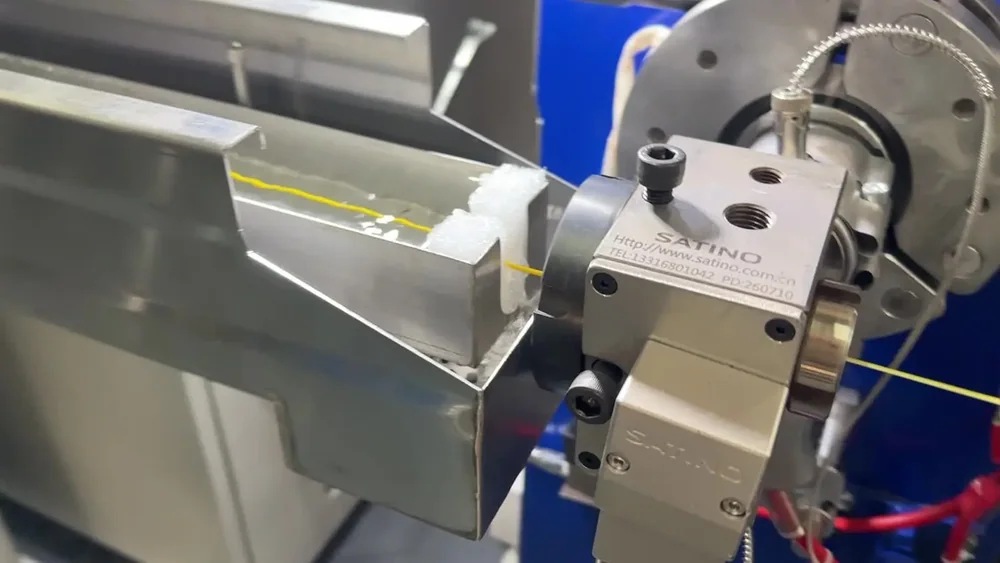
Share your cable drawing, target output or the issue on your line.
케이블 제조, 장비 선택 및 문제 해결에 대한 월간 노트와 HONGKAI 생산 라인 관련 가끔 업데이트를 받아보세요.
언제든지 구독을 해지할 수 있습니다. 개인정보 보호정책
 English English
 Русский
 हिन्दी
 한국어
 বাংলা
 Bahasa Indonesia
 Tiếng Việt
 മലയാളം
 Português do Brasil
 العربية
 فارسی