






Choosing the right 광섬유 케이블 생산 라인1 involves balancing an investment of $200,000 to over $1,000,000 with your specific production goals. Key decisions depend on target capacity (e.g., 1,500 km/month), 케이블 유형2 (e.g., FTTH, ADSS), and desired automation levels, which can reduce labor costs3 by up to 40%.
Struggling to select the right machinery for your factory? The high costs and complex technology can feel overwhelming. A wrong choice leads to production bottlenecks, poor quality, and a failed investment, costing you millions in the long run.
To choose the right fiber optic cable production line, focus on three core factors: production capacity, cable type specialization, and total cost of ownership (TCO). A typical line costs between $200,000 and $1,000,000 and can produce from 500 to 3,000 km of cable per month.

– Target a 생산 능력4 that exceeds your current demand by at least 25%** to accommodate future growth. A standard 2차 코팅 라인5 runs at 800 m/min, enabling significant output.
- Select machinery based on your primary cable products. 안 FTTH 드롭 케이블6 line has different requirements and costs about 30% less than a high-fiber-count loose tube stranding line7.
- 믿다 총 소유 비용(TCO)8, not just the initial purchase price. TCO includes energy consumption9 (up to 150 kWh for a complete line), spare parts (around 3-5% of machine cost annually), and operator training.
- Prioritize automation to reduce long-term operational costs. Fully automated lines can reduce the required number of operators by up to 50% and minimize human error, improving cable quality consistency.
Choosing a production line is a major strategic decision defining your factory’s competitive edge for the next decade. It’s more than just buying machines; it’s about building a complete manufacturing ecosystem. In this guide, we will break down the entire process, using our 20+ years of experience to help you make an informed decision that drives profitability and growth.
What are the Core Components of a Fiber Optic Cable Production Line?
A complete fiber optic cable production line consists of four main stages: secondary coating, SZ stranding, sheathing (jacketing), and rewinding, with each stage requiring specialized equipment that costs between $50,000 and $300,000 per unit.
Are you unsure which machines you actually need? Investing in the wrong components creates bottlenecks and inflates your budget. You need a clear roadmap to build an efficient, cohesive production flow from start to finish.
The essential components are the Secondary Coating Line, SZ Stranding Line, and Sheathing Line. For a mid-sized factory targeting 1,500 km of outdoor cable per month, this setup represents an initial investment of approximately $450,000 to $700,000, depending on the level of automation and speed.

Breaking Down the Production Workflow
Raw optical fibers must be protected and bundled to make high-quality fiber optic cables. Each production line stage adds a layer of protection and structure, transforming fragile glass fibers into a durable, high-performance cable. Understanding the function of each machine is the first step toward building an efficient factory.
1. Fiber Coloring and Rewinding Line
Before any protective layers are added, individual fibers are colored for identification. A coloring and rewinding line unwinds fibers from their original spools, applies a thin layer of UV-cured colored ink, and rewinds them onto new bobbins. This process is critical for assembly and splicing in the field. A typical machine can color fibers at up to 2,000 m/min speeds.
2. Secondary Coating Line
This is where the fibers receive their first layer of significant protection. In a loose tube design, the 2차 코팅 라인5 extrudes a plastic tube (usually made of PBT) around a bundle of colored fibers. The line includes payoffs for the fibers, an extruder, cooling troughs, a capstan, and a take-up. High-speed lines can operate at over 800 m/min, producing the semi-finished "loose tubes" that will form the core of the cable. Jelly-filling stations are also integrated here to make the tubes water-resistant.
3. SZ Stranding Line
The SZ stranding machine takes multiple loose tubes (each containing fibers) and twists them together around a central strength member (like a FRP rod). The "SZ" pattern allows easy access to individual tubes without breaking the cable. This machine also applies water-blocking yarns and tapes. The stranding pitch and tension control are critical parameters, directly impacting the cable’s mechanical and optical performance.
4. Sheathing (Jacketing) Line
The final stage is applying the outer jacket. The 덮개선10 takes the stranded cable core, applies additional strength members if needed (like aramid yarn for ADSS cables), and extrudes a final protective jacket, usually made of HDPE or LSZH. This line is crucial for ensuring the cable can withstand environmental factors like moisture, UV radiation, and physical stress. A typical 덮개선10 for outdoor cables runs at speeds between 80 and 120 m/min.
| Machine Component | 주요 기능 | Typical Speed (m/min) | Estimated Cost Range |
|---|---|---|---|
| Fiber Coloring Line | Colors individual fibers for identification | 1000 – 2000 | $40,000 – $80,000 |
| Secondary Coating Line | Encases fibers in a protective loose tube | 500 – 1000 | $150,000 – $300,000 |
| SZ 스트랜딩 라인 | 중앙 요소 주위에 느슨한 튜브를 비틀어 감습니다 | 80 – 150 | $120,000 – $250,000 |
| 외장 라인 | 최종 외피를 적용합니다 | 60 – 120 | $100,000 – $200,000 |
주요 내용:
- 세 가지 핵심 공정: 이차 코팅, SZ 비틀기, 그리고 외피 공정으로 시작하세요. 컬러링 기계는 보조적이지만 핵심적인 구성 요소입니다.
- 귀하의 장비 속도는 2차 코팅 라인5 전체 공장의 최대 이론적 생산량을 결정합니다.
- 각 장비의 비용은 그 속도, 자동화 수준, 그리고 구성 요소의 품질(예: 압출기 스크류, 모터, PLC 시스템)과 직접적으로 연관됩니다.
목표하는 케이블 유형이 장비 선정에 어떻게 영향을 미칩니까?
제조하려는 케이블 유형—예를 들어 FTTH 드롭 케이블 대비 288핵 ADSS 케이블—은 장비 사양을 직접적으로 결정하며, 고핵 케이블 전용 라인은 단순 실내 케이블 라인보다 최대 50-70%까지 비쌉니다.
범용 생산 라인을 선택하는 것은 안전해 보이지만 비효율적인 전략입니다. 무거운 야외용 케이블용으로 설계된 라인은 단순한 실내 패치 코드에는 과도한 사양이며, 에너지와 자본을 낭비합니다. 기계는 목적에 맞춰 선택해야 합니다.
장비 선택은 귀하의 주요 시장과 일치해야 합니다. FTTH 드롭 케이블의 경우, 섬유 페이오프를 갖춘 전용 외피 라인이 필요하며, 비용은 약 $80,000-$150,000입니다. 고핵 방호 케이블의 경우 추가로 강선 테이핑 라인과 무거운 SZ 비틀기 장치가 필요하며, 총 비용에 $200,000 이상이 추가됩니다.

장비를 시장에 맞추기
광섬유 케이블 시장은 하나의 규격으로 모든 것을 해결할 수 없습니다. 다양한 응용 분야는 크게 다른 케이블 설계를 요구합니다. 귀하의 공장 수익성은 특정 시장 세그먼트11. 에 효율적으로 대응하는 능력에 달려 있습니다. 다음은 세 가지 일반적인 케이블 유형2.
1. FTTH (가정용 광섬유) 드롭 케이블
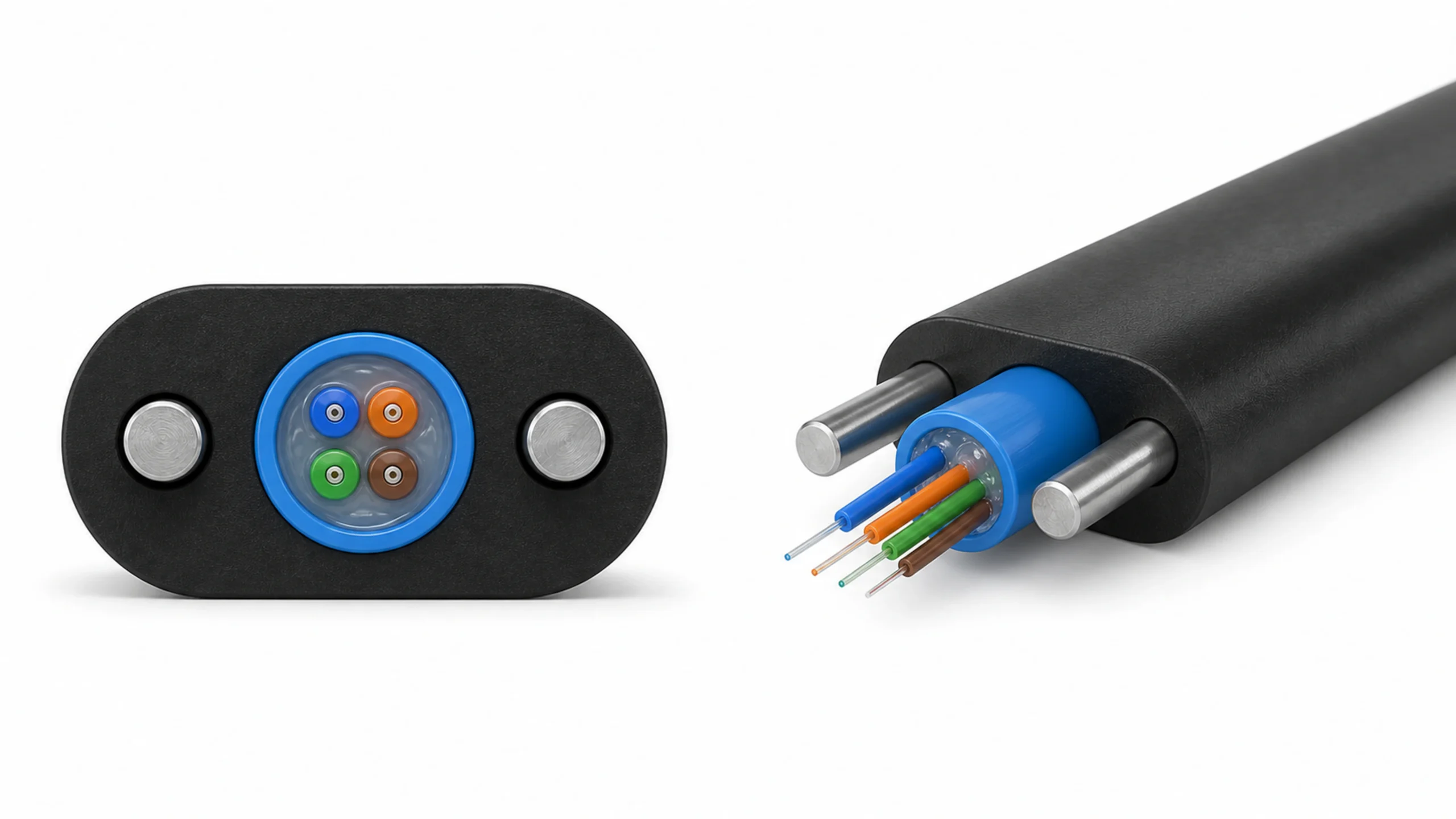
These cables bring fiber from a local distribution point to an individual home. They are typically low-fiber-count (1-4 fibers), lightweight, and designed for easy installation.
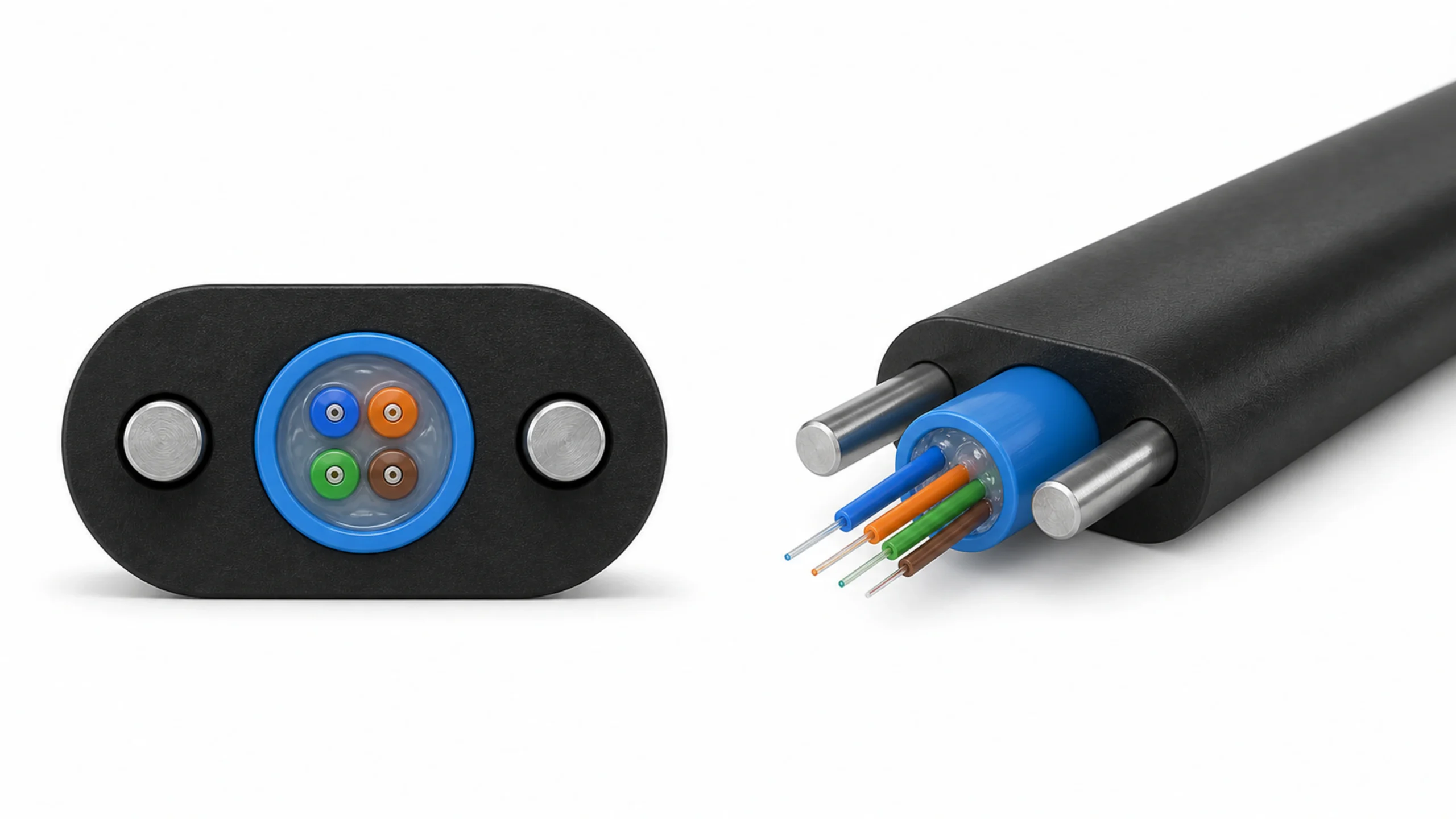
- Production Process: Significantly simpler. It often uses a specialized FTTH 드롭 케이블6 production line that combines fiber payoffs, strength member application (FRP or steel wire), and sheathing into a single, continuous process.
- Key Machinery: A dedicated FTTH 덮개선10 is the core component. A separate coloring machine is also needed. For the most common designs, you do not need a secondary coating or SZ 스트랜딩 라인12.
- Investment Focus: Speed and reliability for high-volume production of a standardized product.
2. Indoor Distribution Cables (Tight Buffer)
데이터센터 및 LAN 내부에 사용되는 이 케이블은 섬유에 "타이트 버퍼" 코팅(900µm 플라스틱층이 250µm 섬유에 직접 도포됨)이 적용되어 있습니다.
- Production Process: 루즈 튜브 대신 타이트 버퍼링 라인이 필요합니다. 2차 코팅 라인5. 타이트 버퍼링된 섬유는 이후 묶여 외피가 적용됩니다.
- Key Machinery: 타이트 버퍼링 라인, 케이블/스트랜딩 기계(SZ 스트랜더보다 간단함), 및 실내 케이블 외피 라인(PVC 또는 LSZH 재료를 자주 사용).
- Investment Focus: 타이트 버퍼링 라인에서의 정밀한 장력 제어는 섬유의 감쇠(마이크로 벤딩)를 방지하기 위해 필수적입니다.
3. 야외용 루즈 튜브 케이블(배관/공중/매설용)
이 케이블은 극한의 야외 환경에 사용되도록 강화된 케이블로, 여러 개의 루즈 튜브 내에 12에서 576+개의 섬유를 포함할 수 있습니다.
- Production Process: 이에는 이차 코팅, SZ 스트랜딩, 외피 공정의 전체 장비가 필요합니다. 강화 케이블의 경우 최종 외피 전에 스틸 테이프 방호 라인이 추가로 필요합니다. 모든 비금속 자립형(ADSS) 케이블의 경우 덮개선10 고토크 캐터필러와 아라미드 실타래 공급 장치가 필요합니다.
- Key Machinery: 이전 섹션에서 설명한 전체 라인입니다.
- Investment Focus: 내구성, 무거운 부품을 위한 강력한 장력 관리, 그리고 두꺼운 보호 외피를 위한 정밀한 재료 압출.
| 케이블 유형 | 필수 핵심 장비 | 주요 기술적 초점 | 추정 라인 비용 |
|---|---|---|---|
| FTTH 드롭 케이블 | 컬러링 라인, FTTH 외피 라인 | 고속(최대 200 m/min), 컴팩트한 설치 공간 | $120,000 – $230,000 |
| 실내 타이트 버퍼 | 타이트 버퍼링 라인, 케이블 기계, 외피 라인 | 정밀한 장력 제어, 유연한 재료(LSZH) | $250,000 – $400,000 |
| Outdoor Loose Tube | Secondary Coating, SZ Stranding, Sheathing Line | High stranding torque, robust cooling, jelly filling | $450,000 – $1,000,000+ |
주요 내용:
- Define your target market and top 2-3 cable products before requesting machinery quotes.
- A flexible production line that can handle multiple 케이블 유형2 is possible, but often comes at the cost of lower efficiency for any single type.
- For armored or ADSS cables, the power and torque of the stranding and 덮개선10s are critical success factors. Ensure the machines are specified for the heaviest cables you plan to produce.
What is the Total Cost of Ownership for a Production Line?
The Total Cost of Ownership (TCO) for a fiber optic cable production line is typically 2-3 times the initial purchase price over a 10-year lifespan, including energy, labor, maintenance, and raw materials, which account for over 70% of ongoing expenses.
You have a budget for the machinery, but have you accounted for the hidden costs? Focusing only on the sticker price is a common mistake that leads to budget overruns and unprofitable operations. You need a complete financial picture.
Beyond the initial $450,000-$700,000 machine investment for a standard line, budget an additional 15-20% annually for operational costs. This includes approximately $80,000/year for energy, $120,000/year for skilled operators, and $25,000/year for spare parts and maintenance.

Looking Beyond the Price Tag
A wise investment delivers the lowest cost per meter of quality cable over the machine’s lifetime. High-quality machinery from a reputable supplier may have a 20% higher initial cost but can reduce TCO by up to 30% through better efficiency, lower failure rates, and reduced waste.
1. Energy Consumption
A complete production line is energy-intensive. The extruders (for secondary coating and sheathing) are the biggest consumers, along with the motors and heating/cooling systems.
- Standard Line: A typical line running at medium capacity can consume 100-150 kWh of electricity.
- Cost Impact: At an industrial rate of $0.10/kWh, running two shifts can cost $4,000-$6,000 per month, or over $50,000 per year, just in electricity.
- Optimization: Look for machines with high-efficiency motors (IE3 or better) and modern, insulated extruders that reduce heat loss.
2. Labor Costs
Skilled operators are essential for running the line, performing changeovers, and troubleshooting issues.
- Team Size: A semi-automated line requires 4-6 operators per shift. A highly automated line might only need 2-3.
- Cost Impact: With an average salary of $30,000/year, a team of 5 operators for two shifts costs $300,000 annually. Reducing this by just two positions through automation saves $120,000 annually, offering a clear ROI.
- Optimization: Invest in machines with a centralized PLC control system (like Siemens or Rockwell), automatic tension control, and sensor-driven quality monitoring.
3. Maintenance and Spare Parts
Machines with moving parts will eventually require maintenance. Planning for this is crucial for minimizing downtime.
- Budget: Allocate 3-5% of the initial machine cost for annual spare parts. A $500,000 line is $15,000 – $25,000 per year.
- Critical Spares: Key parts to keep in stock include extruder screws, heaters, thermocouples, belts, and bearings. A reputable supplier will provide a recommended spare parts list with the initial quote.
- Optimization: Choose suppliers who use globally recognized components (e.g., Siemens motors, Omron sensors). This ensures you can source replacements locally, reducing downtime from weeks to days.
4. Raw Material Waste (Scrap Rate)
You produce scrap cable every time you start the line, change a product, or have a process instability.
- Industry Average: A well-run factory aims for a scrap rate below 1.5%. A poorly managed line can easily exceed 5%.
- Cost Impact: With raw materials for optical cable costing $500-$1,500 per kilometer, a 3% scrap rate on a production of 1,000 km/month can cost over $200,000 per year.
- Optimization: 스크랩을 최소화하려면 정밀한 온도, 장력 및 속도 제어를 통해 안정적인 공정 제어가 가능한 고품질 기계가 필수적입니다.
주요 내용:
- Request suppliers’ energy consumption9 데이터(kWh 단위)를 사용하여 재무 모델에 반영하세요.
- Analyze the 자동화의 투자수익률(ROI)11 by comparing the upfront cost to a 3-5 year projection of labor savings.
- Demand a two-year recommended spare parts list12 with your machinery quote and include this in your initial budget.
실제 사례
Typical Scenario: A growing Internet Service Provider (ISP) in Eastern Europe aimed to produce their own FTTH drop cables13 to control supply and reduce costs.
도전: The company must produce 2,000 km of 2-fiber flat drop cable monthly. They had a dedicated space of only 500 square meters and lacked experienced machine operators. Their primary goal was to achieve the lowest possible cost per meter while ensuring high quality.
해결책: We provided them with a compact, highly automated FTTH Drop Cable Production Line.
- The line integrated the fiber payoff, parallel strength member applicators, and the sheathing extruder into a single, 40-meter-long frame, saving over 30% floor space compared to a non-integrated setup.
- We included a Siemens PLC system14 with a central touchscreen interface that stored recipes for different cable specifications, simplifying product changeovers.
- An online diameter and flaw detector was integrated to provide real-time quality feedback, automatically adjusting the line speed and extruder output to minimize waste and ensure consistent cable dimensions.
결과:
- 생산 효율성: The customer is now producing an average of 2,500 km of cable per month, exceeding their initial target by 25%.
- 비용 절감: They reduced their cable procurement costs by 35% by producing in-house. The automated quality control system15 keeps its raw material scrap rate below 0.8%, saving an estimated $70,000 per year compared to industry averages.
- Labor Optimization: The line requires only two operators per shift, a 50% reduction compared to a conventional, semi-automatic line, saving over $100,000 in annual labor costs. The investment paid for itself in just under 3 years.

Expert Insight
"Many new investors focus 90% of their attention on the machine’s price and 10% on the process. Our most successful clients do the opposite. They work with us to understand the entire workflow—from raw material sourcing to final testing. A cheaper machine that produces 3% more scrap is far more expensive in the long run. We help our partners build a profitable business, not just buy a machine."
— HONGKAI 영업 및 마케팅 팀
"위대한 것의 핵심은 광섬유 케이블16 is consistency. This comes from perfect tension control. We use active dancer controls and servo motors for every payoff reel on our SZ stranding lines. This prevents the micro-stresses on the fibers that can degrade the optical signal over 25 years in the field. It’s a small detail that defines the long-term reliability of your product."
— HONGKAI Engineering Team (20+ years combined experience)
흔한 질문
Q: 완전한 생산 라인을 위해 필요한 공장 면적은 얼마입니까?
A: For a standard outdoor loose tube cable line (Secondary Coating, Stranding, Sheathing), plan for a facility that is at least 150 meters (490 ft) long and 20 meters (65 ft) wide. This provides enough space for the machines, raw material storage, and semi-finished product workflow. A compact FTTH line may only require a length of 60-80 meters.
Q: 주요 전력 및 유틸리티 요구 사항은 무엇입니까?
A: A complete production line typically requires a 380V/440V 3-phase power supply with a total capacity of around 250-350 kVA. For the extruders and cooling troughs, you will also need a supply of compressed air (for pneumatic controls) and a chilled water system (with a cooling capacity of around 300,000 kcal/hour).
Q: 기계 설치와 직원 교육에는 얼마나 걸리나요?
A: Installation and commissioning typically take 3-4 weeks for a complete line. This is followed by 1-2 weeks of comprehensive operator and maintenance training. HONGKAI provides on-site engineering support to oversee this process, ensuring your team is fully prepared before production begins.
Q: 나중에 생산 라인을 업그레이드할 수 있나요?
A: Yes, modularity is a key feature of modern lines. You can start with a basic setup and add capabilities later. For example, you can add an armoring station to your sheathing line or increase the number of payoffs on your SZ strander to produce higher-fiber-count cables. Plan for this by leaving physical space for future expansion.
Q: What is the most common point of failure on a production line?
A: The extruder’s heating elements and the gearbox are common failure points if not properly maintained. We mitigate this using high-quality, durable components and by providing a detailed preventive maintenance schedule17. Regular cleaning of the extruder screw and die head is the most critical maintenance task for ensuring consistent quality.
결론
Choosing the right 광섬유 케이블16 production line is a decision that balances cost, capacity, and capability. By focusing on the total cost of ownership instead of just the initial price, aligning machinery with your target products, and planning for future growth, you build a foundation for long-term success.
즉시 행동하시겠습니까?
- Step 1: Define your top 3 target cable products and your desired monthly production volume (km).
- Step 2: Use our guide to prepare a preliminary budget that includes machinery, installation, and one year of operational costs.
- Step 3: Contact the HONGKAI team for a technical consultation to develop a customized line configuration that fits your business goals.
-
Explore this link to understand the components and benefits of a fiber optic cable production line. ↩
-
Discover the various types of fiber optic cables and their specific applications. ↩ ↩ ↩
-
Explore how labor costs impact the overall budget of a production line. ↩
-
Learn how to effectively assess production capacity to meet market demands. ↩
-
Explore the role of the secondary coating line in ensuring cable durability. ↩ ↩ ↩ ↩
-
Learn about FTTH drop cables and their role in modern telecommunications. ↩ ↩
-
Explore the specifications and uses of high-fiber-count stranding lines. ↩
-
Understand TCO to make informed financial decisions for your production line. ↩
-
Learn how to assess energy consumption to optimize operational costs. ↩ ↩
-
Discover how the sheathing line protects and enhances fiber optic cables. ↩ ↩ ↩ ↩ ↩
-
Understanding the ROI of automation can help you make informed decisions about investing in technology for your business. ↩ ↩
-
A well-prepared spare parts list ensures minimal downtime and efficient maintenance, crucial for operational success. ↩ ↩
-
Exploring FTTH drop cables will provide insights into their importance in modern telecommunications and infrastructure. ↩
-
Understanding Siemens PLC systems can help you leverage automation for better control and efficiency in production. ↩
-
Learn how automated quality control systems enhance product quality and reduce waste, crucial for maintaining standards. ↩
-
예방 정비 일정은 기계 수명 연장과 운영 효율성을 보장하는 데 필수적입니다.↩

 English
  हिन्दी
  فارسی
فارسی