





An outdoor cable buyer may ask for a “dry” design, but the word can mean different things on different drawings. In HONGKAI’s usual customer discussions, it means 루스 튜브 내부에 충전 젤이 없으며, 케이블 코어 주변에도 충전 젤이 없음. 다른 공급업체들은 튜브에 여전히 젤이 포함되어 있음에도 불구하고 때때로 “드라이 코어(dry core)”라는 용어를 사용한다. 장비 견적을 비교하기 전에 이러한 차이점을 명확히 해야 한다.
Write down what goes inside the loose tube and what goes around the cable core. For a HONGKAI all-dry request, neither location is gel-filled. If another supplier calls a cable “dry core,” ask whether its tubes still contain gel. Then match the approved construction to the production route and finished-cable tests.
이 비교는 야외 광케이블 구조 및 해당 장비 범위를 선택하는 제조업체를 위한 것입니다. 모든 야외 케이블에 대해 특정 재료를 최고로 순위 매기지 않습니다.
물을 차단할 수 있는 두 가지 위치
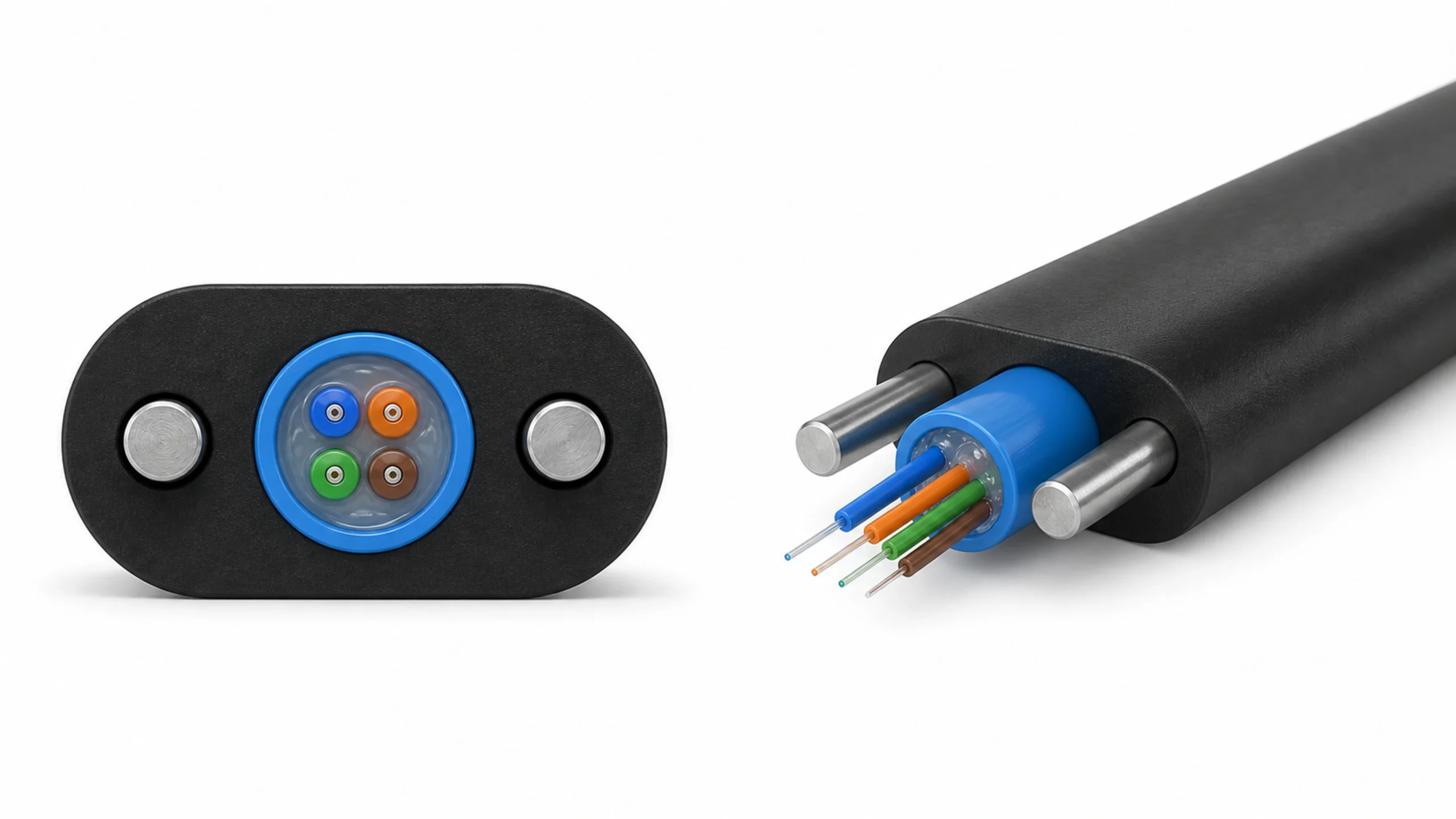
In a stranded loose-tube cable, optical fibers sit inside individual buffer tubes. Those tubes form a cable core beneath the outer protective layers. Water blocking can be needed in both locations. Corning’s technical note describes gel or dry water-swellable materials used in the cable core and within the buffer tubes.1 HONGKAI 따라서 구매자에게 명시하도록 요청합니다. tube interior 그리고 space around the assembled core separately.
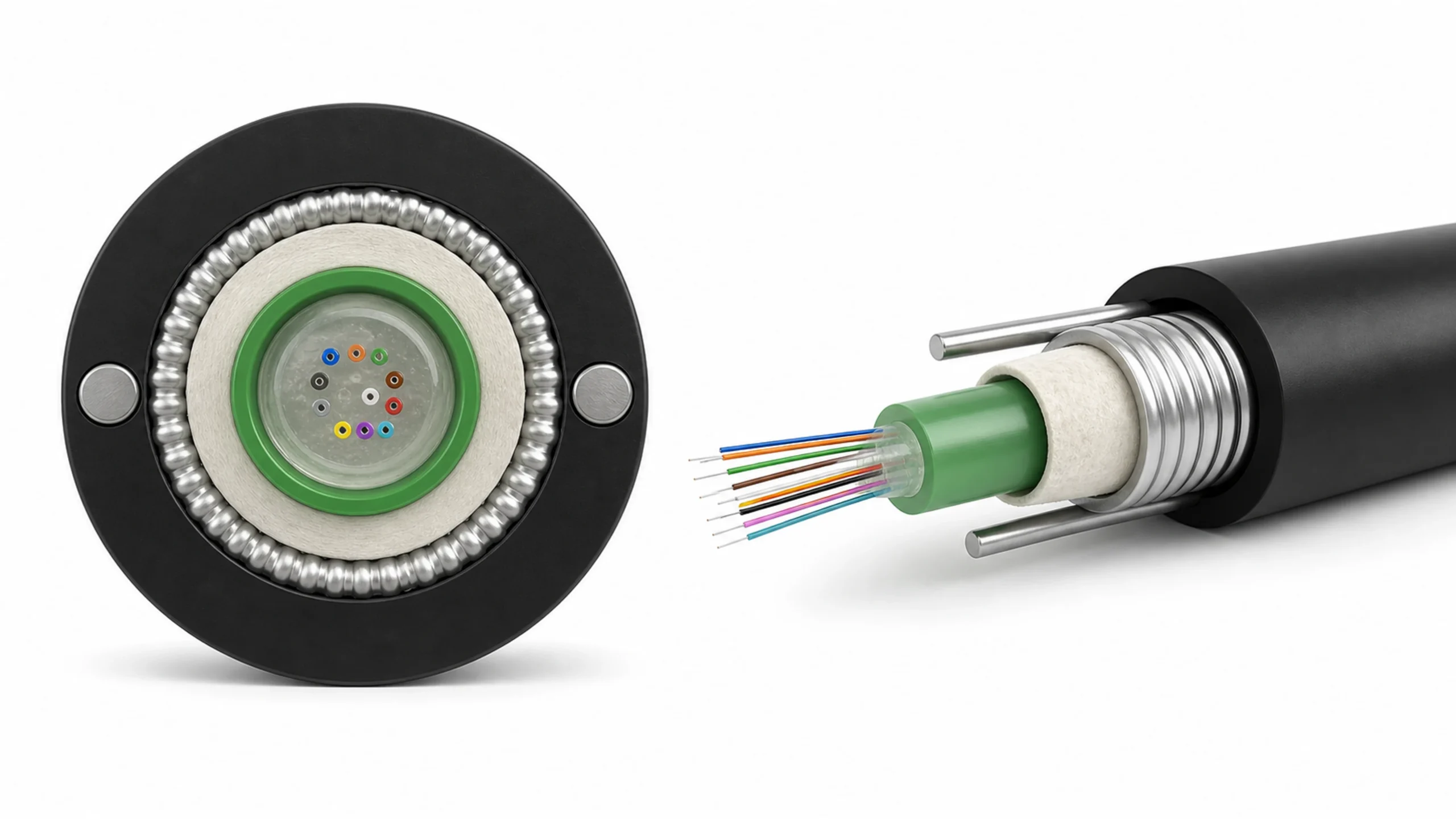
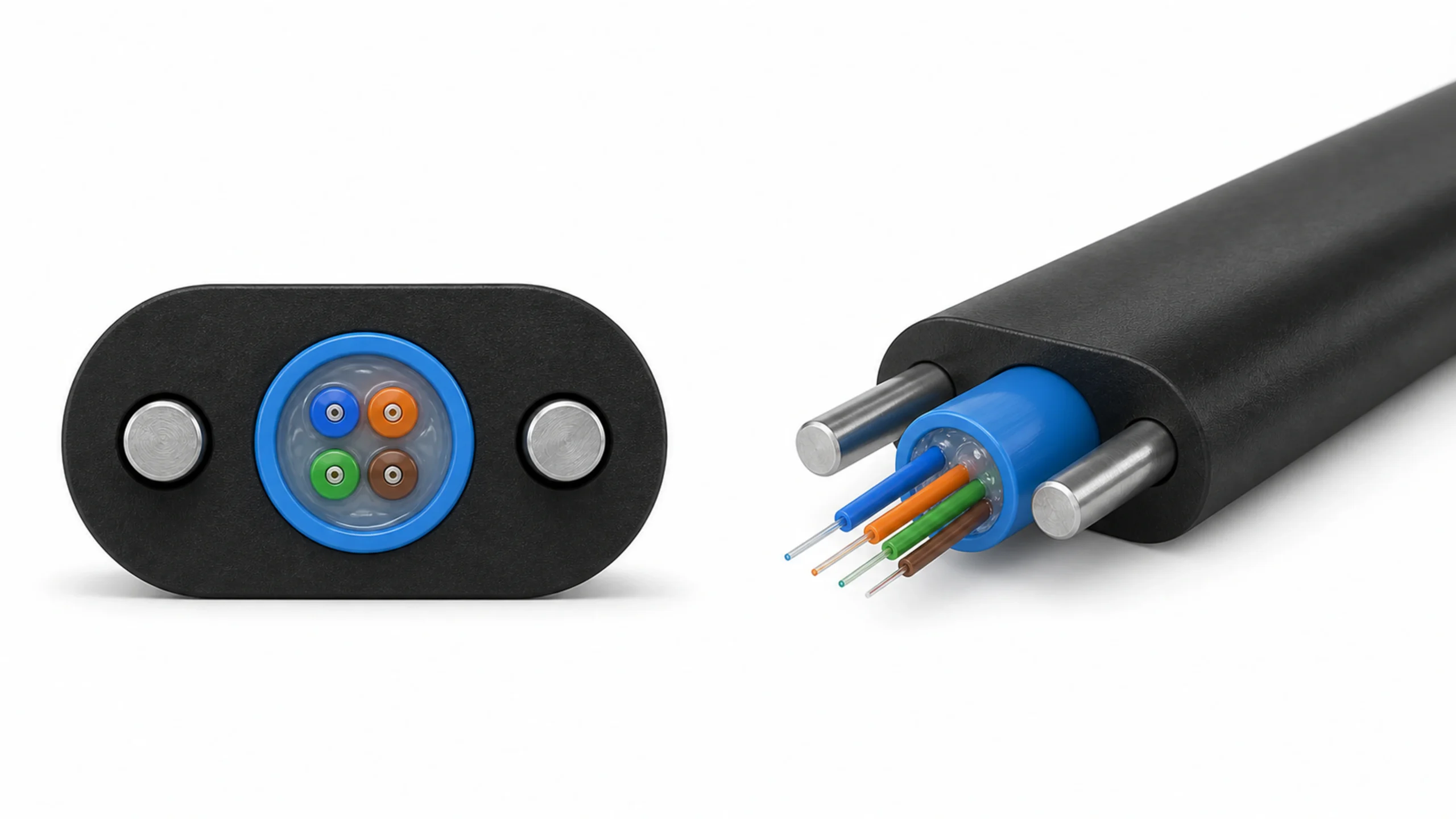
HONGKAI GYXTW 3D structure reference helps locate the tube and surrounding layers. It does not show or certify an all-dry construction.
For quotation purposes, separate three arrangements. The names below describe the locations being compared; the approved drawing must show the actual materials.
| Arrangement being compared | Inside the buffer tubes | Around the cable core | 구매자가 명확히 해야 할 사항 |
|---|---|---|---|
| Gel in tubes and cable core | Specified filling compound | Specified core filling or flooding compound | Which compound belongs in each location? |
| Dry core with gel-filled tubes | Specified filling compound | Specified dry water-blocking elements | Does the customer accept gel inside the tubes? |
| All-dry construction—the usual meaning in HONGKAI’s customer discussions | No filling gel; use the approved dry tube design | No filling gel; use the approved dry core design | What blocks water at each location, and what cable evidence supports it? |
This is not just a wording exercise: Prysmian’s MassLink multi-tube ribbon cable is described as having a dry core with gel-filled buffer tubes.2 That is a legitimate manufacturer usage, but it is ~ 아니다 the all-dry construction HONGKAI usually discusses for a dry cable. The example does not imply that HONGKAI supplies that particular Prysmian cable.
Removing cable-core filling from a proposal does not necessarily remove tube filling. Likewise, a drawing showing water-blocking tape outside the tubes does not explain what is inside them.
Ask the cable supplier or designer to mark the two locations on the cross-section. For a central-tube cable, use that cable’s drawing rather than forcing it into a stranded-tube layout. Confirm whether the words dry core, gel-free or all-dry apply to one part or the whole construction.
Keep material identities separate. A compound approved for one location should not be assumed suitable for another simply because both are called jelly.
Choose for Cable Access and the Actual Installation
Start with the customer’s drawing, installation setting and required cable performance—not a general rule that gel or dry is always better. In some HONGKAI enquiries, a customer seeking a flame-retardant cable has also specified a gel-free construction. That is a project requirement to check, not proof that simply removing gel makes a cable flame-retardant. Flame performance belongs to the complete approved cable design and its applicable test evidence. Corning, for example, lists both gel-free water blocking and a flame-retardant sheath for one specific LSZH cable family.3
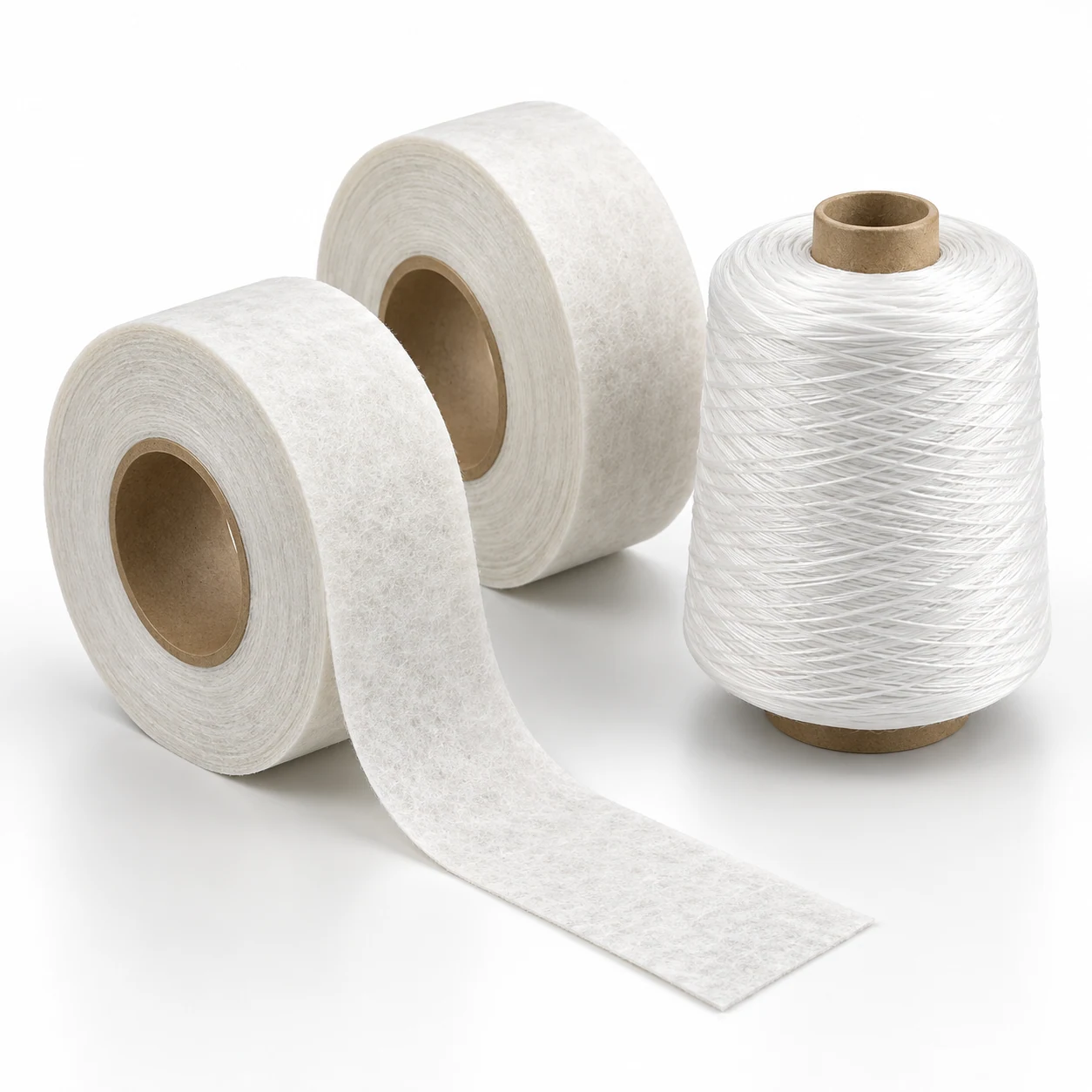
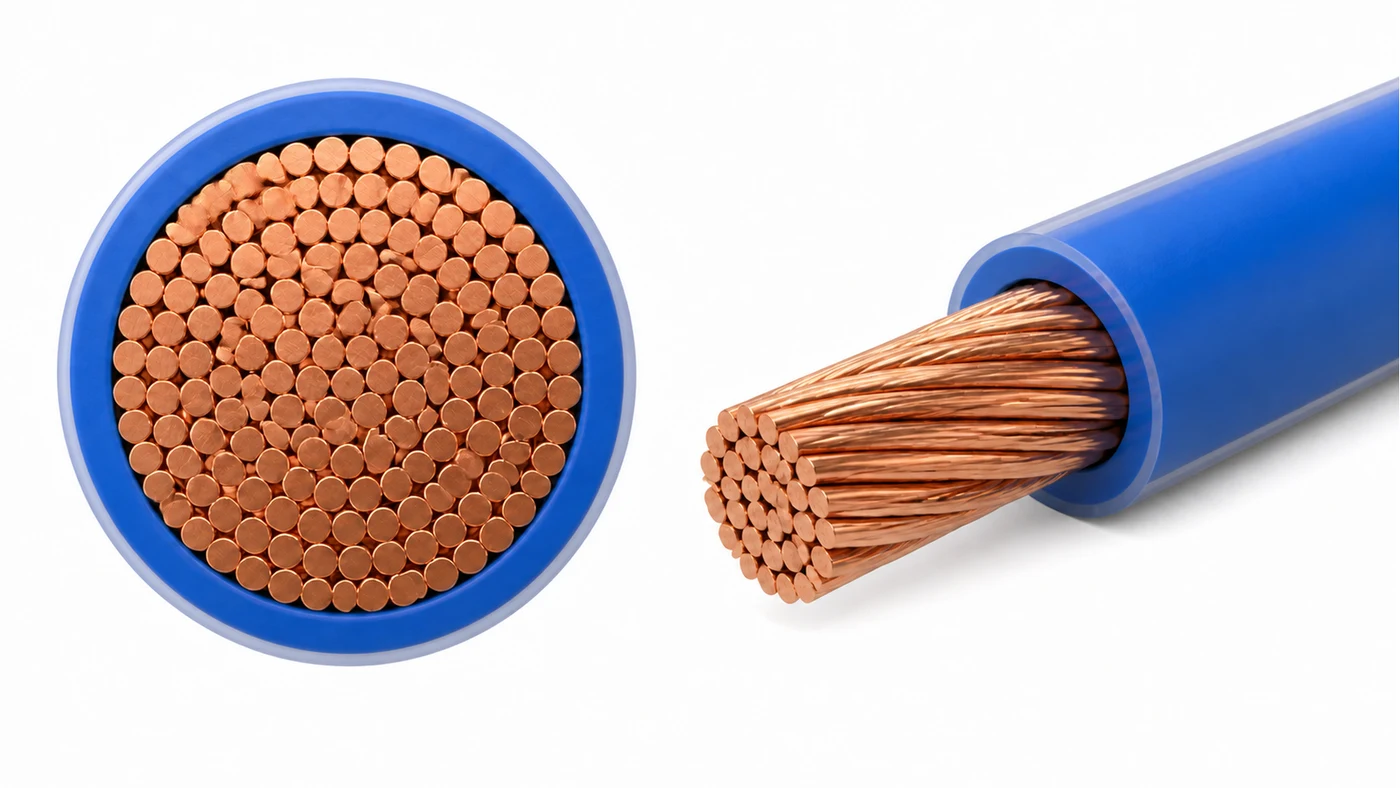
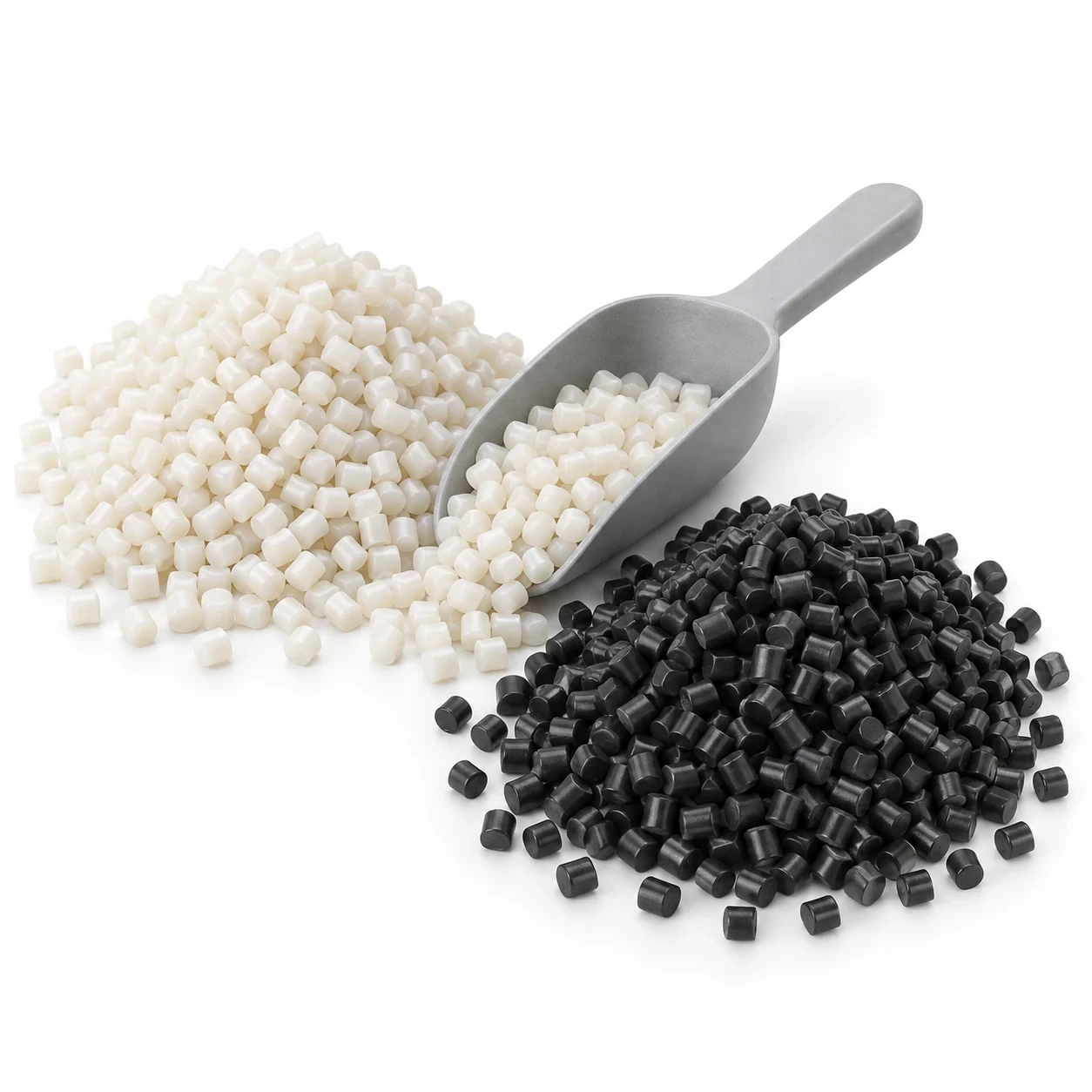
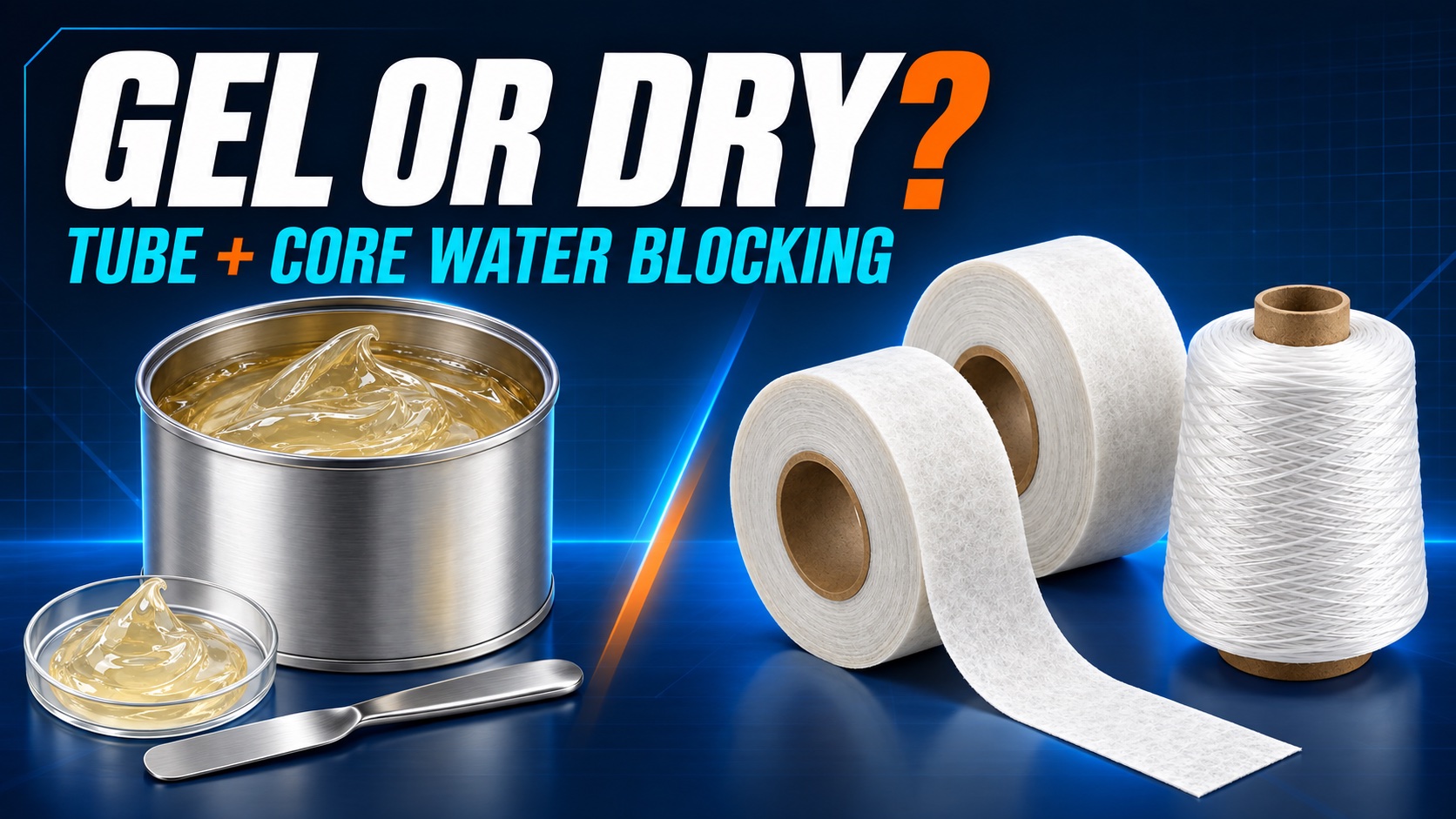
HONGKAI material illustration: water-blocking tape and yarn are possible dry-design inputs, not a claim that either one alone meets the buyer’s cable test.
The clearest operational reason to compare gel-free options is often the work done when opening the cable. Corning describes easier cable preparation and access for its gel-free FREEDM LST product using water-blocking tapes and yarns.4 That is evidence for a particular product’s design approach, not a promised time saving for every dry cable.
If easier access matters to the customer, compare representative samples using the intended preparation procedure. Record which layer is opened, whether fibers must be cleaned, what tools and cleaning materials are needed, and whether the prepared fibers are suitable for the next operation. For a dry core with gel-filled tubes, opening the jacket and opening a tube are different jobs.
Do not turn that comparison into a universal claim that dry cable is cheaper. Compare the material bill and factory costs separately from the installation team’s access work. Use the customer’s expected work and measured sample results, not an assumed percentage saving.
The installation specification still controls. A dry label does not by itself establish suitability for duct, aerial or direct-buried service. Those applications have requirements beyond water blocking, so compare the complete cable specifications before treating two offers as alternatives.
ITU-T L.100, which covers duct and tunnel optical cables, discusses filling compounds and swellable materials as ways to limit longitudinal water penetration. It also distinguishes that problem from moisture passing radially through a sheath.5 어떤 구조물이든 테스트한 내용을 명시하지 않고 단순히 방수라고 설명하지 마십시오.
If a tender already specifies a construction, ask whether an alternative is permitted before changing it. If the requirement is performance-based, present the proposed construction and its test evidence together. A different material name is not enough to establish equivalence.
생산 공정이 둘 이상의 단계에서 변경됨
The equipment discussion starts after both water-blocking locations are defined. If only the cable core changes to dry, the loose-tube process may still use gel. In the all-dry route discussed for HONGKAI enquiries, the loose tube is also made without filling gel, and the core is not gel-filled either. It is not enough to call the finished cable dry while leaving the tube process unspecified.
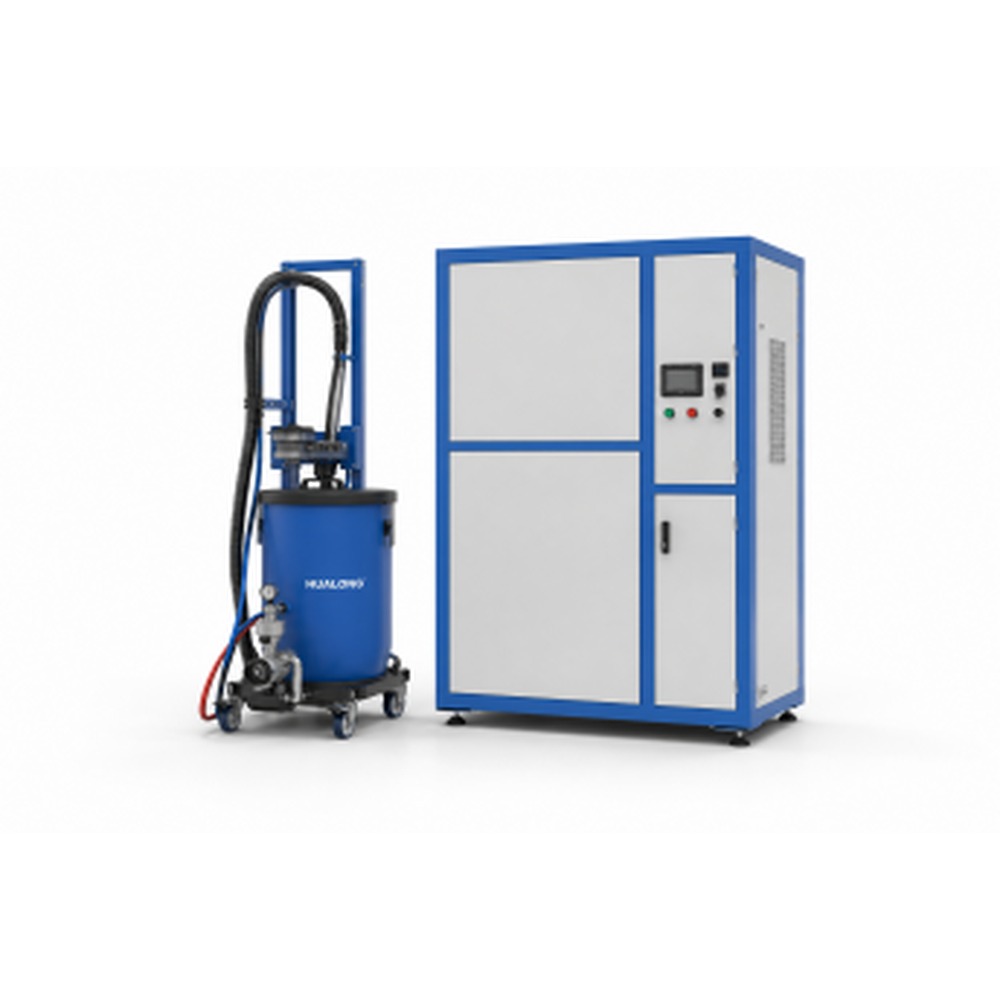
HONGKAI 젤 충전 라우트용 필링 유닛 참조입니다. 이 이미지는 드라이 튜브 진공 장치를 나타내지 않습니다.
제안서를 비교할 때 위치-공정 맵을 사용하세요:
| Construction decision | 검토할 생산 범위 | 견적서에 명시되어야 할 사항 |
|---|---|---|
| 젤 충전 버퍼 튜브 | 루스튜브 단계에서의 컴파운드 준비, 공급 및 충진 인터페이스 | Approved compound, filling controls, start-up handling and verification method |
| 겔 프리 루즈 튜브 | Leave the jelly-filling machine off for the HONGKAI changeover described here; review the tube-forming and vacuum-assisted diameter-control arrangement | The exact vacuum unit/interface on the line drawing, dry material path if specified, and a stable tube outer diameter in trial production |
| 젤 충전 케이블 코어 | 합의된 케이블 제조 공정에서의 코어 충전 또는 방수 구조 | 적용 위치, 자재 취급 및 인접 장비와의 경계 |
| Dry cable core | 지정된 방수 테이프, 원사 또는 기타 요소의 배치 | 재료 공급, 위치 조정, 연속성 및 코어 성형과 시스(被覆)와의 인터페이스 |
This is a proposal-review map, not a universal machine layout. For the HONGKAI dry-tube route described here, the gel-filling unit need not run, while a vacuum arrangement near the tube-forming head is added or used to help control the tube’s outer diameter. 정확한 진공 연결부와 건식 재료 공급부는 실제 라인 도면에 고정되어야 한다.; that project-level experience does not establish that every existing filling line can switch simply by pressing Stop. Cooling, tension, material and diameter measurement still need a stable trial.
HONGKAI’s 루즈튜브 생산 라인 참조 treats the filling or water-blocking interface as part of secondary coating. It also separates that stage from cable-core stranding and final sheathing. This is a useful boundary when requesting a quotation; it is not confirmation that every dry and gel-filled design uses interchangeable equipment.
For an existing factory, request a marked list of retained units, modified units and new units. Include the gel shut-off path, any vacuum interface, material path and control points—not just the extruder model. If both constructions must run on the same line, ask the supplier to demonstrate the changeover and record tube-diameter stability for each route. Stopping a gel pump is only one operation in that check.
Keep the production target attached to a specific cable and material combination. A speed demonstrated for one tube or one filling arrangement does not automatically apply to the alternative. If both routes matter to the business, specify how each will be demonstrated rather than accepting a single unqualified maximum speed.
지정하고 입증할 수 있는 구조를 선택하세요
여기 설명된 HONGKAI 드라이 루즈 튜브 시험의 경우, 먼저 다음 사항을 확인하십시오. 튜브 외경이 안정적으로 유지됨 while the gel-filling arrangement is not running. Agree a target and tolerance for the selected tube drawing, inspect measurements across the agreed trial length and retain the records. This checks the tube-making stage; it is not a finished-cable water-blocking result.
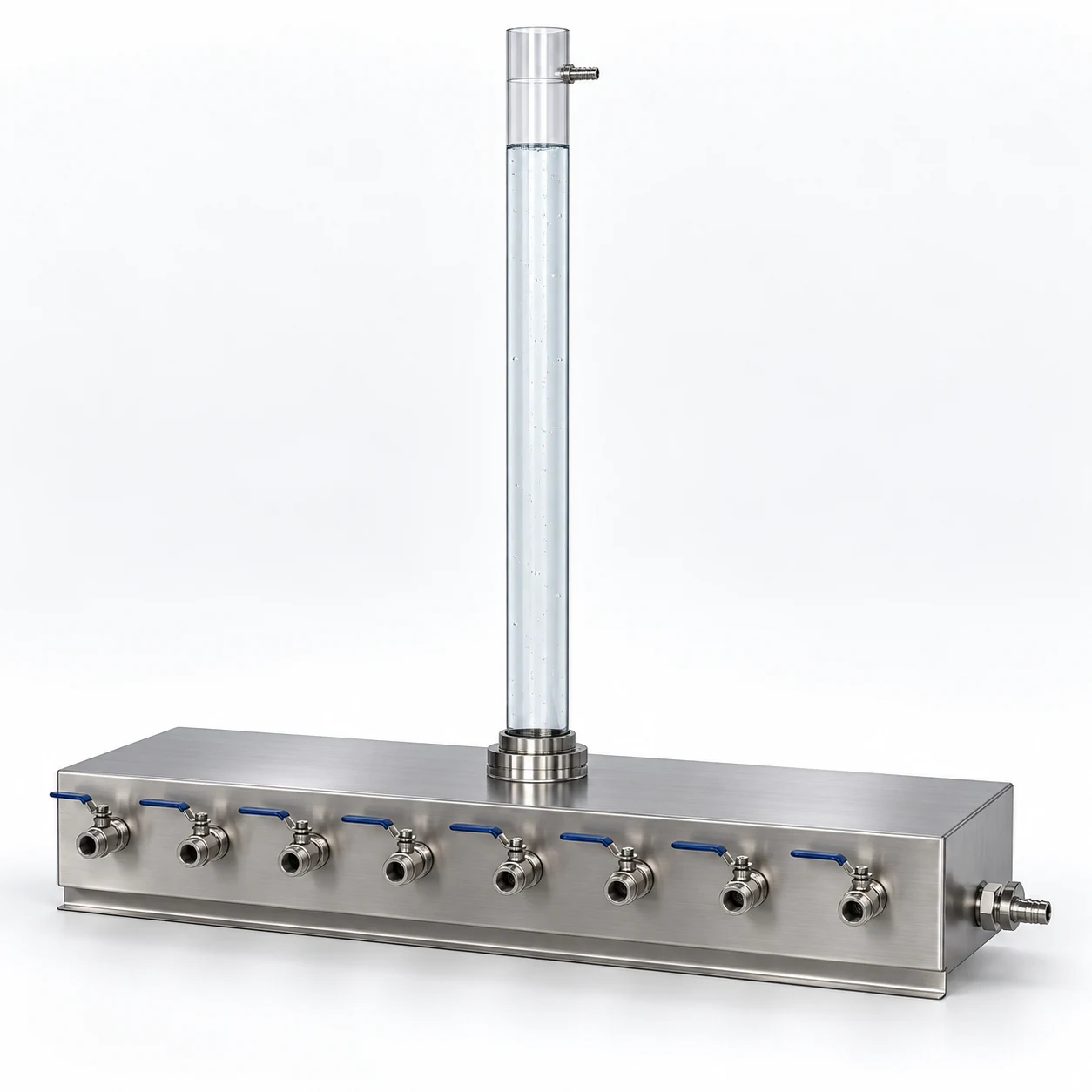
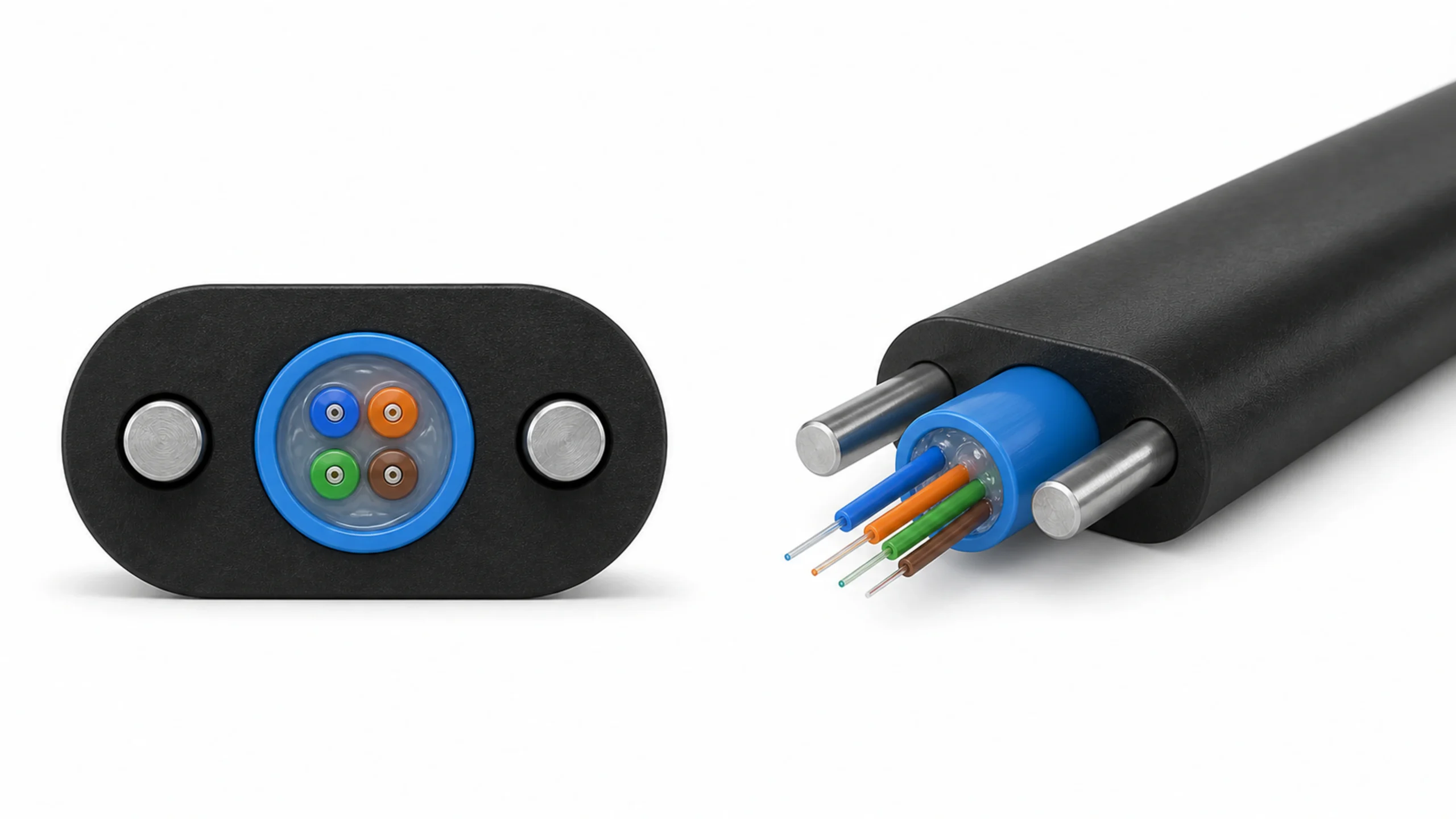
HONGKAI 3D test-equipment illustration. The final test setup, conditions and pass criteria must match the selected cable specification; no test result is implied.
Water-blocking material data and finished-cable test results answer different questions. The material document identifies what will be used. The finished-cable report shows how a particular construction performed under stated test conditions. In HONGKAI’s acceptance sequence, tube-diameter stability is checked during tube production; water-penetration and optical attenuation are checked on the finished cable under the agreed methods and limits.
For duct and tunnel cables, ITU-T L.100 addresses material compatibility and recommends water-penetration testing; its test selection depends on the cable design.5 Agree the applicable product specification, test method and edition, sample requirements, conditions and acceptance limits before ordering. Do not borrow a test limit from an unrelated cable or treat a tape’s swelling demonstration as a finished-cable result.
Match each report to the offered drawing revision and material identities. Confirm which water paths the test assesses, and request the finished-cable attenuation report and any other environmental results required by the customer. HONGKAI’s 광케이블 테스트 가이드 케이블 테스트를 해당 케이블을 제조하는 데 사용되는 장비와 분리하는 데 도움을 줍니다.
실용적인 의사결정 순서는 다음과 같습니다:
- 고객이 두 위치 모두에 젤을 지정한 경우, 해당 구조를 견적하거나 대안에 대한 승인을 받아야 한다. 공장의 선호만으로 드라이 설계로 대체해서는 안 된다.
- If the customer accepts gel-filled tubes but wants a dry core, keep tube filling in the production scope and compare the core-level material and handling changes.
- If the customer requires an all-dry cable, specify no filling gel in the tubes or core. Verify the dry-design materials, the dry-tube vacuum/diameter-control arrangement and the finished-cable tests for that exact construction.
- If the customer says only dry cable, resolve that wording before comparing equipment prices.
The useful purchasing description is not just “jelly-filled versus dry.” It states what is inside the tubes, what surrounds the core, how the cable will be used and how the offered construction will be verified. That description lets the factory compare genuinely equivalent proposals.
-
Corning Application Engineering Note 026, revision 9, page 2, describes water blocking in the cable core and buffer tubes. Used for construction principles only; its older standards references are not adopted as current requirements. ↩
-
프리스미안 MassLink 멀티튜브 리본 케이블, product description. A manufacturer example of dry-core construction with gel-filled buffer tubes, not a HONGKAI product claim. ↩
-
Corning LSZH loose-tube gel-free interlocking armored cable specification, page 1, identifies gel-free water blocking and a flame-retardant sheath for that specific product. It does not establish a universal rule that gel removal grants a fire rating. ↩
-
코닝 FREEDM LST 젤리스 루즈튜브 케이블 사양, page 1, describes swellable tapes/yarns and cable-preparation benefits for that product. No numerical saving or HONGKAI product performance is inferred. ↩
-
ITU-T L.100 (01/2024), Optical fibre cables for duct and tunnel application, clauses 6.3.3–6.3.4, 7.2.8 and A.4.3. Supports the distinctions between longitudinal water penetration, moisture permeation, material compatibility and cable-level testing within that recommendation’s scope. ↩ ↩

 English
 हिन्दी
 فارسی