





قد يطلب مشترٍ لكابلات خارجية تصميمًا “جافًا”، لكن الكلمة قد تعني أشياء مختلفة في رسومات مختلفة. في مناقشات HONGKAI المعتادة مع العملاء، تعني لا يوجد جيل مالئ داخل الأنابيب الفضفاضة ولا يوجد جيل مالئ حول قلب الكابل. يستخدم مورّدون آخرون أحيانًا تعبير “النواة الجافة” حتى عندما تحتوي الأنابيب على هلام. يجب حل هذا الاختلاف قبل مقارنة عروض المعدات.
Write down what goes inside the loose tube and what goes around the cable core. For a HONGKAI all-dry request, neither location is gel-filled. If another supplier calls a cable “dry core,” ask whether its tubes still contain gel. Then match the approved construction to the production route and finished-cable tests.
يُعدّ هذا المقارنة مخصصةً للمصنّعين الذين يختارون هيكل كابل بصري خارجي ونطاق معداته. ولا تصنّف مادةً واحدةً على أنها الأفضل لكل كابل خارجي.
مكانان لمنع تسرب الماء
In a stranded loose-tube cable, optical fibers sit inside individual buffer tubes. Those tubes form a cable core beneath the outer protective layers. Water blocking can be needed in both locations. Corning’s technical note describes gel or dry water-swellable materials used in the cable core and within the buffer tubes.1 HONGKAI لذلك يطلب من المشتري التحديد tube interior و المسافة المحيطة بالنواة المجمعة separately.
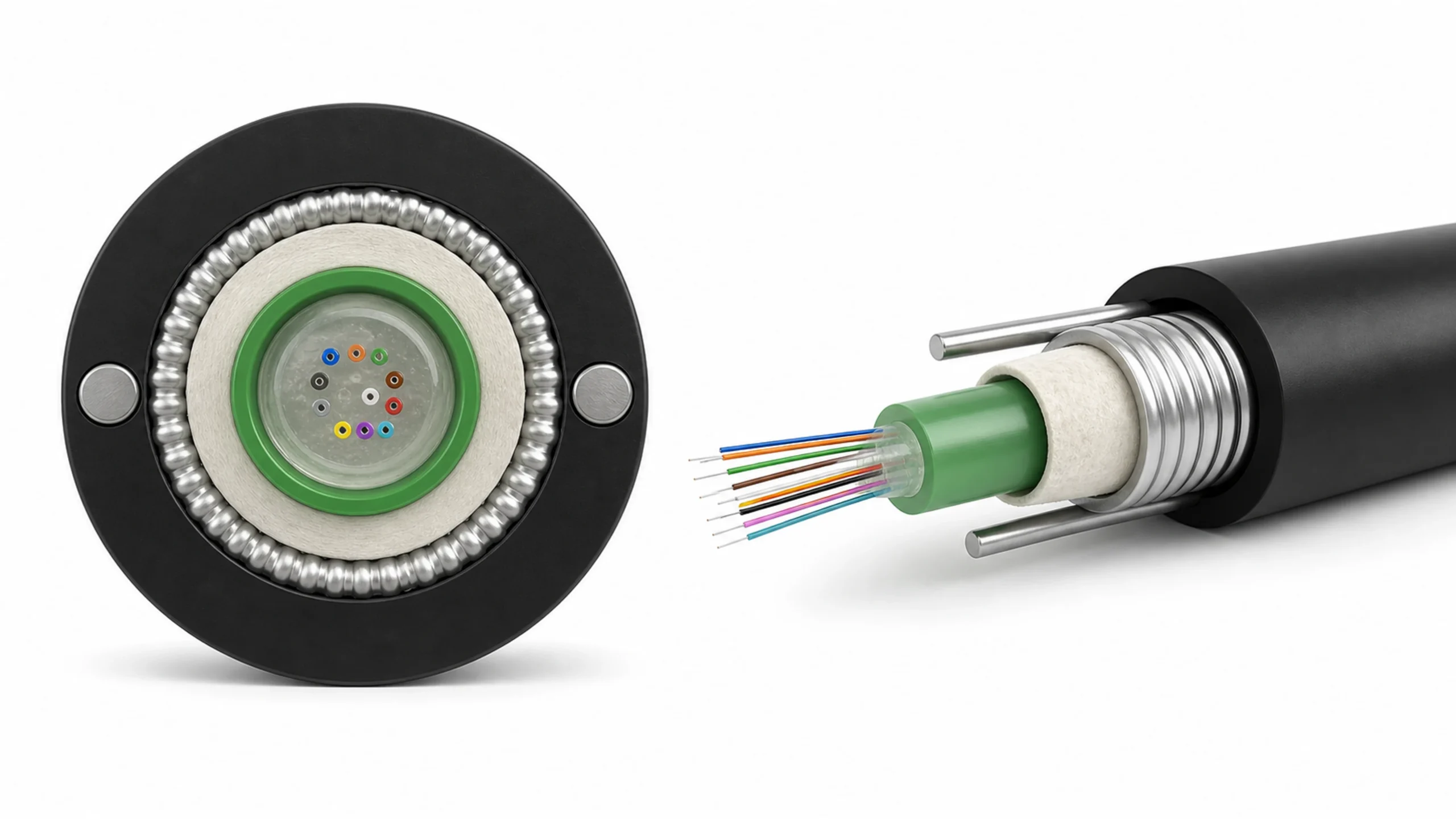
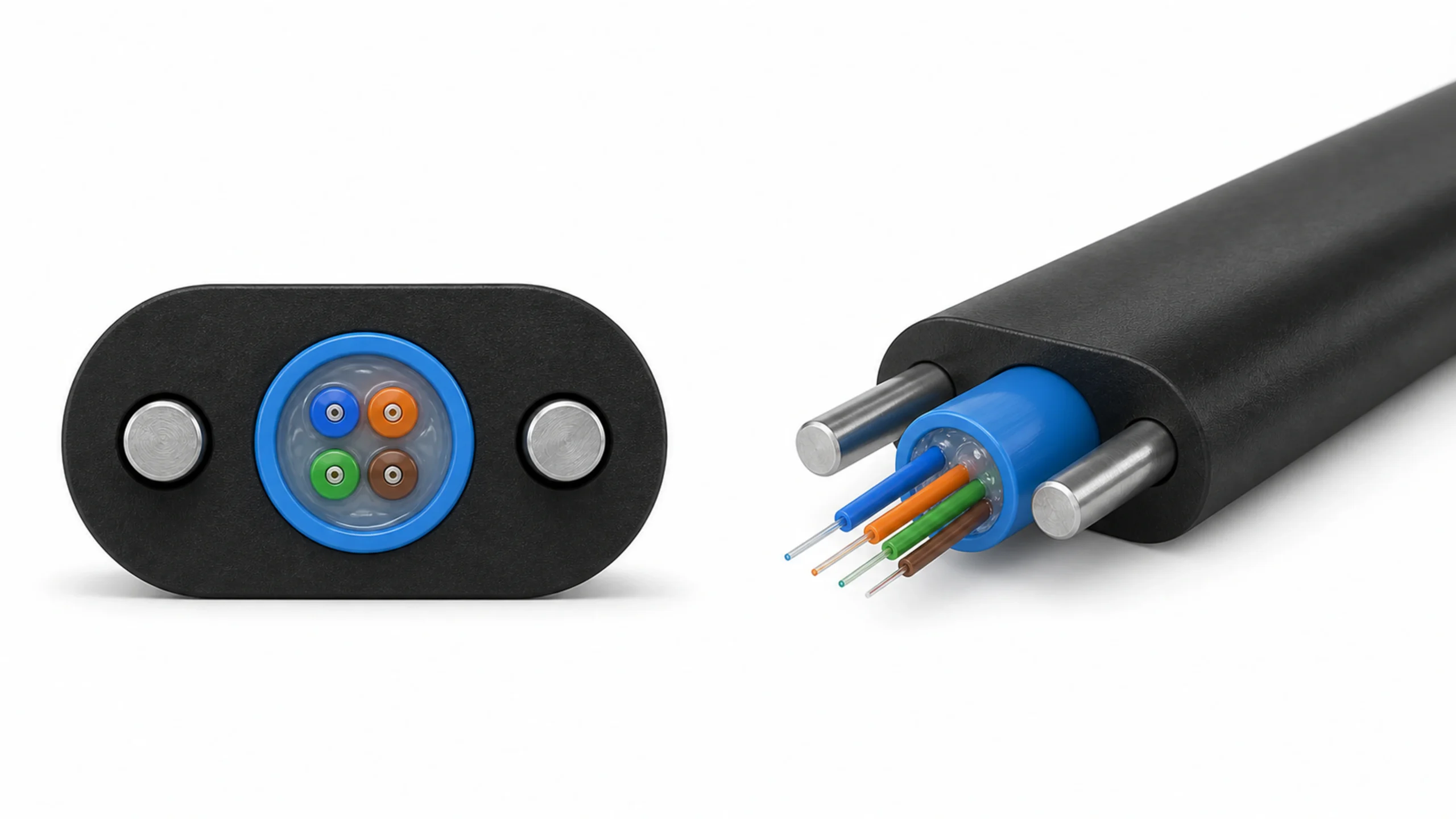
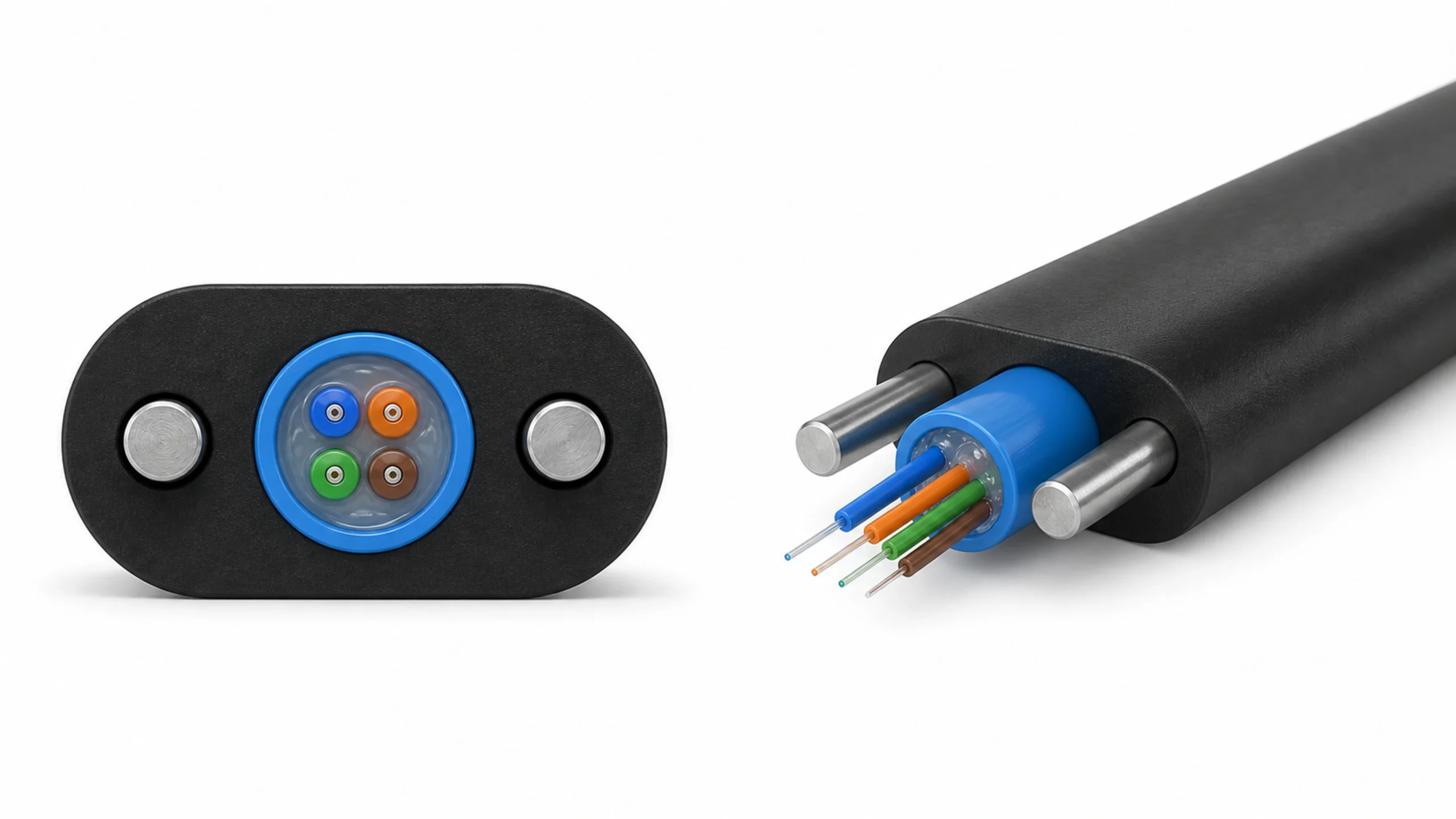
HONGKAI GYXTW 3D structure reference helps locate the tube and surrounding layers. It does not show or certify an all-dry construction.
لأغراض عرض الأسعار، افصل بين ثلاث ترتيبات. تصف الأسماء أدناه المواقع التي يتم مقارنتها؛ يجب أن يوضح الرسم المعتمد المواد الفعلية.
| الترتيب قيد المقارنة | داخل أنابيب التوسيد | حول لب الكابل | ما يجب على المشتري توضيحه |
|---|---|---|---|
| الهلام في الأنابيب وقلب الكابل | مركب الحشو المحدد | مركب حشو أو غمر النواة المحدد | أي مركب ينتمي إلى كل موقع؟ |
| نواة جافة بأنابيب مملوءة بالجيل | مركب الحشو المحدد | عناصر سد الماء الجافة المحددة | هل يقبل العميل وجود هلام داخل الأنابيب؟ |
| البناء الجاف بالكامل—المعنى المعتاد في مناقشات عملاء HONGKAI | لا هلام تعبئة؛ استخدم تصميم الأنبوب الجاف المعتمد | لا هلام تعبئة؛ استخدم التصميم المعتمد للنواة الجافة | ما الذي يمنع دخول الماء في كل موقع، وما الأدلة المتعلقة بالكابلات التي تدعم ذلك؟ |
هذا ليس مجرد تمرين في الصياغة: يُوصف كابل Prysmian MassLink متعدد الأنابيب الشريطية بأنه يحتوي على لب جاف مع أنابيب عازلة مملوءة بالهلام.2 That is a legitimate manufacturer usage, but it is لا the all-dry construction HONGKAI usually discusses for a dry cable. The example does not imply that HONGKAI supplies that particular Prysmian cable.
Removing cable-core filling from a proposal does not necessarily remove tube filling. Likewise, a drawing showing water-blocking tape outside the tubes does not explain what is inside them.
Ask the cable supplier or designer to mark the two locations on the cross-section. For a central-tube cable, use that cable’s drawing rather than forcing it into a stranded-tube layout. Confirm whether the words dry core, gel-free or all-dry apply to one part or the whole construction.
Keep material identities separate. A compound approved for one location should not be assumed suitable for another simply because both are called jelly.
Choose for Cable Access and the Actual Installation
Start with the customer’s drawing, installation setting and required cable performance—not a general rule that gel or dry is always better. In some HONGKAI enquiries, a customer seeking a flame-retardant cable has also specified a gel-free construction. That is a project requirement to check, not proof that simply removing gel makes a cable flame-retardant. Flame performance belongs to the complete approved cable design and its applicable test evidence. Corning, for example, lists both gel-free water blocking and a flame-retardant sheath for one specific LSZH cable family.3
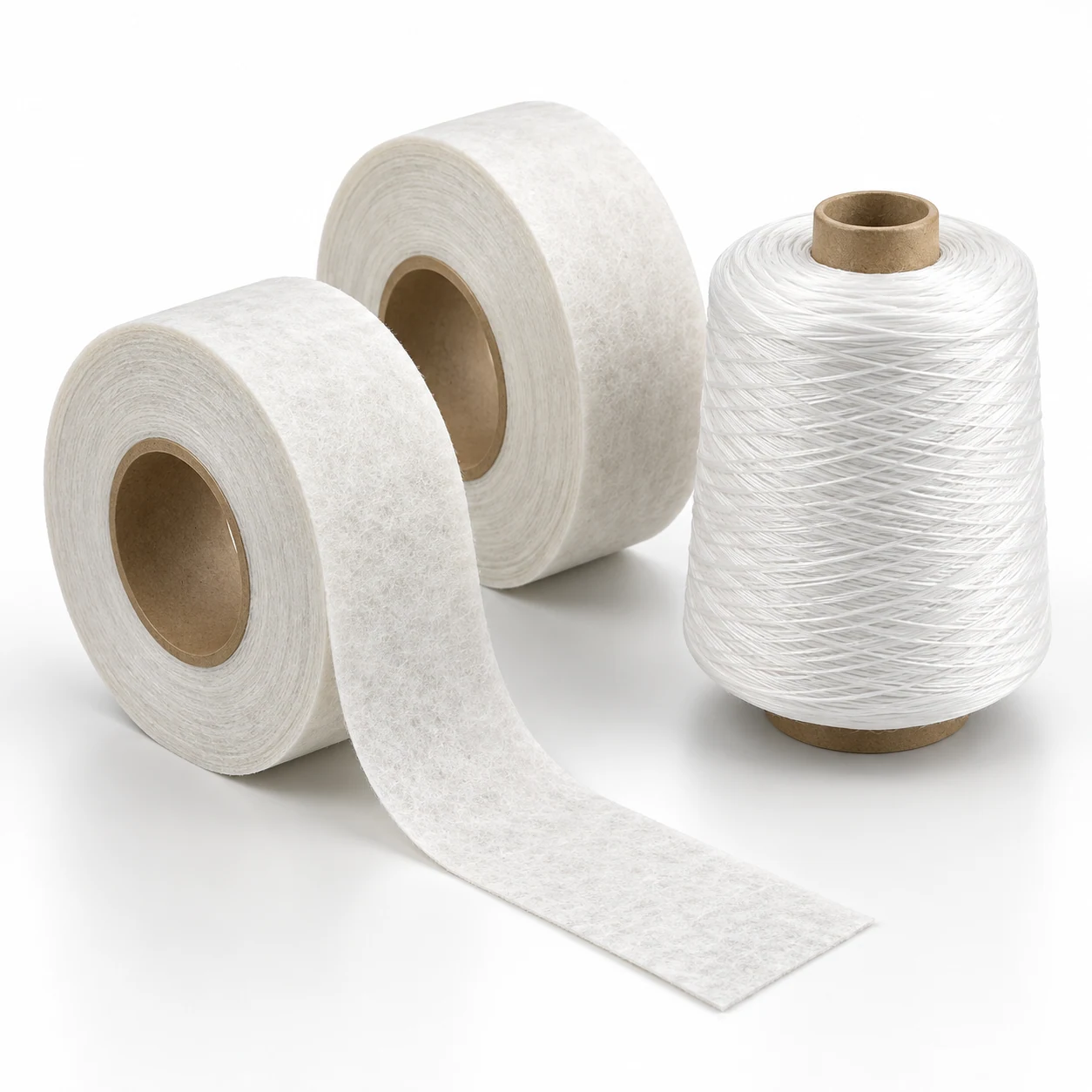
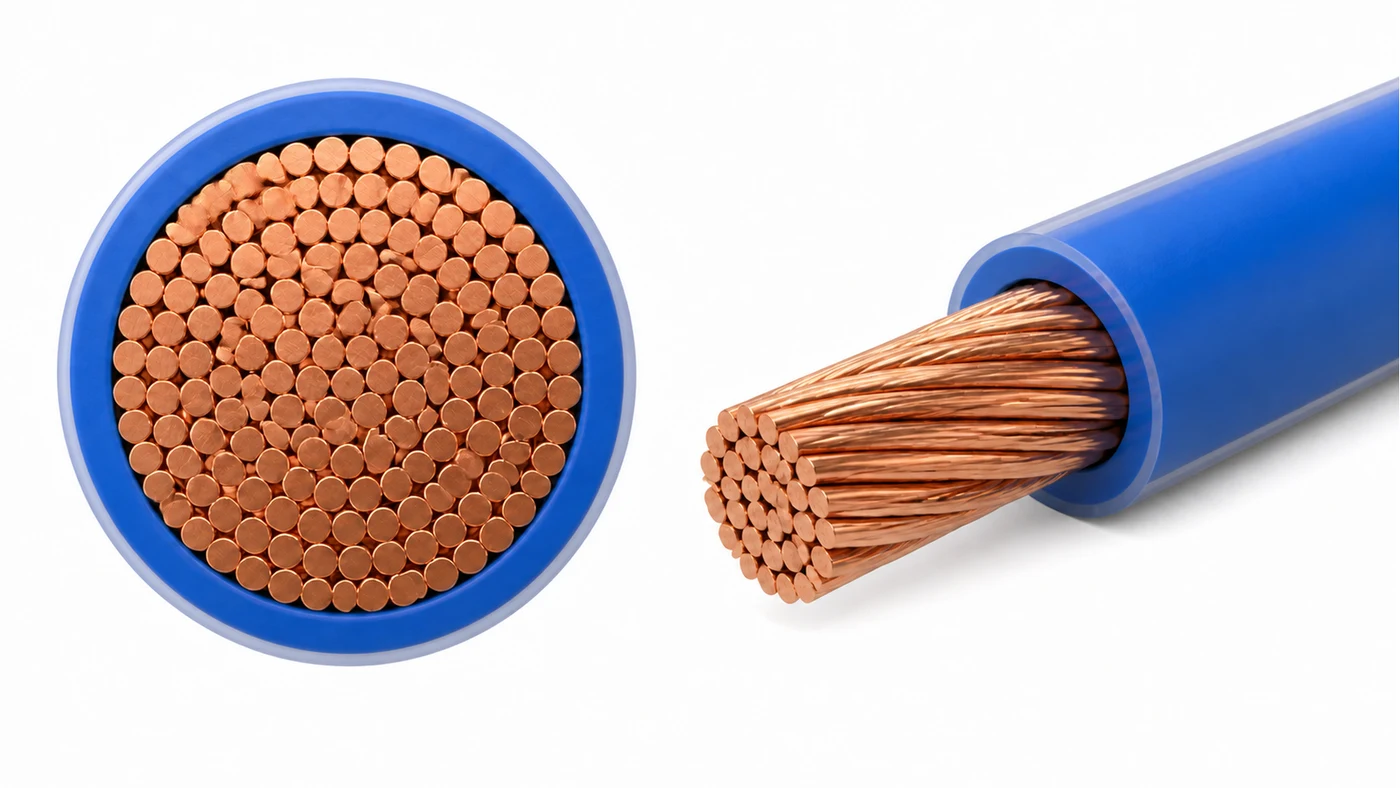
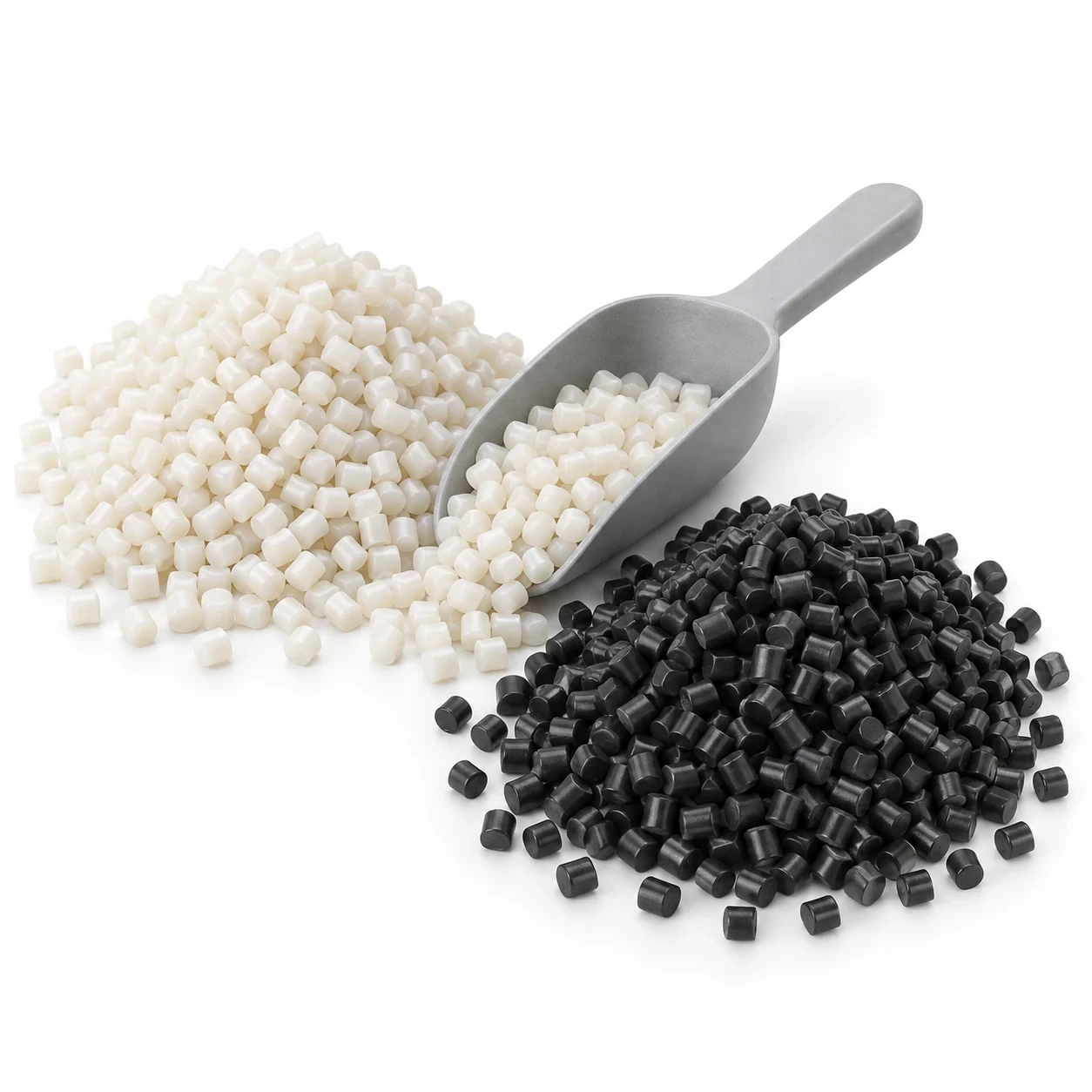
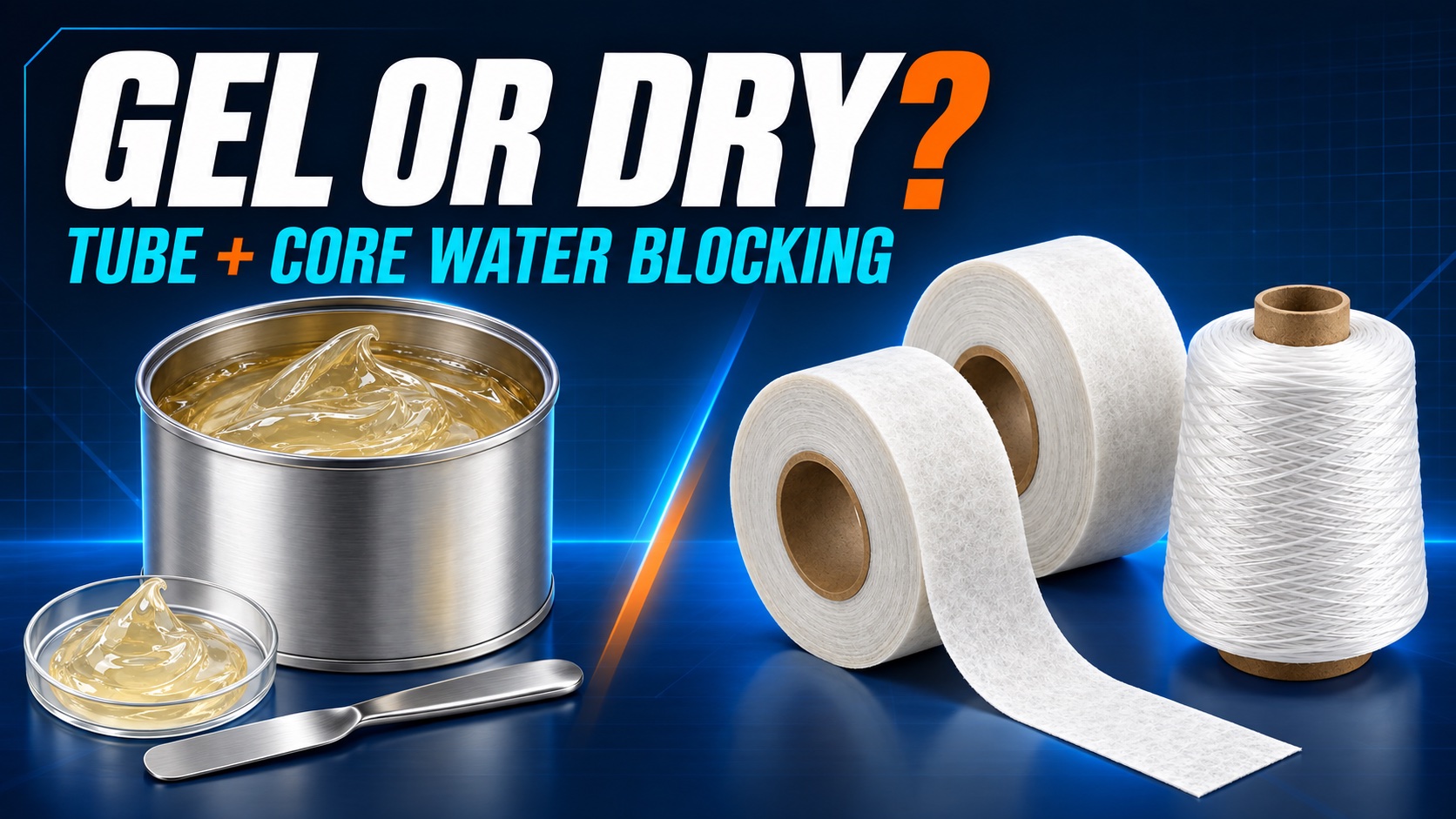
HONGKAI material illustration: water-blocking tape and yarn are possible dry-design inputs, not a claim that either one alone meets the buyer’s cable test.
The clearest operational reason to compare gel-free options is often the work done when opening the cable. Corning describes easier cable preparation and access for its gel-free FREEDM LST product using water-blocking tapes and yarns.4 That is evidence for a particular product’s design approach, not a promised time saving for every dry cable.
If easier access matters to the customer, compare representative samples using the intended preparation procedure. Record which layer is opened, whether fibers must be cleaned, what tools and cleaning materials are needed, and whether the prepared fibers are suitable for the next operation. For a dry core with gel-filled tubes, opening the jacket and opening a tube are different jobs.
Do not turn that comparison into a universal claim that dry cable is cheaper. Compare the material bill and factory costs separately from the installation team’s access work. Use the customer’s expected work and measured sample results, not an assumed percentage saving.
The installation specification still controls. A dry label does not by itself establish suitability for duct, aerial or direct-buried service. Those applications have requirements beyond water blocking, so compare the complete cable specifications before treating two offers as alternatives.
ITU-T L.100, which covers duct and tunnel optical cables, discusses filling compounds and swellable materials as ways to limit longitudinal water penetration. It also distinguishes that problem from moisture passing radially through a sheath.5 Avoid describing either construction as simply waterproof without stating what was tested.
If a tender already specifies a construction, ask whether an alternative is permitted before changing it. If the requirement is performance-based, present the proposed construction and its test evidence together. A different material name is not enough to establish equivalence.
The Production Route Changes at More Than One Stage
The equipment discussion starts after both water-blocking locations are defined. If only the cable core changes to dry, the loose-tube process may still use gel. In the all-dry route discussed for HONGKAI enquiries, الأنبوب الفضفاض مصنوع أيضًا بدون هلام تعبئة, and the core is not gel-filled either. It is not enough to call the finished cable dry while leaving the tube process unspecified.

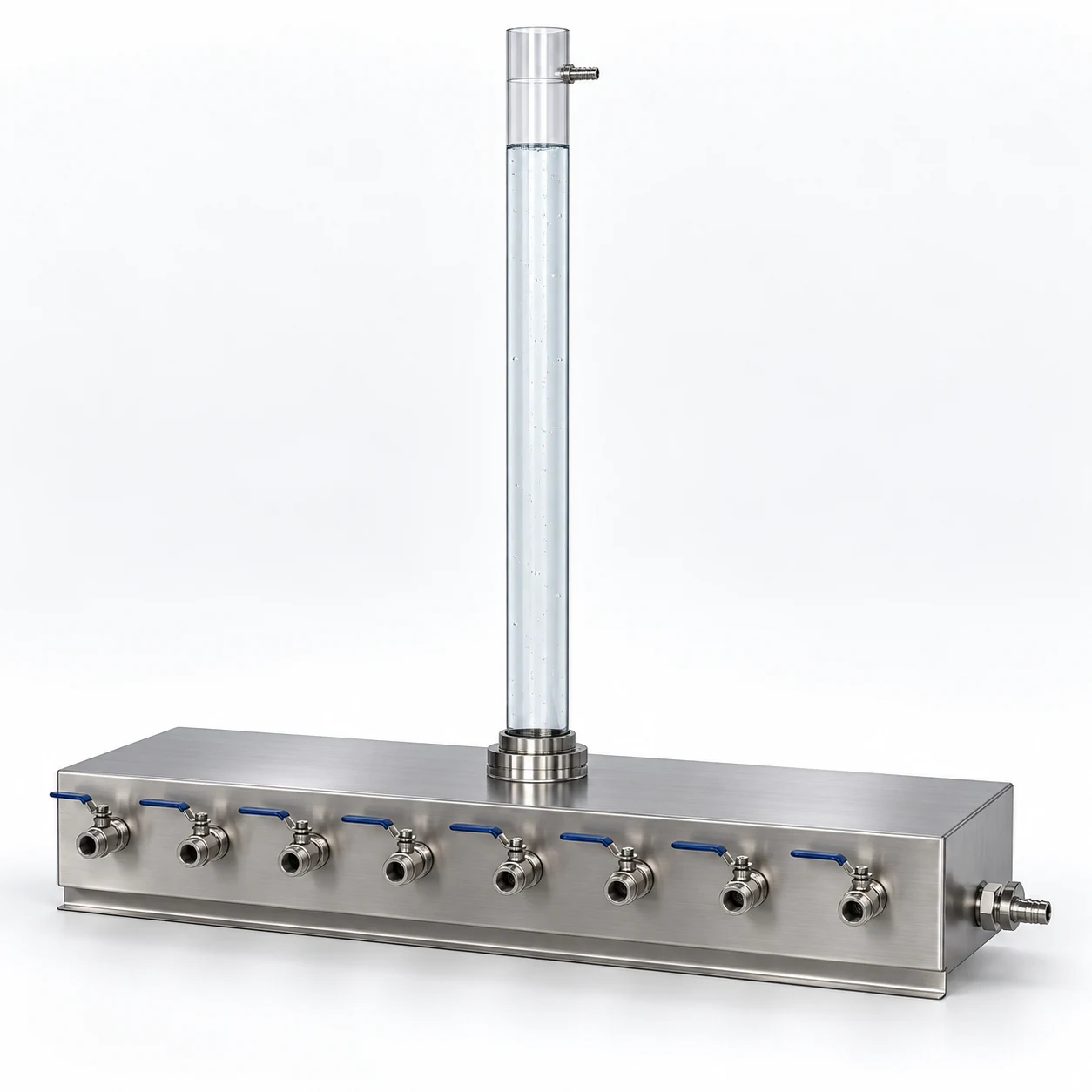
HONGKAI filling-unit reference for the gel-filled route. This image does not depict the dry-tube vacuum arrangement.
استخدم خريطة الموقع إلى العملية عند مقارنة العروض:
| Construction decision | نطاق الإنتاج للمراجعة | ما يجب أن يوضحه عرض الأسعار |
|---|---|---|
| Gel-filled buffer tubes | واجهة تحضير المركب، التوصيل والتعبئة في مرحلة الأنبوب الفضفاض | Approved compound, filling controls, start-up handling and verification method |
| أنابيب فضفاضة خالية من الجل | Leave the jelly-filling machine off for the HONGKAI changeover described here; review the tube-forming and vacuum-assisted diameter-control arrangement | وحدة التفريغ الدقيقة/الواجهة على الرسم الخطي، ومسار المادة الجافة إذا تم تحديده، وقطر خارجي ثابت للأنبوب في الإنتاج التجريبي |
| Gel-filled cable core | Core filling or flooding arrangement in the agreed cable-making route | موقع التطبيق، ومناولة المواد، والحد الفاصل مع المعدات المجاورة |
| لب الكابل الجاف | Placement of the specified water-blocking tapes, yarns or other elements | Material supply, positioning, continuity and the interface with core formation and sheathing |
This is a proposal-review map, not a universal machine layout. For the HONGKAI dry-tube route described here, the gel-filling unit need not run, while a vacuum arrangement near the tube-forming head is added or used to help control the tube’s outer diameter. يجب تثبيت وصلة الفراغ الدقيقة وأي تغذية للمواد الجافة على رسم الخط الفعلي; that project-level experience does not establish that every existing filling line can switch simply by pressing Stop. Cooling, tension, material and diameter measurement still need a stable trial.
HONGKAI’s مرجع خط إنتاج الأنبوب الفضفاض treats the filling or water-blocking interface as part of secondary coating. It also separates that stage from cable-core stranding and final sheathing. This is a useful boundary when requesting a quotation; it is not confirmation that every dry and gel-filled design uses interchangeable equipment.
For an existing factory, request a marked list of retained units, modified units and new units. Include the gel shut-off path, any vacuum interface, material path and control points—not just the extruder model. If both constructions must run on the same line, ask the supplier to demonstrate the changeover and record tube-diameter stability for each route. Stopping a gel pump is only one operation in that check.
Keep the production target attached to a specific cable and material combination. A speed demonstrated for one tube or one filling arrangement does not automatically apply to the alternative. If both routes matter to the business, specify how each will be demonstrated rather than accepting a single unqualified maximum speed.
اختر التركيب الذي يمكنك تحديده وإثباته
بالنسبة لتجربة الأنبوب الجاف غير المغلف HONGKAI الموصوفة هنا، تحقق أولاً مما إذا كان يبقى القطر الخارجي للأنبوب مستقرًا while the gel-filling arrangement is not running. Agree a target and tolerance for the selected tube drawing, inspect measurements across the agreed trial length and retain the records. This checks the tube-making stage; it is not a finished-cable water-blocking result.
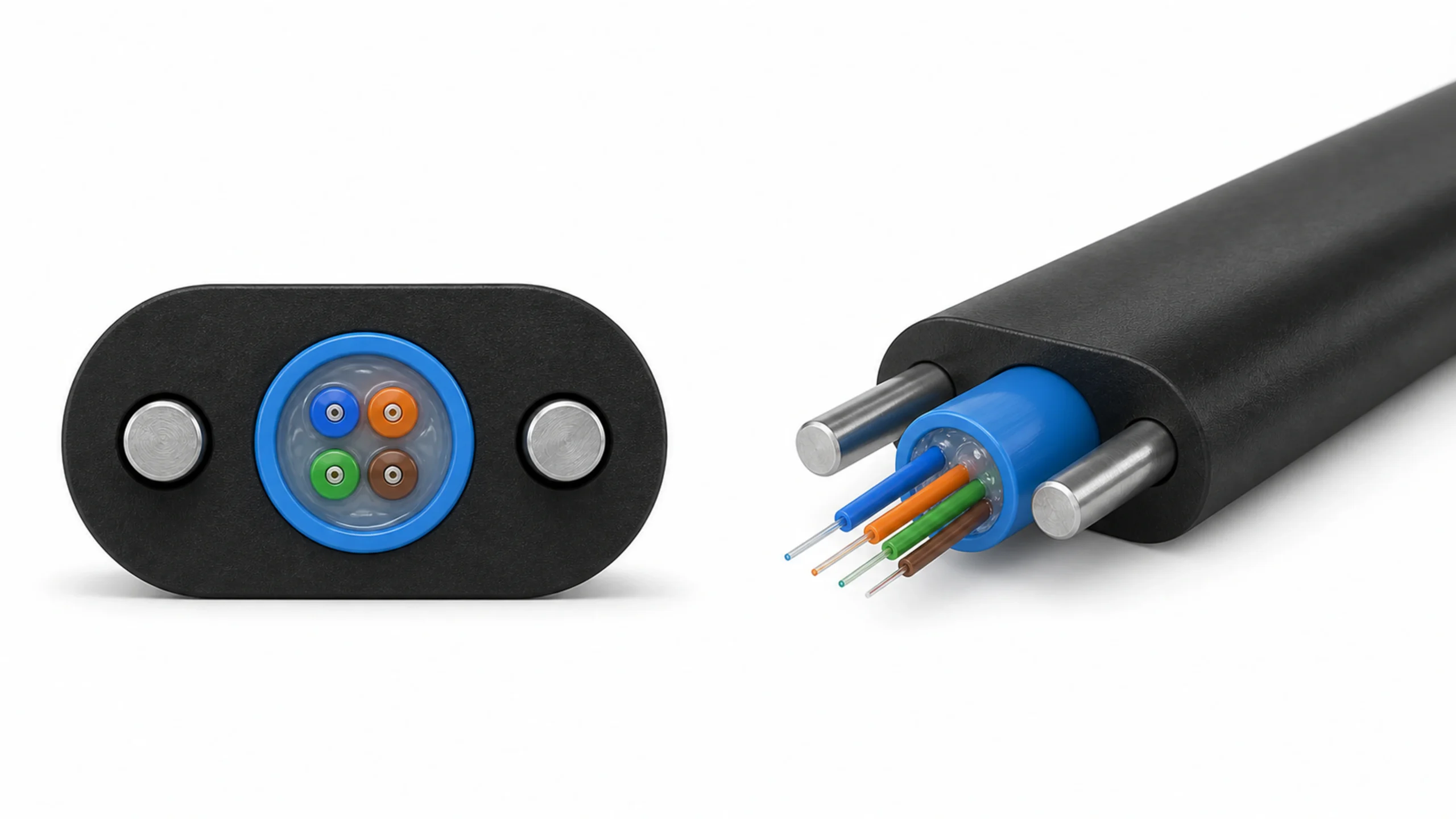
HONGKAI 3D test-equipment illustration. The final test setup, conditions and pass criteria must match the selected cable specification; no test result is implied.
Water-blocking material data and finished-cable test results answer different questions. The material document identifies what will be used. The finished-cable report shows how a particular construction performed under stated test conditions. In HONGKAI’s acceptance sequence, tube-diameter stability is checked during tube production; water-penetration and optical attenuation are checked on the finished cable under the agreed methods and limits.
For duct and tunnel cables, ITU-T L.100 addresses material compatibility and recommends water-penetration testing; its test selection depends on the cable design.5 Agree the applicable product specification, test method and edition, sample requirements, conditions and acceptance limits before ordering. Do not borrow a test limit from an unrelated cable or treat a tape’s swelling demonstration as a finished-cable result.
Match each report to the offered drawing revision and material identities. Confirm which water paths the test assesses, and request the finished-cable attenuation report and any other environmental results required by the customer. HONGKAI’s دليل اختبار كابلات الألياف البصرية يساعد في فصل اختبارات الكابل عن الآلات المستخدمة في تصنيعه.
تسلسل القرار العملي هو:
- إذا حدد العميل استخدام الجل في كلا الموضعين، فاقتبس هذا التصميم أو احصل على موافقة على بديل. لا تُجرِ استبدالاً بتصميم جاف بناءً على تفضيل المصنع وحده.
- If the customer accepts gel-filled tubes but wants a dry core, keep tube filling in the production scope and compare the core-level material and handling changes.
- If the customer requires an all-dry cable, specify no filling gel in the tubes or core. Verify the dry-design materials, the dry-tube vacuum/diameter-control arrangement and the finished-cable tests for that exact construction.
- إذا قال العميل "كابل جاف فقط"، فقم بتوضيح هذه العبارة قبل مقارنة أسعار المعدات.
The useful purchasing description is not just “jelly-filled versus dry.” It states what is inside the tubes, what surrounds the core, how the cable will be used and how the offered construction will be verified. That description lets the factory compare genuinely equivalent proposals.
-
Corning Application Engineering Note 026, revision 9, page 2, describes water blocking in the cable core and buffer tubes. Used for construction principles only; its older standards references are not adopted as current requirements. ↩
-
كابل ريبون متعدد الأنابيب من بريزميان ماسلينك, product description. A manufacturer example of dry-core construction with gel-filled buffer tubes, not a HONGKAI product claim. ↩
-
Corning LSZH loose-tube gel-free interlocking armored cable specification, page 1, identifies gel-free water blocking and a flame-retardant sheath for that specific product. It does not establish a universal rule that gel removal grants a fire rating. ↩
-
مواصفات كابل Corning FREEDM LST ذو أنابيب فضفاضة وخالٍ من الجيل, page 1, describes swellable tapes/yarns and cable-preparation benefits for that product. No numerical saving or HONGKAI product performance is inferred. ↩
-
ITU-T L.100 (01/2024), Optical fibre cables for duct and tunnel application, clauses 6.3.3–6.3.4, 7.2.8 and A.4.3. Supports the distinctions between longitudinal water penetration, moisture permeation, material compatibility and cable-level testing within that recommendation’s scope. ↩ ↩

 English
 हिन्दी
 فارسی