











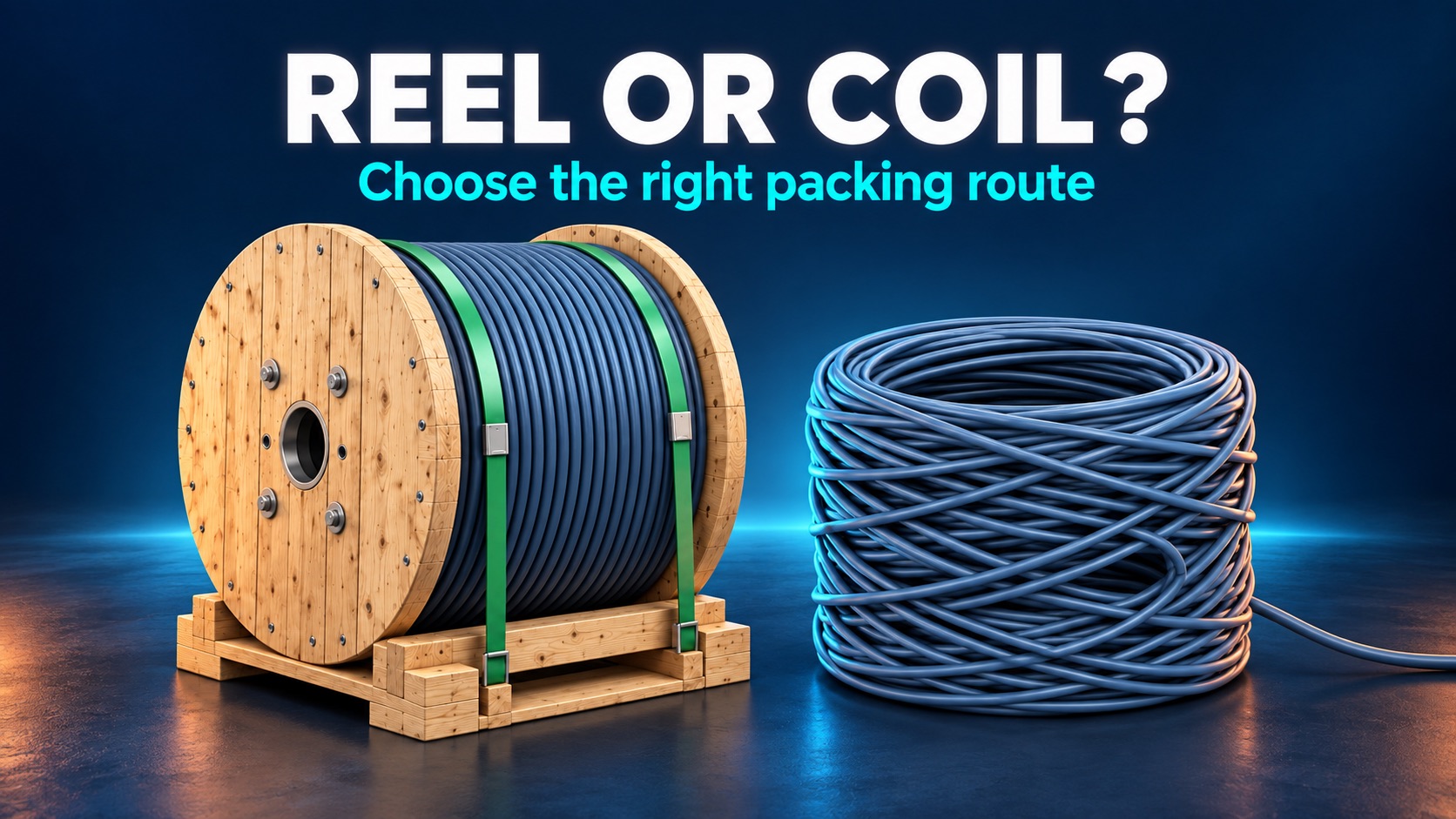
A finished cable on a production reel is not necessarily ready for sale. A buyer may need a measured coil, a smaller sale reel, a drum or a coil prepared for a carton. The correct handling equipment depends on that final format—not only on the cable’s outside diameter.
This guide is for factory owners, production managers and technical buyers deciding whether to keep the line’s existing take-up, add an off-line coiling operation or specify a more automated packing stage. It separates the functions so a quotation can be checked against the cable and the package customers actually order.
먼저 판매 준비 완료 패키지를 정의하세요.
Start with one representative finished cable and its required delivery format. State the length per package, the physical package dimensions and how it will be marked and handled. Only then compare reel take-up, coiling and automatic packing equipment.
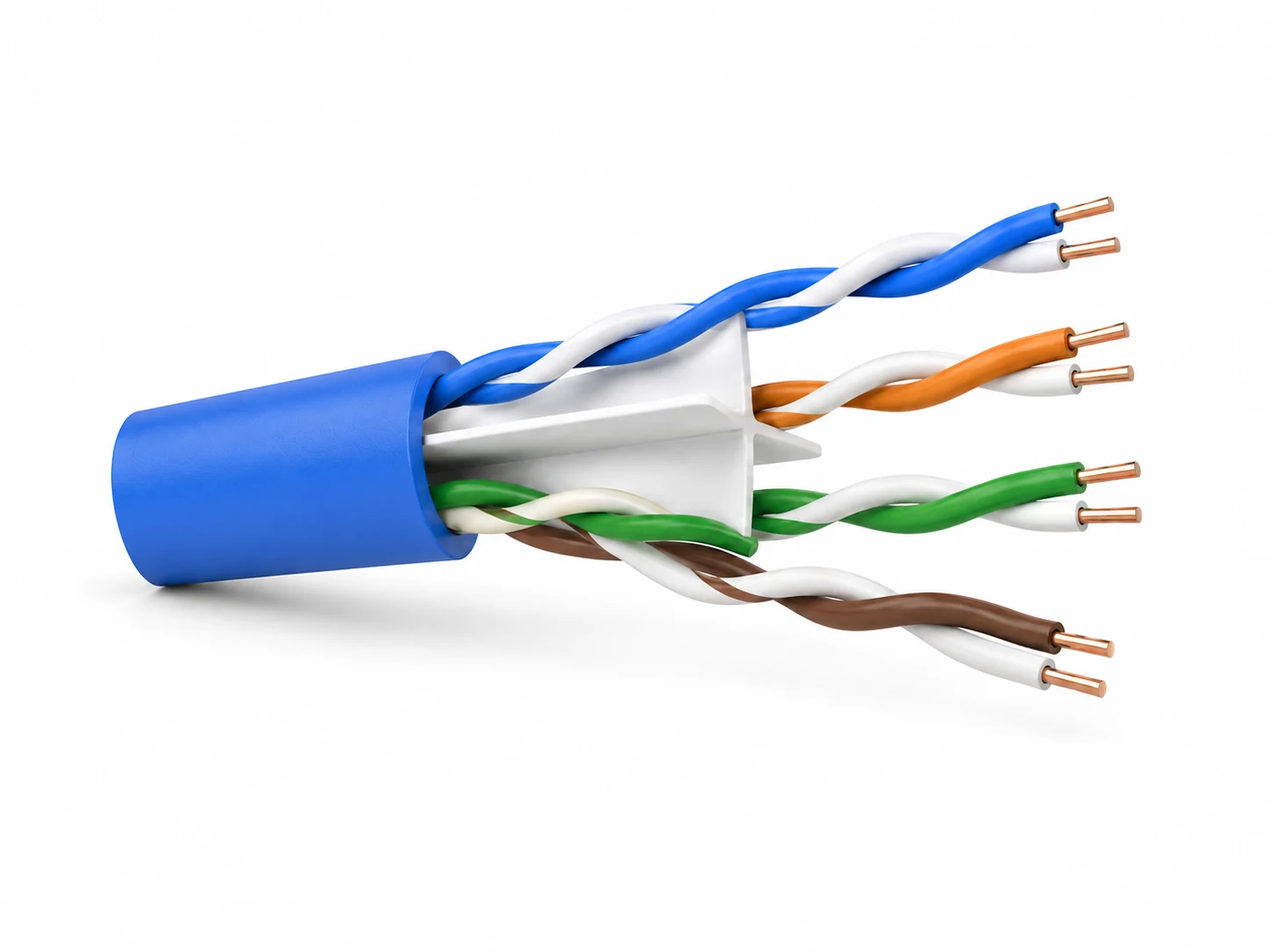
Ask for the cable drawing or sample, the finished outside diameter, flexibility and allowed handling limits. Then define the delivery unit: a production reel, a smaller sale reel, a tied coil or another approved format. For LAN cable, establish whether the order is for boxed bulk cable, cable sold on reels, or finished patch cords. Patch-cord termination and testing are separate operations; a coiling machine does not turn bulk cable into a tested patch cord. One cable family may be sold in several package sizes, so list the expected mix instead of quoting only the largest package.

HONGKAI 3D reference: a drum and smaller coils illustrate different delivery formats, not one standard equipment package.
| 구매자 결정 | 동일한 사양서에 기재할 데이터 | 장비 선택을 변경하는 이유 |
|---|---|---|
| 케이블 포장 진입 | 구성, 외경, 유연성 및 입력 릴 | 샘플로 확인해야 하는 페이오프 및 권선 방식을 결정합니다. |
| 완성된 납품 단위 | 릴, 드럼, 묶은 코일, 박스 포장된 대량 케이블 또는 기타 승인된 형태 | 생산 와인더가 이미 충분한지 여부 또는 별도의 재권취/코일링 작업이 필요한지를 결정합니다. |
| 길이 및 형상 | 포장당 길이, 허용 길이 공차, 내부 및 외부 치수, 중량 | 대표 시험을 위한 측정 및 권선 조건을 설정합니다 |
| 마킹 및 외부 포장 | 케이블 마킹, 라벨, 타이, 랩 또는 카톤 요구사항 | Makes each function explicit; the word “packaging” alone does not define the scope |
| Order pattern | 일반적인 배치 길이, 포장 변경 횟수 및 교대당 목표 수량 | 체인지오버 및 방전 시간이 표면적인 권선 속도보다 더 중요한지를 드러냅니다. |
The current HONGKAI 자동 권취 및 포장 장비 페이지 separates cable size, coil dimensions, length and included automation functions. HONGKAI generally supplies the equipment; reels can also be supplied when specified. A large-reel-to-small-reel rewinding machine is one possible route, not a default stage for every buyer. The listed machine families are selection references, not evidence that one machine covers every cable and format. Model-specific range, speed and precision figures must stay attached to the matching equipment and test conditions.
판매 길이 권취에서 별도 라인 테이크업 분리
Production take-up winds and measures the manufacturing output; sale-length rewinding or coiling prepares the customer package. The existing length counter does not by itself cut, coil or tie sale units. Specify those additional functions only where the finished order requires them.
On a 건물용 전선 생산 공정, take-up follows the extrusion, cooling and in-line checks. HONGKAI’s production take-up normally includes length metering, so a buyer should first check the installed counter and its verification method rather than automatically add a separate metering machine. Measured coiling and packing can follow as a separate operation when the sales format requires it. The handover may be a finished reel moved to an off-line coiler, or a large reel transferred to smaller sale reels through a rewinding machine. If customers buy the cable on its existing reel, neither extra route should be assumed.
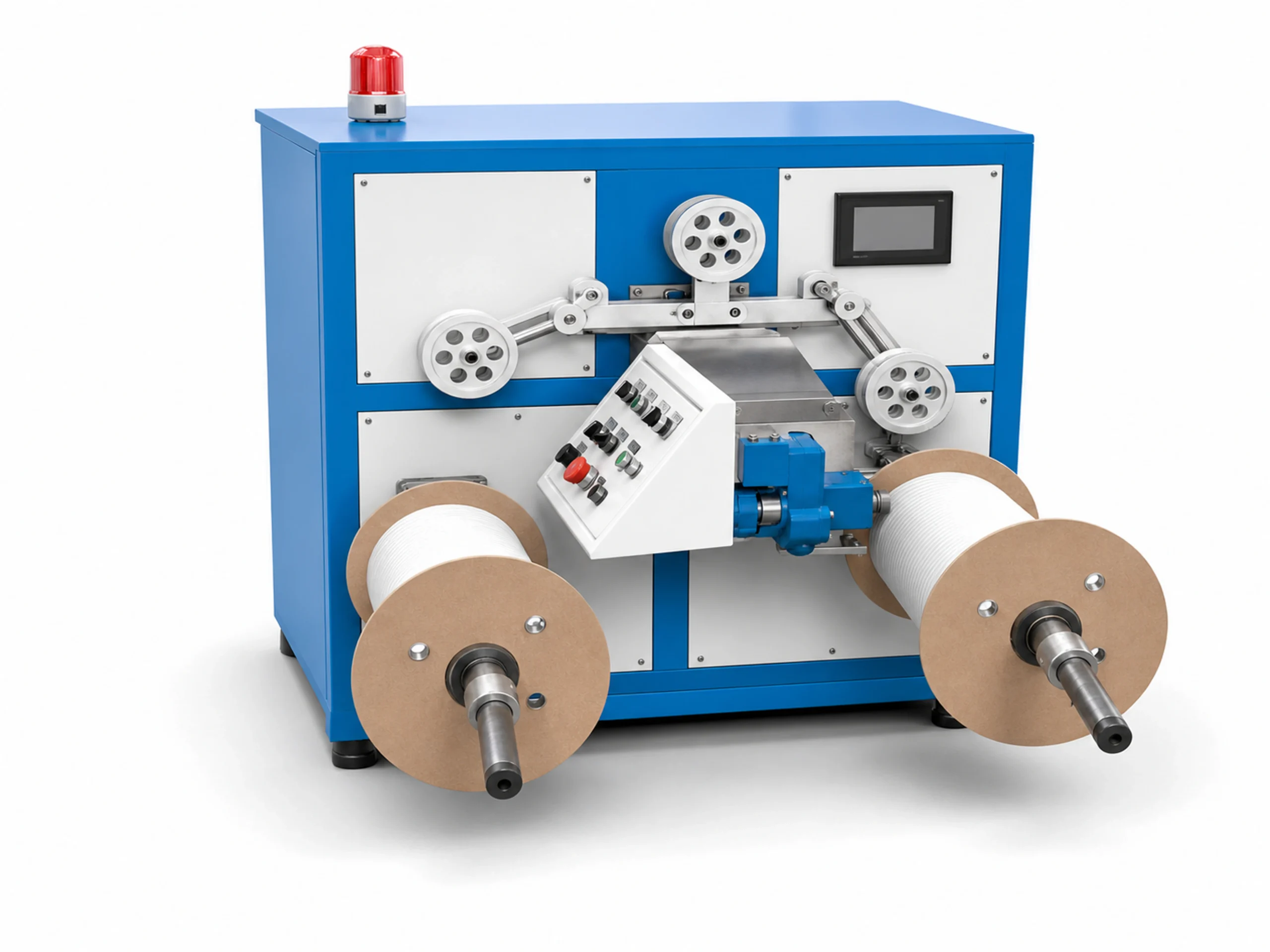
HONGKAI 3D take-up reference: collecting cable on a reel is distinct from preparing a measured sale-length coil.
Before asking for automation, draw the actual handover: where the finished cable leaves the main line, what reel or drum it is on, who moves it, and where the existing length count is checked. Cutting and coiling are separate scope decisions. They may reduce operator handling and raise the degree of automation, but a labor-saving or payback figure needs project-specific evidence. If packaging is intended to be in-line, ask how the line handles a completed package while the upstream process continues. If it is off-line, specify input-reel storage, pay-off control and the number of packaging stations needed for the agreed product mix. The correct interface must be confirmed against the actual line—not inferred from a catalog photo.
제안서에 해당 작업이 개별적으로 포함되지 않는 한, 릴 와인더를 절단, 결속, 포장 또는 박싱 시스템으로 간주하지 마십시오.
케이블과 패키지에 자동화를 맞추기
Choose functions one by one: pay off, verify length, cut, wind, tie, discharge, label, wrap and place into cartons if required. A production take-up’s length counter is not proof that the later functions are included. “Automatic” is not a written equipment scope.
The cable’s stiffness and package geometry influence whether the trial produces a neat, undamaged coil. A configuration that works on a small flexible wire should not be assumed to work on a larger or less flexible cable. Likewise, a network-cable coil and a heavier building-wire coil may call for different handling, even if both are described as “coiling.”
Ask every supplier to mark each function as included, optional, buyer-supplied or not required. In HONGKAI’s configuration discussion, cutting, coiling and tying can be specified together, while labeling and film wrapping require the appropriate additional equipment or configuration. Do not assume the same machine includes all of these stages. Placing a coil into a carton and robotically palletizing filled cartons are also different tasks; neither should be promised because a quotation merely says “boxing.” The equipment listing presents several coiling families, but the exact source and responsibility of each stage must be written in the offer.

HONGKAI 3D equipment reference. The image does not establish that cutting, tying, labeling, wrapping and cartoning are all included in one offered machine.
| 기능 | 구매자는 정의해야 합니다 | 요청할 증거 |
|---|---|---|
| 페이오프 및 공급 | 입력 리엘, 케이블 상태 및 공급 방향 | 의도된 입력 패키지를 사용한 데모 |
| 길이 계측 및 절단 | Existing take-up counter, target sale length, agreed tolerance and whether cutting is needed | Counter verification, specified cutter and recorded trial results |
| Winding and tying | Coil shape, size, weight and tie method | 검사를 위한 대표 완제품 포장 |
| Labeling, wrapping and cartoning | 코일링 및 결속 후에 어떤 작업이 이루어지는가? 누가 코일을 카톤에 넣는가? | Written module/operator scope and observed sequence, not a generic “fully automatic” label |
| Palletizing | 포장된 상자를 작업자 또는 로봇이 적재할지 여부 | 필요 시 별도의 자재 취급 범위 적용 |
Note: Peter confirms that the ranges, speeds and precision figures published for HONGKAI equipment are achievable for the matching models. They are not universal values for every coiling or packaging route; identify the offered model and test conditions before using any figure as an acceptance limit.
대표적인 시험으로 결과를 입증하십시오
A useful trial produces the package the buyer plans to sell. It must show length, appearance and cable condition under the agreed material, package size and running conditions—not only a short no-load machine demonstration.
Before a trial, agree which cable sample, input reel and finished package will be used. Record the target length, measured length error, coil or reel dimensions, observed output and any stops or adjustments. Inspect cable surface condition and coil neatness: winding must not damage the jacket, disturb printing or create a package that cannot be handled or boxed as intended. Where a boxed coil needs a central opening, specify its required diameter before machine design and measure it during acceptance. Verify finished-package length by the method agreed in the purchase specification; an unverified display reading alone is not proof of the delivered length.
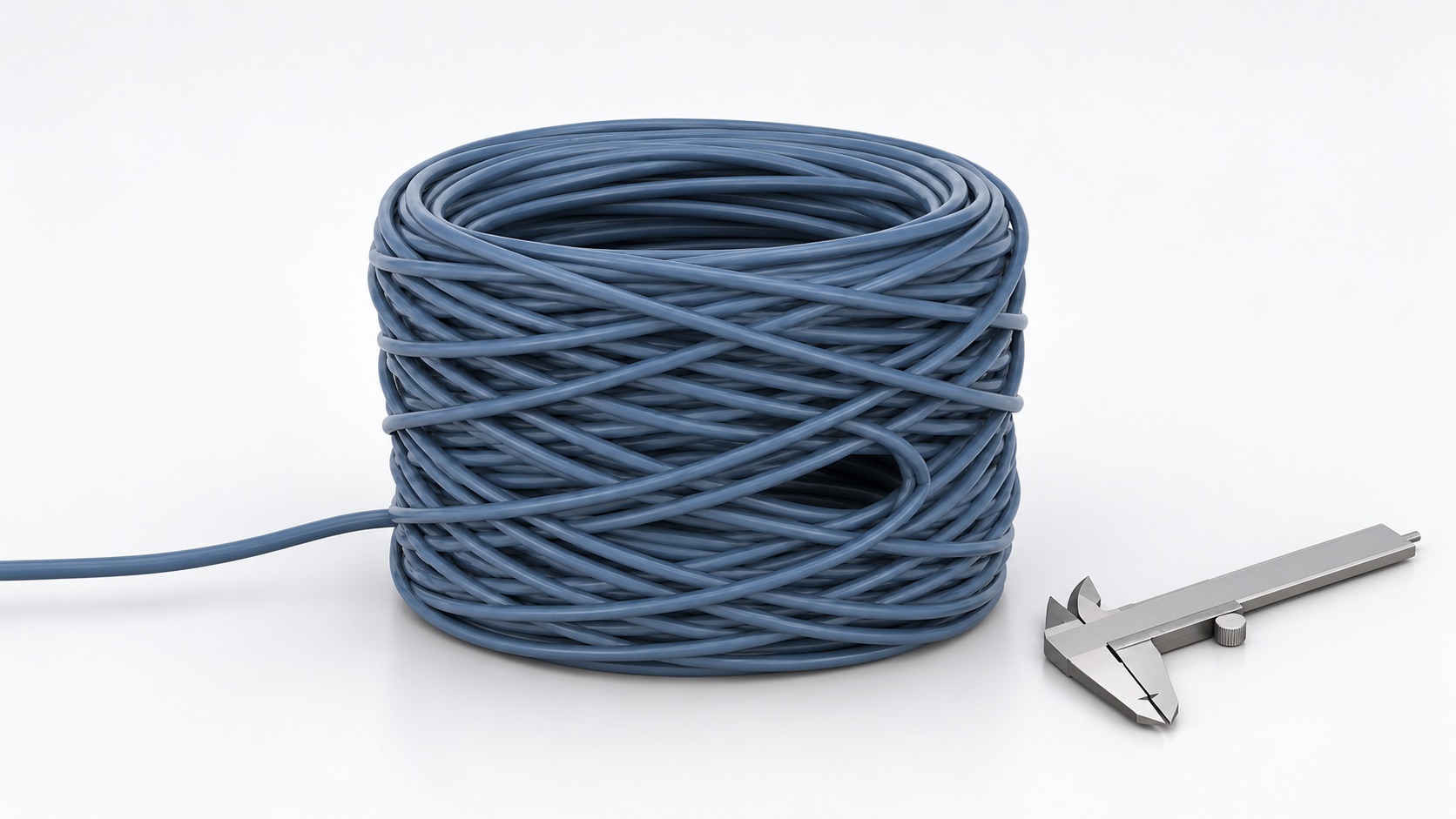
Illustrative 3D view based on a HONGKAI coil reference. It explains the opening and winding checks; it is not a real FAT record or a measured result.
If several cable sizes or formats are important, select a small set of representative cases that covers the intended range. A single easy sample cannot demonstrate every product. Record changeover steps and the operator work that remains after each package is discharged. Compare the results against the conditions in the quotation rather than a generic catalog speed.
This article does not set a universal length-error percentage, coil-diameter tolerance or pieces-per-minute target. Those values belong in the approved product and equipment agreement, and any HONGKAI offer must be checked against the actual sample and scope.
가장 짧은 완전한 취급 경로를 선택하세요
The choice is not between “manual” and “fully automatic” in the abstract. It is between routes that deliver the correct sale-ready package at the required volume with a clear responsibility boundary. A factory already selling cable on reels may need only suitable take-up and handling; one selling on smaller reels may need rewinding. A factory delivering measured coils may need a cut-and-coil stage. Tying, labeling, wrapping, cartoning and palletizing are separate decisions based on the actual order and handling plan.
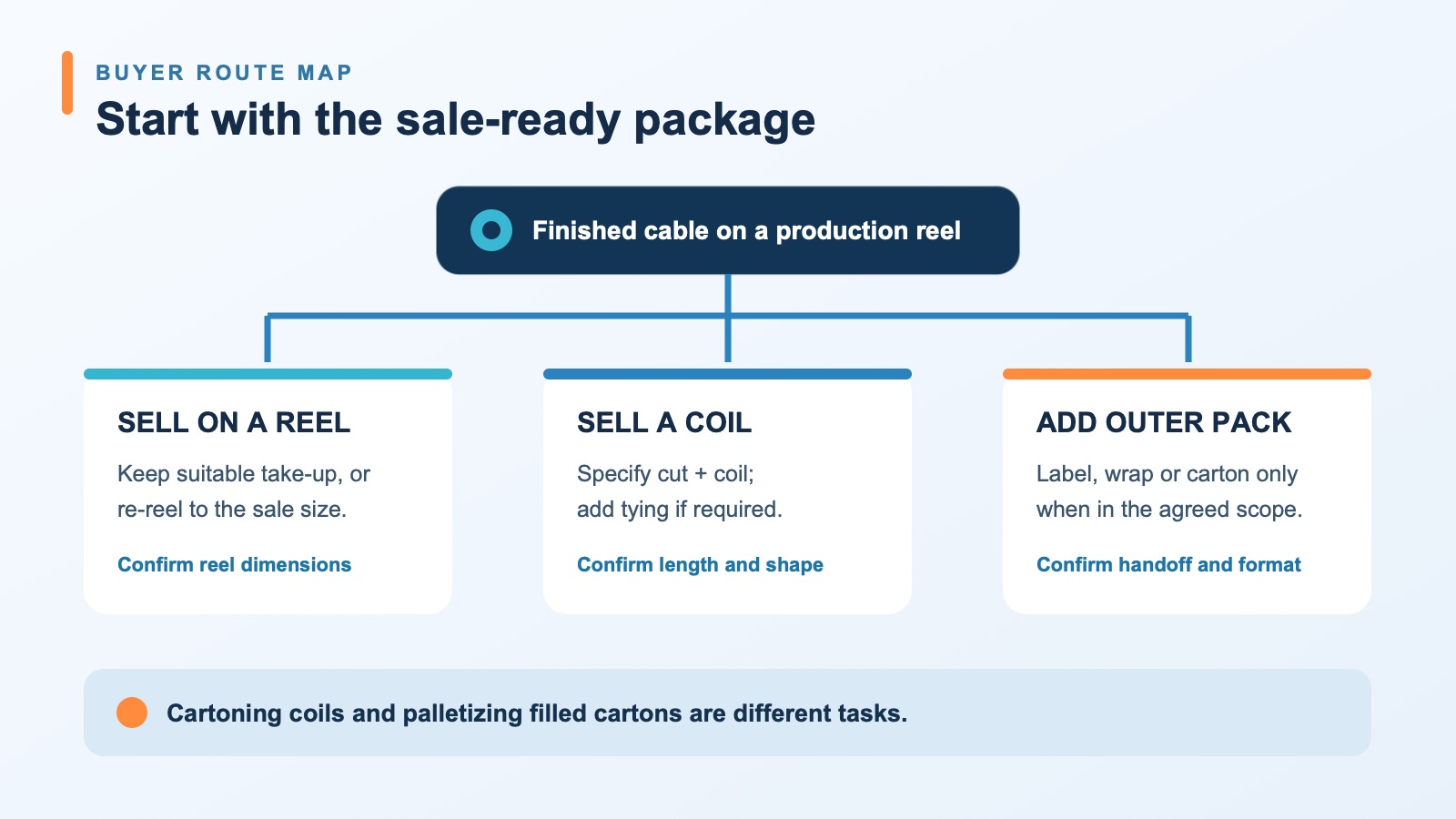
설명용 라우트 다이어그램이며, 장비 사진이 아닙니다. 릴 판매, 측정된 코일 및 외부 포장 단계는 별도로 명시되어야 합니다.
For the first discussion, send one cable drawing or physical sample, the input reel, two or three representative finished packages, the expected product mix and the existing line’s output arrangement. For a coil that must fit a box, include its target central opening and carton dimensions. Mark any unknown dimensions as open. HONGKAI can then compare equipment families and integration scope against those confirmed inputs, while leaving unproven capacities and formats out of the promised specification.

 English
 हिन्दी
 فارسی