












A finished cable on a production reel is not necessarily ready for sale. A buyer may need a measured coil, a smaller sale reel, a drum or a coil prepared for a carton. The correct handling equipment depends on that final format—not only on the cable’s outside diameter.
This guide is for factory owners, production managers and technical buyers deciding whether to keep the line’s existing take-up, add an off-line coiling operation or specify a more automated packing stage. It separates the functions so a quotation can be checked against the cable and the package customers actually order.
حدد حزمة جاهزة للبيع أولاً
Start with one representative finished cable and its required delivery format. State the length per package, the physical package dimensions and how it will be marked and handled. Only then compare reel take-up, coiling and automatic packing equipment.
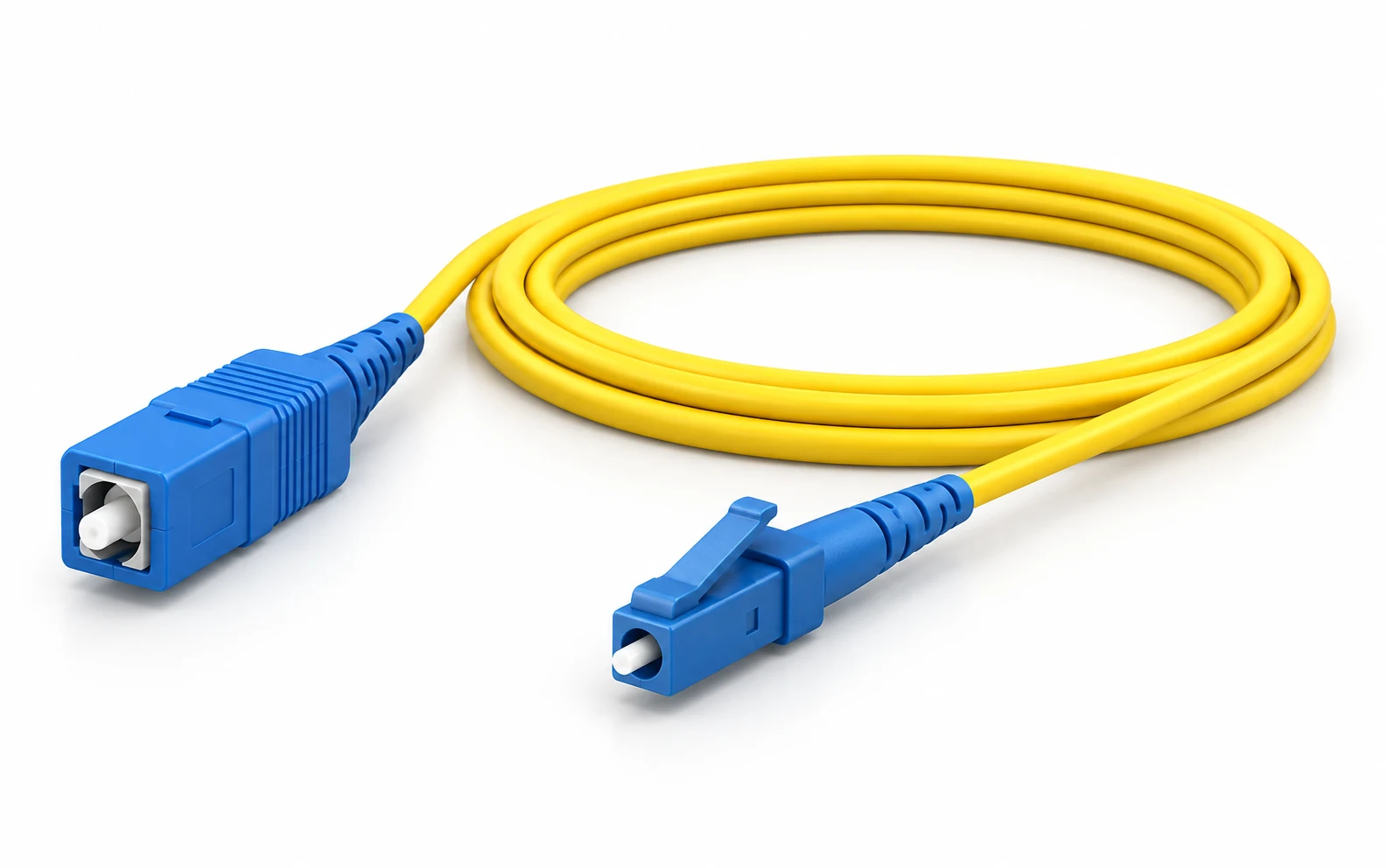
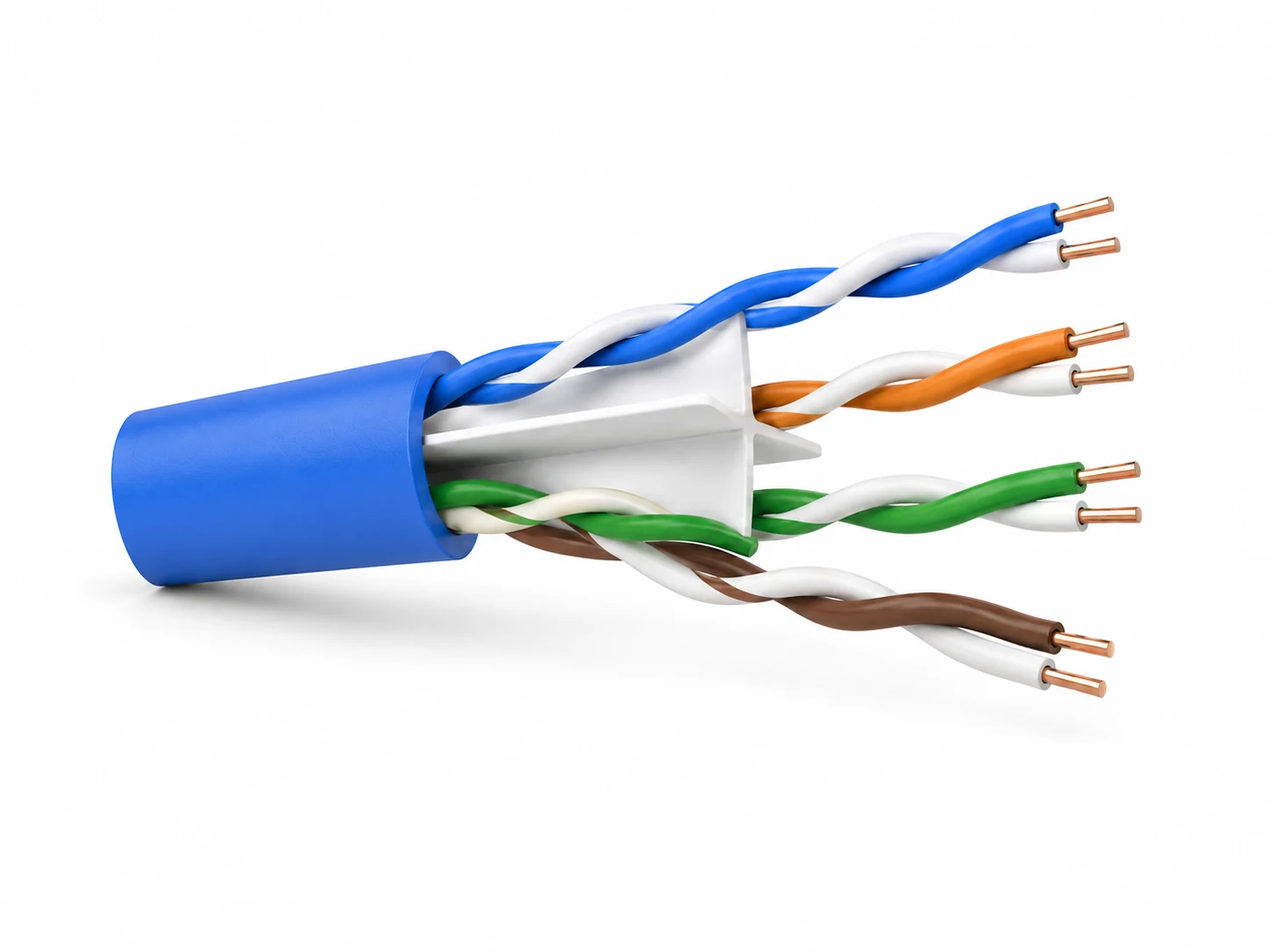
Ask for the cable drawing or sample, the finished outside diameter, flexibility and allowed handling limits. Then define the delivery unit: a production reel, a smaller sale reel, a tied coil or another approved format. For LAN cable, establish whether the order is for boxed bulk cable, cable sold on reels, or finished patch cords. Patch-cord termination and testing are separate operations; a coiling machine does not turn bulk cable into a tested patch cord. One cable family may be sold in several package sizes, so list the expected mix instead of quoting only the largest package.

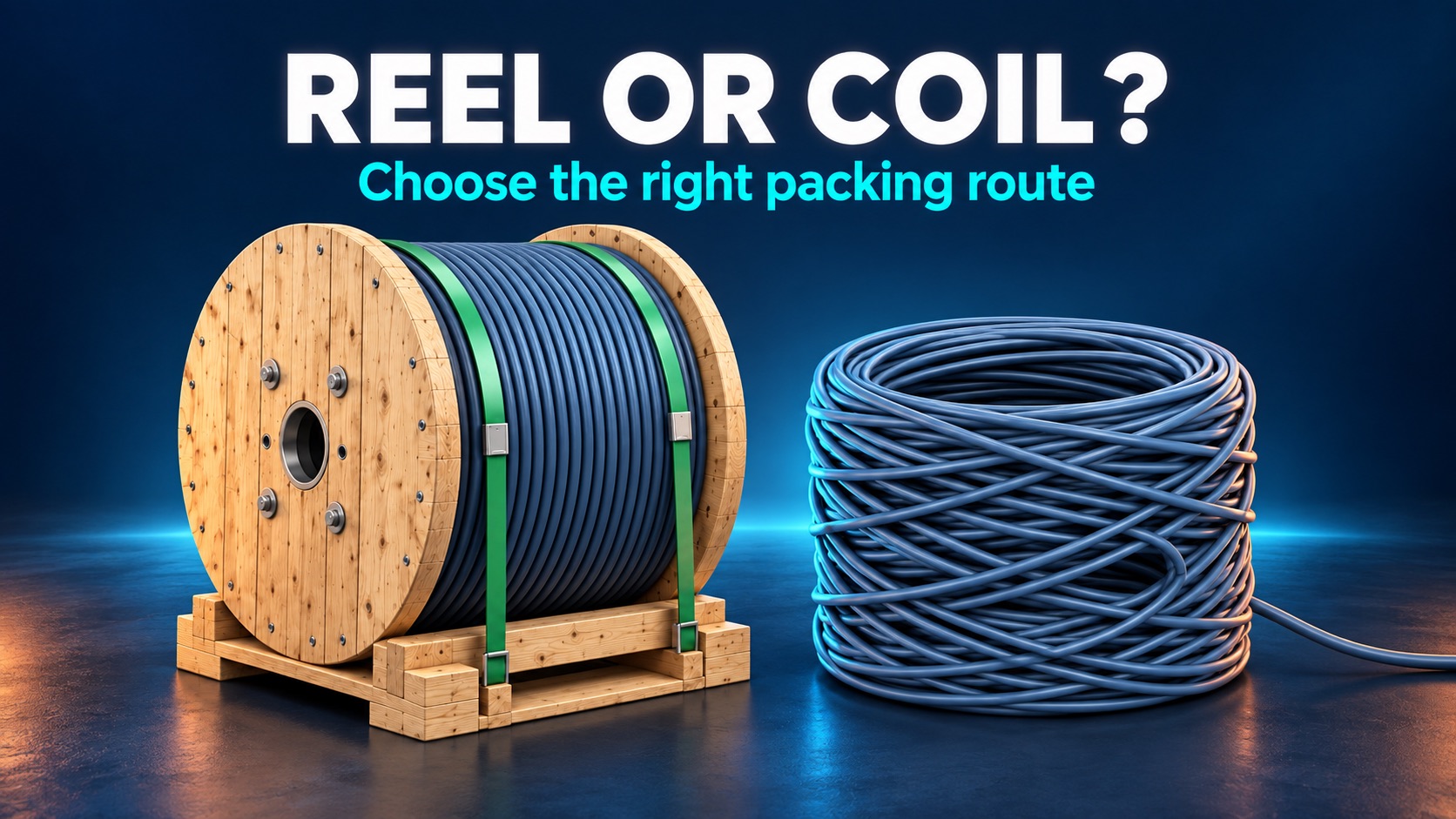
HONGKAI 3D reference: a drum and smaller coils illustrate different delivery formats, not one standard equipment package.
| قرار المشتري | البيانات التي سيتم وضعها على نفس ورقة المواصفات | لماذا يؤدي ذلك إلى تغيير اختيار المعدات |
|---|---|---|
| الكابل الداخل في التغليف | البناء، القطر الخارجي، المرونة وبكرة الإدخال | يحدد طريقة الفك واللف التي يجب التحقق منها باستخدام عينة |
| وحدة التسليم النهائية | بكرة، طبلية، لفافة مربوطة، كابل سائب معبأ في صندوق أو شكل آخر معتمد | يحدد ما إذا كان لف الإنتاج الحالي كافيًا بالفعل أو ما إذا كانت هناك حاجة إلى عملية لف/لف إضافية منفصلة |
| الطول والهندسة | الطول لكل عبوة، التسامح المسموح به في الطول، الأبعاد الداخلية والخارجية، الوزن | يحدد ظروف القياس واللف لتجربة تمثيلية |
| العلامة والتغليف الخارجي | متطلبات تعليمات الكابل، الملصق، الرباطة، الغلاف أو الكرتونة | Makes each function explicit; the word “packaging” alone does not define the scope |
| Order pattern | طول الدفعة النموذجي، وعدد مرات تغيير العبوة والكمية المستهدفة لكل وردية | يكشف ما إذا كانت فترة التبديل والتفريغ أكثر أهمية من سرعة اللف المعلَنة |
The current HONGKAI صفحة معدات اللف والتعبئة التلقائية separates cable size, coil dimensions, length and included automation functions. HONGKAI generally supplies the equipment; reels can also be supplied when specified. A large-reel-to-small-reel rewinding machine is one possible route, not a default stage for every buyer. The listed machine families are selection references, not evidence that one machine covers every cable and format. Model-specific range, speed and precision figures must stay attached to the matching equipment and test conditions.
فصل خط التجميع عن لفائف الطول المخصص للبيع
Production take-up winds and measures the manufacturing output; sale-length rewinding or coiling prepares the customer package. The existing length counter does not by itself cut, coil or tie sale units. Specify those additional functions only where the finished order requires them.
On a مسار إنتاج أسلاك المباني, take-up follows the extrusion, cooling and in-line checks. HONGKAI’s production take-up normally includes length metering, so a buyer should first check the installed counter and its verification method rather than automatically add a separate metering machine. Measured coiling and packing can follow as a separate operation when the sales format requires it. The handover may be a finished reel moved to an off-line coiler, or a large reel transferred to smaller sale reels through a rewinding machine. If customers buy the cable on its existing reel, neither extra route should be assumed.
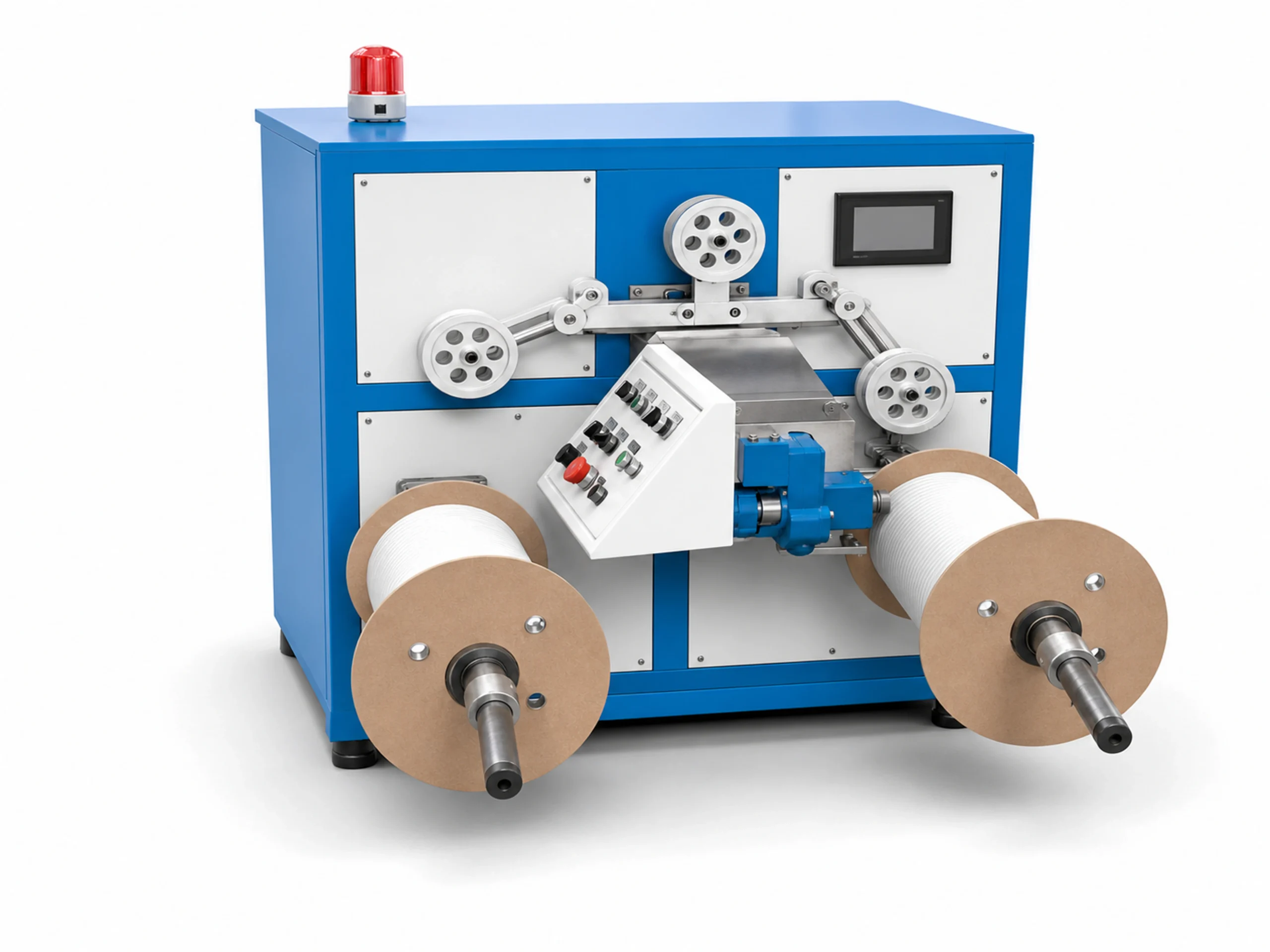
HONGKAI 3D take-up reference: collecting cable on a reel is distinct from preparing a measured sale-length coil.
Before asking for automation, draw the actual handover: where the finished cable leaves the main line, what reel or drum it is on, who moves it, and where the existing length count is checked. Cutting and coiling are separate scope decisions. They may reduce operator handling and raise the degree of automation, but a labor-saving or payback figure needs project-specific evidence. If packaging is intended to be in-line, ask how the line handles a completed package while the upstream process continues. If it is off-line, specify input-reel storage, pay-off control and the number of packaging stations needed for the agreed product mix. The correct interface must be confirmed against the actual line—not inferred from a catalog photo.
لا تحسب نظام لف البكرة كنظام قطع أو ربط أو تغليف أو تعبئة في صناديق ما لم تكن تلك العمليات مدرجة بشكل فردي في العرض.
مطابقة الأتمتة مع الكابل والعبوة
Choose functions one by one: pay off, verify length, cut, wind, tie, discharge, label, wrap and place into cartons if required. A production take-up’s length counter is not proof that the later functions are included. “Automatic” is not a written equipment scope.
The cable’s stiffness and package geometry influence whether the trial produces a neat, undamaged coil. A configuration that works on a small flexible wire should not be assumed to work on a larger or less flexible cable. Likewise, a network-cable coil and a heavier building-wire coil may call for different handling, even if both are described as “coiling.”
Ask every supplier to mark each function as included, optional, buyer-supplied or not required. In HONGKAI’s configuration discussion, cutting, coiling and tying can be specified together, while labeling and film wrapping require the appropriate additional equipment or configuration. Do not assume the same machine includes all of these stages. Placing a coil into a carton and robotically palletizing filled cartons are also different tasks; neither should be promised because a quotation merely says “boxing.” The equipment listing presents several coiling families, but the exact source and responsibility of each stage must be written in the offer.

HONGKAI 3D equipment reference. The image does not establish that cutting, tying, labeling, wrapping and cartoning are all included in one offered machine.
| وظيفة | يجب على المشتري تحديد | الأدلة المطلوب طلبها |
|---|---|---|
| الترقيم والتغذية | Input reel, cable condition and feed direction | Demonstration with the intended input package |
| Length count and cutting | Existing take-up counter, target sale length, agreed tolerance and whether cutting is needed | Counter verification, specified cutter and recorded trial results |
| Winding and tying | شكل اللفة، المقاس، الوزن وطريقة الربط | Representative finished packages for inspection |
| الوسمة، التغليف والتعبئة في علب | Which operations follow coiling and tying; who places coils into cartons | نطاق الوحدة/المشغل المكتوب والتسلسل الملحوظ، وليس تسمية عامة مثل “تلقائي بالكامل” |
| Palletizing | Whether filled cartons are to be stacked by an operator or robot | نطاق منفصل للتعامل مع المواد عند الحاجة |
Note: Peter confirms that the ranges, speeds and precision figures published for HONGKAI equipment are achievable for the matching models. They are not universal values for every coiling or packaging route; identify the offered model and test conditions before using any figure as an acceptance limit.
أثبت النتيجة من خلال تجربة تمثيلية
A useful trial produces the package the buyer plans to sell. It must show length, appearance and cable condition under the agreed material, package size and running conditions—not only a short no-load machine demonstration.
Before a trial, agree which cable sample, input reel and finished package will be used. Record the target length, measured length error, coil or reel dimensions, observed output and any stops or adjustments. Inspect cable surface condition and coil neatness: winding must not damage the jacket, disturb printing or create a package that cannot be handled or boxed as intended. Where a boxed coil needs a central opening, specify its required diameter before machine design and measure it during acceptance. Verify finished-package length by the method agreed in the purchase specification; an unverified display reading alone is not proof of the delivered length.
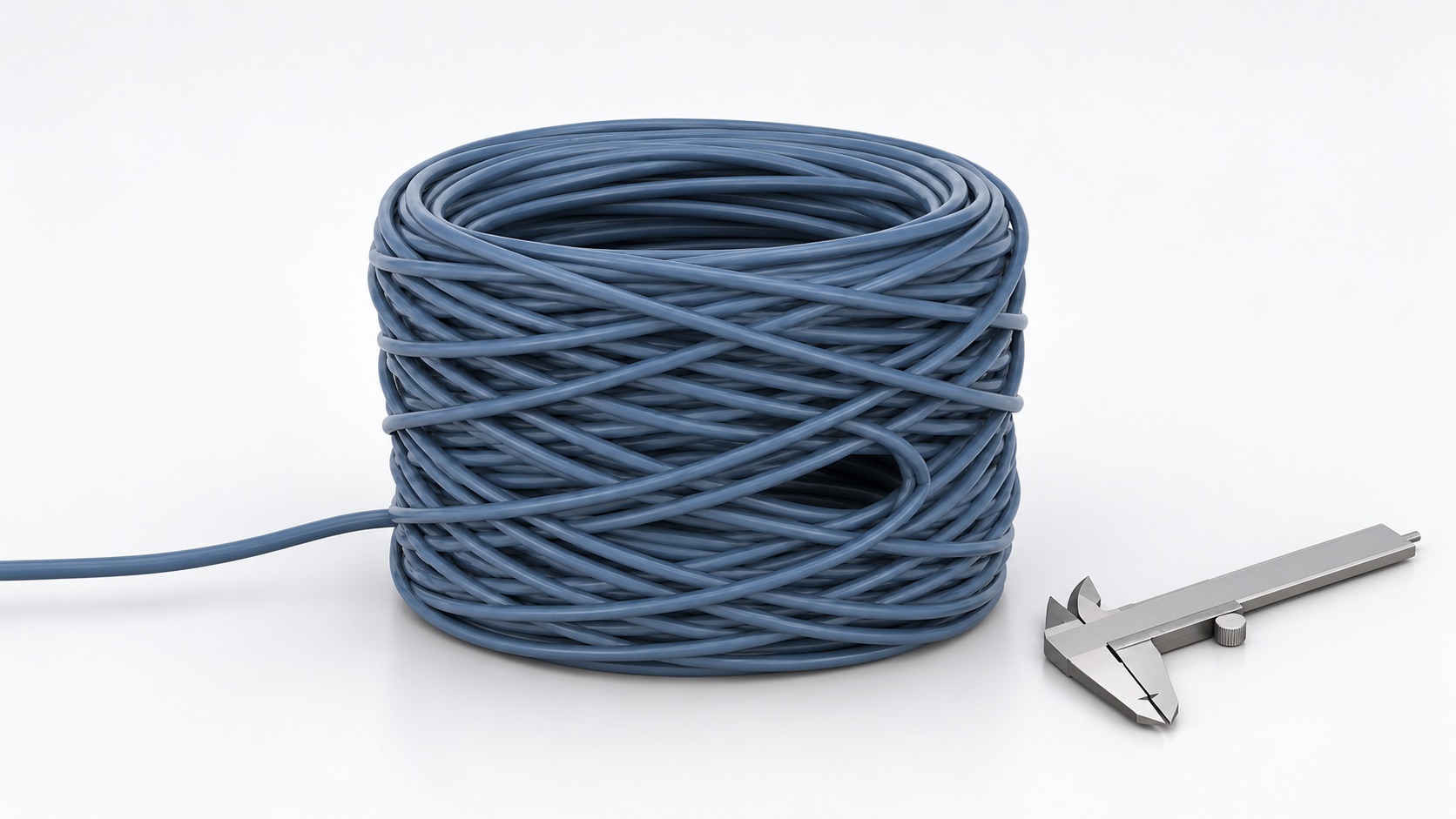
Illustrative 3D view based on a HONGKAI coil reference. It explains the opening and winding checks; it is not a real FAT record or a measured result.
If several cable sizes or formats are important, select a small set of representative cases that covers the intended range. A single easy sample cannot demonstrate every product. Record changeover steps and the operator work that remains after each package is discharged. Compare the results against the conditions in the quotation rather than a generic catalog speed.
This article does not set a universal length-error percentage, coil-diameter tolerance or pieces-per-minute target. Those values belong in the approved product and equipment agreement, and any HONGKAI offer must be checked against the actual sample and scope.
اختر أصغر مسار مناولة كامل
The choice is not between “manual” and “fully automatic” in the abstract. It is between routes that deliver the correct sale-ready package at the required volume with a clear responsibility boundary. A factory already selling cable on reels may need only suitable take-up and handling; one selling on smaller reels may need rewinding. A factory delivering measured coils may need a cut-and-coil stage. Tying, labeling, wrapping, cartoning and palletizing are separate decisions based on the actual order and handling plan.
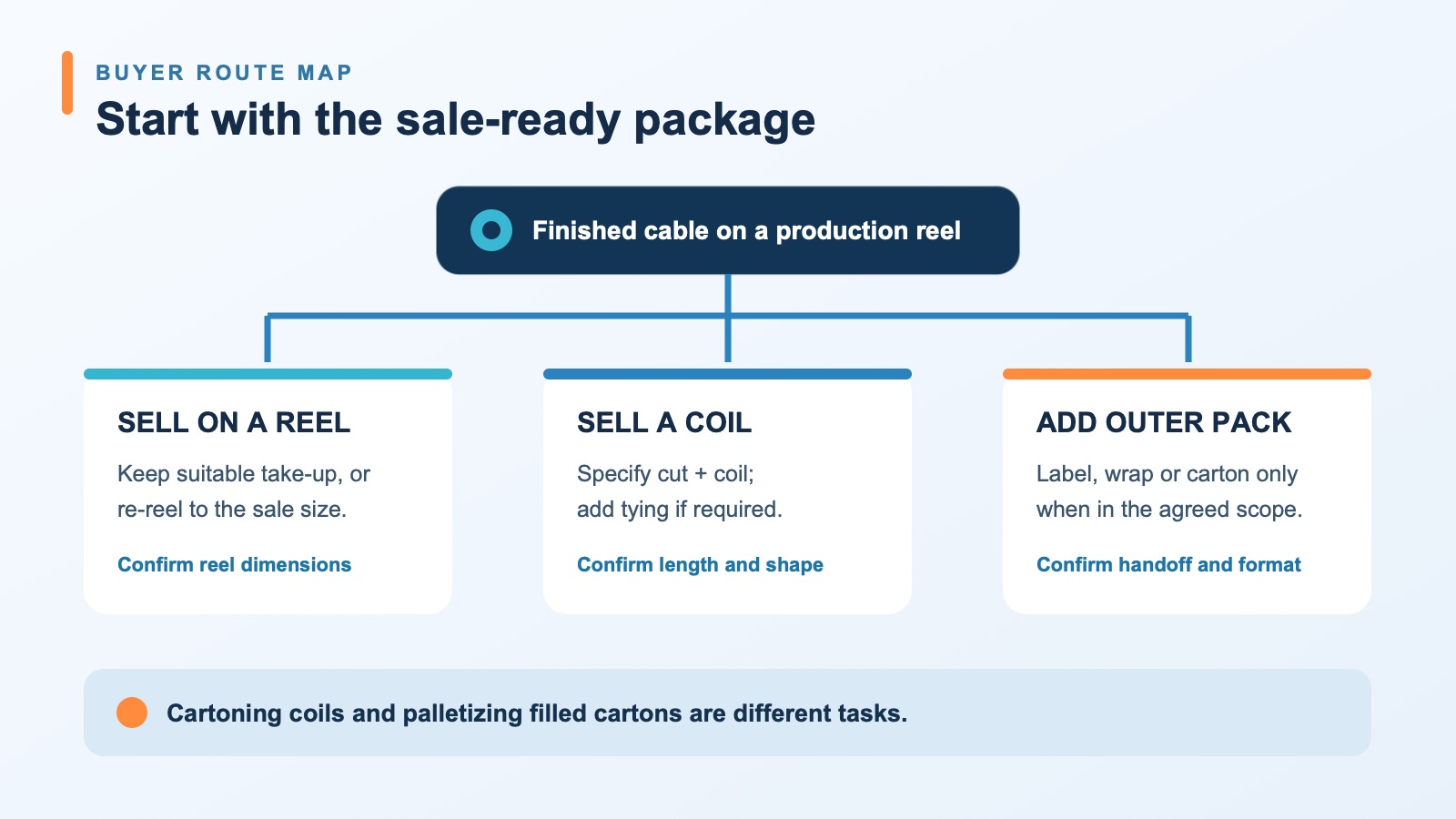
مخطط توضيحي للمسار، وليس صورة للمعدات. يجب تحديد مبيعات البكرات، واللفائف المقيسة، وأي خطوات تغليف خارجي بشكل منفصل.
For the first discussion, send one cable drawing or physical sample, the input reel, two or three representative finished packages, the expected product mix and the existing line’s output arrangement. For a coil that must fit a box, include its target central opening and carton dimensions. Mark any unknown dimensions as open. HONGKAI can then compare equipment families and integration scope against those confirmed inputs, while leaving unproven capacities and formats out of the promised specification.

 English
 हिन्दी
 فارسی