


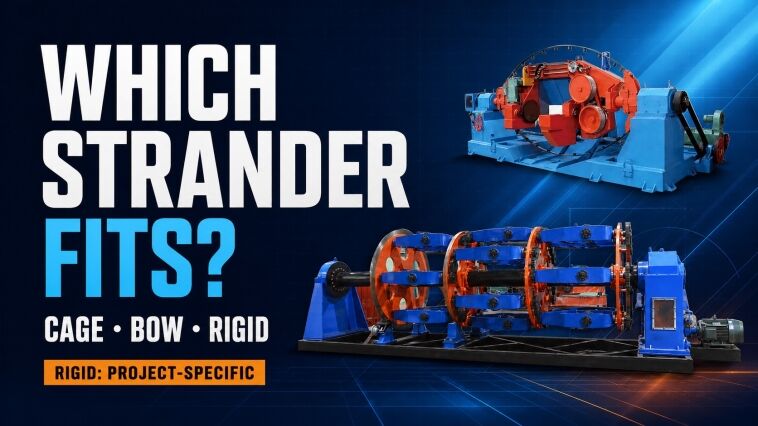
A factory owner, production manager or technical buyer comparing stranding machines must decide which rotating system can produce the approved conductor or cable core—not which catalog name sounds fastest. The choice affects input packages, torsion behavior, lay control, loading, floor interfaces, tooling and the evidence required at factory acceptance.
Cage, bow and rigid stranding machines are not interchangeable model tiers. Start with the finished product construction, then match the element being stranded, individual-wire or core packages, required lay, compaction or backtwist behavior, take-up package and acceptance tests to a verified machine configuration.

Real HONGKAI cage/planetary stranding machine reference. The final cage arrangement, bobbin count, package size and application must be confirmed for the project.
This guide uses “planetary cage,” “bow” and “rigid” as three comparison routes. Supplier terminology is not consistent: a rigid strander is also a cage-type machine, and a page labelled only “cage strander” may describe a planetary, rigid or project-specific arrangement. The purchase specification must therefore describe the mechanism and product duty, not rely on the category name alone.
Why Are the Machine Names Alone Not Enough?
The three names describe rotating arrangements, not a complete production capability. A valid selection still needs the element being stranded, its construction, input packages, output package, lay, direction, tension behavior, tooling and downstream process.
The same factory may use stranding equipment for bare conductor, insulated cores, cable laying-up, screening, armouring or other project-specific work. Those duties impose different requirements even when the nominal finished diameter overlaps. A bare round-wire conductor and a laid-up group of insulated cores should not be assigned to one machine merely because both are called “stranded.”
The first drawing should be the approved conductor or cable construction. For a conductor, define material, individual-wire count and diameter, nominal cross-sectional area, finished geometry, compaction or sector requirement, lay and direction. For insulated cores or cable elements, add element diameter, stiffness, allowable torsion, color sequence, filler or binder requirements and the downstream sheath or armour route.
IEC 60228:2023 covers nominal cross-sectional areas, wire numbers and sizes, and resistance values for several conductor types used in power cables and cords. The IEC record also explains that applicability depends on the relevant cable standard and generally concerns the conductor in the finished cable.1 A machine quotation must therefore connect the stranding process to the finished-product specification instead of treating a standard number as proof that the equipment is suitable.
Common mistakes: A supplier receives only the finished cable name, finished outside diameter or conductor area and selects a machine before the strand construction is known. Another common error is to compare maximum rotational speed without confirming the actual lay, package state, wire condition and stable product result.
How Do Cage, Bow and Rigid Stranding Machines Compare?
Use a same-dimension matrix to narrow the route, then request a project-specific operating window. The table below is a screening tool; it does not replace the signed machine specification or FAT plan.
| Comparison dimension | Planetary cage route | Bow route | Rigid strander route |
|---|---|---|---|
| Rotating concept | پیچها در سینههایی قرار دارند که توسط قفس چرخان حمل میشوند؛ یک تنظیم سیارهای میتواند جهتگیری عناصر یا پیچش معکوس را کنترل کند | عناصر قوس چرخان، رشته را اعمال میکنند؛ یک پیکربندی قوس-پرش ممکن است شامل پیچش معکوس کنترلشده نیز باشد | پیچهای تغذیه در سینههایی جامد نصب شدهاند که همراه روتور میچرخند، معمولاً بدون پیچش سیارهای |
| اولین سؤال کاربردی | آیا محصول از هستههای عایقبندیشده، عناصر شکلدار یا ورودیهای دیگری تشکیل شده است که نیاز به کنترل جهتگیری یا پیچش دارند؟ | آیا مدل قوس تأییدشده دقیقاً شامل هادی، پیچش کابل عایقبندیشده یا رشته مورد نیاز، از جمله رفتار پیچش معکوس، پیچ و بستهبندی است؟ | آیا بار کاری مربوط به هادی برقی، هادی هوایی، لایه پوششی یا ساختار دیگری است که با قفس جامد سازگار است؟ |
| سؤال بستههای ورودی | چند پیچ، با چه ابعاد و جرم، و چه تنظیم سینهای/پیچش معکوسی مورد نیاز است؟ | بستههای ورودی کجا قرار دارند، چگونه بارگیری میشوند و کدام اندازههای بسته در شرایط مورد نیاز تأیید شدهاند؟ | برای هر لایه محصول، قطر پیچ، سیستم بارگیری، بخش قفس و تعداد سیم مورد نیاز چه هستند؟ |
| شواهد محصول | جهتگیری عناصر، پیچ، هندسه هسته، رفتار باند و ساخت رول | پیچ، هندسه هادی، رفتار کشش، شرایط سطح و ساخت رول | پیچ، هندسه هادی، نتیجه فشردهسازی یا شکلدهی، پایه آزمون الکتریکی و ساخت رول |
| ریسک اصلی انتخاب | “استفاده از ”قفس" بدون ذکر رفتار سیارهای یا جامد | سرعت کاتالوگ به عنوان شواهد تولید پایدار برای هر پیچ و هادی در نظر گرفته میشود | ظرفیت بزرگ روتور بدون اثبات کوچکترین محصول، روش بارگیری یا تجهیزات مورد نیاز خریداری میشود |
| وضعیت پیکربندی | تعداد پیچ، نسبت پیچش معکوس، باند، کاپستن و تحویل همچنان وابسته به پروژه هستند | HONGKAI’s live model table is only an initial screening reference; exact range must be reissued | HONGKAI has no universal rigid-strander table approved for this article; the complete scope must be confirmed per project |
The HONGKAI cage stranding machine page shows that cage arrangements vary by bobbin quantity, stranding diameter and support form. That variation is more useful to a buyer than the category name: it proves that the cage block, package and product window must be configured together.
The HONGKAI bow-type stranding machine page likewise separates models by input-wire range, finished conductor range, lay window and machine speed. Those published values can begin a technical discussion, but this article deliberately does not repeat them as universal capability. The final proposal must identify which exact model, product, package, lay and test condition supports every quoted value.
Bow does not mean only fine wire. An official MFL GROUP bow-skip machinery catalogue describes backtwist configurations for bare copper, aluminium and aluminium-alloy conductors, insulated-cable laying-up and steel strands.2 This establishes category-level applications, not a HONGKAI model guarantee; the exact duty still needs a verified proposal and product test.

Real HONGKAI bow-type stranding machine reference. Exact model, wire range, lay, package and supplied controls require project confirmation.
Note: “Cage” and “rigid” are not always mutually exclusive sales categories. Require a layout and mechanism description that states whether the bobbin cradles backtwist, rotate rigidly with the cage, or use another arrangement.
Which Product Inputs Decide the Route?
Five connected inputs decide the route: finished construction, individual elements, lay and direction, package interfaces, and required proof. A missing value in any one group can change the selected stranding machine or make its claimed operating window unusable.
Finished construction and strand duty
List every launch product separately. For each one, state whether the machine produces a bare conductor, a compacted or shaped conductor, a laid-up cable core, a screen, an armour layer or another defined intermediate product. Add the applicable cable drawing and finished-product standard. Do not combine future products into one unsupported “maximum range.”
Individual wires, cores or cable elements
Define material, coating, diameter, count, surface condition, stiffness and allowable torsion. For insulated cores, include the insulation outside diameter and tolerance. For bare wires, include the incoming wire condition and the forming or compaction requirement. If a product uses fillers, binders, tapes or water-blocking elements, show their position and supply package.
Lay, direction and layer sequence
Write the required lay or lay range by product and layer, including S or Z direction and the measurement method. State whether alternating layers, concentric construction, sector formation, preforming or post-forming is required. A nominal pitch range does not prove that the machine can hold the product result at the requested operating condition.
Payoff and take-up packages
Give drawings or verified dimensions for every input and output reel: flange diameter, barrel diameter, traverse width, center hole or pintle interface, approved mass and lifting method. Specify shafted or shaftless loading, trolley, crane or hydraulic assistance, aisle and service access. Reel diameter by itself does not prove that the package can be loaded, clamped, braked or traversed correctly.
پایه پذیرش
هر محصول را به نمونه نمایندگی، دستورالعمل ماشین یا تنظیم دنده، روش آزمون، ابزار، حد پذیرش و رکورد نگهداری شده متصل کنید. تعیین کنید که کدام بررسیها در مرحله پیچش انجام میشوند و کدامها فقط بر روی هادی یا کابل نهایی معتبر هستند. آزمون چرخش بدون بار، بررسی مونتاژ است، نه پذیرش محصول.
مسیر پیچش را به صورت موقت نگه دارید، هنگامی که درخواست فقط “ماشین پیچش” را ذکر کند. ابتدا قطر خارجی هر سیم، هسته یا عنصر کابل را قبل از پیچش، قطر خارجی نهایی مورد نیاز، تعداد عناصر و مشخصات کامل محصول را تعریف کنید. جزئیات لای و رولهای تحویل/گیرنده مورد نیاز میتوانند محدوده ماشینهای کاندید را تنگتر کنند، اما جایگزین نقشه ساخت تأیید شده نمیشوند.
به دلیل اینکه ورودیها زیرواحدهای سیم مسی هستند، تنها به دلیل آن نیازی به پیچش معکوس سیستم سیار ندارید؛ ابتدا تأیید کنید که آیا ساختار، شرایط جهتگیری یا پیچش اعمال میکند. در مواردی که ساختار پلاستیکی لوله آزاد نوری نیاز به آزادسازی از پیچش، خمیدگی یا همپوشانی تجمعی دارد، میتوان از مسیر جهتگیری متناوب SZ استفاده کرد. ماشینآلات کابل LAN نیز به محصول بستگی دارد: صفحه معتبر تجهیزات SETIC راهحلهای بدون پیچش معکوس، پیچش معکوس تکگانه و سهگانه را برای کاربردهای LAN فهرست میکند.3 بنابراین، نام مواد به تنهایی نمیتواند مکانیسم را تعیین کند؛ باید ساختار کابل، پیچش مجاز و نتیجه انتقال مورد نیاز تأیید شوند.
معیار تصمیمگیری: اگر تأمینکننده نتواند هر پنج گروه را به یک پیکربندی امضا شده و ماتریس FAT نگاشت کند، مسیر را موقت نگه دارید. از بزرگترین قطر یا بالاترین سرعت فهرستشده برای پر کردن تصمیمات گمشده استفاده نکنید.
خریدار باید مسیر را چگونه به تدریج انتخاب کند؟
مسیرهای ناسازگار را قبل از مقایسه پیشنهادهای تجاری حذف کنید. محصول را تأیید کنید، هر ورودی را تعریف کنید، مکانیسم چرخش را با وظیفه مطابقت دهید و شواهد مورد نیاز برای پنجره عملیاتی را تأیید کنید.
-
محصول — نام خروجی دقیق را مشخص کنید. نقشه، وظیفه ساخت، استاندارد مرتبط را تأیید کنید، محصولات و محصولات آینده را که واقعاً در حوزه هستند، راهاندازی کنید.
-
عناصر — هر ورودی را تعریف کنید. List individual wires or cores, material, diameter, count, torsion sensitivity, binders, tooling and incoming packages.
-
Mechanism — Match rotation to duty. Decide whether orientation/backtwist control, a bow arrangement or a rigid rotor is technically appropriate for the confirmed construction.
-
Evidence — Prove the operating window. Agree the reels, lay, operating condition, sample, tests, safeguards and records before approving the model.
Use the following route logic as a first technical filter:
- If insulated cores or shaped cable elements must keep a controlled orientation, review a planetary cage arrangement and state the required backtwist behavior.
- If the confirmed product is a bare conductor, insulated-cable laying-up duty or strand covered by a verified bow model, compare bow loading, backtwist behavior, lay, tension, surface condition and stable product evidence.
- If the product is a power conductor, aerial conductor, screen or other duty suited to a rigid rotor, review the rigid cage sections, bobbin loading, compaction/forming tools, capstan and take-up as one line. Official rigid-cage equipment information shows separate configurations for conductor and screening duties across aerial, submarine and wind-power cable applications.4
- If the duty is only to bunch fine wires into a flexible conductor, compare a wire bunching machine before assuming that a cage, bow or rigid line is necessary. HONGKAI’s wire bunching machine selection guide explains the conductor, lay, reel, tension and FAT inputs for that separate route.
The route can still change after this filter. A buyer may discover that one product family needs two machines because the smallest and largest constructions do not share a practical operating window. The alternative is not automatically one oversized machine: the factory must compare changeover, input packages, stable operating evidence, floor handling and future product volume.
فقط زمانی موقعیتهای قفس را اضافه کنید که تعداد واقعی عناصر خریدار، محدوده محصول و اندازه رولها با آنها مطابقت داشته باشند. به عنوان مثال، خانواده کابلهای هممحور آینده را با ساختار واقعی و تعداد عناصر مورد نیاز قبل از اضافه کردن موقعیتهای اضافی بوبین فهرست کنید. “موقعیتهای بیشتر برای گسترش” بدون ماتریس محصولی که نشان دهد این موقعیتها کجا استفاده خواهند شد، کافی نیست.
Red flags: A proposal calls a machine “multi-purpose” but does not list excluded products; the layout omits loading or service zones; a bow machine is selected only from maximum speed; or a rigid machine is selected only because it has more bobbins than the launch product needs.
Which Factory Interfaces Can Change the Decision?
The selected mechanism must also fit the factory. Power, foundation, guarding, reel movement, lifting, material flow, operator access and downstream packages can disqualify a technically plausible machine.
Large rotating assemblies require an approved foundation, alignment method and controlled access. The exact civil load, installation tolerance and anchoring method must come from the selected supplier drawing. Do not copy foundation data from another model or assume that overall machine dimensions define the required operating area.
Reel logistics deserve a separate layout check. Mark the path from incoming reel storage to every payoff, the loading device and clearance, the finished-reel removal path and transfer to the next process. Include the largest approved package and the lifting radius. A reel that fits inside the machine may still fail at the doorway, aisle, crane, trolley or downstream payoff.
Electrical and safety scope must be machine-specific. IEC 60204-1:2016 with Amendment 1:2021 به تجهیزات الکتریکی، الکترونیکی و قابل برنامهریزی ماشینآلات از اتصال تأمین برق اعمال میشود.5 ISO 12100:2010 اصول و روششناسی برای ارزیابی و کاهش ریسک ماشینآلات را ارائه میدهد.6 هیچ یک از این مراجع جایگزین آزمونهای دقیق محافظت، قفلبندی، توقف اضطراری، ترمز، عایقبندی، بارگیری و راهاندازی مجدد مورد نیاز توسط خط تأمین شده نیستند.
بررسینامه:
- ☐ تأمین برق تأیید شده و حوزه الکتریکی ماشین
- ☐ نقشه پایه، تثبیت و همترازی
- ☐ محافظت، کنترل دسترسی و رفتار توقف ایمن
- ☐ دستگاه بارگیری رول، جرم و مسیر حرکت تأیید شده
- ☐ جریان مواد از تحویل به گیرنده و فضای سرویس
- ☐ کابلبرقساختمانی، برایاستفاده درتجهیزاتالکتریکی، این کابلازجنسموادعایقبسیارمرغوبساختهشدهاست، مناسببراینصبواستفادهدرشرایطخاص وهمچنینبرایانتقالجریانالکتریکیبهصورتایمنوقابلاعتماداست، اینکابلدرواقعیکانتخابعالیبرایپروژههایساختمانی است.
- ☐ دونسترهـامی رهـیـل کـوـمـپـیـتـیـبـیـلـیـتـیـ وـنـد هـــاـنـدلـیـنـگـ مـــهـــتـــهـــوـــد
- ☐ Utilities، documentation and responsibilities assigned by party
Note: A technically correct stranding head does not make a complete usable line. The signed scope must include every interface required to load, run, measure, stop, unload and transfer the approved product safely.
FAT برای دستگاههای رشتهبندی چه چیزهایی را باید اثبات کند؟
FAT must prove the agreed product route, not only rotation. The accepted evidence should connect identified input packages and material to machine settings, a traceable output reel, product measurements, safeguard tests and the signed configuration.
Build the FAT matrix while the quotation is still being compared. This prevents material, reels, tooling or instruments from becoming last-minute substitutions. Select samples that represent the buyer’s actual risk: the smallest input wire, largest or most demanding product, shortest or critical lay, shaped or compacted geometry, package transition, and any condition that changes tension or loading.
| مدارک FAT | آنچه رکورد باید شامل آن باشد | چرا خریدار به آن نیاز دارد |
|---|---|---|
| Configuration match | بخشهای دستگاه، تعداد و اندازه بوبینها، درایوها، کاپستان، سیستم پیچش، ابزارآلات، بندینگها، محافظها و نسخه نرمافزار/دستورالعمل | اثبات میکند که ماشین آزمایششده، همان ماشین خریداریشده است |
| Input traceability | متریال، ابعاد سیم/هسته و تعداد، نقشههای کلاف، وضعیت بستهبندی و منبع | از جایگزینی آسان ورودی که وظیفه تولید را پنهان کند، جلوگیری میکند |
| چینش و جهت | مقدار تنظیمشده، اندازهگیری واقعی، روش، طول نمونه، جهت S/Z و لایه | تنظیم را به خروجی واقعی رشتهبندیشده متصل میکند |
| آزمونهای هندسی و محصول | قطر، گردی یا هندسه شکلدار، شواهد تراکم/قالبگیری، سطح و آزمونهای الکتریکی یا کابل مربوطه | نشان میدهد که آیا خروجی قابل استفاده است و مبنای توافقشده را برآورده میکند یا خیر |
| رفتار کشش و بستهبندی | راهاندازی، اجرای پایدار، کاهش سرعت، توقف، ساخت ردیف و شرایط نماینده از خالی به پر یا شبیهسازی توافقشده | ناسازگاریهای پنهانی را آشکار میکند که در یک نمایش کوتاه و پایدار دیده نمیشوند |
| محافظها و خطاهای ایمنی | محافظ/قفل ایمنی، توقف اضطراری، قطع سیم، ترمز، رفتار بازنشانی و راهاندازی مجدد کنترلشده همانطور که تحویل داده شده است | تأیید عملکردهای حفاظتی و پاسخ به خطا |
| اسناد و موارد باز | نقشهها، دستورالعملها، فهرست قطعات، تنظیمات، نتایج خام، نمونهها، انحرافات، مالک و تاریخ بسته شدن | پذیرش را پس از تحویل قابل بررسی میکند |
Evidence to request: Retain the approved input and output drawings, machine layout, configuration list, settings, raw measurements, sample identity, photographs or unedited running records, safeguard results and a dated open-item list. If a result applies only to one product or operating condition, label that boundary in the FAT report.
Common mistakes: FAT uses unidentified wire, a different reel, a longer and easier lay, a partly filled take-up or a product outside the buyer’s launch plan. Another failure is to accept calculated lay, display values or a short video without measuring the actual strand and retaining the result.
Choose the representative FAT product from the confirmed specification, required lay range, tension requirement and payoff/take-up reel sizes. Include the product condition that exercises the agreed limits and retain the actual lay and tension evidence. Passing one easier sample proves that sample only; it does not validate every product in the proposed range.
HONGKAI چگونه یک مقایسهی خاص پروژه را تعریف میکند؟
HONGKAI frames the enquiry as a product-to-process comparison, then distinguishes current HONGKAI reference families from specialist equipment that requires a project-specific configuration. The proposal should keep the source, responsibility, exclusions and acceptance basis visible.
HONGKAI’s current equipment scope distinguishes core machines manufactured by HONGKAI from specialist processes that can be integrated from qualified manufacturers. Drawing, bunching, stranding and armouring fall into the specialist-process group on the مرور کلی محدوده پروژه HONGKAI. این بدان معناست که خریدار باید انتظار یک محدوده پروژه هماهنگشده را داشته باشد، در حالی که مسئولیت دقیق و منبع هر دستگاه باید در پیشفاکتور بهوضوح مشخص باشد.
For a cage or bow enquiry, HONGKAI can begin with the current live product families and then reissue the exact application, model, range and interfaces for the project. For a rigid-strander enquiry, this draft makes no claim that a specific HONGKAI model, bobbin arrangement, speed, conductor range or loading system is already approved. Those details must be confirmed against the product portfolio and the selected specialist configuration.
خریدار باید یک ماتریس محصول ارسال کند قبل از درخواست مقایسه تجاری:
| Required field | Buyer input |
|---|---|
| Finished product | کشش هادی/کابل، وظیفه و استاندارد اعمالشونده |
| Individual elements | ماده، پوشش، قطر، تعداد، عایقبندی و حساسیت به پیچش |
| Strand geometry | قطر/شکل نهایی، نیازمندیهای تراکم یا سکتور، توالی لایهها |
| Lay | Vaلوی ار رانگهی، S/Z دیرکـتـیـونـهـ، تـولـیـرـانـگـهـیـ ونـد مـوادـهـایـرـومـیـمـوادـهـنـتـمـوادـهـتـود |
| Packages | Every payoff and take-up reel drawing__, mass and loading method |
| Process additions | Binder، تاپه، وَاتِراتهر بُلُوکِینگ، کینگ، پــرِفورمینگ، پــرِفورمینگ، مــین، پــرِفورمینگ، ، پــوست-فورمینگ، تــا فــورمینگ، مــین، ، کامپکتیون، پــرِفورمینگ، تــا، ، یا مــینِاسورینگ، مــین، وَارِینــگ، ، یونیتهای مــین، |
| Factory interfaces | برق، فونداسیون، محافظت، بالابر، راهرو و انتقال پاییندست |
| پذیرش | نمونههای FAT، شرایط عملیاتی، آزمونهای محصول، اقدامات ایمنی و سوابق نگهداریشده |
What to ask: Require HONGKAI’s proposal to state the selected mechanism, why it matches each launch product, which products are excluded, which values remain to be confirmed and which specialist equipment is integrated rather than manufactured directly by HONGKAI. This creates a clearer technical comparison than three catalog tables with different definitions.
Note: The correct purchase is the narrowest verified configuration that covers the approved product portfolio, factory interfaces and acceptance evidence. Machine category, maximum diameter and maximum speed are screening labels—not the final decision.
-
IEC, “IEC 60228:2023 — رساناهای کابلهای عایقدار,،” سوابق انتشارات رسمی.↩
-
MFL GROUP, “کاتالوگ ماشینآلات سیم و کابل,، اطلاعات کاربرد دستگاه رشتهگذاری با ویژگی bow skip و پیچش معکوس.↩
-
SETIC & POURTIER, “Group Twinners,،” صفحه رسمی تجهیزات کابل LAN.↩
-
MFL GROUP, “راهحلهای ماشینآلات سیم و کابل,،” صفحه رسمی خانواده محصولات که مسیرهای هادی قفسسخت CES و RCS و صفحات سایهزنی را فهرست میکند.↩
-
IEC, “IEC 60204-1:2016+AMD1:2021 — ایمنی ماشینآلات — تجهیزات الکتریکی ماشینها — بخش 1: الزامات عمومی,،” سوابق انتشارات رسمی.↩
-
ISO, “ISO 12100:2010 — ایمنی ماشینآلات — اصول عمومی طراحی — ارزیابی ریسک و کاهش ریسک,،” سوابق انتشارات رسمی.↩
