


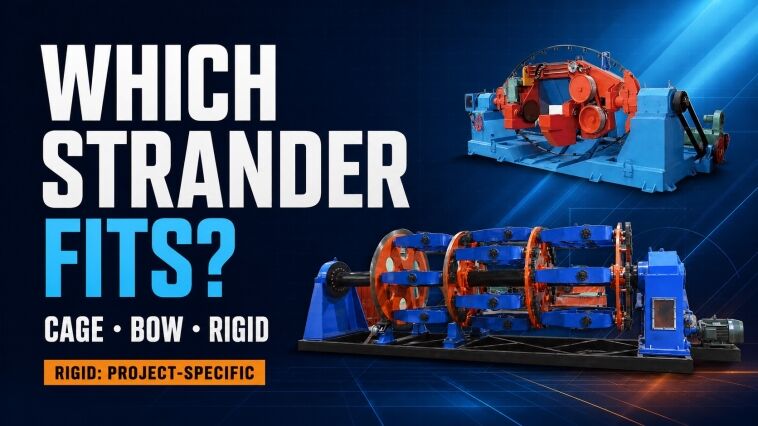
Chủ nhà máy, quản lý sản xuất hoặc người mua kỹ thuật khi so sánh các máy xoắn phải quyết định hệ thống quay nào có thể sản xuất lõi dây dẫn hoặc cáp được phê duyệt—không phải hệ thống nào có tên danh mục nghe nhanh nhất. Sự lựa chọn này ảnh hưởng đến gói đầu vào, hành vi xoắn, kiểm soát bước xoắn, tải, giao diện sàn, dụng cụ và bằng chứng cần thiết tại nghiệm thu nhà máy.
Các máy xoắn kiểu lồng, kiểu cung và kiểu cứng không phải là các cấp độ mô hình thay thế cho nhau. Bắt đầu với cấu trúc sản phẩm hoàn chỉnh, sau đó phù hợp với thành phần đang được xoắn, gói dây đơn hoặc gói lõi, bước xoắn yêu cầu, hành vi nén hoặc xoắn ngược, gói đầu ra và các bài kiểm tra nghiệm thu với một cấu hình máy đã được xác minh.

Tham chiếu thực tế về máy xoắn kiểu lồng/hành tinh HONGKAI. Cấu hình lồng cuối cùng, số lượng con lăn, kích thước gói và ứng dụng phải được xác nhận cho dự án.
Hướng dẫn này sử dụng các thuật ngữ “lồng hành tinh”, “cung” và “cứng” làm ba phương án so sánh. Thuật ngữ của nhà cung cấp không nhất quán: máy cứng cũng là máy kiểu lồng, và một trang chỉ ghi “máy xoắn lồng” có thể mô tả bố trí hành tinh, cứng hoặc đặc thù dự án. Do đó, thông số mua hàng phải mô tả cơ chế và yêu cầu sản phẩm, chứ không chỉ dựa vào tên danh mục.
Tại sao Tên Máy Không Đủ?
Ba tên gọi này mô tả các bố trí quay, không phải toàn bộ năng lực sản xuất. Một lựa chọn hợp lệ vẫn cần xác định thành phần đang được xoắn, cấu trúc của nó, gói đầu vào, gói đầu ra, bước xoắn, hướng, hành vi lực căng, dụng cụ và quy trình downstream.
Cùng một nhà máy có thể sử dụng thiết bị xoắn cho dây dẫn trần, lõi cách điện, lắp cáp, chống nhiễu, gia cố hoặc các công việc đặc thù dự án khác. Những nhiệm vụ này đặt ra các yêu cầu khác nhau, ngay cả khi đường kính hoàn thiện danh nghĩa trùng nhau. Một dây dẫn tròn dây đơn và một nhóm lõi cách điện đã được lắp không nên gán cho cùng một máy chỉ vì cả hai đều được gọi là “xoắn”.”
Bản vẽ đầu tiên phải là cấu trúc dây dẫn hoặc cáp đã được phê duyệt. Đối với dây dẫn, xác định vật liệu, số lượng và đường kính dây đơn, diện tích tiết diện danh nghĩa, hình dạng hoàn thiện, yêu cầu nén hoặc hình dạng tiết diện, bước xoắn và hướng. Đối với lõi cách điện hoặc các phần tử cáp, thêm đường kính phần tử, độ cứng, độ xoắn cho phép, trình tự màu, yêu cầu về vật liệu lấp đầy hoặc buộc và tuyến đường ốp hoặc gia cố downstream.
IEC 60228:2023 bao gồm các diện tích tiết diện danh nghĩa, số lượng và kích thước dây, và giá trị điện trở cho một số loại dây dẫn được sử dụng trong cáp và dây điện. Bản ghi IEC cũng giải thích rằng tính ứng dụng phụ thuộc vào tiêu chuẩn cáp liên quan và thường liên quan đến dây dẫn trong cáp hoàn chỉnh.1 Do đó, báo giá máy phải kết nối quy trình xoắn với thông số sản phẩm hoàn chỉnh, thay vì coi một con số tiêu chuẩn là bằng chứng cho thấy thiết bị là phù hợp.
Những sai lầm phổ biến: Nhà cung cấp chỉ nhận được tên cáp hoàn chỉnh, đường kính ngoài hoàn chỉnh hoặc diện tích dây dẫn và chọn máy trước khi biết cấu trúc xoắn. Một sai lầm phổ biến khác là so sánh tốc độ quay tối đa mà không xác nhận bước xoắn thực tế, trạng thái gói, điều kiện dây và kết quả sản phẩm ổn định.
Các máy xoắn kiểu Lồng, Cung và Cứng So Sánh Như Thế Nào?
Sử dụng ma trận cùng kích thước để thu hẹp lựa chọn, sau đó yêu cầu cửa sổ vận hành đặc thù dự án. Bảng dưới đây là công cụ sàng lọc; nó không thay thế thông số máy đã ký hoặc kế hoạch FAT.
| Tiêu chí so sánh | Phương án lồng hành tinh | Phương án cung | Phương án máy cứng |
|---|---|---|---|
| Khái niệm quay | Các con lăn nằm trong giá đỡ được mang bởi một lồng quay; bố trí hành tinh có thể kiểm soát định hướng thành phần hoặc xoắn ngược | Các phần tử cung quay tạo ra sợi; cấu hình cung-bỏ qua cũng có thể bao gồm xoắn ngược được kiểm soát | Các cuộn dây cấp nguyên liệu được lắp đặt trong các giá đỡ cố định quay cùng với rotor, thông thường không có xoắn ngược hành tinh |
| Câu hỏi ứng dụng đầu tiên | Sản phẩm có chứa lõi cách điện, các phần tử định hình hoặc các đầu vào khác cần kiểm soát hướng hoặc xoắn không? | Mô hình cung đã xác minh có bao phủ đúng loại dây dẫn, quá trình đan dây cách điện hoặc sợi, bao gồm hành vi xoắn ngược, bước xoắn và bao bì không? | Chức năng này có phải là dây dẫn điện lực, dây dẫn trên không, lớp màn chắn hoặc một cấu trúc khác phù hợp với bố trí rotor cứng không? |
| Câu hỏi về bao bì đầu vào | Cần bao nhiêu cuộn dây, kích thước và khối lượng nào, và bố trí giá đỡ/xoắn ngược nào là cần thiết? | Các bao bì đầu vào nằm ở đâu, chúng được nạp như thế nào, và kích thước bao bì nào đã được chứng minh là phù hợp với điều kiện yêu cầu? | Đường kính cuộn dây, hệ thống nạp, tiết diện khung và số lượng dây cần thiết cho mỗi lớp sản phẩm là bao nhiêu? |
| Bằng chứng sản phẩm | Hướng phần tử, bước xoắn, hình học lõi, hành vi dây buộc và cấu trúc cuộn | Bước xoắn, hình học dây dẫn, hành vi lực căng, điều kiện bề mặt và cấu trúc cuộn | Bước xoắn, hình học dây dẫn, kết quả nén hoặc định hình, cơ sở kiểm tra điện và cấu trúc cuộn |
| Rủi ro lựa chọn chính | “Khung được chấp nhận mà không nêu rõ hành vi hành tinh hay cứng | Tốc độ trong danh mục được coi là bằng chứng sản xuất ổn định cho mọi bước xoắn và dây dẫn | Công suất rotor lớn được mua mà không chứng minh sản phẩm nhỏ nhất, phương pháp nạp hoặc dụng cụ cần thiết |
| Trạng thái cấu hình | Số lượng cuộn dây, tỷ lệ xoắn ngược, dây buộc, capstan và cuộn thu vẫn mang tính đặc thù của dự án | Bảng mô hình trực tiếp của HONGKAI chỉ là tài liệu tham khảo ban đầu; phạm vi chính xác phải được cấp lại | HONGKAI không có bảng máy đan sợi cứng phổ quát được phê duyệt cho sản phẩm này; phạm vi đầy đủ phải được xác nhận theo từng dự án |
Các HONGKAI cage stranding machine page cho thấy cách bố trí lồng thay đổi theo số lượng cuộn dây, đường kính đan sợi và dạng hỗ trợ. Sự biến thiên này hữu ích hơn cho người mua so với tên danh mục: nó chứng minh rằng khối lồng, gói và cửa sổ sản phẩm phải được cấu hình cùng nhau.
Các HONGKAI bow-type stranding machine page cũng phân loại các mô hình theo phạm vi dây đầu vào, phạm vi dây dẫn hoàn chỉnh, cửa sổ xoắn và tốc độ máy. Các giá trị đã công bố có thể bắt đầu một cuộc thảo luận kỹ thuật, nhưng bài viết này cố ý không lặp lại chúng như khả năng phổ quát. Đề xuất cuối cùng phải xác định chính xác mô hình, sản phẩm, gói, xoắn và điều kiện kiểm tra nào hỗ trợ từng giá trị được trích dẫn.
Cung không có nghĩa là chỉ dây mảnh. Một danh mục máy cung-bỏ qua MFL GROUP chính thức mô tả các cấu hình xoắn ngược cho dây dẫn đồng trần, nhôm và hợp kim nhôm, lắp đặt cáp cách điện và sợi thép.2 Điều này xác định các ứng dụng ở cấp danh mục, không phải đảm bảo mô hình HONGKAI; nhiệm vụ chính xác vẫn cần một đề xuất đã xác minh và kiểm tra sản phẩm.

Tham chiếu thực tế về máy đan sợi dạng cung HONGKAI. Mô hình chính xác, phạm vi dây, xoắn, gói và các bộ điều khiển được cung cấp yêu cầu xác nhận dự án.
Lưu ý: “Lồng” và “cứng” không phải luôn là các danh mục bán hàng loại trừ lẫn nhau. Yêu cầu mô tả bố trí và cơ chế cho biết các giá đỡ cuộn dây có xoắn ngược, quay cứng cùng lồng, hay sử dụng bố trí khác.
Những đầu vào sản phẩm nào quyết định lộ trình?
Năm đầu vào được kết nối quyết định lộ trình: cấu trúc hoàn thiện, các phần tử riêng lẻ, bước xoắn và hướng, giao diện gói và bằng chứng bắt buộc. Một giá trị thiếu trong bất kỳ nhóm nào cũng có thể thay đổi máy xoắn được chọn hoặc làm cho khoảng hoạt động được tuyên bố trở nên không sử dụng được.
Cấu trúc hoàn thiện và nhiệm vụ xoắn
Liệt kê từng sản phẩm khởi động riêng biệt. Đối với mỗi sản phẩm, xác định xem máy sản xuất dây dẫn trần, dây dẫn nén hoặc định hình, lõi cáp đã xoắn, lớp màn, lớp giáp hoặc một sản phẩm trung gian đã xác định khác. Thêm bản vẽ cáp và tiêu chuẩn sản phẩm hoàn thiện phù hợp. Không gộp các sản phẩm tương lai thành một “phạm vi tối đa” không được hỗ trợ.”
Dây, lõi hoặc phần tử cáp riêng lẻ
Xác định vật liệu, lớp phủ, đường kính, số lượng, điều kiện bề mặt, độ cứng và mô-men xoắn cho phép. Đối với các lõi cách điện, bao gồm đường kính ngoài lớp cách điện và dung sai. Đối với dây trần, bao gồm điều kiện dây đầu vào và yêu cầu định hình hoặc nén. Nếu sản phẩm sử dụng vật liệu lấp đầy, dây buộc, băng hoặc các phần tử chống thấm nước, hãy chỉ rõ vị trí và gói cung cấp.
Bước xoắn, hướng và trình tự lớp
Viết bước xoắn hoặc phạm vi bước xoắn yêu cầu theo sản phẩm và lớp, bao gồm hướng S hoặc Z và phương pháp đo. Xác định xem có yêu cầu các lớp xen kẽ, cấu trúc đồng tâm, hình dạng phân đoạn, định hình trước hoặc định hình sau hay không. Phạm vi bước danh nghĩa không chứng minh được rằng máy có thể duy trì kết quả sản phẩm ở điều kiện hoạt động yêu cầu.
Gói đầu vào và đầu ra
Cung cấp bản vẽ hoặc kích thước đã xác minh cho mọi cuộn đầu vào và đầu ra: đường kính vành, đường kính thân, chiều rộng di chuyển, lỗ tâm hoặc giao diện chốt, khối lượng được phê duyệt và phương pháp nâng. Xác định việc nạp có trục hay không có trục, xe nâng, cần cẩu hoặc trợ giúp thủy lực, lối đi và khả năng tiếp cận dịch vụ. Đường kính cuộn một mình không chứng minh được rằng gói có thể được nạp, kẹp, phanh hoặc di chuyển chính xác.
Căn cứ chấp nhận
Liên kết mỗi sản phẩm với một mẫu đại diện, công thức máy hoặc thiết lập bộ truyền động, phương pháp kiểm tra, thiết bị, giới hạn đạt được và hồ sơ lưu trữ. Xác định các kiểm tra nào diễn ra ở giai đoạn xoắn và những kiểm tra nào chỉ hợp lệ trên dây dẫn hoặc cáp hoàn thiện. Kiểm tra quay không tải là kiểm tra lắp ráp, không phải chấp nhận sản phẩm.
Giữ lộ trình bện ở dạng tạm thời khi yêu cầu chỉ ghi “máy bện”. Trước tiên, hãy xác định đường kính ngoài của từng dây, lõi hoặc phần tử cáp trước khi bện, đường kính ngoài thành phẩm yêu cầu, số lượng phần tử và toàn bộ thông số kỹ thuật sản phẩm. Các thông số về bước bện và chi tiết cuộn cấp/dẫn dây sau đó có thể thu hẹp phạm vi máy phù hợp, nhưng chúng không thay thế bản vẽ kết cấu đã được phê duyệt.
Không yêu cầu phương pháp bện ngược hành tinh chỉ vì các đầu vào là các đơn vị con dây đồng; trước tiên hãy xác nhận xem kết cấu có áp đặt điều kiện định hướng hay xoắn nào không. Khi kết cấu ống lỏng quang học bằng nhựa cần được giải tỏa khỏi hiện tượng xoắn tích tụ, uốn cong hoặc chồng lấn, có thể xem xét sử dụng phương pháp bện SZ đổi chiều luân phiên. Máy móc sản xuất cáp LAN cũng mang tính đặc thù theo từng sản phẩm: trang thiết bị chính thức của SETIC liệt kê các giải pháp không bện ngược, bện ngược đơn và bện ngược ba lần dành cho ứng dụng LAN.3 Tên vật liệu đơn thuần không thể quyết định cơ chế; phải xác nhận cấu trúc cáp, mô-men xoắn cho phép và kết quả truyền dẫn yêu cầu.
Tiêu chí quyết định: Nếu nhà cung cấp không thể ánh xạ cả năm nhóm vào một cấu hình đã ký và ma trận FAT, hãy giữ lộ trình ở trạng thái tạm thời. Không sử dụng đường kính lớn nhất hoặc tốc độ cao nhất được liệt kê để lấp đầy các quyết định còn thiếu.
Người mua nên chọn lộ trình từng bước như thế nào?
Loại bỏ các lộ trình không tương thích trước khi so sánh các đề xuất thương mại. Phê duyệt sản phẩm, xác định mọi đầu vào, khớp cơ chế quay với nhiệm vụ và đồng ý bằng chứng bắt buộc cho khoảng hoạt động.
-
Sản phẩm — Đặt tên chính xác đầu ra. Phê duyệt bản vẽ, nhiệm vụ cấu trúc, tiêu chuẩn áp dụng, các sản phẩm khởi động và các sản phẩm tương lai thực sự thuộc phạm vi.
-
Phần tử — Xác định mọi đầu vào. Liệt kê từng dây hoặc lõi riêng lẻ, vật liệu, đường kính, số lượng, độ nhạy với mô-men xoắn, dây buộc, dụng cụ và gói đầu vào.
-
Cơ chế — Phù hợp với chế độ làm việc. Quyết định xem việc kiểm soát hướng dẫn/xoắn ngược, bố trí cung hay rotor cứng có phù hợp về mặt kỹ thuật cho kết cấu đã xác nhận hay không.
-
Bằng chứng — Chứng minh cửa sổ vận hành. Đồng ý về các cuộn dây, xoắn, điều kiện vận hành, mẫu, kiểm tra, biện pháp an toàn và hồ sơ trước khi phê duyệt mô hình.
Sử dụng logic lộ trình sau làm bộ lọc kỹ thuật đầu tiên:
- Nếu các lõi cách điện hoặc các phần tử cáp định hình phải giữ hướng dẫn được kiểm soát, hãy xem xét bố trí lồng hành tinh và nêu rõ hành vi xoắn ngược yêu cầu.
- Nếu sản phẩm đã xác nhận là dây dẫn trần, nhiệm vụ lắp đặt cáp cách điện hoặc sợi được bao phủ bởi mô hình cung đã xác minh, hãy so sánh tải cung, hành vi xoắn ngược, xoắn, lực căng, điều kiện bề mặt và bằng chứng sản phẩm ổn định.
- Nếu sản phẩm là dây dẫn điện, dây dẫn trên không, màn chắn hoặc nhiệm vụ khác phù hợp với rotor cứng, hãy xem xét các phần lồng cứng, tải cuộn dây, công cụ nén/dạng, capstan và cuộn lấy như một đường tuyến. Thông tin thiết bị lồng cứng chính thức cho thấy các cấu hình riêng biệt cho nhiệm vụ dây dẫn và màn chắn trong các ứng dụng cáp trên không, dưới biển và điện gió.4
- Nếu nhiệm vụ chỉ là bó các dây mảnh thành dây dẫn linh hoạt, hãy so sánh máy bó dây trước khi giả định rằng cần lồng, cung hoặc đường tuyến cứng. HONGKAI’s hướng dẫn lựa chọn máy bó dây explains the conductor, lay, reel, tension and FAT inputs for that separate route.
The route can still change after this filter. A buyer may discover that one product family needs two machines because the smallest and largest constructions do not share a practical operating window. The alternative is not automatically one oversized machine: the factory must compare changeover, input packages, stable operating evidence, floor handling and future product volume.
Add cage positions only when the buyer’s actual element counts, product range and reel sizes map to them. For example, list a future concentric-cable family by real construction and required number of elements before adding extra bobbin positions. “More positions for expansion” is not enough without a product matrix that shows where those positions will be used.
Red flags: A proposal calls a machine “multi-purpose” but does not list excluded products; the layout omits loading or service zones; a bow machine is selected only from maximum speed; or a rigid machine is selected only because it has more bobbins than the launch product needs.
Which Factory Interfaces Can Change the Decision?
The selected mechanism must also fit the factory. Power, foundation, guarding, reel movement, lifting, material flow, operator access and downstream packages can disqualify a technically plausible machine.
Large rotating assemblies require an approved foundation, alignment method and controlled access. The exact civil load, installation tolerance and anchoring method must come from the selected supplier drawing. Do not copy foundation data from another model or assume that overall machine dimensions define the required operating area.
Reel logistics deserve a separate layout check. Mark the path from incoming reel storage to every payoff, the loading device and clearance, the finished-reel removal path and transfer to the next process. Include the largest approved package and the lifting radius. A reel that fits inside the machine may still fail at the doorway, aisle, crane, trolley or downstream payoff.
Electrical and safety scope must be machine-specific. IEC 60204-1:2016 with Amendment 1:2021 applies to electrical, electronic and programmable electronic equipment of machines from the supply connection.5 ISO 12100:2010 cung cấp các nguyên tắc và phương pháp luận để đánh giá và giảm thiểu rủi ro máy móc.6 Không tài liệu tham khảo nào thay thế được các bài kiểm tra chính xác về bảo vệ, liên động, dừng khẩn cấp, phanh, cô lập, nạp và khởi động lại yêu cầu bởi dây chuyền được cung cấp.
Danh sách kiểm tra:
- ☐ Nguồn điện được phê duyệt và phạm vi điện máy
- ☐ Bản vẽ nền, neo và căn chỉnh
- ☐ Bảo vệ, kiểm soát truy cập và hành vi dừng an toàn
- ☐ Thiết bị nạp cuộn, khối lượng và hành trình được phê duyệt
- ☐ Dòng chảy vật liệu từ đầu cấp đến đầu thu và khoảng trống dịch vụ
- ☐ Các giao diện cuộn, băng, nén, định hình và đo lường
- ☐ Tương thích và phương pháp xử lý cuộn đầu ra
- ☐ Tiện ích, tài liệu và trách nhiệm được phân công bởi bên liên quan
Lưu ý: Một đầu đan kỹ thuật chính xác không tạo thành một dây chuyền hoàn chỉnh và sử dụng được. Phạm vi đã ký phải bao gồm mọi giao diện cần thiết để nạp, vận hành, đo lường, dừng, xả và chuyển sản phẩm được phê duyệt một cách an toàn.
Điều gì phải được FAT chứng minh đối với máy đan?
FAT phải chứng minh lộ trình sản phẩm đã thống nhất, không chỉ là chuyển động quay. Bằng chứng được chấp nhận phải kết nối các gói đầu vào và vật liệu đã xác định với các thiết lập máy, cuộn đầu ra có thể truy xuất, các phép đo sản phẩm, các bài kiểm tra an toàn và cấu hình đã ký.
Xây dựng ma trận FAT trong khi vẫn đang so sánh báo giá. Điều này ngăn chặn việc thay thế vật liệu, cuộn, dụng cụ hoặc thiết bị vào phút cuối. Chọn các mẫu đại diện cho rủi ro thực tế của người mua: dây đầu vào nhỏ nhất, sản phẩm lớn nhất hoặc yêu cầu nhất, bước đan ngắn nhất hoặc quan trọng nhất, hình dạng hoặc cấu trúc nén, chuyển đổi gói, và bất kỳ điều kiện nào làm thay đổi lực căng hoặc tải.
| Bằng chứng FAT | Nội dung mà hồ sơ phải chứa | Lý do người mua cần nó |
|---|---|---|
| Phù hợp cấu hình | Các phần máy, số lượng và kích thước cuộn, bộ truyền động, capstan, đầu thu, dụng cụ, máy cuộn, bảo vệ và phiên bản phần mềm/công thức | Proves that the tested machine is the purchased machine |
| Input traceability | Material, wire/core dimensions and count, reel drawings, package state and source | Prevents an easy substitute input from masking the production duty |
| Lay and direction | Set value, actual measurement, method, sample length, S/Z direction and layer | Connects the setting to the real stranded output |
| Geometry and product tests | Diameter, roundness or shaped geometry, compaction/forming evidence, surface and applicable electrical or cable tests | Shows whether the output is usable and meets the agreed basis |
| Hành vi căng và đóng gói | Khởi động, chạy ổn định, giảm tốc, dừng, xây cuộn và điều kiện đại diện từ rỗng đến đầy hoặc mô phỏng đã đồng ý | Tiết lộ sự không ổn định bị che giấu bởi một bài kiểm tra ngắn ổn định |
| Bảo vệ và lỗi | Bảo vệ/liên động, dừng khẩn cấp, đứt dây, phanh, hành vi reset và khởi động lại được kiểm soát như cung cấp | Xác nhận các chức năng bảo vệ và phản ứng lỗi |
| Tài liệu và các mục còn mở | Bản vẽ, hướng dẫn, danh sách phụ tùng, thiết lập, kết quả thô, mẫu, sai lệch, chủ sở hữu và ngày đóng | Làm cho việc chấp nhận có thể kiểm tra sau khi giao hàng |
Bằng chứng cần yêu cầu: Lưu giữ các bản vẽ đầu vào và đầu ra đã được phê duyệt, bố trí máy, danh sách cấu hình, thiết lập, số đo thô, danh tính mẫu, ảnh hoặc bản ghi chạy chưa chỉnh sửa, kết quả bảo vệ và danh sách các mục còn mở có ghi ngày. Nếu một kết quả chỉ áp dụng cho một sản phẩm hoặc điều kiện vận hành, hãy ghi nhãn ranh giới đó trong báo cáo FAT.
Những sai lầm phổ biến: FAT sử dụng dây không xác định, cuộn khác, bước xoắn dài hơn và dễ dàng hơn, cuộn thu không đầy hoặc sản phẩm nằm ngoài kế hoạch ra mắt của người mua. Một thất bại khác là chấp nhận bước xoắn tính toán, giá trị hiển thị hoặc video ngắn mà không đo thực tế sợi và lưu giữ kết quả.
Choose the representative FAT product from the confirmed specification, required lay range, tension requirement and payoff/take-up reel sizes. Include the product condition that exercises the agreed limits and retain the actual lay and tension evidence. Passing one easier sample proves that sample only; it does not validate every product in the proposed range.
Hướng tiếp cận của HONGKAI đối với so sánh theo dự án cụ thể là gì?
HONGKAI frames the enquiry as a product-to-process comparison, then distinguishes current HONGKAI reference families from specialist equipment that requires a project-specific configuration. The proposal should keep the source, responsibility, exclusions and acceptance basis visible.
Phạm vi thiết bị hiện tại của HONGKAI phân biệt các máy chính được sản xuất bởi HONGKAI với các quy trình chuyên dụng có thể tích hợp từ các nhà sản xuất đủ tiêu chuẩn. Các quy trình kéo, xoắn, đan và bọc giáp thuộc nhóm quy trình chuyên dụng trên Tổng quan phạm vi dự án HONGKAI. Điều đó có nghĩa là người mua nên kỳ vọng một phạm vi dự án được phối hợp thống nhất, trong khi trách nhiệm và nguồn gốc chính xác của từng máy phải được hiển thị rõ ràng trong báo giá.
Đối với yêu cầu về lồng hoặc cung, HONGKAI có thể bắt đầu với các họ sản phẩm đang hoạt động hiện tại, sau đó phát hành lại chính xác ứng dụng, mô hình, phạm vi và giao diện cho dự án. Đối với yêu cầu về máy đan cứng, bản nháp này không khẳng định bất kỳ mô hình HONGKAI cụ thể nào, bố trí ống, tốc độ, phạm vi dây dẫn hoặc hệ thống nạp đã được phê duyệt. Những chi tiết đó phải được xác nhận dựa trên danh mục sản phẩm và cấu hình chuyên dụng đã chọn.
Người mua nên gửi một ma trận sản phẩm trước khi yêu cầu so sánh thương mại:
| Trường bắt buộc | Đầu vào của người mua |
|---|---|
| Sản phẩm hoàn chỉnh | Vẽ dây dẫn/cáp, nhiệm vụ và tiêu chuẩn áp dụng |
| Các phần tử riêng lẻ | Vật liệu, lớp phủ, đường kính, số lượng, cách điện và độ nhạy với xoắn |
| Hình học sợi | Đường kính/hình dạng hoàn chỉnh, yêu cầu nén hoặc phân đoạn, trình tự lớp |
| Bước xoắn | Giá trị hoặc phạm vi, hướng S/Z, dung sai và phương pháp đo |
| Bao bì | Mỗi bản vẽ cuộn trả và cuộn lấy, khối lượng và phương pháp tải |
| Các bổ sung quy trình | Đơn vị dán, băng, chống thấm nước, tiền định hình, hậu định hình, nén hoặc đo |
| Giao diện nhà máy | Điện, nền móng, bảo vệ, nâng, lối đi và chuyển giao phía sau |
| Acceptance | Mẫu FAT, điều kiện vận hành, kiểm tra sản phẩm, bảo vệ và hồ sơ được lưu giữ |
Điều cần hỏi: Yêu cầu đề xuất của HONGKAI nêu rõ cơ chế đã chọn, lý do nó phù hợp với từng sản phẩm khởi động, sản phẩm nào bị loại trừ, giá trị nào vẫn cần xác nhận và thiết bị chuyên dụng nào được tích hợp thay vì được HONGKAI tự sản xuất. Điều này tạo ra so sánh kỹ thuật rõ ràng hơn ba bảng danh mục với các định nghĩa khác nhau.
Lưu ý: Việc mua đúng là cấu hình được xác minh hẹp nhất bao phủ danh mục sản phẩm được phê duyệt, giao diện nhà máy và bằng chứng chấp nhận. Danh mục máy, đường kính tối đa và tốc độ tối đa là nhãn sàng lọc—không phải quyết định cuối cùng.
-
IEC, “IEC 60228:2023 — Các sản phẩm dẫn điện này được sản xuất từ vật liệu có độ bền cao và được thiết kế để sử dụng trong các ứng dụng công nghiệp.,” củahãnghãngsảnxuấtsảnphẩmcáp đượcsảnxuấtbởiHONGKAItheotiêuchuẩnkỹthuậtnày.Đâylàsảnphẩmchínhhãng. ↩
-
MFL GROUP, “Dây & Máy cáp Hàng mục Catalogue, thông tin về ứng dụng máy bện kiểu bow-skip và độ xoắn ngược.↩
-
SETIC & POURTIER, “Group Twinners,” trang thiết bị cáp LAN chính thức.↩
-
MFL GROUP, “Giải pháp Máy móc Dây & Cáp,” trang chính thức của dòng sản phẩm liệt kê các tuyến dẫn và che chắn dạng lồng cứng CES và RCS.↩
-
IEC, “IEC 60204-1:2016+AMD1:2021 — An toàn máy móc — Thiết bị điện của máy — Phần 1: Yêu cầu chung,” củahãnghãngsảnxuấtsảnphẩmcáp đượcsảnxuấtbởiHONGKAItheotiêuchuẩnkỹthuậtnày.Đâylàsảnphẩmchínhhãng. ↩
-
ISO, “ISO 12100:2010 — An toàn máy móc — Các nguyên tắc chung về thiết kế — Đánh giá rủi ro và giảm thiểu rủi ro,” củahãnghãngsảnxuấtsảnphẩmcáp đượcsảnxuấtbởiHONGKAItheotiêuchuẩnkỹthuậtnày.Đâylàsảnphẩmchínhhãng. ↩
