












Factory owners planning an indoor multi-fiber cable line, production managers adding a new cable family, and technical buyers comparing proposals face the same risk: one product name can hide several different cable structures. Selecting machinery before checking the cable cross-section can leave a required process out of the project or add equipment the factory does not need.
Start with the element that enters final cable formation, not with a machine model. A conventional distribution cable uses tight-buffered fibers, the compact mini cable defined in this guide uses colored coated fibers, and a classic breakout cable uses finished simplex subcables. Each input requires a different upstream route and core-forming method. Only after the cross-section is confirmed should a factory decide which modules can be reused and which must be added.
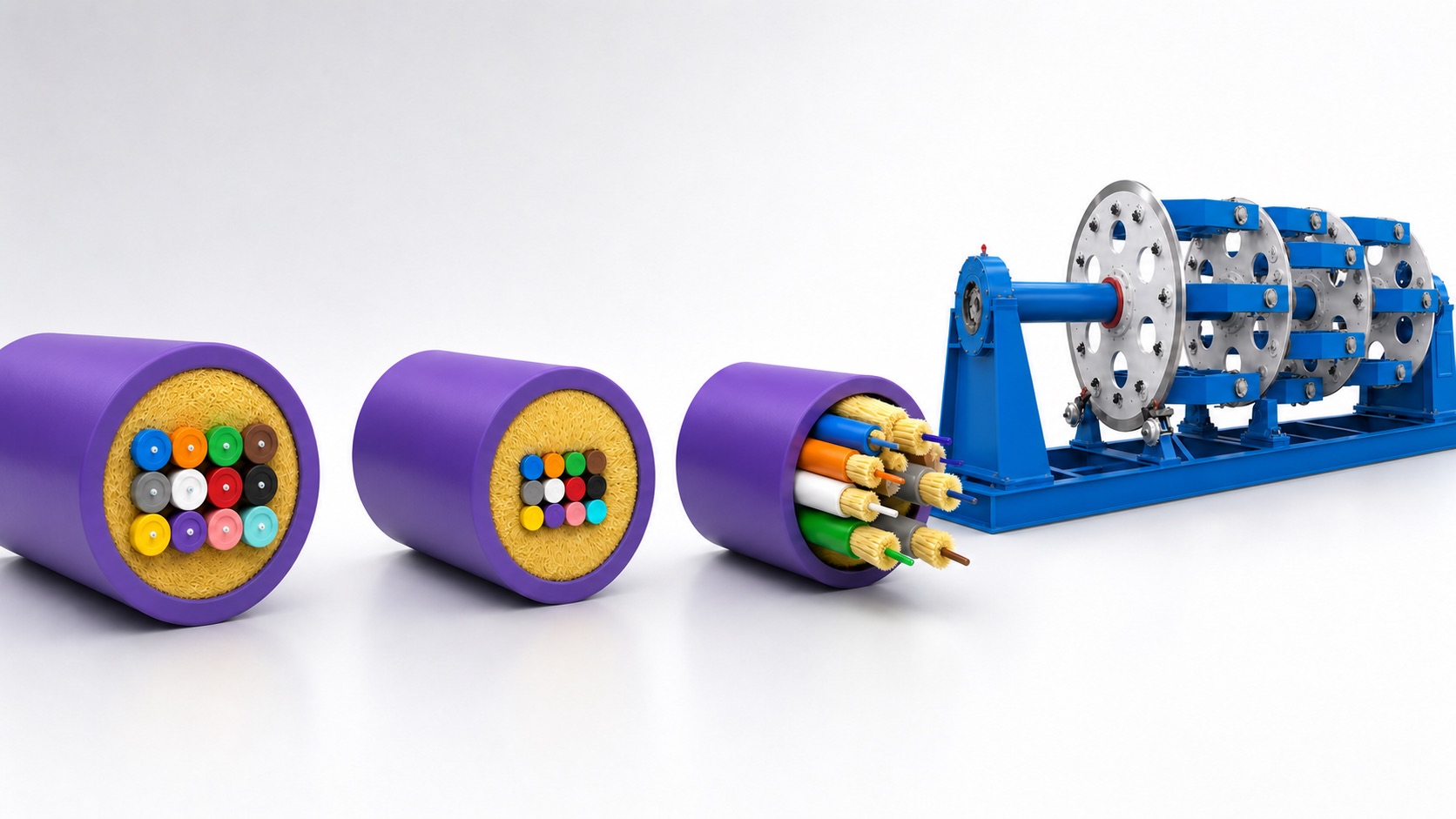
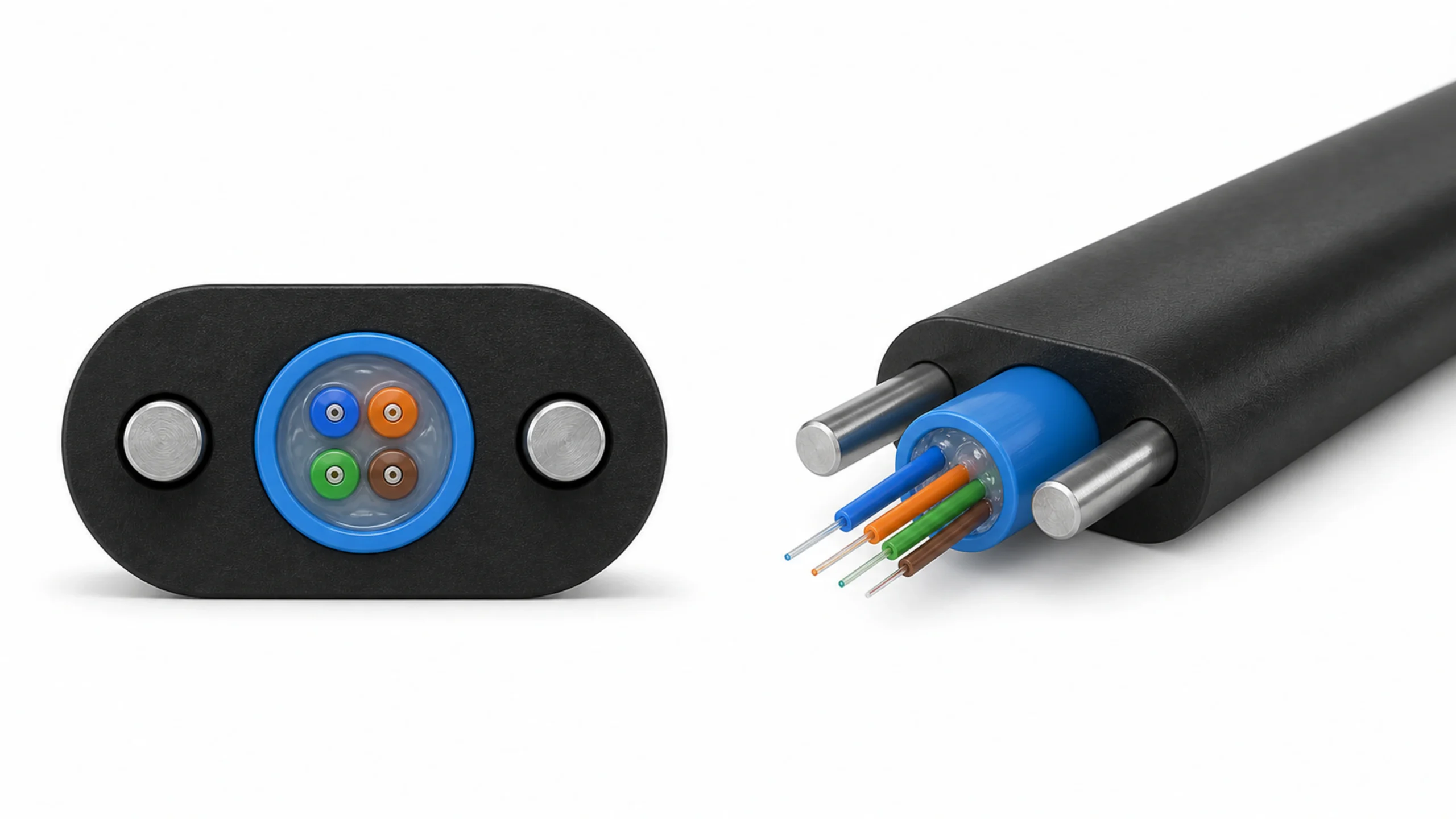
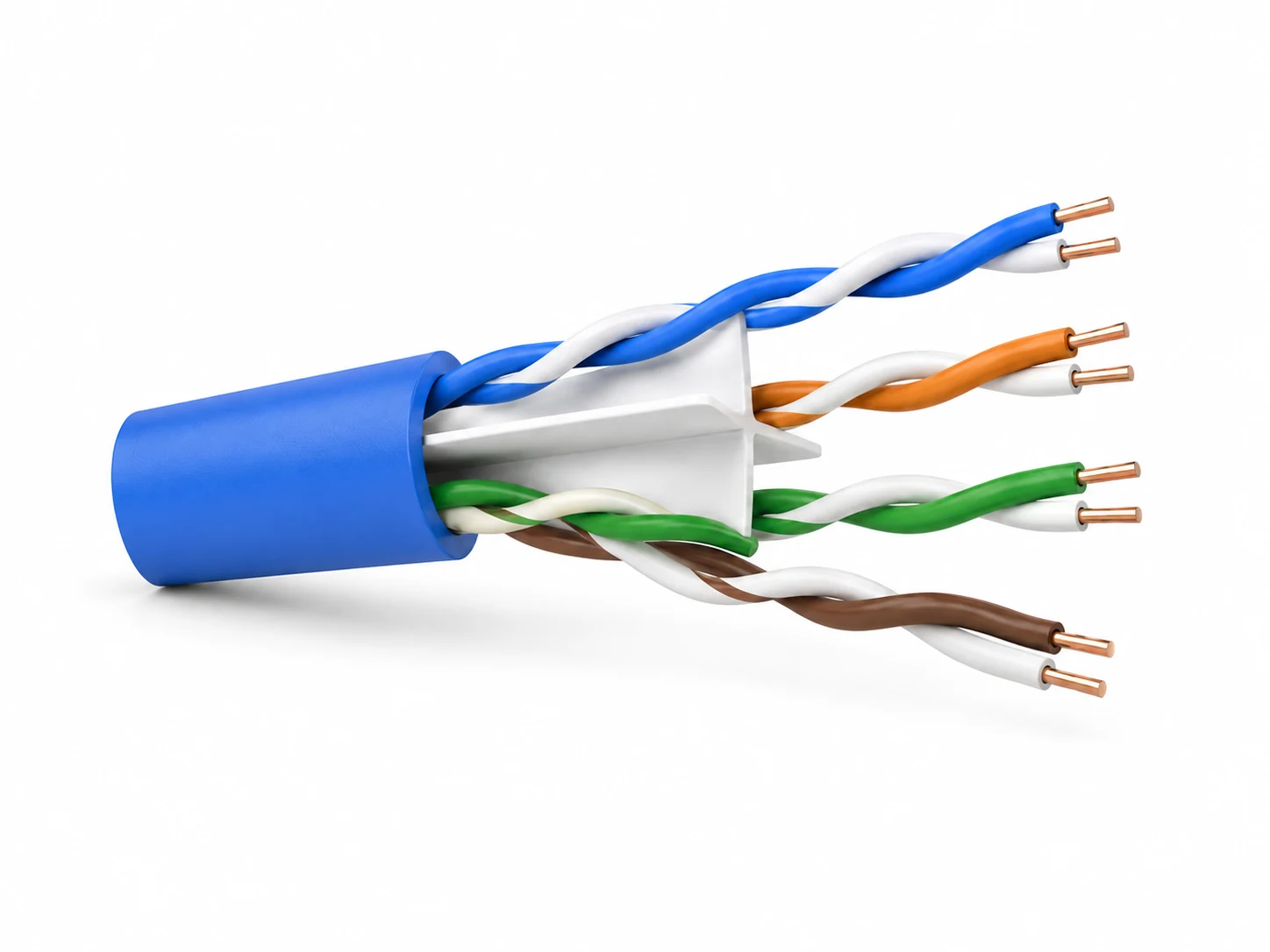
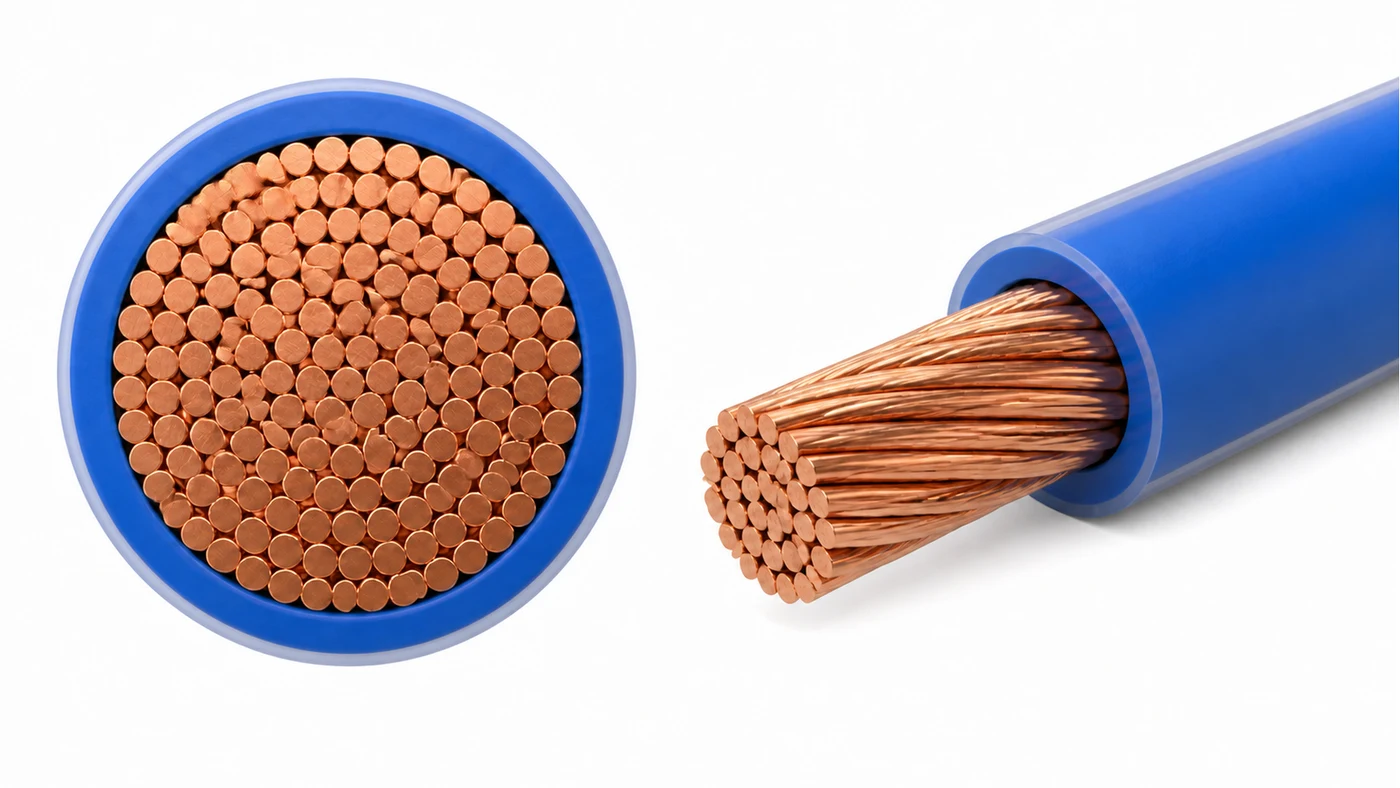
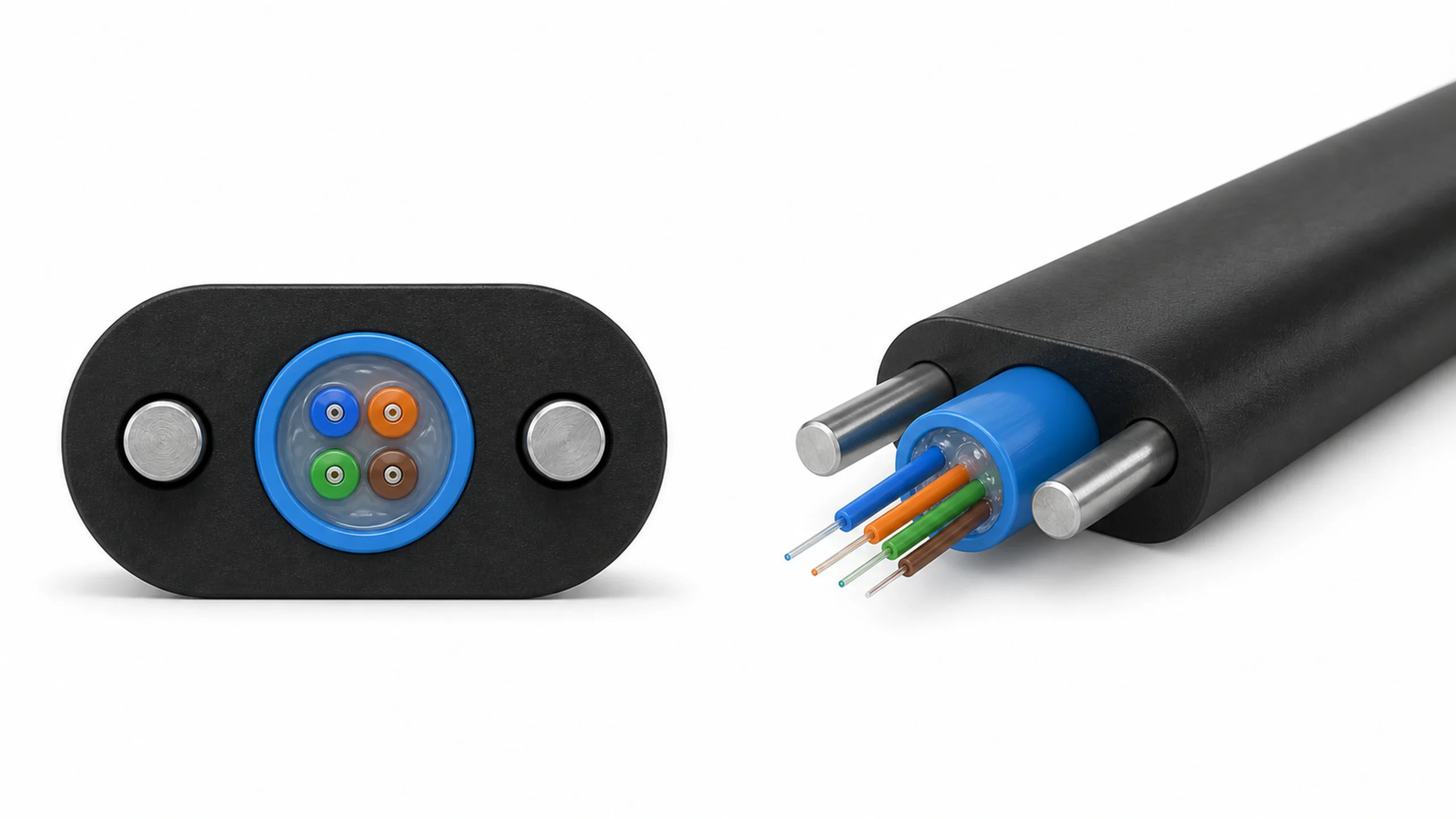
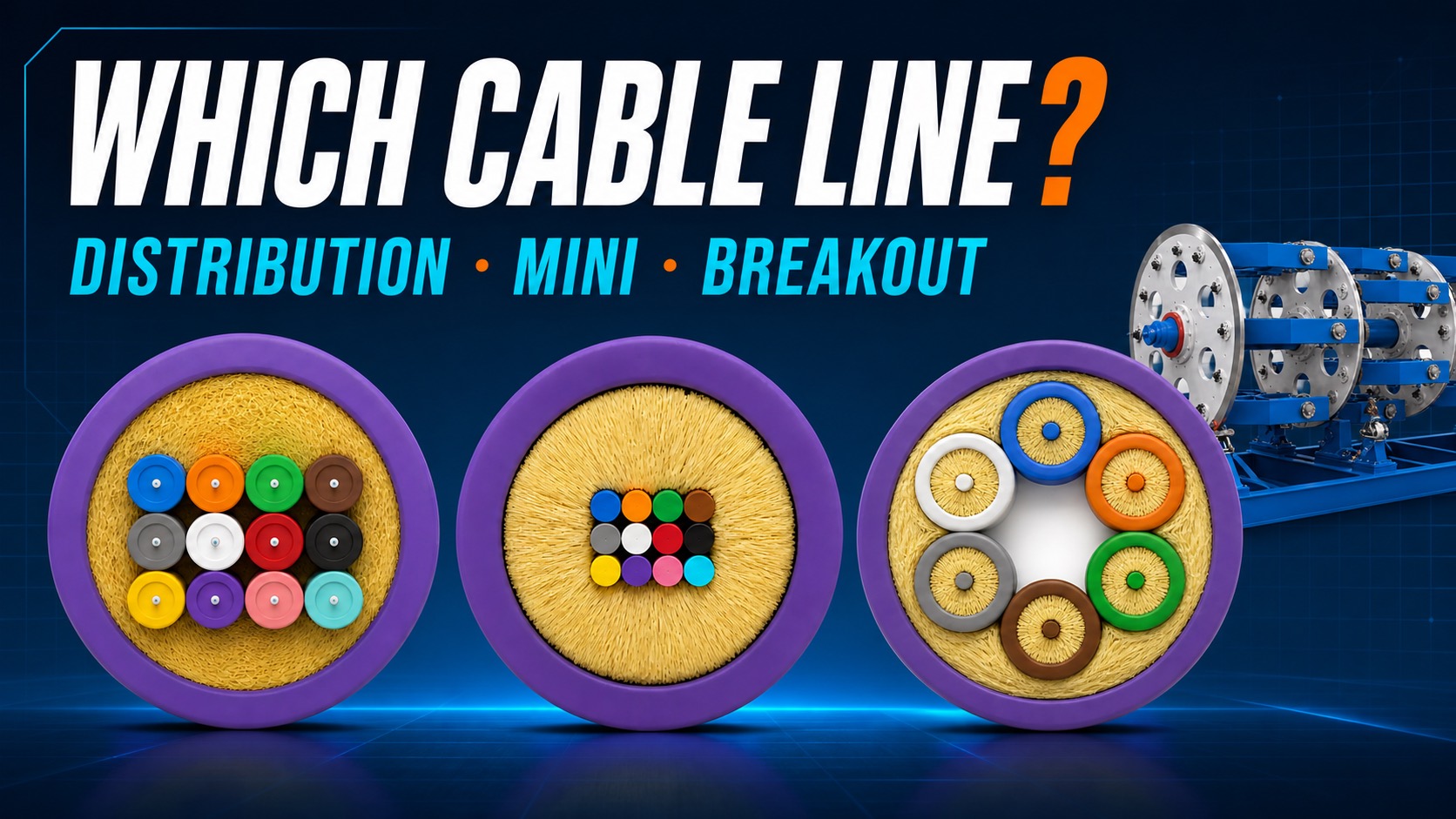
HONGKAI technical illustration based on verified cable references: the three structures are parallel product choices, not consecutive production stages. The cage strander applies only to the illustrated breakout route.
This guide gives each reader a different output from the same technical comparison. A factory owner can define the investment boundary, a production manager can check the manufacturing stages and changeover risks, and a technical buyer can turn the approved cable drawing into an RFQ and FAT checklist.
The term “mini cable” is not used consistently across the fiber-cable industry. In this guide it means a compact indoor, GJFV-style multi-fiber construction using colored coated fibers beneath shared reinforcement and one outer jacket. It does not mean a classic breakout cable or an outdoor air-blown microduct cable. The approved cross-section always takes priority over the sales name.
How Can a Buyer Identify Distribution, Compact Mini, and Breakout Cable from the Cross-Section?
Trace one optical fiber from the center of the cable toward the outer jacket. A conventional distribution cable shows an individual tight buffer but no individual subcable jacket. The compact mini cable defined in this guide shows a colored coated fiber beneath shared reinforcement, while a classic breakout cable shows a complete simplex subcable around every fiber. This layer-by-layer check is more reliable than the product name printed on an enquiry.
| Question to check on the cross-section | वितरण केबल | Compact mini cable | Breakout cable |
|---|---|---|---|
| What enters the cable-forming stage? | Tight-buffered fibers | Colored coated fibers | Finished simplex subcables |
| Does every fiber have a tight buffer? | हाँ | No, unless a different approved design specifies it | Yes, inside each simplex subcable |
| Does every fiber have its own subcable jacket? | नहीं | नहीं | हाँ |
| How is the core formed? | टाइट-बफर्ड फाइबर्स को एकत्रित या बुना जाता है | रंगीन कोटेड फाइबर्स को आवश्यकता पड़ने पर एकत्रित या हल्के से बुना जाता है | सिंपलेक्स सबकेबल्स को केज-बुना जाता है |
| सभी तत्वों द्वारा साझा किया गया क्या है? | अरामिड या निर्दिष्ट प्रवर्धन और बाहरी जैकेट | अरामिड या निर्दिष्ट प्रवर्धन और संपीड़ित बाहरी जैकेट | अंतिम प्रवर्धन और सामान्य बाहरी जैकेट |
AFL का पारंपरिक वितरण उदाहरण साझा प्रवर्धन और एक बाहरी जैकेट के नीचे टाइट-बफर्ड फाइबर्स का उपयोग करता है।.1 AFL का अलग ब्रेकआउट उत्पाद प्रत्येक सिंपलेक्स सबयूनिट को अपने टाइट-बफर्ड फाइबर, अरामिड यार्न और सबयूनिट जैकेट के साथ सामान्य बाहरी केबल परतों के नीचे दर्शाता है।.2 IEC भी प्रीमिसेज वितरण केबल्स और मल्टी-सिंपलेक्स ब्रेकआउट केबल्स के लिए अलग-अलग विस्तृत विनिर्देश प्रकाशित करता है।.34 इन प्रकाशित संरचनाओं से स्पष्ट होता है कि उत्पादन रूट चुनने से पहले क्रॉस-सेक्शन की जांच करना आवश्यक है, न कि बिक्री नाम।.
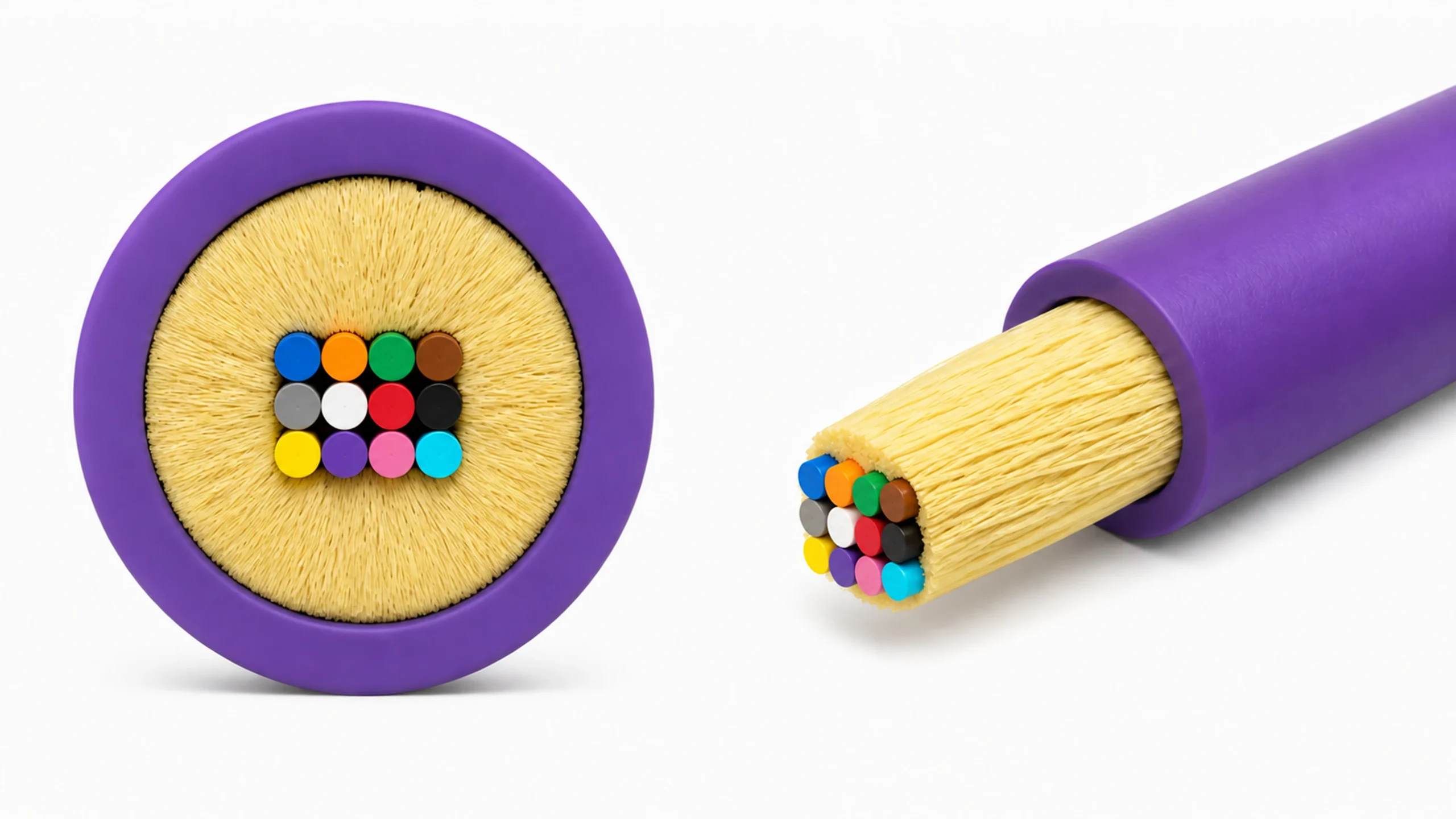
HONGKAI 3D संरचना संदर्भ: रंगीन फाइबर्स साझा स्ट्रेंथ यार्न और एक बाहरी जैकेट के भीतर एक संपीड़ित बंडल बनाते हैं। चित्रण व्यक्तिगत जैकेटेड सिंपलेक्स सबकेबल्स को नहीं दर्शाता है।.
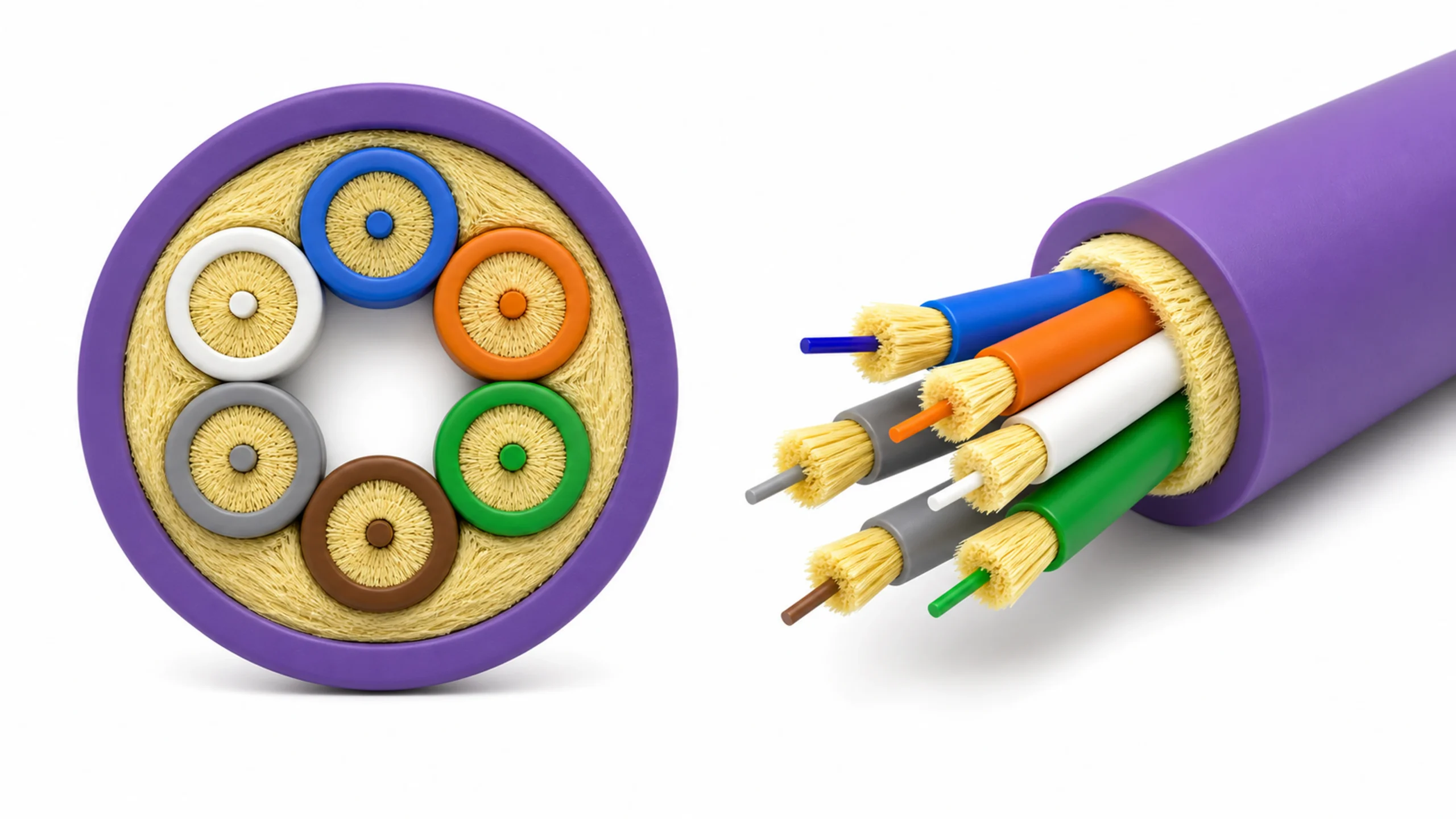
HONGKAI 3D संरचना संदर्भ: व्यक्तिगत जैकेटेड सिंपलेक्स सबकेबल्स एक सामान्य बाहरी जैकेट के नीचे समाहित किए जाते हैं। चित्रण ब्रेकआउट निर्माण की व्याख्या करता है और कनेक्टर प्रकार को परिभाषित नहीं करता है।.
निर्णय मापदंड: स्पष्ट क्रॉस-सेक्शन, भौतिक नमूना या अनुमोदित ड्राइंग के लिए अनुरोध करें। यदि दस्तावेज यह नहीं दर्शाता कि आने वाला तत्व कोटेड फाइबर, टाइट-बफर्ड फाइबर है या एक पूर्ण सिंपलेक्स सबकेबल है, तो उपकरण तुलना बहुत जल्दी शुरू हो गई है।.
नोट: एक कनेक्टर फैन-आउट को “ब्रेकआउट” भी कहा जा सकता है, लेकिन MPO-to-LC असेंबली नाम यह साबित नहीं करता कि आधार केबल की एक क्लासिक ब्रेकआउट-केबल निर्माण है।.
तीनों केबल संरचनाओं के बीच आवश्यक निर्माण चरणों में क्या अंतर है?
निर्माण रूट प्रत्येक चरण में प्रवेश करने वाले तत्व के साथ बदल जाता है। वितरण केबल को पहले टाइट-बफर्ड फाइबर्स की आवश्यकता होती है, संपीड़ित मिनी केबल योग्य रंगीन कोटेड फाइबर्स के साथ शुरू हो सकता है, और ब्रेकआउट केबल को पहले पूर्ण सिंपलेक्स सबकेबल्स बनाने की आवश्यकता होती है। फिर कोर निर्माण बफर्ड-फाइबर एकत्रीकरण या बुनाई से, कोटेड-फाइबर एकत्रीकरण या हल्की बुनाई में, और बड़े सबकेबल्स की केज-बुनाई में बदल जाता है। मशीन मॉडल्स को केवल इन आवश्यक चरणों के सहमत होने के बाद ही मैप किया जाना चाहिए।.
| केबल संरचना | रूट में क्या प्रवेश करता है? | आवश्यक निर्माण रूट | उद्धरण से पहले मुख्य जांच | HONGKAI संदर्भ कॉन्फ़िगरेशन |
|---|---|---|---|---|
| वितरण | लेपित फाइबर, फिर टाइट-बफर्ड फाइबर | टाइट बफरिंग → टाइट-बफर्ड फाइबर को एकत्रित या स्ट्रैंड करें → एरामिड → सामान्य जैकेट | बफर व्यास, फाइबर गिनती, कोर व्यवस्था, जैकेट और आउटपुट | HK-30 टाइट बफरिंग + कॉन्फ़िगर्ड HK-50 GJFJV रूट |
| संकुचित मिनी | योग्य रंगीन लेपित फाइबर | आवश्यकता के अनुसार एकत्रित या हल्के से स्ट्रैंड करें → एरामिड → संकुचित सामान्य जैकेट | फाइबर पहचान, तनाव, आवश्यक ले और फिनिश्ड व्यास | कॉन्फ़िगर्ड HK-50 GJFV रूट |
| ब्रेकआउट | लेपित फाइबर, फिर फिनिश्ड सिंपलेक्स सबकेबल | टाइट बफर → सिंपलेक्स सबकेबल → केज स्ट्रैंडिंग → रिइनफोर्समेंट और सामान्य शीथ | सबकेबल की संख्या और व्यास, केज व्यवस्था, ले, केंद्रीय तत्व और जैकेट | HK-30 + कॉन्फ़िगर्ड HK-50 सिंपलेक्स स्टेज + cage/HK-70 final stage |
The published GJFJV route confirms tight buffering before the distribution-cable stage.5 The compact GJFV reference route accepts colored coated fibers directly, so tight buffering is not added unless a different approved drawing requires it.6 A Corning compact indoor construction also uses color-coded coated fibers, shared dielectric strength members and one jacket.7
Classic breakout production adds another manufacturing level because every tight-buffered fiber becomes an individually reinforced and jacketed simplex subcable before final assembly.8 The HONGKAI project video shows cage stranding, reinforcement, extrusion, cooling and take-up in a China breakout or branch-cable project.9 The footage supports the process sequence, but it does not define a universal cage count, line speed, material or finished cable size.

HONGKAI 3D reference configuration: a cage strander assembles simplex subcables before the common outer sheath. Final cage count, bobbin size and line layout depend on the approved cable drawing and required output.
HONGKAI project video: cage stranding and downstream common-sheathing stages in a China breakout or branch-cable project.
How to verify: Draw one process box for every layer in the approved cross-section. A supplier’s equipment list is incomplete if any buffer, subcable jacket, reinforcement, core-forming or final jacket layer cannot be traced to a named stage.
नोट: तालिका में HONGKAI मॉडल्स प्रक्रिया की परिभाषा के बाद संदर्भ विन्यास हैं; ये खरीददार के केबल ड्राइंग के विकल्प नहीं हैं।.
एक कारखाना कौन से उत्पादन मॉड्यूल्स का पुनः उपयोग कर सकता है, और कौन से उत्पाद-विशिष्ट रहने चाहिए?
एक कारखाना एक से अधिक अनुमोदित केबल के लिए एक्सट्रूजन, शीतलन, माप और टेक-अप कार्यों का पुनः उपयोग कर सकता है। पेऑफ और कोर-फॉर्मिंग खंड कम अदला-बदली योग्य हैं क्योंकि कोटेड फाइबर, टाइट-बफर्ड फाइबर और फिनिश्ड सिंपलेक्स सबकेबल अलग-अलग रील आकार, तनाव सीमाएँ और हैंडलिंग विधियों का उपयोग करते हैं। एक साझा एक्सट्रूडर भी उत्पाद-विशिष्ट टूलिंग, यौगिक, सेटिंग्स या गुणवत्ता जाँच को समाप्त नहीं करता है। पुनः उपयोग की पुष्टि मॉड्यूल दर मॉड्यूल की जानी चाहिए, पूरी उत्पादन लाइन के लिए नहीं।.
| उत्पादन कार्य | वितरण केबल | Compact mini cable | Breakout cable | मौजूदा कारखाने के लिए प्रश्न |
|---|---|---|---|---|
| फाइबर रंगीनीकरण या पहचान | टाइट बफरिंग से पहले आवश्यक | यदि योग्य रंगीन फाइबर नहीं खरीदा जाता है तो आवश्यक | टाइट बफरिंग से पहले आवश्यक | आने वाली फाइबर पहले से ही योग्य और पहचानी गई है? |
| टाइट बफरिंग | सामान्यतः आवश्यक | यहाँ परिभाषित कोटेड-फाइबर संरचना के लिए आवश्यक नहीं | सिंपलेक्स सबकेबल बनाने से पहले सामान्यतः आवश्यक | स्थापित लाइन अनुमोदित बफर निर्माण को पूरा कर सकती है? |
| सिंपलेक्स सबकेबल उत्पादन | आवश्यक नहीं | आवश्यक नहीं | अंतिम केबल असेंबली से पहले आवश्यक | क्या एक अलग प्रबलन और सबकेबल-जैकेटिंग चरण है? |
| कोर फॉर्मेशन | टाइट-बफर्ड फाइबर को एकत्रित या स्ट्रैंड करें | Gather or lightly strand coated fibers when required | Cage-strand finished simplex subcables | Does the installed pay-off handle the real input reel and tension range? |
| Common jacket and take-up | Required per drawing | Required per drawing | Required after subcable assembly | Do tooling, output, cooling and take-up cover every approved product? |
Decision criterion: Compare the installed equipment with the real product drawings. Record the pay-off reel, tension range, core diameter, guiding method, tooling, extrusion requirement, cooling arrangement, measurement points and take-up reel for each product. A similar finished diameter does not prove that one core-forming system can handle all three inputs.
A production plan should also separate hardware reuse from product changeover. Guides, dies, tension settings, compounds, print data and inspection plans may change even when a downstream extruder remains in service. The technical proposal should list every reusable module and every product-specific module separately. The broader fiber optic cable production-line guide explains how these functions fit into a complete factory route.
Note: The useful commercial question is “Which verified stages can the approved products share?” rather than “Can one machine make every indoor optical cable?”
How Should a New Fiber Cable Factory Decide Which Product Route to Build First?
A new factory should choose its first route from a confirmed cable drawing, target customer requirement and realistic production plan. It should not buy all three routes simply because distribution, mini and breakout cables may serve related markets. The first investment should cover the mandatory stages for the initial approved product, while future products are recorded as expansion requirements. Capacity, project timing, available utilities, technical staffing and budget then determine whether shared modules or separate lines are practical.
| Starting situation | Planning action | Evidence needed before committing |
|---|---|---|
| One confirmed product or order | Define the complete route for that drawing and identify optional expansion interfaces | Approved cross-section, materials, required output, reel data and acceptance tests |
| Several planned indoor cable products | Compare all process stages and highlight genuinely reusable modules | A drawing and forecast for each product, not only a list of product names |
| An existing factory is expanding | Audit the installed machines before adding new equipment | Model, usable range, reel sizes, tooling, controls, condition and recent production evidence |
| A turnkey factory is required | Separate cable-making machinery from laboratory, utilities, installation and third-party scope | Factory layout, power and water conditions, staffing plan, schedule and responsibility list |
The factory owner does not need to decide every machine model at the first meeting. The owner does need to decide which finished cable will generate the first qualified order, what output the business plan requires, when production must begin and which project responsibilities should stay with the factory or supplier. A phased plan is credible only when the first stage can make and test a saleable approved cable without relying on an unspecified future machine.
A practical first-screening sequence begins by confirming whether the product is indoor or outdoor, then requesting a cable picture or exact product name and the required capacity. Follow with the project date, approximate budget and whether the buyer needs machinery only or a one-stop factory scope. These inputs define the investment boundary before a quotation is prepared.
Note: A smaller first equipment list is not automatically a safer investment; it must still include every process and test needed for the first approved product.
What Should a Production Manager Confirm Before Approving the Process Route?
A production manager should confirm how the material enters, moves through and leaves every stage of the proposed route. The review must cover pay-off and take-up reels, tension control, core formation, reinforcement, jacket application, in-process measurement and finished testing. It should also show where work-in-process is stored between tight buffering, simplex production and final cable assembly. A process diagram is ready for approval only when operators can follow it without guessing which machine creates each cable layer.
Checklist: Review these points against the approved drawing and the factory’s real operating conditions:
- ☐ Incoming coated-fiber, tight-buffered-fiber or simplex-subcable specification
- ☐ Pay-off reel, take-up reel and tension-control range for each stage
- ☐ Gathering, controlled stranding or cage-stranding method and required lay
- ☐ Center element, fillers, binders, aramid yarn and ripcord arrangement
- ☐ Jacket compound, dimensions, marking and required flame classification
- ☐ Tooling, guides and settings needed for each product changeover
- ☐ In-process diameter, concentricity or other agreed measurement points
- ☐ Finished optical, dimensional and mechanical tests in the acceptance plan
- ☐ Work-in-process reels, handling method, storage location and traceability
- ☐ Operator training, maintenance access and spare-parts responsibilities
Why it matters: Breakout cable creates an additional simplex-subcable stage before final assembly. Distribution cable introduces tight-buffered reels into core formation, while the compact mini route handles coated fibers directly. These differences change the in-process reels, tension-control task, inspection points and changeover work even when part of the downstream jacket system is shared.
How to verify: Use one approved sample or drawing to conduct a layer-to-stage review with production, quality and maintenance staff. Mark every measurement and material handoff on the process map, then use the same revision during proposal review and FAT planning.
Note: A technically complete equipment list can still fail in production planning if reels, work-in-process handling and inspection responsibility are not defined.
What Should Technical Procurement Include in the RFQ and FAT Plan?
Technical procurement should send the same approved cable information to every supplier and require each proposal to use the same scope labels. The RFQ should identify the finished structure, incoming material, required output, reel data, material system, planned tests and existing equipment. Each machine, tool, laboratory item, utility and integration task should be marked as included, optional, customer-supplied or excluded. The FAT plan should then test the quoted process route against measurable conditions agreed before the order.
Use this RFQ checklist before comparing prices:
- ☐ Finished cable name, clear photo, physical sample or revision-controlled cross-section
- ☐ Coated fiber, tight-buffered fiber or finished simplex subcable entering each stage
- ☐ Fiber, buffered-fiber or subcable count, dimensions and arrangement
- ☐ Required gathering, stranding or cage-stranding method
- ☐ Reinforcement, fillers, binders, ripcord, jacket and marking requirements
- ☐ Input and finished reel sizes, batch length and required production output
- ☐ Existing machines, tooling, laboratory equipment and utilities to be reused
- ☐ Main equipment, auxiliary equipment, tooling and initial spare parts in the supplier scope
- ☐ Installation, commissioning, training and third-party integration responsibility
- ☐ FAT product, material, test method, acceptance record and treatment of nonconformity
- ☐ Planned commissioning date, approximate budget and one-stop service boundary
How to verify: Put the distribution, compact mini and breakout cable cross-sections beside every supplier’s equipment list and trace each layer back to a named process. Use a scope matrix so no item disappears inside terms such as “complete line” or “standard accessories.” The fiber optic cable factory checklist can be used to review laboratory equipment, utilities and the wider factory boundary.
Evidence to request: Ask the supplier for the process diagram, model and scope list, layout, utility requirements, interface points, sample-production plan and measurable FAT record. Product photographs and general catalogues may support the proposal, but they do not replace a configuration tied to the buyer’s approved drawing.
Note: The most comparable quotation is not the one with the shortest equipment list; it is the one that defines the same finished product, process boundary and acceptance conditions.
-
IEC 60794-2-21:2019+A1:2020—भवनों की वायरिंग के लिए बहु-फाइबर ऑप्टिकल वितरण केबल, IEC। ↩
-
IEC 60794-2-22:2023—मल्टी-सिम्पलेक्स ब्रेकआउट ऑप्टिकल केबल, IEC। ↩
-
GJFJV केबल उत्पादन लाइन, HONGKAI. ↩
-
GJFV केबल उत्पादन लाइन, HONGKAI. ↩
-
MIC 250 2.0 इनडोर केबल, कॉर्निंग ऑप्टिकल कम्युनिकेशंस। ↩
-
सिंप्लेक्स/डुप्लेक्स पैच कॉर्ड केबल उत्पादन लाइन, HONGKAI. ↩
-
कैसे काम करता है: ऑप्टिकल फाइबर ब्रेकआउट केबल / वितरण केबल मशीनरी, HONGKAI, दिसंबर 8 को प्रकाशित, 2025। ↩

 English
  हिन्दी
  فارسی
فارسی