
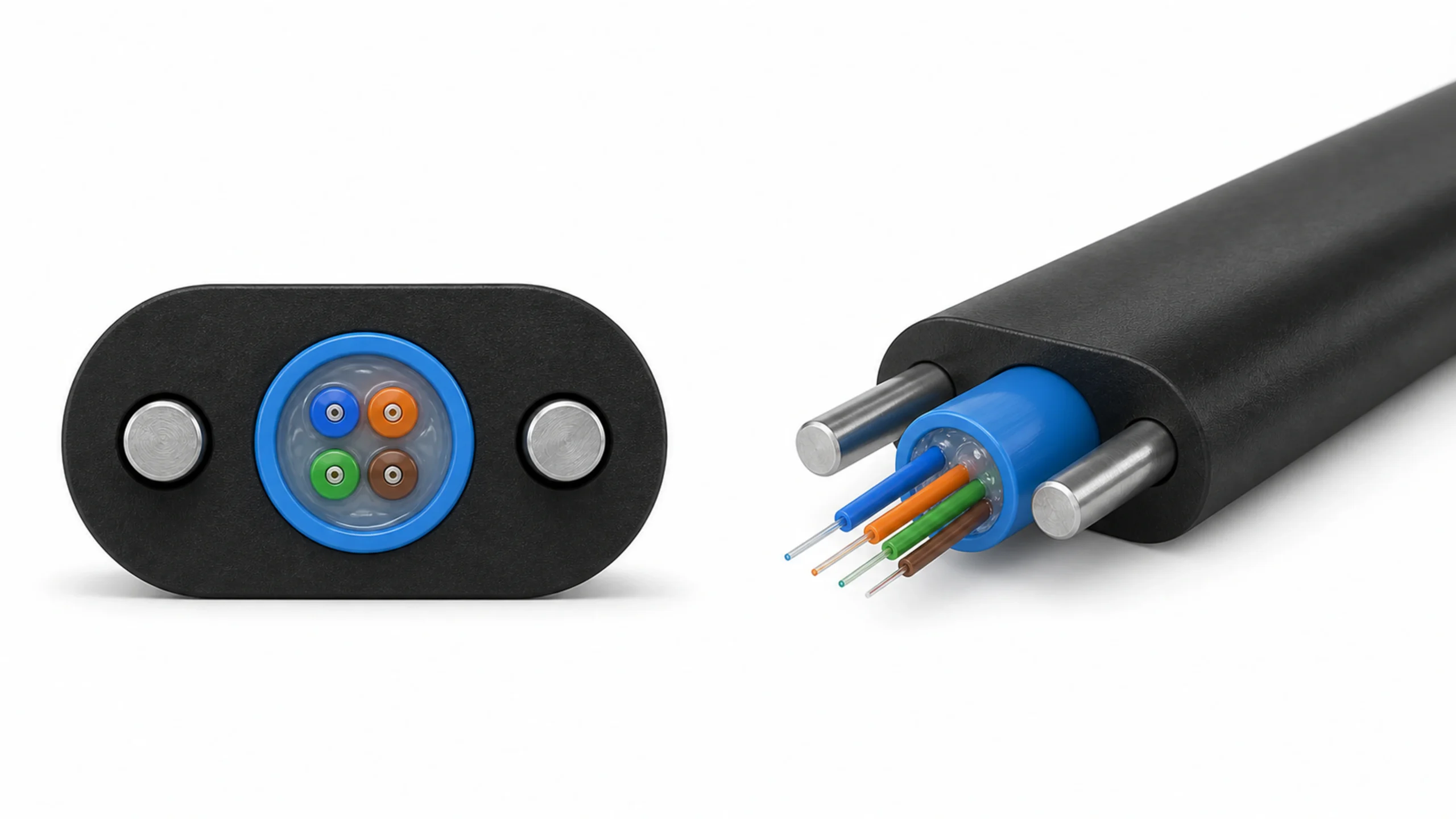
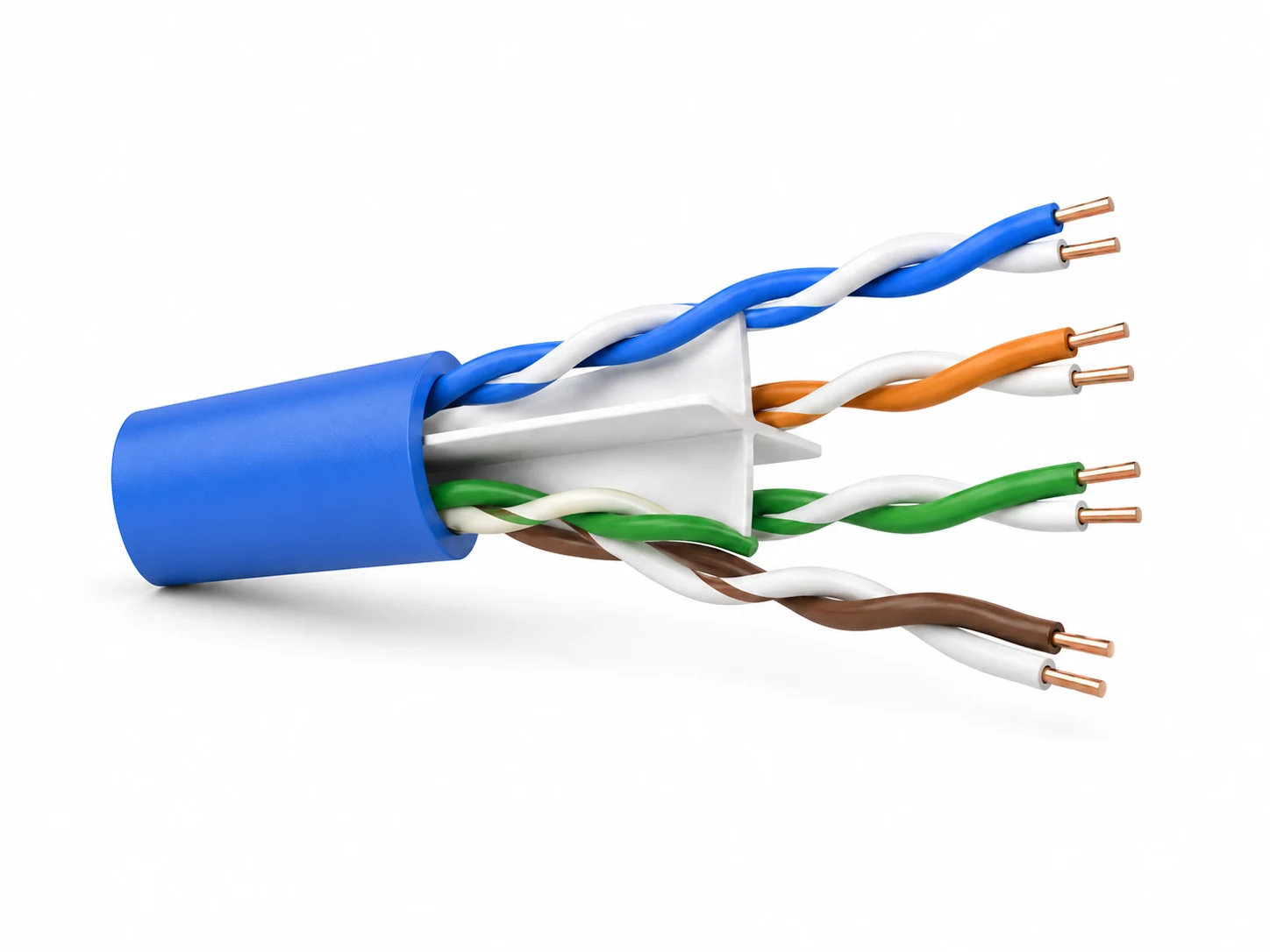
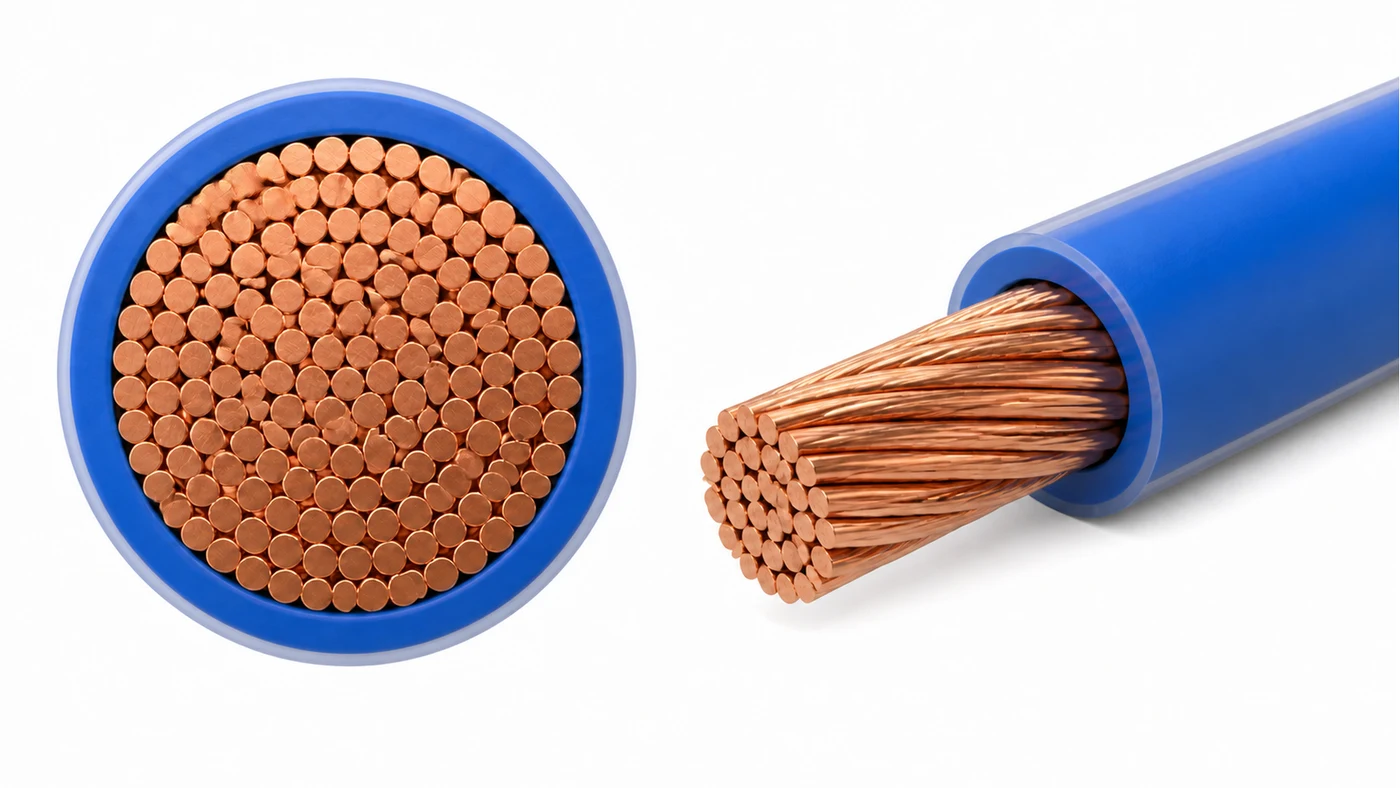
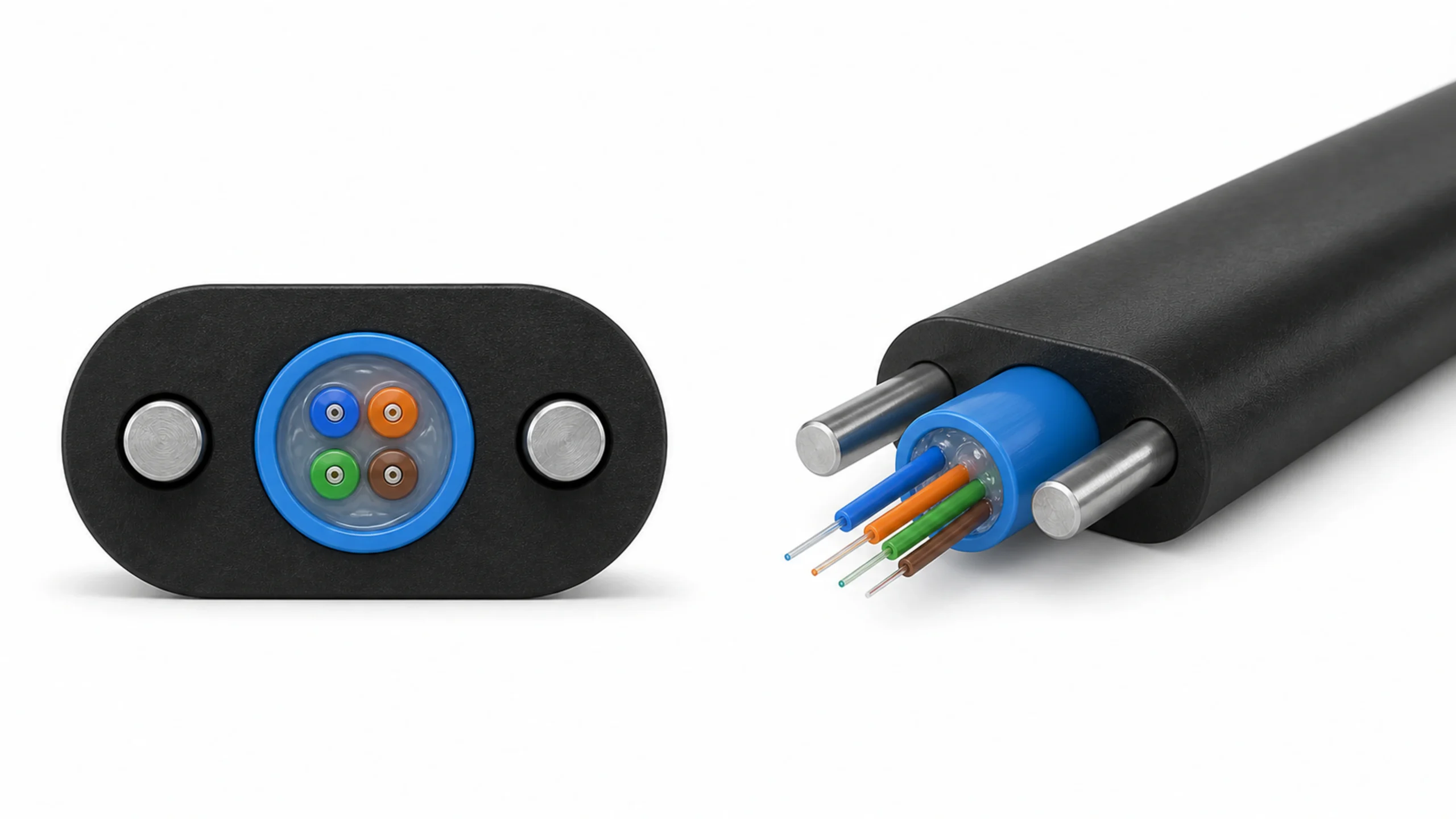







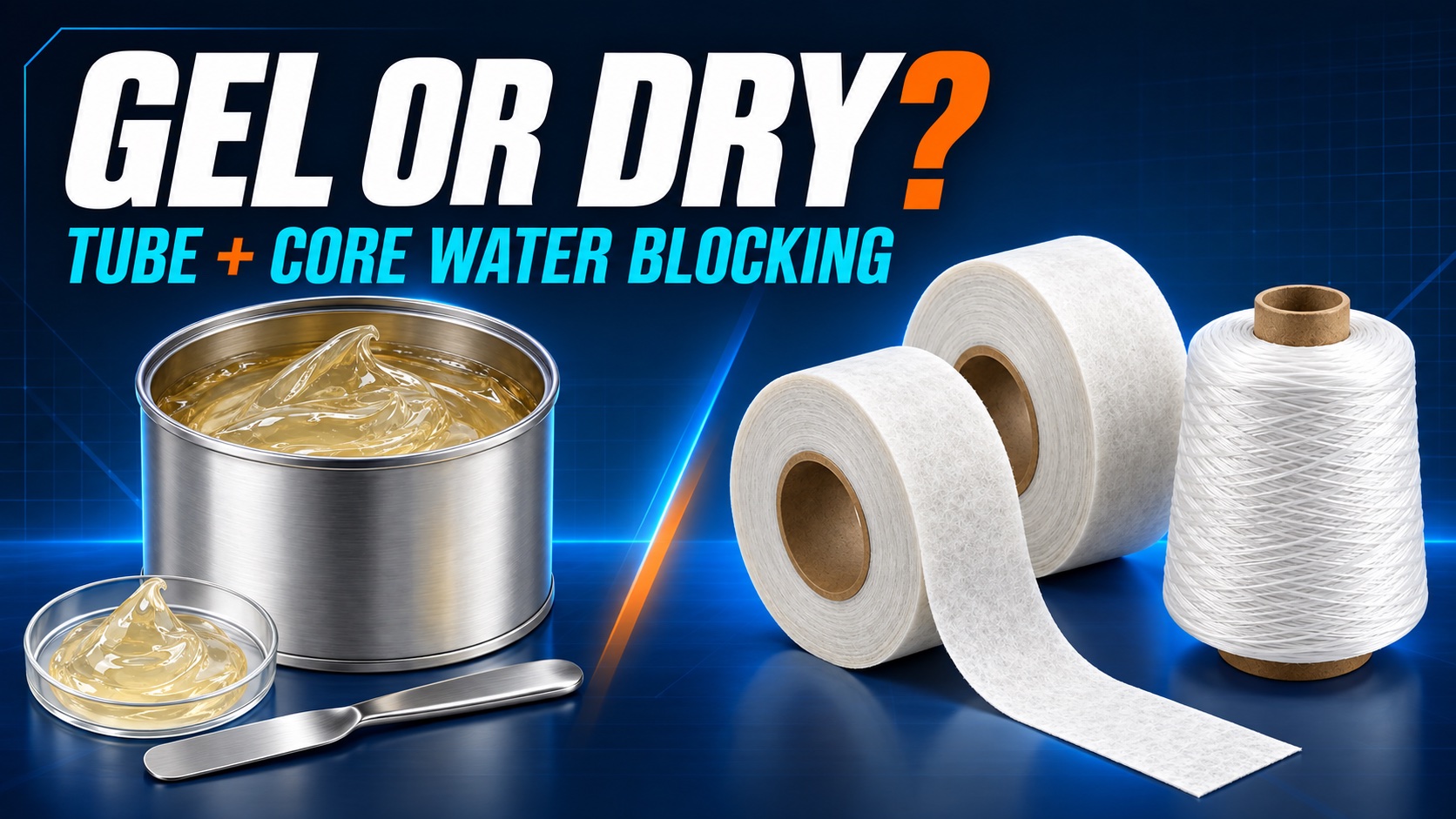
Um comprador de cabos para uso externo pode solicitar um projeto “seco”, mas a palavra pode ter significados diferentes em desenhos distintos. Nas discussões habituais da HONGKAI com clientes, isso significa sem gel de preenchimento dentro dos tubos soltos e sem gel de preenchimento ao redor do núcleo do cabo. Outros fornecedores às vezes usam “núcleo seco” mesmo quando os tubos ainda contêm gel. Essa diferença deve ser resolvida antes de comparar as cotações de equipamentos.
Write down what goes inside the loose tube and what goes around the cable core. For a HONGKAI all-dry request, neither location is gel-filled. If another supplier calls a cable “dry core,” ask whether its tubes still contain gel. Then match the approved construction to the production route and finished-cable tests.
Esta comparação é destinada a fabricantes que escolhem uma construção de cabo óptico para ambientes externos e seu escopo de equipamentos. Não classifica um material como o melhor para todos os cabos externos.
Dois Locais para Bloquear Água
In a stranded loose-tube cable, optical fibers sit inside individual buffer tubes. Those tubes form a cable core beneath the outer protective layers. Water blocking can be needed in both locations. Corning’s technical note describes gel or dry water-swellable materials used in the cable core and within the buffer tubes.1 HONGKAI solicita, portanto, que o comprador especifique tube interior e espaço ao redor do núcleo montado separately.
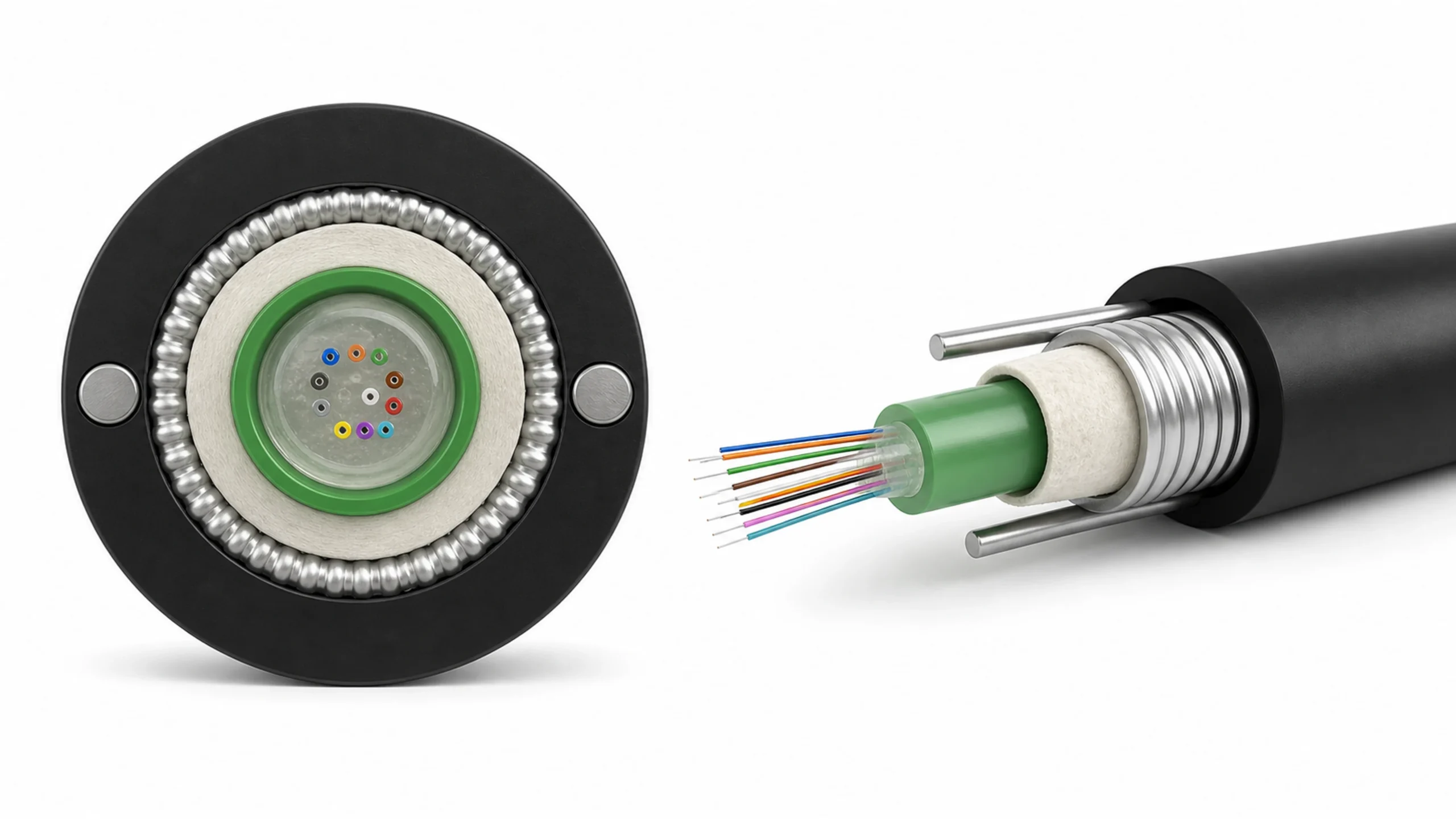
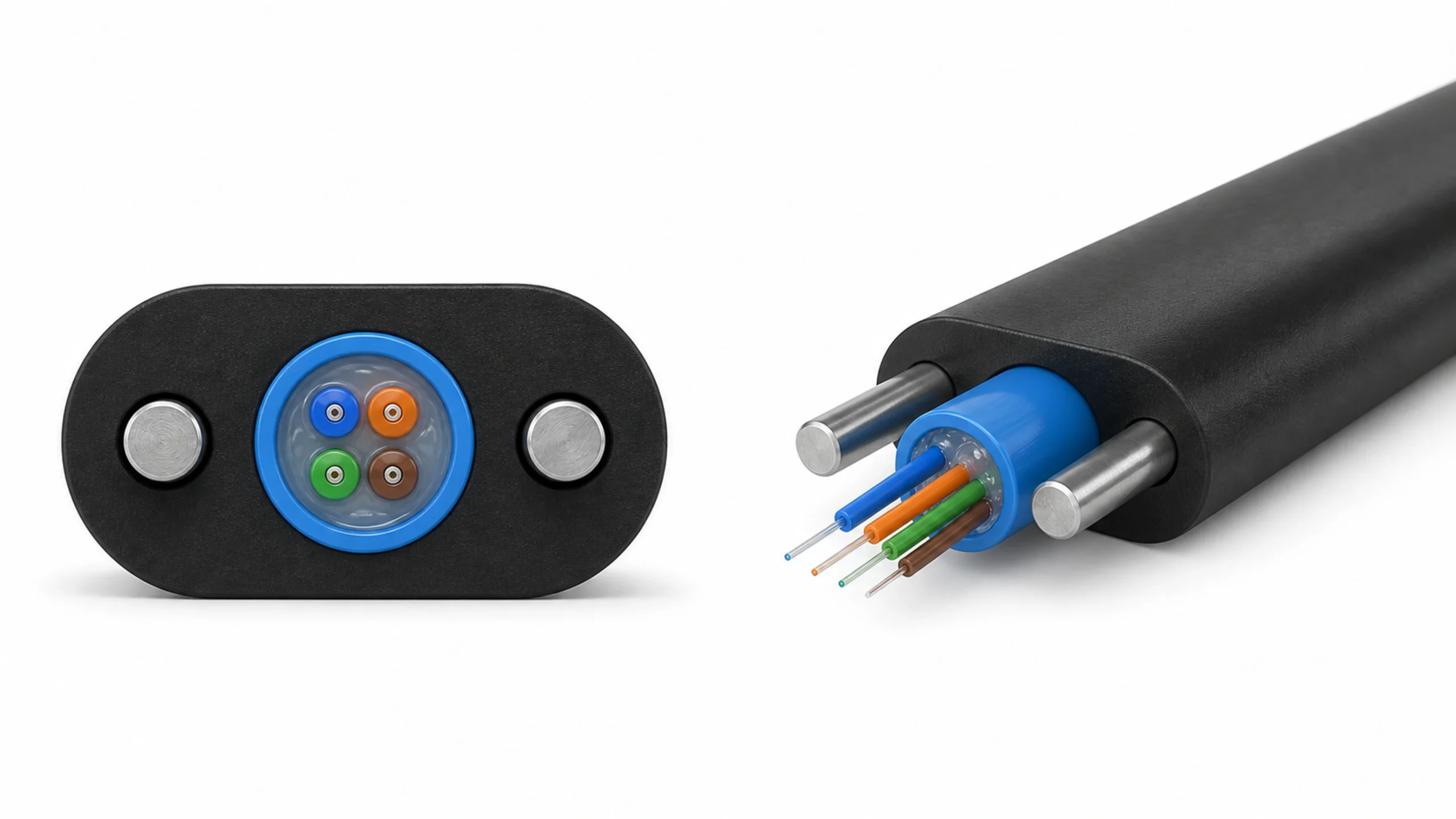
HONGKAI GYXTW 3D structure reference helps locate the tube and surrounding layers. It does not show or certify an all-dry construction.
Para fins de orçamento, separe três arranjos. Os nomes abaixo descrevem os locais que estão sendo comparados; o desenho aprovado deve mostrar os materiais reais.
| Arranjo sendo comparado | Dentro dos tubos tampão | Ao redor do núcleo do cabo | O que o comprador deve esclarecer |
|---|---|---|---|
| Gel em tubos e núcleo do cabo | Composto de enchimento especificado | Composto especificado de preenchimento ou inundação do núcleo | Qual composto pertence em cada localização? |
| Núcleo seco com tubos preenchidos com gel | Composto de enchimento especificado | Elementos especificados de bloqueio de água a seco | O cliente aceita gel dentro dos tubos? |
| Construção totalmente seca—o significado habitual nas discussões com clientes da HONGKAI | Sem gel de preenchimento; utilizar o design aprovado de tubo seco | Sem gel de preenchimento; utilizar o projeto de núcleo seco aprovado | O que bloqueia a água em cada localização e quais evidências de cabos sustentam isso? |
Isto não é apenas um exercício de redação: o cabo fita multi-tubo MassLink da Prysmian é descrito como tendo um núcleo seco com tubos tampão preenchidos com gel.2 Essa é uma utilização legítima do fabricante, mas é não a construção totalmente seca HONGKAI geralmente discutida para um cabo seco. O exemplo não implica que HONGKAI forneça esse cabo Prysmian específico.
Removing cable-core filling from a proposal does not necessarily remove tube filling. Likewise, a drawing showing water-blocking tape outside the tubes does not explain what is inside them.
Ask the cable supplier or designer to mark the two locations on the cross-section. For a central-tube cable, use that cable’s drawing rather than forcing it into a stranded-tube layout. Confirm whether the words dry core, gel-free or all-dry apply to one part or the whole construction.
Mantenha as identidades dos materiais separadas. Um composto aprovado para um local não deve ser considerado adequado para outro simplesmente porque ambos são chamados de "jelly".
Escolha para Acesso ao Cabo e a Instalação Real
Start with the customer’s drawing, installation setting and required cable performance—not a general rule that gel or dry is always better. In some HONGKAI enquiries, a customer seeking a flame-retardant cable has also specified a gel-free construction. That is a requisito do projeto a verificar, not proof that simply removing gel makes a cable flame-retardant. Flame performance belongs to the complete approved cable design and its applicable test evidence. Corning, for example, lists both gel-free water blocking and a flame-retardant sheath for one specific LSZH cable family.3

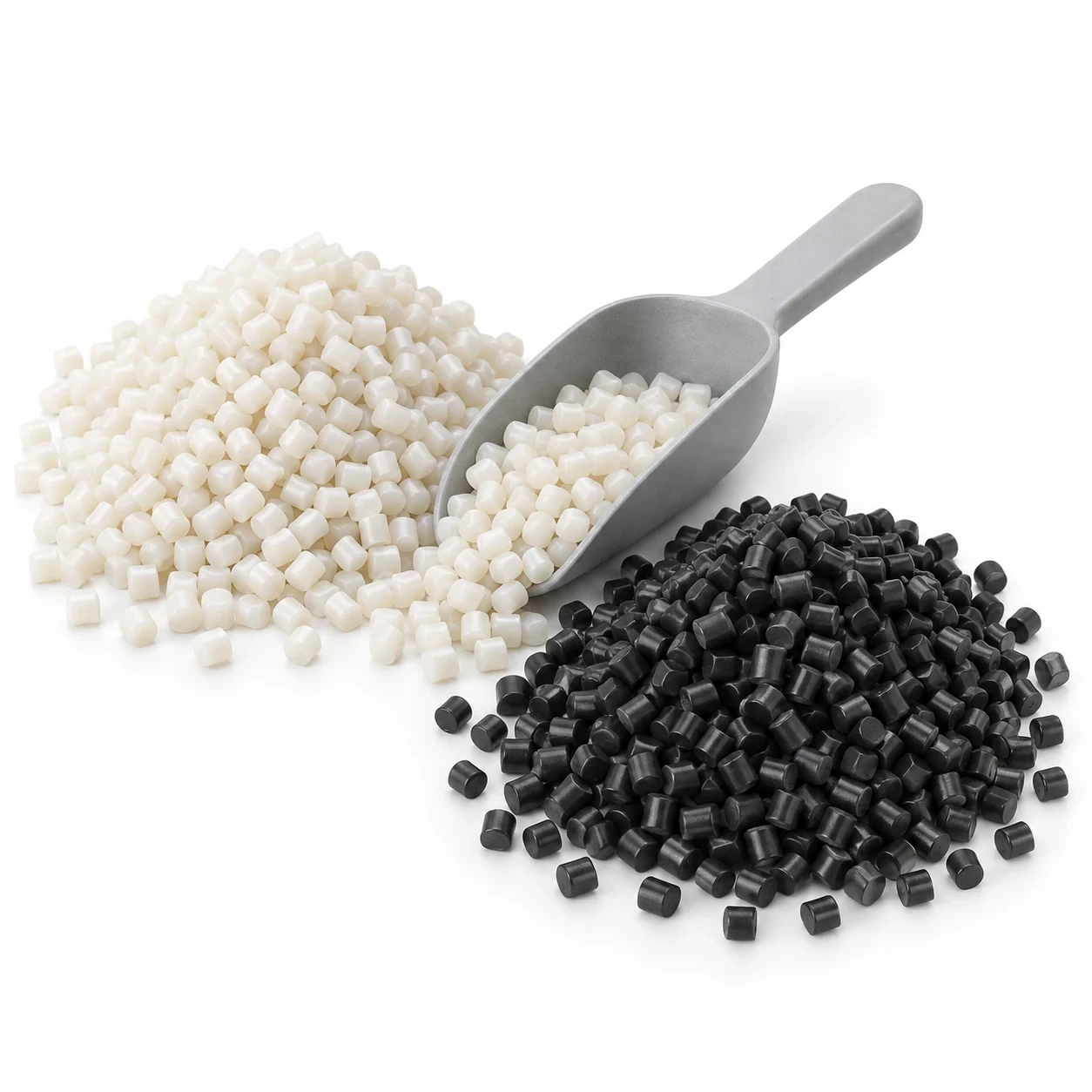
HONGKAI material illustration: water-blocking tape and yarn are possible dry-design inputs, not a claim that either one alone meets the buyer’s cable test.
The clearest operational reason to compare gel-free options is often the work done when opening the cable. Corning describes easier cable preparation and access for its gel-free FREEDM LST product using water-blocking tapes and yarns.4 That is evidence for a particular product’s design approach, not a promised time saving for every dry cable.
If easier access matters to the customer, compare representative samples using the intended preparation procedure. Record which layer is opened, whether fibers must be cleaned, what tools and cleaning materials are needed, and whether the prepared fibers are suitable for the next operation. For a dry core with gel-filled tubes, opening the jacket and opening a tube are different jobs.
Do not turn that comparison into a universal claim that dry cable is cheaper. Compare the material bill and factory costs separately from the installation team’s access work. Use the customer’s expected work and measured sample results, not an assumed percentage saving.
The installation specification still controls. A dry label does not by itself establish suitability for duct, aerial or direct-buried service. Those applications have requirements beyond water blocking, so compare the complete cable specifications before treating two offers as alternatives.
ITU-T L.100, which covers duct and tunnel optical cables, discusses filling compounds and swellable materials as ways to limit longitudinal water penetration. It also distinguishes that problem from moisture passing radially through a sheath.5 Avoid describing either construction as simply waterproof without stating what was tested.
If a tender already specifies a construction, ask whether an alternative is permitted before changing it. If the requirement is performance-based, present the proposed construction and its test evidence together. A different material name is not enough to establish equivalence.
The Production Route Changes at More Than One Stage
The equipment discussion starts after both water-blocking locations are defined. If only the cable core changes to dry, the loose-tube process may still use gel. In the all-dry route discussed for HONGKAI enquiries, o tubo solto também é fabricado sem gel de preenchimento, and the core is not gel-filled either. It is not enough to call the finished cable dry while leaving the tube process unspecified.

HONGKAI referência da unidade de enchimento para a rota preenchida com gel. Esta imagem não representa o arranjo a vácuo do tubo seco.
Use a location-to-process map when comparing proposals:
| Construction decision | Escopo de produção a ser revisado | O que a cotação deve deixar explícito |
|---|---|---|
| Gel-filled buffer tubes | Interface de preparação, entrega e enchimento do composto na etapa do tubo solto | Approved compound, filling controls, start-up handling and verification method |
| Tubos soltos sem gel | Leave the jelly-filling machine off for the HONGKAI changeover described here; review the tube-forming and vacuum-assisted diameter-control arrangement | A unidade exata de vácuo/interface no desenho da linha, o trajeto do material seco, se especificado, e um diâmetro externo estável do tubo na produção experimental |
| Gel-filled cable core | Arranjo de preenchimento ou inundação do núcleo na rota acordada de fabricação do cabo | Application location, material handling and the boundary with adjacent equipment |
| Núcleo de cabo seco | Placement of the specified water-blocking tapes, yarns or other elements | Fornecimento de material, posicionamento, continuidade e a interface com a formação do núcleo e a extrusão da cobertura |
This is a proposal-review map, not a universal machine layout. For the HONGKAI dry-tube route described here, the gel-filling unit need not run, while a vacuum arrangement near the tube-forming head is added or used to help control the tube’s outer diameter. A conexão exata de vácuo e qualquer alimentação de material seco devem ser fixadas no desenho real da linha; that project-level experience does not establish that every existing filling line can switch simply by pressing Stop. Cooling, tension, material and diameter measurement still need a stable trial.
HONGKAI’s referência da linha de produção de tubo solto treats the filling or water-blocking interface as part of secondary coating. It also separates that stage from cable-core stranding and final sheathing. This is a useful boundary when requesting a quotation; it is not confirmation that every dry and gel-filled design uses interchangeable equipment.
For an existing factory, request a marked list of retained units, modified units and new units. Include the gel shut-off path, any vacuum interface, material path and control points—not just the extruder model. If both constructions must run on the same line, ask the supplier to demonstrate the changeover and record tube-diameter stability for each route. Stopping a gel pump is only one operation in that check.
Keep the production target attached to a specific cable and material combination. A speed demonstrated for one tube or one filling arrangement does not automatically apply to the alternative. If both routes matter to the business, specify how each will be demonstrated rather than accepting a single unqualified maximum speed.
Escolha a Construção que Você Pode Especificar e Comprovar
Para o ensaio de tubo solto seco HONGKAI descrito aqui, verifique primeiro se o o diâmetro externo do tubo permanece estável while the gel-filling arrangement is not running. Agree a target and tolerance for the selected tube drawing, inspect measurements across the agreed trial length and retain the records. This checks the tube-making stage; it is not a finished-cable water-blocking result.
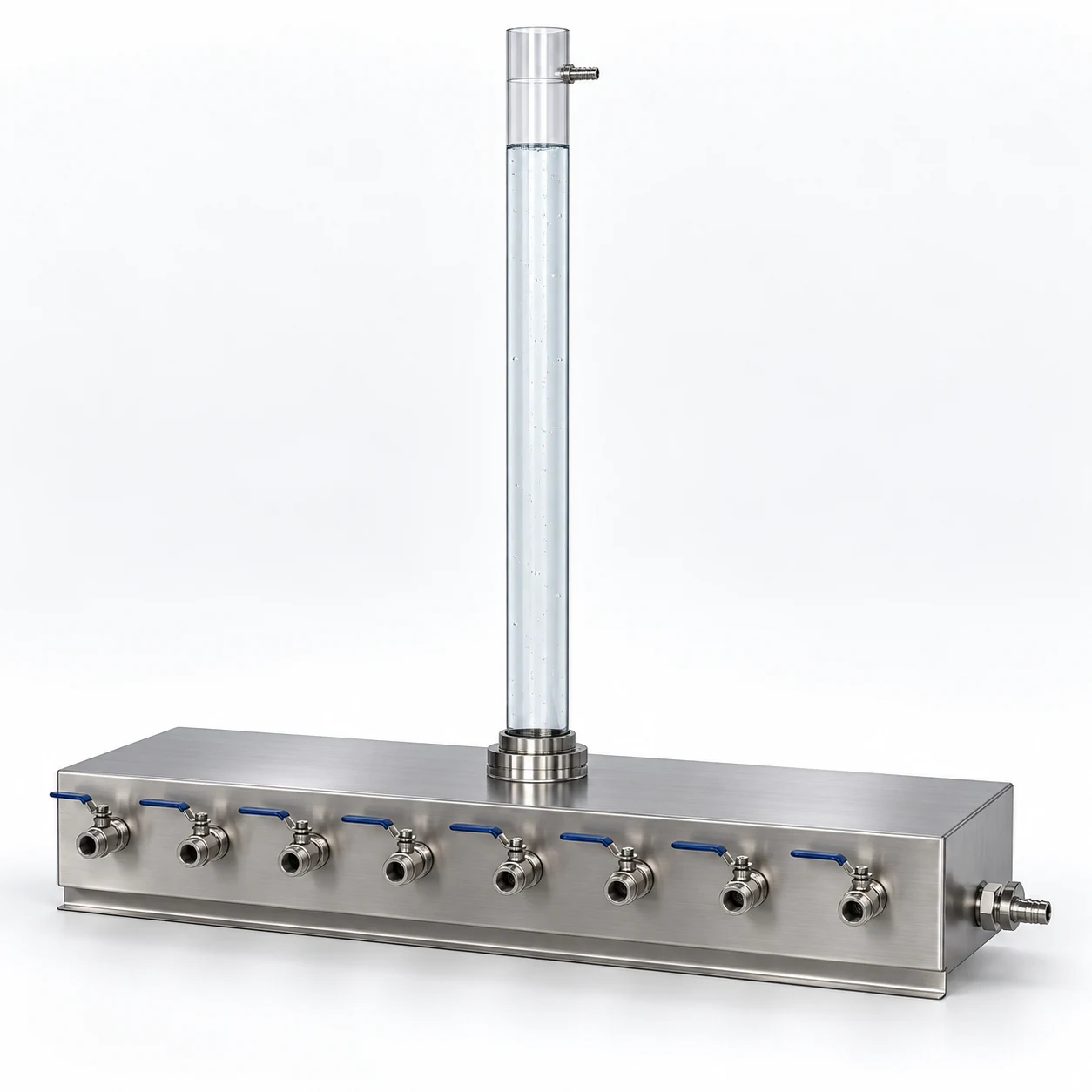
HONGKAI 3D test-equipment illustration. The final test setup, conditions and pass criteria must match the selected cable specification; no test result is implied.
Water-blocking material data and finished-cable test results answer different questions. The material document identifies what will be used. The finished-cable report shows how a particular construction performed under stated test conditions. In HONGKAI’s acceptance sequence, tube-diameter stability is checked during tube production; water-penetration and optical attenuation are checked on the finished cable under the agreed methods and limits.
For duct and tunnel cables, ITU-T L.100 addresses material compatibility and recommends water-penetration testing; its test selection depends on the cable design.5 Agree the applicable product specification, test method and edition, sample requirements, conditions and acceptance limits before ordering. Do not borrow a test limit from an unrelated cable or treat a tape’s swelling demonstration as a finished-cable result.
Match each report to the offered drawing revision and material identities. Confirm which water paths the test assesses, and request the finished-cable attenuation report and any other environmental results required by the customer. HONGKAI’s guia de teste de cabo de fibra óptica ajuda a separar os testes de cabo das máquinas usadas para fabricá-lo.
Uma sequência prática de decisões é:
- Se o cliente especificar gel em ambos os locais, cotar essa construção ou obter aprovação para uma alternativa. Não substituir por um design seco com base apenas na preferência da fábrica.
- Se o cliente aceitar tubos preenchidos com gel, mas desejar um núcleo seco, mantenha o preenchimento dos tubos no escopo de produção e compare as alterações nos materiais e no manuseio ao nível do núcleo.
- If the customer requires an all-dry cable, specify no filling gel in the tubes or core. Verify the dry-design materials, the dry-tube vacuum/diameter-control arrangement and the finished-cable tests for that exact construction.
- Se o cliente disser apenas cabo seco, esclareça essa redação antes de comparar os preços dos equipamentos.
The useful purchasing description is not just “jelly-filled versus dry.” It states what is inside the tubes, what surrounds the core, how the cable will be used and how the offered construction will be verified. That description lets the factory compare genuinely equivalent proposals.
-
Corning Application Engineering Note 026, revision 9, page 2, describes water blocking in the cable core and buffer tubes. Used for construction principles only; its older standards references are not adopted as current requirements. ↩
-
Cabo Ribbon Multi-Tubo Prysmian MassLink, descrição do produto. Um exemplo de fabricante de construção com núcleo seco com tubos tampão preenchidos com gel, não uma declaração de produto HONGKAI. ↩
-
Especificação do cabo Corning LSZH com tubo solto, sem gel e armadura intertravada, page 1, identifies gel-free water blocking and a flame-retardant sheath for that specific product. It does not establish a universal rule that gel removal grants a fire rating. ↩
-
Especificação do cabo de tubo solto sem gel Corning FREEDM LST, page 1, describes swellable tapes/yarns and cable-preparation benefits for that product. No numerical saving or HONGKAI product performance is inferred. ↩
-
ITU-T L.100 (01/2024), Cabos de fibra óptica para aplicação em dutos e túneis, clauses 6.3.3–6.3.4, 7.2.8 and A.4.3. Supports the distinctions between longitudinal water penetration, moisture permeation, material compatibility and cable-level testing within that recommendation’s scope. ↩ ↩

 English
 हिन्दी
 فارسی