


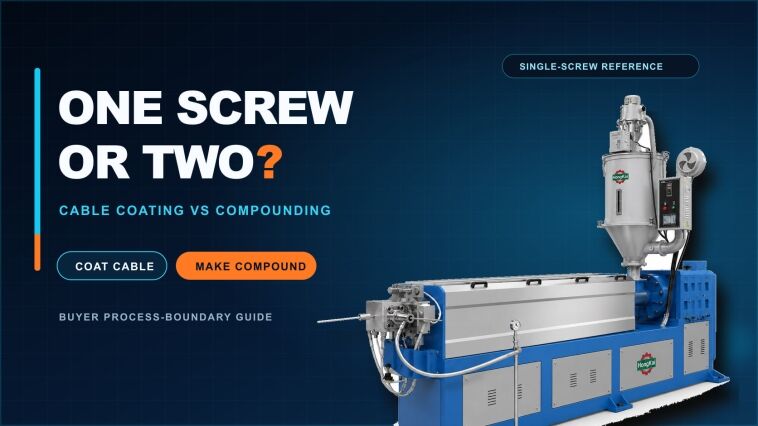
A cable factory owner may be offered a single-screw extruder, a twin-screw extruder, or a proposal that uses both terms without defining the process boundary. The important decision is not whether two screws sound more advanced. It is whether the factory needs to apply an approved compound to a conductor or cable, manufacture the compound itself, or do both as separate production stages.
For most insulation and sheathing projects that begin with qualified cable compound, the main production duty is stable cable coating through a crosshead, supported by pay-off, preheating where required, cooling, measurement, testing, traction and take-up. Twin-screw equipment belongs primarily to a compounding process when the factory must feed, disperse, homogenize, vent and pelletize a formulation. A compounding line does not remove the need for a correctly specified cable-coating line.

رندر مرجع HONGKAI از یک دستگاه اکسترودر پوششدهنده کابل. این تصویر یک واحد ترکیبکننده دو پیچه را نشان نمیدهد و به معنای قابل تعویض بودن دو مسیر فرآیندی نیست.
This guide is for factory owners, production managers and technical procurement teams deciding what belongs in an extrusion quotation. It compares process duty, incoming material, finished output, auxiliary equipment and acceptance evidence so that screw count does not replace a complete production specification.
جداسازی پوشش کابل از تولید ترکیب
A single-screw-versus-twin-screw comparison is meaningful only after the buyer states what enters the process and what must leave it. Applying insulation or sheath around a moving conductor is a different production boundary from turning polymers, fillers and additives into a controlled cable compound.
The cable-coating boundary starts with an approved material in a defined supply form. The material is prepared as required, melted and delivered through a crosshead around a conductor, insulated core or cable core. The output is a continuously coated wire or cable that must meet dimensional, surface, electrical and handling requirements.
The compounding boundary starts with a formulation and controlled ingredient streams. The process may include feeding, premixing, plasticizing, dispersive and distributive mixing, venting, filtration, pressure building, pelletizing, cooling and packaging. The output is normally an identified compound lot that still needs qualification and must later be processed on the cable extrusion line.
| مرز فرآیند | وضعیت ورودی معمولی | Required output | آنچه تجهیزات باید اثبات کنند |
|---|---|---|---|
| عایق یا روکش کابل | گلولهها، دانهها یا سایر مواد اولیه واجد شرایط تأمینکننده تأییدشده | هدایتکننده یا کابل پوششدار روی بستهبندی مشخصشده | ابعاد پایدار، سطح، یکپارچگی لایه، بررسیهای آنلاین مورد نیاز و کشش کنترلشده |
| نوار رنگی یا یک لایه اضافی کابل | ماده تأییدشده برای یک لایه جداگانه | یک نوار یا لایه هماکستروژن شده مشخص بر روی کابل | موقعیت لایه، پیوستگی، ابعاد، چسبندگی در صورت اعمال و کنترل قابل تکرار |
| تولید ترکیب کابل | رزین کنترلشده، پرکنندهها، افزودنیها، مایعات یا پیشمخلوط تعریفشده توسط یک فرمولاسیون | گرانولهای واجد شرایط یا سایر اشکال ترکیبی مورد تأیید | کنترل مواد اولیه، اختلاط، تهویه، سابقه حرارتی، یکنواختی لات و قابلیت فرآوری در مراحل بعدی |
| پروژه یکپارچه مواد و کابل | مواد اولیه بهعلاوه هادی یا ورودی کابل | ترکیب واجد شرایط و یک کابل نهایی بهصورت جداگانه پذیرفتهشده | دو بستهی انتشار مجزا اما متصل: شواهد مواد و شواهد کابل |
The official Coperion cable-compound process illustrates the distinction clearly. Its two-stage system uses a twin-screw section for plasticizing, mixing and homogenizing, then a single discharge screw and pelletizing system for the compound-production duty.1 پیچ تکی در آن سیستم تاندم همان مرز تولید یک خط کراسهد کابل نیست و پلتههای خارجشده از کارخانه ترکیب، کابل نهایی نیستند.
Decision criterion: Write one sentence for each proposed extruder: “This machine receives [named input] and produces [named output].” If the supplier cannot complete that sentence with a physical input, a controlled output and named acceptance evidence, the screw-count comparison is premature.
For HONGKAI cable-line scoping, the first practical input is the material the buyer intends to run. The material identity alone is still incomplete: the buyer must also state the cable construction and required output so that machine size and screw design can be reviewed together. A separate compounding review begins only when the project input is a formulation or multiple controlled ingredients rather than a ready-to-process cable compound.
مقایسه دو مسیر بر اساس ابعاد یکسان
Single-screw cable coating and twin-screw compounding should be compared by process responsibility, not by a generic claim that one mixes better or runs faster. Each route is optimized around a different transformation and requires different upstream, downstream and quality systems.
| Comparison dimension | مسیر پوششدهی کابل با پیچ تکی | مسیر ترکیب دو پیچه |
|---|---|---|
| Primary duty | ترکیب مورد تأیید را بهطور پیوسته ذوب کرده و به سر صلیبی کابل تحویل دهید | ترکیب و کنترل چندین جزء فرمولاسیون از طریق یک فرآیند ترکیبسازی تعریفشده |
| ورودی اصلی تولید | ترکیب کابل واجد شرایط بهعلاوه هادی، هسته عایقبندیشده یا هسته کابل | رزین، پرکنندهها، افزودنیها، مایعات، پیشمخلوط یا سایر مواد ورودی فرمولاسیون |
| خروجی اصلی تولید | سیم عایقدار، هسته پوششدار یا کابل روکشدار | لایه ترکیبی، معمولاً به صورت گرانول، برای فرآوری بعدی کابل |
| Mixing requirement | ذوب پایدار را حفظ کنید و ترکیب تأییدشده را در محدوده فرآیندی آن نگه دارید | ایجاد پراکندگی، توزیع و همگنی مشخصشده از مواد اولیه کنترلشده |
| وظیفه فشار و شکلدهی | تغذیه یک سرِ عرضی که لایهای را حول محصول کابلِ در حال حرکت مداوم تشکیل میدهد | یک فیلر و سیستم پاییندستی برای رسیدگی به ترکیب یا پلاستیکسازی تغذیه کنید؛ برخی از سیستمها عمل اختلاط را از افزایش فشار جدا میکنند. |
| تجهیزات اطراف ضروری | پرداخت، صافکردن یا پیشگرمکردن در صورت نیاز، هد عرضی و ابزارآلات، خنککردن، کولیس، تستر، کاپستان، انباشتگر و پیچش | ذخیرهسازی مواد اولیه، فیدرهای دقیق، مخلوطکنندهها در صورت نیاز، تغذیه جانبی، دوزینگ مایعات، تهویه، فیلتراسیون، پلتیزه کردن، خنککاری و مدیریت محموله |
| شیء پذیرش هسته | یک نمونه کابل شناساییشده ساختهشده در شرایط پایدار ثبتشده | یک لوت ترکیبی شناساییشده ساختهشده از مواد اولیه قابل ردیابی و یک فرمولاسیون کنترلشده |
| سوال معمول درباره گسترش | آیا همان خط میتواند ساختار کابل، درجه ماده، لایه یا بستهبندی دیگری که تأیید شده است را پردازش کند؟ | آیا کارخانه میتواند فرمولاسیون واجد شرایط دیگری تولید کند بدون اینکه در فرآیندهای تغذیه، اختلاط، تهویه، تمیزکاری یا کنترل لات تأثیر منفی بگذارد؟ |
این تمایز همچنین از سه خطای رایج در نامگذاری جلوگیری میکند.
A current Maillefer component index maps screw-diameter extruders to insulation and sheathing duties across building wire, low-voltage, telecom, fiber-optic and other cable applications.2 آن مرجع از مرز پوشش کابل پشتیبانی میکند، اما به تنهایی قطر پیچ را به روشی برای انتخاب تبدیل نمیکند.
First, a main extruder plus a small color-stripe extruder is not a twin-screw extruder. It is a multi-extruder cable line in which separate single-screw units feed different material streams or layers into compatible tooling.
In that arrangement, the main extruder and color-stripe extruder meet at the crosshead. The required stripe proportion is one of the inputs used to size the auxiliary extruder; the presence of two extruder bodies does not establish a twin-screw process.
Second, a multilayer crosshead supplied by two or three extruders does not make those extruders a twin-screw machine. The buyer must specify each layer, material, flow path, interface and control duty independently.
Third, a twin-screw feeder is not automatically a twin-screw process extruder. Ingredient feeding and polymer compounding are separate equipment functions, even when both use rotating screws.
Common mistakes: A quotation uses “double extruder,” “co-extrusion,” “twin screw” and “two-color line” as interchangeable terms. The buyer should require a process diagram that shows the number of extruder barrels, the screw arrangement inside each barrel, the material entering each unit and the die or crosshead receiving each melt stream.
مسیر را از وضعیت مواد و محصول قابل فروش انتخاب کنید
The most reliable selection starts with the approved material supply strategy and the first saleable cable. A factory buying qualified compound needs a different project from a factory developing and manufacturing its own cable formulations.
از این ترتیب قبل از درخواست مدلهای دستگاه استفاده کنید:
- اولین ساخت کابل، ترتیب لایهها، ورودی هادی یا هسته، بستهبندی نهایی و مبنای پذیرش را قفل کنید.
- هر عایق، روکش، نوار یا سایر مصالح اعمالشده را با درجهٔ تأییدشده و فرم تأمین مشخص کنید.
- تصمیم بگیرید که آیا کارخانه ترکیب واجد شرایط را خریداری کند، ترکیب کنترلشده را در داخل تولید کند یا هر دو مسیر را بهصورت جداگانه ارزیابی نماید.
- هر تبدیل فیزیکی را از ماده اولیه ورودی به لوت ترکیبی و از لوت ترکیبی به کابل نهایی نقشهبرداری کنید.
- برای هر مرز فرآیندی که خروجیای بهصورت جداگانه کنترلشده ایجاد میکند، برنامههای آزمون پذیرش کارخانهای جداگانه تهیه کنید.
| Buyer situation | Preliminary route | مرزی که هنوز نیاز به تأیید دارد |
|---|---|---|
| کارخانه گرانولهای تأییدشده را خریداری میکند و یک لایه عایق یا روکش اعمال مینماید | خط پوشش کابل را حول محصول و ماده تأییدشده مشخص کنید | طراحی پیچ، غلاف، سر تقاطعی، ابزارآلات، خنککننده و تجهیزات جانبی باید دقیقاً با ماده و کابل مطابقت داشته باشد. |
| کابل نیاز به یک نوار رنگی یا یک جریان ماده دوم دارد | یک اکسترودر کمکی جداگانه و آرایش سازگار سر قالب یا دای مربوطه را بررسی کنید | این وظیفه اکستروژن چندگانه است، نه مدرکی بر این که فرآیند دو پیچه مورد نیاز باشد |
| کارخانه میخواهد رزین، مواد پرکننده و افزودنیها را با هم ترکیب کرده و ترکیب تجاری خودش را تولید کند. | یک پروژه اختصاصی ترکیبسازی را قبل از خط کابل تعیین کنید | مالکیت فرمولاسیون، تغذیه، اختلاط، تهویه، گرانولسازی، آزادسازی آزمایشگاهی و مسئولیت باید به صورت کتبی باشد |
| کارخانه میخواهد از مواد بازیافتی یا متغیر استفاده کند | تنها بر اساس تعداد پیچها انتخاب نکنید | Input variability, contamination, filtration, degradation, qualification and finished-cable limits require a controlled development plan |
| این پروژه از یک سیستم حساس به حرارت، بسیار پرشده، واکنشپذیر، فومشده، لاستیکی یا قابل اتصال عرضی استفاده میکند. | Treat the process as material- and product-specific | الزامات پردازش تأمینکننده مواد را دریافت کنید و در صورت امکان، زمان ماند، برش، دما، تهویه و کنترلهای ولکانیزاسیون یا کفزایی را تعیین نمایید. |
| The supplier proposes one line for many PVC, PE, XLPE or low-smoke formulations | سازگاری را موقت نگه دارید | Each exact compound grade, screw, tooling, dryer or loader need, cleaning route and acceptance sample must be reviewed |
“PVC,” “PE,” “XLPE” or “LSZH” is not a complete machine input. Commercial grades can differ in additives, fillers, moisture sensitivity, thermal limits, rheology, crosslinking route and required processing controls. A supplier should not convert a material family name into a universal screw geometry or output promise.
The HONGKAI project sequence is to match the required production output to a practical extruder size, then review the intended material against the screw design and the rest of the line. A dryer or additional feeding system is not added merely because the material name changes; those modules remain conditional on the exact grade, supply form and material-supplier processing guidance. The current Φ70 and Φ90 references therefore do not prove universal grade or brand compatibility.
The same caution applies to in-house formulation. Owning a twin-screw compounder creates responsibilities for recipes, ingredient verification, dosing accuracy, lot traceability, laboratory testing, change control, cleaning, nonconforming material and the interaction between compound quality and cable quality. It is a material-manufacturing decision, not merely an extra machine added to the extrusion hall.
Foaming and crosslinkable compounds require their own material-and-screw review because their raw-material behavior and test route differ from ordinary cable compounds. HONGKAI does not extend that confirmed boundary to recycled material or every high-fill low-smoke grade without the exact material data and a representative trial plan.
Red flags: A supplier recommends twin-screw equipment only because the buyer mentions additives; promises that “more mixing” will solve an undefined surface or electrical defect; or quotes a cable line before the compound grade, conductor, layer thickness, package and test basis are available.
خط کامل را مشخص کنید، نه فقط تعداد پیچها
A useful cable-extrusion quotation must connect the extruder to the conductor path, crosshead, cooling, measurement, traction, testing and take-up. A useful compounding quotation must connect raw-material control to feeding, mixing, venting, discharge, pelletizing, laboratory release and lot handling.
برای یک پروژه پوششدهی کابل، خریدار باید یک پوشه محصول و فرآیند با این ورودیها ارائه دهد:
| Input group | حداقل اطلاعات مورد نیاز برای بررسی فنی |
|---|---|
| Finished cable | طرح، ترتیب لایهها، ابعاد نامی و کنترلشده، الزامات سطح، علامتگذاری و بستهبندی |
| هادی یا رشته کابل | ماده، ساختار، قطر ورودی یا محدوده، ابعاد قرقره، کشش مجاز و وضعیت سطح |
| Applied compound | تأمینکننده و گرید در صورت موجود بودن، شکل تأمین، رنگ، دستورالعمل فرآوری، نیازمندیهای خشککردن یا پیشآمادهسازی و کنترلهای لات |
| Extrusion duty | عایق، روکش، لایه زیرین، نوار یا سایر لایههای نامگذاریشده؛ تعداد جریانهای مواد؛ مفهوم ابزارآلات؛ جهت خط مورد نیاز |
| Online control | روش کنترل قطر یا دیواره، تست جرقه در صورت امکان، تأیید چاپ یا علامتگذاری، اندازهگیری طول و ردیابی |
| Factory interface | برق، آب خنککننده، هوای فشرده در صورت نیاز، سیستم زهکشی، نقشه کف، جابجایی و حرکت ردیفها، کنترلهای محیطی و تجهیزات موجود |
| پذیرش | راهاندازی محصول، نمونههای مواد، شرایط عملیاتی هدف، اندازهگیریها، روشهای آزمون، سوابق نگهداریشده و فرآیند موارد حلنشده |
HONGKAI’s verified Φ70 insulation-line and Φ90+50 sheathing-line configuration documents show single-screw cable-coating references with separate material handling, crosshead, cooling, measurement, traction and take-up functions. The “+35” or “+50” designation in these references identifies an additional color-stripe extruder; it does not describe an intermeshing twin-screw barrel. Final screw, barrel, tooling, material and line scope remain project-specific.
For a color-stripe request, the buyer should also define the stripe proportion and visible result. That input affects the auxiliary-extruder size and crosshead arrangement; it should not be translated into a generic request for a “twin-screw cable extruder.”
HONGKAI عمومی خط پوشش کابل بهطور مشابه، اکسترودر را بهعنوان یک ایستگاه درون یک خط طولانیتر که شامل پرداخت، هد صلیبی، خنککاری، اندازهگیری قطر، کشش و پیچش است، ارائه میدهد. HONGKAI راهنمای تولید کابل فشار ضعیف از لایههای کابل تأییدشده و مسیر مورد نیاز آغاز میشود، نه اینکه یک مدل اکسترودر را بهعنوان یک کارخانه کامل در نظر بگیرد.
برای کارهای نگهداری یا تعویض، HONGKAI صفحه قطعات اکستروژن کابل lists the measurements needed to confirm a screw and barrel, including diameter, length or L/D information, thread form and material requirement. Those replacement inputs are also useful during a new-line review, but dimensional compatibility alone still does not prove process suitability.
Note: Current HONGKAI evidence supports the cited single-screw cable-coating configurations. It does not by itself establish a HONGKAI twin-screw compounding model, formulation package or compound-performance guarantee. Any in-house compounding scope must identify the responsible specialist, formulation owner, supplied modules and acceptance boundary in writing.
شواهد FAT جداگانهای برای ترکیب و کابل ایجاد کنید
Factory acceptance should prove the output of each production boundary. A compounder must release an identified material lot against the agreed formulation and test plan; a cable line must run an identified product at a stable recorded condition and release the cable against the agreed dimensional, electrical, mechanical and handling checks.
| Evidence layer | FAT خط پوشش کابل | FAT خط ترکیبسازی |
|---|---|---|
| Controlled inputs | هادی یا رشته کابل تأییدشده، لوت ترکیبی، ابزارآلات و بستهبندی | بازبینی فرمولاسیون تأییدشده، لاتهای مواد اولیه، دستگاههای تغذیه و سوابق دوزدهی |
| Process record | مناطق دمایی، وضعیت پیچ و خط، مشاهدات ذوب یا فرآیند، کشش، خنککاری و هشدارهای مربوطه | سرعتهای تغذیه، پیکربندی و وضعیت پیچ، دما، گشتاور یا بار، تهویه، فشار، فیلتراسیون و شرایط پلتسازی در صورت اعمالشدن |
| Physical output | کابل عایقدار یا روکشدار شناساییشده بر روی قرقره یا بستهبندی توافقشده | ترکیب شناساییشده در دسته مورد توافق به صورت گرانول یا فرم ماده |
| Immediate checks | ابعاد، هممحوری یا شواهد دیواره در صورت نیاز، سطح، علامتگذاری، آزمون آنلاین و کیفیت پیچش | ظاهر، یکنواختی پلته یا خروجی، کنترل آلودگی و هویت نمونه آزمایشگاهی توافقشده |
| Release evidence | آزمونهای اختصاصی محصول مرتبط با کشش کابل، استاندارد یا طرح کنترل | آزمایشهای مواد مرتبط با مشخصات فرمولاسیون و نیازمندیهای فرآیند پاییندست |
| Traceability | قابلمه کابل به هادی/هسته، لوت ترکیبی، تنظیمات، آزمونها و سوابق اپراتور | مربوط کردن لات ترکیبی به مواد اولیه، بازنگری فرمولاسیون، تنظیمات، نمونهها، آزمایشها و تصمیمگیری |
| Handover | دستورالعملها یا تنظیمات مطابق توافق، لیست ابزارآلات، نقشهها، دستورالعملهای راهنما، هشدارها، آموزشها و موارد باز | مسئولیت فرمولبندی، ثبت پیکربندی پیچ، کالیبراسیون فیدر، روش تمیزکاری/تعویض، روشهای آزمایشگاهی، ردیابی و موارد باز |
Open-head output is not enough to accept a cable line. It does not prove that the selected conductor, crosshead, tooling, cooling path, measurement system, traction and take-up can produce the agreed cable continuously. Likewise, a short cable sample cannot prove a compound plant if ingredient control, lot uniformity, venting, filtration, pellet condition and laboratory release remain undefined.
HONGKAI uses two different checks for the cable-extrusion duty. First, the head is opened and the extruder output is weighed under the agreed full-speed test condition to record kilograms per hour. Second, the complete line runs the customer’s specified cable under the agreed full-speed condition to record metres per minute while the finished dimensions and other signed accuracy requirements remain within tolerance. The first check verifies extrusion output; the second verifies that the complete line can make the agreed product. Neither result should substitute for the other.
خریدار میتواند از این چکلیست غربالگری نهایی قبل از تأیید هر یک از مسیرها استفاده کند:
- ☐ ورودی و خروجی فرآیند برای هر اکسترودر نامگذاری شدهاند.
- ☐ از عبارات “تکی”، “دوبل”، “هماکستروژن” و “نوار رنگی” بهصورت یکنواخت در نمودار فرآیند و فهرست تجهیزات استفاده شده است.
- ☐ درجه دقیق ماده یا فرمولاسیون کنترلشده، جایگزین عبارتبندی عمومی خانواده پلیمری میشود.
- ☐ ماژولهای بالادستی و پاییندستی همراه با رابطها و تأمینکننده مسئولشان گنجانده شدهاند.
- ☐ نمونهها، سوابق و معیارهای آزادسازی برای آزمون پذیرش کارخانه (FAT) پوشش کابل و آزمون پذیرش کارخانه (FAT) تولید ترکیب، جداگانه هستند.
- ☐ مواد یا خانوادههای کابل آینده بهعنوان محدوده اختیاری فهرست شدهاند تا زمانی که آزمایشهای نمایندگی و مدارک مربوطه توافق شوند.
- ☐ HONGKAI-manufactured equipment, integrated specialist equipment and buyer-supplied systems are separated in the responsibility matrix.
The correct choice is therefore not “single screw or twin screw” in isolation. It is a verified route from the buyer’s material state to the first saleable cable, with every transformation, interface and acceptance record assigned to the correct production boundary. Twin-screw compounding is included here as buyer education, not as evidence of a current HONGKAI compounding-machine offer. If a project includes pellet production, the specialist compound-equipment and formulation scope must be defined separately from the HONGKAI cable-coating line. The same input dossier can be submitted through the clean صفحه پذیرش پروژه HONGKAI بهگونهای که پوشش کابل، آمادهسازی مواد و هر دامنه ترکیبسازی تخصصی بهصورت جداگانه بررسی شوند.
-
Coperion, STS Mc11 two-stage compounder for cable compounds, سیستم تولید ترکیب کابل را بهعنوان یک فرآیند واحد توصیف میکند که شامل تغذیه، اختلاط و همگنسازی با پیچهای دوقلو، انتقال به یک پیچ تخلیه تکی و گرانولسازی است.↩
-
Maillefer, اکسترودرهای عایقکاری و روکش سیم و کابل, provides a current manufacturer reference for screw-based extruders used across cable insulation and sheathing applications; final screw and line selection remains application-specific. ↩
