


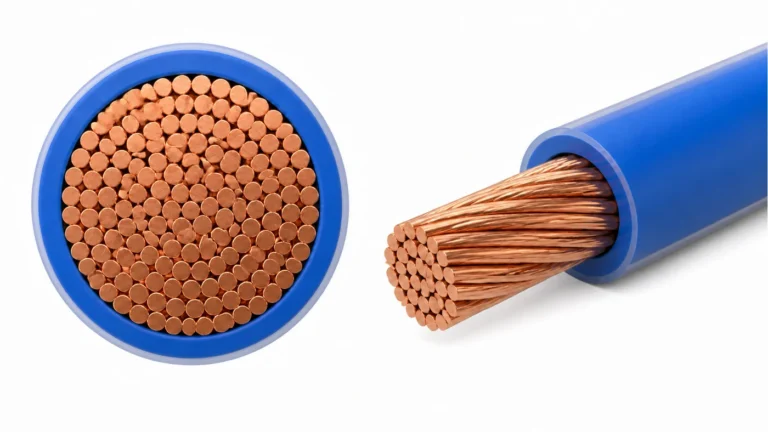

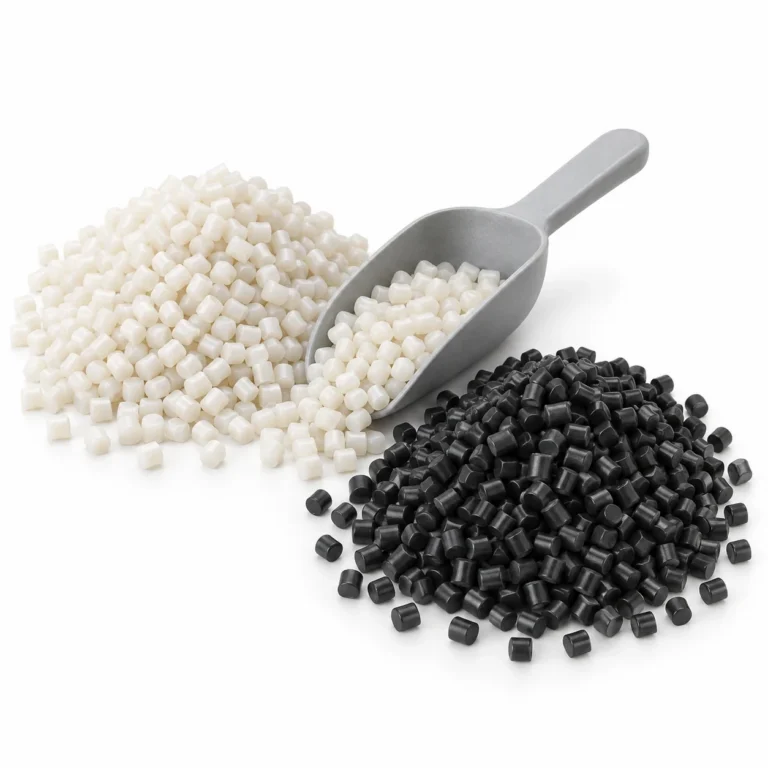


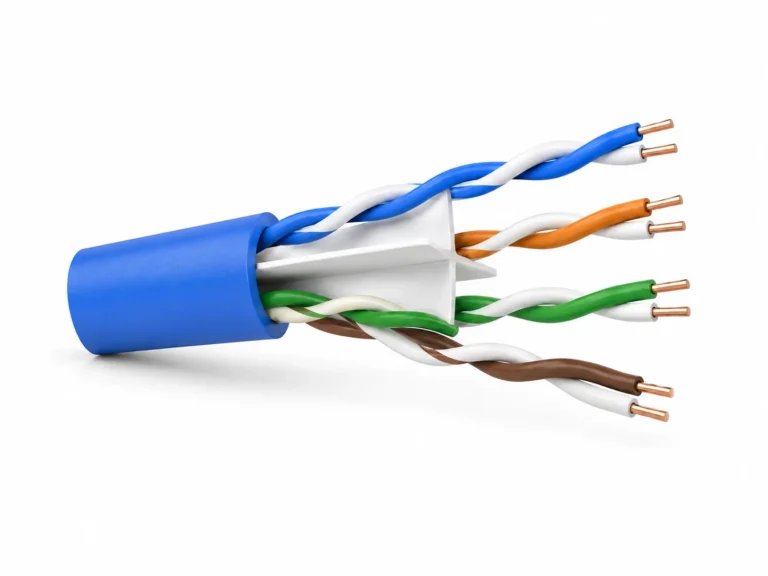




A fiber optic cable factory owner or production manager should not order a loose tube production line from a headline speed and extruder size. The purchase decision starts with the cable construction, approved materials, process window, package plan and evidence that will define an acceptable trial.
A loose tube production line should be specified as one controlled process from fiber pay-off to finished tube take-up. The buyer must lock the tube design, fiber handling, polymer and filling system, tooling, cooling, excess fiber length, reel logistics and test method before comparing suppliers. A catalogue maximum can describe machine capability, but only a stable trial with the agreed cable and materials can establish an acceptable production condition. The purchase specification should therefore connect every machine unit to a measurable output or acceptance record.
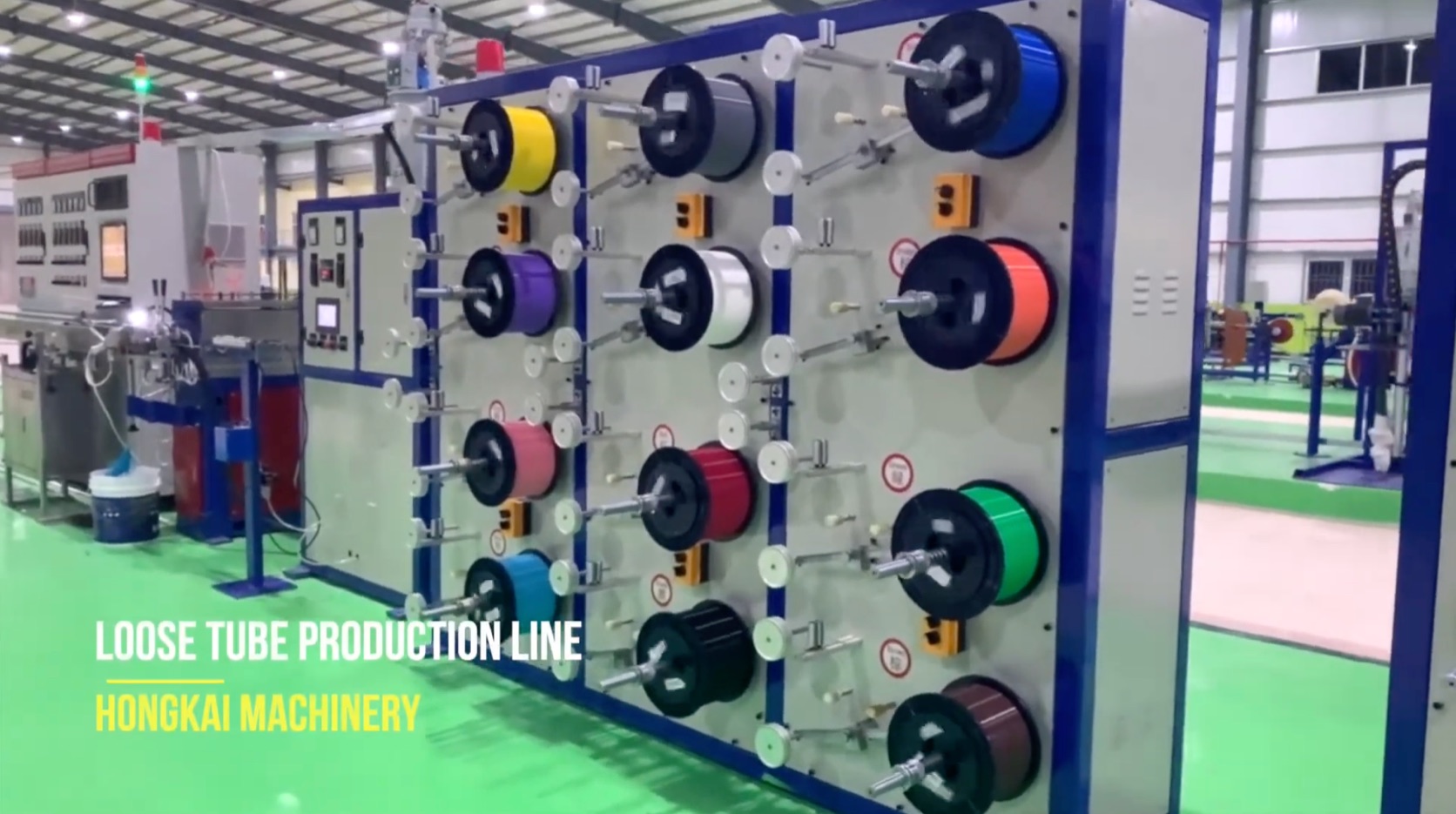
Real HONGKAI loose tube production equipment. The final configuration must be matched to the approved tube construction, fiber package and process evidence.
Sản xuất ống lỏng còn được gọi là phủ lớp thứ cấp. Quy trình này tự thân không phải là tuyến sản xuất cáp ngoài trời hoàn chỉnh. Cáp ống trung tâm có thể chuyển trực tiếp từ công đoạn đùn ống lỏng sang bảo vệ và bọc vỏ, trong khi cáp ống lỏng dạng bó thường yêu cầu thêm công đoạn tạo lõi riêng biệt trước khi bọc áo ngoài cuối cùng. Ống lỏng có thể sử dụng quy trình chứa gel (quy trình ướt) hoặc quy trình khô không dùng gel, do đó phạm vi thiết bị phải được xác định ngược từ cấu trúc cáp thành phẩm thay vì áp dụng một danh sách thiết bị chung cho mọi trường hợp.
The eight decisions below are written for an RFQ, technical comparison and factory acceptance test. They also show why two lines with similar catalogue descriptions may not carry the same project risk.
Which Specifications Should a Buyer Lock Before Ordering a Loose Tube Production Line?
Người mua cần khóa chặt tám quyết định liên quan: ống mục tiêu, đầu vào sợi, chuẩn bị polymer, tuyến điền đầy, đùn và dụng cụ khuôn, làm nguội và độ dài dư, năng lực và xử lý bao bì, cũng như bằng chứng nghiệm thu. Mỗi quyết định phải được mô tả bằng các điều kiện đo lường được và truy ngược được tới bản vẽ cáp hoặc vật liệu đã được phê duyệt. Chỉ khi đó, yêu cầu mới có thể được ánh xạ vào cấu hình dự án cụ thể thay vì danh sách máy móc chung chung. Báo giá tốt nhất là báo giá làm rõ các giả định và trách nhiệm xác minh.
1. Target Tube: Which cable families and loose-tube dimensions must the line support?
Why it matters: The finished cable determines whether the loose tube is a central cable element, one of several stranded elements or an intermediate package for another process. Fiber count alone does not determine the route. Tube outside diameter, wall, fiber count, material, color set, filling method, downstream reel and cable construction must be considered together.
What to ask: Send the finished-cable drawing, tube drawing, tolerance table, fiber count per tube, tube colors, approved polymer grade, filling requirement and planned product range. State which products are launch priorities and which are possible future options. If the factory will make both central-tube and stranded loose-tube cables, identify the downstream equipment and reel interfaces for each family.
Trước khi phát hành RFQ, hãy xác nhận ống là loại khô hay loại chứa gel, đường kính ngoài mục tiêu và số sợi trên mỗi ống, cũng như điều kiện sản xuất ổn định cần thiết cho từng màu ống. Đối với kế hoạch sản xuất mà dây chuyền chạy từng màu ống riêng lẻ, hãy liên kết tốc độ được chấp nhận với lịch trình màu sắc cũng như quá trình kéo ống.
How to verify: Trace every quoted unit to the product drawing. The fiber pay-off count must cover the approved tube construction; the crosshead and tooling must cover the defined tube range; the take-up package must transfer safely to the next process. ITU-T L.102 describes sufficient internal tube space as the essential loose-tube feature and states that buffer-tube dimensions should be agreed between the manufacturer and customer.1
Red flags: A proposal uses only total cable fiber count, omits the tube drawing, or claims one configuration covers every outdoor optical cable without identifying the central-tube, SZ-stranded or product-specific route.
2. Fiber Input: How will the line control every optical fiber from pay-off to crosshead?
Why it matters: Multiple coated fibers enter one small crosshead at the same time. Unstable pay-off tension, damaged guide surfaces, uncontrolled static or a poor fiber path can create intermittent problems that are difficult to diagnose after extrusion. The buyer needs a fiber-handling specification, not only a count of pay-off positions.
What to ask: Define incoming fiber diameter, reel dimensions, usable length, fiber identification, normal operating tension, alarm limits, broken-fiber response and the required production record. Ask how each pay-off is driven or braked, how dancer position is measured, how fibers are guided and gathered, and what happens when one position reaches a limit.
Cách kiểm tra: Trong quá trình FAT, nạp các cuộn sợi đã thỏa thuận và quan sát mọi vị trí trong suốt các giai đoạn khởi động, tăng tốc, chạy ổn định, giảm tốc và dừng. Xem lại lịch sử báo động và xác nhận rằng lỗi sợi mô phỏng tạo ra phản ứng máy như đã thỏa thuận. Kiểm tra các bộ phận dẫn hướng và tập trung để đảm bảo bề mặt tiếp xúc sạch sẽ, đồng thời ghi lại tình trạng sợi trước và sau thử nghiệm. Một bước kiểm tra thực tế là xác nhận điều khiển xả sợi ổn định và đường đi của sợi phẳng, ít dao động trước đầu kéo ngang (crosshead), sau đó so sánh điều kiện này với kết quả độ dài dư đã ghi nhận.
Red flags: The supplier demonstrates only an empty line, reports one tension value without a range or tolerance, cannot show individual position behavior, or treats fiber pay-off as an accessory outside the line-control responsibility.
3. Polymer Control: Which PBT grade, drying method and material records will define the process?
Why it matters: A loose tube production line cannot establish a repeatable process if the polymer grade, moisture condition, color masterbatch and thermal history are undefined. The dryer and loader are part of the quality-control chain because moisture or contamination can appear later as bubbles, surface defects, dimensional variation or unstable processing.
What to ask: Name the approved PBT or other tube polymer by supplier and grade. Attach the supplier’s storage, drying and processing instructions; define masterbatch compatibility, allowable regrind policy, material-change procedure and required lot records. Ask how the dryer confirms temperature and time, how material is protected after drying, and how the hopper and loader prevent contamination.
How to verify: Build the FAT recipe from the actual resin supplier document rather than a universal temperature copied from another project. The Celanese polyester technical manual explains that tube extrusion depends on melt-temperature control and identifies inadequate drying, incorrect temperatures and pressure conditions as common causes of extrusion problems.2 Record material lot, drying condition, zone settings and the time sequence used for every accepted sample.
Red flags: The quotation states a single universal PBT temperature, does not identify the resin grade, leaves the dryer outside the machine scope, or changes material during FAT without restarting the evidence record.
4. Filling Route: Does the product require gel filling, a dry design or project-specific preparation?
Why it matters: Gel-filled and dry loose-tube designs do not have identical material feeds, cleanliness controls or acceptance checks. A gel system also has to control preparation, delivery and air removal while remaining synchronized with the tube process. The filling decision must come from the approved cable construction rather than from the supplier’s standard equipment list.
What to ask: Specify whether the tube is gel-filled, dry or part of another qualified design. For gel filling, define the approved compound, preparation method, operating condition, start-up handling, air-removal method, fill verification and cleaning procedure. For a dry design, define the approved water-blocking element and how the machine route changes.
Cách xác minh: Chạy vật liệu điền đầy đã thống nhất và kiểm tra các mẫu ống theo phương pháp bằng văn bản của người mua. Ghi lại các thông số cài đặt của hệ thống điền đầy, trạng thái chân không và tuần hoàn, lượng phế liệu khởi động và bằng chứng vệ sinh. Xác nhận rằng quá trình điền đầy diễn ra đồng bộ với dây chuyền đùn và các chức năng tuần hoàn, chân không loại bỏ khí lẫn trước khi bắt đầu ca sản xuất được chấp nhận. Đối với thử nghiệm quy trình ướt, ổn định việc cấp gel và kiểm soát bọt khí trước khi đưa vào các sợi quang đã thỏa thuận.
Red flags: A supplier describes gel filling as automatically acceptable without a sample method, assumes every loose tube must contain gel, or cannot explain how a filling fault affects line stop, sample segregation and restart approval.
5. Extrusion and Tooling: How will the line hold tube geometry during speed changes?
Why it matters: Extruder size alone does not prove stable tube geometry. Screw and barrel condition, melt delivery, crosshead design, tooling, thermal control, line speed and haul-off behavior interact. Unstable polymer output changes wall thickness and outside diameter, which can also move the measured excess fiber length. The buyer needs a defined process window for the approved tube, especially through acceleration and deceleration.
What to ask: Provide the screw and barrel scope, crosshead and tooling concept, heating and cooling zones, sensor locations, diameter measurement, feedback logic and recipe records. List every tube size to be trialed and identify which tips, dies, guides or inserts change between products. Require a tooling drawing and a spare-tooling list.
How to verify: Measure outside diameter and the other agreed tube dimensions at stable speed and across controlled speed changes. Compare the online gauge with the buyer’s offline measurement method, retain labeled samples and review the trend record rather than accepting one displayed value. The resin supplier’s processing guide notes that overly high or low melt temperature can produce irregular wall thickness, poor surface finish or uneven dimensions.2
Red flags: The FAT relies on a short maximum-speed display, the supplier cannot connect gauge feedback to a control action, tooling is treated as an unnamed consumable, or samples are not linked to time-stamped settings.
6. Cooling and EFL: How will the line establish the required excess fiber length?
Why it matters: Excess fiber length is a product characteristic created by the complete relationship between fiber feed, tube formation, thermal history, capstan behavior, cooling and take-up. A high headline speed is not useful if tube shrinkage, tension or cooling variation moves the result outside the agreed window. EFL must be treated as an acceptance output, not a hidden operator adjustment.
What to ask: Define the required excess fiber length range and measurement method for each approved tube. Ask the supplier to explain the hot, warm and cooling sections, water-temperature control, movable or adjustable elements, capstan arrangement, dancer loops, recipe variables and stabilization procedure after a product change.
How to verify: Use a written sampling plan that connects sample position, process time, reel, speed and recipe to the measured result. Compare start-up, stable-run and end-of-reel samples. Confirm that the excess-length capstan holds controlled tension without pulling the PBT tube too hard or allowing it to run too loose. At higher speed, verify that cooling length and water-temperature control are sufficient for the actual tube. The measurement equipment and calculation method must be agreed before FAT, because two parties can otherwise report different EFL results from the same production run.
Red flags: EFL is absent from the acceptance table, the proposal treats cooling trough length as proof of control, the buyer and supplier use different sample methods, or the line reaches speed before the process is allowed to stabilize.
7. Capacity and Packages: What stable output and reel-change plan does the factory actually need?
Why it matters: Loose-tube output must be calculated by tube color, tube count, cable structure and downstream consumption. One finished cable can require several separate tube runs, so machine metres cannot be compared directly with finished-cable metres. Reel size, product length, color change and changeover loss also affect saleable output.
What to ask: State the required tube length by color and construction, planned shifts, target stable production condition, minimum accepted run length, incoming fiber packages, outgoing tube reels and downstream demand. Separate machine structure speed, catalogue maximum, demonstrated speed and accepted stable speed in the quotation. Define the required fiber-pay-off positions from the maximum fibers in one tube, not only the total fibers in the finished cable. Ask whether reel handling is manual, semi-automatic or fully automatic, and require the supplier to describe the operator’s work at every reel change.
Cách xác minh: Tính toán năng lực sản xuất dựa trên lịch trình sản xuất thay vì nhân tốc độ danh nghĩa với số giờ khả dụng. Đối chiếu số lượng gói ống với nhu cầu bện SZ hoặc bao vỏ ống trung tâm và xác nhận giao diện cuộn vật lý. Trong các ví dụ lập kế hoạch dự án HONGKAI, một ống có thể có đường kính ngoài xấp xỉ 2.0 mm, một sản phẩm nhỏ hơn có thể vào khoảng 1.6 mm, và một số ống chứa 24 sợi quang có thể đạt gần mức 3.0 mm; bản vẽ sản phẩm vẫn là tài liệu điều khiển chính. Thiết kế tốc độ cấu trúc 800 m/min có thể hỗ trợ điều kiện sản xuất thực tế vào khoảng 600 m/min cho một ống phù hợp, trong khi dây chuyền có dải cấu trúc từ 400 đến 600 m/min có thể cần được lên kế hoạch gần mức 400 m/min hơn. Đây vẫn chỉ là các ví dụ so sánh có giới hạn, không phải là các điểm vận hành được đảm bảo: đường kính, số sợi quang, vật liệu, làm mát và chất lượng ổn định sẽ quyết định giá trị FAT.
Red flags: A supplier converts catalogue speed directly into annual finished-cable output, ignores the number of tube colors, does not define changeover loss, or quotes a take-up reel that does not match the downstream pay-off.
8. Acceptance Evidence: Which records must prove the loose tube production line is ready?
Why it matters: A successful FAT is not a video of the machine running. The acceptance plan must connect the approved materials, settings, output samples, measurements, alarms and documents to pass or fail criteria. The records also become the baseline for installation, commissioning and future troubleshooting.
What to ask: Attach a factory acceptance test, or FAT, matrix covering machine scope, safety checks, utilities, material identity, fiber handling, line functions, alarms, recipe and trend records, tube dimensions, EFL, filling result, optical checks when specified, length counting, reel build and supplied documents. Name the measuring equipment, calibration status, sample method, stabilization condition, witnesses and disposition of nonconforming results. If the contract requires a minimum run time or length, define it before the trial instead of inventing it after the machine starts.
How to verify: Sign the accepted configuration and FAT method before the trial. First stabilize polymer output, tube outside diameter and, for a wet process, gel circulation, filling delivery and air removal. Then run the agreed optical fibers and retain time-linked samples and electronic records. Reconcile every result with the cable drawing and purchase specification. IEC 60794-1-23 describes test procedures for geometrical, material, mechanical and environmental properties of optical cable elements, including buffer-tube-related methods; the buyer should select only the methods relevant to the agreed product and current standard edition.3
Red flags: Pass criteria are agreed after the test, samples have no traceability, the supplier substitutes materials without approval, alarms are not challenged, or the signed FAT report does not list open items and responsibility.
Note: The decisive question is not whether a loose tube production line can run fast; it is whether the agreed tube can be reproduced with traceable settings, measurements and package handoffs inside the buyer’s production plan.
How Does HONGKAI Configure a Loose Tube Production Line for a Specific Project?
HONGKAI starts with the tube drawing, fiber package, material, filling route, output plan and downstream process. A current reference configuration connects independently controlled fiber pay-offs, material preparation, filling and air removal when required, a PBT extruder and crosshead, staged water cooling, online diameter measurement, traction and dancer control, and project-matched reel handling. HK-50 and HK-60 proposal variants are project references rather than universal standards. The final scope and accepted speed are confirmed against the exact product and FAT conditions.
The HONGKAI fiber optic cable production equipment guide explains where secondary coating sits inside a broader optical-cable process. For a verified central-tube example, the GYXTW tuyến sản xuất connects fiber coloring, HK-50 loose-tube production and project-specific protection and sheathing. The ADSS production route adds SZ stranding and aramid/sheathing stages because the approved cable structure is different.
Gửi bản vẽ cáp hoàn chỉnh và chi tiết ống trước khi yêu cầu mẫu máy. Trình tự đó cho phép HONGKAI xác định xem dự án có cần tuyến ống trung tâm, tuyến ống lỏng xoắn, thiết kế chứa gel hay khô, và giao diện máy nào phải được đưa vào cùng một kế hoạch nghiệm thu.
Fiber-pay-off quantity should follow the highest fiber count in one tube. As a HONGKAI planning example, many cable designs at or below 144 total fibers can use 12 fibers per tube and a 12-position fiber pay-off. A higher-count design may instead require 24 fibers in one tube and a 24-position pay-off. The approved cable drawing, rather than the finished-cable total alone, decides the requirement.
Tự động hóa thu dây cũng cần một ranh giới được ghi chép rõ ràng. Với việc thay cuộn thủ công, người vận hành cắt và chuyển ống sang cuộn tiếp theo. Hệ thống bán tự động thực hiện một phần chuỗi kẹp hoặc nâng, trong khi người vận hành tháo cuộn đầy và định vị cuộn tiếp theo. Tùy chọn hoàn toàn tự động có thể tự động hóa nhiều hơn chu kỳ nạp và xả, nhưng nhà cung cấp phải nêu rõ chính xác những thao tác nào vẫn còn thủ công.
Phạm vi thiết bị tham chiếu thường bao gồm các chức năng quy trình sau, nhưng thương hiệu, kích thước, số lượng, phạm vi và tùy chọn vẫn phụ thuộc vào thông số kỹ thuật dự án đã được phê duyệt:
- ☐ Cung cấp và thu hồi sợi quang được kiểm soát
- ☐ Sấy polymer, nạp và kiểm soát công thức có thể truy xuất nguồn gốc
- ☐ Chuẩn bị gel, tuần hoàn và loại bỏ không khí khi cần thiết
- ☐ Máy đùn, đầu chéo và dụng cụ chuyên dụng cho ống
- ☐ Kiểm soát nhiệt độ nước và làm nguội theo giai đoạn
- ☐ Đo đường kính trực tuyến và phản hồi
- ☐ Capstan, bộ điều chỉnh, đếm chiều dài và thu ống thủ công, bán tự động hoặc hoàn toàn tự động theo yêu cầu
- ☐ Lịch cảnh báo, bản ghi xu hướng, hướng dẫn, bản vẽ và tài liệu FAT
Người mua cũng có thể sử dụng HONGKAI’s phương pháp lập kế hoạch năng lực sản xuất cáp quang để cân bằng sản lượng ống lỏng với quá trình nhuộm màu, SZ xoắn và lớp bao phủ cuối cùng. Việc kết nối quan trọng vì một dây chuyền sản xuất ống lỏng về mặt kỹ thuật có thể vẫn tạo ra lượng sản phẩm dở dang dư thừa nếu tiêu thụ downstream và logistics cuộn không được lên kế hoạch.
Lưu ý: Cấu hình tham chiếu của HONGKAI chỉ trở thành thông số kỹ thuật mua hàng sau khi cấu trúc cáp, vật liệu, điều kiện vận hành, giao diện và bằng chứng chấp nhận được ghi vào tài liệu dự án.
-
ITU-T Khuyến nghị L.102 (2025), Dây cáp sợi quang dùng cho ứng dụng treo, đặc biệt là các điều khoản về cấu trúc ống và kiểm tra ống đệm.↩
-
Hướng dẫn kỹ thuật Celanese Polyester, các mục 3.7.12 a và 3.7.14 về đùn ống và khắc phục sự cố đùn. Hướng dẫn về cấp độ vật liệu vẫn có hiệu lực cho dự án thực tế.↩ ↩
-
IEC 60794-1-23:2019, Phương pháp kiểm tra phần tử dây cáp sợi quang. Xác nhận các sửa đổi hiện hành và bất kỳ phần phương pháp nào thay thế khi chuẩn bị kế hoạch kiểm tra hợp đồng.↩

 English
 हिन्दी
 فارسی