
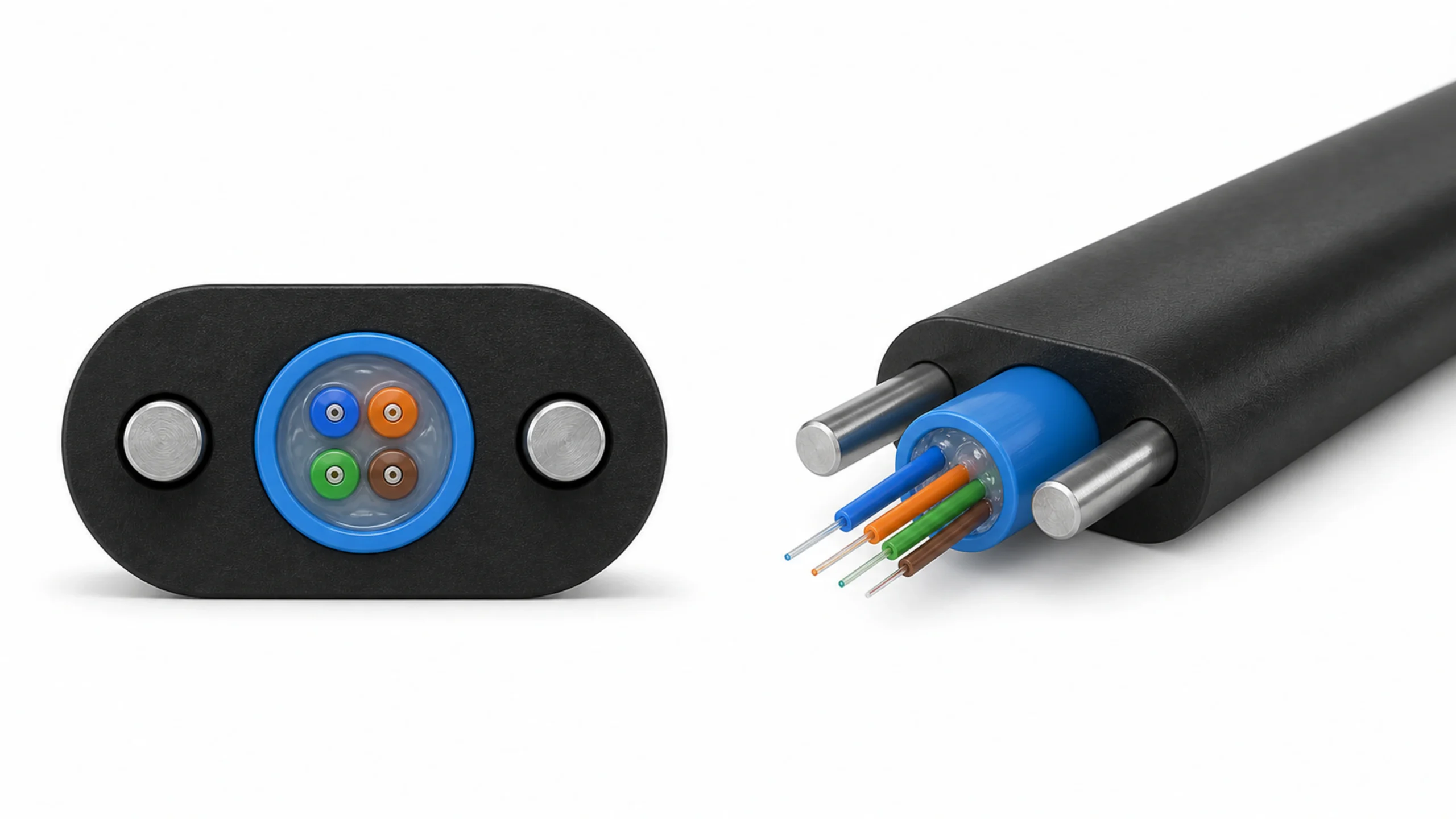
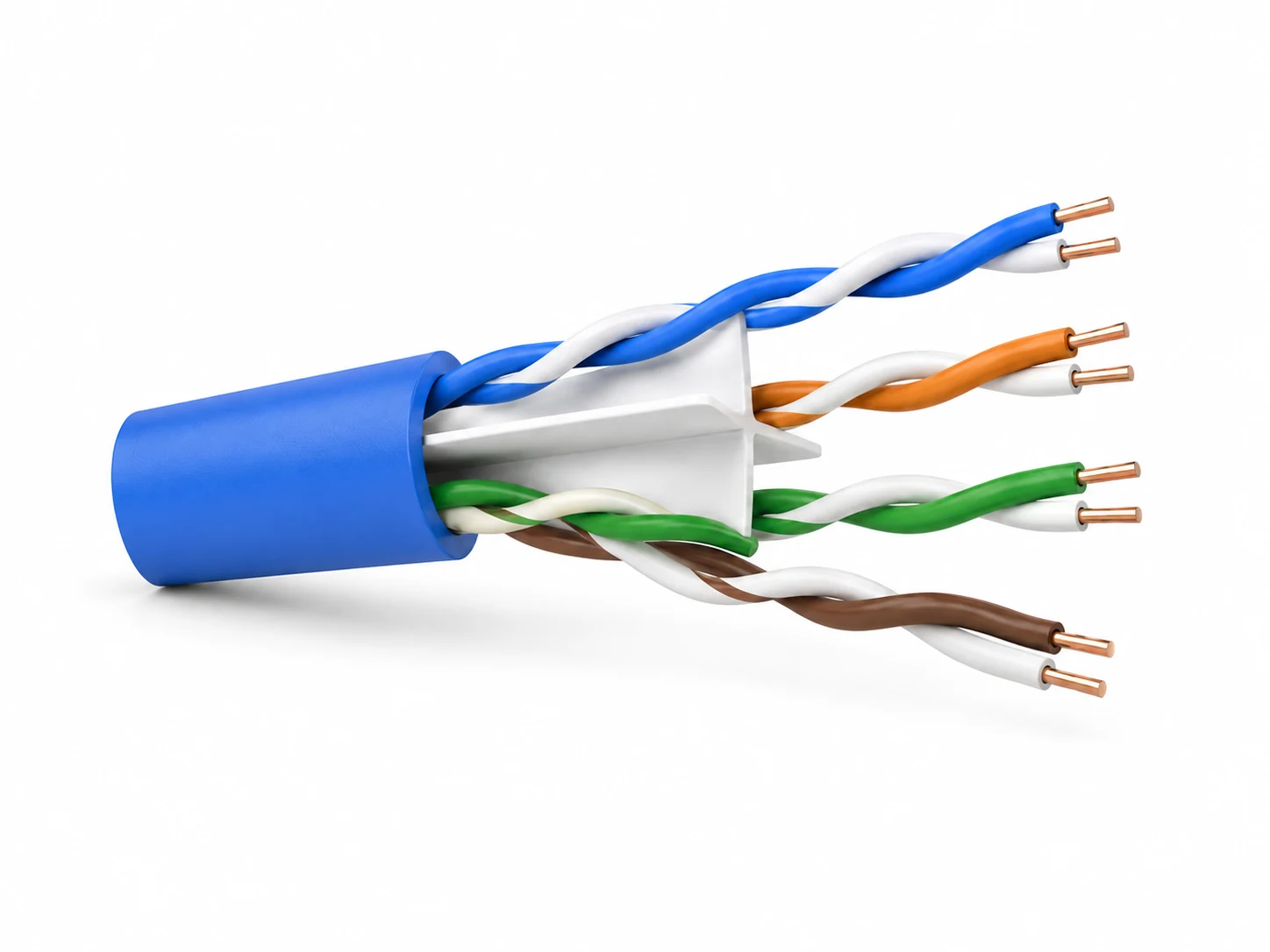
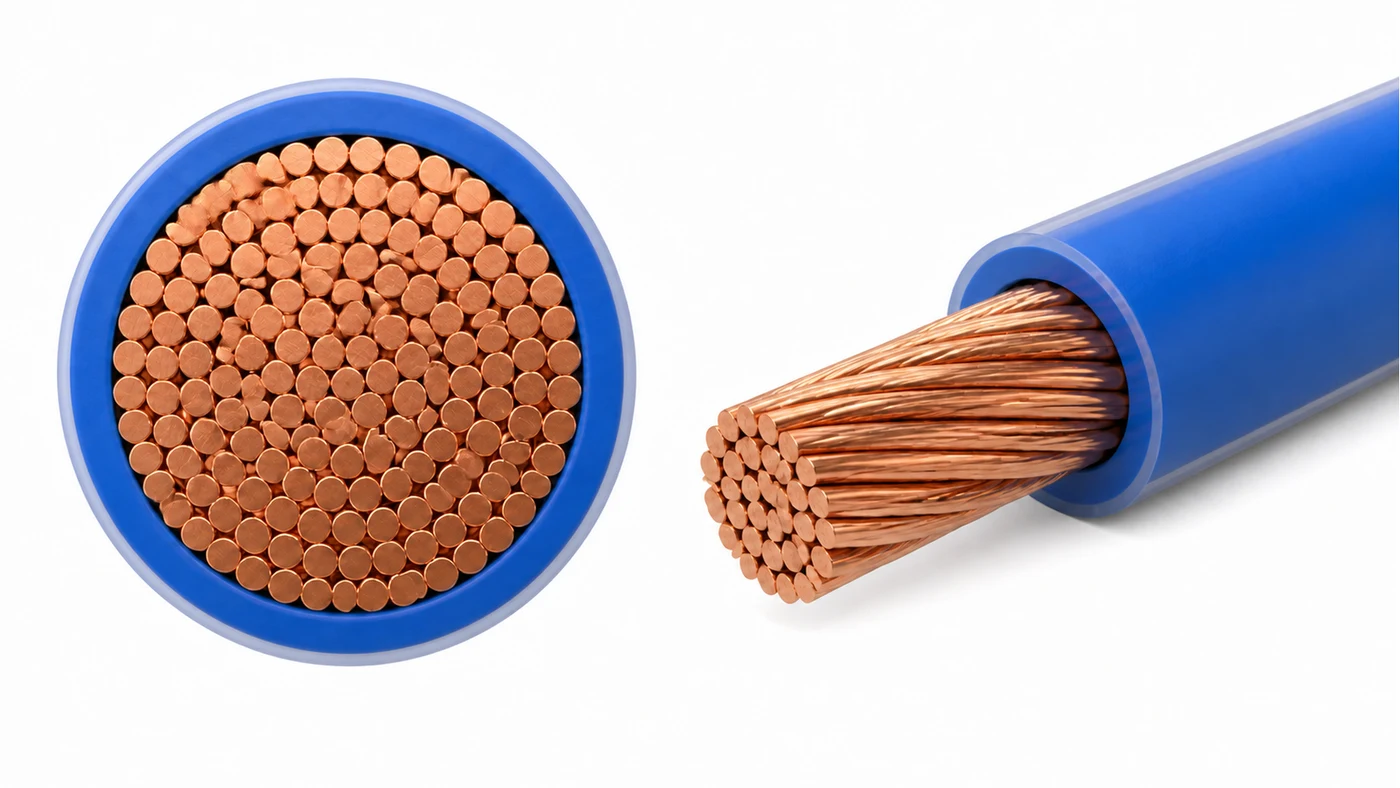
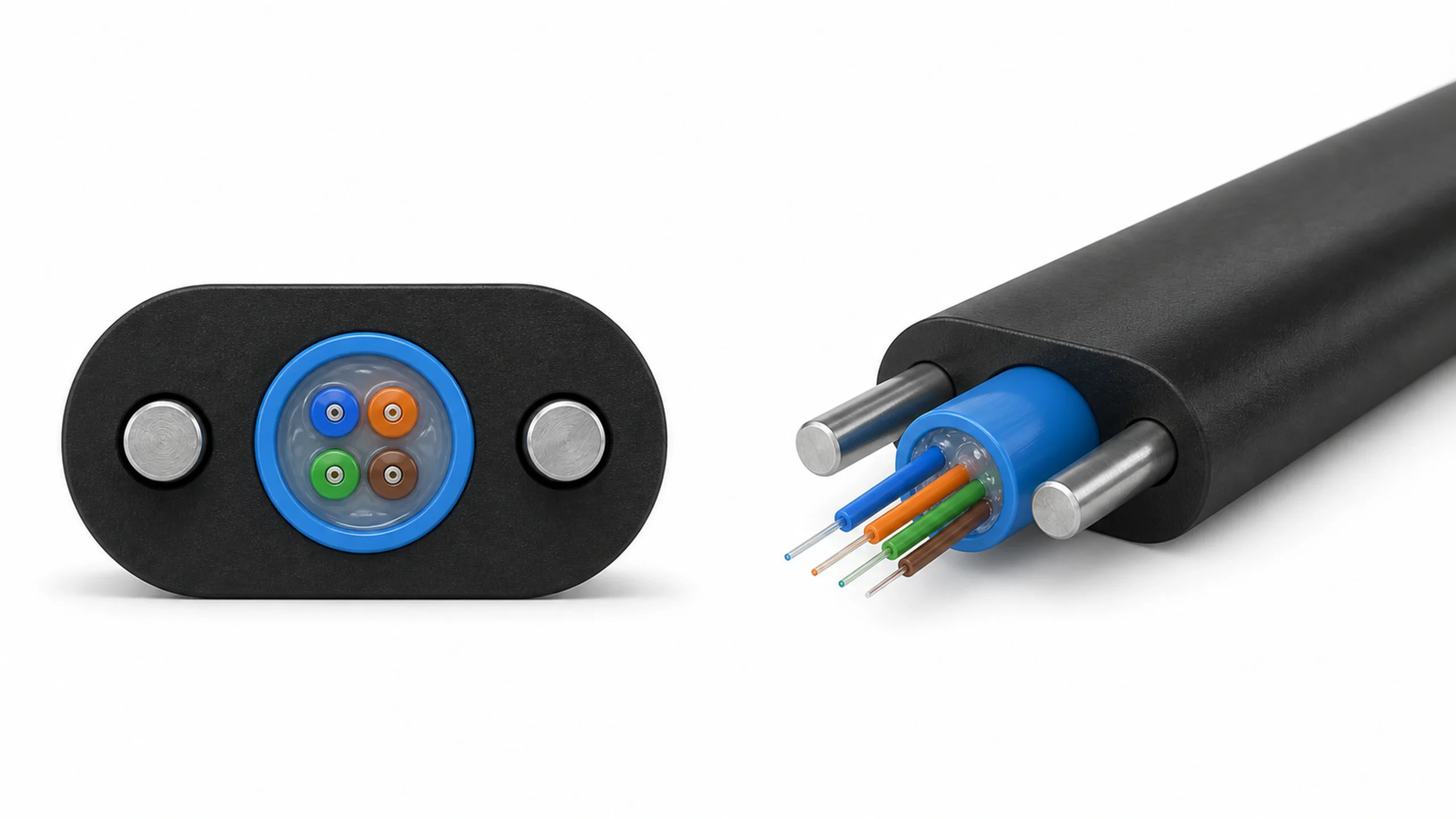












A fiber optic cable factory owner or production manager should not order a loose tube production line from a headline speed and extruder size. The purchase decision starts with the cable construction, approved materials, process window, package plan and evidence that will define an acceptable trial.
A loose tube production line should be specified as one controlled process from fiber pay-off to finished tube take-up. The buyer must lock the tube design, fiber handling, polymer and filling system, tooling, cooling, excess fiber length, reel logistics and test method before comparing suppliers. A catalogue maximum can describe machine capability, but only a stable trial with the agreed cable and materials can establish an acceptable production condition. The purchase specification should therefore connect every machine unit to a measurable output or acceptance record.
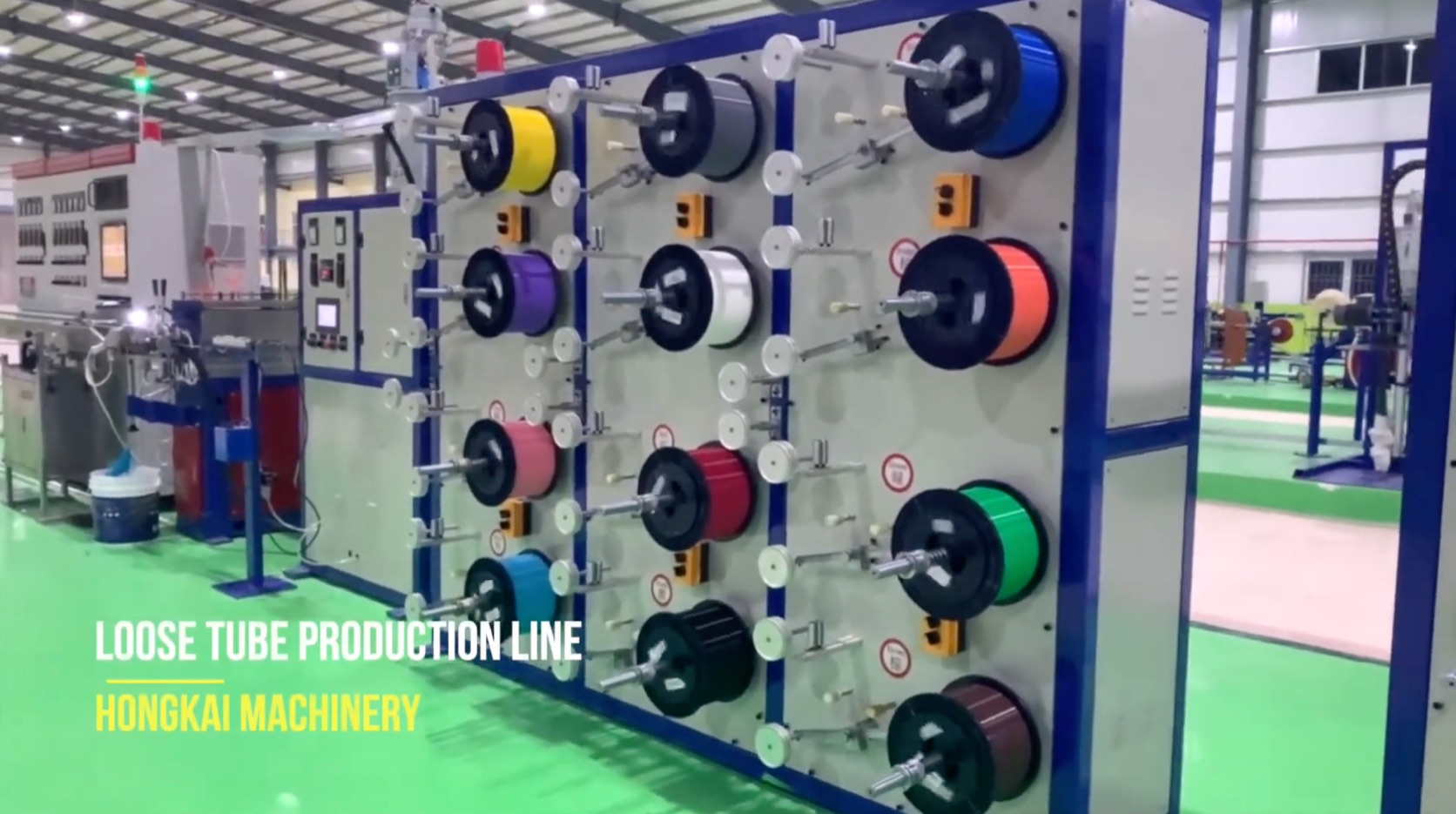
Real HONGKAI loose tube production equipment. The final configuration must be matched to the approved tube construction, fiber package and process evidence.
Produksi loose-tube juga disebut sebagai pelapisan sekunder. Ini bukan merupakan rute kabel luar ruangan yang lengkap secara mandiri. Kabel central-tube dapat berpindah dari ekstrusi loose-tube ke tahap perlindungan dan pelapisan, sedangkan kabel loose-tube yang dihela umumnya memerlukan tahap pembentukan inti terpisah sebelum jaket akhir dipasang. Loose tube dapat menggunakan proses berisi gel (basah) atau proses kering tanpa gel pengisi, sehingga cakupan peralatan harus ditentukan mundur dari kabel jadi alih-alih menganggap satu daftar sebagai universal.
The eight decisions below are written for an RFQ, technical comparison and factory acceptance test. They also show why two lines with similar catalogue descriptions may not carry the same project risk.
Which Specifications Should a Buyer Lock Before Ordering a Loose Tube Production Line?
Pembeli harus mengunci delapan keputusan terkait: tabung target, masukan serat, persiapan polimer, rute pengisian, ekstrusi dan perkakas, pendinginan dan panjang lebih, kapasitas dan penanganan kemasan, serta bukti penerimaan. Setiap keputusan harus ditulis dalam istilah yang terukur dan dilacak ke gambar kabel atau material yang telah disetujui. Hanya dengan demikian kebutuhan tersebut dapat dipetakan ke konfigurasi proyek tertentu, bukan ke daftar mesin generik. Penawaran terbaik adalah yang membuat asumsi dan tanggung jawab verifikasi menjadi jelas.
1. Target Tube: Which cable families and loose-tube dimensions must the line support?
Why it matters: The finished cable determines whether the loose tube is a central cable element, one of several stranded elements or an intermediate package for another process. Fiber count alone does not determine the route. Tube outside diameter, wall, fiber count, material, color set, filling method, downstream reel and cable construction must be considered together.
What to ask: Send the finished-cable drawing, tube drawing, tolerance table, fiber count per tube, tube colors, approved polymer grade, filling requirement and planned product range. State which products are launch priorities and which are possible future options. If the factory will make both central-tube and stranded loose-tube cables, identify the downstream equipment and reel interfaces for each family.
Sebelum mengeluarkan RFQ, konfirmasi apakah tabung berisi kering atau berisi gel, diameter luar targetnya dan jumlah serat per tabung, serta kondisi produksi stabil yang diperlukan untuk setiap warna tabung. Untuk rencana produksi di mana lini memproduksi satu warna tabung dalam satu waktu, kaitkan kecepatan yang diterima dengan jadwal warna maupun penarikan tabung.
How to verify: Trace every quoted unit to the product drawing. The fiber pay-off count must cover the approved tube construction; the crosshead and tooling must cover the defined tube range; the take-up package must transfer safely to the next process. ITU-T L.102 describes sufficient internal tube space as the essential loose-tube feature and states that buffer-tube dimensions should be agreed between the manufacturer and customer.1
Red flags: A proposal uses only total cable fiber count, omits the tube drawing, or claims one configuration covers every outdoor optical cable without identifying the central-tube, SZ-stranded or product-specific route.
2. Fiber Input: How will the line control every optical fiber from pay-off to crosshead?
Why it matters: Multiple coated fibers enter one small crosshead at the same time. Unstable pay-off tension, damaged guide surfaces, uncontrolled static or a poor fiber path can create intermittent problems that are difficult to diagnose after extrusion. The buyer needs a fiber-handling specification, not only a count of pay-off positions.
What to ask: Define incoming fiber diameter, reel dimensions, usable length, fiber identification, normal operating tension, alarm limits, broken-fiber response and the required production record. Ask how each pay-off is driven or braked, how dancer position is measured, how fibers are guided and gathered, and what happens when one position reaches a limit.
Cara verifikasi: Selama FAT, muat gulungan serat yang telah disepakati dan amati setiap posisi selama proses start, akselerasi, operasi stabil, deselerasi, dan berhenti. Tinjau riwayat alarm dan pastikan bahwa simulasi gangguan serat menghasilkan respons mesin sesuai kesepakatan. Periksa panduan dan komponen pengumpul untuk memastikan permukaan kontak bersih, serta catat kondisi serat sebelum dan sesudah uji coba. Pemeriksaan praktis dilakukan dengan memastikan kontrol pay-off yang stabil dan lintasan serat yang rata serta fluktuasi rendah sebelum crosshead, lalu bandingkan kondisi tersebut dengan hasil excess-length yang telah direkam.
Red flags: The supplier demonstrates only an empty line, reports one tension value without a range or tolerance, cannot show individual position behavior, or treats fiber pay-off as an accessory outside the line-control responsibility.
3. Polymer Control: Which PBT grade, drying method and material records will define the process?
Why it matters: A loose tube production line cannot establish a repeatable process if the polymer grade, moisture condition, color masterbatch and thermal history are undefined. The dryer and loader are part of the quality-control chain because moisture or contamination can appear later as bubbles, surface defects, dimensional variation or unstable processing.
What to ask: Name the approved PBT or other tube polymer by supplier and grade. Attach the supplier’s storage, drying and processing instructions; define masterbatch compatibility, allowable regrind policy, material-change procedure and required lot records. Ask how the dryer confirms temperature and time, how material is protected after drying, and how the hopper and loader prevent contamination.
How to verify: Build the FAT recipe from the actual resin supplier document rather than a universal temperature copied from another project. The Celanese polyester technical manual explains that tube extrusion depends on melt-temperature control and identifies inadequate drying, incorrect temperatures and pressure conditions as common causes of extrusion problems.2 Record material lot, drying condition, zone settings and the time sequence used for every accepted sample.
Red flags: The quotation states a single universal PBT temperature, does not identify the resin grade, leaves the dryer outside the machine scope, or changes material during FAT without restarting the evidence record.
4. Filling Route: Does the product require gel filling, a dry design or project-specific preparation?
Why it matters: Gel-filled and dry loose-tube designs do not have identical material feeds, cleanliness controls or acceptance checks. A gel system also has to control preparation, delivery and air removal while remaining synchronized with the tube process. The filling decision must come from the approved cable construction rather than from the supplier’s standard equipment list.
What to ask: Specify whether the tube is gel-filled, dry or part of another qualified design. For gel filling, define the approved compound, preparation method, operating condition, start-up handling, air-removal method, fill verification and cleaning procedure. For a dry design, define the approved water-blocking element and how the machine route changes.
Cara verifikasi: Jalankan bahan pengisi yang telah disepakati dan periksa sampel tabung menggunakan metode tertulis dari pembeli. Catat pengaturan sistem pengisian, kondisi vakum dan sirkulasi, limbah saat start-up, serta bukti pembersihan. Pastikan bahwa pengiriman pengisian mengikuti jalur ekstrusi dan bahwa fungsi sirkulasi serta vakum menghilangkan udara yang terperangkap sebelum dimulainya produksi yang diterima. Untuk uji coba proses basah, stabilkan pengiriman gel dan kontrol gelembung sebelum memasukkan serat optik yang telah disepakati.
Red flags: A supplier describes gel filling as automatically acceptable without a sample method, assumes every loose tube must contain gel, or cannot explain how a filling fault affects line stop, sample segregation and restart approval.
5. Extrusion and Tooling: How will the line hold tube geometry during speed changes?
Why it matters: Extruder size alone does not prove stable tube geometry. Screw and barrel condition, melt delivery, crosshead design, tooling, thermal control, line speed and haul-off behavior interact. Unstable polymer output changes wall thickness and outside diameter, which can also move the measured excess fiber length. The buyer needs a defined process window for the approved tube, especially through acceleration and deceleration.
What to ask: Provide the screw and barrel scope, crosshead and tooling concept, heating and cooling zones, sensor locations, diameter measurement, feedback logic and recipe records. List every tube size to be trialed and identify which tips, dies, guides or inserts change between products. Require a tooling drawing and a spare-tooling list.
How to verify: Measure outside diameter and the other agreed tube dimensions at stable speed and across controlled speed changes. Compare the online gauge with the buyer’s offline measurement method, retain labeled samples and review the trend record rather than accepting one displayed value. The resin supplier’s processing guide notes that overly high or low melt temperature can produce irregular wall thickness, poor surface finish or uneven dimensions.2
Red flags: The FAT relies on a short maximum-speed display, the supplier cannot connect gauge feedback to a control action, tooling is treated as an unnamed consumable, or samples are not linked to time-stamped settings.
6. Cooling and EFL: How will the line establish the required excess fiber length?
Why it matters: Excess fiber length is a product characteristic created by the complete relationship between fiber feed, tube formation, thermal history, capstan behavior, cooling and take-up. A high headline speed is not useful if tube shrinkage, tension or cooling variation moves the result outside the agreed window. EFL must be treated as an acceptance output, not a hidden operator adjustment.
What to ask: Define the required excess fiber length range and measurement method for each approved tube. Ask the supplier to explain the hot, warm and cooling sections, water-temperature control, movable or adjustable elements, capstan arrangement, dancer loops, recipe variables and stabilization procedure after a product change.
How to verify: Use a written sampling plan that connects sample position, process time, reel, speed and recipe to the measured result. Compare start-up, stable-run and end-of-reel samples. Confirm that the excess-length capstan holds controlled tension without pulling the PBT tube too hard or allowing it to run too loose. At higher speed, verify that cooling length and water-temperature control are sufficient for the actual tube. The measurement equipment and calculation method must be agreed before FAT, because two parties can otherwise report different EFL results from the same production run.
Red flags: EFL is absent from the acceptance table, the proposal treats cooling trough length as proof of control, the buyer and supplier use different sample methods, or the line reaches speed before the process is allowed to stabilize.
7. Capacity and Packages: What stable output and reel-change plan does the factory actually need?
Why it matters: Loose-tube output must be calculated by tube color, tube count, cable structure and downstream consumption. One finished cable can require several separate tube runs, so machine metres cannot be compared directly with finished-cable metres. Reel size, product length, color change and changeover loss also affect saleable output.
What to ask: State the required tube length by color and construction, planned shifts, target stable production condition, minimum accepted run length, incoming fiber packages, outgoing tube reels and downstream demand. Separate machine structure speed, catalogue maximum, demonstrated speed and accepted stable speed in the quotation. Define the required fiber-pay-off positions from the maximum fibers in one tube, not only the total fibers in the finished cable. Ask whether reel handling is manual, semi-automatic or fully automatic, and require the supplier to describe the operator’s work at every reel change.
Cara memverifikasi: Hitung kapasitas berdasarkan jadwal produksi, bukan dengan mengalikan kecepatan nominal dengan jam kerja yang tersedia. Rekonsiliasi jumlah paket tabung dengan permintaan pelapisan SZ stranding atau pelapisan tabung pusat, serta konfirmasi antarmuka reel fisik. Dalam contoh perencanaan proyek HONGKAI, diameter luar suatu tabung kira-kira 2.0 mm, produk yang lebih kecil sekitar 1.6 mm, dan beberapa tabung berserat 24 dapat mendekati 3.0 mm; gambar produk tetap menjadi acuan utama. Desain kecepatan struktur 800 m/min dapat mendukung kondisi produksi aktual sekitar 600 m/min untuk tabung yang sesuai, sedangkan lini dengan rentang struktur 400–600 m/min mungkin perlu direncanakan lebih dekat ke 400 m/min. Contoh perbandingan ini tetap terbatas dan bukan titik operasi yang dijamin: diameter, jumlah serat, material, pendinginan, dan kualitas stabil menentukan nilai FAT.
Red flags: A supplier converts catalogue speed directly into annual finished-cable output, ignores the number of tube colors, does not define changeover loss, or quotes a take-up reel that does not match the downstream pay-off.
8. Acceptance Evidence: Which records must prove the loose tube production line is ready?
Why it matters: A successful FAT is not a video of the machine running. The acceptance plan must connect the approved materials, settings, output samples, measurements, alarms and documents to pass or fail criteria. The records also become the baseline for installation, commissioning and future troubleshooting.
What to ask: Attach a factory acceptance test, or FAT, matrix covering machine scope, safety checks, utilities, material identity, fiber handling, line functions, alarms, recipe and trend records, tube dimensions, EFL, filling result, optical checks when specified, length counting, reel build and supplied documents. Name the measuring equipment, calibration status, sample method, stabilization condition, witnesses and disposition of nonconforming results. If the contract requires a minimum run time or length, define it before the trial instead of inventing it after the machine starts.
How to verify: Sign the accepted configuration and FAT method before the trial. First stabilize polymer output, tube outside diameter and, for a wet process, gel circulation, filling delivery and air removal. Then run the agreed optical fibers and retain time-linked samples and electronic records. Reconcile every result with the cable drawing and purchase specification. IEC 60794-1-23 describes test procedures for geometrical, material, mechanical and environmental properties of optical cable elements, including buffer-tube-related methods; the buyer should select only the methods relevant to the agreed product and current standard edition.3
Red flags: Pass criteria are agreed after the test, samples have no traceability, the supplier substitutes materials without approval, alarms are not challenged, or the signed FAT report does not list open items and responsibility.
Note: The decisive question is not whether a loose tube production line can run fast; it is whether the agreed tube can be reproduced with traceable settings, measurements and package handoffs inside the buyer’s production plan.
How Does HONGKAI Configure a Loose Tube Production Line for a Specific Project?
HONGKAI starts with the tube drawing, fiber package, material, filling route, output plan and downstream process. A current reference configuration connects independently controlled fiber pay-offs, material preparation, filling and air removal when required, a PBT extruder and crosshead, staged water cooling, online diameter measurement, traction and dancer control, and project-matched reel handling. HK-50 and HK-60 proposal variants are project references rather than universal standards. The final scope and accepted speed are confirmed against the exact product and FAT conditions.
The HONGKAI fiber optic cable production equipment guide explains where secondary coating sits inside a broader optical-cable process. For a verified central-tube example, the GYXTW production route connects fiber coloring, HK-50 loose-tube production and project-specific protection and sheathing. The ADSS production route adds SZ stranding and aramid/sheathing stages because the approved cable structure is different.
Kirim gambar kabel jadi dan detail tabung sebelum meminta model mesin. Urutan tersebut memungkinkan HONGKAI mengidentifikasi apakah proyek memerlukan rute tabung pusat, rute tabung longgar berpilin, desain berisi gel atau kering, serta antarmuka mesin mana yang harus dimasukkan dalam rencana penerimaan yang sama.
Jumlah pelepasan serat harus mengikuti jumlah serat tertinggi dalam satu tabung. Sebagai contoh perencanaan HONGKAI, banyak desain kabel dengan jumlah serat total di atau di bawah 144 dapat menggunakan 12 serat per tabung dan pelepasan serat 12-posisi. Desain dengan jumlah lebih tinggi mungkin memerlukan 24 serat dalam satu tabung dan pelepasan 24-posisi. Gambar kabel yang disetujui, bukan hanya total kabel jadi, yang menentukan kebutuhan.
Otomatisasi penarikan juga memerlukan batasan tertulis. Dengan perubahan gulungan manual, operator memotong dan mentransfer tabung ke gulungan berikutnya. Sistem semi-otomatis menangani sebagian urutan penjepitan atau pengangkatan sementara operator menghapus gulungan penuh dan menempatkan gulungan berikutnya. Pilihan sepenuhnya otomatis dapat mengotomatisasi lebih banyak siklus pemuatan dan pembongkaran, tetapi pemasok harus menyatakan secara tepat gerakan mana yang tetap manual.
Ruang lingkup peralatan referensi biasanya mencakup fungsi proses berikut, tetapi merek, ukuran, jumlah, rentang, dan opsi tetap tunduk pada spesifikasi proyek yang disetujui:
- ☐ Pelepasan dan pengumpulan serat optik terkendali
- ☐ Pengeringan polimer, pemuatan, dan kontrol resep yang dapat dilacak
- ☐ Persiapan gel, sirkulasi, dan penghilangan udara bila diperlukan
- ☐ Extruder, crosshead, dan perkakas khusus tabung
- ☐ Kontrol suhu air bertahap dan pendinginan
- ☐ Pengukuran diameter online dan umpan balik
- ☐ Capstan, dancer, penghitung panjang, dan penarikan tabung manual, semi-otomatis, atau sepenuhnya otomatis sesuai spesifikasi
- ☐ Riwayat alarm, catatan tren, manual, gambar, dan dokumen FAT
Pembeli juga dapat menggunakan HONGKAI’s metode perencanaan kapasitas produksi serat optik untuk menyeimbangkan output tabung longgar dengan pewarnaan, pengeratan SZ, dan penyelubungan akhir. Koneksi ini penting karena jalur produksi tabung longgar yang secara teknis dapat diterima masih dapat menciptakan pekerjaan dalam proses berlebih jika konsumsi hilir dan logistik gulung tidak direncanakan.
Catatan: Konfigurasi referensi HONGKAI menjadi spesifikasi pembelian hanya setelah struktur kabel, bahan, kondisi operasi, antarmuka, dan bukti penerimaan dimasukkan ke dalam dokumen proyek.
-
ITU-T Rekomendasi L.102 (2025), Kabel serat optik untuk aplikasi udara, terutama klausa konstruksi tabung dan pengujian tabung penyangga.↩
-
Celanese Polyester Technical Manual, bagian 3.7.12 and 3.7.14 tentang ekstrusi tabung dan pemecahan masalah ekstrusi. Instruksi grade material tetap berlaku untuk proyek aktual.↩ ↩
-
IEC 60794-1-23:2019, Metode pengujian elemen kabel serat optik. Konfirmasikan amandemen terkini dan bagian metode pengganti saat menyiapkan rencana pengujian kontrak.↩

 English
  हिन्दी
  فارسی
فارسی