


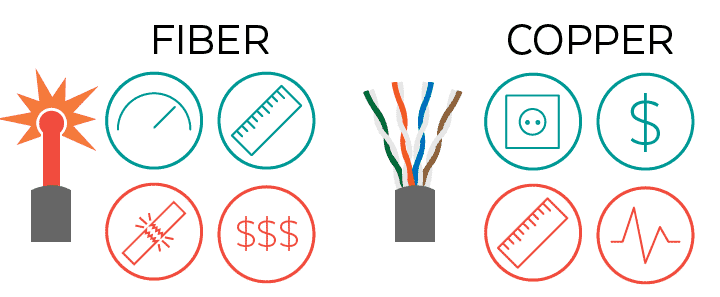
Is copper wire more expensive than fiber optic cable? There is no single answer without specifying the cable and the job it must do. A useful comparison separates cable purchase price from the cost of the complete installed system.
For communications, compare copper and fiber links against the same requirements for reach, capacity and installation conditions. For electrical power delivery, optical fiber is not a direct substitute for a copper conductor. Specify the application before comparing quotations.
Các phần dưới đây giải thích các yếu tố chi phí chính, phân biệt các ứng dụng phổ biến và cho biết những chi tiết nào cần bao gồm trong báo giá cáp thay thế tương đương.

Giá cáp quang:
Là một ví dụ trong lịch sử, Atlantech’s July 2022 installation-cost guide cited cable material costs of $1 per foot for 24 fibers and $6 per foot for 288 fibers. These are source-specific historical figures, not a current HONGKAI quotation or a universal market price. Compare current quotations using the same cable specification and length unit. A complete building installation has additional costs that depend on the following factors:
Diện tích/Quy mô tòa nhà:
Chỉ định số sợi quang dựa trên sơ đồ mạng, các kết nối và dung lượng dự phòng đã lên kế hoạch. Chỉ riêng kích thước tòa nhà không quyết định số sợi cần thiết; Hướng dẫn thiết kế mạng FOA bắt đầu với các yêu cầu truyền thông thực tế và tuyến đường.
Trở ngại vật lý:
Khảo sát tuyến đường trước khi ước tính chi phí lắp đặt. Việc đào đất, vượt sông suối, các hạn chế về tiếp cận và giấy phép có thể phát sinh khối lượng công việc riêng biệt ngoài việc mua cáp.
Khoảng cách từ sợi quang gần nhất:
For a service connection, ask the network provider whether a nearby fiber route is available for your premises and obtain a site-specific connection quotation. Proximity alone is not a sufficient basis for a cost estimate. For a private network, price the planned route and equipment instead.
Các kịch bản sử dụng sợi quang:
Sợi quang phục vụ truyền thông và các ứng dụng khác, including sensing and light delivery. These uses require different components and system designs. A specialized medical or sensing application does not establish the suitability of an ordinary telecommunications cable for the same task.
Lĩnh vực y tế:
Các dẫn sáng quang học chuyên dụng cung cấp ánh sáng chiếu sáng, và các bó dẫn hình ảnh có thể truyền hình ảnh trong nội soi. Tổng quan nội soi của SCHOTT phân biệt các thành phần này. Chúng là các thấu kính y tế được thiết kế chuyên dụng, không thể thay thế lẫn với cáp mạng thông thường.
Truyền dữ liệu:
Communications fiber carries optical signals between transmitters and receivers. Link reach depends on the fiber, operating wavelength, transceivers and total optical loss; it is not a fixed property of every cable sold as fiber optic cable.

sử dụng công nghiệp:
Các hệ thống cảm biến sợi quang có thể đo nhiệt độ, biến dạng hoặc rung động. Khi Giới thiệu của FOA về cảm biến quang học giải thích rằng sợi quang có thể đóng vai trò là phần tử cảm biến hoặc truyền ánh sáng đến một cảm biến riêng biệt. Một hệ thống đo lường hoàn chỉnh đòi hỏi nhiều hơn chỉ một đoạn cáp.
Phòng thủ:
Specialized fiber-optic acoustic sensors can be used in underwater sensing arrays. This is a particular sensor-system application, not a capability of every communications cable. Cable selection alone does not define the sensing function or its performance.
Thông số kỹ thuật sợi quang:
Fiber optic links transmit information using light. Glass and plastic describe fiber materials; singlemode and multimode describe how light propagates. These classifications should not be treated as interchangeable performance ratings.
Các loại sợi quang:
Bảng so sánh vật liệu dưới đây bao gồm hai nhóm:
· Sợi quang nhựa
· Sợi quang thủy tinh
Các Hướng dẫn sợi quang FOA giải thích các phân loại sợi và ứng dụng của chúng. Nội dung này data-link guide explains why transmission rate depends on the complete link, not the material name alone.
| Comparison point | Glass optical fiber | Plastic optical fiber (POF) |
|---|---|---|
| Vật liệu | Glass core; check the specified core and cladding design | Polymer fiber; check the specific POF grade |
| Fiber design | Singlemode and multimode options | Different index profiles exist; identify the actual type |
| Application examples | Telecom and premises-network links, depending on fiber type | Conventional POF is used in short links, including consumer audio |
| Data-rate selection | Match fiber bandwidth, link loss, distance and transceivers | Match the POF grade, link loss, distance and transceivers |
For either material, request the finished cable’s bend-radius, pulling-tension and temperature limits. Do not assume that all glass cables are fragile or that plastic cables are bend-proof. Compare the complete installed system when evaluating cost, rather than assigning a universal cheaper or more expensive label.
Giá dây đồng:
There is no single per-meter price for copper cable. Request a dated quotation for the exact construction, length and order quantity, and check whether connectors, freight and taxes are included. Compare cable material prices separately from the cost of an installed, tested link. The three cable types below require different quotation details:
Cáp xoắn đôi:
For twisted-pair cable, specify the application and cable category where applicable, conductor material and size, pair count, shielding and jacket requirements. Ask whether the quotation is for bulk cable or a terminated assembly, and confirm the supplied length and minimum order quantity before comparing unit prices.
Cáp dẹt nhiều dây:
For multi-conductor flat cable, state the conductor count, conductor size, pitch, insulation and required connector compatibility. Confirm whether the supplier is pricing a reel of cable, a cut length or a finished assembly. Compare quotations only after those details and the order quantity are aligned.
Cáp đồng trục:
For coaxial cable, identify the impedance, operating frequency, acceptable attenuation, conductor and shield construction, jacket and required length. Specify any connectors and their termination requirements separately. A quotation for a different cable construction or assembly length is not a like-for-like cost comparison.
Các kịch bản sử dụng dây đồng:
Copper’s electrical conductivity makes it useful for power conductors, winding wire and communications cables. The Copper Information Center’s properties and applications guide describes these uses. The required conductor size, insulation and construction still depend on the application.
Nam châm điện:
A current flowing through a wire coil creates a magnetic field. Copper winding wire is used in electromagnets, including electromagnetic locks and lifting magnets. The complete device design determines its force and operating limits.
Động cơ:
Copper winding wire is widely used in electric motors for applications such as pumps, household appliances and fans. A motor winding is a different product from an insulated building wire or a communications cable, so their prices should not be treated as interchangeable.
Máy biến áp:
Máy biến áp có thể sử dụng dây quấn bằng đồng hoặc nhôm. Ví dụ, Hướng dẫn vật liệu quấn dây của Schneider Electric identifies the construction of particular transformer models. Check the specified winding material rather than assuming that every transformer is made with copper cable.
Viễn thông:
Copper communications cables carry electrical signals. Twisted-pair and coaxial cables are common examples, but the supported service and distance depend on the cable specification and connected equipment. A generic multi-conductor flat cable is not automatically suitable for a telecommunications link.

Thông số kỹ thuật dây đồng:
Dưới đây là ba cấu trúc cáp đồng, không phải là bảng xếp hạng theo dung lượng dữ liệu. Ứng dụng và giới hạn của chúng phụ thuộc vào loại cáp cụ thể và thiết bị được kết nối:
· Cáp xoắn đôi · Cáp dẹt nhiều dây · Cáp đồng trục
Use the comparison below as a specification checklist. The manufacturer examples linked after the table illustrate particular products; they are not ratings for every cable in that group.
| Comparison point | Cáp xoắn đôi | Cáp dẹt nhiều dây dẫn | Cáp đồng trục |
|---|---|---|---|
| Cấu trúc | Các dây dẫn cách điện được sắp xếp thành từng đôi xoắn | Các dây dẫn song song được nối với nhau bằng lớp cách điện; ví dụ điển hình là thiết kế dạng dải. | Center conductor, dielectric insulation and an outer conductive shield |
| Application example | Cáp Ethernet có phân loại cụ thể và ứng dụng được hỗ trợ | Kết nối dây với bảng mạch sử dụng các đầu nối tương thích | RF connections between equipment and antennas |
| Performance checks | Loại cáp, ứng dụng Ethernet được hỗ trợ và chiều dài kênh cho phép | Kích cỡ dây dẫn, bước xoắn, khả năng tương thích đầu nối và yêu cầu mạch | Impedance, attenuation at the operating frequency and cable length |
| Handling checks | Tuân thủ bán kính uốn cong và giới hạn kéo của cáp khi lắp đặt | Check the product’s flexibility and suitability for repeated movement | Tuân theo bán kính uốn cong đã được quy định; cáp đồng trục không phải lúc nào cũng cứng tuyệt đối |
Manufacturer examples: Belden 2142A Category 6A cable liệt kê các ứng dụng Ethernet được hỗ trợ; 3M 3365 flat cable mô tả cấu trúc dải ruy băng linh hoạt cho các kết nối dây-với-bảng mạch; Belden 8259 coaxial cable quy định các ứng dụng RF, độ suy hao và bán kính uốn lắp đặt tối thiểu.
For a cost comparison, request dated quotations for the required conductor size, shielding, jacket, length and quantity. These three construction names alone do not establish which cable is cheaper.
So sánh cáp quang và dây đồng:
Both copper and fiber links have signal loss. For fiber, the loss budget includes the fiber length, splices and connectors; it must fit within the selected equipment’s optical power budget.
Compare supported data rate and reach for the complete link, not the cable material alone. A fiber link’s usable performance depends on compatible fiber, transceivers, bandwidth and loss, as described in the data-link guide above.
Các Hướng dẫn thiết kế mạng FOA starts media selection with the communication system, required speed and distance. Fiber, copper and wireless can coexist in one network; there is no universal winner for every application.
Câu hỏi liên quan:
Nhược điểm của cáp quang là gì?
Fiber installation requires suitable tools, trained personnel and testing. Poor handling or termination can increase loss or damage the cable, but normal routing does not mean the cable will break: follow the manufacturer’s bend-radius and pulling limits. Include termination, splicing where needed and acceptance testing in the project budget. The Hướng dẫn lắp đặt FOA giải thích việc chuẩn bị, xử lý và đào tạo người lắp đặt.
Cáp quang hoạt động như thế nào?
Conventional glass telecommunications fiber guides light in a core surrounded by cladding with a lower refractive index. The FOA optical-fiber explanation describes this using total internal reflection. In a communications link, a transmitter encodes information onto an optical signal and a receiver detects it.
Nhận xét kết thúc:
Neither copper nor fiber is always the cheaper choice. First define the required application, data rate, distance, environment and equipment interfaces. Then compare dated quotations for systems that meet those requirements, including cable, connectors or splices, network equipment, installation and testing. A cable-only price does not determine the total project cost, and a forecast that fiber will replace every copper application is not a sound purchasing basis.
