
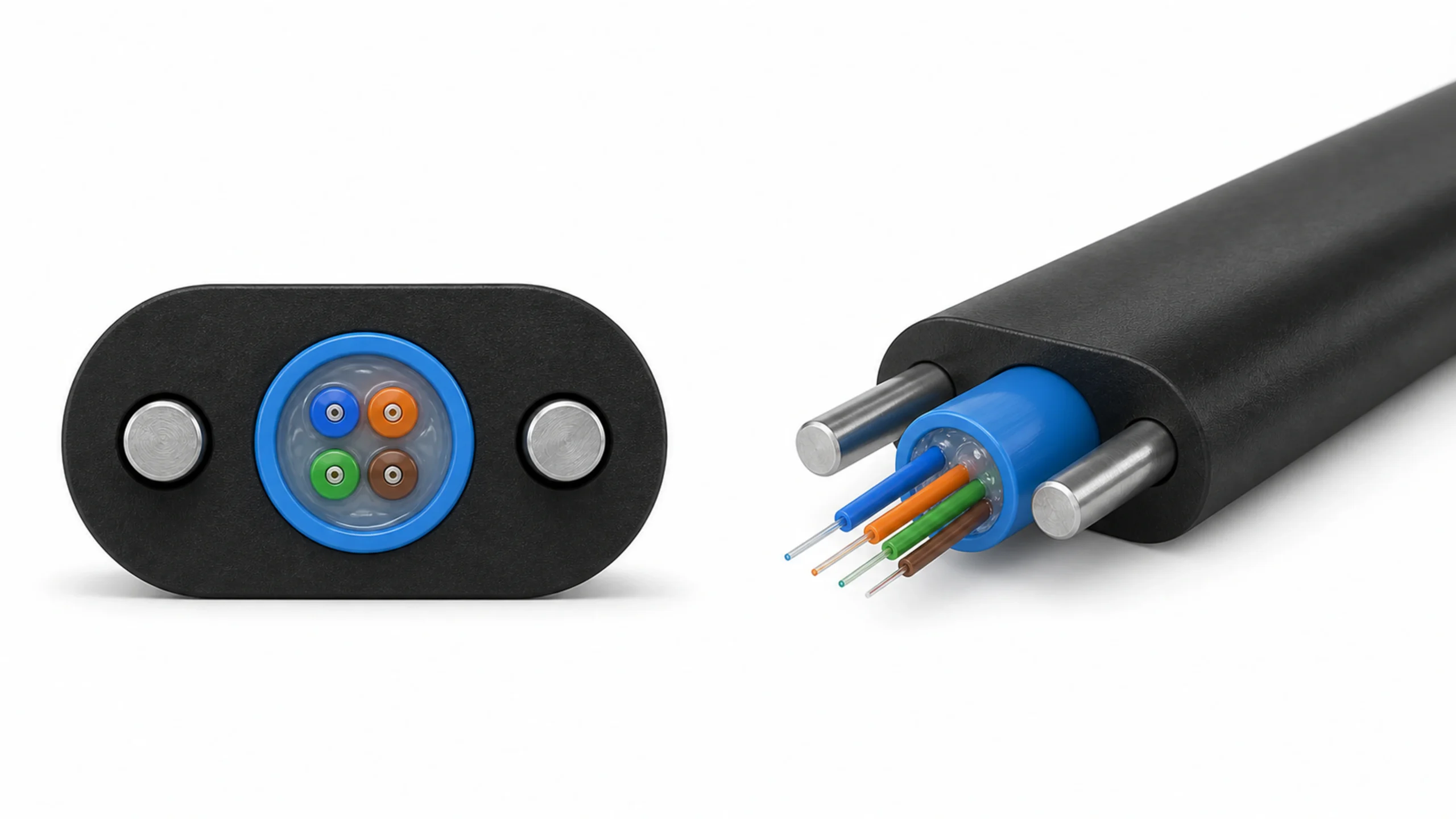
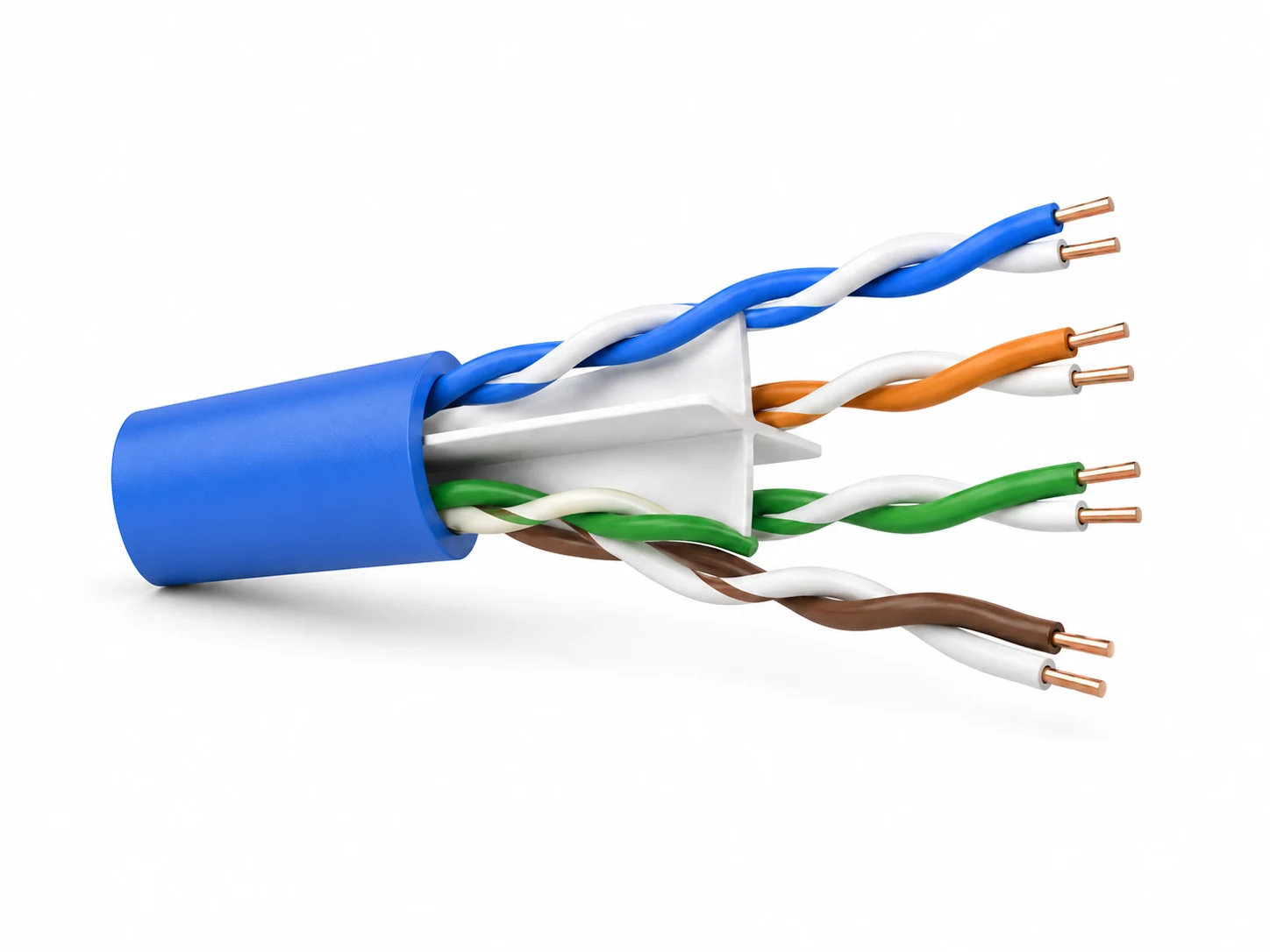
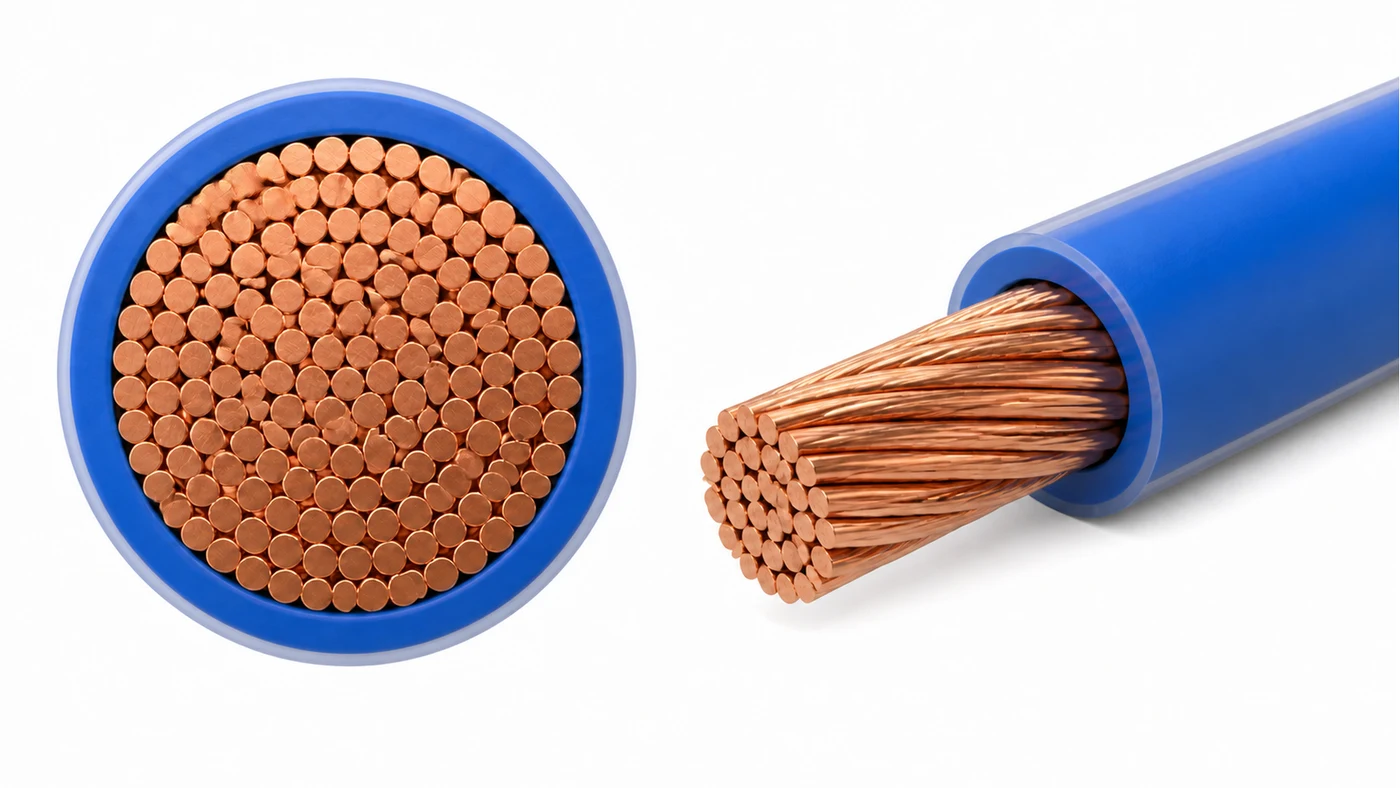
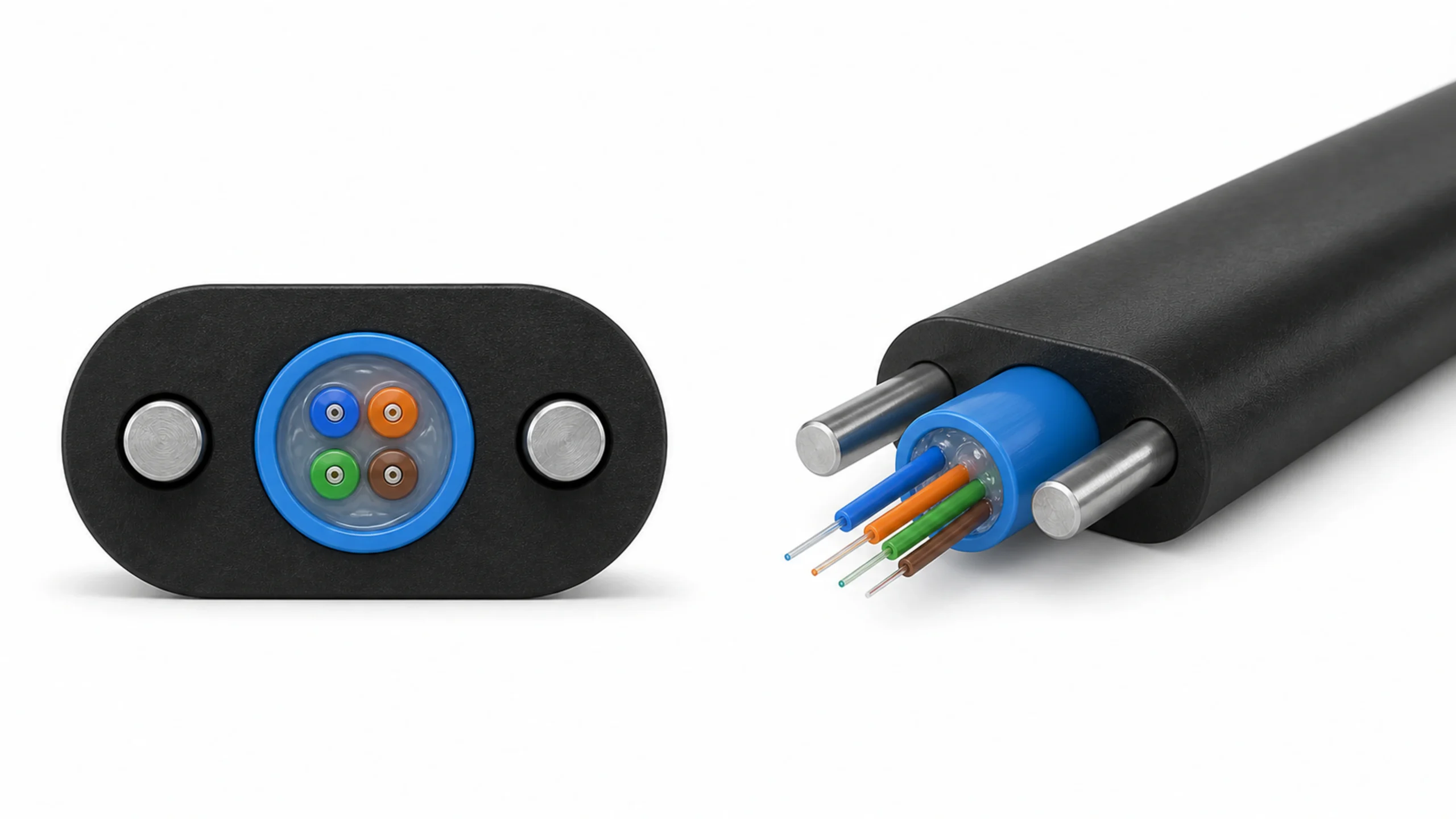












A buyer may ask several suppliers for a “complete cable production line” and receive equipment lists that cannot be compared. First establish whether the buyer has a real order or is only exploring an investment. A request for quotation (RFQ) for a specific project needs the cable construction, output target and problem the equipment must solve.
A price enquiry without an order or defined product can support only an early discussion, not a precise equipment configuration. For a project RFQ, describe the target cable, its structure and diameter range, the required capacity and the existing factory situation. Ask every supplier to quote against the same assumptions and acceptance conditions.
This guide is for a new factory defining its first production route and for an existing factory solving a capacity or product problem. It explains what to send, what to leave explicitly open and how to compare replies without treating a budgetary concept as a final equipment list.
Pertama Tentukan Apakah Permintaan Sudah Siap untuk Dikonfigurasi
A buyer with a real customer order should send its cable specification, construction and required capacity before requesting the first equipment configuration. A trader asking only what machinery costs, without an order or defined product, cannot expect the same level of configuration or quotation accuracy.
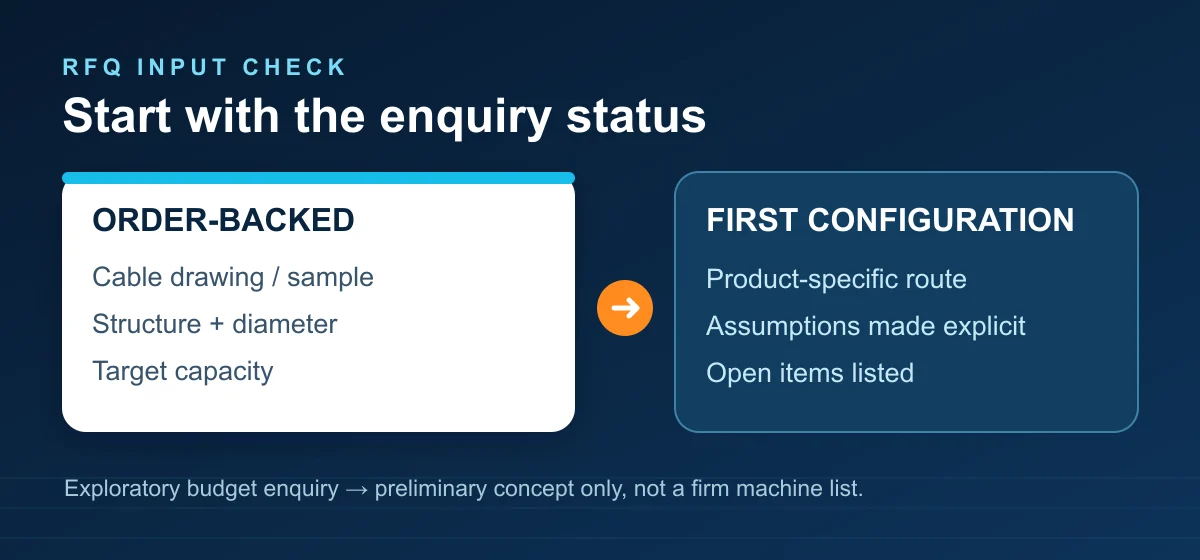
Diagram editorial: Konfigurasi peralatan pertama memerlukan kabel dan kapasitas yang telah ditentukan; permintaan harga eksploratif tetap bersifat awal.
HONGKAI first asks what situation the enquiry represents: an existing customer order, an identified product for a planned factory, or an exploratory price check. Even when a buyer can name a cable but has not confirmed the order, investment range and output, the response may remain an initial route or budgetary concept rather than a settled machine list. That boundary should be stated in the reply, not hidden behind a precise-looking price.
For an order-backed project, send the customer specification or an approved cable drawing. If there is no formal drawing, provide a physical sample or clear cross-section and identify which dimensions and materials are confirmed. “Power cable,” “network cable,” and “optical cable” are product families, not full equipment specifications. The buyer and supplier must resolve the missing construction decisions before a final configuration.
| Product input | Apa yang harus disediakan jika diketahui | Jika masih terbuka |
|---|---|---|
| Enquiry basis | Tahap pesanan pelanggan atau proyek, kabel yang dimaksudkan, dan pasar target | Beri label diskusi anggaran eksploratif sebagai awal |
| Product identity | Nama kabel, aplikasi, dan gambar atau revisi sampel | Tandai aplikasi yang dimaksudkan dan minta tinjauan konstruksi |
| Components | Input konduktor atau serat berlapis, jumlah inti, dan struktur rakitan | Tanyakan input atau produk antara mana yang diasumsikan oleh rute yang dikutip |
| Material layers | Isolasi, buffer, penguat, perisai, lapisan pelindung, dan selubung sebagaimana berlaku | Catat setiap lapisan yang belum diputuskan secara terpisah; jangan menerima asumsi generik “material standar” |
| Finished form | Dimensi luar, bentuk, penandaan, dan kemasan pengiriman yang disyaratkan | Minta klarifikasi berbasis sampel sebelum perkakas diselesaikan |
| Target output | Jumlah akhir yang dibutuhkan dan jadwal operasi | Pertahankan jumlah mesin yang tergantung pada kapasitas dan kinerja tetap terbuka |
Keluarga kabel yang sama mungkin memerlukan peralatan berbeda ketika konstruksinya berubah. Misalnya, sebuah rute produksi kabel tegangan rendah depends on its conductor, applied layers and testing boundary; an optical-fiber route starts from different purchased inputs and process stages. The RFQ should not merge those routes because both end with a cable on a drum.
Yang perlu ditanyakan: “Apakah ini penawaran harga untuk pesanan yang telah dikonfirmasi, atau diskusi awal untuk anggaran? Gambar kabel, sampel, dan target output mana yang dicakup oleh konfigurasi yang diusulkan?”
Mengonversi Permintaan Penjualan Menjadi Persyaratan Output yang Dapat Diuji
Specify the cable structure, the actual diameter range, the technical requirements and the required finished output before asking for a speed. “High speed” alone is not a production target: the stable speed must be calculated for the product that will actually run.

Diagram editorial: Kecepatan lari yang dinyatakan hanya memiliki arti jika disertai dengan konstruksi kabel, diameter, dan kondisi kualitasnya.
When a customer requests a “high-capacity” line, HONGKAI’s first follow-up is the product’s construction, diameter and required technical result. Those conditions determine a realistic production-speed discussion. Ask for the product mix, expected order quantities, batch lengths, shifts, reel sizes and planned changeovers. An existing factory should add actual stop and quality-loss records; a new factory should ask suppliers to label any availability or yield assumption that has not yet been tested. The panduan perencanaan kapasitas serat optik menjelaskan mengapa tahap yang paling lambat dapat membatasi output kabel jadi dalam proyek optik multi-tahap.
Gunakan satu pernyataan kapasitas untuk semua penawaran:
| RFQ field | Buyer entry | Supplier must state |
|---|---|---|
| Finished product and mix | Named cable revisions, constructions, diameter ranges and expected proportions | Which products were included in the sizing calculation |
| Demand period | Required conforming length or quantity per period | Assumed shift calendar and running time |
| Batch dan paket | Typical order length and take-up drum or reel | Batas peralihan dan kemasan |
| Stable production condition | Target untuk produk perwakilan yang disepakati | Material, tooling, diameter, construction and quality conditions behind the proposed speed |
| Factory result | Target output Pembeli | Tahap, kerugian, atau jalur tambahan mana yang membatasi hasil |
Decision criterion: Separate mechanical design speed, stable speed for the approved sample, and expected factory output. They answer different questions and must not appear as one unexplained number.
Tentukan Masalah yang Perlu Diselesaikan oleh Pabrik yang Sudah Ada
For an existing factory, start with the past order mix and the reason for adding equipment. Is the buyer trying to increase output, make a new cable or remove a bottleneck? The proposed line and investment range should answer that problem, not simply duplicate the machines already on site.
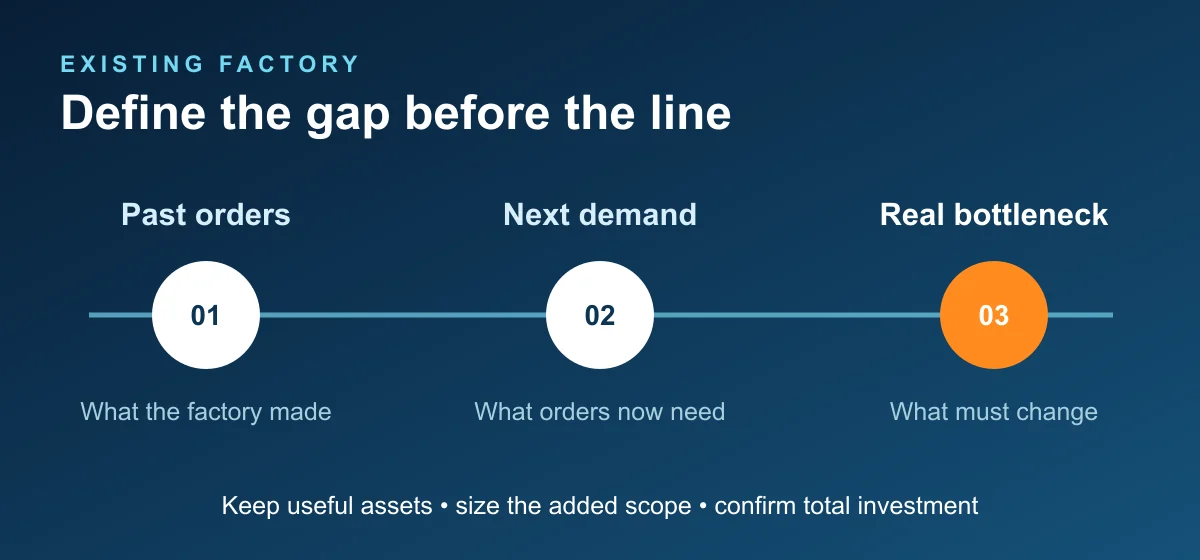
Diagram editorial: Identifikasi kesenjangan antara kemampuan saat ini dan pesanan baru sebelum menambahkan peralatan.
HONGKAI asks what the factory used to produce, what current orders require and what the proposed investment is meant to change. The buyer should state the target capacity and approximate total project investment, not only a preferred machine price. An equipment-interface review then checks which existing process and factory assets can actually support the new route. This review is project-specific; Peter’s answer did not establish one universal list of interfaces for every factory.
Show the machines that remain in service and the handoff to new equipment: incoming reel sizes, output package sizes, line direction, floor space, utilities and controls. For a new plant, ask for a staged scope that distinguishes launch-critical machines from later expansion. The daftar periksa pabrik serat optik illustrates how product, capacity, schedule, budget and service boundary affect one optical project; a power-cable or LAN-cable project needs its own process map.
| Boundary | Sertakan dalam RFQ | Diperlukan dalam setiap balasan pemasok |
|---|---|---|
| Incoming material | Formulir masukan yang dibeli, tanggung jawab paket dan kualitas | Required input specification and pay-off interface |
| Proses utama | Tahapan produksi yang ada dan baru | Included machines, excluded stages and any outsourced process |
| Factory services | Ketersediaan daya, air, pendinginan, udara terkompresi, dan ruang | Permintaan utilitas dan kondisi instalasi untuk konfigurasi yang ditawarkan |
| Kualitas | In-line measurement and final laboratory scope | Included instruments, buyer-supplied tests and calibration boundary |
| Pengiriman dan dukungan | Installation site, schedule and operator team | Instalasi, pelatihan, dokumentasi, dan tanggung jawab purnajual |
Note: Do not infer an equipment capability from a drawing of the final cable. Ask the supplier to map every required process stage to the machine or existing factory asset that performs it.
Compare Quotations by Scope and Assumptions
Compare the actual machine configuration before deciding that the higher or lower price is better. The electrical and electronic components, installed power and demonstrated production condition may differ even when two quotations use the same machine name.
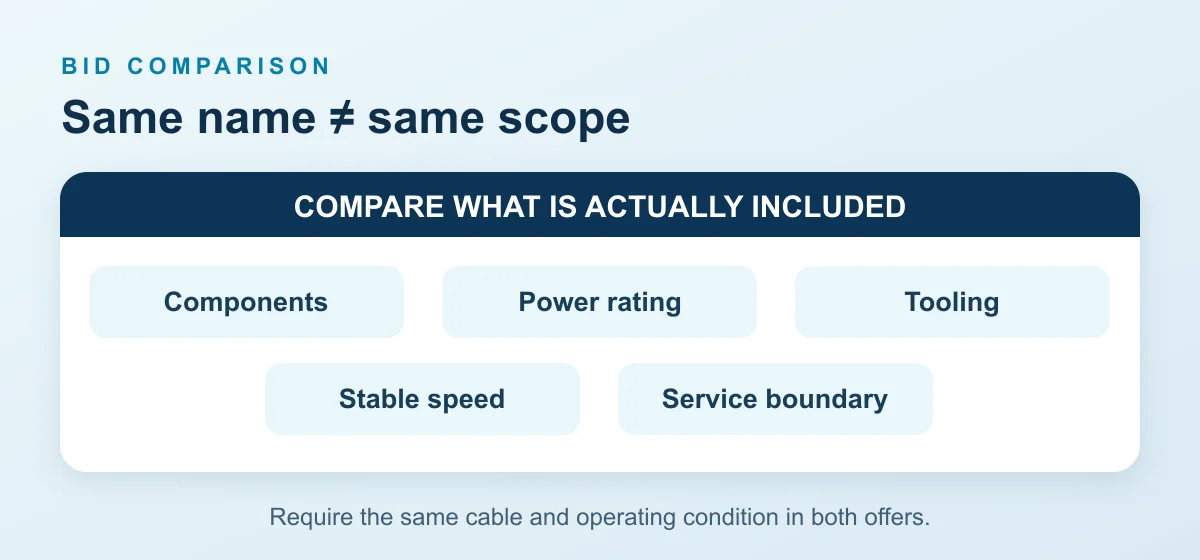
Diagram editorial: Nama mesin yang sama tidak membuktikan bahwa dua kutipan mencakup ruang lingkup teknis dan layanan yang sama.
When HONGKAI reviews a large price difference, the first check is what each configuration contains: the specified electrical and control components, power ratings, product range and actual speed under the relevant cable condition. These are possible reasons for a difference, not proof that the more expensive offer is better. Keep one bid-comparison sheet with a column for each supplier. Record the offered model or configuration, component specifications, included tooling, supported product range, operating assumptions, testing, services, exclusions and open points. Ask the supplier to label every deviation from the RFQ rather than burying it in a brochure or email.
| Bandingkan pada baris yang sama | Supplier A | Supplier B | Decision needed |
|---|---|---|---|
| Revisi produk dan gambar yang disetujui | Akan diisi | Akan diisi | Apakah kedua penawaran tersebut berdasarkan kabel yang sama? |
| Tahapan proses dan peralatan yang disertakan | Akan diisi | Akan diisi | Apakah ada proses antara yang terlewat? |
| Electrical/control components and power ratings | Akan diisi | Akan diisi | Are models, ratings and control functions equivalent? |
| Stable output condition at the specified diameter and structure | Akan diisi | Akan diisi | Produk dan catatan produksi apa yang mendukung klaim tersebut? |
| Utilities and existing-machine interface | Akan diisi | Akan diisi | Who supplies each missing interface? |
| Inspeksi, FAT, dan penerimaan di lokasi | Akan diisi | Akan diisi | Is the same finished sample tested? |
| Installation, training and exclusions | Akan diisi | Akan diisi | Pekerjaan apa yang tetap menjadi tanggung jawab pembeli? |
Evidence to request: A revised technical schedule and a marked deviation list. A supplier who proposes a sensible alternative should explain which product requirement it changes and obtain approval before that alternative becomes the comparison baseline.
Write Acceptance Evidence Into the RFQ
Agree on a representative cable and the basic quality checks before factory acceptance testing (FAT). For an applicable insulated or sheathed cable, HONGKAI commonly checks centering or concentricity, outside-diameter stability and whether the surface is damaged. The product specification must set the actual limits and methods.

Diagram editorial: Sampel yang disepakati, catatan produksi, pengukuran, dan serah terima harus merujuk pada spesifikasi produk yang sama.
Concentricity, outside diameter and ovality are distinct measurements, even when a single in-line system reports all three.1 If a customer’s specification calls for concentricity above 95%, use that figure only for the specified product and measurement method. It is bukan a universal cable requirement; “eccentricity” should not be treated as a higher-is-better percentage. Before using the figure in a contract, identify the applicable product, calculation, measuring position and pass limit. For optical or other products where centering is not the relevant finished-cable criterion, specify the tests appropriate to that construction instead.
The RFQ should identify the sample construction, who supplies qualified materials, what will be measured, the pass limits and the documents the buyer will receive. It does not need to invent a universal test duration or speed. If the full product range cannot be run at FAT, list the untested products as open site-validation items. Do not turn one successful sample into a claim for every cable in the catalogue.
| Acceptance record | Apa yang harus dihubungkan |
|---|---|
| Identitas sampel yang disetujui | Revisi gambar, bahan masukan, perkakas, dan kemasan |
| Run record | Recipe or settings, operating period, stops and measured output |
| Product measurements | Variasi diameter luar yang disepakati, penyetelan/pusat konsentrisitas jika berlaku, kondisi permukaan, dan hasil spesifik produk lainnya |
| Scope record | Mesin, instrumen, utilitas yang telah dipasang, dan antarmuka yang belum terselesaikan |
| Handover | Manuals, training, spare-parts scope and open-item owners |
How to verify: Use the same product and acceptance schedule for the RFQ, technical agreement, FAT and site handover. Amend a field by revision instead of silently changing the product after prices arrive.
An RFQ is ready to send when a supplier can identify the finished cable, calculate the required route and output, see the factory boundary, and explain how its proposal will be accepted. Any open field should have an owner and a date for resolution. That is more useful to a buyer than a longer list of unqualified machine names.
-
SIKORA, "Teknik untuk pengukuran konsentrisitas presisi suatu konduktor dalam insulasi dan parameter relevan kabel serta kawat". The source describes conductor-in-insulation concentricity together with outer-diameter and ovality measurements; it does not set a universal 95% acceptance limit. ↩

 English
 हिन्दी
 فارسی