











قد يحتاج مدير إنتاج الكابلات إلى أدوات جديدة بعد تغيير مقاس الكابل، أو إضافة طبقة، أو اكتشاف عزل غير منتظم. قبل طلب رأس عرضي جديد، يجب فصل متطلبات الكابل عن حالة الأدوات المركبة وطريقة تشغيل الخط.
لا يتطلب مقاس الكابل الجديد دائمًا رأسًا عرضيًا جديدًا. تحقق من تركيب القلب الوارد، والشكل والمقاس المطلوبين من الخارج، والمدى المؤكد للرأس. بعد ذلك، تحقق من محاذاة الخط، وسمك الجدار، والتسخين: فتغيير الأدوات أو ضبط الرأس لا يمكنه تصحيح كل أسباب عدم انتظام سمك الجدار.
يتعلق هذا الدليل بالمعلومات والأدلة المطلوبة لبثق العزل والغلاف. وهو ليس وصفة عالمية لتحديد مقاس القالب، ولا إجراءً لتوسيط جهاز معين، ولا بديلاً عن دليل تشغيله.
ابدأ بالطبقة التي يتم تطبيقها
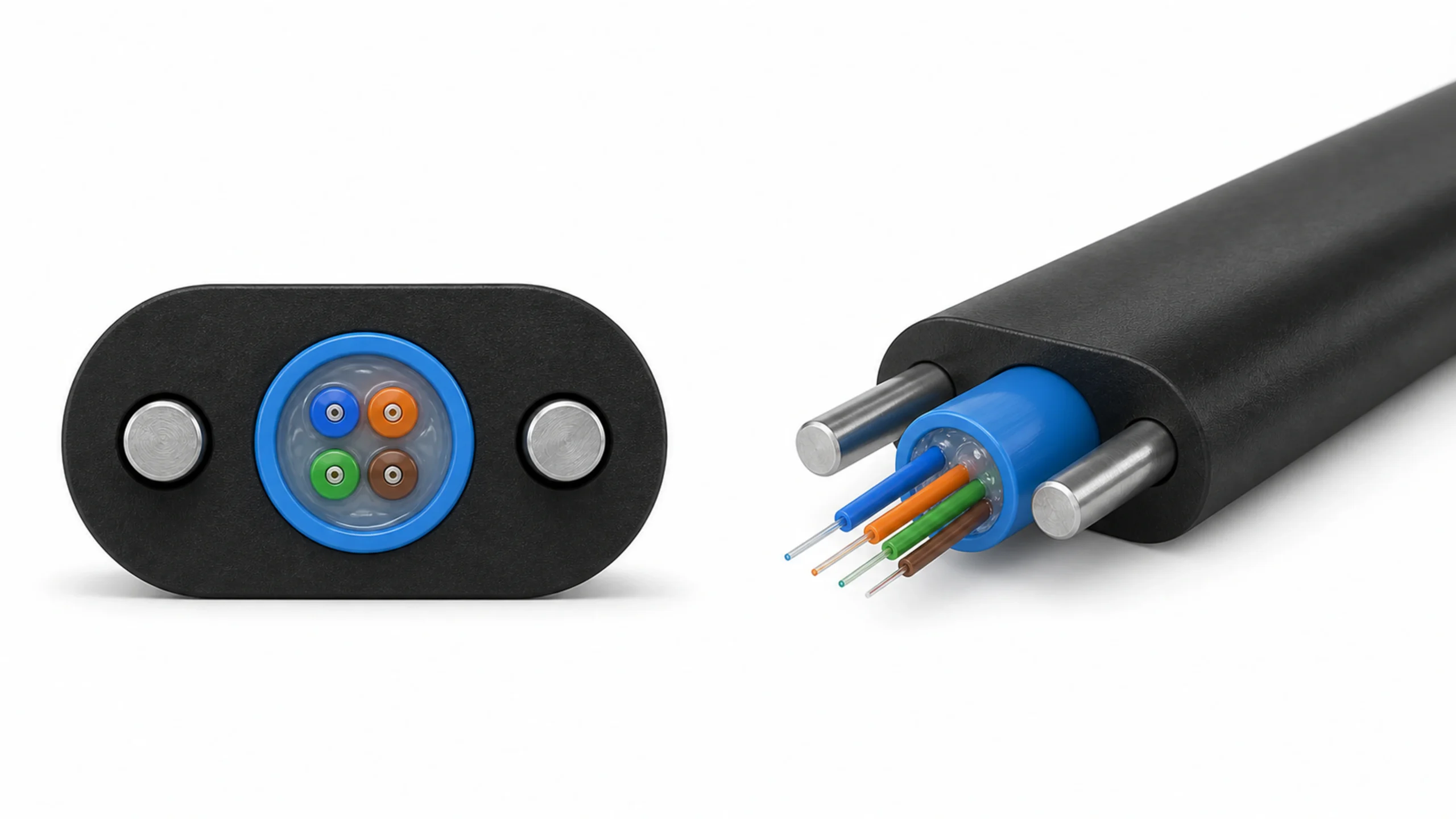
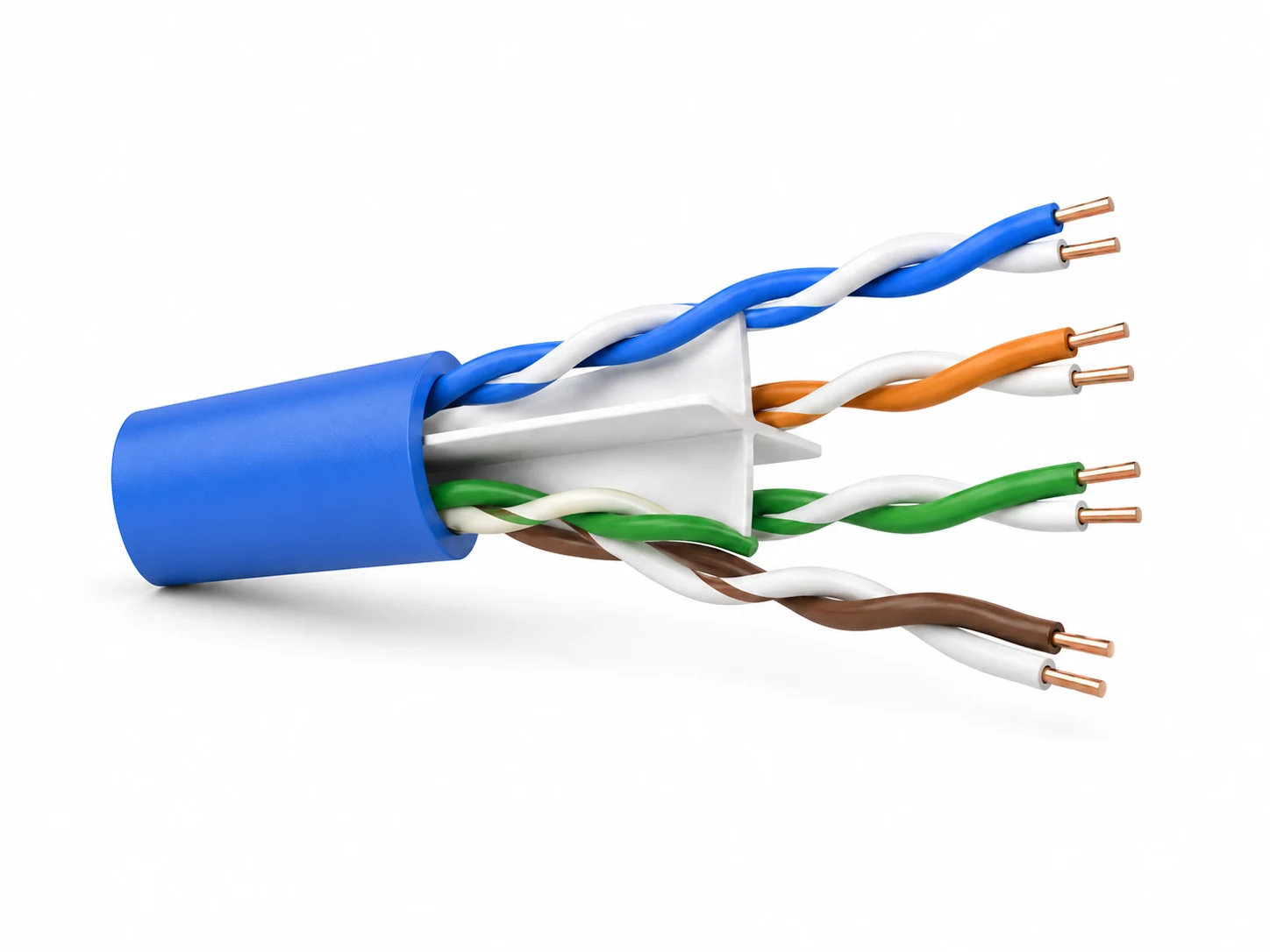
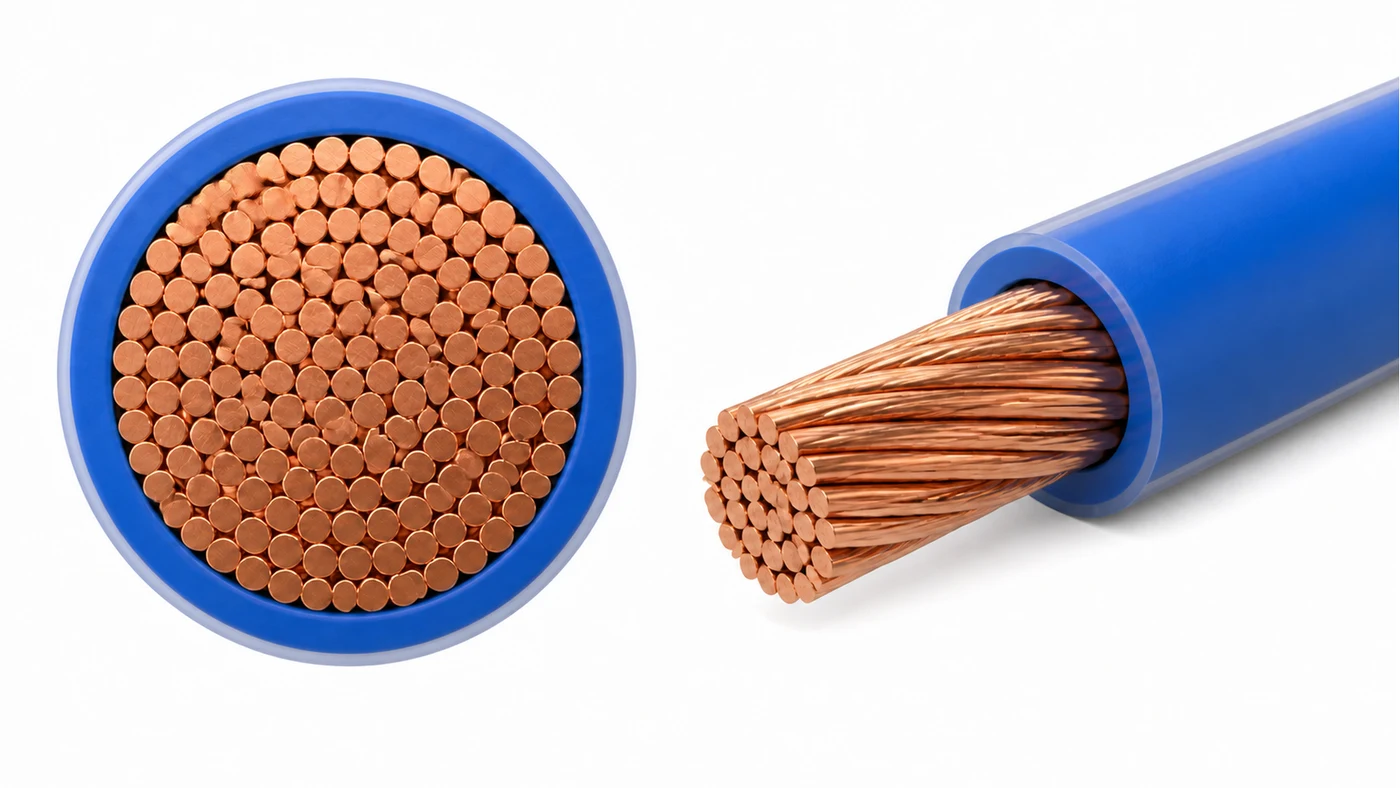
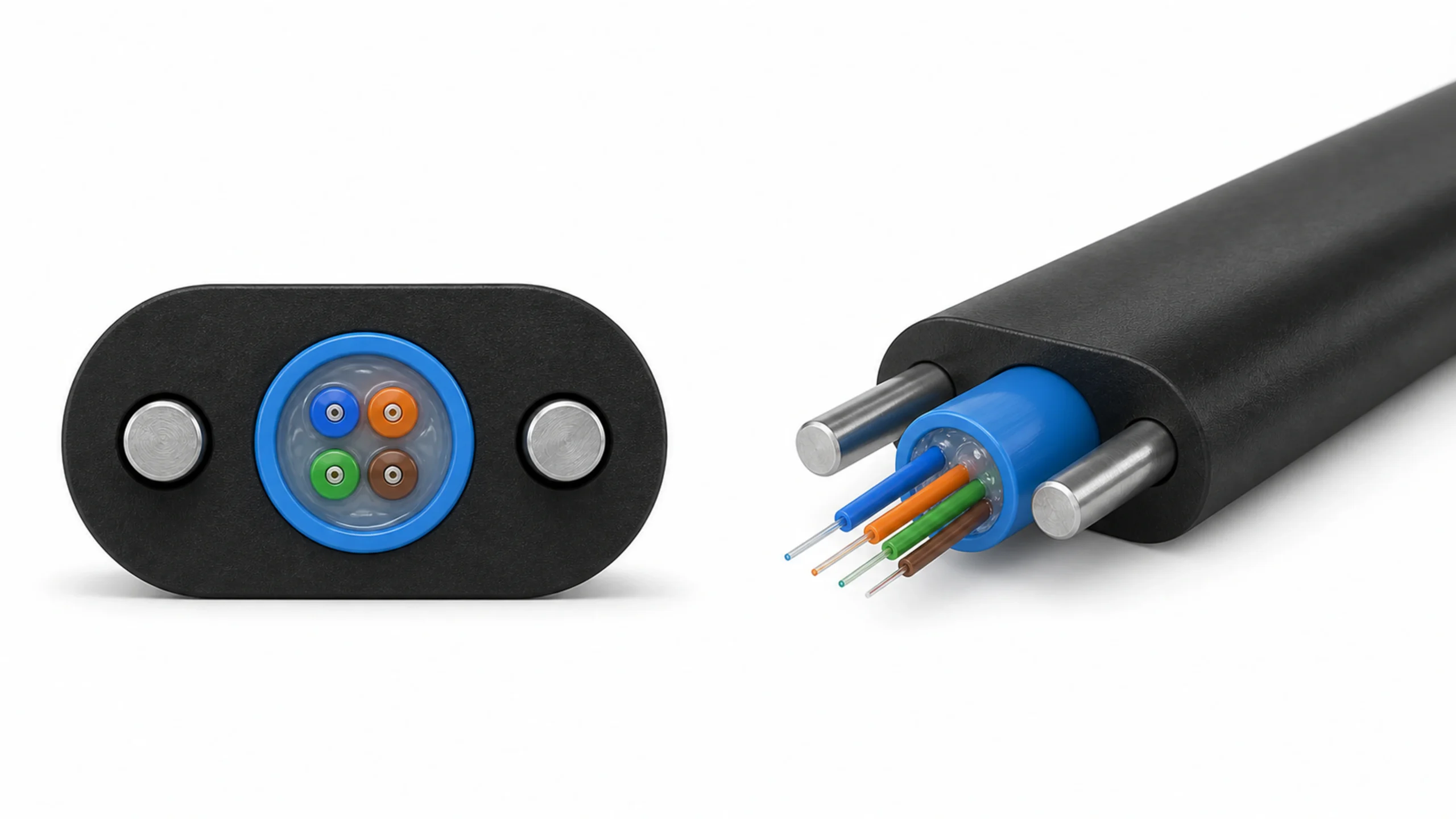
ابدأ برسم المنتج عند دخوله رأس التوزيع وعند خروجه منه. لا ينبغي التعامل مع الموصل الصلب، والموصل المجدول، وقلب الكابل المجمع كمدخلات قابلة للتبديل لمجرد أن أقطارها الاسمية متشابهة.
سجّل التشكيل الداخل، ونطاق أقطاره، والطبقة التي يتم تطبيقها. وفي حال الكابل النهائي، حدّد ما إذا كان الشراء يتعلق بعزل الموصل، أو الغلاف الداخلي، أو الغلاف الخارجي. وعند وجود عدة مواد أو طبقات، حدّد كل منها على حدة بدلاً من طلب “رأس متعدد الطبقات” بشكل عام.”
أعد سجل منتج قصير يحتوي على:
- رسم التوصيل أو السلك الداخل والعينات الممثلة.
- الشركة المصنعة للمادة المركبة، والدرجة الدقيقة، وإرشادات المعالجة.
- البُعد الخارجي النهائي، وسُمك الجدار المطلوب، وحدود القبول المنطبقة.
- عدد وترتيب الطبقات، بما في ذلك أي شريط أو تغذية مواد منفصلة أخرى.
- المتطلبات ذات الصلة الخاصة بالتقشير أو الالتصاق أو فصل الطبقات، إذا تضمنها مواصفة الكابل.
- الطابعة البلاستيكية الحالية، هوية الرأس العرضي، تخطيط الخط ونطاق التشغيل المقترح.
اختر طريقة البثق وترتيب الطبقات بشكل منفصل
تصف أدوات الضغط وأدوات الأنابيب نهجين مختلفين للالبث. يصف البثق أحادي الطبقة والبثق المشترك ترتيب الطبقات. هذه قرارات منفصلة، وليست أربعة أسماء متنافسة لنفس الخيار. تقدم مصنّعو الأدوات تكوينات مختلفة للضغط/الأنابيب والطبقات والتوسيط.1
ابدأ بالمنتج وسماكة الجدار المطلوبة عند اختيار نهج البثق. في تطبيقات HONGKAI التي تمت مناقشتها في هذا الدليل، تستخدم عملية أنبوب الألياف البصرية أدوات أنابيب، بينما تستخدم عملية الغلاف أدوات ضغط. هذه أمثلة تطبيقية وليست قاعدة تنص على أن كل أنبوب كابل ألياف بصرية أو غلاف يستخدم نفس الطريقة.
Next, specify whether the product needs one layer, two layers in separate operations, or two layers extruded together. If both layers must be applied in one pass, the proposed head and material feeds must support that coextrusion arrangement. Identify a color stripe separately; a stripe is not automatically another complete sheath layer.
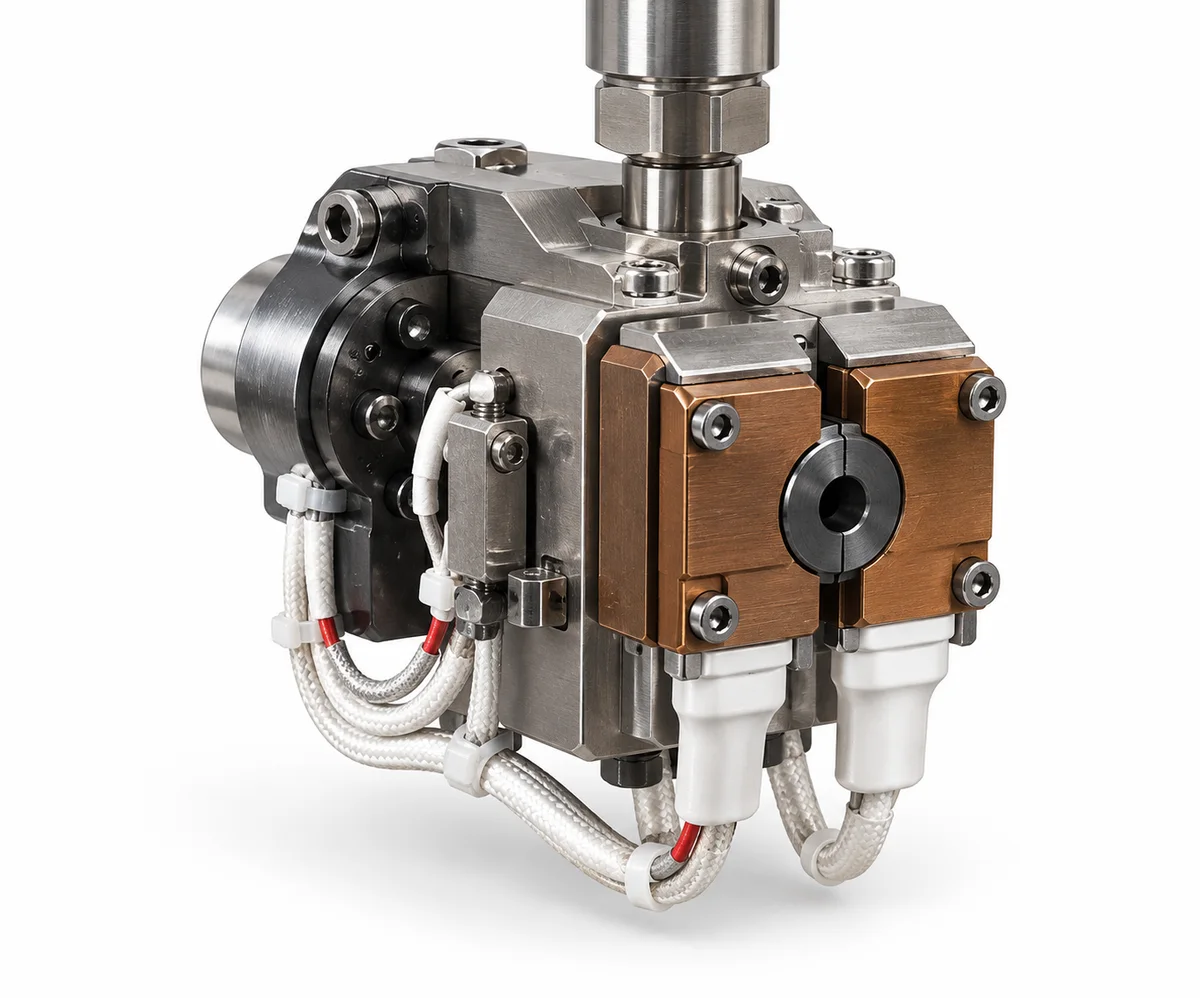
HONGKAI 3D مرجع خارجي لرأس تداخل ثنائي الطبقة مع ترتيب شريط لوني. هذا ليس رسمًا مُقاسًا ولا تصميمًا عالميًا لأغراض رؤوس التداخل الأخرى.
For an expansion project, separate the first approved product from future products. Ask the supplier to identify which changes remain within the proposed head and tooling range, and which require a different setup or an application trial. A possible future configuration should not be listed as proven production scope.
تغيير الأدوات—أو رأس التثبيت بالكامل؟
Check the tip when the incoming core construction changes, and the die when the required outside shape or dimension changes. If the product is outside the installed head’s confirmed size range, a tooling change alone is not enough: the head must also change. Staying within that range is only the first compatibility check.
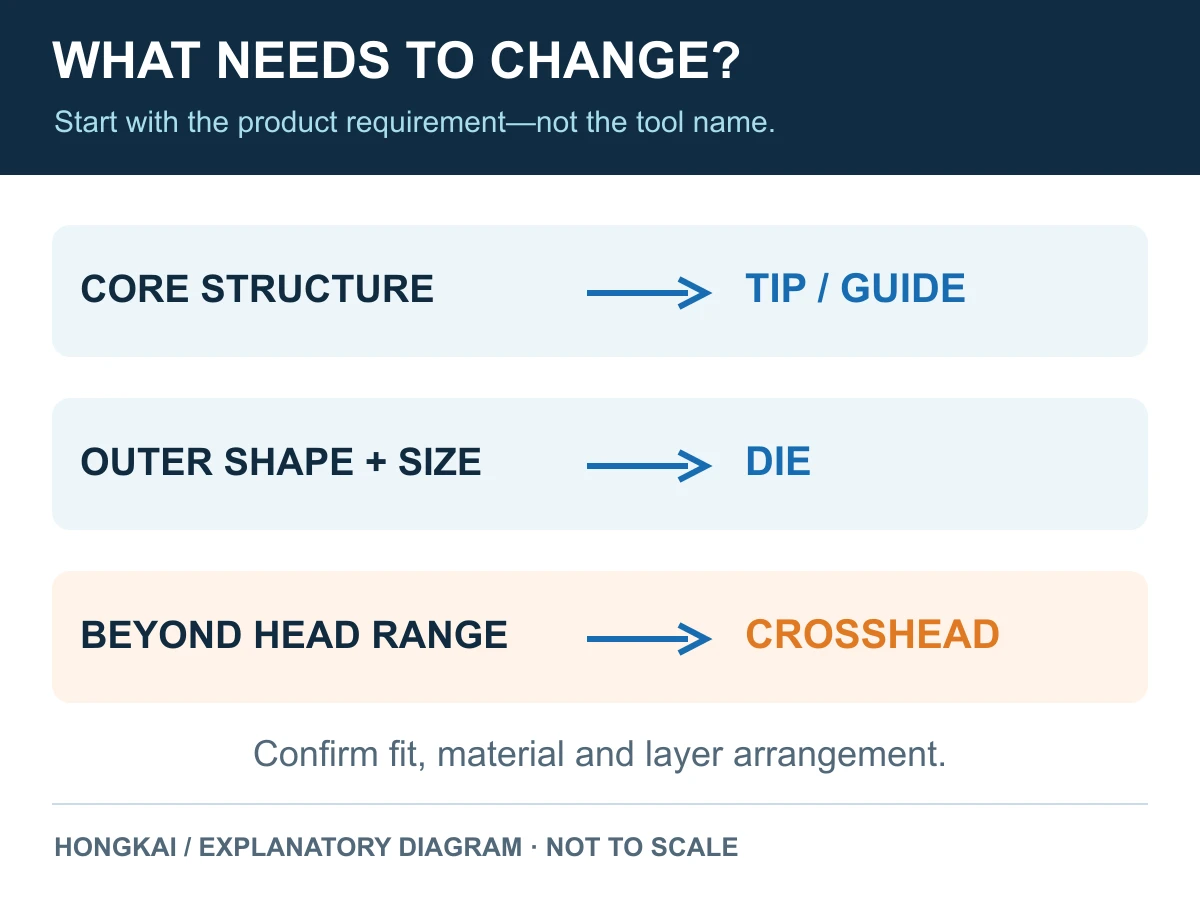
Explanatory decision map based on the application distinctions discussed for this guide. It is not a tooling drawing; fit, material and layer arrangement still require confirmation.
HONGKAI’s sizing discussions include U7, U10, U14 and U20 crossheads. In this family, the number indicates the supported maximum line-size range. Confirm the actual limit and which product dimension it refers to against the particular head’s drawing or specification. These names are not a universal sizing system across manufacturers.
For tooling, separate the incoming construction from the finished shape. A single-core and a two-core product can require different tips. The die must suit the target outer shape and size as well as the agreed material and extrusion method. Do not assume that each product change requires both tools to be replaced, or that a larger die can extend the head beyond its approved range.
| What changes? | ما الذي يجب مراجعته أولاً | ما الذي يجب تأكيده؟ |
|---|---|---|
| بناء الموصلات الداخلة، مثل الموصل أحادي النواة إلى ثنائي النواة | هندسة الطرف أو الدليل | الممر، ترتيب التوجيه والتوافق مع القالب |
| الشكل الخارجي المطلوب أو البُعد النهائي | هندسة القالب والنطاق القابل للاستخدام | الشكل والحجم المستهدفان مع المادة المختارة وطريقة البثق |
| الحجم المطلوب للمنتج يتجاوز الحد الأقصى المؤكد للرأس | رأس ذو نطاق مناسب | الرأس الجديد، والأدوات وواجهات الخط كحزمة كاملة |
| ترتيب الطبقات، تغييرات الشريط أو المادة | ترتيب البثق، وليس فقط فتحة الأداة | الخلاطات المطلوبة، الرؤوس/الأدوات المتوافقة وأي تجربة تطبيق |
For an existing machine, provide its head identification, photographs and tooling drawing. Confirm the mounting dimensions, locating surfaces, holders and adjustment arrangement. Different manufacturers’ tools are not interchangeable merely because the finished cable diameter is the same.
HONGKAI’s published صفحة قطع غيار البثق lists die, tip and adjusting-ring components and asks for photos or drawings before confirming a replacement. That is a starting point for part identification, not evidence that an unknown tool will fit every crosshead.
A worn part can help identify the assembly, but its measured dimensions should not automatically become the dimensions of a new part. Ask the supplier to distinguish the original design from wear, damage or earlier modifications. Record drawing revisions and part numbers so a later order refers to the same approved package.
Have the supplier record the agreed scope: replacement tools, a modified tooling package or a different head. That written boundary is more useful than an unsupported claim that one head can make every future product.
تحقق من مسار السلك قبل أن تلوم الرأس
An uneven wall is a reason to investigate, not an automatic instruction to replace the crosshead. Preserve the sample and operating record before changing the setup. Record whether the issue appeared after a tool change, a material change, a restart or a change in line operation.
قم بإنشاء ترتيب التمركز قبل الإنتاج
Identify whether the particular head uses manual adjustment, assisted adjustment or a fixed/self-centering arrangement. Follow the setup method for that design before formal production. A head described as requiring no routine centering adjustment still needs correct installation, matched tooling and a check of the finished wall.
تحقق من التركيب والجر وكذلك الرأس
HONGKAI’s commissioning checks for the applications discussed here include equipment leveling, alignment between the crosshead’s cable path and the haul-off centerline, and abnormal haul-off vibration or jerking. Establish these conditions during installation rather than trying to compensate for them with the head’s centering adjustment later.
An uneven floor matters if the equipment has not been correctly supported and leveled. The floor does not have to serve as the alignment reference by itself. Ask the installer to verify the machine positions and cable path against the approved layout. A misaligned haul-off or unstable pull is a separate issue to correct; adjusting the head alone does not resolve it.

مفهوم مبسط للتوحيد، وليس رسم تركيب أو خط إنتاج كامل. يجب أن تتبع مواقع المعدات والدعامات والتسامحات التخطيط الفعلي.
احتفظ بهذه الأسئلة الاستقصائية منفصلة:
- Part identity: هل أن التركيبات المثبتة من رؤوس التشكيل والقوالب وأجهزة التثبيت هي المجموعة المعتمدة؟
- Assembly condition: هل يُظهر الفحص وجود تلف أو تلوث أو حالة أخرى تحتاج إلى تصحيح؟
- Line behavior: هل يمر القلب بشكل ثابت عبر المسار المقصود، أم هل يتغير موضعه أو شدته؟
- Heating behavior: هل تتطابق درجات الحرارة المقاسة للرأس وسلوك التحكم مع الوصفة المعتمدة، بدلاً من عرض نقاط الضبط المطلوبة فقط؟
- Extrusion behavior: هل تكون إعدادات المواد والمخرجات مستقرة وفقًا للوصفة المعتمدة؟
- Measurement: هل العطل المبلغ عنه عبارة عن تغيّر في القطر الخارجي، أو سماكة جدار غير متساوية، أو عدم استدارة (بيضاوية)، أو مجموعة من هذه العوامل؟
هذه الأسئلة تنظّم الأدلة؛ ولا واحدة منها تُثبِت السبب بمفردها. الـ دليل التحقيق في عيوب المواد والعمليات يغطي الفحوصات الأوسع نطاقًا عند ظهور فقاعات أو خشونة أو بثق غير مستقر، وكذلك المشكلات المتعلقة بالأبعاد.
If several settings are changed together, record all of them. A better sample after multiple changes cannot show which change solved the problem. Where a controlled comparison is practical, agree on the change and its evaluation before running the trial.
Note: Intrusive inspection, cleaning and tool changes require qualified personnel following the machine’s isolation, pressure-release and temperature-control instructions. This article does not authorize adjusting, opening or reaching into running or pressurized equipment.
قياس سمك الجدار، وليس القطر الخارجي فقط
A stable outside diameter does not prove that the conductor or core is centered. Accept the layer using the wall-thickness and dimensional evidence required by the cable specification, not only the diameter display.
SIKORA explains that comparing diameters before and after extrusion can provide a thickness value, but that laser-diameter comparison alone does not measure eccentricity. A system intended to measure eccentricity needs the relevant additional measurement capability.2
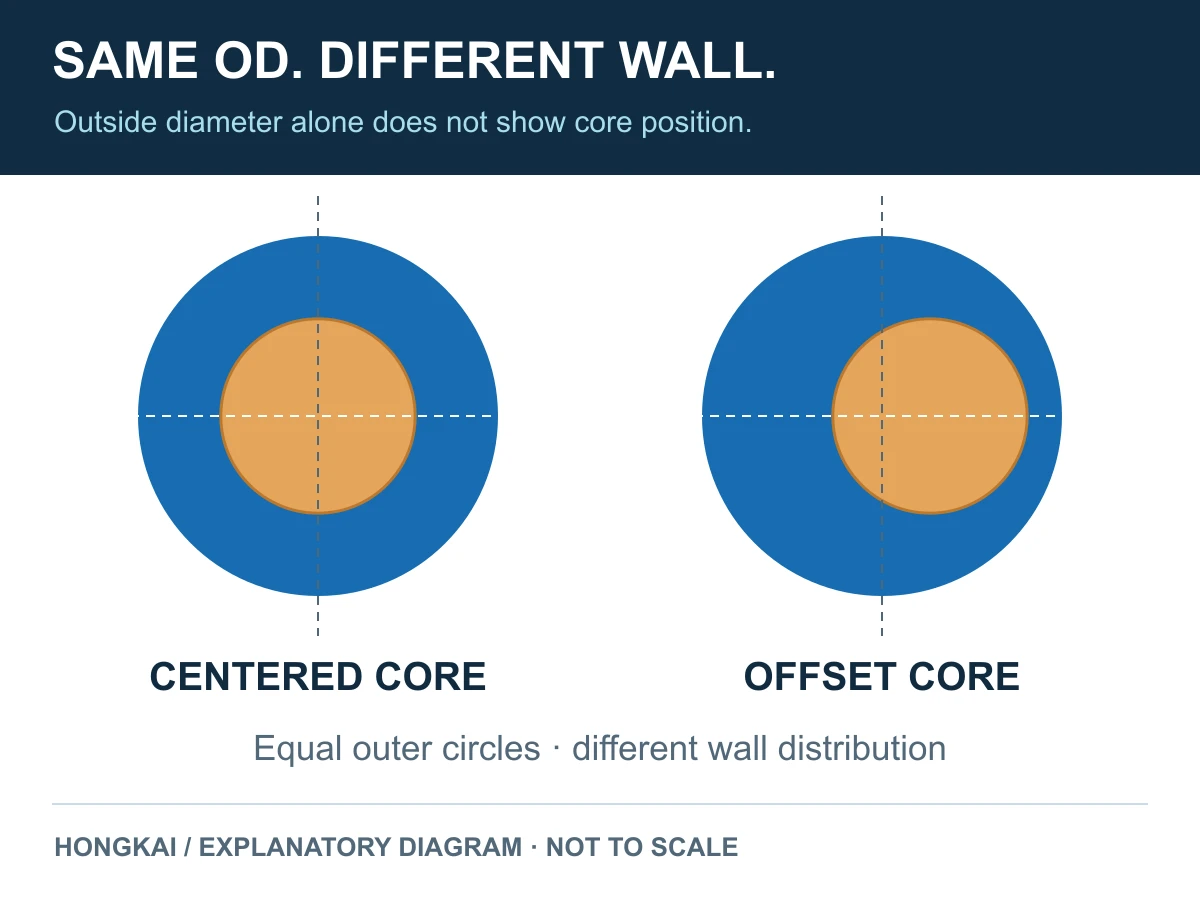
مقاطع عرضية مفاهيمية بنفس القطر الخارجي. يؤدي الانزياح في القلب إلى تغيير توزيع الجدار؛ هذه ليست عيّنات قياسية أو حدود قبول.
أبقِ شروط الفحص واضحة في سجلات الشراء والتجربة:
| الأدلة | ما يساعد على إثباته | ما لا يُثبته بذاته |
|---|---|---|
| سجل القطر الخارجي | التفاوت في البُعد الخارجي المقاس | موقع الموصل أو القلب داخل الطبقة |
| المقطع العرضي المحضر | التوزيع المحلي للجدار في تلك العينة المحددة | جودة طول الإنتاج بالكامل |
| قياس مناسب عبر الإنترنت للجدار أو الانحراف | سلوك المعلمة المقاسة أثناء التشغيل المسجّل | الملاءمة لمادة أو حجم أو تركيب غير موثق |
| Surface inspection | المظهر المرئي في الموقع المفتش | جميع المتطلبات البُعدية أو الكهربائية المخفية |
Before the trial, agree on how samples will be prepared and measured. Identify the instrument, the recorded quantities and the acceptance limits. Where a percentage such as “concentricity” appears in a proposal, require its definition and calculation method; do not assume that different reports use identical terminology.
Link each result to the same material batch, tooling setup and sample position or production time. If an online gauge and an offline sample disagree, first confirm that they refer to the same product and measurement conditions. Do not choose whichever result happens to be more favorable.
The measuring system also needs an application check. Ask which materials, layer arrangements, product dimensions and operating conditions it can evaluate in the proposed setup. This guide does not require a particular instrument brand or claim that one sensing method covers every cable.
اقبل إعدادًا قابلاً للتكرار، وليس عينة جيدة واحدة
Agree on the trial before accepting the proposed crosshead or tooling change. Define the sample product, material grade, setup identity, operating conditions, measurement method and decision limits. The buyer and supplier should know what evidence will settle acceptance before the machine is demonstrated.
For the head itself, HONGKAI’s priorities in the applications discussed here are the actual product’s centering and normal heating behavior. Demonstrate both on the agreed product: inspect the wall distribution and retain the corresponding temperature records. These head-focused checks do not replace the other tests required for the finished cable.
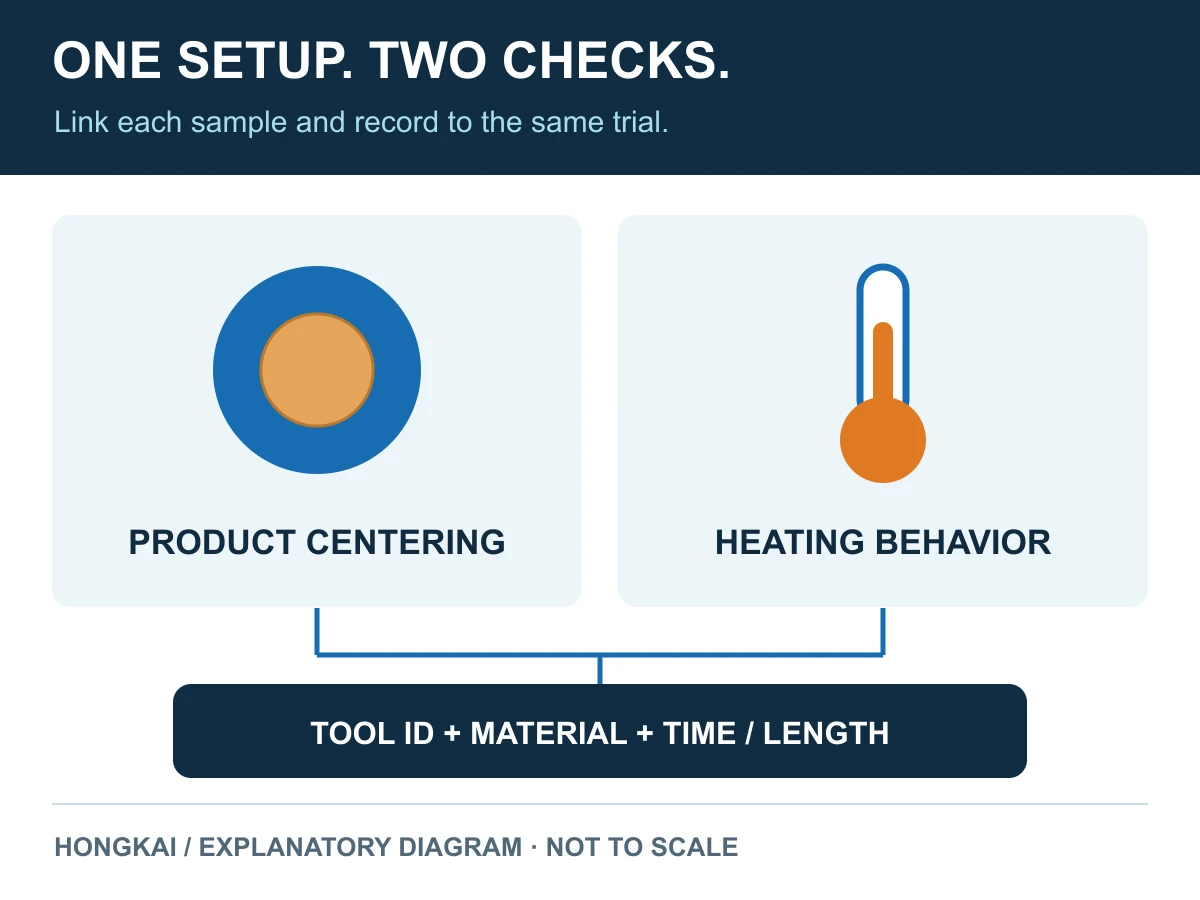
خريطة سجل توضيحية، وليست تقرير اختبار. ربط عينات التمركز وسجلات درجة الحرارة بنفس الإعداد؛ واتفق على الحدود الفعلية واختبارات المنتج الأخرى بشكل منفصل.
يسجّل سجل تجريبي مفيد العناصر التالية مع ربطها ببعضها بدلاً من تخزينها كصور غير مرتبطة:
- رسم الكابل المعتمد ودفعة المركب المستخدمة.
- معرف الرأس وأرقام قطع الأدوات وتنقيحات الرسم.
- ترتيب التمركز، ومحاذاة الخط المُحقَّقة، وظروف التشغيل المتفق عليها.
- إعدادات درجة الحرارة المحددة وسجلات درجات الحرارة المقاسة المقابلة.
- العينات المحفوظة مع مراجع زمنها أو طولها.
- النتائج الأبعادية المقابلة وفحوصات المنتج الأخرى المنطبقة.
- أي انقطاع أو تعديل، مع ذكر سببه والنتيجة التي ترتبت عليه لاحقًا.
Where frequent product changes are important, include an agreed changeover in the demonstration. The question is not merely whether an experienced operator can produce one acceptable short sample. It is whether the factory can identify the approved tools, follow the documented setup and verify the result again under the agreed conditions.
Do not invent a universal test speed, duration or sample count. Those values must match the product, contract and factory’s acceptance method. Startup material and output made during an unapproved adjustment should remain identifiable under the factory’s quality procedure.
At handover, retain the accepted tool drawings or identifiers, setup instructions, maintenance guidance and sample records. List future materials and product sizes separately if they have not been demonstrated. A clear scope prevents the accepted setup for one cable from becoming an unsupported promise about every cable the factory may make later.
The strongest result is a matched tooling package with traceable samples and a repeatable setup. That gives production staff a basis for the next changeover and gives the buyer evidence for accepting the equipment.
-
غيل تول آند إنجينيرينغ،, السلاسل وخيارات التهيئة. Used only to substantiate the existence of distinct pressure/tubing and fixed/adjustable configurations, not as a HONGKAI product specification, supplier endorsement or universal selection rule. ↩
-
SIKORA, قياس السُمك, خاصةً النقاش حول القياس بالليزر. يدعم التمييز بين السُمك المستمد من القطر وقياس الانحراف المركزي؛ ولا يتم اعتماد أي ادعاء خاص بالمورد بشأن الدقة أو الأداء.↩

 English
 हिन्दी
 فارسی