











A fiber optic cable factory owner, production manager or technical buyer planning an ADSS cable production line must connect the approved cable design to every manufacturing stage. The practical question is not whether a supplier offers an “ADSS line,” but whether the proposed route can control each component, interface and acceptance result required by the target cable.
A defensible ADSS production route begins with the finished cable specification and works backward through outer sheathing, aramid reinforcement, cable-core stranding, loose-tube formation and fiber preparation. Existing equipment can remain in scope only when its material handling, package, tension, process window and test evidence match the approved ADSS construction.
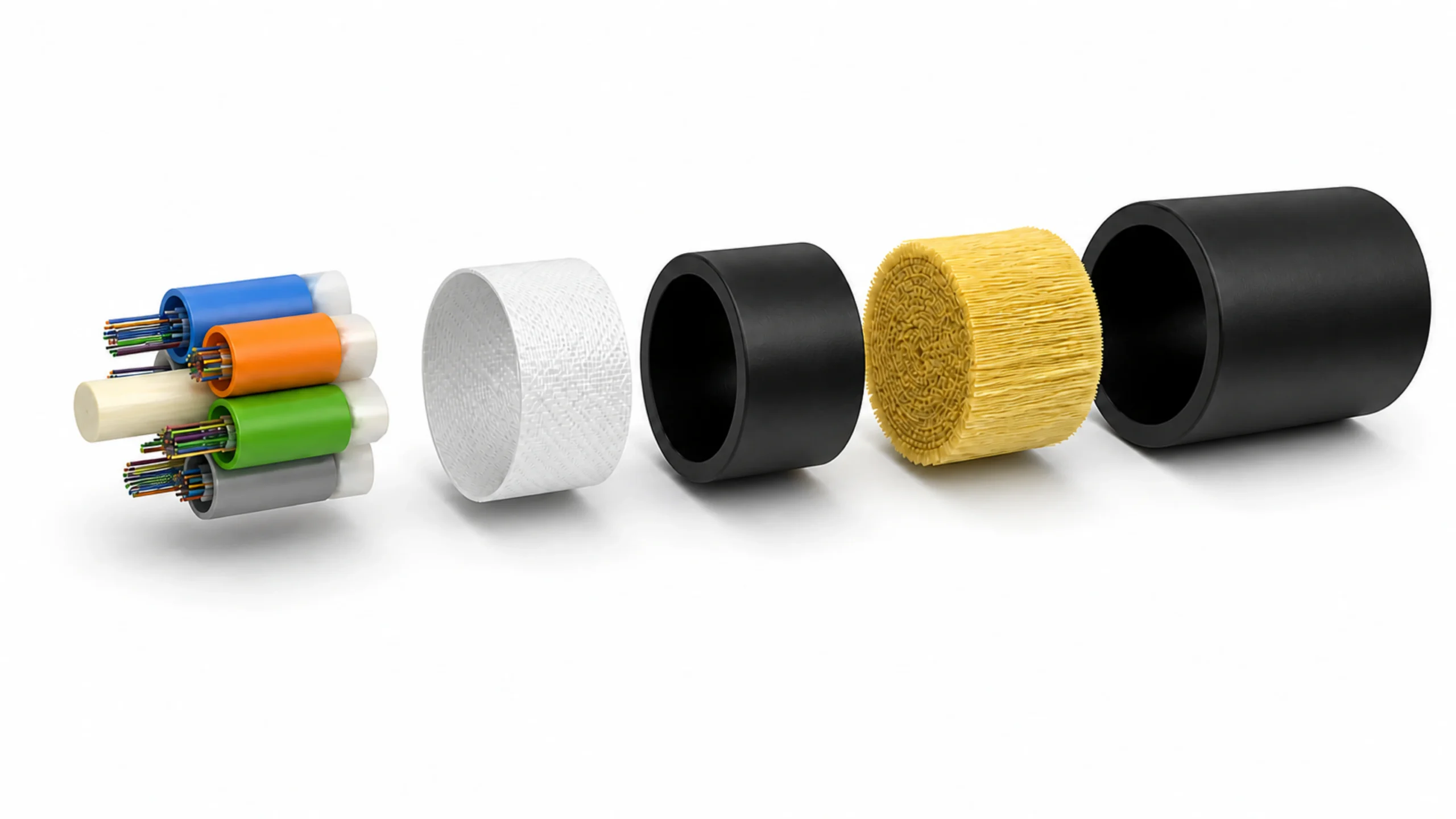
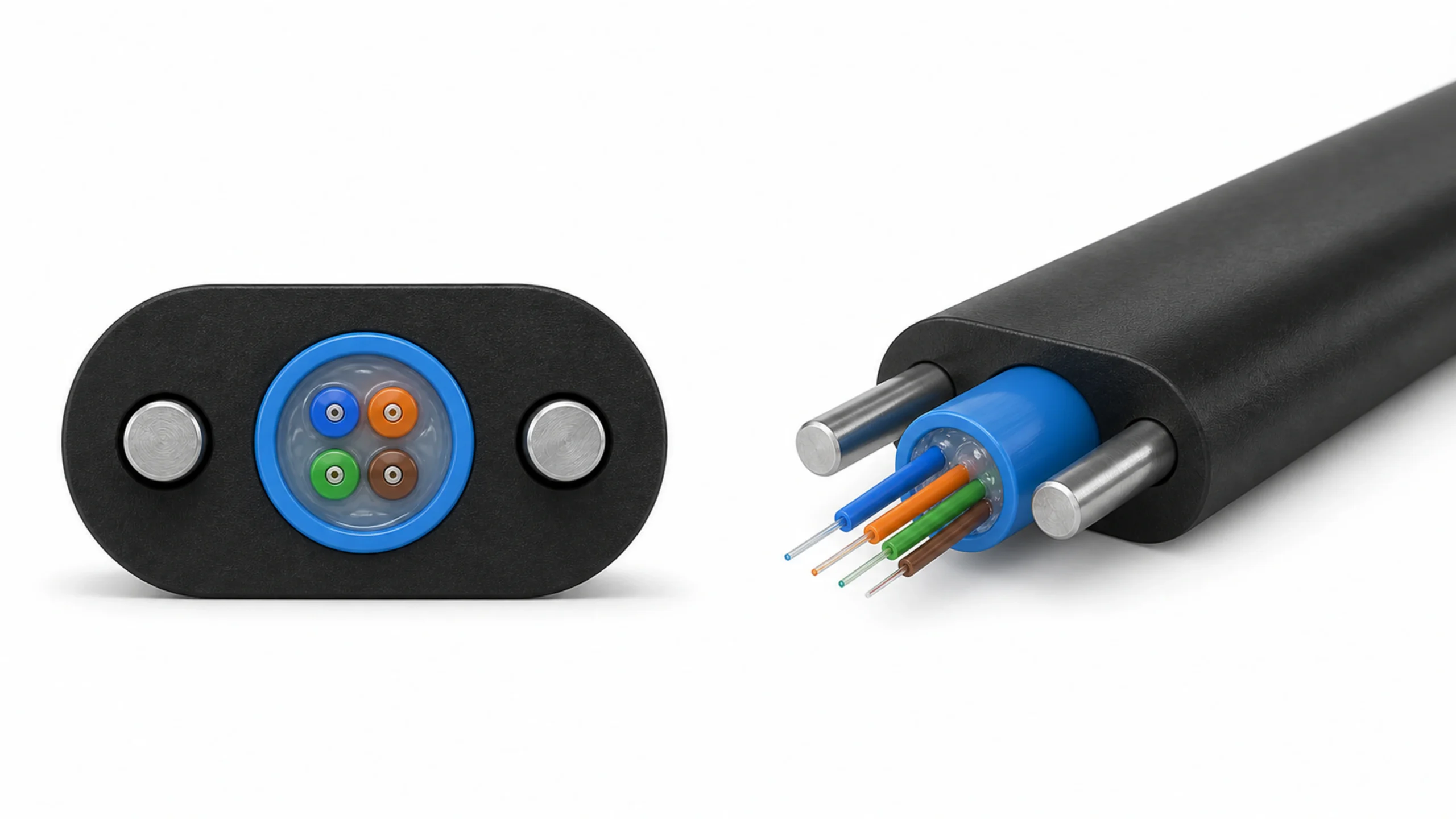
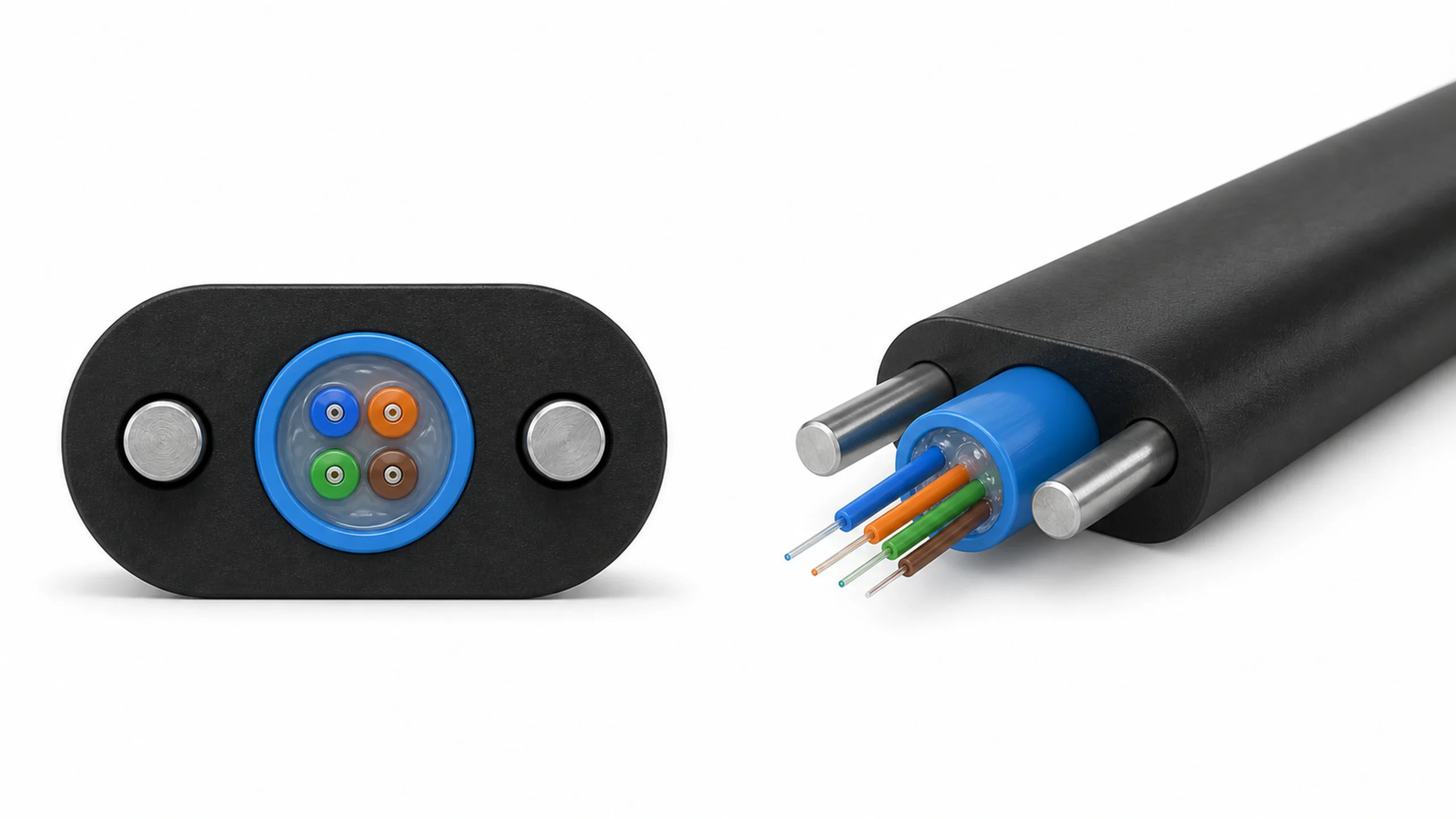
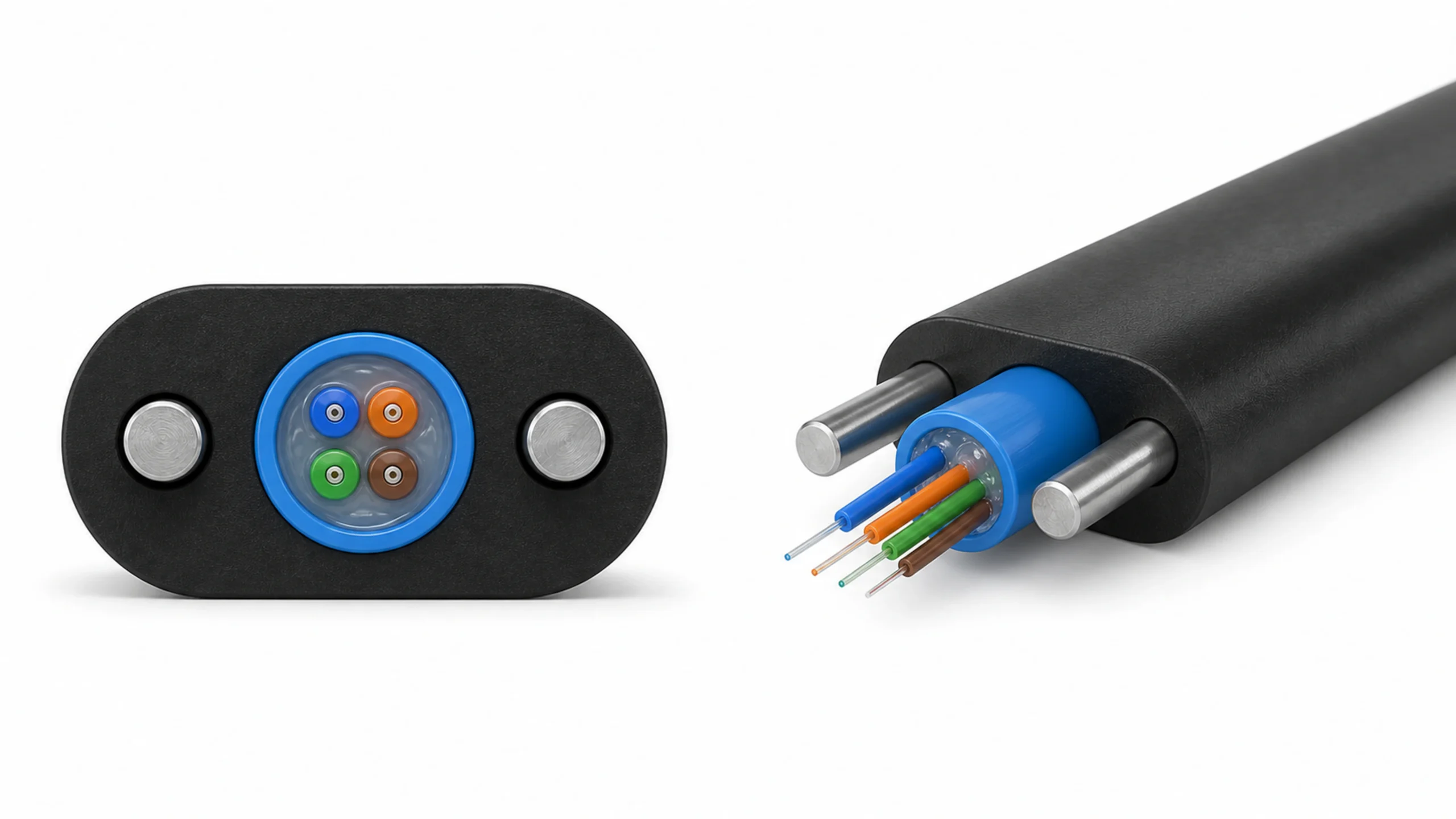
Verified reference illustration of a stranded loose-tube ADSS construction. Final layer count, dimensions, materials and performance requirements must follow the approved cable drawing.
This guide replaces HONGKAI’s older process article at the same URL. It separates product requirements from machine claims, treats the current HONGKAI ADSS cable production line as a reference route, and keeps machine quantities and operating values project-specific.
What Must Be Defined Before Choosing an ADSS Production Route?
Start with the target cable, installation environment and acceptance specification. Fiber count or finished diameter alone cannot determine the loose-tube design, cable-core arrangement, aramid requirement, sheath compound, production equipment or FAT program.
ADSS means all-dielectric self-supporting cable. The tensile reinforcement is non-metallic, and the finished design must support itself under the specified aerial installation and operating loads. The current IEC 60794-4-20:2018 scope covers ADSS construction as well as mechanical, electrical, optical, environmental, installation and acceptance requirements. The standard does not certify a machine or define one universal factory configuration.
The buyer’s first engineering package should include:
- the approved cable cross-section and material schedule;
- fiber type, fiber count, color sequence and supply reel format;
- loose-tube count, tube dimensions, fibers per tube and filler arrangement;
- central dielectric member, water-blocking and binder construction;
- inner-sheath requirement, aramid layer design, ripcord and outer-sheath construction;
- the applicable product standard, project specification and installation environment;
- المسافة المقصودة، ونوع المسار، وسيناريو التطبيق، جنبًا إلى جنب مع الحدود الأبعادية والأداء الخاصة بالمنتج من قبل العميل؛;
- الاختبارات الميكانيكية والبصرية والبيئية والكهربائية المطلوبة؛;
- رسومات حزمة الإدخال والإخراج لكل مرحلة إنتاج.
قد تخضع كابلات الهواء المستخدمة بالقرب من خطوط الطاقة وكابلات الدعم الذاتي المستخدمة على مسارات أعمدة الاتصالات لمتطلبات مختلفة من الأداء وتصميم القشرة. على سبيل المثال،, IEC 60794-3-20:2016 تغطي كابلات الهواء ذاتية الدعم للاتصالات ولكن تستبعد صراحةً بنى ADSS على خطوط الطاقة التي تتطلب مواد قشرة مقاومة خاصة للتتبع والتآكل. يجب أن يحدد مواصفات المشروع المسار المنطبق بدلاً من استخدام مصطلح “كابل هوائي” كمدخل تصميم كامل.
الأخطاء الشائعة: يرسل المشتري فقط عدد الألياف أو المسافة أو القطر النهائي ويسأل عن قائمة كاملة بالآلات. خطأ آخر هو نسخ قائمة مواد ADSS السابقة دون التحقق من جهد الخط، والتعرض البيئي، والتحميل، وقطر الكابل، وتصميم الشد، وبرنامج الاختبار المطلوب.
معيار القرار: اعتبر “ADSS + عدد الألياف + المسافة” مجموعة مدخلات غير كاملة. اطلب تفاصيل بنية المنتج ومواصفاته قبل التحقق من مسار الإنتاج، لأن هذه المدخلات تحدد كل من تكوين الآلة وأساس القبول للاختبار التجريبي. لا تثبت القدرة النظرية للآلة وحدها أن كابل العميل المستهدف قد تم التحقق منه.
كيف ترتبط بنية الكابل بمراحل الإنتاج؟
اربط كل طبقة من المواد بالمرحلة التي تخلقها أو تدمجها، ثم عرّف نقطة التسليم بين المراحل. يشمل مسار ADSS المعياري المُشَدّد المُحَبَّب عادةً إعداد الألياف، بثق الأنبوب المُحَبَّب، تشكيل اللب SZ، التدعيم بالأراميد، ووضع القشرة الخارجية، يليها اختبار المنتج والتغليف.
| عنصر الكابل أو الإخراج | المسؤولية التصنيعية | وحدة HONGKAI المرجعية | دليل المشتري قبل الاختيار |
|---|---|---|---|
| الألياف البصرية الملونة | إعداد لفات التعرف والإمداد الخاضعة للرقابة عندما لا تُستخدم الألياف الملونة مسبقًا | صبغ وإعادة لف HK-235 | مواصفات الألياف، تسلسل الألوان، شكل اللفة، وسجل التأهيل |
| أنابيب مُحَبَّبة مملوءة | تغذية الألياف، قياس مركب الحشو، بثق وتبريد الأنبوب، التحكم في الهندسة وجمع الأنبوب المؤهل | خط إنتاج الأنبوب المُحَبَّب HK-50 | Tube material، fibers per tube، tube دراوينغ، exceسس-لنغتهـ ميتهـود وأند تست وبلان |
| سترانديد كـابـلـيـ كـورـيـ | افكّك الجزء المركزي من الألياف الزجاجية المعززة بالبلاستيك (FRP) والأنابيب الفضفاضة، وطبّق التجديل على شكل SZ، واربطها وأضف عناصر سد الماء المحددة | HK-SZ / HK-800-12 reference route | عدد العناصر، الأبعاد، مخطط التجميع، متطلبات الانعكاس، نطاق الشد، وسجل اختبار القلب |
| لب مقوى بألياف الأراميد | طبق التعزيز الشدّي العازل المحدد مع توزيع مضبوط وشدّ متحكم به | نظام تعزيز الأراميد المخصص للمشروع | نوع الخيط، العبوة، تصميم الطبقة، الكمية، طريقة الشد، ودليل التغطية |
| غلاف خارجي نهائي | تسوية النواة المعتمدة، دمج واجهات التسليح/الخيط المُشقّق، البثق، التبريد، القياس، السحب واللف | مسار التغليف HK-90 ADSS | الخلطة، بنية التغليف، العلامات، الهندسة، فحوصات الشرارة/العبرية، واللفة النهائية |
| كابل ADSS المُطلق | اختبار المتطلبات البصرية، الأبعادية، الميكانيكية والبيئية المتفق عليها | مختبر المشتري، طرف ثالث مؤهل أو نطاق اختبار متفق عليه | طريقة الاختبار، العينة، الأداة، الحدود، الطرف الشاهد وتقرير المحفوظات |
هذه المصفوفة هي خريطة عملية، وليست قائمة معدات عالمية. قد لا تحتاج مصنع يشتري ألياف ملونة مسبقًا إلى خط تلوين. قد يعيد مصنع يمتلك خطًا مُعتمدًا للأنابيب الفضفاضة أو SZ استخدامه إذا كانت المواد المعتمدة، والعبوات، وحدود العملية، والأدلة النوعية تناسب نطاق ADSS الجديد.
- Process names alone do not prove equipment reuse. An existing optical-cable plant may already have coloring, loose-tube extrusion, SZ stranding or sheathing equipment, but the decision must still be made against the target product and required operating tier. Low-, medium- and higher-throughput configurations can differ in control scope and line capability even when the process names are the same.
-
::flow
01 · DEFINE|اعتماد الكابل
تجميد التصميم، المواد، المعيار المطبق، إطلاق المنتجات ومتطلبات القبول.
02 · MAP|تعيين كل طبقة
تحديد المرحلة التي تشكّل أو تدمج كل ألياف، أنبوب، عنصر قوة، عنصر منع تسرب الماء، خيط، خيط مُشقّق وتغليف.
03 · MATCH|تدقيق المعدات
مقارنة المعدات الحالية والمقترحة مع الحزم، التوترات، الهندسة، الضوابط وواجهات المصنع المطلوبة.
04 · PROVE|تشغيل القبول
- استخدام مواد قابلة للتتبع وكابل تمثيلي للتحقق من نافذة العملية المتفق عليها وأدلة المنتج النهائي.
-
::
معيار القرار: لا تشتري خط “ADSS كامل” حتى يتم تعيين آلة، طرف مسؤول، مواصفات إدخال، سجل إخراج وأسلوب قبول لكل صف في مصفوفة التصميم-إلى-العملية.
ما الواجهات العملية التي من المرجح أن تُعطّل المسار؟
The highest-risk points are usually the handoffs between stages, not the presence of the headline machines. A qualified loose tube can still be damaged during payoff or SZ stranding; a stable cable core can still fail if aramid distribution, sheath extrusion or take-up handling is not coordinated.
تحضير الألياف حتى البثق في الأنبوب الفضفاض
Confirm whether the plant will use pre-colored fiber or color and rewind it in-house. The handoff must preserve fiber identification, coating condition, reel build and payoff behavior. The loose-tube line then needs the correct fiber reel interface, filling system, tube material preparation, extrusion tooling, cooling path, online geometry check and take-up package.
The tube drawing should define more than nominal outside diameter. It should state wall construction, fiber count, fiber excess-length requirement, filling condition and test method. A stable-looking tube is not sufficient if the optical result changes after cabling, temperature conditioning or mechanical loading.
الأنابيب الفضفاضة إلى تجديل قلب الكابل بنمط SZ
The SZ stage must receive loose tubes and the central FRP in compatible packages and controlled condition. Confirm element diameters, counts, fillers, central-member interface, lay or reversal program, binder and water-blocking materials, tension method, capstan and output reel. These variables are connected; they should not be approved as separate catalog options.
Check the cable core after stranding for geometry, tube condition, binding stability and the agreed optical evidence. The line trial should also show starts, stops, reversal behavior, acceleration and the reel build required by the next stage. A short no-load rotation test cannot prove the cable-core handoff.
لب الكابل إلى التعزيز بالأراميد والغمد
The final-stage proposal must show where the cable core is paid off, where aramid is applied, how the yarn packages are loaded and controlled, where ripcords or other specified elements enter, and how the reinforced core reaches the crosshead. The downstream extruder, cooling path, diameter measurement, traction and take-up must follow the same coordinated line-speed reference.
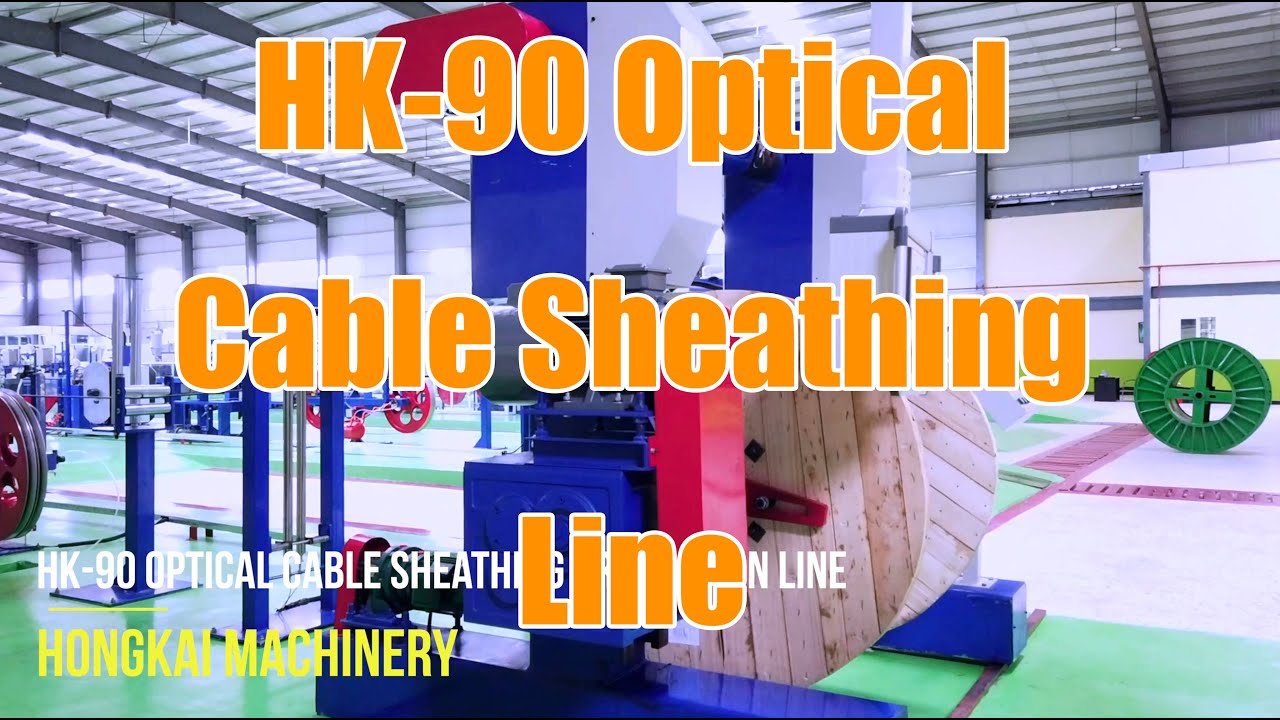
Real HONGKAI HK-90 optical cable sheathing-stage reference. The complete aramid arrangement, line interfaces, dimensions and operating range require project confirmation.
Note: The product page groups aramid reinforcement and final sheathing into the last reference stage. The signed proposal must still state whether the reinforcement system is a separate machine, an inline module or another verified arrangement and how its controls interlock with the sheathing line.
ما الذي يجب أن يتحكم فيه عملية التسليح بالأراميد؟
Aramid is a structural input, not decorative yarn added before the jacket. The process must distribute the specified reinforcement around the cable core without unacceptable local stress, gaps, overlap, twist, yarn damage or unstable handoff into the sheath crosshead.
The required yarn type, linear density, treatment, package, number of ends and layer design come from the approved cable construction. Machine selection must then address package dimensions, loading, individual or grouped tension control, yarn path, guiding, break detection, stranding direction or application pattern, changeover and line synchronization. Do not infer these values from cable diameter alone.
Derive the required number of aramid ends from the approved cable construction; a structure needing more reinforcement may require more active yarn packages. For ADSS projects with multiple yarn ends, evaluate an active payoff with tension control rather than assuming that passive line pull will be adequate. A cage-type arrangement is a HONGKAI reference configuration, but its head count, layer pattern and suitability must be confirmed for the approved cable.
The aramid system and sheathing process must be reviewed together. A mismatch can disturb the reinforced-core diameter, yarn distribution, crosshead entry, jacket concentricity, surface appearance or take-up behavior. The FAT should therefore capture evidence before, during and after sheathing rather than hiding the reinforcement layer inside the finished sample.
Some approved constructions include an inner and outer sheath, while others do not. The application scenario—including whether the cable is intended for a backbone route or another installation environment—must therefore be supplied before HONGKAI freezes the sheath and aramid arrangement. This project-specific review must not be replaced by the assumption that every ADSS cable uses the same final-stage configuration.
الأدلة المطلوب طلبها:
- معرف الخيط المعتمد وتفاصيل الطرد؛;
- رسم توضيحي للخيط وطريقة التحكم في الشد المسجلة؛;
- التحقق من أطراف الخيوط النشطة وترتيب الطبقات؛;
- صور أو عينات محفوظة تُظهر التوزيع قبل التغليف؛;
- إعدادات الخط المسجلة للمنتج التمثيلي؛;
- هندسة الكابل النهائي ونتائج البصريات المرتبطة بنفس الدفعة؛;
- الاختبارات الميكانيكية المتفق عليها أو التقارير الخارجية المؤهلة للتصميم النهائي.
علامات تحذيرية: يذكر المقترح عدد الموظفين فقط، ويعامل جميع حزم الخيوط على أنها قابلة للتبادل أو يدّعي قيمة شد واحدة لكل تصميم ADSS. إن خطة FAT التي تفحص فقط الكسوة الخارجية ولا تسجل النواة المعززة قبل دخولها إلى الرأس المتقاطع هي تحذير آخر.
ما هي أدلة الجودة التي تنتمي إلى كل مرحلة؟
افصل فحوصات العملية عن تأهيل الكابل النهائي. يمكن لقبول المصنع إثبات تجميع الآلة، والواجهات، والإعدادات القابلة للتكرار، وأدلة الإنتاج التمثيلية، لكن قد يتطلب التصميم النهائي للـ ADSS أيضًا اختبارات ميكانيكية وبصرية وبيئية وكهربائية لا يمكن تنفيذها عمليًا في خط الإنتاج.
| المرحلة | أدلة أثناء العملية | أدلة الناتج | الحدود المطلوب تسجيلها |
|---|---|---|---|
| إعداد الألياف | هوية البكرة، تسلسل الألوان، حالة اللف، وسلوك الإطلاق | أدلة التصاق اللون/عدم فقدان اللون وبكرة الألياف المُعدة المؤهلة | ما إذا كانت الألياف مُزودة من المشتري، ملونة مسبقًا، أو معالجة داخليًا |
| بثق الأنبوب المفتوح | دفعة المواد، تغذية الألياف، الحشو، وصفة درجة الحرارة/الضغط، التبريد، والهندسة عبر الإنترنت | طول الزائد المُتحكم فيه للألياف، قطر الأنبوب الخارجي المستقر، أدلة بصرية، وبناء البكرة | ما هي الاختبارات التي هي فحوصات خط ومتى تتطلب طريقة مختبرية |
| جدل SZ | هوية العنصر، طريقة شد الإطلاق، إعدادات التلويح/العكس، وتطبيق المُثبت ومانع الماء | تشكيل نواة الكابل الطبيعي، حالة الأنبوب، ثبات الربط، النتيجة البصرية وبكرة الخرج | أي منتج وحالة تشغيل يمثلان القبول |
| Aramid application | هوية الخيط، عدد الخيوط الفعالة، حالة اللفة، طريقة الشد، المسار والتوزيع | قطر اللب المعزز، ودليل التغطية، والعينة المحفوظة | تصميم الطبقة وحدود المرور من مواصفات الكابل المعتمدة |
| التغليف الخارجي | هوية المركب، الرأس العرضي/الأدوات، إعدادات البثق/التبريد، تطبيق الأراميد، القطر عبر الإنترنت ومزامنة الخط | سطح الغلاف، القطر الخارجي، الانحراف/الاختلاف، العلامات، الطول، بناء البكرة والاختبارات المتّفق عليها عبر الإنترنت | متطلبات المركب والبيئة الكهربائية خاصة بكل مشروع |
| Finished cable | إمكانية التتبع من المواد والوصفات إلى العينة | التقارير البصرية، والبُعدية، والميكانيكية، والبيئية، والتقارير الكهربائية المعمول بها | موقع الاختبار، الشاهد، طول العينة، الطريقة، الحد والمسؤولية |
IEC 60794-4-20:2018 يتضمن متطلبات قبول واختبار كابلات ADSS على مستوى المنتج. ITU-T L.102 (11/2025) defines ADSS as a self-supporting cable whose tensile element is non-metallic reinforcement under or within the plastic sheath and discusses aerial-cable construction and performance considerations. Newer test-method publications can also apply to specific phenomena: IEC 60794-1-119:2025 يحدد طريقة اختبار الاهتزاز الهوائي (الأيوليان) للحبال البصرية الهوائية بما في ذلك الحبال البصرية ذات الدعم الذاتي (ADSS).
These sources help define what the cable must prove. They do not establish that every test belongs inside a machinery FAT or that HONGKAI supplies every laboratory. The RFQ should assign each required result to machine FAT, buyer laboratory, independent laboratory, type-test evidence or another agreed verification route.
How to verify: Select the FAT cable from the customer’s approved product specification, then keep stage-linked evidence: color adhesion after coloring; fiber excess length, optical result and outside-diameter stability after loose-tube extrusion; normal cable-core formation after SZ stranding; and aramid application, sheath surface, diameter and eccentricity/deviation at the final stage. Exact limits remain those of the agreed product specification. If the complete line does not produce a conforming cable, start with the failed finished-cable characteristic and trace it backward—for example, color loss, poor excess-length control or excessive loose-tube diameter variation—to the responsible upstream process.
كيف يجب تدقيق المعدات الحالية قبل شراء خط إنتاج كامل؟
Audit the plant stage by stage and keep only equipment that can prove the required input, process and output window. Reusing a machine because its nominal diameter or speed appears sufficient can leave hidden gaps in yarn handling, package interfaces, controls, test capability or downstream compatibility.
For each existing line, collect the nameplate and configuration, general arrangement, payoff/take-up drawings, tooling, control architecture, material limitations, maintenance condition and recent qualified product records. Then compare those records with the launch ADSS matrix. Mark each stage as reusable, reusable with modification, new equipment required or external responsibility.
ال HONGKAI لـووسـيـ-تـوبـيـ قـرَودُكْـتِـيـويـنـ لـيـنـيـ غـوَيـدُيـ يمكن أن يساعد في تحديد مدخلات مرحلة الأنبوب، بينما الـ دليل تركيب خط إنتاج كابلات الألياف الضوئية يوضح واجهات المشروع التي يجب تجميدها قبل التشغيل. استخدم هذه الصفحات كمراجع تخطيط، وليس كبديل عن الاتفاقات الفنية.
قائمة المراجعة:
- ☐ مصفوفة منتجات ADSS المعتمدة والمعايير المطبقة
- ☐ سجلات تهيئة الماكينة الحالية وحالتها
- ☐ رسومات بكرات الإدخال والإخراج لكل مرحلة
- ☐ درجات المواد، أشكال التغليف وظروف التخزين
- ☐ تم تحديد أدوات التثبيت، والرأس العرضي، والقوالب، والأدلة، وأجزاء التغيير
- ☐ واجهات التحكم بالخط، والتشغيل المتزامن، وتسجيل البيانات
- ☐ المرافق، تخطيط الأرضية، الرفع، الحماية ووصول المشغّل
- ☐ تم تعيين مسؤوليات الاختبار أثناء التشغيل والاختبار النهائي
- ☐ منتجات FAT تمثيلية، وحدود القبول، والسجلات المحفوظة
- ☐ حدود التعديل والتركيب والتدريب وتسليم المشروع
Common mistakes: A factory counts machines instead of verifying stage interfaces, or assumes the existing laboratory can perform every project-specific ADSS qualification test. A gap register is more useful than an optimistic “complete line” label.
ما الذي يجب أن يحتويه عرض الأسعار (RFQ) وحزمة اختبار القبول النهائي (FAT)؟
The RFQ should make the supplier map the cable construction to the proposed route, and the FAT should prove the agreed representative operating conditions with traceable records. Commercial comparison should begin only after the technical scope and evidence matrix are aligned.
Send the supplier a controlled input pack containing the cable drawing, material schedule, product matrix, standards, stage capacities required by the production plan, package drawings, factory utilities, existing-equipment interfaces and acceptance matrix. Ask for a returned line-by-line responsibility schedule that identifies every supplied machine, optional module, buyer item, utility, test instrument and excluded scope.
For FAT, select products that exercise the important boundaries of the proposed route. The chosen sample should be stated by construction, materials, package, lay/reversal program, aramid layer, sheath and test method—not merely “one ADSS cable.” Record material lots, setup, recipes, line condition, sample length, measuring instruments, pass limits, deviations and retained samples or files.
ال HONGKAI صفحة حلول ADSS uses HK-235 fiber preparation, HK-50 loose-tube extrusion, HK-SZ core stranding and HK-90 reinforcement/sheathing as a reference route. HONGKAI can use the buyer’s approved product matrix to review which modules are new, which can be integrated with existing equipment and which tests remain the buyer’s or a laboratory’s responsibility.
Note: No machine list, head count, speed, output or test package is universal for ADSS cable. Final values and responsibilities belong in the mutually approved technical proposal and FAT plan.

 English
  हिन्दी
  فارسی
فارسی