















At a loose-tube line trial, the outside-diameter reading is steady and the tube winds neatly onto the reel. Before you sign the trial sheet, ask the supplier to show you one more thing: how much coated fiber is inside a marked length of that tube?
The gauge measures across the tube. To check excess fiber length, compare the length of the marked tube with the length of one identified fiber from inside it. A good diameter reading cannot substitute for that comparison.
For a gel-filled tube, the most useful trial record connects the production run, the piece of tube you kept and the fiber from that same piece. Here is how to follow one sample all the way through.
Follow the gel-filled tube from payoff to take-up
Start at the fiber reels. Colored, coated fibers pay off together. The filling unit supplies fiber filling gel, and the extrusion head forms one polymer tube around the group. The fibers share the gel-filled space; the extruder does not put a separate snug coat on each fiber. Cooling and traction bring the tube to the take-up, where it is wound for the next operation. The reel holds a cable component, not a finished outdoor cable.
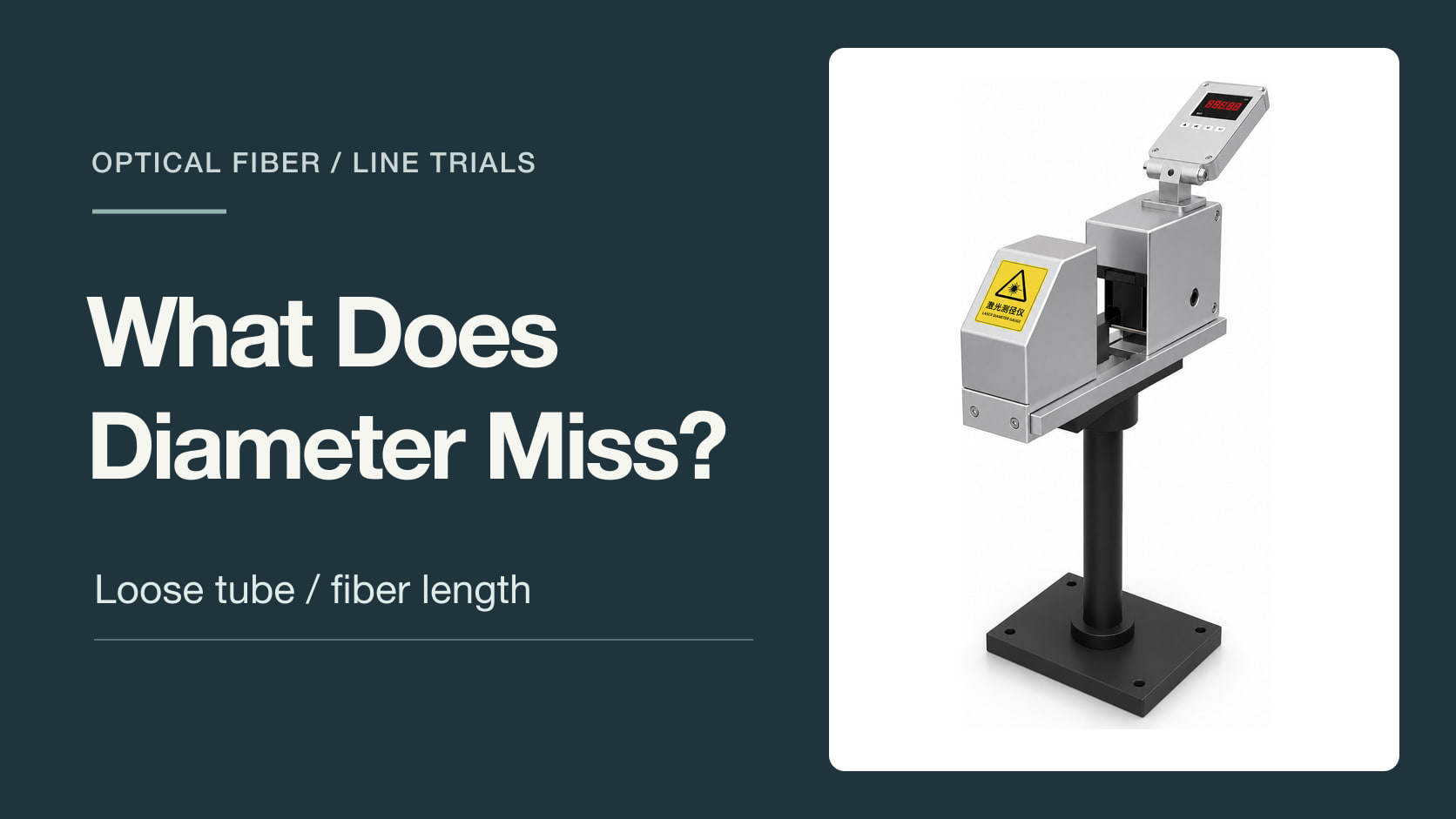
Các HONGKAI loose-tube line shows the filling, extrusion, cooling, measurement and traction stages. On the HK-50 reference configuration, the laser gauge measures outside diameter. Its readout does not tell you the length of any fiber inside the tube. If a quotation also offers online excess-length monitoring, ask what lengths it measures and how its reading will be compared with a retained sample. Do not assume that function is included with the diameter gauge.
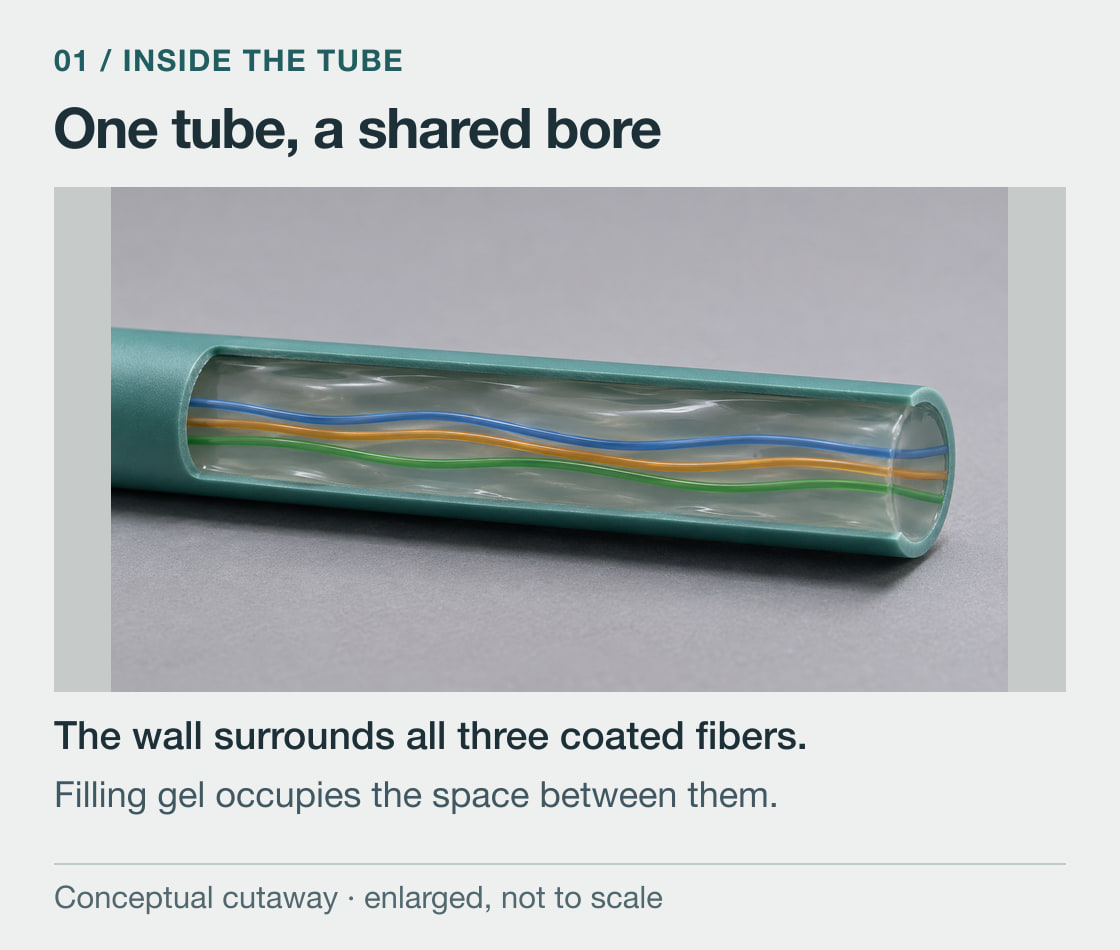
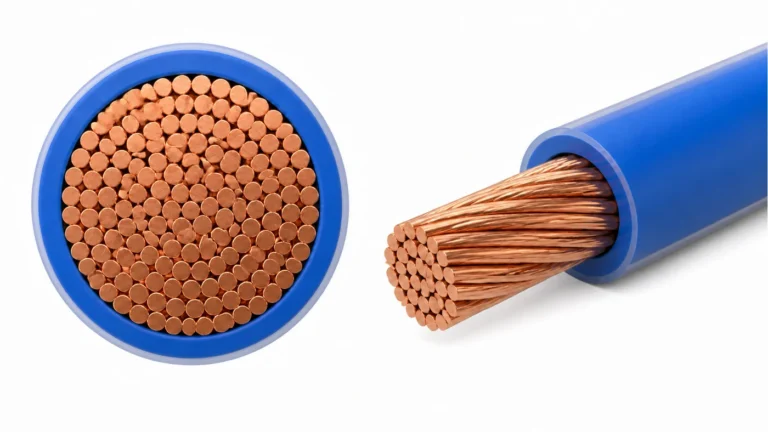
This enlarged conceptual cutaway shows the polymer wall, filling gel and coated fibers. Fiber count is illustrative. You cannot read excess length from a cut end.
Compare two lengths from the same marked section
Excess fiber length (EFL) gives the glass room to straighten as the tube stretches. More is not always better: too much extra length can force tighter bends and increase optical loss. That is why a buyer needs a range for the specific tube construction, not just the largest number the line can produce.
Tube EFL (%) = (fiber length − tube length) ÷ tube length × 100. Use the same unit for both lengths. Do not substitute the length printed on a finished cable jacket: in a stranded cable the tube winds around the core, so that comparison also includes the longer path taken by the tube.1
For arithmetic only: if a 10.000 m tube section contains 10.020 m of one fiber, the difference is 20 mm. Relative to the tube, that is 0.20%, or 2‰. Neither the sample length nor the result is a recommended test condition or a limit. Before the trial, the buyer and supplier should agree in writing on the sampling method and the acceptable EFL range for that tube construction.
In that agreement, specify how the section ends are identified, which fibers will be measured, the sample condition and how to handle the fiber during measurement. Record both original lengths, not just the percentage. If the two measurements came from different places on the reel, recalculating to more decimal places will not fix the comparison.

The left ends share a reference. The bracket on the right shows the length difference; it is exaggerated so you can see it. The drawing does not specify test tension.
Trace an unexpected result back to its place on the reel
Suppose the outside-diameter trace stays inside the agreed band but one sample gives an unexpected EFL. Before changing settings, match the sample to the run. A reading taken during steady production cannot explain a different section made during a restart.
| What the trial shows | What to compare before deciding |
|---|---|
| Two people report different EFL for the same sample | Compare the fiber ID, section ends, sample condition, units and calculation. Make sure both used tube length as the denominator. |
| A steady-run sample and a restart sample differ | Keep the results separate. Match each to the reel position and the available fiber-payoff, cooling and traction records for that interval. A difference identifies where to investigate; it does not identify a faulty machine. |
| The gauge trend looks good, but the reel position of the length sample is unknown | Keep the diameter record. Obtain a traceable length sample under the agreed safe sampling procedure before using it to release a reel. |
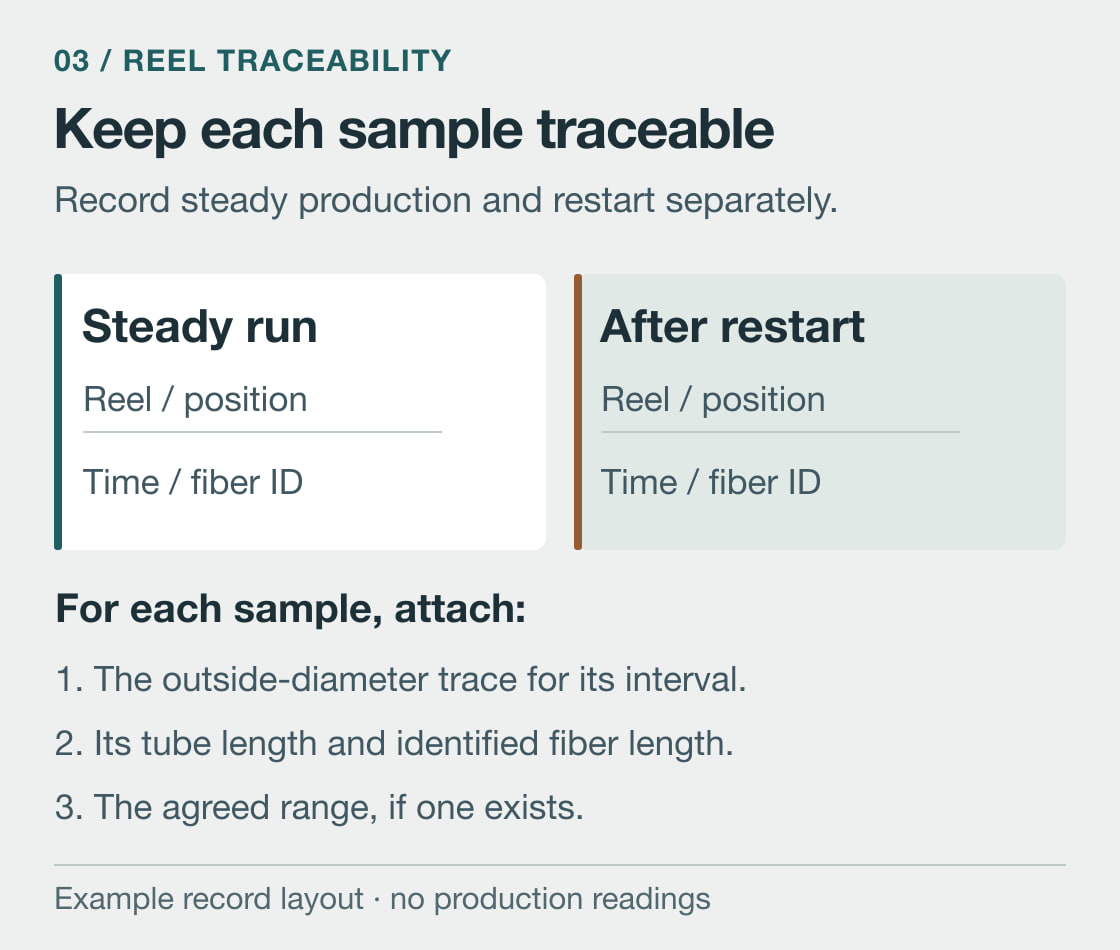
Use a separate reference for each piece. The layout shows which records belong together, not actual readings or a completed acceptance test.
At handover, pick one retained piece and ask the trial team to find its reel position, the matching diameter trace, the two measured lengths and the range both parties approved. If there is no agreed range, record the measurement and leave the pass/fail decision open.
-
K. Borzycki and P. Gajewski, Accurate Location of Fiber Cable Fault with OTDR, pp. 44–45 of the paper. Section 3.1.1, equation (4), gives fiber overlength relative to the tube; section 3.1.3 distinguishes the added path from stranding. Neither sets a pass limit for this trial. ↩

 English
 हिन्दी
 فارسی