


A cable factory should not build its maintenance system from a generic spare-parts catalog. The production manager first needs to know which assets stop saleable production, which conditions can be inspected, which work requires controlled isolation, and which replacement details must be frozen before a failure occurs.
A cable production line maintenance plan should connect each machine position to a safe task, inspection evidence, action limit, responsible person and exact spare-part identity. Critical stock is not simply the most expensive stock or the longest list; it is the smallest justified set of parts whose failure, sourcing difficulty and process consequence the factory cannot accept. Wear parts, repairable assemblies, control components and vendor-specific items should be reviewed separately. HONGKAI can help match parts to the confirmed machine and configuration, but the factory must set its final maintenance and inventory policy from real operating conditions and local safety requirements.

HONGKAI technical reference illustration of mechanical cable-machine parts. The image is a category guide, not a universal spare-parts kit for every production line.
This guide is for factory owners, production managers, maintenance teams and technical buyers who need a usable system before commissioning a new line or taking over an existing one. The decision is not whether to “buy more spares.” The decision is how to prevent an avoidable failure from becoming an uncontrolled repair, an untraceable quality change or an extended wait for an unidentified component.
O que uma fábrica deve definir antes de aprovar um plano de manutenção de linha de produção de cabos?
A factory should approve eight connected decisions: the asset register, safe-work boundary, process criticality, condition evidence, task ownership, spare-part identity, stock policy and supplier handover. These decisions turn a machine list into a controlled cable production line maintenance system. The same framework can cover extrusion, drawing, bunching, stranding, fiber processing, testing and handling while keeping every task configuration-specific. A proposed interval, action limit or stock quantity should remain project-specific until the machine documents and factory operating history support it.
1. Registro de Ativos: É possível identificar cada item mantido na sua posição exata na máquina?
Why it matters: A maintenance request such as “replace the sensor” is not actionable when one production line contains multiple sensors, controllers, drives and tension zones. The asset register must connect the complete line, each machine unit, the installed assembly and the replacement component. Without that hierarchy, technicians can fit a visually similar part with a different range, signal, mounting, material or control behavior.
What to ask: Record the line name, machine model, serial or project identifier, unit position, equipment drawing reference, electrical designation, component manufacturer, complete part number, revision, quantity installed and photo. For tooling or mechanical parts, add the approved drawing, dimensions, material, surface treatment and mating component. For a HONGKAI replacement review, also provide the apparent cause of damage and clear photographs that show both the installed position and measured detail when the number or drawing does not identify the item completely. For software-controlled equipment, record the PLC, HMI and drive versions plus the controlled backup location without storing passwords in the maintenance register.
How to verify: Walk the physical cable production line with the signed equipment list, electrical drawings, manuals and packing list. Photograph nameplates and installed positions, then test whether a person who did not build the register can locate the correct item and its document. HONGKAI’s cable machine spare-parts hub organizes replacement enquiries by production process, part name, photos and machine identity; the factory register should retain all four paths.
Red flags: The register contains only generic names, photos omit the installed position, drawings have no revision, two different parts share one store label, or a supplier code cannot be traced to the original component specification.
2. Trabalho Seguro: Cada tarefa de manutenção está vinculada a um método aprovado de controle de energia?
Why it matters: Cleaning, lubrication, adjustment and replacement can expose personnel to electrical, pneumatic, hydraulic, thermal, rotating, gravitational or stored-tension hazards. Pressing an HMI stop or emergency stop does not by itself prove that every hazardous energy source is isolated. The maintenance plan must be subordinate to the factory’s risk assessment, local law and machine-specific safe-work procedure.
What to ask: Define who may authorize, isolate, verify, test and return each machine to service. Identify main and secondary energy sources, stored-energy locations, isolation devices, discharge or restraint steps, test points, required tools and communication between operations and maintenance. State when guards may be removed and how a controlled test or positioning step is performed before isolation is reapplied.
How to verify: Conduct a documented field trial of each energy-control procedure with qualified personnel. IEC 60204-1:2016 with Amendment 1:2021 covers electrical equipment of machines from the supply connection and is a useful technical reference, while the applicable law and project risk assessment remain controlling.1 For factories subject to United States rules, OSHA 29 CFR 1910.147 requires an energy-control program, documented procedures in covered cases, training and verification before servicing.2
Red flags: The procedure says only “switch off power,” stored pneumatic or mechanical energy is not addressed, outside technicians follow a different isolation method without coordination, or production can restart the line while maintenance personnel remain exposed.
3. Criticidade: Quais falhas geram uma consequência inaceitável em produção, segurança ou qualidade?
Why it matters: Not every installed component deserves the same stock or monitoring policy. A common fastener, a process-contact tool, a matched mechanical assembly and a discontinued controller create different consequences. Criticality should reflect what happens to people, product, traceability and the production route when the function is lost—not the visual size or purchase price of the component.
O que perguntar: Para cada ativo ou componente, registre o efeito da falha, se a linha pode operar com segurança, se o produto fabricado antes da detecção precisa ser contido, se existe um método temporário aprovado, como a falha é diagnosticada, se o reparo é possível e quais informações de abastecimento já estão disponíveis. Distinga uma parada de linha de uma derivação oculta na qualidade. Identifique qualquer ponto único cuja perda bloqueie várias etapas downstream ou torne as evidências do produto retido não confiáveis. Como tela inicial nas revisões de peças de reposição em HONGKAI, componentes eletrônicos essenciais e peças de desgaste frequentemente utilizadas recebem atenção prioritária; isso não constitui uma lista universal de estoque, portanto a fábrica ainda deve confirmar a interrupção do processo, a intercambiabilidade e se uma substituição verificada pode chegar dentro da janela aceitável de interrupção.
How to verify: Run a cross-functional review with production, quality, maintenance, safety and purchasing. Trace a failure from the machine position to cable dimensions, tension, temperature, surface, electrical result, marking, package or other controlled characteristic only when that relationship applies to the approved process. Require one written reason for every “critical” rating and one defined response for every detected condition.
Red flags: Every part is labelled critical, no quality consequence is considered, a bypass is accepted without technical approval, or the rating is copied from another factory whose line, materials and support network differ.
4. Evidência de Condição: Qual observação indica à fábrica para inspecionar, ajustar ou substituir?
Why it matters: Calendar-only maintenance can create unnecessary intervention while still missing deterioration between intervals. Condition monitoring is useful only when the factory defines the parameter, measurement method, baseline, trend, action boundary and response. Vibration, temperature, current, pressure, tension, wear, leakage, surface condition and product measurements are different evidence streams and should not be mixed without a stated relationship.
What to ask: For every monitored item, name the failure mode, observable condition, instrument or inspection method, measurement position, operating condition, unit, baseline source, review owner and action rule. Link process measurements to the cable specification where a component can cause gradual quality change. Mark conditions that require an immediate safe stop separately from those that trigger planned inspection.
Como verificar: Repita a medição em condições comparáveis de máquina e produção, retenha o resultado bruto e confirme que pessoas qualificadas diferentes conseguem aplicar o método de forma consistente. Trate um alarme de produção que continue a ocorrer como um gatilho para diagnóstico controlado, e não para reinicializações repetidas. Em uma linha de extrusão, uma zona de aquecimento que não atinge sua temperatura definida, saída instável do material ou um novo ruído rastreável ao interior do equipamento justifica investigação, mas nenhuma dessas observações isoladamente identifica a peça com falha nem autoriza a continuidade da produção. ISO 17359:2018 gives general procedures for establishing a machine condition-monitoring program and remains current after ISO’s 2023 review.3 The standard supplies a framework, not universal alarm values for a cable production line.
Red flags: The plan says “check regularly” without a method, a handheld reading has no measurement position, thresholds come from an unrelated machine, or a product defect is treated as the first acceptable warning of equipment deterioration.
5. Plano de Tarefas: As tarefas de manutenção, as evidências e a responsabilidade são utilizáveis no chão de fábrica?
Why it matters: A maintenance schedule fails when it lists activities but not safe conditions, acceptance evidence or responsibility. “Lubricate bearings” is incomplete if the lubricant, point, machine state, amount, contamination control and record are unknown. “Check alignment” is incomplete if the reference, method and action boundary are absent.
O que perguntar: Escreva cada tarefa com seu ativo, finalidade, gatilho ou intervalo aprovado, pré-requisitos, estado de isolamento, ferramentas e materiais, referência do procedimento, condição esperada, ação caso esteja fora do limite, registro e função responsável. Separe cuidados do operador, manutenção planejada, inspeção baseada em condição, calibração, verificação de dispositivos de segurança, limpeza controlada e reparo corretivo. Para uma linha de extrusão de cabos HONGKAI, a revisão inicial abrange a seção de extrusão, equipamento de tração, roldanas guia, caixa de engrenagens, rosca e tanque de resfriamento; componentes com movimento repetitivo necessitam inspeção e manutenção, enquanto a rosca, o tanque e outras áreas em contato com o material também requerem limpeza controlada. Utilize a extrusora instalada, o material processado, as instruções do fabricante e o método aprovado da fábrica para definir a tarefa exata, o intervalo e a condição de aceitação, em vez de aplicar um único cronograma a todas as linhas.
How to verify: Observe the assigned person perform the task using the controlled instruction. Confirm that the record identifies the asset, condition found, work completed, parts used, measurement result, unresolved issue and return-to-service approval. Review whether the task itself changes tooling, alignment, recipe, sensor position or any other condition that requires a product or process check afterward.
Red flags: Tasks have no document revision, operators sign work they cannot perform, completion is recorded without the condition found, or a repaired line returns to production without checking the affected cable characteristic.
6. Identidade da peça: A compra pode obter uma substituição funcionalmente correta antes de uma falha?
Why it matters: A spare is useful only when its identity and compatibility are confirmed. The same visible shape can hide different voltage, current, temperature, signal, accuracy, range, material, hardness, geometry, direction, connector, firmware or mounting details. Emergency purchasing creates the highest risk when the failed part must first be reverse-engineered under time pressure.
What to ask: Freeze the original manufacturer and part number where appropriate, plus function, technical specification, drawing, photos, nameplate, connector or terminal plan, mounting dimensions, mating part and approved substitute rule. For wear tooling, retain a new-part reference and the cable products or material system for which the geometry is approved. For a custom mechanical item, identify whether HONGKAI needs a sample, drawing, measured dimensions or all three.
Como verificar: Compare a peça sobressalente proposta com o item instalado e os documentos do projeto antes de fazer o pedido. Após o recebimento, inspecione a identidade e as dimensões críticas e, em seguida, armazene as evidências junto ao registro de estoque. O processo de peças sobressalentes HONGKAI aceita marca e modelo da máquina, descrição da peça, dimensões-chave, fotos ou desenhos, pois nenhum identificador único é confiável para todos os componentes antigos ou personalizados. O pedido também deve distinguir danos por manuseio, uso inadequado, desgaste normal e problemas suspeitos de qualidade, para que a análise possa determinar se apenas a substituição é razoável ou se a instalação, as condições operacionais ou o conjunto acoplado precisam ser examinados. Uma fotografia sem a posição na máquina e detalhes dimensionais medidos não é suficiente para muitas peças personalizadas ou antigas.
Red flags: A substitute is chosen only from an online photo, the original drawing is unavailable, incoming inspection checks only quantity, or a custom part is first fitted during an unplanned stop.
7. Política de Estoque: Quais peças devem ser estocadas, monitoradas, reparadas ou adquiridas sob demanda?
Why it matters: Criticality alone does not decide inventory. The factory should also consider failure detectability, installed quantity, interchangeability, preservation requirements, repair option, supplier status, transport and customs constraints, approved substitute and the production buffer available for the affected route. A large store can still fail if the needed item is unidentified, degraded or reserved for another machine.
What to ask: Assign each reviewed item to a clear strategy: operating consumable, planned wear stock, critical insurance spare, repairable assembly, shared interchangeable spare, supplier-held or made-to-order part, or non-stock item with a complete sourcing file. Record minimum review data without forcing a universal quantity. Include shelf condition, environmental protection, rotation, inspection, firmware or software compatibility and obsolescence review where applicable.
Como verificar: Teste a decisão de estoque contra cenários realistas de falha e o plano de produção da fábrica. Considere o conjunto básico de peças sobressalentes fornecido com uma nova máquina HONGKAI como um pacote inicial, depois revise as peças comumente desgastadas na configuração exata fornecida e acorde qualquer estoque inicial adicional antes do embarque. Projetos atuais de controle HONGKAI geralmente selecionam hardware PLC Siemens, que pode estar disponível por canais locais, mas o modelo exato, programa, revisão e disponibilidade local ainda exigem confirmação; discuta com antecedência suficiente uma peça cuja falha pare a produção ou que esteja envelhecendo, a fim de estabelecer um caminho compatível de reserva ou substituição. Confirme que o item físico na prateleira corresponde ao registro digital e que peças reservadas não sejam consumidas silenciosamente por outra linha. Reavalie a estratégia quando houver alterações na mistura de cabos, carga operacional, revisão dos equipamentos, status do fornecedor ou tempo aceitável de interrupção da produção.
Red flags: Stock quantity is copied from the supplier without a consequence review, electronic parts are stored without compatibility records, seals or compounds age unnoticed, or the only critical assembly is already installed on another machine.
8. Entrega: O fornecedor entrega os registros necessários para manter e recuperar a linha?
Why it matters: A factory cannot maintain a cable production line from a sales quotation. The handover must transfer drawings, manuals, installed-component identities, backups, tool and spare lists, safe procedures, troubleshooting evidence and open issues. Training that covers only normal start-up leaves the maintenance team dependent on the visiting engineer.
O que perguntar: Exigir desenhos mecânicos e elétricos atuais, manuais de operação e manutenção, informações de lubrificação, guia de alarmes e solução de problemas, lista de componentes e peças de reposição, desenhos de ferramentas, backups de software e receitas, controle de alterações de parâmetros, registros de treinamento, rota de contato de serviço e lista final de itens pendentes. Nomear o proprietário do arquivo, revisão e local de armazenamento. Separar equipamentos fabricados por HONGKAI- de equipamentos especializados integrados, para que a responsabilidade e as fontes de peças permaneçam visíveis.
How to verify: During FAT and site handover, select sample faults and parts from different line sections. Ask factory personnel to identify the machine position, find the correct drawing, isolate the equipment, locate the approved spare, explain the verification step and restore the documented configuration. A previous verified HONGKAI installation package included installation drawings, operating manuals, electrical diagrams and packing information; the final project list still needs to match the exact supplied line. Release a repaired machine only after the fault is cleared, operation is stable, no abnormal condition remains and the required process or finished-product checks for the affected function have passed. A machine that merely restarts while alarms, unstable output, abnormal noise or quality uncertainty remain is not ready for released production.
Sinais de alerta: Backups permanecem apenas em um laptop do fornecedor, a lista de peças de reposição não indica posição instalada, desenhos não refletem alterações no local, máquinas integradas não têm proprietário de suporte nomeado ou alarmes não resolvidos desaparecem do registro de transferência assinado.
Nota: Um plano de manutenção torna-se auditável quando cada tarefa e peça de reposição podem ser rastreadas da máquina física até o risco, modo de falha, evidência, ação aprovada e registro de retorno ao serviço.
Quais Famílias de Peças de Reposição uma Fábrica de Cabos deve Revisar por Processo de Produção?
Uma fábrica de cabos deve revisar peças de reposição por posição do processo e função de falha, e não por um kit universal. Extrusão, processamento de fibras, torção, estiramento, manuseio e sistemas de controle expõem peças diferentes ao calor, atrito, tensão, contato com material, movimento e carga elétrica. A tabela abaixo é um mapa de revisão, não uma recomendação de estoque. HONGKAI deve confirmar a peça final, quantidade e compatibilidade contra a configuração aprovada do equipamento e a lista de embalagem.
| Área do processo | Famílias de peças a revisar | Evidência do comprador necessária antes do estoque | Por que a decisão final permanece específica do projeto |
|---|---|---|---|
| Extrusão e revestimento | Parafuso e cilindro; cabeçote e matrizes; bandas ou placas de aquecimento; termopares; itens relacionados à fusão ou pressão, quando instalados; correias de tração | Modelo do extrusor e cabeçote, sistema de polímero, desenho da ferramenta, classificação do aquecedor, tipo de sensor, posição instalada e dimensões de acoplamento | Contato com material, padrão de desgaste, construção do aquecedor e geometria da ferramenta mudam com o extrusor e o design do cabo |
| Coloração de fibras e tubo solto | Matrizes de coloração; guias de fibra; PBT ou ferramentas para tubo solto; peças de controle de tensão; sensores e aquecedores aprovados, quando instalados | Caminho da fibra, desenho da matriz ou ferramenta, construção aprovada do tubo, dimensões dos guias, função de tensão e identidade exata do dispositivo | Pequenas diferenças de geometria ou superfície podem afetar um processo sensível de fibra ou tubo |
| SZ torção e entrelaçamento | Rodas guia; guias cerâmicas; tensionadores; freios ou embreagens magnéticas; grampos; fusos e interfaces de carretéis | Posição de desenrolamento e torção, perfil da guia, classificação do freio ou embreagem, desenho do carretel, direção e interface de controle | O mesmo nome de peça pode servir a diferentes zonas de tensão, pacotes e estruturas de cabo |
| Estiramento e recozimento do fio | Matrizes de estiramento; anéis guia ou de capstan; rodas de recozimento; vedações e peças relacionadas à lubrificação especificadas pela máquina | Material e faixa do fio, cronograma de matrizes, estiramento por roda ou anel, especificação de refrigeração e lubrificação, identidade da máquina instalada | Desgaste, superfície e contato elétrico dependem do sistema real de estiramento e recozimento |
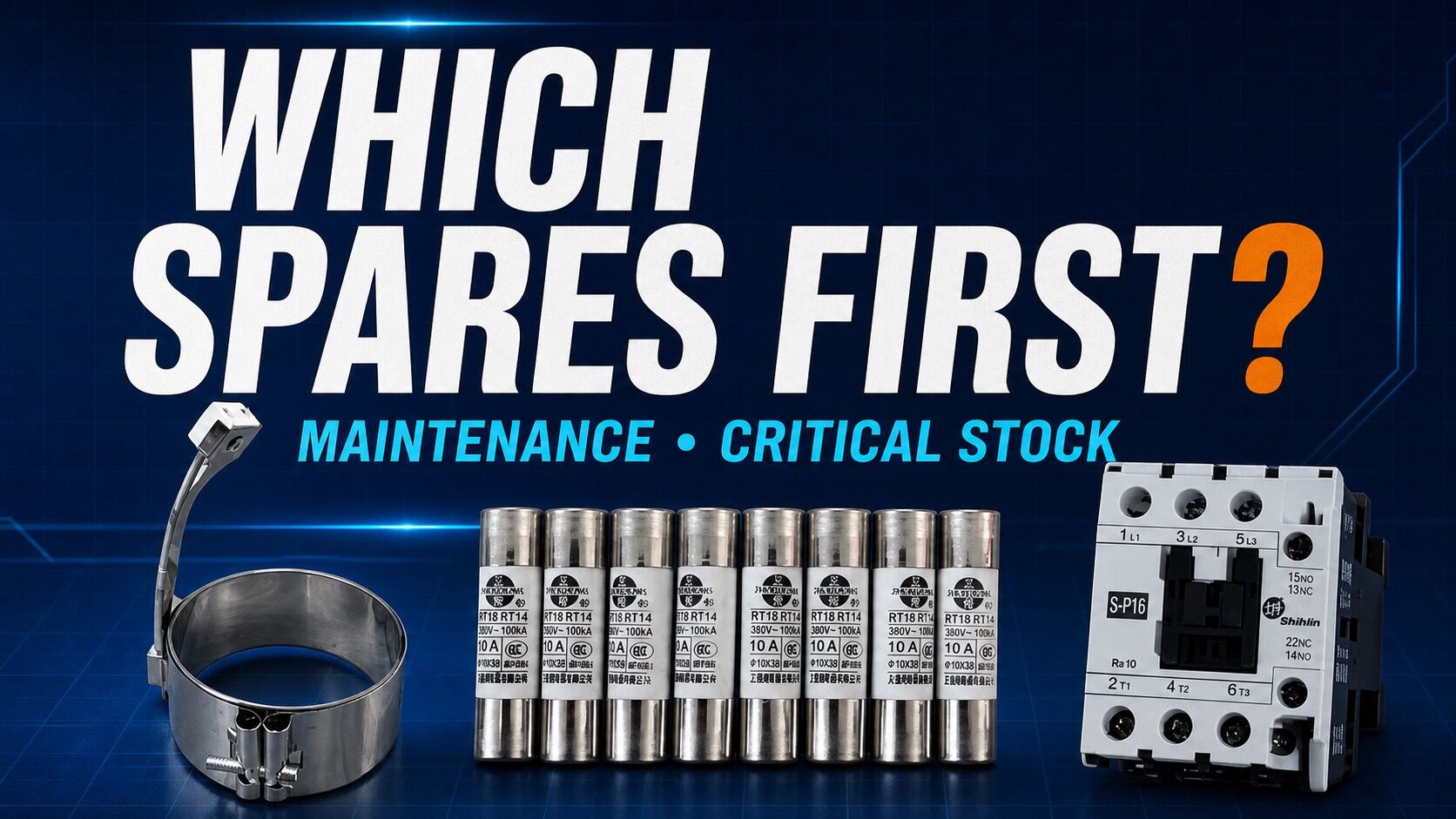
| Elétrico e controles | Fusíveis; contatoras; relés; botões; codificadores; sensores; controladores de temperatura; módulos VFD, PLC ou HMI quando aprovados | Número de peça completo, classificação elétrica, I/O ou tipo de sinal, plano de terminais, backup de programa ou parâmetro, revisão e substituto aprovado | Carcaças semelhantes não comprovam compatibilidade funcional ou de software |
| Pneumático, refrigeração e utilidades | Tubulações, conexões, válvulas, filtros, bombas, vedações e peças de interface de utilidade incluídas no projeto | Meio, pressão ou temperatura base, material, tamanho da porta e tubo, direção do fluxo, compatibilidade da vedação e posição da máquina | O design e os materiais das utilidades variam conforme a linha, o local e a configuração aprovada |
| Ferramentas, fixadores e ferramentas de manutenção | Moldes específicos do produto; ferramentas padrão e especiais; parafusos e peças de fixação aprovadas | Lista de ferramentas, torque ou instrução de uso quando necessário, revisão do desenho, especificação do cabo e controle de armazenamento | Uma ferramenta ou molde pode ser específica do produto mesmo quando parece mecanicamente simples |
Documentos verificados do projeto HONGKAI mostram por que uma lista genérica é insegura. Um projeto verificado de extrusão de cabo PY-70+35 incluiu, em seu conjunto de peças de reposição fornecido, um filme de aquecimento do pescoço da máquina, anel de aquecimento do molde ocular, termopares do tipo K-, fusíveis, potenciômetros, botões e um contator de aquecimento. Uma configuração verificada separada de cabo de fibra interna descreveu ferramentas padrão, tubulações e fixadores selecionados, moldes específicos do produto, itens de aquecimento do cabeçote, termopares especificados pela fonte, peças elétricas de reposição selecionadas e pacotes de documentos. Estes são exemplos de configuração, não uma promessa de que o mesmo kit, quantidades ou identidades de componentes se adequem a outra linha de produção de cabos.
O comprador também deve separar o estoque da identificação. Uma matriz de extrusão personalizada pode ser planejada como um item de desgaste controlado; um grande conjunto mecânico pode ser documentado para reparo ou fornecimento sob encomenda; um dispositivo elétrico comum pode ser estocado somente após a confirmação de sua classificação, programa e regra de substituição. A política correta segue a consequência da falha e o caminho de recuperação, não o nome da categoria.
Nota: A lista de peças de reposição mais útil não começa com a quantidade — ela começa com a posição instalada, função exata, evidência de compatibilidade e estratégia de recuperação.
Quais evidências de manutenção e peças de reposição devem ser incluídas no RFQ, FAT e na entrega?
Um comprador deve exigir evidências de manutenção e peças de reposição antes da saída da linha de produção de cabos do fornecedor, depois verificar as mesmas evidências durante o FAT e a entrega no local. O RFQ deve definir o escopo dos documentos, regras de identificação, treinamento, revisão inicial de peças de reposição e responsabilidade pelos equipamentos integrados. O FAT deve comprovar que os registros correspondem à configuração fornecida, enquanto a entrega deve comprovar que o pessoal da fábrica pode utilizá-los. A lista abaixo é um controle de aquisição, não um substituto para o sistema de trabalho seguro da fábrica ou instruções de manutenção específicas do projeto.
- ☐ Hierarquia completa de ativos da linha de produção e unidades de máquina
- ☐ Lista de equipamentos assinada com fabricante, modelo e atribuição de origem
- ☐ Desenhos atuais mecânicos, elétricos, pneumáticos e de utilidades
- ☐ Lista de componentes instalados com números de peça, classificações e posições na máquina
- ☐ Lista de ferramentas específicas do produto e desenhos controlados
- ☐ Instruções de operação, limpeza, lubrificação e manutenção
- ☐ Machine-specific energy-isolation information and site procedure owner
- ☐ Alarm, fault and troubleshooting reference with escalation route
- ☐ PLC, HMI, drive, recipe and parameter backups under revision control
- ☐ Condition-monitoring points, methods and project-approved action rules
- ☐ Calibration and safety-function verification responsibilities
- ☐ Initial spare-parts proposal with a written reason for each critical item
- ☐ Wear, repairable, interchangeable, made-to-order and non-stock classifications
- ☐ Incoming-inspection method for custom and compatibility-sensitive parts
- ☐ Storage, preservation, rotation and obsolescence review requirements
- ☐ Supplier and factory responsibility for integrated specialist equipment
- ☐ Operator and maintenance training records using the actual supplied line
- ☐ FAT deviations, unresolved alarms and open items tied to responsible owners
At FAT, choose samples from several process areas instead of reviewing only the parts carton. Match a tooling item to its drawing and approved cable, an electrical item to its designation and rating, a mechanical item to its installed position, and a backup to the actual controller revision. Confirm that quantities and identities agree with the final packing list, but do not treat packing-list agreement as proof of functional compatibility.
At site handover, connect the documents to work. A qualified technician should be able to find a fault record, locate the machine position, apply the approved safe procedure, identify the replacement, record the work and explain what process or product evidence is needed before production resumes. The production manager should also know which items are factory stock, supplier-sourced, repairable or pending, and which line or product would be affected by their loss.
For an existing line, send clear photos, nameplates, drawings, dimensions and the installed location through the HONGKAI project enquiry page before assuming compatibility. For a new line, attach this checklist to the RFQ and require the supplier to return a project-specific spare-parts and documentation matrix. Exact quantities, replacement intervals, lead times and stock levels remain to be confirmed per project.
Note: Maintenance readiness is proven when the factory can identify, isolate, diagnose, replace, verify and document a component without losing control of safety or product evidence.
-
IEC 60204-1:2016, Safety of machinery — Electrical equipment of machines — Part 1, with Amendment 1:2021 available from the same official IEC publication record. The standard covers electrical, electronic and programmable electronic equipment of machines from the supply connection. ↩
-
OSHA 29 CFR 1910.147, The control of hazardous energy. This United States rule applies to covered servicing and maintenance; factories elsewhere must follow their applicable law and approved risk controls. ↩
-
ISO 17359:2018, Monitoramento e diagnóstico de condições de máquinas — Diretrizes gerais. ISO afirma que a terceira edição foi confirmada em 2023 aº e permanece atual.↩
