












कारखाने के मालिक, उत्पादन प्रबंधक और तकनीकी खरीददार अक्सर प्रक्रिया रूट को पूरी तरह से परिभाषित करने से पहले नए और पुराने फाइबर ऑप्टिक केबल मशीनरी की तुलना करते हैं। उपयोगी निर्णय यह नहीं है कि कौन सा विकल्प सस्ता लगता है; यह है कि कौन सा विकल्प अनुमोदित केबल को सुरक्षित, दोहराया जा सकने वाला और समर्थन योग्य स्वीकृति योजना के साथ बना सकता है।.
जब केबल संरचना, नियंत्रण, दस्तावेजीकरण या भविष्य का विस्तार एक साथ इंजीनियर किए जाने की आवश्यकता हो, तो नया मशीनरी आमतौर पर स्पष्ट विकल्प होता है। जब इसकी प्रक्रिया विंडो, स्थिति, सुरक्षा प्रणाली, सॉफ़्टवेयर, दस्तावेजीकरण और भाग समर्थन की पुष्टि इच्छित उत्पाद के खिलाफ की जाती है, तो पुराना मशीनरी व्यवहार्य हो सकता है। कोई खरीददार किसी ऐसी तुलना को अस्वीकार करना चाहिए जो केवल मॉडल नाम, आयु या पूछे जाने वाले मूल्य पर आधारित हो। निर्णय प्रत्येक उत्पादन चरण और इंटरफ़ेस के स्तर पर होना चाहिए।.
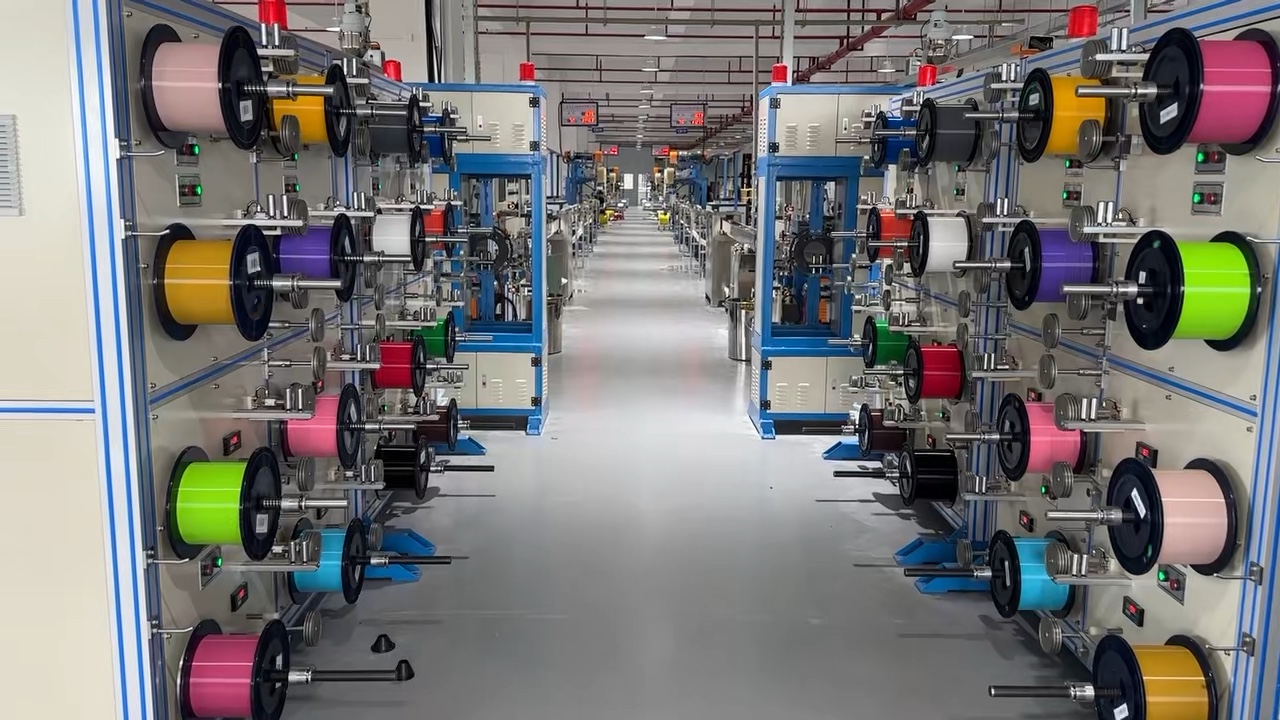
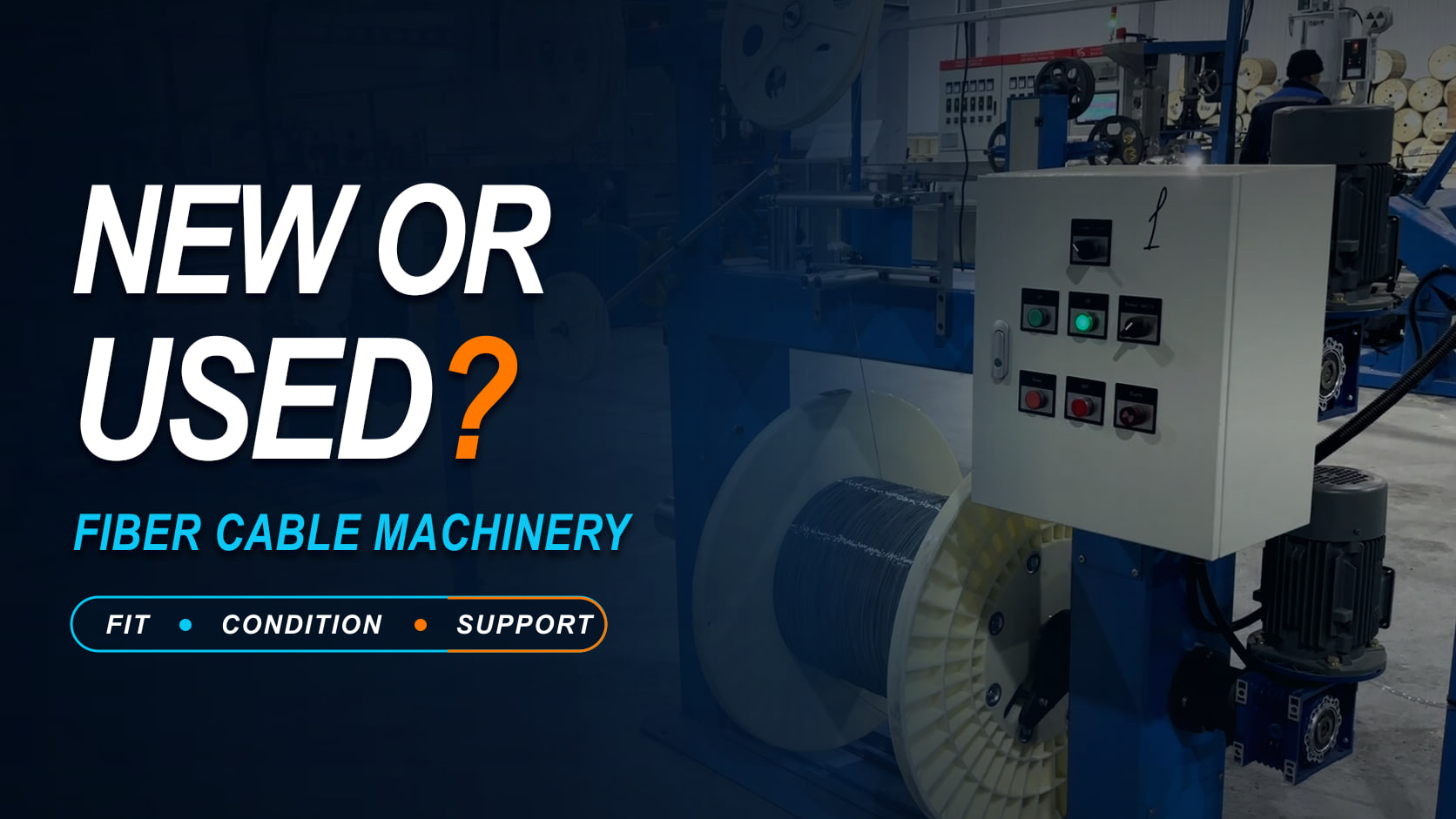
वास्तविक HONGKAI उत्पादन फुटेज संदर्भ। चित्र एक सत्यापित शीथिंग-लाइन कॉन्फ़िगरेशन की पहचान करता है; यह हर नए या पुराने फाइबर ऑप्टिक केबल मशीन का प्रतिनिधित्व नहीं करता है।.
इस गाइड से कारखाने के मालिक को एक निवेश सीमा, उत्पादन प्रबंधक को एक निरीक्षण मार्ग और तकनीकी खरीद को एक तुलनीय RFQ और FAT संरचना मिलती है। यह एक सार्वभौमिक द्वितीयक हस्तांतरण छूट, शेष सेवा जीवन, भुगतान अवधि या उत्पादन परिणाम का अनुमान नहीं लगाता है क्योंकि ये मान ठीक मशीन और परियोजना पर निर्भर करते हैं।.
क्या एक कारखाने को नया या पुराना फाइबर ऑप्टिक केबल मशीनरी खरीदना चाहिए?
जब प्रक्रिया, नियंत्रण, सुरक्षा कार्य, लाइन इंटरफ़ेस या भविष्य की उत्पाद श्रेणी को एक सत्यापित दायरे के रूप में इंजीनियर किया जाना आवश्यक हो, तो नया फाइबर ऑप्टिक केबल मशीनरी खरीदें। केवल तभी पुराना मशीनरी पर विचार करें जब ठीक मशीन का निरीक्षण, दस्तावेजीकरण और अनुमोदित केबल और कारखाने की स्थिति के खिलाफ परीक्षण किया जा सके। एक पुरानी मशीन स्वतः खराब मूल्य नहीं है, और एक नई मशीन स्वतः सही कॉन्फ़िगरेशन नहीं है। सही विकल्प वह है जिसमें इच्छित उत्पादन चरण के लिए मजबूत साक्ष्य हो।.
| निर्णय क्षेत्र | नया मशीनरी | पुराना मशीनरी | दोनों विकल्पों से आवश्यक साक्ष्य |
|---|---|---|---|
| प्रक्रिया फिट | अनुमोदित केबल और आउटपुट आवश्यकता के आसपास कॉन्फ़िगर किया जा सकता है | मौजूदा प्रक्रिया विंडो उत्पाद श्रेणी को सीमित कर सकती है | केबल ड्राइंग, सामग्री प्रणाली, आयाम, रील डेटा और आवश्यक आउटपुट |
| यांत्रिक स्थिति | निर्माण के दौरान आधार स्थापित होता है और FAT | पहनावा, संरेखण और पिछले संशोधनों की जांच की आवश्यकता होती है | निरीक्षण रिकॉर्ड, रन टेस्ट, महत्वपूर्ण स्पष्टता और रखरखाव इतिहास |
| नियंत्रण और सॉफ़्टवेयर | Current control scope can be documented for the project | PLC, HMI, drives and licenses may be obsolete, locked or modified | Hardware list, program backup, passwords, licenses and electrical drawings |
| Safety and compliance | Safeguards can be designed for the destination and intended use | Missing guards, defeated interlocks or undocumented changes must be corrected | Risk assessment, guard and interlock checks, emergency-stop test and local compliance review |
| Support | Supplier responsibility can be defined before the order | Original support and parts availability may be uncertain | Support owner, spare-parts route, remote-access boundary and service documentation |
| Acceptance | FAT can be written into the supply scope | Demonstration may be limited by location or available materials | Agreed product trial, measured records, defect handling and acceptance sign-off |
For buyers in Great Britain, the Health and Safety Executive says second-hand equipment should be suitable for its intended use, supplied with relevant information, and checked for missing or damaged guards and safety devices.1 Legal duties differ by destination, so the buyer must review the applicable local rules instead of treating any generic checklist as a conformity decision.
Decision criterion: Compare one new and one used proposal against the same cable drawing, process stages, utilities, safety requirements, documents, trial material and acceptance tests. A lower asking price is not comparable if the scope excludes the work needed to reach production.
Note: The first decision is not new versus used; it is whether the exact machine evidence is complete enough to support a production decision.
Which Seven Checks Decide Whether a Used Fiber Optic Cable Line Is Viable?
A viable used fiber optic cable line must pass seven connected checks: process fit, mechanical condition, controls, safety, documentation, parts support and sample production. Failure in one area can invalidate evidence from the others; a smooth no-load run does not prove cable quality, and a good cable sample does not prove that the guards or software are supportable. The buyer should assign an owner and acceptance record to every check. Review the existing machine and its interfaces before discussing replacement or integration.
1. Process Fit: Can the machine make the approved cable structure?
Why it matters: Fiber coloring, tight buffering, loose-tube extrusion, SZ stranding and final sheathing perform different transformations. A familiar model name cannot prove that tooling, tension control, reel handling, materials or measurement positions fit the target cable.
What to ask: Request the finished cable drawing, incoming material, required process, dimension range, reel data, material system, required output and in-line measurements.
How to verify: Trace every cable layer to a named process and match every process to a visible machine function, tool and control point.
Red flags: The seller offers only a machine name, a maximum-speed claim or a generic statement that the line can make “all optical cables.”
2. Mechanical Condition: Are wear and alignment measurable?
Why it matters: Bearings, shafts, gearboxes, capstans, guides, screws, barrels, crossheads and take-up mechanisms can affect stability even when the machine powers on.
What to ask: Request maintenance records, known faults, replacement history, lubrication records, stored condition, operating video and access for inspection.
How to verify: Inspect wear surfaces and rotating assemblies under safe conditions, then record vibration, leakage, noise, temperature, alignment and unloaded versus loaded behavior where the agreed test permits.
Red flags: Fresh paint hides inspection points, critical guards cannot be opened safely for review, or the seller refuses a controlled run test.
3. Controls & Software: Can the electrical system be supported?
Why it matters: A functioning HMI does not prove that the PLC program, drive parameters, recipes, licenses, source files or communication interfaces can be recovered after a failure.
What to ask: Request a complete component list, electrical drawings, PLC and HMI backups, drive parameter files, license status, passwords, network architecture and alarm history.
How to verify: Have a qualified controls engineer compare installed hardware with the drawings and demonstrate a restorable backup for the supplied scope.
Red flags: Modified wiring is undocumented, backups are unavailable, passwords are unknown, or critical components have no confirmed replacement route.
4. Safety System: Are guards and interlocks complete and functional?
Why it matters: Pay-offs, capstans, rotating reels, caterpillars, take-ups and extrusion equipment create moving-part and process hazards that must be assessed for the intended installation.
What to ask: Request the risk-assessment record, guard layout, interlock logic, emergency-stop circuit, safe maintenance procedure and destination-specific compliance documents.
How to verify: Test guards, interlocks and emergency functions under an agreed safe procedure, and complete a local risk review before the machine enters production. ISO 12100 provides a risk-assessment and risk-reduction methodology, while IEC 60204-1 covers the electrical equipment of machines.23
Red flags: Interlocks are bypassed, emergency devices are untested, rotating parts are exposed, or a label is offered as a substitute for the underlying technical file.
5. Documents & History: Is the machine identity traceable?
Why it matters: A buyer cannot plan installation, maintenance, training or modification if the serial identity, manuals, drawings and change history do not describe the machine being supplied.
What to ask: Request the nameplate, serial number, build year, manuals, drawings, parts list, maintenance history, modification log and previous product records.
How to verify: Match document revisions to the installed components and photograph each discrepancy for the refurbishment scope.
Red flags: Manuals belong to another model, drawings omit major modifications, or ownership of software and documentation cannot be transferred.
6. Parts & Support: Who owns the recovery path after delivery?
Why it matters: A stopped production stage can remain unavailable if the buyer cannot source a critical drive, sensor, bearing, screw, barrel, guide, belt or control component.
What to ask: Request a critical-spares list, current part numbers, substitute policy, lead-time basis, service contact and responsibility for obsolete items.
How to verify: Confirm at least one documented replacement or repair route for every component classified as critical in the buyer’s maintenance plan. The HONGKAI fiber optic cable line parts guide shows the identification information normally needed before a parts quotation.
Red flags: Parts are described only by appearance, installed components have no readable identity, or the commercial offer excludes all obsolete-component engineering.
7. Sample Trial: Can the line pass an agreed production test?
Why it matters: A no-load demonstration cannot prove material handling, tension behavior, extrusion stability, dimensional control, take-up quality or finished-cable performance.
What to ask: Define the trial material, product drawing, setup responsibility, run condition, samples, measurements, test instruments, record format and treatment of nonconformity.
How to verify: Run the agreed product where practical, preserve machine settings and measured records, and compare the output with the same acceptance criteria used for a new-machine proposal.
Red flags: The machine can only jog briefly, no qualified material is available, measurements are replaced by visual opinion, or the sample cannot be traced to the tested settings.
Note: A used line becomes a credible option only when the buyer can convert each unknown into a measured result, a documented refurbishment item or an explicit commercial exclusion.
Which Fiber Optic Cable Production Stages Are Hardest to Evaluate as Used Machinery?
The hardest used-machine evaluations occur where the production stage must control a sensitive material, create a cable layer or coordinate several driven sections. Fiber coloring and tight buffering depend on controlled fiber handling; loose-tube and sheathing extrusion add material preparation, tooling, cooling and dimensional control; SZ stranding adds synchronized reversal and core handling. The buyer should evaluate each stage separately because a complete fiber optic cable production line is not one interchangeable machine package.
| Production stage | What the stage must prove | Used-equipment inspection focus | HONGKAI reference boundary |
|---|---|---|---|
| Fiber coloring and respooling | Controlled fiber handling, identification and reel preparation | Fiber path, tension elements, coating/curing scope, traverse and reel compatibility | Confirmed as a distinct preparation stage in the fiber optic cable production-line map |
| टाइट बफरिंग | Adds the approved protective buffer to optical fiber | Pay-off condition, preheating where applicable, extrusion system, cooling, capstan and take-up | HK-30 tight-buffered production line is a route reference, not proof of a third-party used machine |
| ढीले-ट्यूब एक्सट्रूजन | Forms and fills the approved loose tube around optical fibers | Fiber pay-offs, tension, extruder and crosshead condition, filling system, cooling, diameter control and take-up | HONGKAI maps loose-tube extrusion as an outdoor-cable process stage |
| एसजेड स्ट्रैंडिंग | Forms the loose-tube cable core with the approved lay and elements | Tube pay-offs, reversal unit, binding, central member feed, synchronized drives and core take-up | HK-800/12 is a verified HONGKAI reference configuration; final scope remains drawing-dependent |
| आर्मरिंग और शीथिंग | Adds protection and the final jacket defined by the cable drawing | आवश्यकता के अनुसार टेप या तार का मार्ग, एक्सट्रूडर का घिसावट, क्रॉसहेड/उपकरण, शीतलन, चिह्नितकरण, ट्रैक्शन और लेन लेना | GYXTW production route HK-90 को एक पुष्टि प्राप्त केबल-विशिष्ट मार्ग में दर्शाता है |
| परीक्षण और पैकिंग | सहमति प्राप्त निर्मित उत्पाद की पुष्टि करता है और डिलीवरी फॉर्मेट तैयार करता है | उपकरण कैलिब्रेशन, परीक्षण विधि, नमूना ट्रेसेबिलिटी, रील की स्थिति और रिकॉर्ड रिटेंशन | प्रयोगशाला और पैकिंग का दायरा केबल निर्माण यंत्र से अलग रूप से नामित होना चाहिए |

HONGKAI 3D उपकरण संदर्भ की पुष्टि SZ स्ट्रैंडिंग चरण के लिए। चित्र किसी भी प्रयुक्त मशीन की स्थिति, नियंत्रण या क्षमता का वर्णन नहीं करता है।.
Start with the finished cable and mark the boundary of every process already available in the factory. Only then should the project compare a used replacement, a new standalone machine or a coordinated line upgrade.
नोट: जितने अधिक इंटरफेस एक चरण के पास ऊपरी सामग्री, निचली तनाव और लाइन नियंत्रण के साथ होते हैं, उतनी ही कम उपयोगी एक स्वतंत्र पावर-ऑन वीडियो खरीदारी साक्ष्य के रूप में होती है।.
एक ROI बनाए बिना एक खरीददार को कुल परियोजना दायरा कैसे तुलना करना चाहिए?
अनुमानित लाभ अवधि की तुलना न करें, बल्कि वितरित उत्पादन दायरा की तुलना करें। खरीददार को अपनी स्वीकृति से पहले आवश्यक खरीद, निरीक्षण, पुनर्निर्माण, परिवहन, स्थापना, उपयोगिताएँ, नियंत्रण कार्य, सुरक्षा सुधार, उपकरण, परीक्षण, प्रशिक्षण, स्पेयर और समर्थन की सूची बनानी चाहिए। नया और प्रयुक्त प्रस्ताव केवल तभी वाणिज्यिक रूप से तुलनीय होते हैं जब दोनों दायरा मैट्रिक्स में समान शामिलताएँ, बाहर रखे गए तत्व और जिम्मेदारियाँ दिखाई दें। किसी भी ROI दावे को खरीददार के पुष्टि प्राप्त ऑर्डर, मार्जिन, उपयोग और संचालन लागत के बिना लेख और प्रस्ताव से बाहर रखा जाना चाहिए।.
| दायरा आइटम | एक नई मशीन के प्रस्ताव के लिए प्रश्न | एक प्रयुक्त मशीन के प्रस्ताव के लिए प्रश्न |
|---|---|---|
| उपकरण सीमा | मुख्य और सहायक प्रणालियाँ कौन सी शामिल हैं? | निरीक्षण में दिखाए गए कौन से आइटम वास्तव में शामिल हैं? |
| पुनर्निर्माण | FAT से पहले कौन से परियोजना-विशिष्ट परिवर्तन शामिल हैं? | कौन सी दोषपूर्ण वस्तुएँ, अप्रचलित वस्तुएँ और सुरक्षा सुधार पूरे किए जाएँगे? |
| उपकरण और सामग्री | कौन से उत्पाद उपकरण और परीक्षण सामग्री शामिल हैं? | कौन सा वर्तमान उपकरण उपयोग किया जा सकता है, और क्या बदलना होगा? |
| नियंत्रण | कौन सी बैकअप, स्रोत फ़ाइलें, लाइसेंस और दूरस्थ समर्थन शर्तें प्रदान की जाती हैं? | कौन सी वर्तमान फ़ाइलें मौजूद हैं, और कौन पुराने नियंत्रणों को स्थानांतरित या बदलेगा? |
| स्थापना | पोजिशनिंग, वायरिंग, पाइपिंग, यूटिलिटीज और लाइन एकीकरण का मालिक कौन है? | मशीन को कौन अनजोड़ेगा, पैक करेगा, पुनः स्थापित करेगा, संरेखित करेगा और पुनः सक्रिय करेगा? |
| Acceptance | कौन सा उत्पाद, स्थिति, माप और रिकॉर्ड FAT और साइट स्वीकृति को परिभाषित करता है? | क्या खरीद से पहले और स्थापना के बाद एक ही परीक्षण पूरा किया जा सकता है? |
| Support | कौन सा प्रशिक्षण, वैधता, भाग और सेवा प्रतिक्रिया शामिल है? | पुराने घटकों और पुनर्निर्माण के बाद की विफलताओं का समर्थन कौन करता है? |
निर्णय मापदंड: वाणिज्यिक तुलना में एक “अज्ञात” स्तंभ जोड़ें। अज्ञात शून्य लागत नहीं है; यह एक अनसुलझी जिम्मेदारी है जिसे खरीद आदेश से पहले बंद, मूल्यांकित या स्पष्ट रूप से स्वीकार किया जाना चाहिए।.
The fiber optic cable factory checklist यह विभाजन केबल बनाने की मशीनरी, यूटिलिटीज, प्रयोगशाला उपकरण, सामग्री हैंडलिंग और शुरुआत की जिम्मेदारियों से अलग करता है। इस विभाजन से मशीन केवल कोटेशन को उत्पादन-तैयार कारखाने की योजना के रूप में गलत तरीके से नहीं लिया जाता है।.
नोट: एक वैध निवेश तुलना जांचे गए दायरे और जोखिम तक ही सीमित हो सकती है; यह एक निर्णय का समर्थन करने के लिए एक निर्मित ROI आंकड़े की आवश्यकता नहीं रखती।.
खरीद आदेश जारी किए जाने से पहले क्या परीक्षण किया जाना चाहिए?
खरीद से पहले का परीक्षण उपलब्ध मशीन, सामग्री और स्थान की सुरक्षित सीमाओं के अनुसार इच्छित उत्पादन कार्य को जितना संभव हो सके बहुत निकटता से पुनर्निर्मित करना चाहिए। खरीदारी को प्रदर्शन से पहले परीक्षण उत्पाद, मशीन सेटअप, संचालन अवस्था, माप विधि, उपकरण, नमूने, रिकॉर्ड और पास/असफल नियमों को सहमति से निर्धारित करना चाहिए। सुरक्षा कार्य और दस्तावेजीकरण उत्पादन साक्ष्य के साथ एक ही स्वीकृति पैकेज में शामिल होने चाहिए। यदि पूर्ण उत्पाद परीक्षण संभव नहीं है, तो अपरीक्षित विषयों को अनुमानित क्षमताओं के बजाय स्पष्ट शर्तों के रूप में रखा जाना चाहिए।.
चेकलिस्ट: मशीन, प्रक्रिया और वाणिज्यिक दायरे के लिए एक नियंत्रित स्वीकृति रिकॉर्ड का उपयोग करें:
- ☐ मशीन की पहचान, नामपट्ट, शामिल मॉड्यूल और स्थापित विकल्प दर्ज किए गए
- ☐ अनुमोदित केबल ड्राइंग और परीक्षित उत्पादन चरण पहचाने गए
- ☐ मैंनेकोमिलायानेग माटेरिअलईयाअल, रीएएल डाटाएअ, तोओलिनेइनेग और री रीएकीपीए रीवीएसीइयोअओने रीएकोरोड़दएद
- ☐ गार्ड, इंटरलॉक, आपातकालीन कार्य और सुरक्षित पहुँच की स्थितियों की जाँच की गई
- ☐ यांत्रिक घिसावट, संरेखण, स्नेहन, रिसाव और असामान्य शोर की जांच की गई
- ☐ विद्युत चित्र स्थापित नियंत्रण और बिजली आवश्यकताओं से मेल खाते हैं
- ☐ PLC, HMI और ड्राइव बैकअप सहमत दायरे के भीतर प्रदर्शित और हस्तांतरित किए गए
- ☐ गंभीर अलार्म, सेंसर, हीटर, कूलिंग, ट्रैक्शन और टेक-अप फ़ंक्शन का परीक्षण किया गया
- ☐ प्रक्रियागत आयाम, तनाव या अन्य सहमत चर दर्ज किए गए
- ☐ समाप्त नमूना, रील की गुणवत्ता और मशीन सेटिंग्स से जुड़े निर्दिष्ट केबल परीक्षण
- ☐ अनुपालनहीनताएँ, पुनर्निर्माण कार्य, पुनः परीक्षण स्वामी और समय सीमा दस्तावेज़ीकृत
- ☐ पैकिंग, परिवहन, स्थापना, पुनः कमीशनिंग और साइट-स्वीकृति की जिम्मेदारियाँ सहमत हैं
OSHA का सामान्य मशीन-गार्डिंग नियम इसके अधिकार क्षेत्र के अंतर्गत आने वाले कार्यस्थलों के लिए संचालन बिंदु, आने वाले निप पॉइंट्स और घूर्णन भागों जैसे खतरों से सुरक्षा की आवश्यकता होती है।.4 यह नियम एक वैश्विक अनुपालन प्रमाणपत्र नहीं है; यह एक प्रामाणिक उदाहरण है कि क्यों गार्डिंग साक्ष्य की जांच खरीददार के वास्तविक अधिकार क्षेत्र और उपयोग के खिलाफ की जानी चाहिए।.
कैसे सत्यापित करें: निरीक्षण, पुनर्निर्माण, FAT और साइट कमीशनिंग के दौरान समान संशोधित-नियंत्रित स्वीकृति शीट का उपयोग करें। फोटोग्राफ और वीडियो को परीक्षण की गई मशीन और उसकी स्थिति की पहचान करनी चाहिए, बिना मापे गए रिकॉर्ड को बदले।.
नोट: खरीद आदेश में यह वर्णित होना चाहिए कि एक अनसुलझा परीक्षण कैसे एक होल्ड पॉइंट, सुधारात्मक कार्रवाई या स्पष्ट अपवर्जन बन जाता है, बजाय इसके सामान्य वारंटी भाषा में गायब हो जाने के।.
एक नया या पुराना मशीनरी समीक्षा के लिए कौन सी जानकारी भेजी जानी चाहिए?
सबसे पहले केबल और प्रक्रिया जानकारी भेजें, फिर मशीनरी साक्ष्य। HONGKAI केवल तभी एक स्वतंत्र मशीन, एक प्रतिस्थापन चरण या एक पूर्ण फाइबर ऑप्टिक केबल उत्पादन मार्ग की समीक्षा कर सकता है जब तक तैयार उत्पाद, मौजूदा उपकरण और प्रोजेक्ट सीमा दिखाई दे रही हों। फोटोग्राफ उपयोगी हैं, लेकिन ड्राइंग, नामपट्ट, घटक पहचान, सॉफ्टवेयर स्थिति और चलाने के रिकॉर्ड समीक्षा को कार्यान्वयन योग्य बनाते हैं। अनुपलब्ध जानकारी को एक बिक्री अनुमान द्वारा बदलने के बजाय एक प्रश्न के रूप में सूचीबद्ध किया जाना चाहिए।.
अनुरोध के लिए साक्ष्य: निम्नलिखित एक समीक्षा पैकेज तैयार करें:
- ☐ तैयार केबल का नाम, अनुप्रयोग, अनुप्रस्थ काट, सामग्री प्रणाली और लागू विनिर्देश
- ☐ प्रोजेक्ट के अनुसार पुष्टि के लिए आवश्यक उत्पादन चरण और आउटपुट
- ☐ ऊपरी और निचले मशीनों को दर्शाता हुआ मौजूदा प्रक्रिया मानचित्र
- ☐ कारखाने का वोल्टेज, आवृत्ति, सुविधाएँ, उपलब्ध स्थान और स्थापना सीमाएँ
- ☐ मशीन निर्माता, मॉडल, सीरियल नंबर, निर्माण वर्ष और वर्तमान स्थान
- ☐ पूर्ण-लाइन फोटोग्राफ, नामपट्ट, नियंत्रण कैबिनेट, पहनावे वाले क्षेत्र, उपकरण और सम्मिलित सहायक उपकरण
- ☐ विद्युत और यांत्रिक ड्राइंग, मैनुअल, भाग सूची और संशोधन इतिहास
- ☐ PLC, HMI और ड्राइव हार्डवेयर सूची, बैकअप, पासवर्ड और लाइसेंस स्थिति
- ☐ हाल के रखरखाव, दोष, अलार्म और उत्पादन रिकॉर्ड जिन्हें खुलासा किया जा सके
- ☐ परीक्षण वीडियो, मापे गए नमूना रिकॉर्ड और प्रस्तावित निरीक्षण पहुँच
- ☐ आवश्यक पुनर्निर्माण, स्थापना, प्रशिक्षण, स्पेयर पार्ट्स और समर्थन सीमा
- ☐ लक्ष्य प्रोजेक्ट तिथि और चयनित उपकरण चरण के लिए निर्णय की अंतिम तिथि
HONGKAI लक्ष्य केबल का उपयोग फाइबर तैयारी, टाइट बफरिंग, लूस-ट्यूब एक्सट्रूजन, SZ स्ट्रैंडिंग, प्रवर्धन, शीथिंग, परीक्षण और पैकिंग को आवश्यक मार्ग में मैप करता है। वर्तमान HONGKAI fiber optic cable production solutions page को एक प्रक्रिया मानचित्र के रूप में उपयोग किया जाना चाहिए, जबकि अंतिम मॉडल और दायरा तकनीकी पुष्टि के अधीन रहेगा। खरीदार पूर्ण प्रमाण पैकेज को क्लीन के माध्यम से भेज सकते हैं HONGKAI परियोजना संपर्क पृष्ठ.
नोट: एक उपयोगी मशीनरी समीक्षा एक लिखित फिट निर्णय, एक निरीक्षण अंतर सूची और एक परिभाषित अगले परीक्षण के साथ समाप्त होती है—यह कि मशीन “अच्छी दिखती है”, इस बारे में एक सामान्य वादा नहीं।”
-
UK Health and Safety Executive, प्रयुक्त मशीनरी खरीदना. । कानूनी चर्चा ग्रेट ब्रिटेन के लिए विशिष्ट है; अन्य गंतव्यों के लिए अपनी अनुपालन समीक्षा की आवश्यकता होती है। ↩
-
अंतर्राष्ट्रीय मानकीकरण संगठन, ISO 12100:2010 — Safety of machinery: risk assessment and risk reduction. ↩
-
अंतर्राष्ट्रीय विद्युत तकनीकी आयोग, IEC 60204-1:2016 — Safety of machinery: electrical equipment of machines. ↩
-
U.S. Occupational Safety and Health Administration, 29 CFR 1910.212 — General requirements for all machines. The rule applies within OSHA’s jurisdiction and is cited as an example of guarding requirements, not as a global conformity claim. ↩

 English
  हिन्दी
  فارسی
فارسی