









A cable factory buying a fiber coloring machine or considering a curing-source change needs more than a comparison of lamp names. The useful question is whether the proposed ink, optical-fiber input, curing arrangement and winding system can produce the specified colored fiber under an agreed test plan.
Both mercury-based UV lamps and UV LEDs provide ultraviolet light. In this comparison, UV-lamp means a mercury-based lamp arrangement, including microwave-powered versions where specified; UV-LED means an LED curing arrangement. The distinction does not create a separate category of fiber quality or make either route automatically suitable for every ink.
The buying decision should connect three records: material compatibility, the offered line configuration and demonstrated product results. A statement about any one of them is not evidence that the other two have been accepted.
Both Routes Use UV, but the Ink Must Match the Source
The photoinitiator system must respond to the light reaching the coating. Noblelight describes mercury-based sources as broadband and UV LEDs as nearly monochromatic; it explains why formulations intended for LED curing need an appropriate longer-wavelength response. Its examples also show that some formulations can work with both source types.1

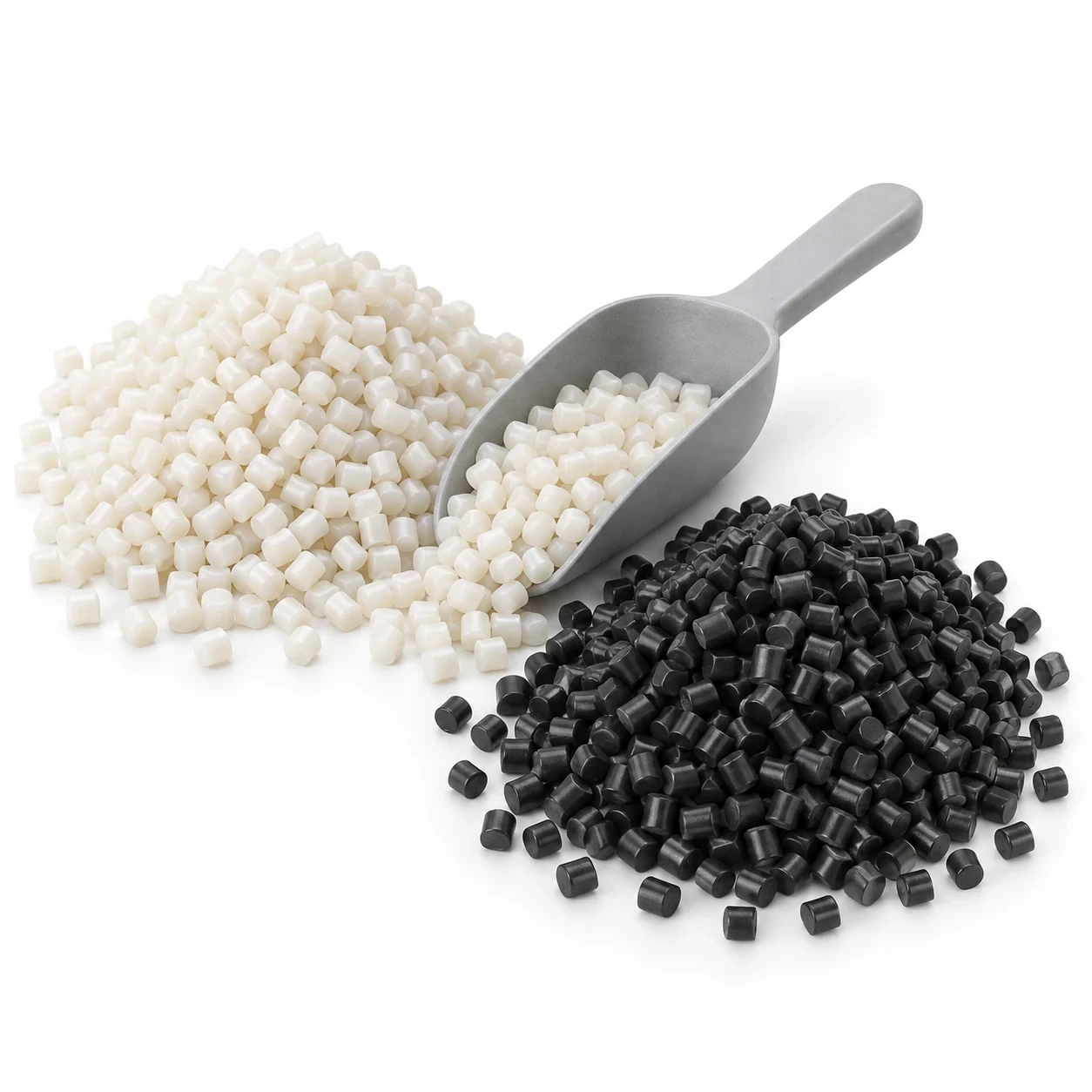
Conceptual pairing guide. Source symbols are not measured spectra or a machine optical design. The fiber drawing distinguishes an incoming coated fiber from applied ink; layer thickness is not to scale and internal fiber construction is not specified.
That makes an ink trade name or the words UV curable an incomplete purchase specification. Identify the exact series, color, revision and supplier instructions, together with the intended source spectrum. Ask the ink supplier to confirm the proposed pairing rather than assuming that two products bearing a UV label can be substituted.
A lamp electrical rating is not a statement of the UV delivered to the fiber. Ask where an optical measurement applies, which wavelengths the instrument measures and how the proposed arrangement exposes the fiber around its circumference. Keep lamp input power, irradiance at the product and exposure dose as separately named quantities.
Read Compatibility by Ink Grade and Color
Use a compatibility statement for the exact ink and source, not a blanket rule that all conventional inks fail under LED or that all LED inks work under mercury lamps.
For a retained lamp line and an LED-designated ink, request written instructions covering that lamp arrangement. Conversely, an old lamp-cured production record does not qualify a new LED source. These are different evidence requests even when the same supplier sells both ink families.
| Proposed combination | Evidence to obtain before a trial | What remains unproven |
|---|---|---|
| Existing lamp-cured ink with a new LED source | Ink-supplier confirmation of the grade and proposed source, followed by an agreed trial | The old setup record does not qualify the new source |
| LED-designated ink with an existing lamp arrangement | Written backward-compatibility scope and applicable processing instructions | The LED label alone does not authorize the pairing |
| New ink and new curing arrangement | A jointly identified material/source configuration and trial record | Two individually marketed products are not an accepted production process |
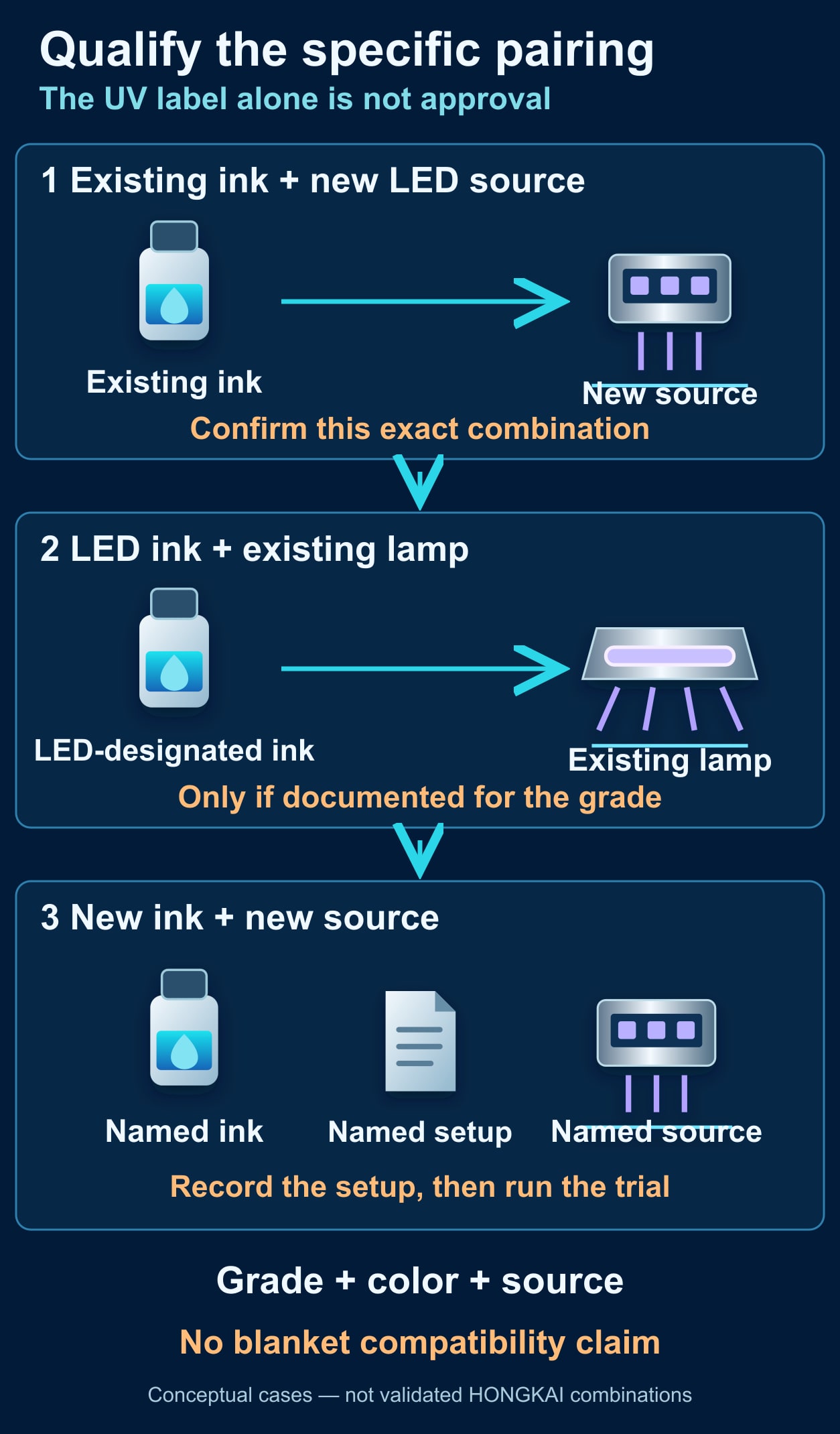
Conceptual compatibility cases, not approved HONGKAI combinations. Each ink grade, color and actual source needs its own documented scope and agreed verification. No pairing is marked passed.
Include the actual colors in the material review. Noblelight identifies pigment absorption as a relevant curing variable and notes that a dense black ink can present a different challenge from yellow.1 The practical response is to agree representative colors with the suppliers, not to declare every dark ink unsuitable or qualify the whole color range using one easy sample.
Control film thickness by the applicable product and ink requirements. For example, the Cablelite 751 datasheet associates its Munsell color claim with a specified film-thickness range.2 A color claim for one series is not a universal thickness specification or proof of adhesion, ribbon behavior or optical performance.
Separate Curing Output from Whole-Line Performance
An advertised curing speed is not automatically a guaranteed colored-fiber output. The offered operating point must also fit the fiber packages, coating application, tension-controlled path and take-up arrangement. Identify whether a stated maximum describes the light source, a material trial, mechanical running or production of acceptable colored fiber.
Treat low thermal loading and optical exposure as different questions. An LED system may reduce an unwanted heat load without having low UV irradiance. Noblelight’s optical-fiber system specification separately lists wavelength, irradiance at the target, uniformity and cooling.3 Those categories are more useful for a technical comparison than a single low-power label; that supplier’s values must not be transferred to another machine.
Have the equipment and material suppliers define which conditions a trial must cover. These can include the chosen ink colors and lots, incoming fiber coating, applied layer, running speed, start and stop conditions, cooling state and required inerting arrangement. The list is a review framework, not a prescribed process recipe or permission to alter interlocks.
For HONGKAI equipment selection, the previously supplied coloring-and-rewinding reference configuration is a starting point, not an ink-qualification certificate or a retrofit specification. It groups fiber pay-off, pay-off tension control, coating application, curing, haul-off, take-up with traverse, and electrical/temperature control. These are functions within one integrated machine, not seven separate production lines.
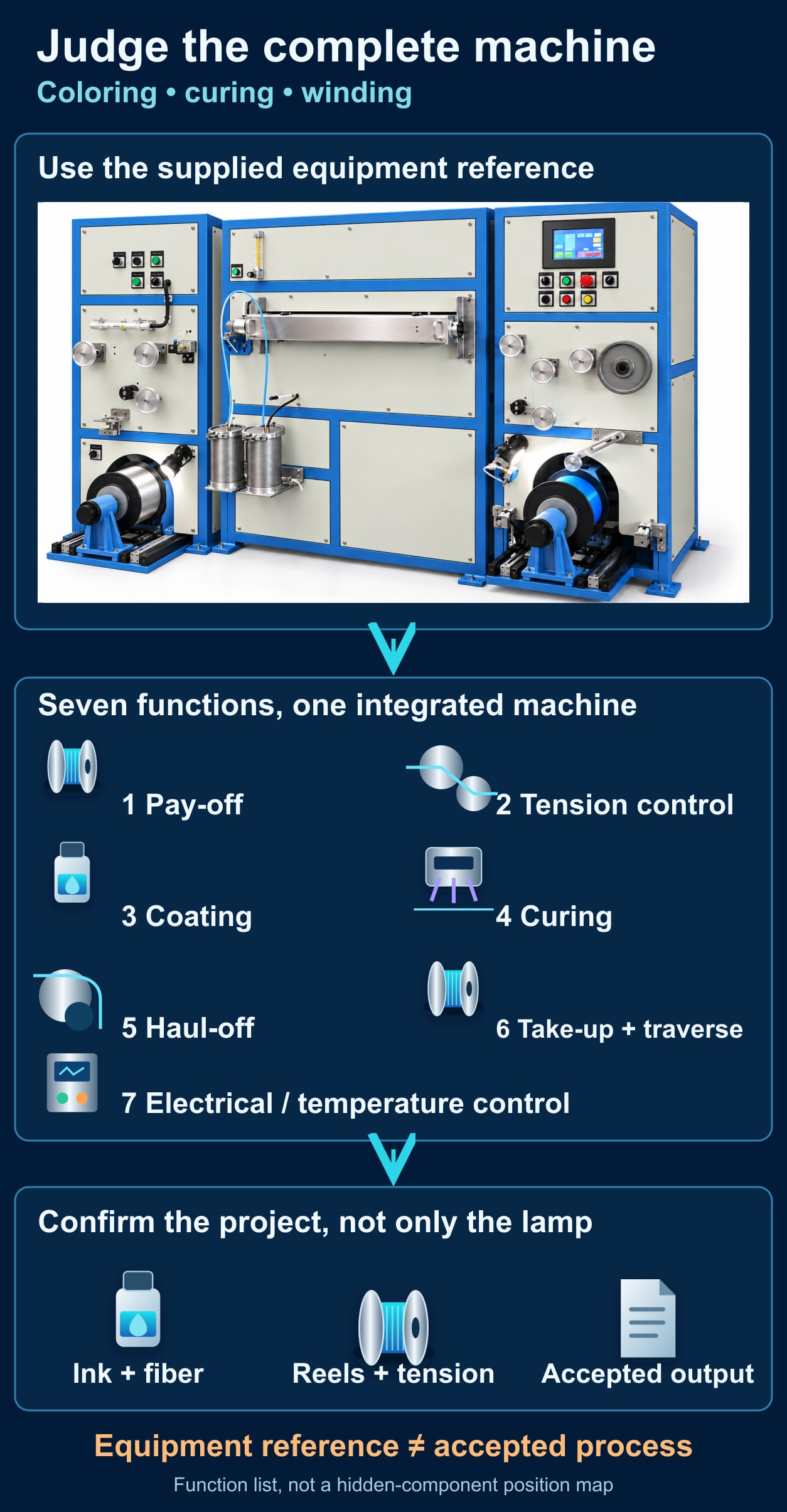
Equipment reference illustration based on the previously supplied HONGKAI coloring-and-rewinding configuration and its retained 3D image. The numbered function list is not a spatial map of hidden components. The reference does not establish ink compatibility, an accepted retrofit, running power or a guaranteed colored-fiber output.
Confirm the actual lamp or LED version, ink, incoming fiber, reel packages and accepted operating point in the project configuration. A reference to HK-235 in a broader cable-production route identifies a process stage; it does not qualify an untested ink or demonstrate an existing machine conversion.
Review a Retrofit as an Interface Change
Replacing a curing source and purchasing a complete new coloring machine are different scopes. Before retaining equipment, define the boundary of the proposed change and require a drawing or interface record for the items it affects.
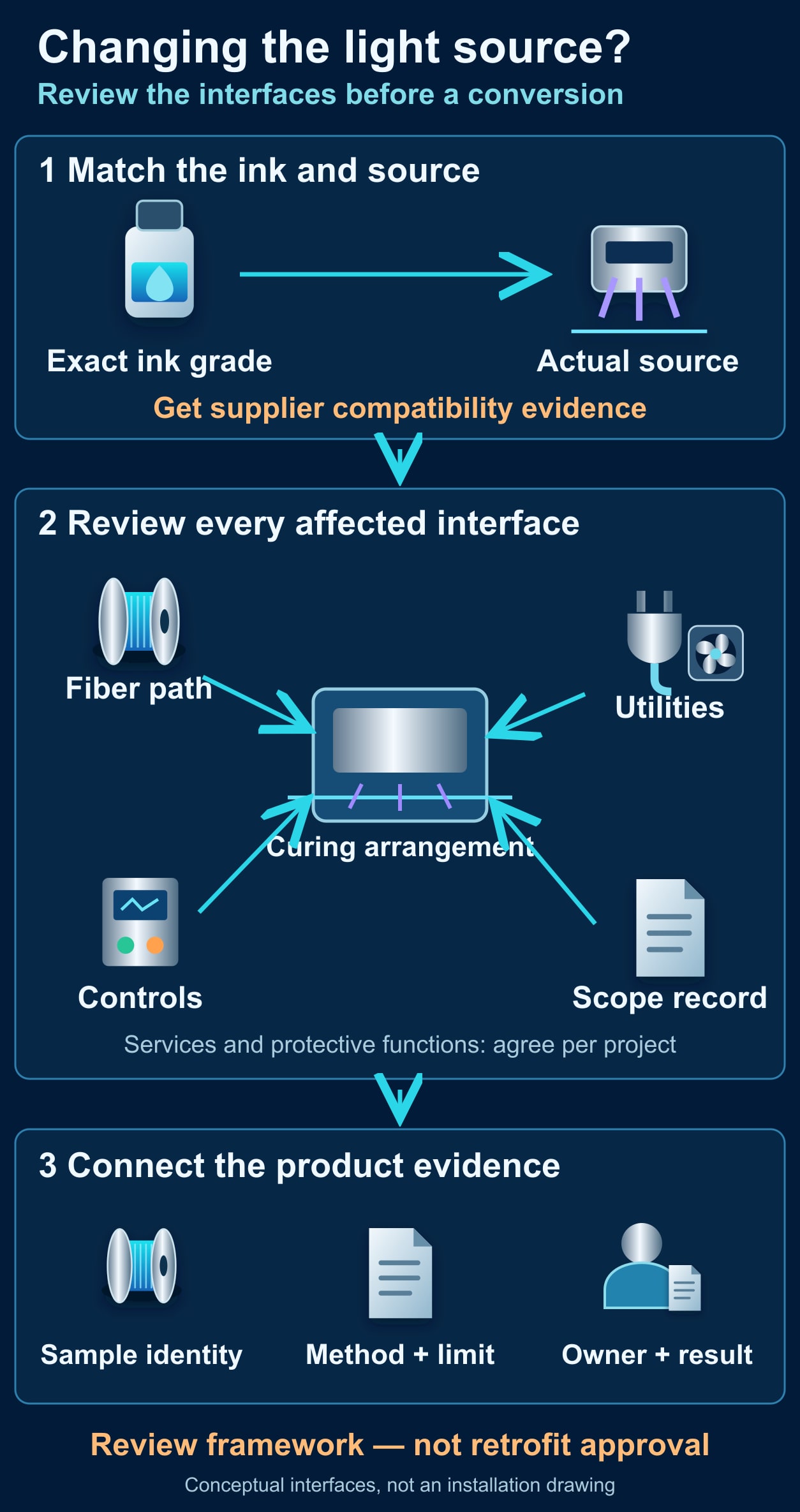
Conceptual interface review, not an installation drawing or a completed HONGKAI conversion. Each surrounding item needs project-specific evidence; no component is shown as approved for retention or removal.
| Interface to review | Decision the project must resolve | Evidence owner to name |
|---|---|---|
| Curing enclosure and fiber path | How the proposed source, optical arrangement and clearances fit the actual fiber route | Equipment integrator and source supplier |
| Utilities and heat removal | Which electrical, cooling, gas and extraction services are required in the offered arrangement | Equipment supplier and factory engineering |
| Controls and protection | How source readiness, line movement, faults and protective functions are coordinated | Responsible control-system engineer |
| Application and winding sections | Whether the agreed ink, fiber dimensions, tension conditions and reel packages fit the retained sections | Equipment and material suppliers |
Do not infer that an auxiliary system can be removed simply because the new source is LED. State whether the proposal retains, changes or excludes each service, and leave unresolved interfaces open until the responsible party approves them.
The absence of lamp-generated ozone is not a general exemption from ventilation or chemical-handling requirements. Follow the ink safety data sheet and the factory’s exposure assessment; the UV/EB acrylates safe-handling guide discusses ventilation and the risks of uncured or incompletely cured material.4 Cooling the light source, controlling exposure to chemicals and providing UV shielding are separate responsibilities.
Write the Trial Record Before Agreeing a Speed
Accept a demonstrated material and operating scope, not a lamp that switches on or a fiber that looks dry. The test agreement should name the checks, methods, limits, sample identity and party responsible for each result before the demonstration begins.
Use the FAT and SAT acceptance framework to distinguish the factory demonstration from checks that remain for the installed equipment or a separate laboratory.
| Evidence group | What the trial agreement should identify | What the result cannot replace |
|---|---|---|
| Coloring and coating condition | Required colors, layer or diameter checks, appearance criteria and any agreed solvent-rub or cure assessment | Optical results or downstream ribbon evaluation |
| Optical performance | Identified input and output samples, applicable measurement method, conditions and acceptance limit | Coating adhesion or mechanical compatibility |
| Downstream use, where applicable | Actual ribbon or cable materials, conditioning and agreed stripping or breakout assessment | Qualification of every other downstream material |
| Demonstrated running scope | Ink and fiber identities, accepted speed, operating period, reel conditions and rejected material | An unrestricted production or lifetime guarantee |

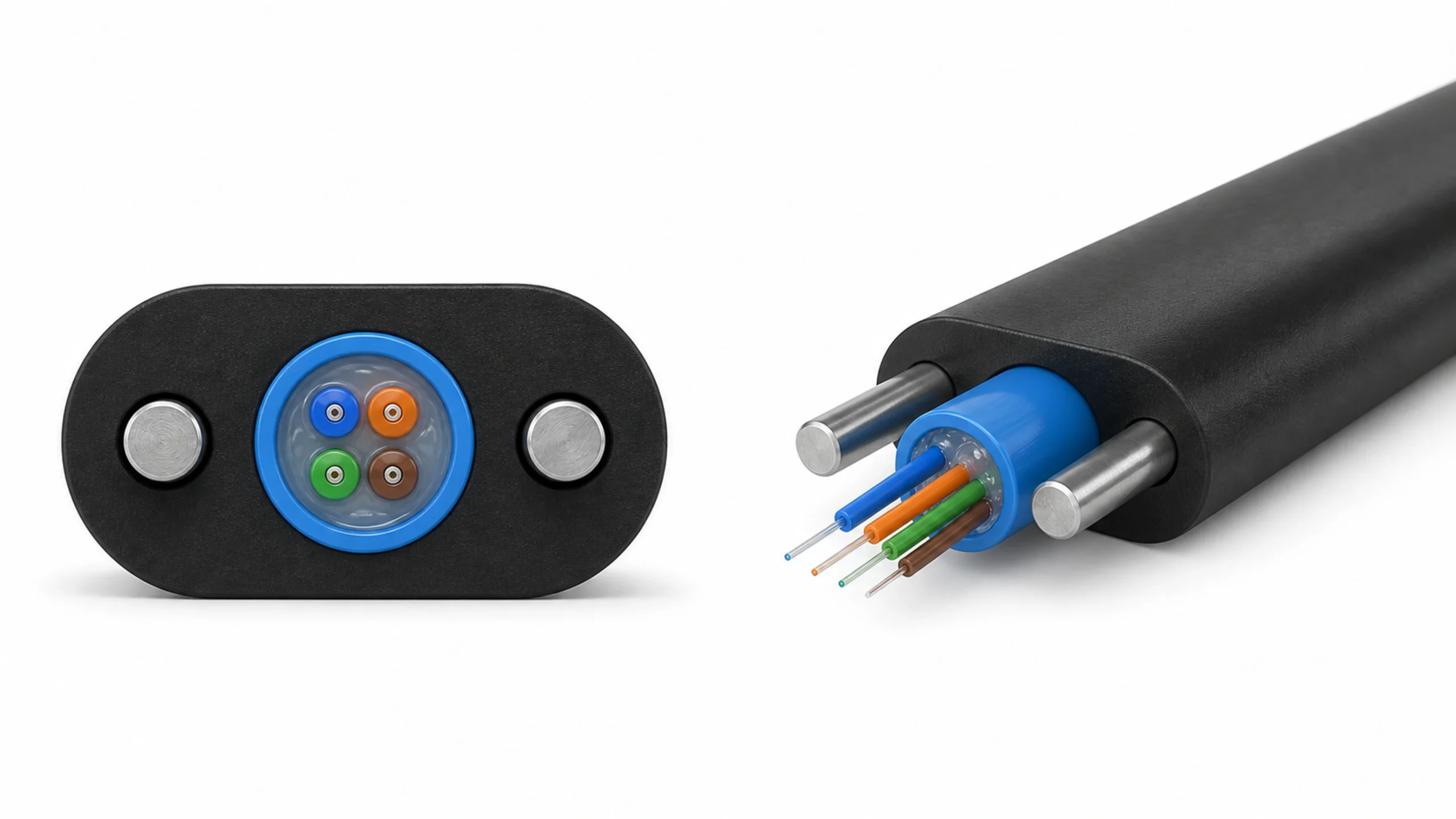
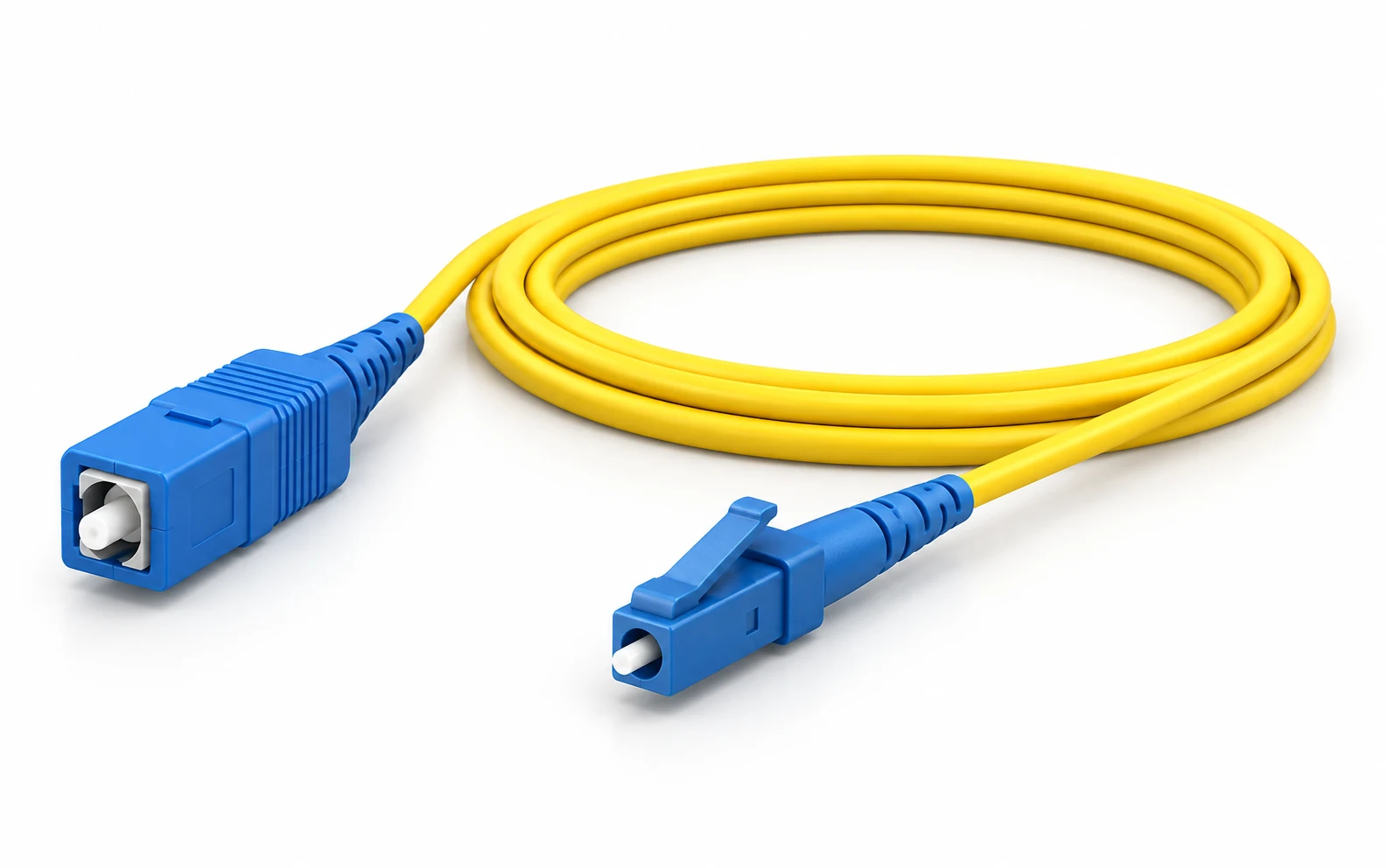
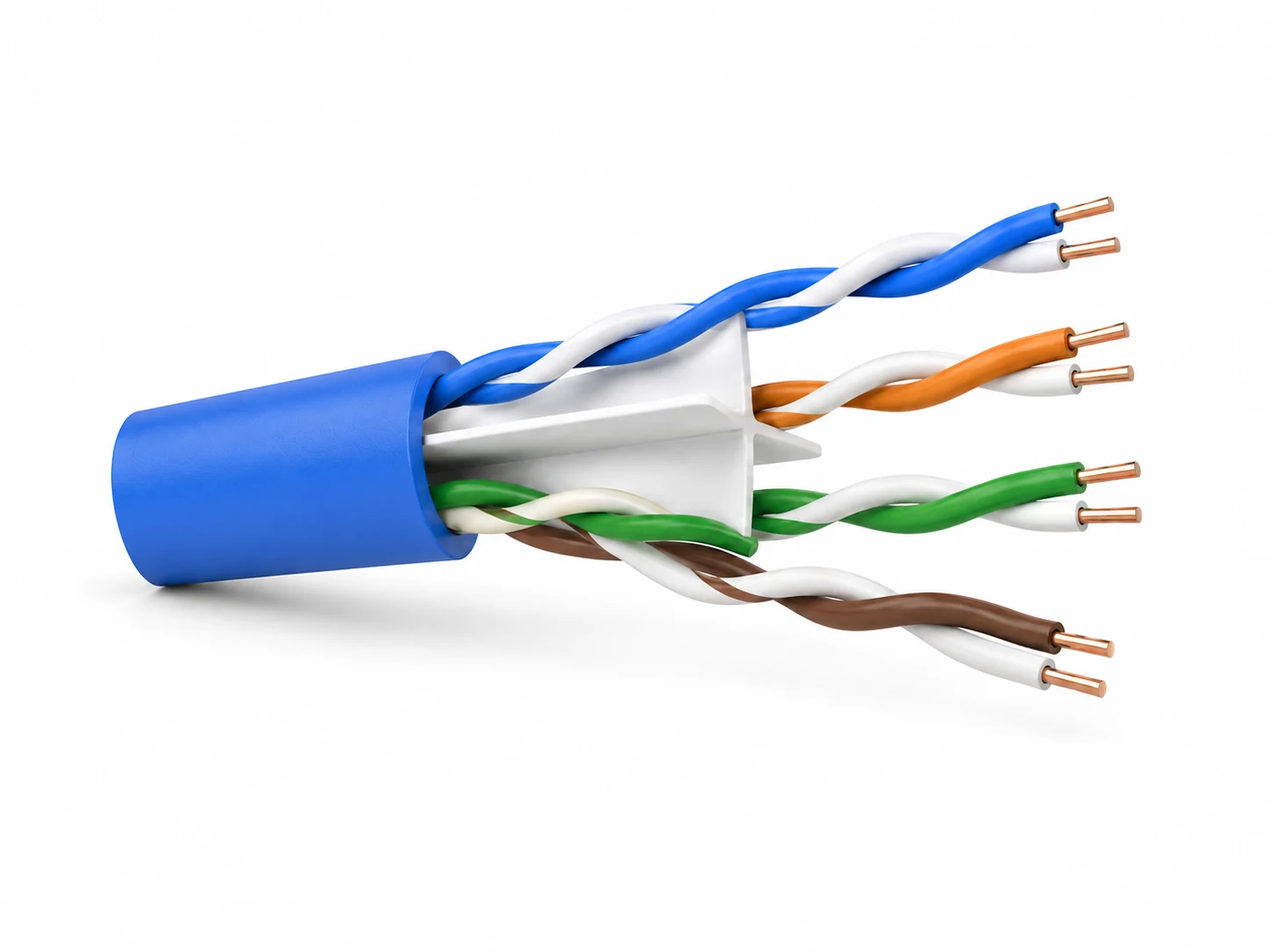
Conceptual agreement categories, not completed test results or a HONGKAI acceptance-service commitment. Product symbols do not specify a construction or testing method. Name the responsible party separately for each required result.
If MEK rubbing is part of the agreed plan, retain the specified method and assessment criteria. Do not improvise a rub count or treat that one result as proof that every requirement has passed. An additional cure-assessment method should be defined with the material supplier rather than inferred from a generic pass label.
Expand abbreviations in the agreement. A relevant optical-fiber patent uses LID for Local Injection and Detection, in connection with coupling light through an inked fiber.5 Do not automatically translate a supplier’s LID entry as light-induced attenuation, or substitute it for a separately specified optical-loss test. Obtain that supplier’s definition and method.
Keep original records with the sample and operating-condition identifiers. A screen photograph, a color sample and a stated line speed can describe different runs unless the record connects them. For an unexpected optical result, start with comparable measurements and process-stage evidence. If a required laboratory or downstream result is outside the machine supplier’s scope, make the owner and outstanding result explicit.
Compare Running Cost on the Same Accepted Output
An operating-cost comparison is useful only when the two arrangements are producing the same accepted product scope. Define the measurement boundary: the curing source alone, its cooling equipment, or the complete coloring line. Include the operating and standby periods actually being compared.
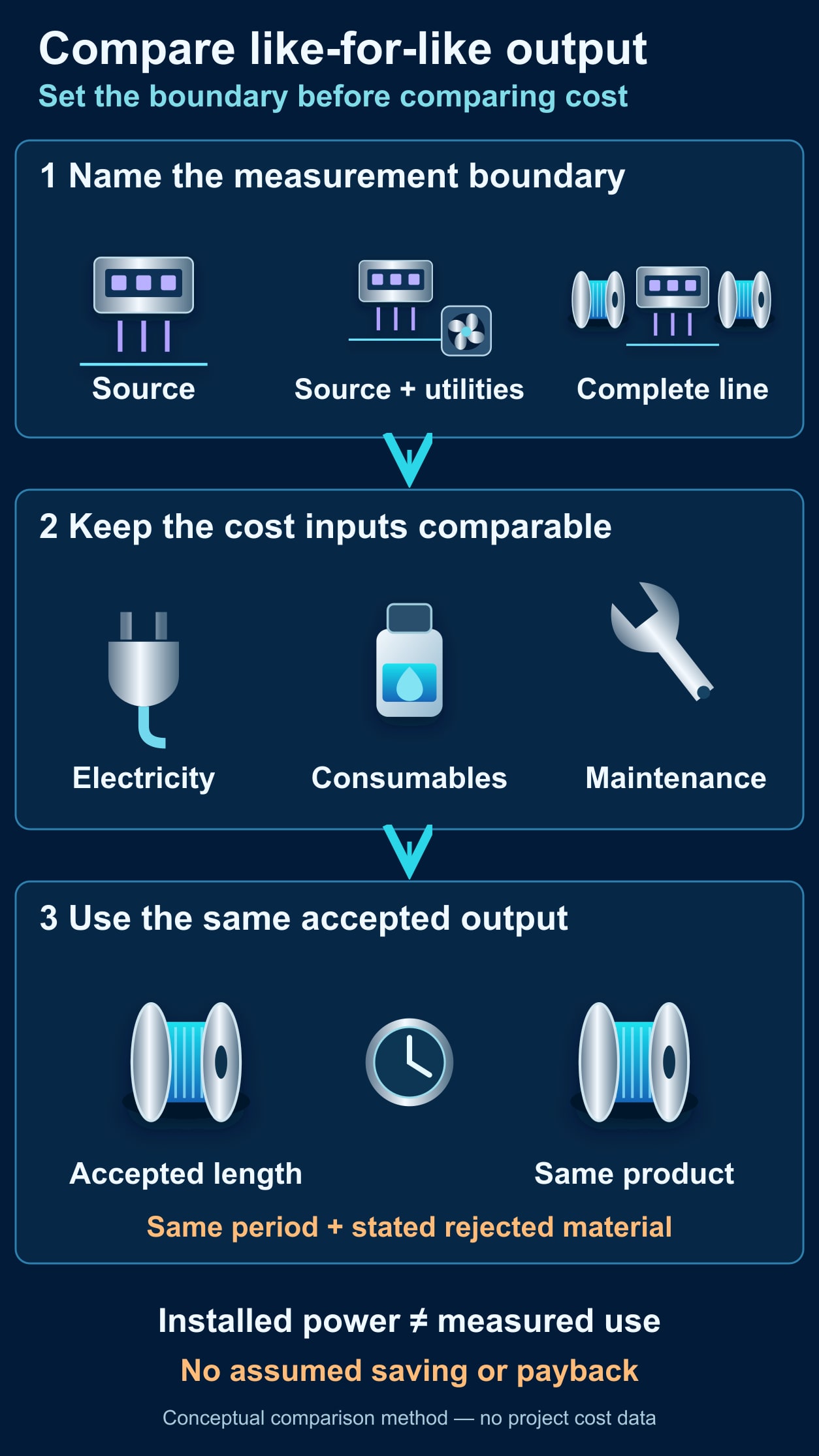
Conceptual comparison boundaries, not a HONGKAI line layout, measured consumption or saving. Use the same specified product, accepted-output basis and operating period; identify rejected material and the equipment included in the measurement.
Request comparable measured or supported inputs for electricity, consumables, maintenance work and any changed utility demand. Keep installed electrical capacity separate from measured consumption. Compare accepted length over the same operating period, with the treatment of setup time and rejected material stated. This is a comparison method, not a calculated saving for an unspecified factory.
Vendor savings claims also need their original reference. For example, Noblelight states a named microwave-system baseline for the energy-saving percentage on its optical-fiber LED page.3 A percentage without its equipment and operating boundary should not become a general LED saving or a HONGKAI project commitment.
The final choice may be a new lamp-based arrangement, a qualified LED arrangement, an engineered retrofit or a decision to keep the current process while evidence is collected. Record exactly which material/source pairing, line interfaces and test results support that choice. Leave untested colors, product constructions, operating points and savings outside the accepted scope.
-
Excelitas Noblelight, UV & IR FAQs — ink formulation, source spectrum and pigment absorption. These general curing explanations are not an optical-fiber process recipe or a HONGKAI trial result. ↩ ↩
-
Covestro, Cablelite 751 product datasheet, updated 8 March 2022, hosted by Fiber Optic Center. Product-specific color, film and test-method information is not adopted as a universal cable standard or a final current offer. ↩
-
Excelitas Noblelight, Semray UV PC6003 optical-fiber curing system. The page distinguishes optical and cooling parameters and names its energy-comparison baseline. Its equipment capabilities and test results are not transferred to HONGKAI equipment. ↩ ↩
-
UV/EB Acrylate Resins sector group, Safe Handling Guide UV/EB Materials, 2017. Use the actual ink SDS and the applicable factory assessment; this article is not a substitute for the equipment or chemical safety instructions. ↩
-
US4960318A — Optical fiber cable, published 2 October 1990. This historical primary document establishes one relevant use of the LID abbreviation, not the definition or acceptance method for every current ink supplier. ↩

 English
 हिन्दी
 فارسی