



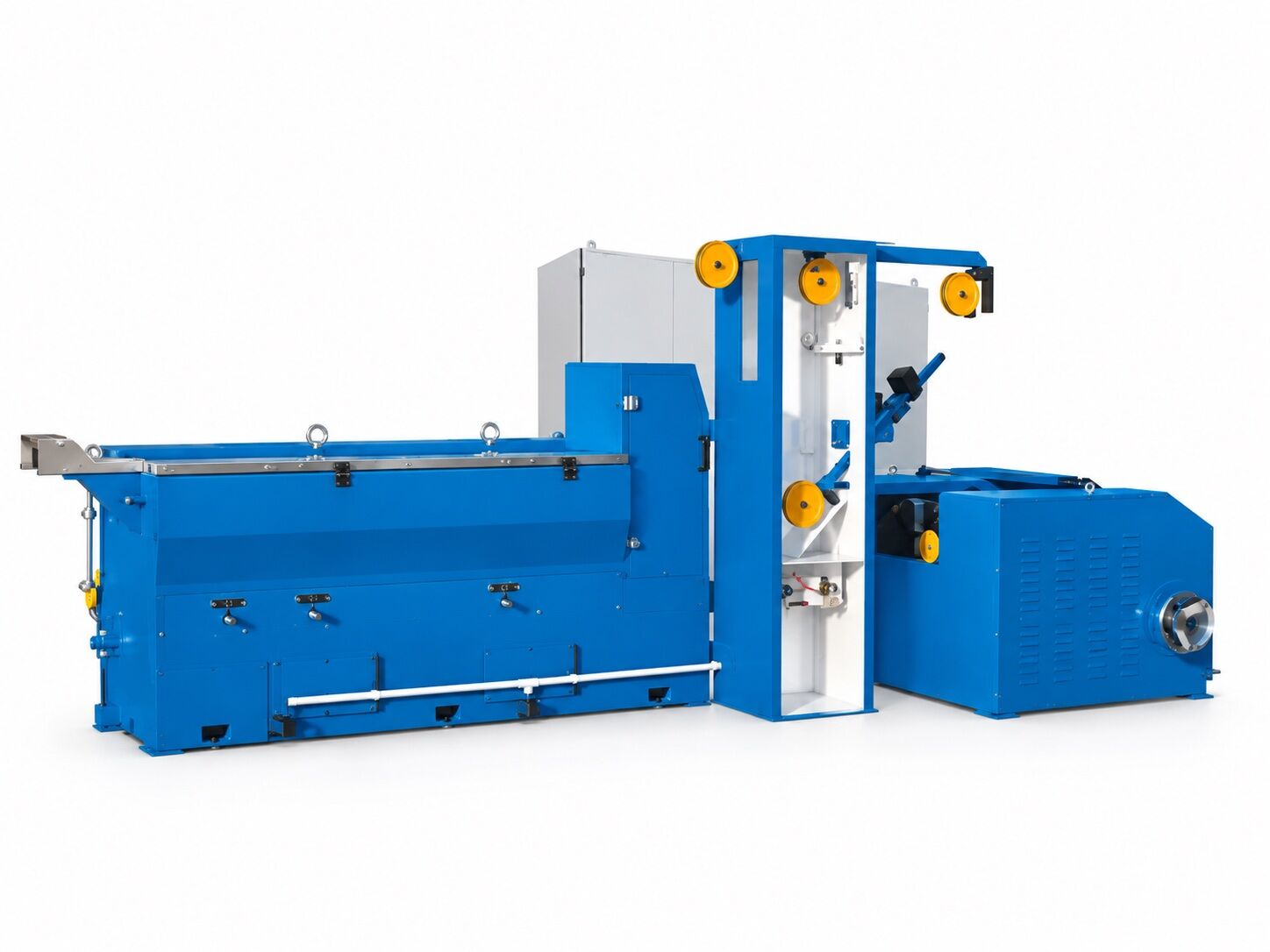
Reduce copper wire to an intermediate conductor size
Select a copper-wire drawing arrangement from the incoming material and the finished wire specification. Include any annealing requirement and downstream package constraints in the same review.
Position in your production line
How this operation works
Copper passes through a drawing sequence selected for the incoming material and finished diameter. The feed condition, reduction sequence and collection arrangement are reviewed together. Decide at the outset whether annealing is inline, separate or outside the supply.
- Incoming copper
- Provide grade, diameter, surface condition and the normal input package.
- Finished sizes
- Identify the working sizes, tolerances and temper needed by the next process.
- Annealing boundary
- Show which drawing, annealing and take-up units belong in the quotation.
Compare the selection references
Intermediate copper-wire drawing
Use the equipment family to establish the process fit.
Confirm the operating range
The quotation will define dimensions, operating values and equipment scope for your supplied construction.
Die count, operating speed, electrical load and machine dimensions depend on the selected configuration and are confirmed in the technical proposal.
Select around your actual product
Input material
State copper grade, rod or wire diameter and surface condition. Supply the normal input package dimensions.
Finished range
List the output diameters, tolerances and required temper, including the most frequent production sizes.
Annealing decision
State whether annealing must be inline, provided separately or is outside the requested supply.
Installation fit
Provide output targets, take-up reels, available power, cooling and floor-space limits.
Define what your quotation includes
- Drawing machine selected for the reduction range.
- Drawing dies and consumables included in the proposal.
- Pay-off and take-up package arrangement.
- Annealing interface if required, controls, utilities and layout.
State whether this is a new line, an additional machine or an upgrade. Include existing equipment interfaces so the offer covers the connections that matter.
From your requirement to the agreed equipment
Use these review steps to compare proposals and agree responsibilities for this machine.
01Define your requirement
Provide grade, diameter, surface condition and the normal input package. Identify the working sizes, tolerances and temper needed by the next process. Identify whether this is a new line, an additional machine or an upgrade.
02Review the configuration
Compare the proposed working range, included machines, tooling and reel interfaces. Record optional items and customer-side utilities before agreeing the quotation.
03Agree the acceptance checks
Set the trial material, operating point and acceptance method for incoming copper; finished sizes; annealing boundary. Identify which checks require samples or records and who provides them.
04Plan delivery and handover
Confirm packing, delivery terms, site preparation and any agreed installation or training scope. Identify operating documents, maintenance information and the machine-specific spare-parts list.
Continue your equipment selection
Intermediate Wire Drawing Machine with Annealer

Combine diameter reduction with an annealing stage for the specified copper-wire condition. The drawing range, annealing duty and collection package should be selected together.
Fine Wire Drawing Machine
Reduce incoming wire through a sequence of drawing dies before conductor bunching or another cable-making process. Start with the input wire condition and the required finished diameter.
Double Twisting Machine
Compare HK-500, HK-650 and HK-800 for drawn-wire conductor bunching.
Explore the cable production equipment overview to place this machine in the wider production route.
Questions before choosing this machine
Does a copper-rod description define the acceptable input diameter?
No. Provide the actual incoming diameter and grade. The drawing schedule and machine selection must match that input.
What if the finished wire must be annealed?
Specify the required condition and whether annealing should be inline. The drawing-with-annealer family is an adjacent route to review.
What follows intermediate drawing?
The next step depends on the conductor design: further drawing, annealing, bunching, stranding or insulation may follow.
Tell us what you need.
Ask for a quotation, check a specification or get help selecting equipment.
EquipmentIntermediate Wire Drawing Machine for Copper Rod