
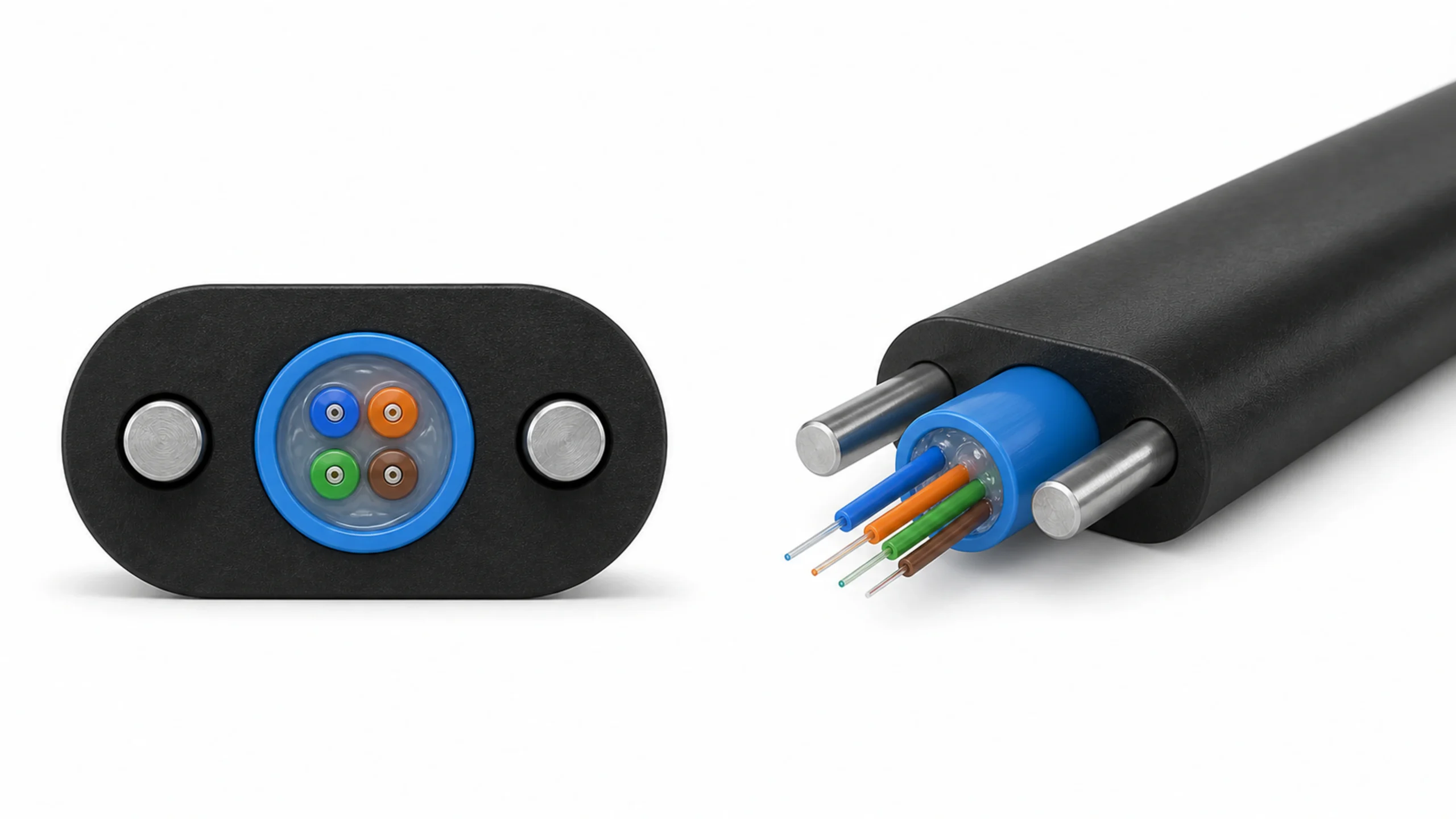
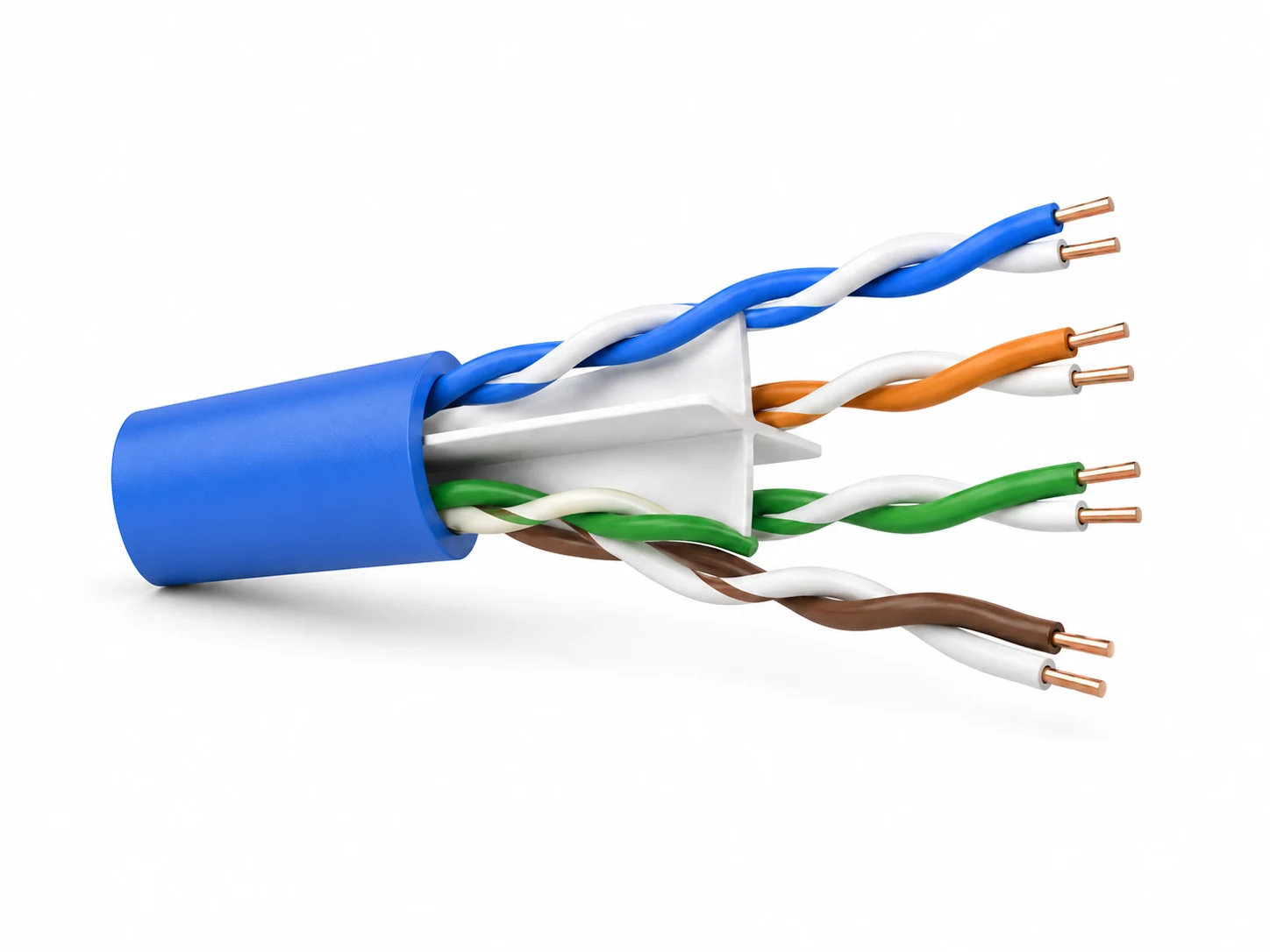
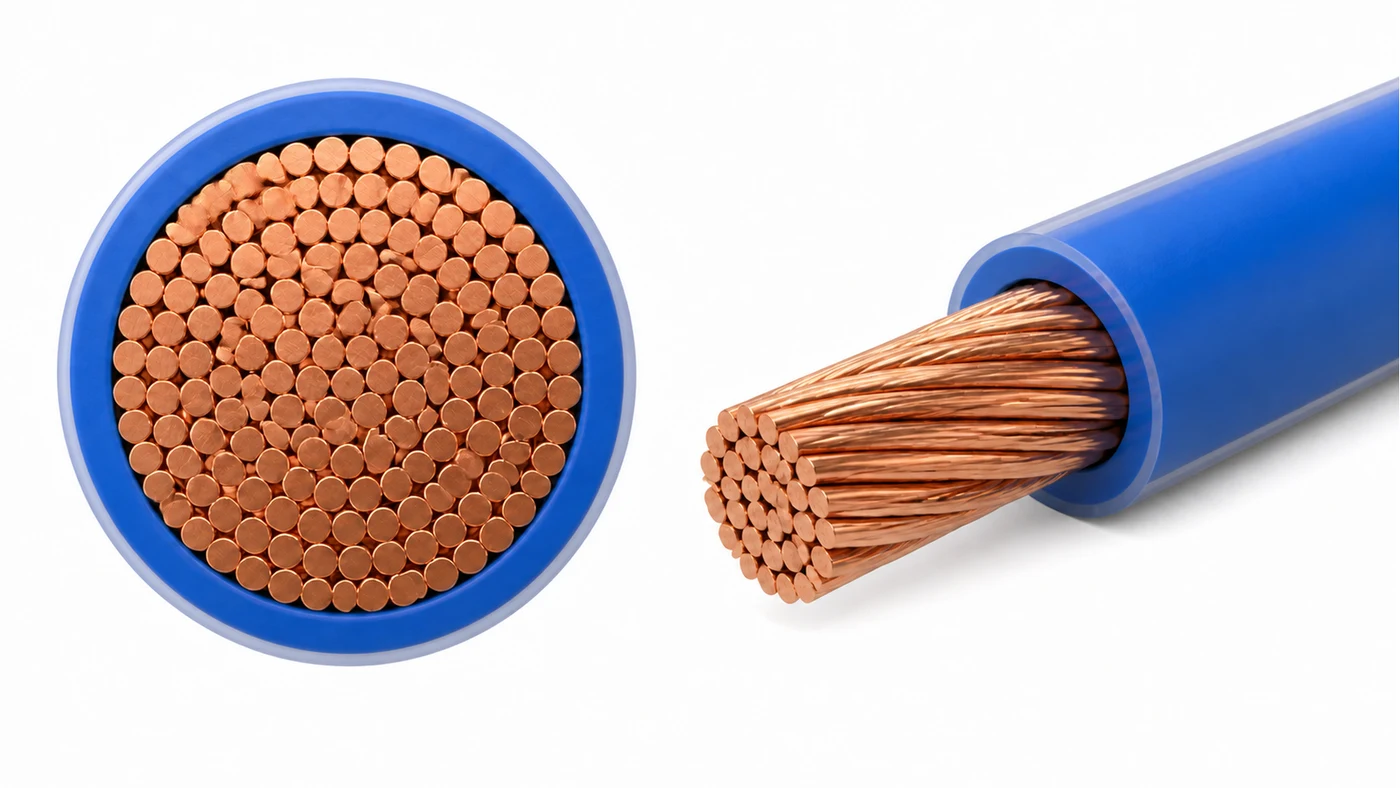
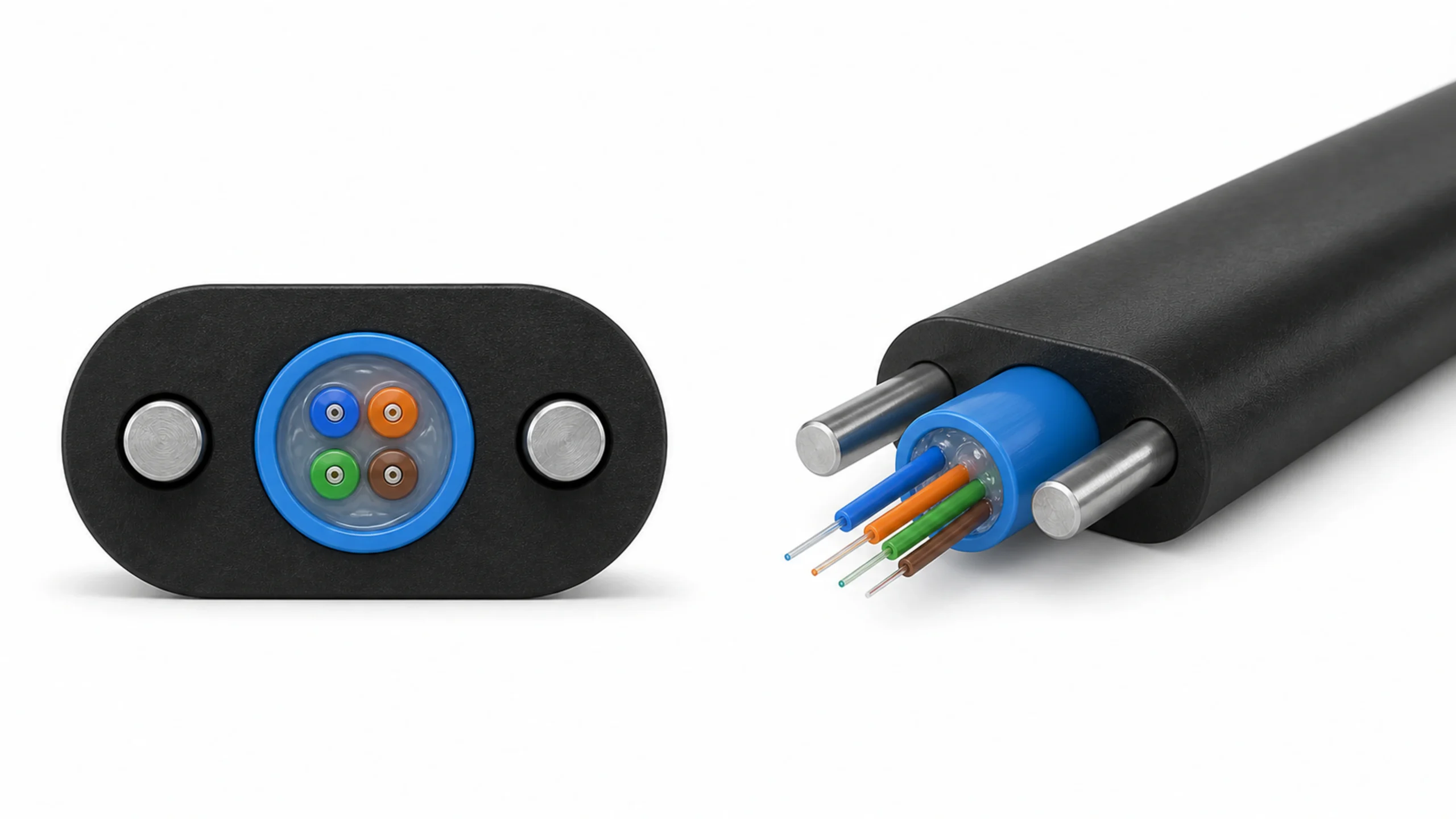

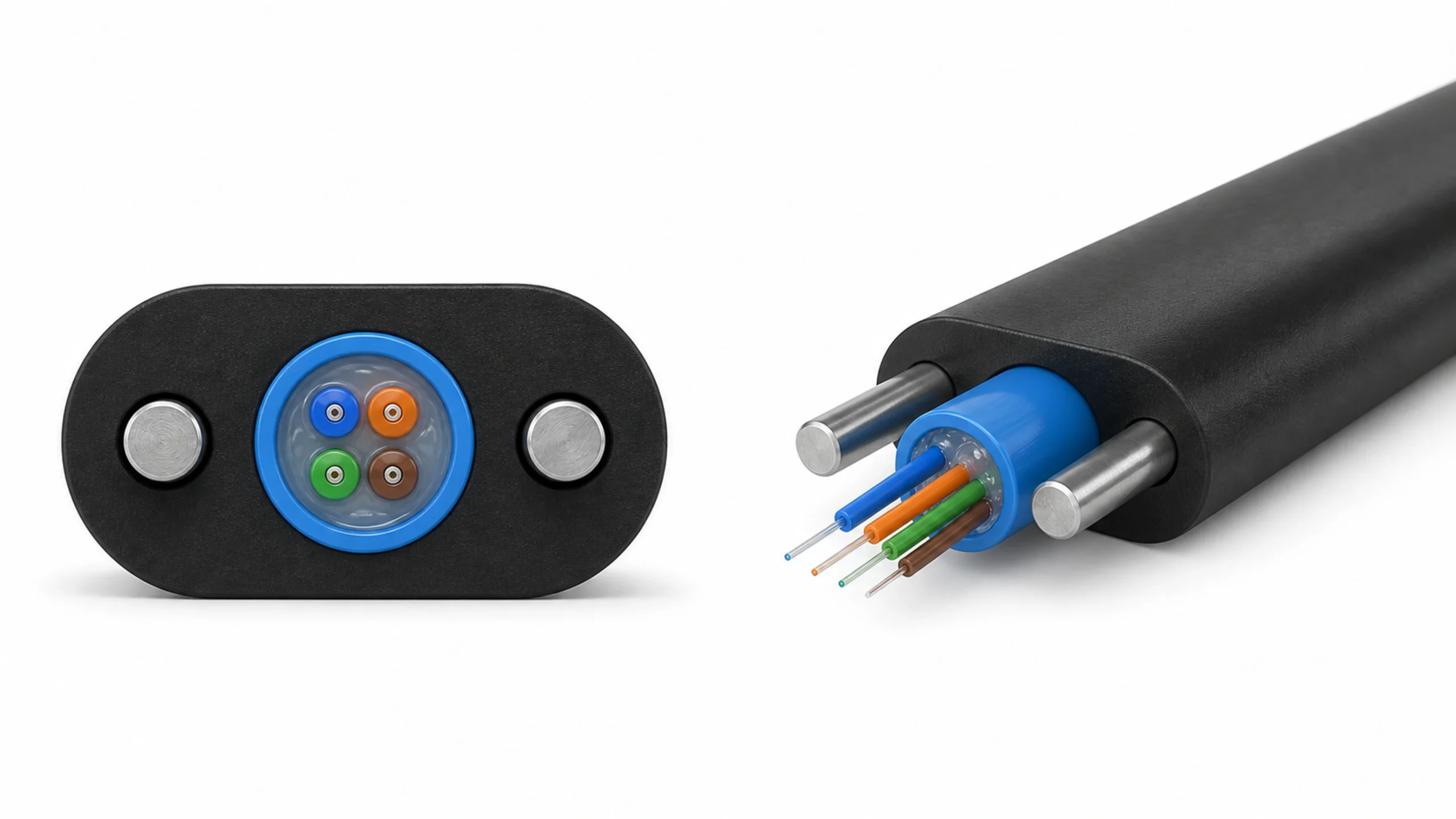

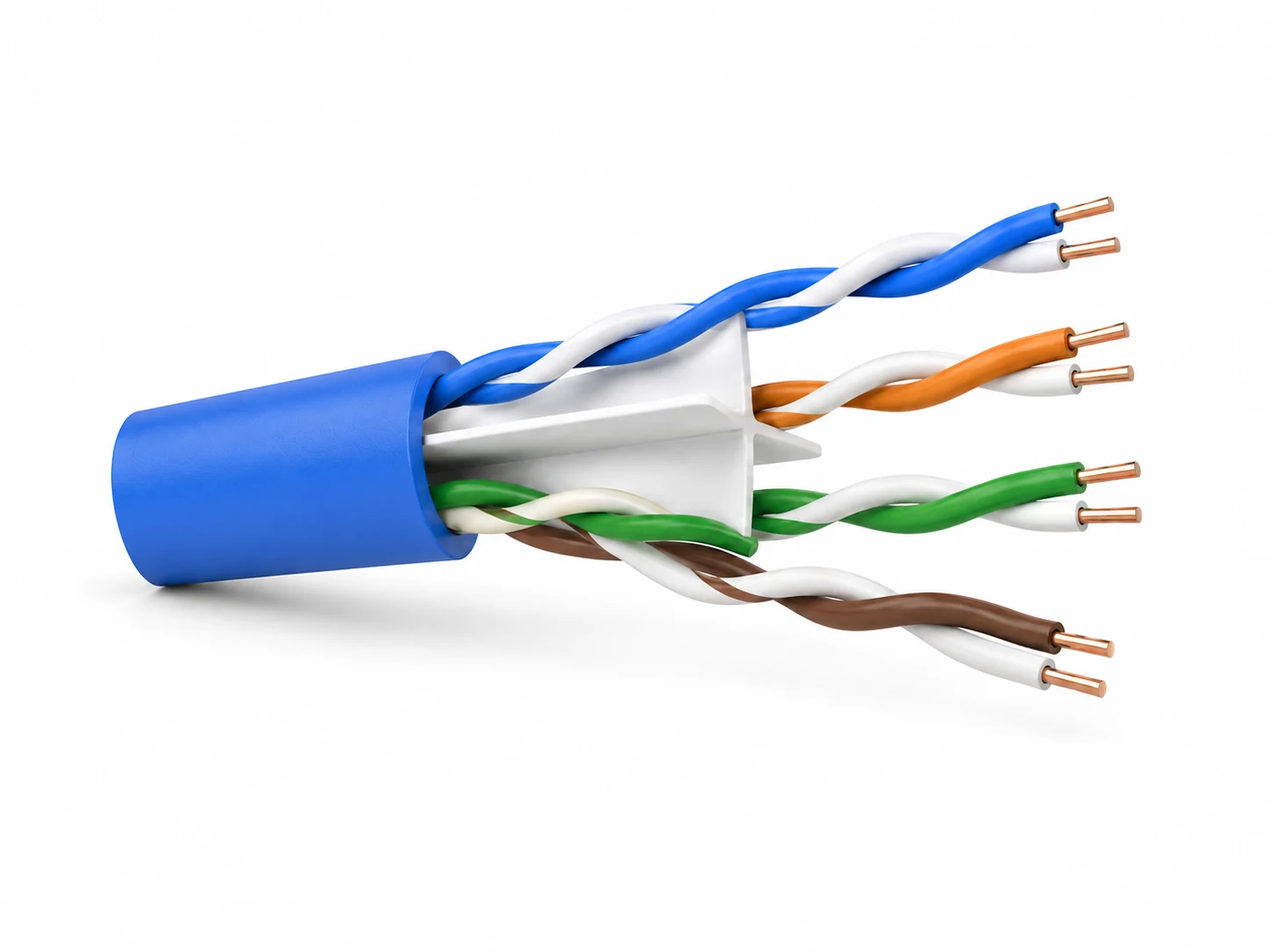











A power-cable factory needs more than a list of instruments before buying cable testing equipment. The owner and quality manager must decide which checks control production, which results release a manufactured length, and which evidence qualifies the cable design. This guide focuses on low-voltage power cable and building wire; optical-cable laboratories and LAN transmission testing require separate plans.
Start with the cable specification and work backward from the release decision. An outside-diameter gauge, a spark tester, a resistance bridge and a tensile machine answer different questions; none creates a complete cable-approval system by itself.
The useful purchasing document is a test-duty map: the product, property, method, specimen, required frequency, acceptance source, instrument and record owner. Use that map to identify missing capability before comparing equipment packages.
In the HONGKAI packages discussed for this guide, test instruments are sourced externally rather than manufactured by HONGKAI. The proposed equipment list must identify the actual manufacturer, model, accessories and service responsibilities instead of treating a coordinated supply as one factory’s own instrument range.
Define the Product and the Release Unit
A request for a “complete cable laboratory” leaves the most important decisions open. Define the cable family, conductor material and construction, insulation and sheath compounds, layer dimensions, voltage designation and intended application. Identify the product specification, edition and customer additions that govern the order. Do not use one building-wire test list for an armoured multicore cable without reviewing the changed construction.
Then identify the unit being accepted. A material batch, an insulated core, a cut test specimen, a finished drum and a cable design are different objects. A result for one object does not automatically release the others.

Illustrative planning reference linking product definition, the accepted unit, sample identity and test scope. Blank fields are not test evidence; a sample result does not automatically release every unit.
Routine, sample and type tests describe purposes within a specification, not interchangeable names for laboratory machines. APAR’s cable-test guidance illustrates the distinction with manufactured-drum electrical checks, lot-based dimensional samples and design-level type evidence.1 The actual classification, coverage and frequency must come from the selected product requirement, not from this general article.
| Evidence level | Object to identify in the factory plan | Purchasing implication |
|---|---|---|
| In-line process check | Material moving through a defined stage | The instrument, installation point and response must match that stage |
| Routine release check | The manufactured unit specified by the governing requirement | Plan access to the cable, connections, instrument duty and a unit-linked result |
| Sample check | A specimen selected under the approved sampling plan | Include sampling, preparation, conditioning and the link back to the lot |
| Type or qualification evidence | The stated cable design and scope | Confirm the test programme, laboratory responsibility and changes requiring review |
A factory should be able to name the evidence needed before its first commercial dispatch. If the required report or approval scope is unknown, purchasing more instruments does not resolve that gap.
Put In-Line Instruments at the Right Process Boundary
Outside diameter is an external dimension. A cable can have the intended outer envelope while its conductor or an internal layer is off-centre. SIKORA describes eccentricity measurement that combines information about conductor position and the cable exterior, and X-ray systems that distinguish layer boundaries.2 This supports a simple procurement rule: specify the property to be measured before choosing the sensing principle.
For each gauge, record whether the duty is diameter, ovality, lump detection, eccentricity or layer thickness. Confirm the actual product shape, materials, size range, measurement location and required record. Do not describe an outside-diameter-only instrument as a minimum-wall measurement system.
Diameter monitoring and spark testing are the first in-line functions reviewed in the HONGKAI planning discussion for this article. This is a process-planning starting point, not a complete release programme or permission to omit a required test. Identify the offline electrical and material checks from the product specification and order before allocating the laboratory budget.

Illustrative 3D references for third-party diameter-measurement and spark-testing equipment. These are not HONGKAI manufacturing or delivery photographs, a combined line layout or an operating setup. Length-linked recording remains a separate scope item.
Spark testing has a different duty. Clinton describes continuous in-line detection of insulation faults and identifies application-specific electrodes and control outputs for its equipment.3 An approved application still needs a defined cable construction, method, test conditions, line speed and response to a detected fault.
The arrangement described for this guide includes an audible alarm at the spark tester. Marking, automatic stopping and stored events are separate functions to confirm in the line scope. Ask whether a fault generates a counter entry, a mark, a stop request or an exported event, then confirm how the affected length will be identified after the take-up reel changes. An alarm is not the same as a traceable disposition of the cable.
A fault relay and a stored, length-linked event history are different deliverables. Ask who supplies the length reference, event storage and association with the receiving reel, and demonstrate the agreed connection rather than inferring it from a communication port or relay specification. The supplier must confirm the offered functions; this planning question does not establish that a particular instrument includes a logging system.
Identify the actual length-measurement device and its data path to the event record. Do not assume that a laser outside-diameter gauge also provides a length reference, or that an optical signal establishes storage, export or reel-linked reporting. Demonstrate those functions if they are included in the offer.
O HONGKAI THHN/THWN reference production line separates cooling and drying, outside-diameter measurement, spark testing and finished-wire checks. It is a useful reference for keeping functions distinct, not a claim that the same arrangement or settings suit every power cable.
Note: The online instrument controls or screens a defined property at its installed stage. It does not, by itself, replace the finished-cable tests or product qualification required for the order.
Match Each Laboratory Duty to a Specimen and Fixture
Select laboratory equipment by the measurement job rather than the machine name. A usable specification states what enters the fixture, how the specimen is prepared, which quantity is recorded and where the pass limit comes from.

Illustrative procurement reference linking four parts of a defined laboratory duty. The specimen, fixture and records are abstract symbols, not a manufacturer’s apparatus, operating setup or actual test report.
BASEC’s guidance distinguishes conductor resistance, insulation resistance, electrical breakdown, dimensional examination and material tests.4 These are separate evidence streams. A pass in one should not be used to fill a blank result in another.
A request for tighter eccentricity control can add a dedicated measurement duty. It does not make wall-thickness or electrical requirements optional when the selected product specification already requires them. Neither an outside-diameter result nor a spark-test result establishes conductor resistance, insulation resistance or finished-cable voltage-withstand performance.
| Test duty, where required | Equipment or preparation to review | Record that should remain identifiable |
|---|---|---|
| Resistência do condutor | Suitable resistance instrument, connections, specimen length and required temperature treatment | Conductor identity, measured value, length, temperature basis and reported result |
| Insulation resistance | Instrument range, connection arrangement and the specified specimen conditions | Cable/core identity, method conditions and measured result |
| Finished-cable voltage withstand | Appropriate test system, connections, load capability and protected test area | Tested unit, connection schedule, approved conditions and result |
| Insulation or sheath dimensions | Section preparation and an appropriate dimensional measuring method | Layer, section location and the individual dimensions required by the specification |
| Tensile strength and elongation of material specimens | Specimen cutter, thickness measurement, grips, load range and extension measurement | Material/layer identity, specimen geometry, conditioning and result |
| Ageing or thermal duties | Required conditioning apparatus and the associated before/after measurements | Actual condition record, specimen identity and linked comparison |
| Specified flame or other specialist performance | Method-specific apparatus or an accepted external laboratory | Named method and edition, sample construction, test scope and report |
This table is a planning aid, not a declaration that every row is compulsory for every cable. The approved product plan decides what is required and whether a test is routine, sample-based or part of qualification.
Check accessory scope carefully. A tensile machine without the necessary specimen preparation or grips may not perform the intended material test. A dimensional instrument without a repeatable section-preparation method leaves another gap. ZwickRoell’s preparation guidance separately identifies cutting equipment, specimen-shape tools and specimen dimensioning.5 Use that distinction to ask for the actual preparation and measuring scope, not to prescribe its example apparatus for every cable. List cutters, fixtures, leads, software, consumables and any apparatus supplied by a different party.
For an existing instrument proposed for reuse, request its identification, usable range, fixtures, calibration-status documents and method or software configuration. Check it against the intended specimen and measurement duty, then agree a demonstration. A powered display or an old purchase invoice does not establish that the instrument can perform the new duty.
Size the Laboratory Around Its Workload
A test machine can have enough measuring range yet insufficient capacity for the factory’s release schedule. Estimate the number of manufactured lengths and samples requiring each duty, rather than applying the extrusion line’s metre-per-minute rating to laboratory throughput.
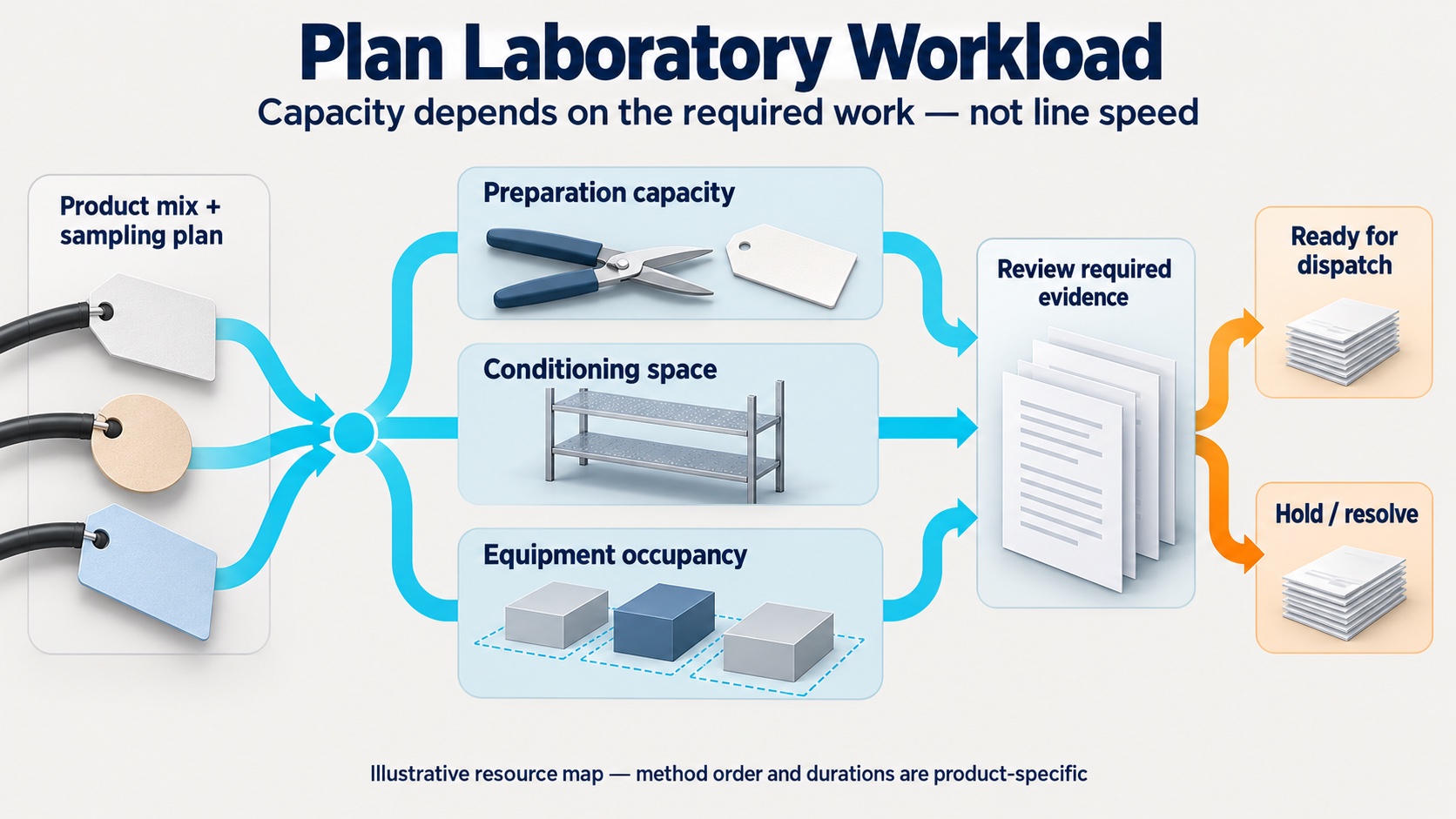
Illustrative laboratory workload map. The parallel lanes identify resource demands rather than a universal test sequence; method order, occupancy and conditioning durations must be established for the actual product plan.
For each test, map the work from sample receipt to an approved report. Include preparation, conditioning, connection or mounting, the required test sequence, review and the time during which the equipment remains occupied. Identify which tasks can share an instrument and which cannot overlap. Do not reduce a prescribed holding or conditioning period to clear a queue.
A practical workload sheet contains:
- The product mix and expected release units per shift.
- The sampling rule and resulting specimen count for each duty.
- Preparation tools and personnel available for that sample volume.
- Equipment occupancy and any required conditioning space.
- Calibration or verification downtime and the response to an unavailable instrument.
- Report review, quarantine and approved retest responsibilities.
Decide on external testing only after confirming what the product specification, customer and approval scheme permit. Identify the laboratory’s relevant scope, sample requirements, expected report timing and how an unresolved result affects dispatch. An external-laboratory option is not permission to omit mandatory factory capability or surveillance requirements.
BASEC distinguishes a one-off type-test result from an ongoing product-certification programme.6 Buying a specialist machine, obtaining one report and holding product approval are therefore different milestones. Keep each milestone and its responsible party explicit in the project schedule.
Accept a Working Test System, Not Just a Powered Machine
Before equipment acceptance, agree on a demonstration that uses a representative specimen and the required method. A machine that moves, displays a value or prints a generic certificate has not necessarily demonstrated the factory’s intended test duty.
The acceptance package should identify the instrument and software version, measuring ranges, compatible fixtures, calibration documentation, operating instructions and training scope. Confirm which data can be retained or exported, how samples are named, and whether the report records actual test conditions rather than only the selected recipe.

Illustrative procurement planning reference for an agreed test-duty demonstration. Specimen identity, equipment scope, raw output, report links and unfinished items must be demonstrated as applicable; these blank fields are not actual test or acceptance evidence.
Ask the supplier to demonstrate the identifier fields, raw results and final report in the export that will actually be supplied. Export and traceability are separate scope questions: ZwickRoell’s software documentation, for example, distinguishes data export from additional traceability functions.7 Confirm the version, licensed options, record access, retention and training in the offer; a printable report alone does not establish a working link to a production reel. This is a procurement check, not a claim that HONGKAI supplies that software.
For an integrated in-line device, include the interface demonstration. Check the agreed event, alarm or marking response and the connection between the instrument record and the collected length. Do not deliberately damage or energize production cable outside the manufacturer’s authorized verification procedure.
Evidence to request: A witnessed specimen run, its identifiable raw output and final report, the instrument and fixture list, calibration-status evidence, the agreed software/export function, and a written list of unfinished acceptance items.
O cable production line FAT and SAT checklist provides the wider project framework for samples, configuration checks and correction records. The testing-equipment acceptance plan must still state its own specimen, method and result; a production-line video does not replace those records.
Electrical test systems require qualified personnel, the specified protective arrangements and the manufacturer’s operating procedures. This article is an equipment-planning framework, not a high-voltage connection or operating instruction.
Build One Release Dossier for Each Defined Unit
The final purchasing check is whether the records can support an actual dispatch decision. Select one intended release unit and trace the evidence from product definition through production, sampling, test results and disposition.
Link the cable drawing revision and material lots to the manufactured length or drum. Attach the required in-line event history, the relevant laboratory specimens and the approved results. Identify any affected or excluded length explicitly instead of hiding it behind an overall pass entry.
A practical proposed starting point is to identify each completed reel, enter that identifier in the agreed production record, and carry the same source identity into sample and laboratory records. Give a cut specimen its own identifier while retaining the link to the parent reel or lot. This is a record-design recommendation, not confirmation that a particular HONGKAI machine includes production-management software or automatic report linking.

Illustrative record-link planning map, not a test certificate or an installed reporting system. Preserve source identity through cutting or rewinding, trace records in both directions, and retain the original result with any authorized repeat; blank fields do not establish release.
The release dossier should show the applicable requirement and revision, test method, specimen or unit identity, equipment identity, calibration status, actual result, acceptance basis, operator and reviewer. Where a result has been repeated, retain the original result and the reason and authorization for the retest. A later pass should not silently overwrite the first record.
Use a record-link worksheet to test the proposed reporting arrangement before ordering software or instruments. The following is an editorial planning template, not a test certificate, an actual factory record or a prescribed sampling rule. Leave measured results and acceptance limits blank until the approved product plan and actual test supply them.
| Evidence object | Link to define in the proposed record system | Question to resolve before acceptance |
|---|---|---|
| Product and requirement | Cable drawing revision, order and the approved test-plan revision | Can the reviewer identify which requirement applied when the unit was manufactured? |
| Production run and online event | Run identity, process stage, source of the length reading and event record | Does the event locate an affected length, or does the instrument retain only a count? |
| Reel change, cutting or rewinding | Source run or reel, destination drum and the agreed length mapping | Can the factory still locate the affected material after its container or length reference changes? |
| Laboratory specimen | Unique specimen identity, source drum or lot and sampling location | Can the report be traced back to the accepted unit without relying on the operator’s memory? |
| Test result and any repeat | Specimen or unit, method revision, instrument, raw result and linked repeat authorization | Is the original result retained, and can the reviewer explain why a repeat was performed? |
| Final disposition | Required records, unresolved items, affected scope and the authorized review | Does the release decision identify what was accepted, excluded or remains unresolved? |
Choose a specimen and follow these links in both directions during the agreed demonstration: from the test report to its source drum, then from that drum to the required records. If rewinding or cutting is within the proposed production route, include that transfer in the record review. A matching date or product name alone should not be accepted as proof that the result belongs to the particular drum under review.
Where an interface cannot provide the agreed link, identify the missing data source and responsible party before accepting the reporting scope. A controlled manual record may be proposed for review, but a manual or automated arrangement still needs approval for the actual product and customer requirements. Do not describe either option as compliant solely because it fills every column of this worksheet.
Before ordering the equipment, ask the quality manager to walk through a blank dossier with the proposed suppliers. Every required field should have a data source and an owner. An empty field reveals a missing interface, instrument, procedure or decision that should be resolved before the first production drum waits for release.
A complete cable-testing plan is the combination of suitable instruments, usable fixtures, controlled methods, trained personnel and traceable decisions. The right equipment purchase makes that chain work for the defined cable range; it does not promise universal approval for future products.
-
APAR: Routine, Sample and Type Tests, used for the distinction between evidence levels, not as a universal factory test schedule. ↩
-
SIKORA: Eccentricity measurement of round products, describing combined position measurement and X-ray layer measurement. ↩
-
Clinton Instrument: HF-15B high-frequency spark tester, rechecked 23 October 2026; used for the in-line fault-detection function and application-dependent interfaces, not a HONGKAI model, length-logging system or performance claim. ↩
-
BASEC: Guidance Notes, Testing, used for distinct electrical, dimensional and material-test duties; numerical examples are not adopted as this article’s acceptance limits. ↩
-
ZwickRoell: Specimen Preparation and Dimensional Measurement, checked 23 October 2026. Used only to separate preparation tools and specimen dimensioning; no example dimensions, method, apparatus or material limits are adopted as this cable’s requirements. ↩
-
BASEC: Type Test vs Certification vs BASEC Product Certification, used for the distinction between a sampled test report and continuing certification. ↩
-
ZwickRoell: testXpert Testing Software, checked 23 October 2026. Used to distinguish export and configurable traceability scope, not as evidence of HONGKAI software, a factory implementation or compliance. ↩

 English
 हिन्दी
 فارسی