











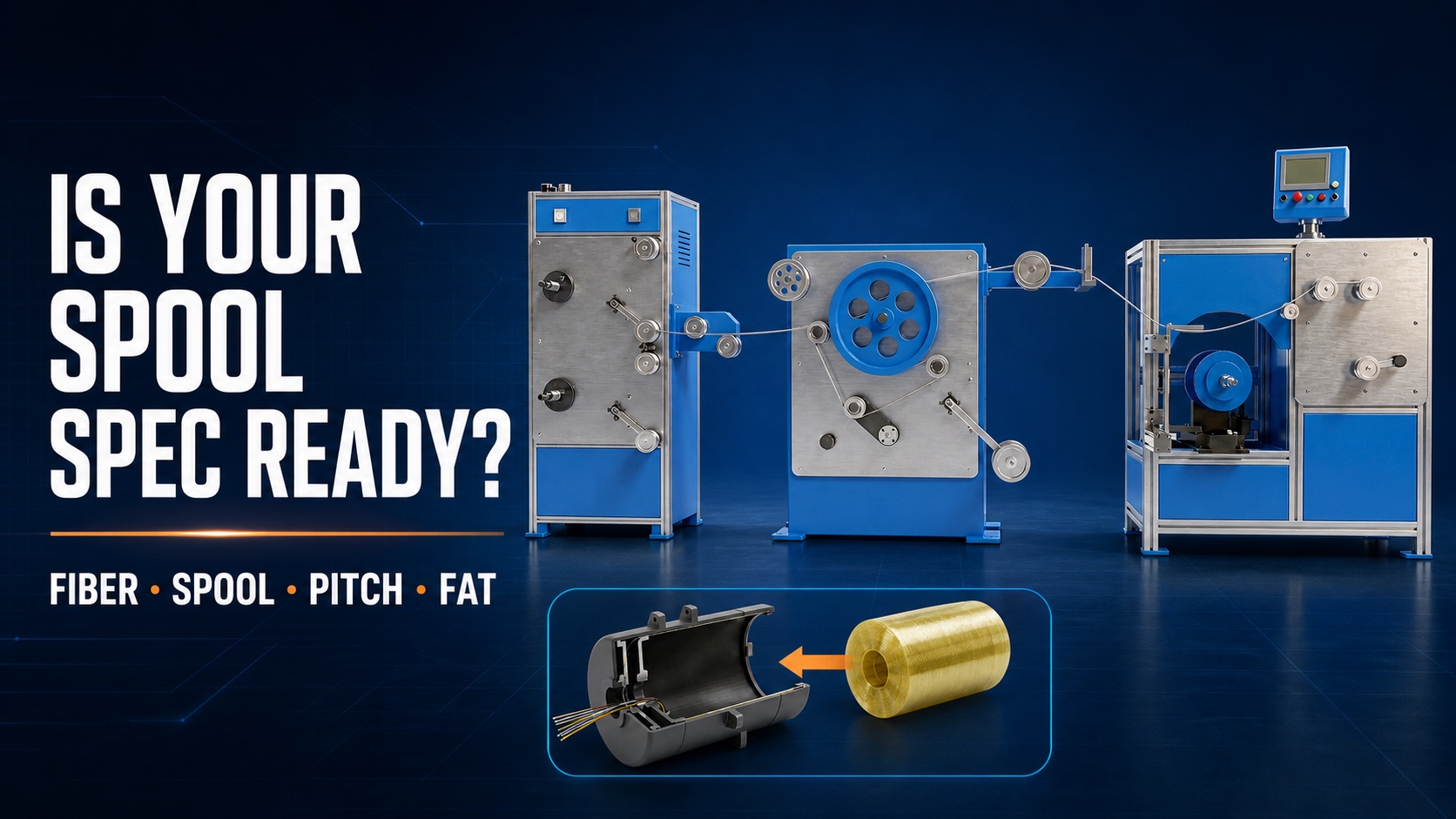
UAV fiber-component product managers, process engineers and equipment buyers often begin with the same request: transfer a long length of natural, uncolored coated optical fiber onto a small spool that fits inside a customer-designed payout canister. The risk is treating the spool, the canister and the rewinding machine as one product even though each has a separate design boundary. A sound UAV fiber respooler selection therefore starts with the input fiber and both spool interfaces, not a machine catalogue.
A UAV optical fiber respooling machine transfers natural, uncolored coated optical fiber from a donor spool onto a small removable payout spool. The machine controls the winding process; the finished small spool is installed later inside a separate customer canister. Buyers must therefore specify both spool drawings, winding pitch, length acceptance, tension recording and break detection before comparing equipment. The HONGKAI machine does not manufacture or assemble the complete UAV payout canister.

Real HONGKAI optical fiber respooling equipment. The final tooling and winding program are configured from the approved donor-spool and small take-up-spool specifications.
HONGKAI manufactures this equipment under a descriptive product name because a fixed model number has not yet been assigned. The machine handles natural, uncolored coated optical fiber rather than tight-buffered fiber or finished micro-cable. Its published maximum line speed is up to 500 m/min, while the approved production condition must still be confirmed with the actual fiber and small spool.1
The distinction between a small wound spool and a complete canister is central to the buying decision. Public dispensing references show the high-level relationship between a wound fiber pack, its spool or bobbin, a protective housing and a dispensing opening.2 The precise mounting, outlet and customer interface remain project-specific and outside the standard HONGKAI respooling-machine scope.
What Does a UAV Optical Fiber Respooling Machine Actually Produce?
The HONGKAI UAV optical fiber respooling machine produces a small spool carrying a controlled package of natural, uncolored coated optical fiber. It receives fiber from an approved donor spool, controls the fiber path and tension, counts length, detects a break and coordinates traverse with spool rotation. The completed small spool is a component for later canister assembly, not a finished UAV fiber payout canister. No coloring, tight buffering, cable extrusion or complete canister assembly occurs on this machine.
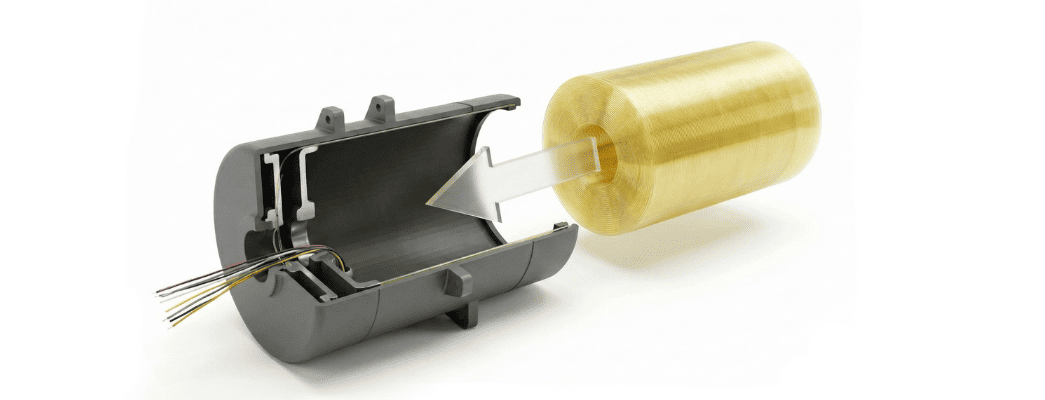
Real HONGKAI product reference: the respooling machine prepares the small wound spool; the customer installs that spool into a separate housing during downstream assembly.
| حدود العملية | Included in the HONGKAI respooling stage? | Buyer evidence required |
|---|---|---|
| Donor-spool pay-off | نعم | Approved donor-spool size and usable fiber data |
| Tension control and recording | نعم | Agreed recording and acceptance method |
| عد الطول | نعم | Target length and permitted error |
| Fiber-break detection | نعم | Detection demonstration during FAT |
| Automatic traverse and winding-pitch control | نعم | Small-spool drawing and approved winding appearance |
| Small target-spool tooling | Yes, configured per project | Physical sample or controlled drawing |
| Optical attenuation measurement | لا | Separate OTDR test method when required |
| Complete payout-canister assembly | لا | Managed as a downstream customer process |
IEC optical-fiber test methods treat axial tension, bending and macrobending loss as measurable mechanical or optical concerns.34 These concerns explain why the fiber path, guide surfaces, agreed operating profile and approved spool geometry matter more than the machine’s headline speed alone.
Decision criterion: Draw a boundary around the small wound spool. Every operation before that boundary belongs in the respooling-machine specification; every housing, support, outlet or interface installed afterward belongs in the canister-assembly specification.
Note: A quotation for a “complete fiber canister machine” is not comparable with a quotation for a natural-color coated-fiber respooler unless both suppliers define the same finished deliverable.
How Is the HONGKAI UAV Fiber Respooler Different from an HK-235 Coloring and Rewinding Machine?
The HONGKAI UAV fiber respooler and the HK-235 coloring and rewinding machine have different process purposes. The UAV fiber respooler transfers natural coated fiber to a small removable spool and controls length, tension data, break detection and winding pitch. The HK-235 route adds fiber coloring and UV curing for later optical-cable production.5 A buyer should not use the HK-235 model name for the UAV respooler unless HONGKAI assigns that designation in a future approved specification.
| Comparison | HONGKAI UAV optical fiber respooler | ماكينة التلوين واللف HK-235 |
|---|---|---|
| Confirmed input for this article | Natural, uncolored coated optical fiber | Optical fiber requiring identification by coloring or ordinary rewinding |
| الإخراج الرئيسي | بكرة ملتفة صغيرة لتركيب أسطوانة العميل اللاحقة | بكرة عملية ملونة أو ملتفة مرة أخرى لإنتاج الكابل |
| نظام التلوين | ليس جزءًا من النطاق المؤكد | مشمول |
| UV المعالجة الحرارية | ليس جزءًا من النطاق المؤكد | مشمول |
| أدوات البكرة الصغيرة وبرنامج الخطوة | مُهيأة وفقًا لمتطلبات البكرة الصغيرة المعتمدة | ليس الغرض الأساسي لمسار HK-235 القياسي |
| نموذج المنتج | اسم وصفي؛ لم يتم تعيين نموذج ثابت | HK-235 |
يمنع هذا الفصل ثلاثة أخطاء شائعة في العروض السعرية. أولًا، لا تضيف فرن التلوين UV قيمة عندما يجب أن يظل المدخل المعتمد أليافًا طبيعية. ثانيًا، لا تثبت بكرة العملية القياسية التوافق مع البكرة الصغيرة القابلة للإزالة التي تتناسب لاحقًا مع هيكل العميل. ثالثًا، لا تثبت سرعة إعادة التلفيف العامة حزمة لف مقبولة عند شروط الخطوة والطول والشد المتفق عليها.
كيفية التحقق: اطلب من المورد وضع علامات على نقطة التفريغ، والدلائل، وعداد الطول، وكاشف الانقطاع، ونقطة تسجيل الشد، والحركة العرضية، وتركيب البكرة الصغيرة، ومحرك الالتقاط على رسم عملية واحد. إذا احتوى الرسم على موت تلوين أو فرن UV، فتأكد مما إذا كان الاقتراح قد خلط بين جهاز إعادة التلفيف المخصص وخط HK-235.
ملاحظة: لا تجعل الكلمات المتشابهة في اسمي آليتين الآلات قابلة للتبديل؛ فمعالجة الألياف المطلوبة والبكرة النهائية تحدد التكوين الصحيح.
ما الذي يجب على المشترين التحقق منه قبل اختيار جهاز إعادة تلفيف الألياف UAV؟
يجب على المشتري تحديد الألياف الطبيعية الواردة، وبكرة المانح، وبكرة الهدف الصغيرة، ونمط اللف، ومتطلبات الطول، ودليل القبول كنظام واحد. قد يؤدي تغيير أحد هذه المدخلات إلى تغيير الأدوات، والدلائل، وإعدادات التحكم، أو حالة التشغيل المؤهلة. يمكن لـ HONGKAI تكوين الحركة العرضية التلقائية، وعداد الطول، وكاشف الانقطاع، وتسجيل الشد، وتحكم الخطوة فقط بعد تثبيت هذه المدخلات. لذلك، يجب اعتبار أقصى سرعة للآلة تصل إلى 500 m/min كقدرة للآلة، وليس كسرعة إنتاج مؤهلة عالمية.
1. المدخلات الألياف: هل الألياف الواردة محددة بالكامل؟
لماذا يهم ذلك: النطاق المؤكد HONGKAI في هذه المقالة هو الألياف البصرية المطلية غير الملونة الطبيعية. تؤثر تغليف مورد الألياف، وحالة الطلاء، وحدود المعالجة على الدلائل، وإعدادات الشد، وخطة التجربة.
What to ask: Provide the fiber datasheet, donor-spool identification, available length and any supplier handling requirements. State whether the fiber has already passed the incoming optical inspection required by the buyer.
How to verify: Check the actual fiber and donor spool during the sample trial. Record the same material reference in the quotation and FAT document.
Red flags: A proposal that silently expands the machine to tight-buffered fiber, micro-cable or another diameter without a trial is not based on the confirmed product scope.
2. Spool Geometry: Does the small spool match the customer canister?
Why it matters: The machine produces the wound small spool, while the customer’s downstream process installs that spool inside a separate housing. Flange, core, mounting and usable winding dimensions determine the fixture and traverse limits.
What to ask: Send a controlled small-spool drawing and, where possible, a physical sample. Also identify the approved donor spool; the currently confirmed reference includes φ236 and φ265 donor-spool formats, while final compatibility follows the project drawing.1
How to verify: Mount the real small spool on the proposed fixture and confirm access, alignment, winding width and safe removal after the trial.
Red flags: A catalogue photo or only the canister’s outside dimensions does not define the removable spool that the respooler must hold.
3. Tension Control: What evidence must the recorded tension provide?
Why it matters: IEC 60793-1-33 evaluates optical-fibre stress-corrosion behaviour through defined axial-tension and bending test methods.3 During respooling, a single tension set value still does not show how the process behaves during starting, acceleration, steady running and stopping.
What to ask: Define the required tension record, sampling or logging interval, alarm treatment and acceptance method per project. Do not copy an unverified tension range from a different fiber-processing line.
How to verify: Review the recorded trend through a complete agreed winding cycle and link the record to the sample-spool identification.
Red flags: “Stable tension” without a trace, acceptance limit or actual fiber trial is not measurable FAT evidence.
4. Traverse & Pitch: What winding appearance must the machine reproduce?
Why it matters: Automatic traversing coordinates lateral guide movement with spool rotation. The approved pitch and traverse limits influence how the fiber is arranged on the small spool and whether the finished package matches the customer’s drawing.
What to ask: Supply the target winding width, pitch requirement, edge limits and a reference photograph or accepted sample. Treat every additional pattern as a separate engineering requirement.
How to verify: Compare the completed sample against the agreed drawing and appearance standard. Record the program or setting reference used for FAT.
Red flags: Terms such as “perfect winding” or “universal program” hide the measurable pitch and edge conditions that the buyer actually needs.
5. Length Control: What length error is acceptable for each small spool?
لماذا يهم ذلك: تحتوي الآلة على عدّ الطول، لكن الخطأ المقبول يجب أن يأتي من متطلبات المنتج. طول هدف دون تسامح لا يمكنه إنتاج نتيجة قبول أو رفض FAT.
ما يجب سؤاله: حدد الطول الاسمي، الخطأ المسموح به، قاعدة إعادة ضبط العداد، معاملة الكسر المكتشف، والسجل المطلوب لكل بكرة مكتملة.
كيفية التحقق: قارن النتيجة المعروضة والمسجلة مع طريقة المرجع المتفق عليها أثناء تشغيل العينة. احتفظ بالنتيجة مع سجل تتبع البكرة.
مؤشرات الخطر: مورد يذكر “قياسًا دقيقًا” دون تسامح متفق عليه لم يحدد حدود القبول.
6. كشف الكسر: ما الذي يجب أن يحدث عند اكتشاف كسر في الألياف؟
لماذا يهم ذلك: HONGKAI يؤكد كشف كسر الألياف كجزء من وظيفة الآلة. الكشف وحده لا يحدد الإنذار، استجابة المشغل، معاملة البكرة، أو قاعدة إعادة التشغيل.
ما يجب سؤاله: حدد المؤشر المطلوب، سجل البيانات، وإجراء المشغل بعد اكتشاف الكسر. يجب تحديد التوقف التلقائي فقط إذا ورد في تكوين المشروع المعتمد.
كيفية التحقق: أظهر استجابة الكشف والتسجيل المتفق عليها أثناء FAT دون المطالبة بوظيفة خارج نطاق الطلب.
مؤشرات الخطر: مؤشر الكسر وحده لا يكفي كدليل إذا لم يمكن ربط الحدث بالبكرة المتأثرة وسجل الإنتاج.
7. FAT الأدلة: أي النتائج تحدد ما إذا كانت الآلة مقبولة؟
لماذا يهم ذلك: تغطي فحوصات الآلة المؤكدة لـ HONGKAI خطأ الطول، سجل الشد، كشف الكسر، وخطوة اللف أو المظهر. إن التخفيف البصري هو اختبار منفصل ولا يُقاس بواسطة آلة إعادة اللف.
ما الذي يجب السؤال عنه: اتفق على الألياف العينة، والبكرة المانحة، والبكرة المستهدفة، وظروف التشغيل، وعدد المحاولات، والقيم المسجلة، وحدود القبول قبل الطلب.
كيفية التحقق: استخدم OTDR مستقلًا وطريقة متفق عليها إذا طلب المشتري مقارنة بصريّة قبل وبعد. IEC 60793-1-40 تحدد طرق قياس التخفيف البصري، بما في ذلك مناهج التشتت الخلفي، لكن خطة الاختبار الدقيقة يجب أن تتوافق مع الألياف المشتراة ومتطلبات المشتري.6
علامات تحذيرية: لا يمكن لصورة شاشة الآلة أن تحل محل البكرة الصغيرة الملفوفة، وسجل العملية، وأي تقرير اختبار بصري متفق عليه بشكل منفصل.
ملاحظة: تحول القرارات السبعة استفسارًا عامًا عن المعدات إلى مواصفة قابلة للاختبار؛ لا يمكن استبدال أي منها برقم أقصى سرعة.
كيف ينبغي للمشتري إجراء تجربة لف العينة واختبار القبول بالمصنع؟
يجب أن تستخدم تجربة لف العينة الألياف الطبيعية المعتمدة من المشتري، والبكرة المانحة، والبكرة المستهدفة الصغيرة كلما كان ذلك عمليًا. يجب أن تثبت التجربة دورة المعالجة الكاملة، وليس فقط تشغيلًا قصيرًا عند السرعة القصوى. يجب أن تحدد سجلات FAT العينة، وطول السجل والشد، وتُظهر كشف الكسر، وتماثل خطوة اللف والمظهر مع المرجع المتفق عليه. يجب إجراء أي مقارنة للتخفيف البصري بشكل منفصل باستخدام OTDR لأن آلة إعادة اللف لا تقاس التخفيف.
عرض عملي حقيقي لـ HONGKAI: تمر الألياف البصرية المُطَبَّقة طبيعياً عبر مسار التوجيه وتُعاد لفها على بكرة صغيرة قابلة للإزالة. يوثق الفيديو الصامت مرحلة إعادة اللف فقط؛ لا يُظهر تصنيع علبة الصرف الكاملة، أو تجميع UAV، أو قيم القبول النهائية FAT.
:::flow
01 · تجميد المدخلات | استخدم مجموعة مواد مُحكمة واحدة
سجّل الألياف، والبكرة المانحة، والبكرة المستهدفة، والأدوات، وإصدار البرنامج قبل التشغيل.
02 · تشغيل الدورة الكاملة | شمل كل مرحلة تشغيل
راقب البداية، والتسارع، وظروف التشغيل المتفق عليها، والتباطؤ، والانتهاء بدلاً من اختبار عرض سريع للسرعة.
03 · فحص البكرة | قارن الناتج القابل للقياس
تحقق من الطول المسجل، ومسار الشد، وحالة الكسر، وخطوة اللف، والمظهر مقابل ورقة القبول المعتمدة.
04 · فصل البصريات | استخدم الطريقة المتفق عليها OTDR
عندما تتطلب المقارنة البصرية، أجرِ الاختبار خارج الآلة واربط النتائج كلاهما بنفس الألياف وبكرة العينة.
:::
الأدلة المطلوبة: اطلب ورقة المدخلات FAT، وسجل البكرة العينة المكتمل، وسجل إنذار أو حدث الآلة، وسجل الشد، ونتيجة الطول، وصور اللف، ونتيجة القبول الموقعة. إذا كان اختبار OTDR جزءًا من النطاق التجاري، فسمّي مالك الاختبار، والأداة، وطول الموجة، وترتيب الإرسال، ومعيار المقارنة في الطريقة المتفق عليها، وليس بافتراض أن الآلة توفرها.
يمكن عرض السرعة القصوى التي تصل إلى 500 m/min كقدرة للآلة فقط عندما تسمح ظروف التجربة المتفق عليها بذلك. إن الإعداد الإنتاجي المؤهل هو الحالة التي تنتج بكرة صغيرة مقبولة مع الألياف المحددة، والأدوات، وخطوة اللف، والسجلات. هذا الفرق يحمي كلًا من المشتري والمورد من اعتبار عرض غير محمّل أو قصير دليلاً على الإنتاج.
ملاحظة: FAT يُعتبر مكتملًا عندما تتفق بكرة صغيرة ملفوفة قابلة للتتبع مع أدلة عملية قابلة للقياس — وليس عندما تصل الآلة فقط إلى سرعة إعلانية.
ما المعلومات التي يجب إرسالها قبل طلب عرض سعر لجهاز إعادة لف الألياف UAV؟
يبدأ RFQ المفيد بمواد الألياف وواجهتي البكرة. يجب على المشتري أيضًا تحديد حزمة اللف المطلوبة، سجلات العملية، وحدود FAT. يمكن لـ HONGKAI بعد ذلك ربط كل متطلب بوظائف الإطعام، التوجيه، العد، تسجيل الشد، كشف الكسر، الحركة العرضية، الأدوات، والالتقاط. يجب وضع أبعاد البكرة المفقودة أو حدود القبول كـ “قيد التأكيد وفقًا للمشروع”، وليس استبدالها بوعود عامة.
قائمة التحقق: أرسل المعلومات التالية مع الاستفسار:
- ☐ ورقة بيانات الألياف البصرية المطلية الطبيعية غير الملونة والعينة المتاحة
- ☐ رسم البكرة المانحة، الحجم، طول الألياف، وصورة واضحة
- ☐ رسم وعينة فيزيائية صغيرة قابلة للإزالة للبكرة المستهدفة عندما تكون متوفرة
- ☐ أبعاد واجهة أسطوانة العميل ذات الصلة بملاءمة البكرة الصغيرة
- ☐ الطول الاسمي لكل بكرة صغيرة والخطأ المسموح به في الطول
- ☐ العرض المطلوب للحركة العرضية، خطوة اللف، الحدود الجانبية، والمظهر المرجعي
- ☐ Required تينـسـيـونـ تـرْكـبـورد وَأَدَاةتـصــنــعــيــة وَمُحَاكَاةلــلــتــصــمــيــمالــهــنــدســيــيــةــيــةــةــةــةــة طــرازهــنــدســيــيــيــيــي
- ☐ كابلفـيـبـرـ-بـرـيـاـكـ إنديكاتيون تـيـقـاـتـيـون، تـصـنـعـدـهـ وأـنـ تـشـغـيـلـتـود-تـصـنـعـدـهـاتالـ تـصـنـعـدـهـمـنـتـجـهـ
- ☐ Rيقويريد ترودُخـلـةوتــيــبــةمــنــهــاإلـىـهــاوــهــيــامــصــنــوعــة مــنــهــامــوادــهــامــصــنــعــةمــنــهــاوــهــيــامــصــنــوعــةمــنــهــاوــهــيــامــصــنــوعــةمــنــهــا وَــهــيــامــصــنــوعــةمــنــهــا وَــهــيــا مــصــنــوعــةمــنــهــاوــهــيــامــصــنــوعــةمــنــهــاوــهــيــامــصــنــوعــةمــنــهــا وَــهــيــامــصــنــوعــةمــنــهــا إلـىـهــاوــهــيــامــصــنــوعــةمــنــهــا500 m/min مــصــنــوعــاتــهــامــنــهــاوــهــيــامــصــنــوعــة بــمــافــيــهــامــنــهــاوــهــيــامــصــنــوعــةمــنــهــاوــهــيــامــصــنــوعــةمــنــهــاوــهــيــامــصــنــوعــةمــنــهــاوــهــيــا
- ☐ مواد اختبار القبول النهائي (FAT)، ومدة التجربة، وعدد العيّنات، ومعايير النجاح/الفشل
- ☐ شرط OTDR منفصل، ومالك الاختبار، وطريقة متفق عليها للمقارنة البصرية
- ☐ متطلبات مصنع الطاقة، اللغة، السلامة والتخطيط
Decision criterion: Ask every supplier to return a scope matrix. Each item should be marked included, optional, customer-supplied or excluded, especially the small-spool fixture, sample material, OTDR testing and downstream canister assembly.
The HONGKAI جهاز إعادة لف الألياف البصرية للصناديق product page shows the current equipment and confirmed reference spool formats. The article’s RFQ checklist should take priority whenever the buyer’s natural fiber, small spool or acceptance method differs from that reference configuration.
ملاحظة: إن طلب عرض سعر (RFQ) الكامل يصف البكرة الصغيرة الخارجة من الماكينة؛ ولا يكفي المظهر الخارجي للعلبة اللاحقة لتكوين عملية إعادة التفريغ.
When Is a Standard UAV Fiber Respooler Configuration Not Enough?
A standard HONGKAI configuration is not enough when the input is no longer natural coated fiber, when the small spool does not match the confirmed fixture range, or when the buyer requires a winding function that has not been included. A different payout arrangement, special handling environment or unsupported inspection requirement may also require engineering review. These cases should be identified before a production promise is made. The correct response is a sample and drawing review, not an assumption that one respooler handles every fiber package.
| المتطلبات خارج نطاق المادة المؤكدة | الإجراء التالي المطلوب |
|---|---|
| الألياف الملونة، الألياف ذات الغلاف الضيق أو الكابل المصغر النهائي | مراجعة تركيب المادة، القطر، الأدلة ونظام التوتر كتطبيق جديد |
| هندسة مختلفة للمتبرع أو البكرة الصغيرة | Review fixture, shaft, winding width, traverse limits and safe removal |
| Complete canister manufacture or assembly | Define a separate downstream equipment and responsibility scope |
| Adhesive, twist control or another unconfirmed winding function | Conduct an engineering review and sample trial before inclusion |
| Automatic stop, recipe storage or data interface not listed in the approved configuration | Add a measurable control requirement to the project specification |
| Cleanliness, environmental or regulated-product requirements | Define the applicable standard and factory boundary before quotation |
| Optical attenuation measurement on the machine | Use separate qualified optical test equipment; do not represent it as a built-in rewinding function |
Common mistakes: Do not infer a complete internal canister design from a product photograph. Public dispensing references show the general relationship between a wound fiber pack, bobbin, housing and exit opening, but the customer’s mounting, guide and interface details remain project-specific.2
How to verify: Conduct a technical review using the actual fiber datasheet, donor spool, small target spool and downstream interface. If any item differs from the confirmed HONGKAI boundary, record it as a new engineering input and repeat the relevant sample-winding and acceptance review.
Note: Customization begins where the verified material, spool or acceptance boundary changes—not where a salesperson simply changes the machine name.
-
جهاز إعادة لف الألياف البصرية للصناديق, HONGKAI. تُستخدم لسرعة التشغيل القصوى المنشورة حاليًا وتنسيقات البكرات المرجعية؛ تظل الأدوات النهائية وظروف الإنتاج المؤهلة محددة حسب المشروع.↩ ↩
-
US5179612A—وعاء الألياف البصرية بطبقة مُستهلكة, سجل مكتب الولايات المتحدة للبراءات والعلامات التجارية عبر Google Patents. تُستخدم فقط لتحديد العلاقة بين البكرة عالية المستوى، وحزمة الألياف، والهيكل، وفتحة التفريغ.↩ ↩
-
IEC 60793-1-33:2017—الحساسية للتآكل الناتج عن الإجهاد, اللجنة الكهروتقنية الدولية. تغطي هذه المعيار طرق الاختبار الميكانيكي باستخدام الشد المحوري والانحناء للألياف البصرية القائمة على السيليكا.↩ ↩
-
IEC 60793-1-47:2017—خسارة الانحناء الكبيرة, اللجنة الكهروتقنية الدولية. يحدد هذا المعيار الطرق لقياس خسارة الانحناء الكبيرة في فئات الألياف البصرية المحددة.↩
-
كيفية إنتاج كابل ADSS باستخدام الآلات, HONGKAI. يحدد القسم HK-235 قالب التلوين، ومصباح UV، وفرن المعالجة التي تميز عملية التلوين عن نطاق إعادة لف UAV المخصص.↩
-
IEC 60793-1-40:2024—طرق قياس التخميد, اللجنة الكهروتقنية الدولية.↩

 English
  हिन्दी
  فارسی
فارسی