















01
SELECTED LAN PROCESS LINE
LAN Cable Cabling and Taping Line
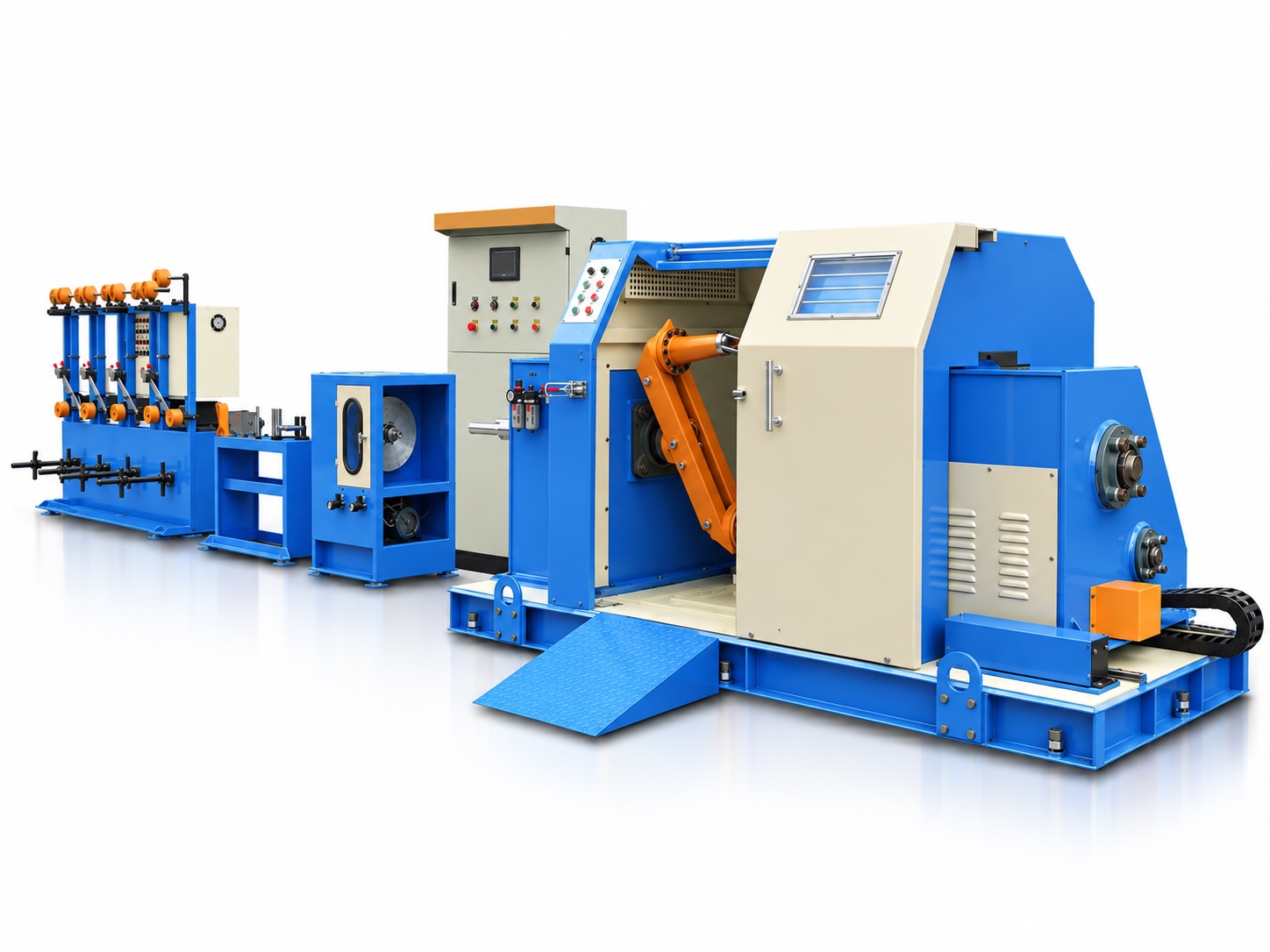
Build the LAN cable core with a defined route for pairs, separator, tapes and the next shielding or jacket operation.
02
PROCESS ROUTE
Resolve every material path in the cable core
Assemble twisted pairs into the cable core and add the separator or wrapping required by the cable drawing. Coordinate the pair pay-offs, single-twist machine and downstream jacket or shielding stage.
Use this stage to assemble the finished twisted pairs into the cable core required by the drawing. It is relevant when selecting a new assembly line or reviewing separator, drain-wire and tape routes on an existing factory process. A general description of single twisting and wrapping leaves important construction choices open. The complete configuration should show how each required element enters the core, how wrapping is applied and which package receives the assembled core for its next operation.
Incoming material
Twisted pairs and specified auxiliary materials
Finished output
Assembled cable core ready for the next operation
Select by
Cable-core lay, tension and wrapping route
Line scope
Confirmed from the approved cable drawing and project inputs
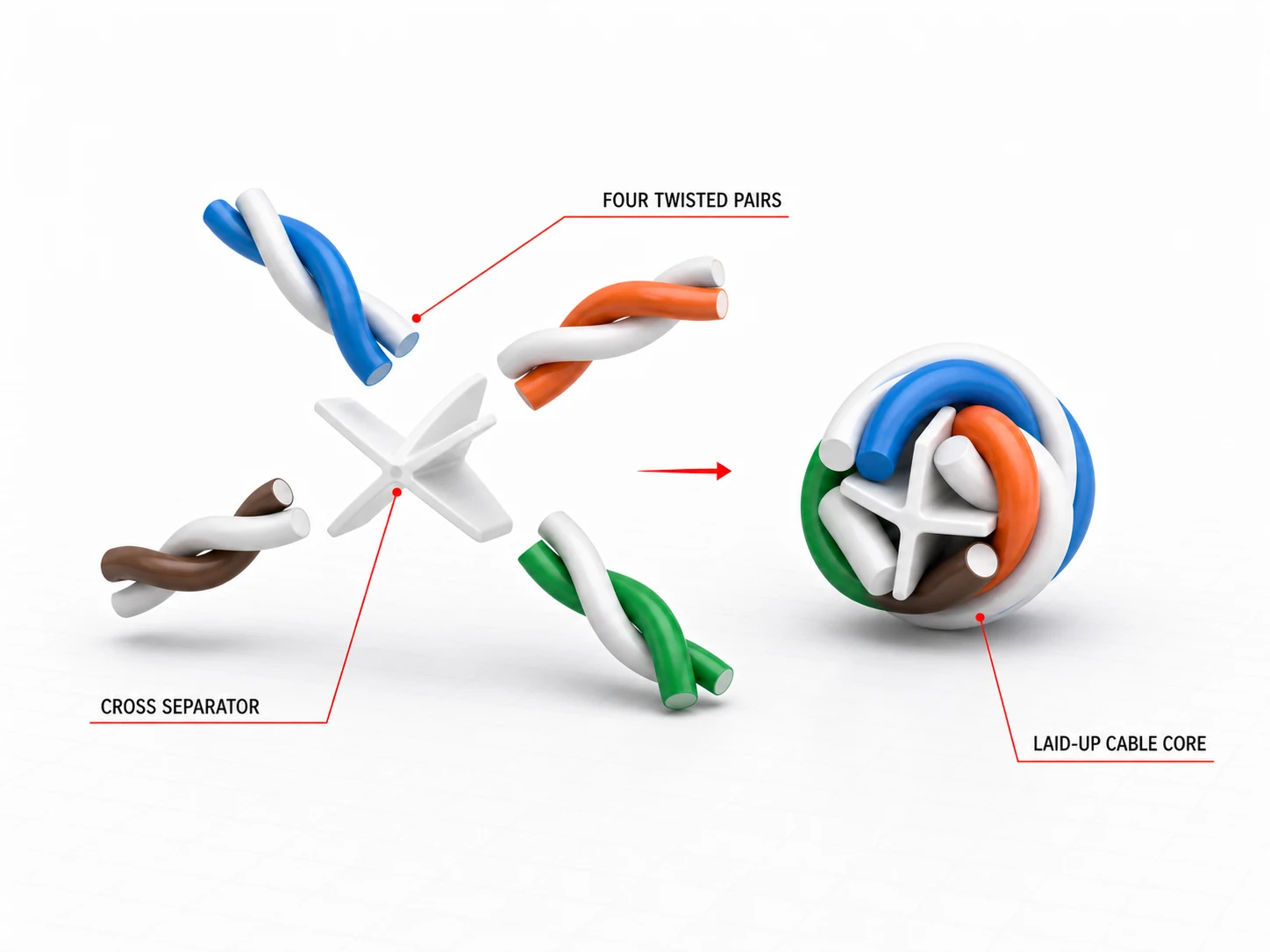
See how the pairs become a cable core
Review the positions of the completed pairs and any separator or wrapping in the cable drawing. The assembled-core geometry determines what the next shielding or sheathing stage receives.
Follow the production process
STAGE 01
Supply pairs and auxiliary elements
Match the pair reels and pay-off tension. Specify the separator feed, drain wire and other auxiliary elements only where the approved construction requires them.
STAGE 02
Assemble and wrap the core
Lay up the pairs on the selected single-twist arrangement. Define centre or side wrapping, tape dimensions and overlap; review each foil path for the required shielding construction.
STAGE 03
Receive for shielding or sheathing
Match the assembled-core diameter, handling and take-up package to the next operation. An overall braid, where specified, is a separate stage before the jacket.
What a well-defined line gives your project
A construction-based equipment list
Map each pair and auxiliary material to its feed or wrapping path. This makes the assembly proposal easier to assess against the actual cable drawing.
A visible shielding boundary
Separate overall wrapping, individual-pair foil screening and any subsequent braid. The selected taping modules can then be checked against the required paths.
A defined transfer to the next stage
Agree the assembled-core diameter and receiving reel with shielding or sheathing. The end of cabling becomes an explicit factory interface.
03
LINE EQUIPMENT
Equipment duties and configuration
Review each module by its function and the project input it needs. Use the documented arrangement as a configuration reference.
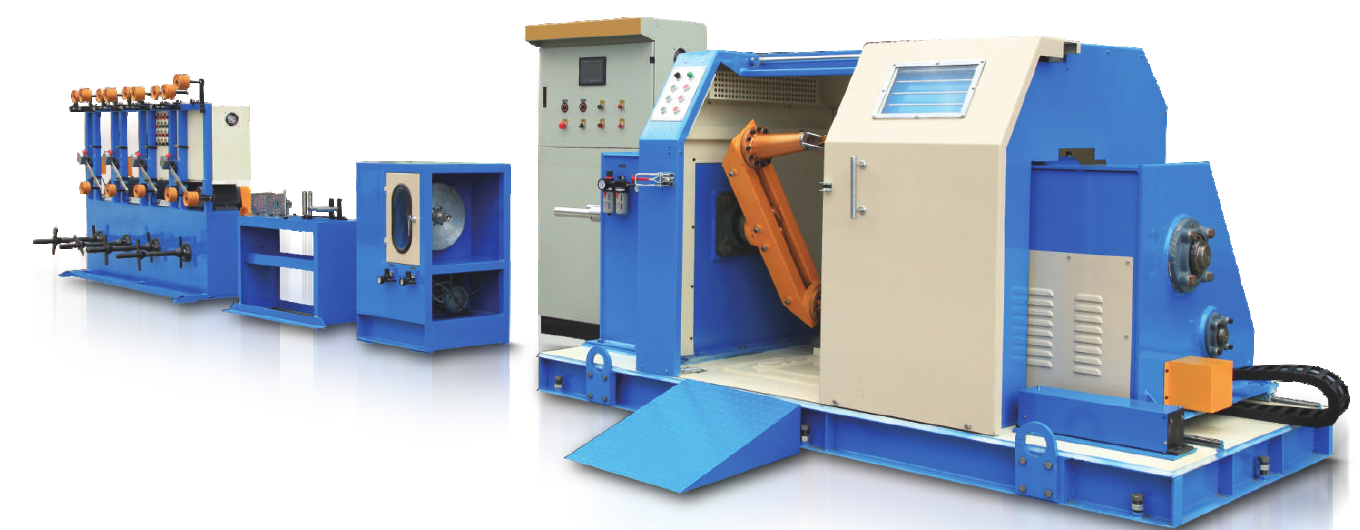
Review the cantilever equipment family
Use this catalog reference to discuss the machine arrangement and reel handling. Define the pair pay-offs, gathering path and wrapping heads separately in the complete line scope.
Pair pay-offs with coordinated tension
The documented single-twist line has four active 500 mm pair pay-offs with dancer tension control and a separate passive separator pay-off. Confirm pair-reel drawings and the required separator feed.
Project-selected separator and auxiliary-material feeds
Show the separator, drain-wire and other auxiliary feeds required by the drawing. Identify the material packages and entry paths for each selected element.
Gathering and length measurement
Gather the incoming elements into the intended cable-core arrangement. Specify the length-measurement function and the agreed guiding or gathering scope.
Cantilever single-twist equipment
Lay up the assembled core using the selected cantilever single-twist arrangement. Confirm machine size against the core and reel requirements.
Centre, side or active taping modules as specified
The reference lists four 300 mm active pair-taping heads and a centre wrapper. Side wrapping is an additional documented project item. Assign every required foil/tape path and confirm its material, width and overlap.
Cable-core take-up and downstream reel interfaces
Receive the assembled core in a package usable by the next operation. Define the take-up and the transfer to braiding or outer sheathing.
Configuration reference
HK-800 cantilever single-twist reference
- Four active 500 mm pair pay-offs plus one passive separator pay-off.
- Four 300 mm active pair-taping heads, gathering/meter-counting platform and centre wrapping; side wrapping is separately specified in the CAT7 project.
- Cantilever single-twist machine: maximum cable diameter 20 mm; electronic pitch 20-250 mm; maximum spindle speed 800 rpm.
- Receiving reel: 800 mm; reel lifting, take-up tension and PLC/HMI controls are part of the reference.
The separately documented HK-800 PLC double-twist machine is another architecture, not a rename of this single-twist line. Select it only after reviewing the cable lay, shielding paths and reel interfaces.
Choose the configuration route
Core assembly without a specified tape layer
Select the pair and auxiliary-material paths from the drawing. Include only the separator and other elements that the approved construction requires.
Assembly with wrapping
Define the overall tape duty, width and overlap. Match the selected wrapping module to that duty and identify the material feed.
Construction with individual-pair screens
Show each individual-pair foil path and the overall shield route. A general taping module or an overall braid alone does not define the complete S/FTP construction.
HONGKAI pair-taping operating reference. Complete four-pair cabling and foil paths are defined separately.
Watch a pair-taping operation
This reference focuses on taping equipment used in shielded LAN constructions. Use it to review the tape-feed function within your proposed assembly route.
- Tape feeding and material guidance
- Wrapping around the prepared pair
- The interfaces to the next assembly stage
04
FACTORY INPUTS
Define the line before comparing quotations
Use the same cable, material and receiving-package requirements when comparing configurations. Unknown items can remain questions for the review.
Your selection brief
Cable-core construction
Provide pair count, pair dimensions, separator profile and the target assembled-core diameter.
Lay and handling
Specify core lay, direction, reel formats, handling requirements and the intended working output.
Wrapping and shielding
Define tape material, width, overlap, drain-wire path and any individual-pair foil coverage that the design requires.
Inputs to include
Pair inputs
Pair count, outside dimensions, lay settings and receiving reels.
Core geometry
Target cable-core diameter, lay and direction.
Auxiliary elements
Separator profile, drain wire and other specified materials.
Tape recipe
Material, width, overlap and every required foil or wrapping path.
Transfer package
Incoming pair reels and the take-up interface to the next stage.
Working basis
Required output, handling requirements and core acceptance method.
05
SUPPLY SCOPE & QUALITY
Agree supply scope and acceptance
Put the selected equipment, plant interfaces and product-specific checks into the written proposal.
ACCEPTANCE CHECKPOINTS
Checks to agree
- Check the assembled-core dimensions and lay against the approved drawing.
- Review pair handling and deformation through the complete assembly route.
- Confirm the foil, separator and drain-wire paths before agreeing a shielded-cable scope.
SUPPLY BOUNDARY
Объем работ подтверждается
A taping module listed in a configuration does not identify every individual-pair shielding path. The proposal should show the required pay-offs, tape heads, auxiliary feeds and interfaces to any subsequent braid or jacket operation.
Define the acceptance sequence
Trial basis
Agree the pair, separator, tape and auxiliary materials to be used with the representative cable-core drawing.
Line and product checks
Review core dimensions, lay, pair handling and the selected tape overlap or foil paths at the agreed operating point.
Records and transfer
Record the assembled-core and package results and define the subsequent shielding, sheathing and finished-cable tests separately.
06
RELATED ROUTES
Connect the upstream and downstream stages
Review the material and receiving packages on both sides of this line, then compare the complete LAN cable route.
Incoming operation
Incoming completed pairs are supplied by the selected pairing route; any separator is a separately prepared material stream.
Next operation
The assembled core enters overall braiding where specified, or proceeds to the outer-jacket operation.
Interface to confirm
Review the full shielding drawing and the reel transfer before agreeing which tape and auxiliary feeds are included.
07
REFERENCE PRICING
Plan your equipment budget
Review the EXW reference price for the named configuration, then request a quotation against your cable drawing, output target and required supply scope.
HK-800 cantilever single-twist configuration
USD 48,000
Per reference set
EXW. Taxes excluded.
Confirm your quotation scope
The documented cantilever single-twist route. A double-twist architecture requires a separate quotation.
Prices are in USD on an EXW basis and exclude taxes. They apply to the named reference configurations. Final price and validity depend on the agreed equipment, tooling, auxiliaries and project requirements.
Confirm the supply boundary and delivery arrangements in the quotation.
08
CUSTOMER FEEDBACK
Good value, with one project team
Feedback from Devang Shah on HONGKAI’s LAN cable equipment and one-stop project service for Channeltech Systems in India.
Devang Shah
Channeltech Systems
Индия
1 customer review
LAN cable equipment project
Equipment value and project support
HONGKAI’s LAN cable production equipment offers good value for money. The service is good, and the one-stop solution saved time for our project.
English summary of customer feedback.
09
QUESTIONS BEFORE SELECTION
Questions before selecting the line
Clarify configuration choices, material duties and process boundaries before turning a reference arrangement into an equipment order.
This LAN application receives already twisted insulated pairs. Bare-wire conductor bunching belongs to a different upstream process.
Include it when the approved cable construction specifies one. Separator extrusion is an upstream material-preparation line; separator feeding takes place during the relevant assembly operation.
Confirm the individual-pair foil paths, tape feeds, overlap and overall braid route against the drawing. A general wrapping description is not a complete shielding specification.
They share an 800 mm reel designation but use different twisting architectures. The separate double-twist reference has five 630 mm motorized pay-offs, a gathering unit, 50-250 mm pitch and ratings of 800 rpm / 1,600 twists per minute. Those ratings do not replace the cantilever line specification or prove suitability for a particular LAN construction.
Identify both duties explicitly. Extrusion prepares the separator; its material package and feed into cabling are separate interfaces within the complete factory route.
Show the pair screens, overall tapes or braid, drain-wire path and the order of the selected operations. Confirm the associated pay-offs, heads and material packages in the proposal.
10
PROJECT ENQUIRY
Request a line configuration
LAN Cable Cabling and Taping Line
Send the full cable cross-section, pair details, separator and drain-wire requirements, tape recipe, core lay and receiving reel. For shielded constructions, show each foil path and any subsequent overall braid.
Use the review to agree
- The equipment arrangement and selected configuration route.
- Incoming material, receiving package and plant interfaces.
- The working target, supplied instruments and acceptance basis.
Send the information you already have. Mark undecided requirements for discussion rather than guessing a specification.
 English
 Русский
 हिन्दी
 한국어
 বাংলা
 Bahasa Indonesia
 Tiếng Việt
 മലയാളം
 Português do Brasil
 العربية
 فارسی