









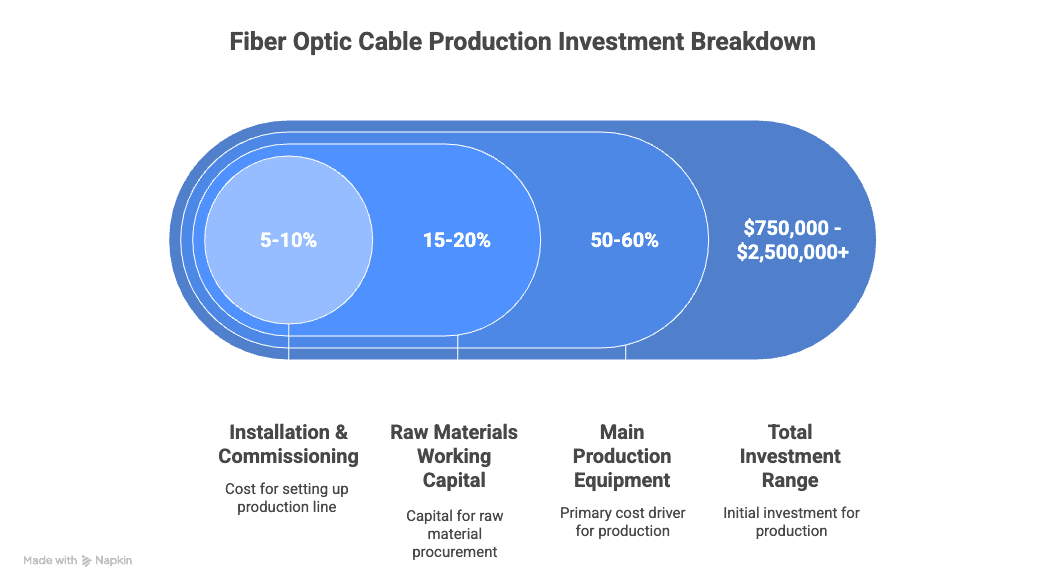
A complete fiber optic cable production line in 2025 requires an initial investment of $750,000 to $2,500,000. Key cost drivers are the main production machinery (50-60%) and raw materials. With strong market demand, most businesses achieve a full return on investment (ROI) within 18 to 36 months.
Investment Overview
Embarking on fiber optic cable production1 is a significant venture. From our experience working with over a hundred new manufacturers, a clear-eyed view of the total investment is the first step toward success. Let’s break down the headline numbers.
Total Investment Range: $750,000 – $2,500,000+
Typical ROI Period: 18 – 36 months
ब्रेक-ईवन उत्पादन: Approx. 800 – 1,200 km of cable per month
Key Cost Drivers:
- Main Production Equipment (accounts for 50-60% of total cost)
- Raw Materials Working Capital (accounts for 15-20% of total cost)
- Installation & Commissioning (कुल लागत का 5-10% हिस्सा)
पूर्ण लागत विवरण
हम आपके द्वारा अपेक्षित प्रत्येक लागत की गहराई से जांच करेंगे। हम पारदर्शिता में विश्वास करते हैं, और इसका अर्थ है कि मशीनरी के मूल्य के बाहर देखना।.
प्रारंभिक निवेश लागतें
यह आपका प्रारंभिक पूंजी व्यय है जिससे कारखाने के दरवाजे खुलेंगे और मशीनें चलना शुरू हो जाएंगी।.
1. उपकरण लागतें
यह आपके संचालन का हृदय और सबसे बड़ा एकल व्यय है। लागत क्षमता, स्वचालन स्तर और ब्रांड के आधार पर भिन्न होती है।.
| उपकरण घटक | लागत सीमा | नोट्स |
|---|---|---|
| मुख्य उत्पादन लाइन (रंगीनीकरण, द्वितीयक कोटिंग, शीथिंग) | $450,000 – $1,200,000 | केबल निर्माण के लिए मुख्य मशीनरी। गति और क्षमता मुख्य भिन्नता हैं।. |
| सहायक उपकरण (SZ स्ट्रैंडिंग, जेली फिलिंग) | $100,000 – $300,000 | बहु-फाइबर केबल संरचनाओं के लिए आवश्यक।. |
| प्रूफ-टेस्टिंग और रीविंडिंग मशीन | $50,000 – $150,000 | केबल तनाव और ऑप्टिकल प्रदर्शन मानकों को पूरा करने के लिए।. |
| गुणवत्ता नियंत्रण उपकरण (OTDR, LAN केबल टेस्टर) | $30,000 – $80,000 | सिग्नल इंटेग्रिटी की पुष्टि और उद्योग की प्रमाणीकरण आवश्यकताओं को पूरा करने के लिए आवश्यक।. |
| कुल उपकरण | $630,000 – $1,730,000 |
उपकरण लागत कारक:
- उत्पादन गति: 800m/min उत्पादित करने वाली लाइन, 300m/min उत्पादित करने वाली लाइन की तुलना में काफी अधिक महंगी होगी।.
- स्वचालन स्तर: पूर्णतः स्वचालित लाइनें श्रम लागत को कम करती हैं लेकिन अधिक की आवश्यकता होती है आरंभिक निवेश2. स्वचालित बॉबिन बदलने जैसी विशेषताओं के बारे में सोचें।.
- ब्रांड और मूल: Equipment from established European brands can cost 50-100% more than machinery from reputable Asian manufacturers like us at HONGKAI.
2. स्थापना और सेटअप लागत
उपकरण को आपके कारखाने तक पहुँचाना और इसे सक्रिय करना खुद एक परियोजना है। इन लागतों को कम न समझें।.
| लागत आइटम | लागत सीमा | समय सारणी |
|---|---|---|
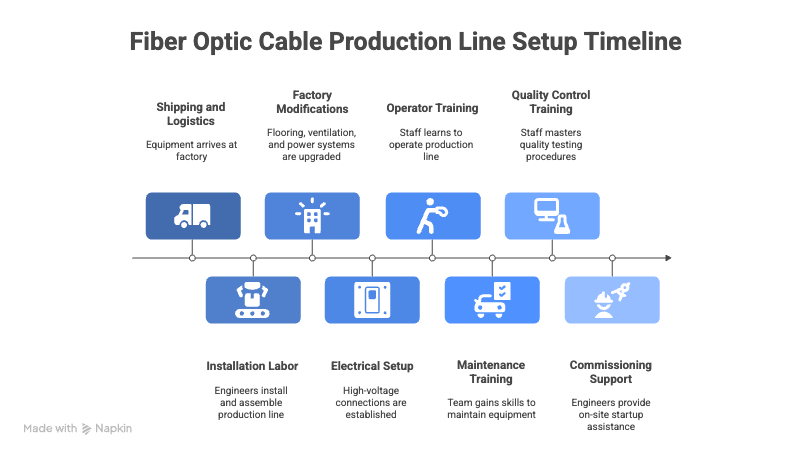
| शिपिंग और लॉजिस्टिक्स | $25,000 – $70,000 | 4-6 सप्ताह |
| स्थापना श्रम (हमारे इंजीनियरों के समर्थन सहित) | $15,000 – $40,000 | 2-3 सप्ताह |
| कारखाना संशोधन (फर्श, वेंटिलेशन, बिजली) | $10,000 – $100,000 | 4-8 weeks |
| Electrical Setup (High-voltage connections) | $5,000 – $20,000 | 1-2 weeks |
| Total Installation | $55,000 – $230,000 | ~8-12 weeks |
3. Training and Commissioning
Your team needs to run and maintain the equipment effectively. The best machinery is useless without skilled operators.
| Training Component | लागत | Duration |
|---|---|---|
| ऑपरेटर प्रशिक्षण | $5,000 – $15,000 | 7-10 days |
| Maintenance Training | $5,000 – $12,000 | 5-7 दिन |
| Quality Control Training | $3,000 – $8,000 | 3-5 days |
| Commissioning Support | $10,000 – $25,000 | 2-3 सप्ताह |
| कुल प्रशिक्षण | $23,000 – $60,000 | ~3-4 सप्ताह |
4. प्रारंभिक कार्यशील पूंजी
आय बहना शुरू होने से पहले प्रारंभिक संचालन व्ययों को कवर करने के लिए आपके पास नकदी होनी चाहिए।.
| वस्तु | राशि | नोट्स |
|---|---|---|
| कच्चे माल (1-2 mमाह) | $50,000 – $400,000 | ऑप्टिकल फाइबर, प्लास्टिक (HDPE, LSZH), आर्मरिंग टेप, भरण यौगिक।. |
| स्पेयर पार्ट्स इन्वेंटरी | $15,000 – $50,000 | एक्सट्रूडर स्क्रू, हीटर और बेल्ट जैसे आवश्यक पहनने योग्य भाग।. |
| ऑपरेटिंग कैश रिजर्व | $20,000 – $100,000 | पहले 3 mमाह के लिए वेतन, बिजली और अप्रत्याशित व्यय के लिए।. |
| कुल कार्यशील पूंजी | $85,000 – $550,000 |
कुल प्रारंभिक निवेश सारांश
आइए इन संख्याओं को एकजुट करके पूरी तस्वीर देखें।.
| श्रेणी | निम्न अंत | उच्च अंत |
|---|---|---|
| उपकरण | $630,000 | $1,730,000 |
| स्थापना | $55,000 | $230,000 |
| प्रशिक्षण | $23,000 | $60,000 |
| कार्यशील पूंजी | $85,000 | $550,000 |
| TOTAL INITIAL INVESTMENT | $793,000 | $2,570,000 |
संचालन लागत
जब आप चलूँ तो, ये वे आवर्ती लागतें हैं जिनका सामना आप प्रति माह करेंगे।.
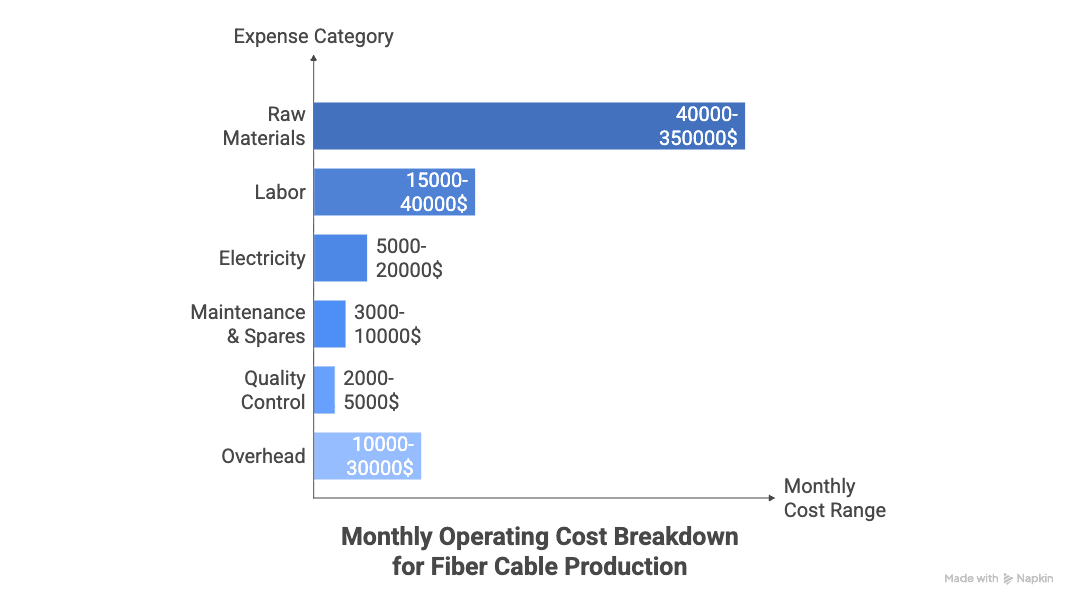
मासिक संचालन व्यय
| व्यय श्रेणी | मासिक लागत | वार्षिक लागत | % आय |
|---|---|---|---|
| कच्चा माल | $40,000 – $350,000 | $480,000 – $4,200,000 | 50-65% |
| श्रम (8-15 ऑपरेटर, इंजीनियर) | $15,000 – $40,000 | $180,000 – $480,000 | 10-15% |
| बिजली | $5,000 – $20,000 | $60,000 – $240,000 | 3-5% |
| रखरखाव और स्पेयर पार्ट्स | $3,000 – $10,000 | $36,000 – $120,000 | 2-4% |
| गुणवत्ता नियंत्रण | $2,000 – $5,000 | $24,000 – $60,000 | 1-2% |
| Overhead (Rent, Admin, Sales) | $10,000 – $30,000 | $120,000 – $360,000 | 5-10% |
| TOTAL MONTHLY | $75,000 – $455,000 | $900,000 – $5,460,000 | 71-91% |
ऑपरेटिंग लागत अनुकूलन:
- बड़े पैमाने पर कच्चे माल की खरीद: फाइबर और प्लास्टिक पर मात्रा छूट की बातचीत से सामग्री लागत में 5-10% तक की कमी हो सकती है।.
- ऊर्जा-कुशल मशीनरी: आधुनिक सर्वो मोटर्स पुराने DC मोटर्स की तुलना में बिजली की खपत को अधिकतम 20% तक कम कर सकते हैं।.
- ऑपरेटर्स का क्रॉस-ट्रेनिंग: अपने कर्मचारियों को कई मशीनों पर प्रशिक्षित करने से शेड्यूलिंग लचीलापन में सुधार होता है और शिफ्ट बदलाव के दौरान बंद समय कम होता है।.
आय की संभावना
आपके निवेश की वित्तीय व्यवहार्यता आपकी केबल उत्पादन और बिक्री की क्षमता पर निर्भर करती है।.
उत्पादन क्षमता और मूल्य
उत्पादन क्षमता:
- दैनिक उत्पादन: 20 – 100 km केबल
- मासिक उत्पादन (22 कार्यदिवस): 440 – 2,200 km
- वार्षिक उत्पादन: 5,280 – 26,400 km
बाजार मूल्य (2025 अनुमान):
| उत्पाद प्रकार | प्रति मीटर मूल्य | बाजार आवश्यकता |
|---|---|---|
| 4-कोर FTTH ड्रॉप केबल | $0.15 – $0.25 | उच्च |
| 12-Core Distribution Cable | $0.40 – $0.70 | उच्च |
| 96-Core Duct Cable | $2.50 – $4.00 | मध्यम |
Revenue Projections
Based on a medium-scale setup producing a mix of cable types.
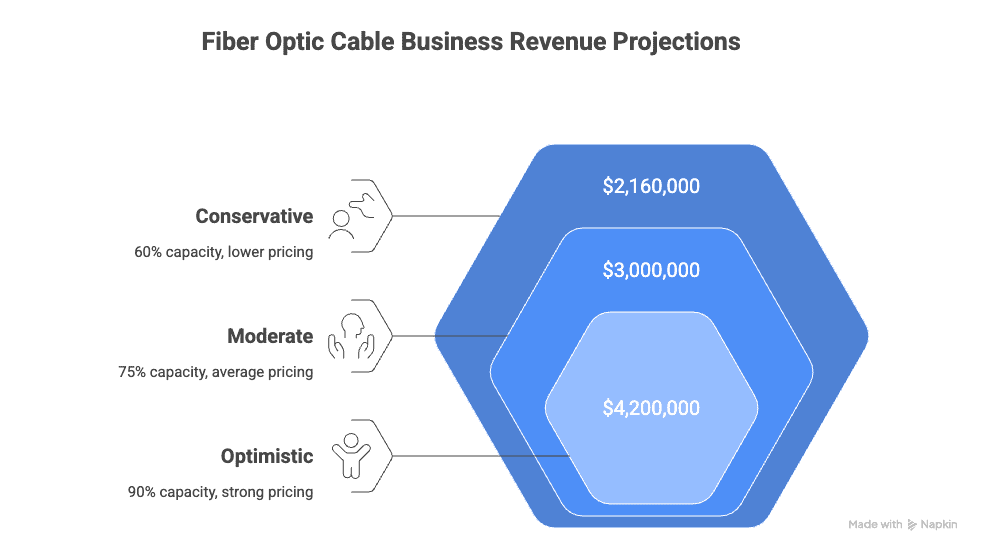
| Scenario | Monthly Revenue | वार्षिक राजस्व | Assumptions |
|---|---|---|---|
| Conservative | $180,000 | $2,160,000 | 60% capacity utilization, lower market pricing3. |
| मध्यम | $250,000 | $3,000,000 | 75% capacity utilization, average market pricing3. |
| Optimistic | $350,000 | $4,200,000 | 90% capacity utilization, strong pricing for premium products. |
ROI Analysis
Here’s where we tie it all together. Let’s calculate profitability based on a moderate आरंभिक निवेश2 का $1,500,000.
Profitability Calculation
Conservative Scenario:
| Metric | वर्ष 1 | वर्ष 2 | वर्ष 3 |
|---|---|---|---|
| आय | $2,160,000 | $2,376,000 | $2,613,600 |
| संचालन लागत | $1,980,000 | $2,178,000 | $2,395,800 |
| सकल लाभ | $180,000 | $198,000 | $217,800 |
| सकल मुनाफा | 8.3% | 8.3% | 8.3% |
| संचयी नकद प्रवाह | -$1,320,000 | -$1,122,000 | -$904,200 |
भुगतान अवधि: > 5 वर्ष (अनुकूल नहीं)
ROI (3 वर्ष): ऋणात्मक
मामूली परिदृश्य (लक्ष्य परिदृश्य):
| Metric | वर्ष 1 | वर्ष 2 | वर्ष 3 |
|---|---|---|---|
| आय | $3,000,000 | $3,300,000 | $3,630,000 |
| संचालन लागत | $2,550,000 | $2,805,000 | $3,085,500 |
| सकल लाभ | $450,000 | $495,000 | $544,500 |
| सकल मुनाफा | 15% | 15% | 15% |
| संचयी नकद प्रवाह | -$1,050,000 | -$555,000 | -$10,500 |
भुगतान अवधि: ~36 mमाह
ROI (3 वर्ष): ~33%
आशावादी परिदृश्य:
| Metric | वर्ष 1 | वर्ष 2 | वर्ष 3 |
|---|---|---|---|
| आय | $4,200,000 | $4,620,000 | $5,082,000 |
| संचालन लागत | $3,360,000 | $3,696,000 | $4,065,600 |
| सकल लाभ | $840,000 | $924,000 | $1,016,400 |
| सकल मुनाफा | 20% | 20% | 20% |
| संचयी नकद प्रवाह | -$660,000 | $264,000 | $1,280,400 |
भुगतान अवधि: ~20 mमाह
ROI (3 वर्ष): ~85%

पैमाने के आधार पर लागत तुलना
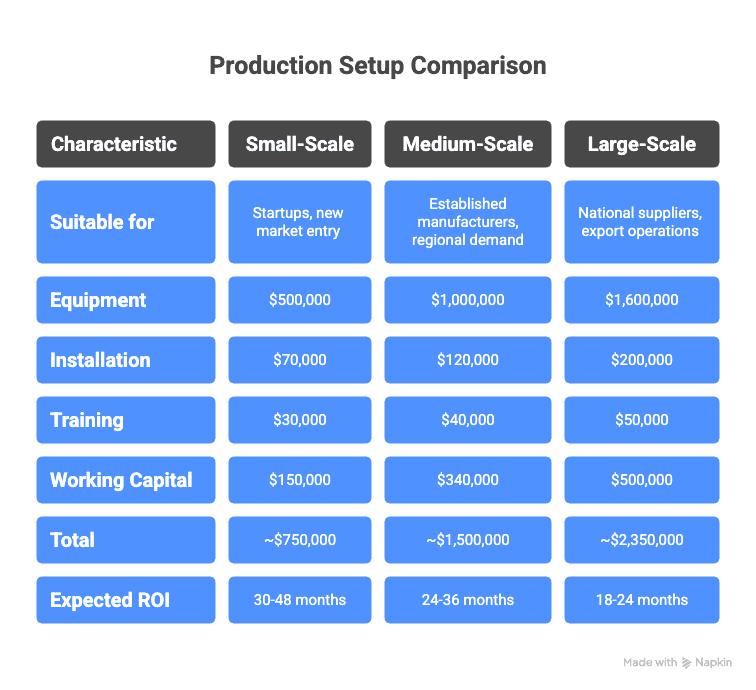
छोटे पैमाने की व्यवस्था ($750k – $1M)
उपयुक्त:
- शुरुआती उद्यम या नए बाजार में प्रवेश करने वाले व्यवसाय।.
- FTTH ड्रॉप केबल जैसे विशिष्ट उत्पादों को लक्षित करना।.
निवेश विवरण:
- उपकरण: $500,000
- स्थापना: $70,000
- Training: $30,000
- Working Capital: $150,000
- कुल: ~$750,000
Expected ROI: 30-48 months
Medium-Scale Setup ($1M – $1.8M)
उपयुक्त:
- Established cable manufacturers expanding their portfolio.
- Serving regional demand with a mix of cable types.
निवेश विवरण:
- Equipment: $1,000,000
- Installation: $120,000
- Training: $40,000
- Working Capital: $340,000
- कुल: ~$1,500,000
Expected ROI: 24-36 months
Large-Scale Setup ($1.8M – $2.5M+)
उपयुक्त:
- Large-scale national suppliers.
- Export-focused operations requiring high output and efficiency.
निवेश विवरण:
- Equipment: $1,600,000
- Installation: $200,000
- Training: $50,000
- Working Capital: $500,000
- कुल: ~$2,350,000
Expected ROI: 18-24 months
Hidden Costs to Consider
Many buyers overlook these costs, which can impact profitability. We’ve seen this happen firsthand.
1. Regulatory Compliance and Certification
सामान्य लागत: $10,000 – $30,000 annually
Why it’s often missed: It’s not a machine or material, but a recurring operational cost. Certifications like ISO 9001 or industry-specific standards (e.g., Telcordia) are essential for selling to large telecom operators.
How to budget for it: Earmark a budget for annual audits, testing fees, and potential consulting from day one.
2. Scrap and Waste Material
सामान्य लागत: 1-3% कच्चे माल की लागत ($5,000 – $100,000+ वार्षिक)
Why it’s often missed: प्रत्येक उत्पादन लाइन में शुरुआती बर्बादी और गुणवत्ता मानकों को पूरा न करने वाला सामग्री होती है। शुरुआत में, यह दर 5-7% तक हो सकती है जब आपकी टीम सीख रही होती है।.
How to budget for it: अपनी शुरुआती लागत की गणना में 3% बर्बादी दर को शामिल करें। इस दर को जल्दी कम करने के लिए अच्छे ऑपरेटर प्रशिक्षण में निवेश करें।.
3. कारखाना IT बुनियादी ढांचा
सामान्य लागत: $15,000 – $50,000
Why it’s often missed: आधुनिक उत्पादन लाइनें डेटा-उत्पादन शक्तिशाली होती हैं। आपको उत्पादन निगरानी सॉफ़्टवेयर (MES) के लिए एक मजबूत स्थानीय नेटवर्क और सर्वर, और साइबर सुरक्षा उपायों की आवश्यकता होती है।.
How to budget for it: मशीनों के आने के बाद नहीं, बल्कि कारखाने की योजना बनाने के दौरान IT विशेषज्ञ से सलाह लें।.
लागत बचत रणनीतियाँ
हमारे 100 स्थापनाओं के अनुभव के आधार पर, हमने अपने नीचे रेखा को सुधारने के लिए मुख्य रणनीतियाँ पहचानी हैं।.
रणनीति 1: कच्चे माल के स्रोत को अनुकूलित करें
संभावित बचत: $50,000 – $200,000 a वार्षिक (5-10% सामग्री लागत में कमी)
कार्यान्वयन:
- प्रत्येक महत्वपूर्ण सामग्री (फाइबर, HDPE, LSZH) के लिए कम से कम तीन आपूर्तिकर्ताओं की योग्यता निर्धारित करें।.
- मूल्यों की तुलना के लिए तिमाही समीक्षा प्रक्रिया स्थापित करें।.
- बड़ी मात्रा में वस्तुओं के लिए, अनुकूल मूल्यों को बंद करने के लिए वार्षिक अनुबंध पर बातचीत करें।.
विकल्प: अधिक जटिल आपूर्ति श्रृंखला प्रबंधन की आवश्यकता होती है, लेकिन यह कुल लाभ पर महत्वपूर्ण प्रभाव डालता है।.
रणनीति 2: चरणबद्ध निवेश
संभावित बचत: प्रारंभिक नकद व्यय में $200,000 – $500,000
कार्यान्वयन:
- Start with a core production line for a high-demand product (e.g., FTTH drop cable).
- Re-invest profits from the first 12-18 months to add a second line (e.g., for stranding or sheathing larger cables).
- Purchase auxiliary equipment like proof-testers for multiple lines to share.
विकल्प: Slower market penetration and lower initial revenue, but much lower initial risk.
Strategy 3: Invest in High-Quality Training
संभावित बचत: $30,000 – $80,000 annually in reduced scrap and downtime.
कार्यान्वयन:
- Choose a supplier (like HONGKAI) that provides comprehensive, on-site training.
- Develop a "master operator" program where key staff receive advanced training.
- Create clear, visual standard operating procedures (SOPs) for all processes.
विकल्प: Higher upfront training cost, but it pays for itself within the first year through improved efficiency.
Real-World Case Studies
Case Study 1: Startup Manufacturer – Poland
Initial Investment: $950,000
Setup: A focused FTTH drop cable line with a capacity of 500m/min.
Actual Results:
- Monthly revenue: $210,000
- Monthly profit: $35,000
- Actual payback: 27 months (vs. projected 36 months)
- Current ROI: 44% annually
Key Success Factors:
- Focused on a single, high-demand product for the local market.
- Secured a large contract with a regional ISP before starting production.
Case Study 2: Established Cable Company – UAE
Initial Investment: $1,700,000
Setup: Medium-scale line to add fiber optics to their existing copper cable portfolio.
Actual Results:
- Monthly revenue: $320,000 (from fiber division)
- Monthly profit: $50,000
- Actual payback: 34 months
- Current ROI: 35% annually
Key Success Factors:
- Leveraged existing sales channels and customer relationships.
- Used profits from their copper business to fund the आरंभिक निवेश2.
Expert Insights
"The biggest mistake I see is underestimating working capital4 needs. I always advise clients to plan for at least 3-4 months of operating expenses in cash reserves. This covers the critical period while you’re building your customer base and waiting for those first invoices to be paid."
"From a technical standpoint, investing in an integrated line control system adds about 5% to the upfront equipment cost. However, it typically reduces material scrap by 1-2% and improves line speed by 10%, paying for itself in under 18 months. It is a no-brainer for any serious manufacturer."
सामान्य प्रश्न
Q: What’s the minimum investment5 to get started?
A: Realistically, the minimum to start a viable, small-scale operation is around $750,000. This covers a basic line, installation, and essential working capital. Anything less makes it difficult to achieve the quality and scale needed to compete.
Q: How accurate are these cost estimates?
A: These estimates are based on our experience with dozens of projects and are typically accurate within a 15% range. The biggest variables are local labor/construction costs and final equipment configuration.
Q: What factors most affect ROI?
A: The two most critical factors are raw material cost6 और sales volume7. A 5% reduction in material costs or a 10% increase in sales can cut your payback period by 6-12 months.
Q: Can I start small and scale up later?
A: Absolutely. Our lines are designed to be modular. You can start with a single sheathing line and later add SZ stranding or secondary coating lines as your product mix expands. This is a very popular and financially prudent strategy.
Q: What’s the typical profit margin8 in this business?
A: Gross margins typically range from 8% to 20%. Well-run operations with optimized supply chains and strong sales can achieve net profit margins8 of 5-12%.
Cost Checklist
Before you sign any purchase order, run through this list.
Initial Costs:
- Main equipment ($450k – $1.2M)
- Auxiliary equipment ($180k – $530k)
- Installation & Shipping ($55k – $230k)
- Training & Commissioning ($23k – $60k)
- Working capital ($85k – $550k)
- Contingency (10-15% of total)
Ongoing Costs:
- Raw materials (Optical Fiber, Plastics)
- Labor (Operators, Engineers, QC)
- Utilities (Electricity is the main one)
- Maintenance (Spares, Lubricants)
- Quality Control (Testing, Certifications)
- Marketing and Sales
Hidden Costs:
- Regulatory Compliance
- Scrap & Waste
- IT Infrastructure
चाबी छीनना
After helping dozens of companies build their fiber optic cable business, here are the final thoughts:
- Total Investment: Expect to invest between $750,000 and $2,500,000 for a full turnkey solution.
- ROI Timeline: A typical payback period is 18 to 36 months. Success hinges on quickly securing sales volume7.
- Critical Success Factor: Your ability to manage raw material cost6s is the most important factor affecting profitability.
- Biggest Cost Driver: The main production equipment will always be your largest single outlay, representing over 50% of the आरंभिक निवेश9.
- Best Savings Opportunity: Implementing a phased investment strategy10 offers the best way to reduce initial risk and capital outlay.
Next Steps
Ready to move forward with your investment? We are here to help you succeed.
At HONGKAI, our goal is to be more than just an equipment supplier. We act as your partner, providing the technical knowledge and process expertise you need to build a profitable manufacturing operation. We can guide you through factory layout planning, financial modeling, and operator training to ensure your investment is a success from day one.
स्टेप 1: Download our detailed equipment specification sheets and cost guides.
चरण दो: Schedule a consultation to get a customized, no-obligation quote and a personalized ROI analysis based on your exact needs.
-
Understanding the factors in fiber optic cable production can help you make informed investment decisions. ↩
-
Explore the financial requirements to start a fiber optic cable production line and plan your budget effectively. ↩ ↩ ↩
-
Knowing market prices helps in setting competitive pricing strategies for your products. ↩ ↩
-
Learn about working capital needs to maintain smooth operations during the initial phase. ↩
-
Understanding the minimum investment helps in planning your entry into the market. ↩
-
Understanding raw material costs is crucial for managing expenses and maximizing profitability in manufacturing. ↩ ↩
-
Sales volume is a key driver of profitability; exploring this can help you strategize for better financial outcomes. ↩ ↩
-
Knowing profit margins can help you set realistic financial goals and assess the viability of your business. ↩ ↩
-
Understanding initial investment requirements is essential for planning and securing funding for your business. ↩
-
Exploring phased investment strategies can reduce risk and optimize capital allocation for your business. ↩