












Factory owners, production managers and technical buyers need a capacity target before they can compare fiber optic cable machinery. The target should describe saleable output for a defined product mix and schedule, not a supplier’s highest machine speed.
Fiber optic production capacity planning starts with the cable products and monthly saleable demand, then works backward through stable speed, reel changes, changeovers, planned stops, quality yield and the slowest required process. A factory should calculate capacity separately for fiber preparation, unit formation, cable-core assembly, sheathing, testing and packing. The purchasing decision is whether the proposed process route can meet the required good output under written operating conditions. Maximum speed alone is not a factory-capacity answer.

Real HONGKAI HK-90 optical cable sheathing production line. Capacity must be calculated for the confirmed cable diameter, material output and stable operating condition.
This guide helps a new factory define an RFQ, helps an existing factory find the actual bottleneck, and helps procurement compare suppliers on the same basis. Every speed, yield, availability and changeover assumption should come from the buyer’s records or a project-specific trial.
What Does Production Capacity Mean for a Fiber Optic Cable Factory?
Production capacity is the amount of conforming cable or intermediate product that a factory can deliver during a defined period for a defined product mix. The definition must state the product, unit, schedule, quality boundary and operating conditions. Installed speed is only one input because a fiber optic cable factory contains separate processes with different materials, package sizes and stopping patterns. Capacity is useful only when production, quality and procurement use the same definition.
A practical capacity statement should answer five questions:
- Which finished cable families and constructions are included?
- Is output measured as colored fiber, loose tube, cable core or finished cable?
- Is the time basis one shift, one day or one month?
- Does the output mean gross produced length or saleable length released by quality control?
- Which changeovers, maintenance stops and product trials are included?
The distinction between intermediate and finished output matters. Fiber coloring prepares individual fibers. A loose-tube line groups fibers inside a tube. SZ stranding may assemble several tubes around a central member. A sheathing route adds the final protection defined by the cable drawing. One meter at each stage does not represent the same quantity of saleable finished cable.
একটি ব্যবহারিক পরিকল্পনা বিভাজন হল একীভূত এবং বহু-পর্যায়ের রুটগুলিকে আলাদাভাবে বিবেচনা করা। একটি ইনডোর কেবল, যা একটি একীভূত উৎপাদন লাইনের মধ্যে দিয়ে চলে, তা সঠিক কেবল স্পেসিফিকেশনের জন্য যাচাইকৃত স্থিতিশীল গতি থেকে পরিকল্পনা করা যেতে পারে। একটি আউটডোর কেবল, যার জন্য একাধিক উৎপাদন লাইনের প্রয়োজন হয়, তা প্রয়োজনীয় সমাপ্ত কেবলের কিলোমিটার থেকে পশ্চাৎদিকে গণনা করা উচিত, কারণ প্রতিটি আপস্ট্রিম পর্যায় পরবর্তী পর্যায়ে ভিন্ন পরিমাণ, প্যাকেজ এবং রঙ সরবরাহ করে।.
Decision criterion: Write the capacity target as one complete sentence, such as “saleable monthly output for the approved product mix under the planned shift schedule, after normal changeovers and quality loss.” Keep the actual values in the project file rather than borrowing a generic utilization percentage.
The HONGKAI fiber optic cable production-line map separates fiber preparation, tight buffering, loose-tube extrusion, SZ stranding, reinforcement, sheathing, testing and packing. That process boundary should be defined before any machine quantity or capacity promise is compared.
Note: A factory-capacity number without a product, period and quality boundary is a sales headline, not a production plan.
মাসিক ক্যাবল চাহিদা কীভাবে প্রয়োজনীয় লাইন আউটপুটে রূপান্তরিত হবে?
সরঞ্জাম নির্বাচনের আগে মাসিক বিক্রয়যোগ্য চাহিদাকে ঘন্টার ভালো আউটপুট প্রয়োজনীয়তায় রূপান্তর করুন। একটি বহু-পর্যায়ের বাইরের ক্যাবল পথের জন্য, প্রয়োজনীয় সম্পূর্ণ ক্যাবল কিলোমিটার দিয়ে শুরু করুন এবং চূড়ান্ত শিথিং থেকে SZ স্ট্র্যান্ডিং, লুজ-টিউব এক্সট্রুশন এবং ফাইবার কালারিং পর্যন্ত পিছনের দিকে গণনা করুন। প্রতিটি প্রধান পণ্য পরিবারের জন্য গণনা পুনরাবৃত্তি করুন কারণ ব্যাস, উপাদান, টিউব সংখ্যা, রং, রিল দৈর্ঘ্য এবং প্রক্রিয়া পথ অপারেটিং উইন্ডোকে পরিবর্তন করে। একটি গড় পণ্য ব্যবহার করে একটি কঠিন মিশ্রণ লুকাবেন না।.
নিম্নলিখিত সহজ গণনা শৃঙ্খলটি ব্যবহার করুন।.
| পরিকল্পনা আইটেম | গণনা বা প্রমাণ | ক্রেতার সিদ্ধান্ত |
|---|---|---|
| বিক্রয়যোগ্য চাহিদা | ক্যাবল পরিবার দ্বারা নিশ্চিত মাসিক চাহিদা | কোন পণ্যগুলি কারখানাকে নির্ভরযোগ্যভাবে সরবরাহ করতে হবে? |
| সম্প্রতি নির্ধারিত ঘন্টা | শিফট ক্যালেন্ডার থেকে ছুটি এবং পরিকল্পিত বন্ধের সময় বাদ দিয়ে | কতটা উৎপাদন সময় প্রকৃতপক্ষে নির্ধারিত হয়েছে? |
| প্রয়োজনীয় ভালো আউটপুট | বিক্রয়যোগ্য চাহিদা কে সম্প্রতি নির্ধারিত পণ্য ঘন্টা দ্বারা ভাগ করে | প্রতি ঘন্টায় কতটা সঙ্গতিপূর্ণ আউটপুট মুক্ত করা হবে? |
| প্রয়োজনীয় মোট আউটপুট | ভালো আউটপুট কে ক্রেতার যাচাইকৃত ফলাফল দ্বারা ভাগ করে | সাধারণ গুণগত ক্ষতির আগে প্রক্রিয়াটি কী উৎপাদন করতে হবে? |
| প্রয়োজনীয় স্থিতিশীল গতি | মোট আউটপুট কে যাচাইকৃত চলমান সময় দ্বারা ভাগ করে | RFQ এবং FAT কোন স্থিতিশীল পরিচালনা অবস্থা পরীক্ষা করবে? |
একই পদ্ধতি আপস্ট্রিমে প্রয়োগ করতে হবে। যদি একটি সম্পূর্ণ ক্যাবল কয়েকটি ঢিলে টিউব ব্যবহার করে, তবে টিউবের প্রয়োজনীয়তা ক্যাবল নির্মাণ, টিউব সংখ্যা, প্যাকেজ পরিকল্পনা এবং আপস্ট্রিম ক্ষতির সাথে মেলে থাকতে হবে। যদি কারখানা পূর্বে রঙিন ফাইবার কিনে থাকে, তবে সেই পণ্যের জন্য রঙিন ক্ষমতা প্রয়োজন হতে পারে না। যদি কারখানা টাইট-বাফার্ড ইনডোর ক্যাবল বিক্রি করে, তবে ঢিলে-টিউব গণনা অপ্রাসঙ্গিক হতে পারে।.
প্রাথমিক আউটডোর কেবল পর্যালোচনার জন্য, এই বিপরীত ক্রমটি ব্যবহার করুন:
| বিপরীত পরিকল্পনা পর্যায় | ক্ষমতা ইনপুট | প্রকল্প-পরিকল্পনা সীমানা |
|---|---|---|
| চূড়ান্ত শিথিলকরণ | সম্পূর্ণ ক্যাবল কিলোমিটার, ক্যাবলের বাহ্যিক ব্যাস, পলিমার এবং এক্সট্রুশন আউটপুট | প্রথমে নিশ্চিত নির্মাণের জন্য বাস্তবসম্মত শিথিলকরণ গতি গণনা করুন |
| SZ স্ট্র্যান্ডিং | প্রয়োজনীয় কোর দৈর্ঘ্য, টিউব সংখ্যা, লে দৈর্ঘ্য এবং প্যাকেজ পরিকল্পনা | একটি HONGKAI প্রাথমিক পরিকল্পনা রেফারেন্স 50–60 m/min সম্পর্কিত, কিন্তু লে দৈর্ঘ্য এবং ক্যাবল স্পেসিফিকেশন প্রকৃত স্থিতিশীল গতি নির্ধারণ করে |
| Loose-tube extrusion | টিউব অবস্থান এবং রঙ দ্বারা প্রয়োজনীয় টিউব দৈর্ঘ্য | একটি HONGKAI প্রাথমিক পরিকল্পনা রেফারেন্স একটি রঙের জন্য 500–600 m/min সম্পর্কিত; মোট চাহিদায় প্রতিটি প্রয়োজনীয় টিউবের রঙ এবং উপাদান পরিবর্তন অন্তর্ভুক্ত থাকতে হবে |
| ফাইবার রঙ | ফাইবার সংখ্যা, রঙের ক্রম, রিল পরিকল্পনা এবং প্রয়োজনীয় রঙিন ফাইবার দৈর্ঘ্য | নিশ্চিত করুন যে রঙিন করা এবং পুনরায় প্রবাহের সময়সূচী ঢিলে-টিউব পরিকল্পনাকে সরবরাহ করতে পারে কিনা |
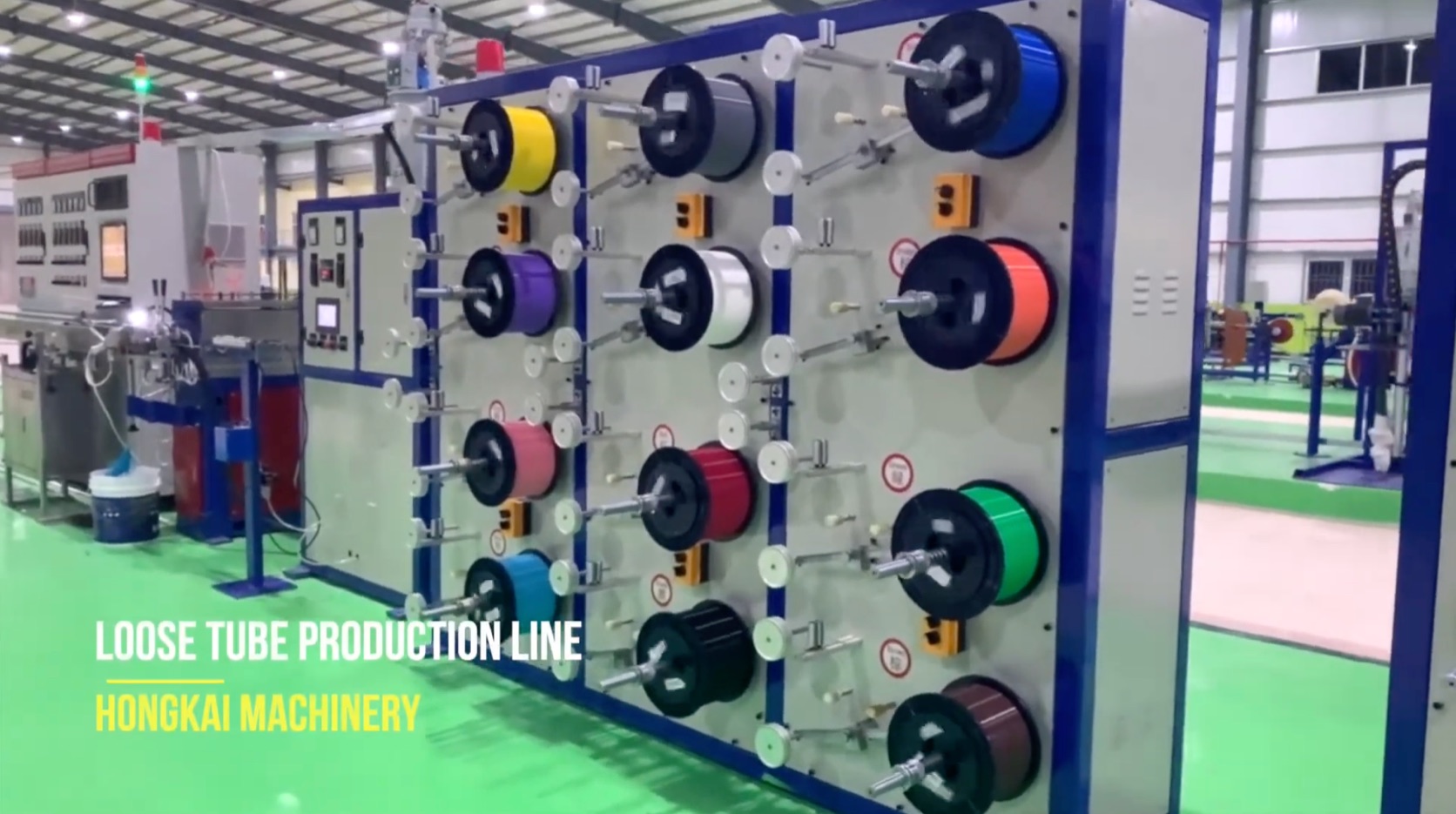
প্রকৃত HONGKAI ঢিলে টিউব উৎপাদন লাইন বহু-রঙের ফাইবার পেআউট সহ। আপস্ট্রিম ক্ষমতা প্রতিটি প্রয়োজনীয় টিউব রঙ এবং পরিবর্তন কভার করতে হবে।.
উপরের সংখ্যাগত পরিসরগুলি HONGKAI প্রকল্প-পরিকল্পনা অভিজ্ঞতা থেকে প্রাপ্ত; এগুলি নিশ্চিতকৃত মান বা শিল্প-মানের অপারেটিং পরিসর নয়। ক্ষমতা বা স্থিতিশীল গতি নিশ্চিত করার আগে একজন সরবরাহকারীর কাছে এখনও সঠিক কেবল ড্রয়িং, মাত্রা, উপকরণ, লে দৈর্ঘ্য, অর্ডার কিলোমিটার এবং উৎপাদন সময়সূচি প্রয়োজন।.
কী জিজ্ঞাসা করবেন: সম্পূর্ণ ক্যাবল ড্রয়িং, মাসিক বিক্রয়যোগ্য দৈর্ঘ্য, উৎপাদন ব্যাচ আকার, রিল দৈর্ঘ্য, উপাদান পরিবার, প্রয়োজনীয় প্রক্রিয়া রুট এবং পরিকল্পিত শিফট প্যাটার্ন সহ একটি পণ্য মিক্স টেবিল চাইতে হবে। বিদ্যমান কারখানাগুলি প্রতিটি পর্যায়ের জন্য প্রকৃত সেটআপ সময়, বর্জ্য, অপ্রত্যাশিত বিরতি এবং গুণগত ধরে রাখা ডেটা যোগ করবে।.
মাসিক পরিকল্পনায় সরবরাহকারীর ক্যাটালগ গতি সরাসরি প্রবেশ করাবেন না। ক্যাটালগ অবস্থা একটি নির্দিষ্ট উপাদান, ব্যাস, প্যাকেজ, টুলিং এবং পরীক্ষা পদ্ধতির জন্য প্রযোজ্য হতে পারে। প্রয়োজনীয় স্থিতিশীল গতি লিখিত শর্তে অনুমোদিত বা সম্মত প্রতিনিধি পণ্যে প্রদর্শন করা উচিত।.
নোট: চাহিদা গণনা কারখানার যা প্রদান করতে হবে তা সংজ্ঞায়িত করে; প্রক্রিয়া গণনা বলে যে প্রস্তাবিত রুট এটি প্রদান করতে পারে কিনা।.
Why Does the Bottleneck Process Set the Factory’s Saleable Capacity?
The bottleneck is the required process that limits saleable output after normal operating losses are included. A faster upstream machine does not increase finished-cable capacity when the downstream process, laboratory or packing area cannot consume its output. The bottleneck can move when the product mix changes, so capacity must be reviewed by route rather than assigned permanently to one machine. Work-in-process inventory is evidence to investigate, not proof that the upstream stage is productive.
The current HONGKAI GYXTW cable production-line reference shows a verified three-stage route: HK-235 fiber coloring and rewinding, HK-50 jelly-filled PBT loose-tube extrusion, and HK-90 armoring and PE sheathing for the approved GYXTW structure. These machines perform different transformations and hand off different packages. Their line speeds cannot be compared as though each meter were the same finished product.

Real HONGKAI HK-800/12 SZ stranding line. Stable output depends on the cable construction, tube count, lay length and package plan.
| Process boundary | Capacity evidence to collect | Common hidden constraint |
|---|---|---|
| Fiber preparation | Stable running record, fiber reel size, traverse quality and change time | Frequent small-reel changes or curing limits |
| Loose-tube extrusion | Approved tube structure, stable condition, tube package length and measured quality | Material change, cleaning, cooling or tube-quality loss |
| Cable-core assembly | Product-specific component count, package plan and stable core output | Tube payoff changes, binding material or tension stability |
| Armoring and sheathing | Approved cable structure, material route, drum size and saleable output | Drum change, material preparation, cooling or take-up limit |
| Laboratory release | Test method, sample plan, instrument availability and release time | Finished cable waits for inspection or retest |
| Packing and dispatch | Drum handling, identification, inspection and storage capacity | Finished drums cannot be cleared from the production area |
How to verify: Draw the product route from incoming coated fiber to released cable. For each stage, record the required input packages, good output, planned hours, actual stable speed, stop categories, work-in-process level and downstream demand. The stage that repeatedly prevents the route from meeting good-output demand is the current constraint.
বোতলের গলা (bottleneck) চিহ্নিত করার আগে, কেবল নির্মাণ এবং প্রতিটি ধাপের হ্যান্ডওভার পর্যালোচনা করুন। GYXTW, ADSS এবং অন্যান্য স্ট্র্যান্ডেড লুজ-টিউব কেবলগুলি সঠিক স্পেসিফিকেশন, টিউব সংখ্যা, লে দৈর্ঘ্য এবং প্যাকেজ পরিকল্পনার উপর নির্ভর করে গতি ও মেশিনের চাহিদা পরিবর্তন করে; টাইট-বাফার্ড ইনডোর কেবল এবং FTTH রুটগুলি ভিন্ন বা একীভূত উৎপাদন লাইন ব্যবহার করতে পারে।.
Note: The useful capacity question is not “Which machine is fastest?” but “Which required stage prevents the approved product mix from reaching saleable output?”
Which Operating Losses Must Be Included Before Buying More Equipment?
Include normal stops and quality losses that will still exist after installation. Reel changes, tooling changes, material changes, cleaning, warm-up, recipe setup, planned maintenance, quality sampling, scrap and rework all reduce saleable output. Use the factory’s measured history when it exists and a conservative trial plan when it does not. A capacity proposal should separate scheduled time, running time, gross output and released output instead of compressing them into one unexplained percentage.
Build the loss model from observable events:
- Package losses: payoff reel changes, take-up drum changes, splicing or threading, and partial packages.
- Product-change losses: tooling changes, color or material changes, cleaning, recipe selection and first-piece approval.
- Process losses: unstable start-up, alarms, tension resets, temperature stabilization and material interruption.
- Quality losses: out-of-spec dimensions, surface defects, optical test failures, rework, retest and quarantined material.
- Planned losses: preventive maintenance, calibration, operator breaks, training and scheduled engineering trials.
- Flow losses: upstream waiting, downstream blockage, laboratory release delay, drum handling and material shortage.
Common mistakes: Applying one utilization factor to every stage makes the plan look complete but hides why time is lost. Coloring, extrusion, stranding, sheathing and laboratory work have different stop patterns. The factor should be supported by stage-specific records or remain an explicit planning assumption to be validated.
একটি সংরক্ষণশীল পর্যালোচনায় উপকরণ-পরিবর্তনের সময়কে একটি সুস্পষ্ট ক্ষতি হিসাবে বিবেচনা করা উচিত এবং যাচাইকৃত উৎপাদন গতির পরিবর্তে কাঠামোগত গতি ব্যবহার করা উচিত নয়। লে দৈর্ঘ্য এবং অপারেটরের দক্ষতাও স্থিতিশীল ফলাফল পরিবর্তন করতে পারে। একটি সংরক্ষণশীল মাসিক অনুমানের জন্য, দ্রুত এবং ধীর পর্যায়গুলির গড় না নিয়ে প্রয়োজনীয় পর্যায়গুলির মধ্যে সর্বনিম্ন যাচাইকৃত ক্ষমতা ব্যবহার করুন।.
For a new factory, ask suppliers to state the operating conditions behind every capacity answer and to separate machine capability from the buyer’s future availability and yield. A machine supplier can demonstrate a stable production condition during FAT; the supplier cannot guarantee the buyer’s shift discipline, material quality, maintenance practice or order mix without project evidence.
For an existing factory, compare the last several representative batches instead of selecting the best shift. Record why the production stage stopped, how long restart took, whether the material was released, and whether upstream or downstream stages were waiting. This turns a capacity debate into a measurable improvement list.
Note: Capacity planning becomes credible when every loss is either measured, explicitly assumed or assigned to a future validation step.
What Capacity Evidence Should Be Written Into the RFQ and FAT?
The RFQ should define the target product, materials, tooling, package sizes, operating condition, measurement method and acceptance record for the required stable output. The FAT should test an agreed representative product for a defined continuous period and link machine settings to the measured sample. Maximum mechanical or structure speed may be recorded separately, but it should not replace the stable production test. Every untested product or condition must remain an explicit limitation.
Evidence to request: Put these items in the same revision-controlled capacity schedule:
- ☐ Finished cable or intermediate-product drawing and revision
- ☐ Incoming fiber, polymer, filling compound, strength member and armor material as applicable
- ☐ Tooling, component count, product dimensions and construction range
- ☐ Payoff reel, take-up reel or finished drum drawings and winding direction
- ☐ Target stable speed for the agreed representative product
- ☐ Required continuous run condition and allowed planned interventions
- ☐ Online measurements, laboratory tests, instruments and calibration status
- ☐ Gross produced length, conforming sample length, scrap and hold treatment
- ☐ Stop log with reason, duration, restart action and responsibility
- ☐ Recipe, alarm, trend and operator records retained with the sample
- ☐ Pass/fail limits and retest procedure
- ☐ Products, materials and operating conditions not demonstrated during FAT
The buyer should also separate three claims in the proposal: mechanical design speed, stable production speed for the agreed product, and expected factory output under the buyer’s schedule. These values answer different questions. Only the middle claim can normally be demonstrated directly during a machine FAT; the factory-output result requires operating data after commissioning.
For an extrusion-stage capacity check, start with screw output under a stated condition. The calculation then uses the polymer, the cable or tube inner and outer dimensions, and the required material mass per meter to derive a theoretical meters-per-minute value for the selected extruder size, such as a 50 mm or 90 mm machine. FAT must then verify the real stable speed and product quality for the agreed construction; an open-head kilograms-per-hour result alone does not prove finished-cable capacity.

Technical illustration—not a site photo. A stable-speed FAT links the approved material and drawing to measured screw output, material per meter, stable speed, stop records and quality checks.
How to verify: Use the same capacity schedule for quotation comparison, design review, FAT, installation and site ramp-up. If a product is too expensive or impractical to run during FAT, agree a representative product and keep the remaining validation as a named site-acceptance hold point.
The broader fiber optic cable factory checklist helps buyers keep utilities, laboratory scope, material handling and operator preparation visible beside the main machinery.
Note: A capacity promise is enforceable only when the tested product, conditions, measurements and responsibility boundary are written beside the number.
When Should a Factory Add Equipment Instead of Improving the Existing Process?
Add equipment when the required process remains the verified constraint after recoverable losses and interface problems have been addressed. Improve the current process first when lost output comes mainly from changeovers, material supply, maintenance, quality holds, drum handling or downstream blockage. A second machine creates value only when upstream supply, downstream consumption, utilities, labor, laboratory capacity and floor flow can support it. The decision should compare complete route capacity before and after the change.
নিম্নলিখিত পর্যায়ক্রমিক সিদ্ধান্তটি ব্যবহার করুন।.
- Confirm the saleable-output gap for the approved product mix.
- Identify the current bottleneck with batch and stop records.
- Separate losses that can be reduced from losses that require more installed capacity.
- Model the next bottleneck after the proposed improvement.
- Check utilities, floor space, material supply, staffing, testing and drum flow.
- Define the FAT and site-acceptance evidence for the new or modified stage.
Decision criterion: An upgrade proposal should show the current constraint, the changed process boundary, the expected handoff to upstream and downstream stages, and the evidence that will prove the new balance. A larger extruder, faster take-up or extra production line should not be approved as an isolated speed purchase.
পণ্য পরিবারগুলির জন্য অসামঞ্জস্যপূর্ণ উপকরণ, টুলিং বা পরিষ্কারের সীমানা প্রয়োজন হলে; যখন একটি পর্যায় প্রমাণিত স্থিতিশীল অবস্থাতেও চাহিদা মেটাতে অক্ষম হয়; অথবা যখন রক্ষণাবেক্ষণ ঝুঁকি অতিরিক্ততা (রিডানডেন্সি) প্রয়োজন করে, তখন সমান্তরাল সরঞ্জামের ব্যবহার যৌক্তিক হতে পারে। এই সিদ্ধান্তগুলি প্রকল্প-নির্দিষ্ট এবং শুধুমাত্র বার্ষিক বিক্রয় পরিমাণ থেকে এগুলি অনুমান করা উচিত নয়।.
একটি ব্যবহারিক সম্প্রসারণ ট্রিগার হল বিদ্যমান রুটের যাচাইকৃত সীমা অতিক্রম করে টেকসই চাহিদা। যদি কারখানাটি ইতিমধ্যে দুই বা তিনটি শিফটে চলছে এবং বোতলের গলা পর্যায়টি নিশ্চিত পণ্যের জন্য তার স্থিতিশীল উৎপাদন সীমা অর্জন করে থাকে, তবে একটি দ্বিতীয় বা তৃতীয় লাইন মূল্যায়ন করা যেতে পারে। যখন HONGKAI একটি প্রাথমিক পর্যায়ের অনুমান প্রস্তুত করে, তখন এটি নিশ্চিত অর্ডারের প্রয়োজনীয়তার উপরে প্রায় 10%–20% ক্ষমতা মডেল করতে পারে, কিন্তু এই ভাতা পণ্য মিশ্রণ, পরিবর্তন এবং বিনিয়োগের ঝুঁকির বিপরীতে পর্যালোচনা করা আবশ্যিক, এটিকে সার্বজনীন নিয়ম হিসাবে গ্রহণ না করে।.
For retrofit planning, the buyer should also check reel compatibility, line direction, electrical supply, cooling, compressed air, control interfaces, maintenance access and shutdown windows. Capacity gained on paper can disappear during installation if the new stage does not fit the existing factory flow.
Note: The best capacity project removes the verified system constraint; it does not automatically buy the machine with the largest headline specification.
What Information Should Be Sent for a Fiber Optic Capacity Review?
ক্ষমতা সংক্রান্ত উত্তর চাওয়ার আগে পণ্য এবং অপারেটিং পরিকল্পনা পাঠান। কনফিগারেশন-নির্দিষ্ট পর্যালোচনার জন্য লক্ষ্য কেবল ড্রয়িং, মাসিক পণ্য মিশ্রণ, বিক্রয়যোগ্য-আউটপুট প্রয়োজনীয়তা, ব্যাচ ও রিল পরিকল্পনা, শিফট সময়সূচি, বিদ্যমান সরঞ্জাম, ইউটিলিটি এবং মান সীমানা প্রয়োজন। একটি বিদ্যমান কারখানার ক্ষেত্রে প্রতিনিধিমূলক উৎপাদন এবং থামানোর রেকর্ড যোগ করা উচিত; একটি নতুন কারখানার ক্ষেত্রে এটি নির্দেশ করা উচিত যে কোন ধরনের অনুমানগুলি এখনও যাচাইযোগ্য। অনুপস্থিত মানগুলি উদ্ভাবিত ডিফল্ট নয়, বরং প্রযুক্তিগত প্রশ্ন হিসাবে গণ্য হওয়া উচিত।.
Checklist: Prepare one project package containing:
- ☐ Finished cable names, applications, cross-sections and bills of materials
- ☐ Monthly saleable demand by cable family
- ☐ Confirmed order kilometers and any approved early-planning capacity allowance
- ☐ Planned batch lengths and finished drum sizes
- ☐ Shift calendar, holidays and planned maintenance windows
- ☐ Required process route from purchased coated fiber to packed cable
- ☐ Existing machine models, process boundaries and suspected bottleneck
- ☐ Actual stable speeds, changeovers, scrap and stop reasons where available
- ☐ Factory voltage, cooling, compressed air, layout and material-flow constraints
- ☐ Quality plan, release tests and customer acceptance boundary
- ☐ Required commissioning date and staged-expansion plan
- ☐ Products and assumptions that still require a trial
কেবল গঠন ব্যবহার করে নির্ধারণ করুন যে রুটে রঙিন করা, টাইট বাফারিং, লুজ-টিউব এক্সট্রুশন, SZ স্ট্র্যান্ডিং, শক্তিবৃদ্ধি, আর্মারিং, শিথিং, পরীক্ষা এবং প্যাকিংয়ের প্রয়োজন হবে কিনা। ক্রেতারা পাবলিক ব্যবহার করতে পারেন ফাইবার অপটিক কেবল উৎপাদন সমাধানের পৃষ্ঠা এর মাধ্যমে প্রকল্প প্যাকেজটি পরিষ্কার করে পাঠাতে হবে HONGKAI যোগাযোগ পৃষ্ঠা একটি কনফিগারেশন-নির্দিষ্ট পর্যালোচনার জন্য।.
অনুরোধের প্রমাণ: প্রতিটি ক্ষমতা ধারণা, প্রতিটি প্রদর্শিত শর্ত এবং প্রতিটি খোলা আইটেম চিহ্নিত করতে চূড়ান্ত প্রস্তাব চাইবেন যা এখনও ক্রেতার দায়িত্ব। এটি একটি প্রাথমিক পরিকল্পনা মডেলকে পরে একটি নিশ্চিত উৎপাদন ফলাফল হিসাবে উপস্থাপন করা থেকে রোধ করে।.
যখন কেবলের স্পেসিফিকেশন এবং অর্ডার পরিকল্পনা অনুপস্থিত থাকে, তখন যেকোনো সরবরাহকারী শুধুমাত্র একটি ব্যাপক পরিসর দিতে পারে। ক্রেতা যখন কনস্ট্রাকশন, মাত্রা, উপকরণ, প্রয়োজনীয় কিলোমিটার এবং শিফট পরিকল্পনা প্রদান করেন, তখন সঠিক ক্ষমতা মিলন শুরু হয়, যার ফলে শেষ পণ্য হিসাবে কেবলের আউটপুট থেকে প্রতিটি উৎপাদন পর্যায় পশ্চাদ্দিকে গণনা করা যায়।.
নোট: একটি কার্যকরী ক্ষমতা পর্যালোচনা একটি ভারসাম্যপূর্ণ প্রক্রিয়া ম্যাপ, একটি পরীক্ষযোগ্য আউটপুট লক্ষ্য এবং কিছু ধারণা নিয়ে শেষ হয় যা এখনও প্রকল্প প্রমাণের প্রয়োজন।.

 English
 हिन्दी
 فارسی