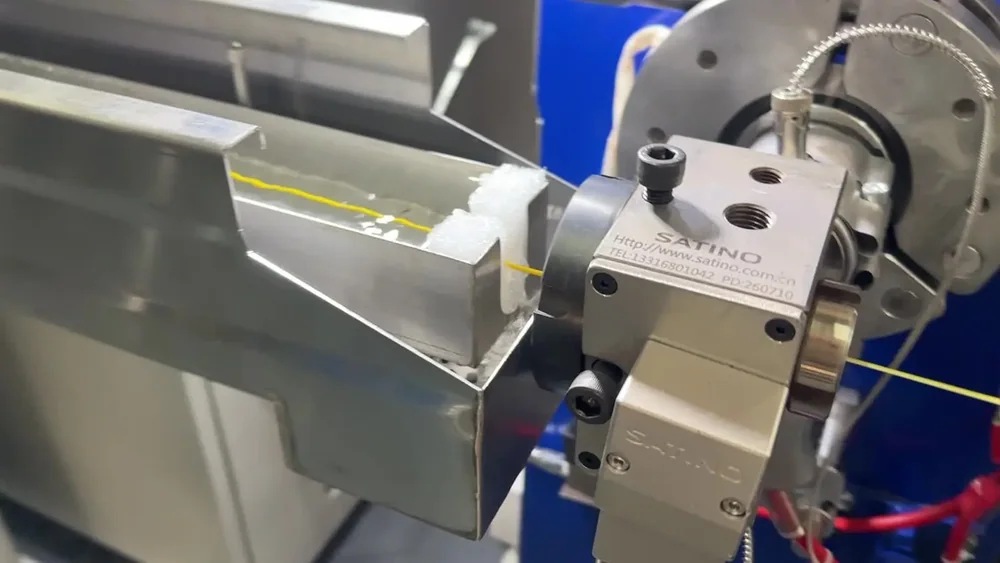










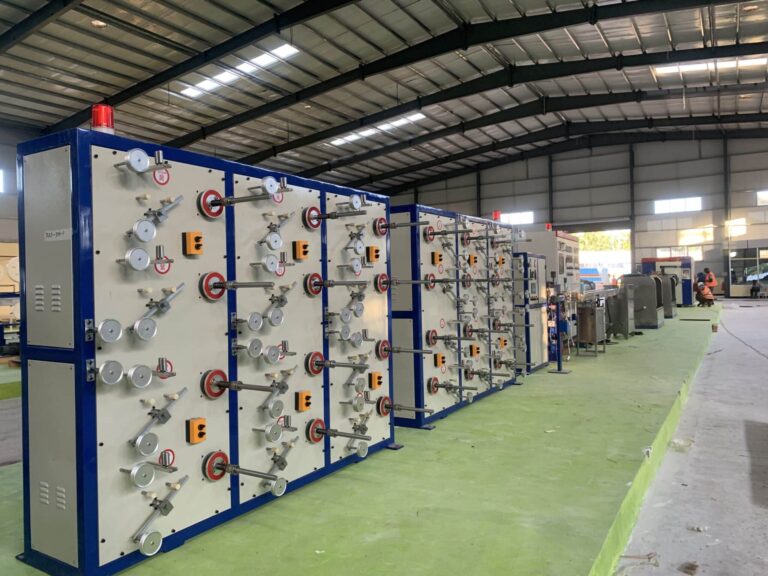
A red fiber reel and guide rollers on the HONGKAI coloring line

Cable manufacturing knowledge center

ابحث عن المسار التقني المناسب لمشروع الكابل الخاص بك

Follow a cable from material to reel, compare production equipment, or trace a fault back to its sample.

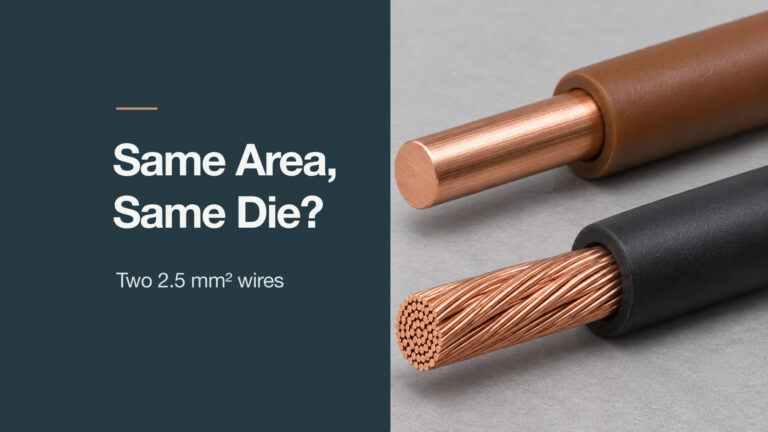
Latest guideهل يمكن للأسلاك المبنية الصلبة والمرنة مشاركة خط عزل واحد؟

Latest technical articles

Browse all articles
كابل الشبكة المحلية

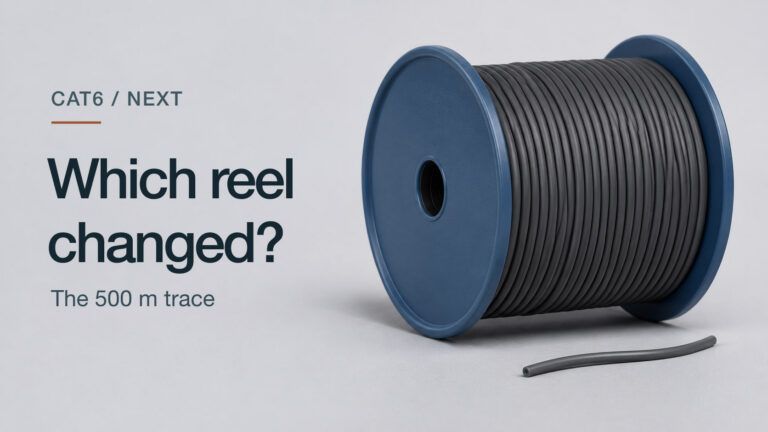
فشل اختبار NEXT في بكرة Cat6. أي أزواج من الكابلات يجب تتبعها؟

يتم تغيير بكرة الزوج عند 500 m. استخدم العلامات الموجودة على كلا طرفي عينة Cat6 لتحديد البكرات التي يجب فحصها، وانظر إلى السبب الذي يجعل أرقام البكرات وحدها غير كافية لتبرير تغيير إعدادات جهاز الالتواء.

اقرأ الدليل
Inside the production line

Choose a cable to follow the material through the line and see what to check on the finished reel.

Choose a cable construction
Cutaway illustration of colored fibers inside a gel-filled buffer tube
In this gel-filled construction, several coated fibers share one tube.

From coated fibers to a loose tube

  1. Feed the fibers

    Match the pay-offs to the fiber count and color order on the drawing. Follow each fiber through its guide to the crosshead.

  2. Form and cool the tube

    The crosshead forms the polymer tube around the fibers. Specify the filling arrangement and the cooling path for this construction.

  3. Check a marked length

    Measure the tube and its enclosed fibers from the same marked section. Keep the excess-length result with the reel record.

Read the loose-tube line guide
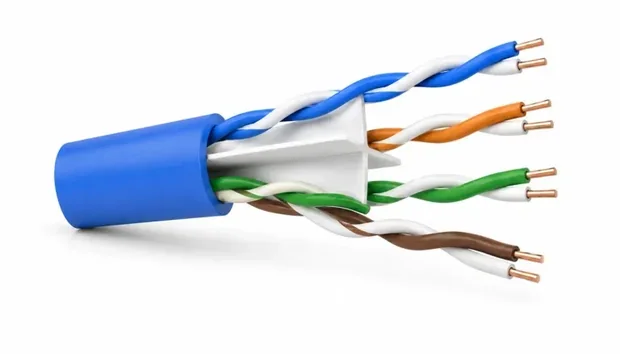
Four color-coded copper pairs arranged around a separator before the outer jacket
The four pairs and separator shown here fit inside one outer jacket. The cable drawing specifies the separator.

From insulated copper to four twisted pairs

  1. Insulate each conductor

    Apply the insulation and confirm the conductor dimensions before sending the single wires to pair twisting.

  2. Twist, then cable the pairs

    Twist two insulated wires into each pair at its specified lay. Bring the four pairs together with a separator if the drawing calls for one.

  3. Jacket and test

    Apply the outer jacket to the cabled core. Check the finished construction and electrical performance, including near-end crosstalk.

Follow the Cat6 manufacturing process
Stranded copper exposed at the end of a blue insulated building wire
Record the diameter of the bare conductor, over the PVC insulation, and over the nylon covering.

From bare copper to PVC and nylon layers

  1. Measure the conductor

    Record the construction and bare diameter of each size. Use those dimensions to establish the starting point for the PVC wall.

  2. Size the two extrusion duties

    Work out the PVC insulation and nylon covering separately. Check the material handling, heads and tooling proposed for each layer.

  3. Inspect both layers

    Keep a cut section from the trial wire. Check the PVC and nylon walls separately and tie the measurements to that sample.

Read the THHN layer and trial guide

By project

اختر نقطة البداية الخاصة بك

Which machine fits the job?

Use the material going in and the product coming out to compare the equipment on a quotation.

Single- or twin-screw extruder?

What changes on the lineA single-screw line commonly applies ready-made compound to cable. A twin-screw compounding line mixes ingredients into a new material.

What to specifySpecify the feed material and whether the required output is coated cable or finished compound.

Cage, bow or rigid strander?

What changes on the lineThe way bobbins and elements rotate affects twist and orientation. Check the mechanism against the conductor or core being stranded.

What to specifyBring the construction, bobbin sizes and required lay. Identify any backtwist or compaction requirement.

Line take-up or finished-pack coiler?

What changes on the lineA take-up collects the continuous line output. A sale-length coil may need a separate measuring, cutting and packing operation.

What to specifySpecify the shipping length, coil or spool dimensions, and how the cable transfers from the production reel.

Browse by topic

Research & benchmarks

جميع الأبحاث

What belongs in your project file?

Choose the decision in front of you to see which drawing, sample or test record to bring.

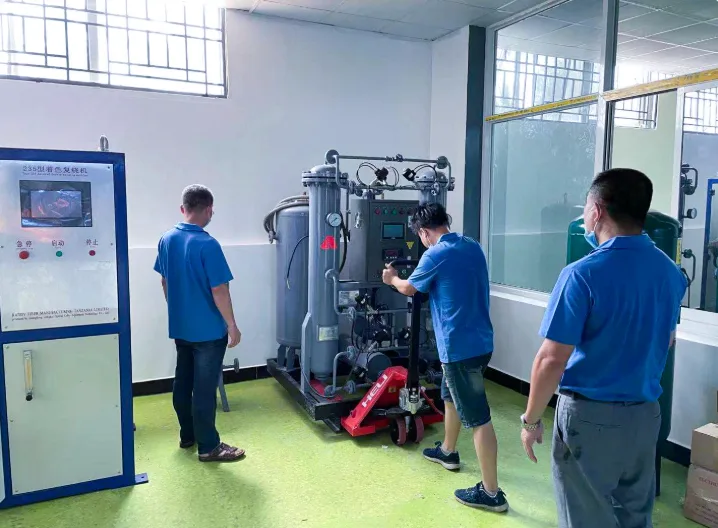
Workshop team gathered at a loose-tube line during testing
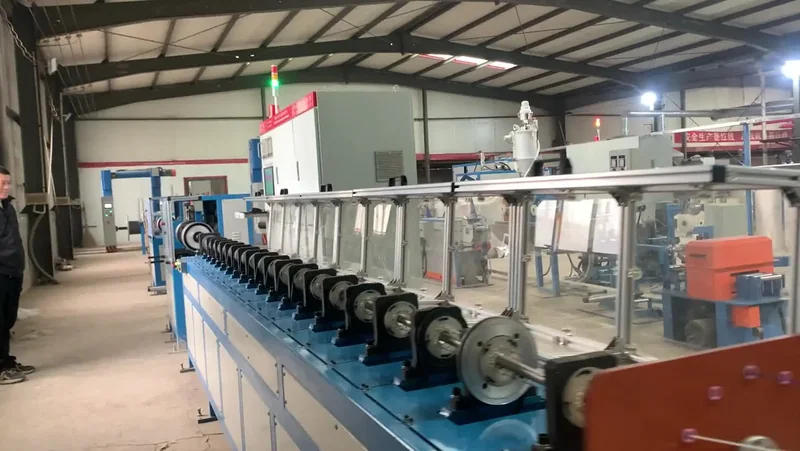
Loose-tube line testing in the workshop.
Request a quotation

Cable drawing and output target

Send the construction, size range and required saleable output for a named cable. Include the working hours behind the target and identify equipment already in the factory.

Open the RFQ checklist
Review the factory layout

Floor plan and reel movements

Mark columns, doors and utility points on a dimensioned plan. Trace a loaded reel from storage to the pay-off and from take-up to the next operation, including space for loading and service.

Check the factory layout
Plan factory and site acceptance

Trial products and signed test records

Agree which products will run at the supplier’s factory. List the installation, utility and product checks to repeat at your site, with a record and responsible person for each.

Compare FAT and SAT
Release a finished drum

Drum ID and sample-linked test results

Identify the drum and the specimen taken from it. Bring the line measurements, required lab results and release decision together so someone can trace a result back to the cable.

Build a drum-release plan

من بيتر هي

ملاحظات إنتاج الكابلات

بريد إلكتروني شهري حول اختيار آلات الكابلات وحل مشكلات خط الإنتاج.

دلائل معدنية وأدوات على خط إنتاج الكابلات HONGKAI

ناقش مشروع الكابل الخاص بك

شاركنا رسم الكابل، أو المخرجات المستهدفة، أو المشكلة الموجودة على خط الإنتاج.

ناقش مشروعك

ملاحظات إنتاج الكابلات

احصل على ملاحظاتي الشهرية حول تصنيع الكابلات، واختيار المعدات، وحل المشكلات، بالإضافة إلى تحديثات دورية حول خطوط إنتاج HONGKAI.

اطلب الاقتباس

سوف نقوم بالرد عليك خلال 24 ساعة!!!

واتساب